The right preparation can turn an interview into an opportunity to showcase your expertise. This guide to Produce Harvesting interview questions is your ultimate resource, providing key insights and tips to help you ace your responses and stand out as a top candidate.
Questions Asked in Produce Harvesting Interview
Q 1. Describe your experience with different harvesting methods (manual, mechanical).
My experience encompasses both manual and mechanical harvesting methods, each with its own strengths and limitations. Manual harvesting, while labor-intensive, allows for selective picking, ensuring only the highest-quality produce is selected. This is crucial for delicate fruits like strawberries or tomatoes where bruising can be a major concern. I’ve personally overseen teams harvesting strawberries, carefully examining each berry for ripeness and blemishes. Mechanical harvesting, on the other hand, is significantly faster and more efficient for larger-scale operations and hardier crops like potatoes or certain types of apples. However, it often comes with a higher rate of damage and requires careful calibration to minimize losses. For example, when harvesting potatoes with a mechanical harvester, the ground speed and the digger’s settings need precise adjustment to avoid damaging the tubers. I’ve managed projects where we strategically combined both approaches, using manual harvesting for premium produce and mechanical methods for volume production.
Q 2. What are the key factors influencing harvest timing for different produce?
Harvest timing is a critical factor determining the quality and shelf life of produce. It’s dictated by several interconnected factors, varying greatly depending on the crop. For example, the optimal harvest time for tomatoes is determined by their color, firmness, and sugar content – typically when they are fully colored and slightly soft to the touch. For apples, we look for factors like background color, firmness, and sugar levels. In addition to ripeness, external factors heavily influence timing. Weather conditions, particularly temperature and rainfall, play a crucial role. Early or late frosts can severely damage crops. Pest and disease pressure can also dictate timing – you might need to harvest earlier than ideal to prevent significant losses from disease outbreaks. Finally, market demand influences the harvest schedule. Sometimes, even if a crop isn’t perfectly ripe, you might need to harvest it earlier to meet peak demand, as seen during holiday seasons for pumpkins, for example.
Q 3. How do you ensure the quality and safety of harvested produce?
Ensuring the quality and safety of harvested produce is paramount. It begins in the field with careful handling to minimize bruising and damage during harvesting. This includes proper training of harvesters on techniques like using appropriate containers and avoiding dropping or throwing produce. Post-harvest, hygiene is critical. Clean equipment, clean hands, and appropriate sanitation procedures at sorting and packing facilities are essential to prevent contamination and spoilage. We regularly conduct checks for soil contamination, insect infestations, and microbial growth. Traceability systems are implemented to track the origin of produce, allowing for rapid identification and removal of any potentially contaminated batches. Furthermore, adherence to strict food safety regulations, including those concerning pesticide residues and temperature control during storage and transportation, is crucial. For example, in one instance we had to recall a batch of lettuce due to a potential E.coli contamination identified during routine testing. This highlighted the importance of proactive monitoring and quick response mechanisms.
Q 4. Explain your experience with yield monitoring and reporting.
Yield monitoring and reporting are crucial for assessing harvest efficiency and profitability. We use a combination of methods, from manual data collection to sophisticated GPS-based yield mapping systems. Manual methods involve physically counting or weighing harvested produce. More advanced systems integrate GPS data with harvester performance data to create detailed maps showing yield variations across fields. This allows us to identify areas with lower yields and investigate potential reasons, such as soil nutrient deficiencies or irrigation issues. We use this data to improve management practices for the following season, such as adjusting fertilization strategies based on specific field areas. Data is compiled into reports that provide insights into harvest efficiency, cost per unit, and overall profitability. These reports also support decision-making related to resource allocation and future planting strategies.
Q 5. Describe your experience with different types of harvesting equipment.
My experience includes working with a wide range of harvesting equipment, from simple hand tools like pruning shears and harvest baskets to sophisticated mechanized harvesters. For example, I’ve used self-propelled harvesters for crops like corn and soybeans, these machines cut the crop and gather it simultaneously. We’ve also used specialized equipment such as mechanical grape harvesters which gently shake the bunches off the vines, minimizing damage to the fruit. The choice of equipment depends on the crop, the scale of operation, and the terrain. Smaller operations may rely heavily on manual labor with hand tools, while large-scale commercial farms utilize highly mechanized systems. I have expertise in operating and maintaining this equipment, as well as understanding the safety protocols involved. Regular maintenance, including lubrication and inspection, is essential to prevent breakdowns and ensure safe operation. This maintenance is usually documented, allowing us to track the equipment’s life cycle.
Q 6. How do you manage a harvest crew effectively?
Effective harvest crew management requires careful planning and clear communication. Before the harvest starts, we provide thorough training on safe harvesting techniques, quality standards, and the use of equipment. I emphasize the importance of teamwork and collaboration. Clear roles and responsibilities are assigned, and communication channels are established for reporting problems or unexpected issues. We use daily briefings and regular check-ins to keep the team informed of the progress and address any concerns. Fair compensation and a supportive work environment are key to maintaining motivation and productivity. Recognizing and rewarding outstanding performance significantly boosts morale and reduces turnover. For instance, we organized a small celebration for the team at the end of a challenging harvest season, celebrating their dedication and hard work which resulted in an exceptional yield.
Q 7. What are the common challenges faced during harvesting and how do you address them?
Harvesting faces several common challenges. Weather is a major factor – unexpected rain or extreme heat can significantly impact productivity and quality. Labor shortages can hinder efficiency and increase costs. Equipment malfunctions can cause delays and losses. Pest and disease outbreaks can necessitate quicker harvests, sometimes at a cost to yield quality. To address these challenges, we implement contingency plans. This involves having backup equipment ready, securing access to temporary labor pools, and implementing proactive pest and disease management strategies. Regular equipment maintenance and thorough pre-harvest assessments help minimize downtime and unexpected issues. Good communication with weather forecasters is essential to prepare for potential disruptions. For instance, during a period of unexpected heavy rainfall, we adjusted our schedule to prevent water damage to harvested fruit. Through proactive planning and quick adaptation, we mitigate the impact of these challenges and maintain harvest efficiency.
Q 8. How do you maintain harvesting equipment and ensure its optimal performance?
Maintaining harvesting equipment is crucial for optimal performance and minimizing downtime. It’s like regularly servicing your car – preventative maintenance is key. My approach involves a multi-pronged strategy focusing on regular inspections, cleaning, and timely repairs.
Daily Inspections: Before each harvest, I conduct a thorough visual inspection of all equipment, checking for loose bolts, worn parts, fluid leaks, and any damage. This is akin to a quick pre-flight check for a pilot.
Cleaning: After each day’s work, I ensure all equipment is meticulously cleaned to remove dirt, debris, and residue from produce. This prevents corrosion and ensures the equipment’s longevity. Think of it as washing your hands after handling food – vital for hygiene and equipment health.
Preventative Maintenance Schedule: I follow a strict maintenance schedule, including lubrication, filter changes, and component replacements according to the manufacturer’s recommendations. This is like scheduling regular oil changes for your car – crucial for preventing major problems.
Repairs: Any malfunctions or damaged components are addressed promptly by qualified mechanics. Delaying repairs can lead to bigger, more costly issues down the line.
Record Keeping: I maintain detailed records of all maintenance activities, repairs, and part replacements. This data is essential for tracking equipment performance, identifying potential problems, and optimizing maintenance schedules.
Q 9. How do you handle unexpected problems during a harvest (e.g., weather delays, equipment malfunctions)?
Unexpected problems during harvest are inevitable. My approach involves a combination of preparedness, quick thinking, and effective communication. Think of it like navigating a storm at sea – you need a plan, adaptability, and a strong crew.
Contingency Planning: We have a detailed contingency plan for various scenarios, including weather delays and equipment malfunctions. This plan outlines alternative harvesting methods, backup equipment, and communication protocols.
Weather Monitoring: We closely monitor weather forecasts and adjust our harvesting schedule accordingly. If a storm is approaching, we prioritize protecting equipment and personnel. This is similar to checking the weather before a road trip – safety first.
Troubleshooting: For equipment malfunctions, we have a skilled team capable of diagnosing and repairing many problems on-site. We also have established relationships with reliable repair services for more complex issues. This ensures minimal downtime.
Communication: Clear and timely communication between the harvesting crew, management, and transportation personnel is critical. This helps to coordinate efforts and minimize losses due to delays.
Adaptability: Sometimes, the best solution is to adapt. If a field is waterlogged due to unexpected rain, we may need to prioritize harvesting other fields or employ alternative harvesting techniques.
Q 10. What are your strategies for optimizing harvesting efficiency?
Optimizing harvesting efficiency requires a holistic approach, encompassing technology, workforce management, and strategic planning. It’s like orchestrating a symphony – every section needs to play in harmony for a successful performance.
Technology: We utilize GPS-guided harvesting equipment to ensure optimal coverage and minimize overlapping. Precision agriculture technologies allow for data-driven decisions, improving resource allocation.
Workforce Management: Proper training and clear communication with the harvesting crew are essential. We use efficient crew assignments and task delegation strategies based on individual expertise and workload balance. This is like having a well-coordinated sports team – each player having a clear role.
Strategic Planning: We optimize harvesting routes to minimize travel time between fields and ensure that produce is harvested at the optimal ripeness stage. This is akin to planning a delivery route to make the most efficient use of time and resources.
Harvesting Techniques: We continuously evaluate and improve our harvesting techniques based on yield, quality, and efficiency data. It’s about continuous improvement, like refining a manufacturing process.
Preventive Maintenance: As mentioned before, preventative maintenance reduces downtime and ensures equipment operates at peak efficiency, contributing to overall harvesting efficiency.
Q 11. What safety procedures do you implement during harvesting operations?
Safety is paramount during harvesting operations. We follow strict protocols and provide thorough training to minimize risks. It’s like wearing a safety harness while working at heights – you wouldn’t consider doing it without one.
Personal Protective Equipment (PPE): All workers are required to wear appropriate PPE, including safety glasses, gloves, and protective footwear. We also provide specialized clothing for specific harvesting tasks.
Machine Safety: We regularly inspect and maintain harvesting equipment to ensure it operates safely and efficiently. Lockout/tagout procedures are implemented during maintenance to prevent accidental starting.
Training: All workers receive comprehensive safety training before commencing harvesting operations, covering topics like safe equipment operation, hazard identification, and emergency procedures.
Emergency Response Plan: We have a detailed emergency response plan that includes procedures for handling injuries, equipment malfunctions, and severe weather conditions. This is like having a fire drill plan – you hope you never need it, but you’re better off prepared.
Regular Safety Meetings: We conduct regular safety meetings to address concerns, reinforce safe work practices, and review incident reports.
Q 12. How do you comply with regulations related to harvesting and food safety?
Compliance with regulations related to harvesting and food safety is non-negotiable. We adhere to all relevant local, state, and federal regulations and maintain meticulous records. It’s like following a recipe precisely – every step is essential for a successful outcome.
Good Agricultural Practices (GAPs): We follow Good Agricultural Practices to ensure the safety and quality of our produce. This includes practices related to water management, pesticide application, and sanitation.
Food Safety Modernization Act (FSMA): We are fully compliant with the requirements of the Food Safety Modernization Act, which includes implementing preventative controls and maintaining thorough records.
Traceability: We have a robust traceability system to track produce from field to consumer. This allows for quick identification and removal of any contaminated products.
Worker Safety: We meet all requirements related to worker safety, including providing appropriate safety training and equipment.
Record Keeping: We maintain comprehensive records of all harvesting activities, pesticide applications, and food safety measures.
Q 13. Describe your experience with post-harvest handling of produce.
Post-harvest handling is critical for maintaining the quality and shelf life of produce. It’s like carefully preserving a fine wine – proper handling ensures that its quality remains intact. My experience encompasses careful harvesting techniques, efficient sorting and grading, and proper storage and transportation.
Careful Harvesting: Gentle handling minimizes damage during harvesting, reducing losses and improving quality.
Rapid Cooling: Produce is rapidly cooled after harvest to slow down respiration and enzymatic activity, extending shelf life. This might involve hydrocooling or air cooling.
Sorting and Grading: We carefully sort and grade produce based on size, quality, and appearance. This ensures that products meet the standards of different markets.
Packaging: Appropriate packaging helps to protect produce during transportation and storage. The packaging should prevent damage and maintain optimal conditions.
Storage: Produce is stored in controlled environments with optimal temperature, humidity, and ventilation to maintain freshness.
Transportation: We use refrigerated trucks and ensure appropriate handling procedures to prevent spoilage during transportation.
Q 14. How do you identify and address crop damage during harvesting?
Identifying and addressing crop damage during harvesting is crucial for minimizing losses and maintaining product quality. This is like a doctor diagnosing and treating an illness – early detection is key.
Visual Inspection: We conduct regular visual inspections of harvested produce to identify any signs of damage, such as bruises, cuts, or insect infestations.
Sorting and Culling: Damaged produce is sorted and culled to prevent it from affecting the quality of the remaining crop.
Harvesting Techniques: We utilize harvesting techniques that minimize damage, such as using appropriate tools and equipment, training workers in careful handling, and ensuring proper equipment maintenance.
Record Keeping: We maintain detailed records of crop damage, including the type, extent, and cause of damage. This allows us to identify areas for improvement in harvesting practices.
Pest and Disease Management: We implement strategies to minimize pest and disease pressures, reducing damage before it even occurs. This could include integrated pest management.
Q 15. Explain your experience with different types of produce and their specific harvesting requirements.
My experience spans a wide range of produce, from delicate berries to robust root vegetables. Each requires a unique approach to harvesting. For example, strawberries demand careful hand-picking to avoid bruising, requiring highly trained pickers and careful handling. In contrast, potatoes are harvested using specialized machinery, focusing on efficient excavation and minimizing damage. Leafy greens like lettuce necessitate swift harvesting to maintain freshness and crispness, often involving mechanized harvesters. Citrus fruits, on the other hand, are harvested using specialized tools like clippers and ladders, with careful attention paid to avoiding damage to the tree and the fruit itself. The key is understanding the specific physiological characteristics of the crop and adapting the harvest method accordingly.
- Berries: Hand-picking, careful sorting
- Potatoes: Mechanical harvesting, efficient soil removal
- Lettuce: Mechanical or hand harvesting, rapid processing
- Citrus fruits: Specialized tools, careful tree management
Career Expert Tips:
- Ace those interviews! Prepare effectively by reviewing the Top 50 Most Common Interview Questions on ResumeGemini.
- Navigate your job search with confidence! Explore a wide range of Career Tips on ResumeGemini. Learn about common challenges and recommendations to overcome them.
- Craft the perfect resume! Master the Art of Resume Writing with ResumeGemini’s guide. Showcase your unique qualifications and achievements effectively.
- Don’t miss out on holiday savings! Build your dream resume with ResumeGemini’s ATS optimized templates.
Q 16. How do you track and manage labor costs during harvesting?
Labor cost management in harvesting is crucial. We utilize a multifaceted approach. First, we accurately estimate labor needs based on yield predictions and historical data. This allows us to optimize crew size and minimize unnecessary expenditure. Second, we employ a combination of hourly and piece-rate pay systems, incentivizing efficiency while ensuring fair compensation. Third, we leverage technology to track worker productivity using time-tracking apps and GPS devices to monitor coverage and identify areas needing adjustment. Finally, regular performance reviews and training sessions improve worker skills, boosting efficiency and reducing labor costs in the long run. We also meticulously track all payroll expenses, benefits, and any other associated costs to maintain a clear and accurate financial picture.
Q 17. What are your methods for training and supervising harvesting personnel?
Training and supervision are paramount. New hires receive comprehensive orientation covering safety protocols, proper harvesting techniques (e.g., correct picking methods for different crops), quality standards, and the use of any harvesting equipment. Experienced supervisors are assigned to each crew, providing on-the-job training and guidance. Regular training sessions focus on improving speed, minimizing damage, and maintaining quality. We also implement a robust feedback system, where supervisors and workers can communicate concerns and identify areas for improvement. This creates a collaborative environment focused on continuous improvement. Safety is a key focus; we conduct regular safety drills and emphasize the importance of reporting any potential hazards immediately.
Q 18. How do you assess the maturity and readiness of produce for harvesting?
Assessing maturity involves a combination of visual inspection and sometimes specialized tools. For example, with tomatoes, we look for the characteristic color change and firmness. For fruits like melons, we might use a refractometer to measure sugar content, a key indicator of ripeness. With many crops, experience plays a crucial role. Experienced harvesters can often identify the right moment by feeling the weight and firmness of the produce. We also utilize pre-harvest monitoring techniques, including regular field inspections to track crop development and predict harvest timing. These strategies allow us to time the harvest precisely, ensuring optimal quality and shelf life.
Q 19. Describe your experience with using technology in harvesting (GPS, data loggers, etc.)
Technology plays a vital role in modern harvesting. GPS-enabled equipment allows for precise navigation and optimized route planning, minimizing travel time and fuel consumption. Data loggers embedded in harvesting machinery collect real-time information on yield, harvest speed, and even soil conditions. This data feeds into our management systems, allowing us to identify areas for improvement and make data-driven decisions. We also use handheld devices to track harvest progress and worker location, improving coordination and communication. This integration of technology not only increases efficiency but also improves overall data management and decision-making, leading to better resource allocation and reduced waste.
Q 20. What is your approach to managing waste during the harvesting process?
Waste management is a critical aspect of sustainable harvesting. We strive to minimize waste through careful planning and efficient harvesting techniques. Damaged or unmarketable produce is separated at the point of harvest and may be repurposed (e.g., compost, animal feed). We work closely with processing facilities to ensure optimal utilization of the harvested crop, minimizing losses during transport and handling. Regular training on proper harvesting techniques and quality standards helps minimize damage during the harvest itself. We meticulously record waste quantities to track trends and identify opportunities for improvement. Continuous monitoring and improvement in these areas are crucial for both economic and environmental sustainability.
Q 21. How do you adapt your harvesting strategies to different environmental conditions?
Adapting to environmental conditions is essential. During extreme heat, we adjust harvesting schedules to avoid peak temperatures and provide adequate hydration for workers. In wet conditions, we utilize specialized equipment or modify harvesting techniques to prevent soil compaction and damage to the produce. We regularly monitor weather forecasts and make proactive adjustments to our schedules, ensuring we harvest before anticipated storms or excessive rainfall. This includes delaying harvests when necessary to protect the quality and yield. We also take into account the microclimate variations within the field and adjust strategies accordingly, to maximize yield and quality across the entire production area.
Q 22. Explain your experience with different soil types and their impact on harvesting.
Soil type significantly impacts harvesting efficiency and produce quality. Different soils have varying water retention, drainage, nutrient content, and susceptibility to erosion, all affecting plant growth and ease of harvest.
- Sandy soils drain quickly, requiring more frequent irrigation but making harvesting easier as the ground is less compacted. However, sandy soils are often nutrient-poor, impacting yield.
- Clay soils retain water well but can become compacted, making harvesting difficult and potentially damaging roots. Harvesting might require specialized machinery to minimize soil disturbance. Clay soils also present challenges with drainage, increasing susceptibility to diseases.
- Silty soils offer a good balance, providing decent drainage and nutrient retention, though they are susceptible to erosion. Harvesting is typically easier in silty soils compared to clay soils.
- Loamy soils, a mix of sand, silt, and clay, are ideal for most crops. They offer excellent drainage, water retention, and nutrient content, leading to efficient harvesting and high-quality yields.
For instance, harvesting carrots in compacted clay soil requires specialized equipment and careful techniques to avoid root damage, unlike harvesting them from well-drained sandy loam.
Q 23. How do you ensure the traceability of harvested produce?
Traceability is paramount in ensuring food safety and consumer confidence. We use a multi-stage system to track produce from planting to the consumer.
- Field Identification: Each field is uniquely identified with a code that is recorded in our harvest management software.
- Batch Tracking: Each harvest batch receives a unique identifier linked to the field, harvest date, and crew.
- Harvest Records: Detailed records are kept, including date, time, quantity harvested, and any quality issues noted.
- Packing and Labeling: Produce is packed and labeled with traceability information, often including QR codes linking to comprehensive data.
- Supply Chain Management Software: Our software integrates with our suppliers and distributors, maintaining consistent traceability throughout the supply chain.
If a quality issue arises, we can quickly trace the source, isolate the affected batch, and prevent further problems. This system is crucial for recall management and maintaining brand integrity.
Q 24. Describe your experience with crop rotation and its influence on harvesting.
Crop rotation is a vital agricultural practice that significantly impacts harvesting. It involves planting different crops in a planned sequence on the same land over several years to improve soil health and reduce pest and disease pressure.
- Improved Soil Health: Different crops have different nutrient requirements. Rotating crops helps prevent depletion of specific nutrients and improve soil structure, leading to better yields and easier harvesting.
- Pest and Disease Control: Rotating crops disrupts the life cycle of many pests and diseases, reducing their impact on subsequent crops. This reduces the need for pesticides, leading to a more sustainable and efficient harvest.
- Weed Management: Certain crops can help suppress weeds, making harvesting easier in subsequent years.
For example, planting a legume (like beans) after a heavy feeder (like corn) replenishes nitrogen in the soil, improving the growth of the next corn crop and making the harvest more efficient.
Q 25. What are your skills in using harvest scheduling software?
I am proficient in using several harvest scheduling software packages. My skills encompass:
- Planning and Optimization: I can create optimized harvest schedules considering factors like crop maturity, weather forecasts, labor availability, and equipment capacity.
- Data Entry and Management: I am adept at inputting field data, tracking yields, and managing labor assignments within these systems.
- Reporting and Analysis: I can generate reports on harvest progress, yield analysis, and labor productivity to identify areas for improvement.
- Integration with other systems: I have experience integrating harvest scheduling software with inventory management and supply chain systems for seamless data flow.
For instance, I’ve used software to predict optimal harvest times based on weather patterns, ensuring that we harvest at peak ripeness while minimizing losses due to adverse conditions. This predictive capability has significantly increased our harvest efficiency and produce quality.
Q 26. How do you manage inventory and logistics during harvesting?
Managing inventory and logistics during harvesting is critical for minimizing losses and ensuring timely delivery. This involves:
- Real-time Inventory Tracking: Utilizing software and handheld devices to track harvested quantities, location, and quality in real-time.
- Efficient Transportation: Scheduling transportation based on harvest volume, proximity to packing facilities, and storage capacity.
- Temperature Control: Maintaining appropriate temperatures during transportation and storage to preserve produce quality.
- Quality Control Checks: Regular quality checks at various stages to identify and address any issues before they escalate.
- Waste Management: Implementing strategies to minimize waste through careful handling and timely processing.
A key strategy is to have a clear chain of custody, ensuring proper documentation at each stage from the field to the distribution center. This minimizes errors and facilitates quick resolution of any logistical challenges.
Q 27. How do you handle disputes or conflicts within the harvesting crew?
Conflict resolution is a crucial skill in managing a harvesting crew. My approach is proactive and focuses on:
- Open Communication: Creating an environment where crew members feel comfortable expressing concerns and disagreements.
- Fair and Consistent Treatment: Ensuring equitable distribution of work, pay, and opportunities.
- Mediation and Facilitation: Acting as a mediator to help resolve conflicts between crew members using active listening and compromise.
- Clear Expectations and Guidelines: Providing clear instructions and expectations, minimizing misunderstandings.
- Performance Management: Addressing performance issues promptly and fairly, providing support and training where needed.
I firmly believe in fostering a positive team environment where individuals feel valued and respected. This approach promotes collaboration and reduces the likelihood of conflicts.
Q 28. What are your career goals related to produce harvesting?
My career goals are centered around optimizing produce harvesting through technology and sustainable practices. I aim to:
- Implement advanced technologies: Explore and integrate innovative technologies like robotics, AI, and precision agriculture to enhance efficiency and reduce labor costs.
- Promote sustainable harvesting: Advocate for sustainable harvesting techniques to minimize environmental impact and improve soil health.
- Leadership and mentorship: Develop my leadership skills and mentor the next generation of harvest professionals.
- Continuous learning: Stay updated on the latest advancements in harvesting techniques and technologies.
Ultimately, I want to contribute to a more efficient, sustainable, and profitable produce harvesting industry while ensuring food security for everyone.
Key Topics to Learn for Produce Harvesting Interview
- Crop-Specific Harvesting Techniques: Understanding the unique handling requirements for various fruits and vegetables (e.g., delicate berries vs. robust root vegetables). This includes knowledge of optimal harvesting times and ripeness indicators.
- Harvesting Equipment and Machinery: Familiarity with different types of harvesting equipment, their operation, maintenance, and safety protocols. This includes practical experience or theoretical knowledge of hand-harvesting tools as well as mechanized harvesters.
- Post-Harvest Handling and Storage: Knowledge of proper techniques for handling produce after harvesting to minimize damage and maintain quality. This includes understanding the importance of proper cooling, sorting, and grading methods.
- Yield Optimization Strategies: Understanding factors that influence harvest yields and implementing strategies to maximize efficiency and minimize waste. This involves knowledge of factors such as weather conditions, soil health, and pest management.
- Quality Control and Assurance: Understanding procedures for ensuring produce meets quality standards throughout the harvesting and post-harvest processes. This includes knowledge of grading scales and quality control checks.
- Safety and Regulations: Awareness of relevant safety regulations and procedures for working in a harvesting environment. This includes understanding personal protective equipment (PPE) requirements and hazard identification.
- Teamwork and Communication: Understanding the importance of effective communication and collaboration within a harvesting team. This includes demonstrating leadership potential and conflict resolution skills.
- Problem-Solving in Harvesting: Ability to identify and solve problems that may arise during the harvesting process, such as equipment malfunctions or unexpected weather conditions. This might include troubleshooting, adapting to changing conditions, or developing innovative solutions.
Next Steps
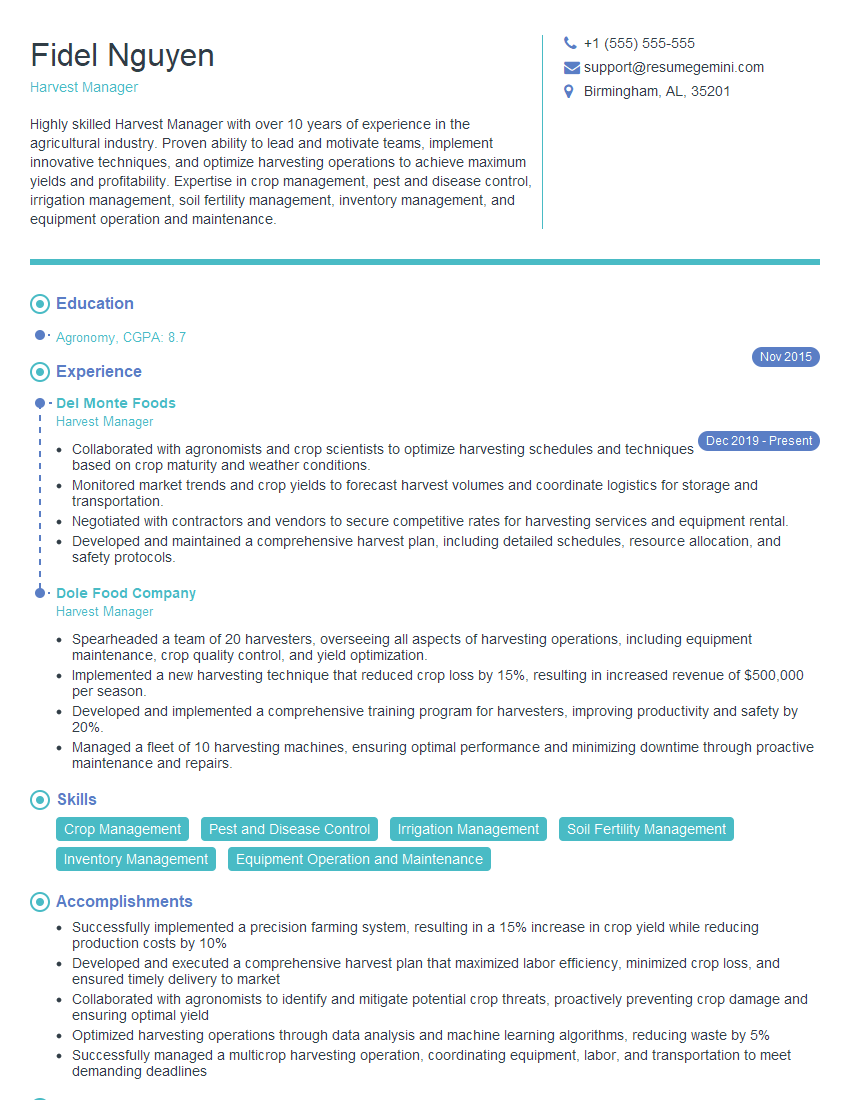
Mastering the intricacies of produce harvesting opens doors to a rewarding career with excellent growth potential. You can advance to supervisory roles, specialize in specific crops, or even move into agricultural technology and management. To maximize your job prospects, creating a strong, ATS-friendly resume is crucial. ResumeGemini is a trusted resource that can help you build a professional resume that showcases your skills and experience effectively. Examples of resumes tailored to the Produce Harvesting industry are available to help guide you.
Explore more articles
Users Rating of Our Blogs
Share Your Experience
We value your feedback! Please rate our content and share your thoughts (optional).
What Readers Say About Our Blog
Very informative content, great job.
good