Cracking a skill-specific interview, like one for Training and Education Delivery, requires understanding the nuances of the role. In this blog, we present the questions you’re most likely to encounter, along with insights into how to answer them effectively. Let’s ensure you’re ready to make a strong impression.
Questions Asked in Training and Education Delivery Interview
Q 1. Describe your experience designing training programs for diverse learners.
Designing training for diverse learners is crucial for effective knowledge transfer. My approach centers on understanding and catering to various learning styles, needs, and preferences. This involves employing a variety of instructional methods, such as visual aids, interactive exercises, group discussions, and hands-on activities to cater to visual, auditory, and kinesthetic learners.
For example, when designing a training program on project management, I would incorporate case studies for analytical learners, interactive simulations for kinesthetic learners, and presentations with clear visuals for visual learners. I also ensure accessibility by providing materials in multiple formats (e.g., audio descriptions for visually impaired learners, large print materials for learners with low vision) and offering alternative assessment methods.
Furthermore, I consider cultural differences and adapt the content and delivery to be inclusive and respectful of diverse backgrounds. This might involve using culturally relevant examples, adapting the language to different proficiency levels, and being mindful of cultural norms around communication and interaction. Ultimately, a multifaceted approach ensures everyone can effectively participate and learn.
Q 2. Explain your approach to needs analysis in training development.
Needs analysis forms the bedrock of any successful training program. My approach involves a three-pronged strategy: organizational, task, and individual analysis.
- Organizational analysis assesses the overall context, including the organization’s goals, resources, and training budget. It identifies the training needs aligned with strategic objectives. For instance, if the company aims to improve customer service, the training should focus on relevant skills.
- Task analysis focuses on identifying the specific knowledge, skills, and abilities (KSAs) required for successful task performance. This often involves job shadowing, interviews, and reviewing job descriptions. Let’s say we’re training customer service representatives; task analysis would pinpoint skills like active listening, conflict resolution, and product knowledge.
- Individual analysis examines the current skill levels of the trainees. This is done through assessments, surveys, and performance reviews. This helps determine the gap between their existing skills and those required, guiding the creation of customized learning paths. For example, some representatives might need more training on conflict resolution than others.
By combining these analyses, I develop a comprehensive understanding of the training needs, enabling me to create a targeted and effective program.
Q 3. How do you assess the effectiveness of a training program?
Assessing training effectiveness is crucial to demonstrate ROI and identify areas for improvement. My approach employs a multi-faceted evaluation strategy using the Kirkpatrick’s four levels of evaluation:
- Reaction: This measures trainee satisfaction and engagement through surveys and feedback forms immediately after the training. It helps gauge the learners’ overall experience.
- Learning: This assesses the knowledge gained during the training using pre- and post-tests, quizzes, or knowledge checks. This measures whether learning objectives have been met.
- Behavior: This evaluates the application of learned knowledge and skills on the job through observation, performance reviews, and 360-degree feedback. This examines actual changes in behavior.
- Results: This measures the impact of the training on organizational outcomes, such as improved productivity, reduced errors, or increased customer satisfaction. This assesses the overall organizational benefit.
Using this comprehensive approach helps to build a strong case for the value of training and provides insights into the areas for refinement.
Q 4. What methods do you use to create engaging and effective eLearning content?
Creating engaging eLearning content requires a blend of instructional design principles and technological expertise. My approach prioritizes interactive elements, visual appeal, and clear learning objectives.
- Microlearning: I break down complex topics into smaller, digestible modules to improve knowledge retention and reduce cognitive overload. Each module focuses on one key concept.
- Gamification: Incorporating game-like elements such as points, badges, and leaderboards enhances engagement and motivation.
- Interactive simulations and scenarios: These allow learners to practice skills in a safe and controlled environment, making the learning more experiential.
- Visual storytelling: Combining compelling narratives with engaging visuals makes the content more relatable and memorable.
- Personalized learning paths: Adapting the learning path based on learner progress and performance keeps learners engaged and on track.
For example, I’ve incorporated branching scenarios in eLearning modules where learners make decisions and experience different outcomes based on those choices, resulting in a highly engaging and personalized learning experience.
Q 5. What are your preferred learning theories and how do you apply them?
My preferred learning theories include constructivism, cognitivism, and social constructivism.
- Constructivism emphasizes active learning where learners construct their own knowledge through experiences and reflection. I apply this by designing activities that encourage learners to actively participate, solve problems, and connect new information to their prior knowledge.
- Cognitivism focuses on the mental processes involved in learning, such as memory, attention, and problem-solving. I use techniques like spaced repetition and elaborative interrogation to optimize knowledge retention.
- Social constructivism highlights the importance of social interaction and collaboration in learning. I incorporate group activities, discussions, and peer feedback to foster a collaborative learning environment.
For example, in a training program on teamwork, I’d incorporate a group project where learners collaborate to solve a complex problem, mirroring real-world scenarios. This allows learners to apply their knowledge and learn from each other through social interaction.
Q 6. How do you handle unexpected challenges or technical difficulties during training delivery?
Handling unexpected challenges is part and parcel of training delivery. My strategy focuses on preparedness and quick problem-solving.
- Technology Contingency Plans: I always have backup plans for technological issues, including alternative delivery methods (e.g., printed materials, alternative platforms) and technical support on standby.
- Flexible Delivery Methods: I design training to accommodate potential disruptions. For example, using modular designs makes it easy to adjust the schedule or content if needed.
- Effective Communication: I maintain clear and consistent communication with participants throughout the training, keeping them informed of any unforeseen issues and offering solutions.
- On-the-Spot Adaptability: I am prepared to adapt my delivery based on the learners’ needs and responses, adjusting pacing or activities as required.
For example, during a live virtual training session if the internet connection fails, I’d immediately switch to a phone call to continue the session and reschedule the virtual portion at a later time. Open communication and a flexible mindset are key to navigating such situations successfully.
Q 7. Explain your experience with different instructional design models (ADDIE, AGILe, etc.).
I have extensive experience with various instructional design models, including ADDIE and Agile.
- ADDIE (Analysis, Design, Development, Implementation, Evaluation) is a structured, linear model ideal for well-defined projects with stable requirements. I use ADDIE when there is a clear understanding of the learning objectives and the target audience, ensuring a thorough and systematic approach to training development.
- Agile is an iterative model best suited for projects with evolving requirements. It allows for flexibility and adaptation during the development process. I use Agile in situations where the learning objectives or the target audience may change throughout the development process, allowing for greater responsiveness to feedback.
Choosing the appropriate model depends on the specific project needs and context. Sometimes, a hybrid approach combining aspects of both ADDIE and Agile can be most effective.
Q 8. Describe your experience using learning management systems (LMS).
My experience with Learning Management Systems (LMS) is extensive, encompassing both administration and instructional design. I’ve worked with various platforms, including Moodle, Canvas, and Blackboard, managing everything from course creation and content upload to user enrollment, progress tracking, and reporting. For instance, in a previous role, I migrated an entire training program from a legacy system to Moodle, a process that involved meticulous content restructuring, user training, and the development of a new assessment strategy aligned with the LMS capabilities. This experience solidified my understanding of how LMS platforms can enhance learning outcomes through features like automated grading, personalized learning paths, and robust communication tools. I also have experience leveraging the analytics features of these systems to monitor learner engagement and identify areas for improvement in course design.
Q 9. How do you incorporate feedback from trainees to improve training programs?
Incorporating trainee feedback is crucial for continuous improvement. I employ a multi-faceted approach. Firstly, I include regular feedback opportunities throughout the training, such as mid-course surveys using tools built into the LMS or simple polls during live sessions. Secondly, I conduct post-training evaluations using a combination of quantitative (e.g., rating scales, multiple-choice questions) and qualitative methods (e.g., open-ended questions, focus groups). For example, in a recent leadership training program, post-training interviews revealed a need for more practical case studies, leading to a significant redesign of the program’s modules. Finally, I analyze the data, identify trends, and make necessary adjustments to content, delivery methods, and assessment strategies. This iterative process ensures that the training remains relevant, engaging, and effective.
Q 10. What strategies do you use to maintain trainee engagement throughout a course?
Maintaining trainee engagement is paramount. My strategies include:
- Varied learning activities: I combine lectures, group discussions, interactive exercises, simulations, and gamification to cater to different learning preferences. For example, I might use a Kahoot! quiz to review key concepts or a collaborative project to apply new skills.
- Real-world application: I emphasize the practical relevance of the training by using real-life case studies, scenarios, and examples relevant to the trainees’ work.
- Regular feedback and interaction: I encourage questions and discussions, providing immediate feedback and support. I also use tools like online forums or chat functions to foster a sense of community among learners.
- Clear learning objectives and progress tracking: Learners are kept informed of their progress, making the learning journey transparent and motivating.
- Storytelling and relatable examples: I use engaging storytelling techniques to connect with learners on an emotional level and make the content more memorable.
Q 11. How do you adapt your training style to different learning styles and preferences?
I adapt my training style by recognizing that learners have diverse preferences. I employ a multi-modal approach, catering to visual, auditory, and kinesthetic learners. For visual learners, I use diagrams, charts, and presentations; for auditory learners, I incorporate discussions, podcasts, and audio feedback; and for kinesthetic learners, I include hands-on activities, simulations, and role-playing. Further, I understand that learning styles are not static; they evolve. Therefore, I regularly assess how the training is landing with different learners and adjust the style accordingly. This could involve offering alternative formats for materials, providing different methods for assessment, or incorporating more interactive elements as needed.
Q 12. Describe your experience developing and delivering virtual training.
My experience in virtual training is substantial. I’ve designed and delivered numerous online courses using various technologies, including Zoom, WebEx, and Microsoft Teams. My approach emphasizes interactive elements to prevent passive learning. I regularly use breakout rooms for collaborative activities, polls and quizzes to check comprehension, screen sharing for demonstrations, and online whiteboards for brainstorming. For example, during a recent virtual training on project management, I used a collaborative online whiteboard to map out project timelines, fostering active participation and team interaction. Furthermore, I meticulously plan for technological issues and ensure a clear communication strategy to help participants navigate the virtual learning environment seamlessly.
Q 13. How do you measure the return on investment (ROI) of a training program?
Measuring ROI in training is crucial. My approach involves quantifying both hard and soft returns. Hard returns include tangible benefits like increased productivity, reduced errors, cost savings, or increased sales. Soft returns include improved employee morale, enhanced skills, better knowledge retention, and improved employee satisfaction. To measure these, I use various methods, including pre- and post-training assessments to measure skill improvement, surveys to gauge employee satisfaction, and data analysis on key performance indicators (KPIs) related to the training objectives. For example, I might track improvements in customer service ratings or sales figures following a customer service training program. This data is then compiled to create a comprehensive report demonstrating the program’s overall value to the organization.
Q 14. What experience do you have with creating assessments and evaluations?
My experience in assessment and evaluation is extensive. I create assessments aligned with learning objectives, using a variety of methods such as multiple-choice questions, short-answer questions, case studies, projects, simulations, and practical exercises. The choice depends on the learning objectives and the nature of the training. For example, a practical skills training might use a demonstration as an assessment, while a knowledge-based course may rely more on written exams. I also design evaluations to gather feedback on the effectiveness of the training program itself. This includes surveys, focus groups, and interviews with trainees, managers, and other stakeholders to gauge satisfaction, identify areas for improvement, and measure the impact of the training on organizational performance. The feedback then directly influences future training iterations.
Q 15. How do you ensure training materials are accessible to all learners?
Ensuring accessibility in training materials is crucial for inclusivity and effective learning. This involves considering learners with diverse needs, including visual, auditory, motor, and cognitive impairments. My approach is multifaceted:
- Format Flexibility: I provide materials in various formats – PDFs, Word documents, audio files (MP3), and transcripts for videos. This caters to different learning styles and technological capabilities.
- Alternative Text for Images: All images include detailed alternative text descriptions so screen readers can convey the information to visually impaired learners. For example, instead of just ‘image of a graph,’ I’d write ‘Bar graph showing sales figures for Q1-Q4, with a significant increase in Q3.’
- Closed Captions and Transcripts for Videos: All video content includes closed captions and downloadable transcripts. This benefits learners who are deaf or hard of hearing, those in noisy environments, or those who prefer to read along.
- Color Contrast and Font Size: I use sufficient color contrast between text and background, and a font size that’s easily readable. I also offer options for adjusting font size within digital documents.
- Simplified Language and Structure: I use clear, concise language, avoiding jargon and complex sentence structures. I break down complex information into smaller, manageable chunks. This is especially helpful for learners with cognitive differences.
- Assistive Technology Compatibility: I ensure the materials are compatible with common assistive technologies like screen readers (JAWS, NVDA) and screen magnifiers.
For example, in a recent training program on cybersecurity, I provided a video tutorial with closed captions, a downloadable transcript, and a separate PDF outlining key concepts with large, easy-to-read fonts.
Career Expert Tips:
- Ace those interviews! Prepare effectively by reviewing the Top 50 Most Common Interview Questions on ResumeGemini.
- Navigate your job search with confidence! Explore a wide range of Career Tips on ResumeGemini. Learn about common challenges and recommendations to overcome them.
- Craft the perfect resume! Master the Art of Resume Writing with ResumeGemini’s guide. Showcase your unique qualifications and achievements effectively.
- Don’t miss out on holiday savings! Build your dream resume with ResumeGemini’s ATS optimized templates.
Q 16. Explain your experience with project management in a training context.
Project management is integral to successful training delivery. My experience spans the entire project lifecycle, from initial needs analysis to post-training evaluation. I utilize a structured approach, typically employing Agile methodologies.
- Needs Analysis and Design: I collaborate with stakeholders to define learning objectives, target audience, and desired outcomes. This includes gathering data through surveys, interviews, and focus groups to understand existing knowledge and skills gaps.
- Content Development and Curriculum Design: I develop engaging and relevant training materials, utilizing diverse methods like interactive exercises, simulations, case studies, and gamification. I ensure alignment with learning objectives and create a clear learning path.
- Resource Allocation and Budget Management: I create detailed project budgets, including costs for materials, instructor fees, technology, and venue rentals (if applicable). I track expenses meticulously and ensure resources are used effectively.
- Schedule and Timeline Management: I establish realistic timelines, breaking down the project into manageable tasks with clear deadlines. I use project management tools (like Trello or Asana) to track progress and manage dependencies.
- Team Collaboration and Communication: I foster effective communication and collaboration among all stakeholders – subject matter experts, instructional designers, facilitators, and participants.
- Evaluation and Feedback: I incorporate formative and summative evaluation methods to measure the effectiveness of the training. This includes pre- and post-training assessments, surveys, and feedback sessions to identify areas for improvement.
For instance, in a recent leadership training program, I used Asana to manage tasks, deadlines, and communication amongst the team of designers, facilitators, and myself. The project was completed on time and within budget, resulting in high participant satisfaction and measurable improvements in leadership skills.
Q 17. How do you stay current with the latest trends in training and education?
Staying current in the rapidly evolving field of training and education is paramount. I employ several strategies:
- Professional Development: I actively participate in conferences, webinars, and workshops focused on instructional design, learning technologies, and adult learning principles. Attending ATD (Association for Talent Development) conferences and online courses is a regular part of my professional development.
- Industry Publications and Research: I subscribe to relevant journals and publications (like Training & Development, eLearning Industry) and follow leading researchers and thought leaders in the field. I regularly review research articles on learning science to stay updated with the latest pedagogical best practices.
- Online Communities and Networks: I participate in online communities and professional networking groups (LinkedIn groups, online forums) to engage with peers, share insights, and stay informed about emerging trends.
- Experimentation and Innovation: I actively seek opportunities to experiment with new training technologies and methodologies in my projects. This allows me to evaluate their effectiveness firsthand and adapt my practices accordingly.
- Keeping up with Technology: I continuously explore and evaluate new learning technologies, including Learning Management Systems (LMS), authoring tools, and virtual reality (VR) platforms.
For example, recently I explored the use of microlearning techniques and incorporated short, engaging videos into a training program, resulting in better knowledge retention compared to traditional methods.
Q 18. Describe your experience with different training delivery methods (online, in-person, blended).
I have extensive experience delivering training through various methods:
- In-Person Training: This method allows for immediate interaction, feedback, and rapport building with participants. I leverage techniques like active learning, group discussions, and hands-on activities to maximize engagement. I adjust my approach based on the size of the group and the learning objectives.
- Online Training (eLearning): I design and develop engaging eLearning courses using various authoring tools (Articulate Storyline, Adobe Captivate). I incorporate interactive elements, multimedia resources, and assessments to enhance learner participation and knowledge retention. Asynchronous online training provides flexibility for learners, while synchronous sessions allow for real-time interaction.
- Blended Learning: This combines the best of both worlds, integrating online and in-person learning components. For example, I might use online modules for pre-work and self-paced learning, complemented by in-person workshops for collaborative activities, discussions, and hands-on practice. This method caters to diverse learning styles and preferences.
In a recent project, I developed a blended learning program for sales training. Participants completed online modules on sales techniques, then attended a two-day workshop where they practiced role-playing and received personalized feedback.
Q 19. How do you handle difficult or disruptive participants in a training session?
Handling disruptive participants requires a calm, professional, and proactive approach. My strategy involves:
- Proactive Engagement: Creating a positive and engaging learning environment from the start minimizes the likelihood of disruptions. This includes establishing clear expectations for participation and behavior at the beginning of the session.
- Addressing the Issue Directly (Privately): If a participant is disruptive, I address the issue privately, maintaining respect and understanding. I try to ascertain the root cause of the disruption (e.g., lack of understanding, discomfort, boredom).
- Redirecting and Re-engaging: I attempt to redirect the participant’s attention by involving them in a relevant activity or asking open-ended questions. This subtly brings them back into the learning environment.
- Seeking Collaboration: In cases of persistent or serious disruptions, I may seek assistance from a colleague or supervisor.
- Post-Training Follow-up: If necessary, I follow up with the participant individually after the session to discuss concerns or provide additional support.
For example, in one session, a participant constantly interrupted with irrelevant questions. I addressed him privately, acknowledging his enthusiasm but explaining the need to focus on the current topic. I then incorporated his question into a later discussion, ensuring he felt heard and valued.
Q 20. Describe your experience with creating training budgets and managing resources.
Creating accurate training budgets and managing resources is a critical aspect of my role. My approach is structured and methodical:
- Needs Assessment: I begin by conducting a thorough needs assessment to determine the scope of the training, including the number of participants, duration, materials required, and technology needed.
- Cost Estimation: Based on the needs assessment, I develop a detailed cost breakdown. This includes instructor fees, venue costs (if applicable), training materials, technology licenses, marketing and communication costs, and evaluation expenses.
- Resource Allocation: I allocate resources effectively, prioritizing needs and seeking cost-effective solutions where possible. For example, I might utilize free or low-cost online resources instead of purchasing expensive materials.
- Budget Tracking and Monitoring: I use spreadsheet software to track expenses, monitor progress against the budget, and identify potential overruns early on. This allows for timely adjustments and prevents financial issues.
- Reporting and Accountability: I provide regular reports to stakeholders on budget status, highlighting variances and proposed solutions. This ensures transparency and accountability.
In a recent project, I created a detailed budget, tracking every expense category. This allowed me to successfully manage resources, remain within budget, and demonstrate financial responsibility to stakeholders.
Q 21. What software and tools are you proficient in for training development?
Proficiency in various software and tools is essential for effective training development. My expertise includes:
- Authoring Tools: Articulate Storyline 360, Adobe Captivate, Lectora
- Learning Management Systems (LMS): Moodle, Canvas, Blackboard, TalentLMS
- Graphic Design Software: Adobe Photoshop, Illustrator
- Video Editing Software: Adobe Premiere Pro, DaVinci Resolve
- Project Management Software: Asana, Trello, Microsoft Project
- Spreadsheet Software: Microsoft Excel, Google Sheets
- Presentation Software: Microsoft PowerPoint, Google Slides
I also possess skills in using various collaborative platforms for online meetings and communication, like Zoom and Microsoft Teams.
Q 22. How do you collaborate effectively with subject matter experts (SMEs)?
Effective collaboration with Subject Matter Experts (SMEs) is crucial for creating high-quality training. It’s not just about extracting information; it’s about building a partnership. I approach this by establishing clear communication channels, setting shared expectations, and fostering a collaborative environment.
- Initial Consultation: I begin with a thorough needs analysis, understanding the learning objectives and the target audience. This helps define the scope of the SME’s contribution. For example, if we’re developing a training module on cybersecurity, I’ll discuss specific threats, best practices, and the desired level of technical detail with the cybersecurity SME.
- Structured Information Gathering: Instead of open-ended questions, I use structured methods like interviews, questionnaires, and document reviews. This ensures I gather consistent and relevant information. This might involve using a pre-designed interview script to ensure all critical information is collected from the SME.
- Iterative Feedback Process: I present drafts and prototypes to the SME regularly, seeking feedback at each stage. This allows for adjustments and improvements throughout the development process. For example, I’d show them a draft of a training module and get feedback on the clarity, accuracy, and relevance of the content.
- Active Listening and Clarification: I prioritize active listening to understand the SME’s perspective fully and ask clarifying questions to address any ambiguities. It’s about understanding the ‘why’ behind their expertise, not just the ‘what’.
- Acknowledgement and Appreciation: Recognizing the SME’s expertise and valuing their contributions is critical. This ensures continued collaboration and high-quality input.
This multi-faceted approach ensures that the training accurately reflects the SME’s knowledge and expertise, while being accessible and engaging for the learner.
Q 23. Describe your experience with developing training for compliance purposes.
Developing compliance training requires a rigorous approach to ensure legal and regulatory adherence. My experience encompasses designing and delivering training for various compliance areas, including data privacy (GDPR, CCPA), workplace safety (OSHA), and anti-bribery (FCPA).
- Needs Assessment: I start by thoroughly analyzing the relevant regulations and identifying specific compliance requirements. This includes reviewing legal documentation, conducting gap analyses, and identifying areas of high risk.
- Content Development: I develop training materials that are clear, concise, and easy to understand, using various formats such as e-learning modules, interactive workshops, and job aids. I always ensure the content is legally sound and regularly updated to reflect any changes in regulations.
- Interactive Elements: I incorporate interactive elements like quizzes, scenarios, and case studies to enhance engagement and knowledge retention. For example, a data privacy module might include a realistic scenario about handling sensitive data, testing the learner’s understanding of the regulations.
- Documentation and Tracking: I meticulously document the training process, including records of participation, assessment results, and any corrective actions taken. This is critical for demonstrating compliance to auditing bodies. Using a Learning Management System (LMS) is crucial for this.
- Regular Updates: Compliance regulations frequently evolve. Therefore, I ensure regular review and updates of the training materials to keep them current and effective.
By following these steps, I ensure the compliance training program is not just effective but also serves as a robust defense against potential legal issues.
Q 24. How do you ensure that training aligns with organizational goals?
Alignment between training and organizational goals is paramount for maximizing ROI. I achieve this by integrating a strategic approach throughout the training development lifecycle.
- Strategic Alignment: I begin by understanding the overarching organizational strategy and key performance indicators (KPIs). For example, if the company’s goal is to improve customer satisfaction, training initiatives should focus on enhancing customer service skills.
- Needs Analysis: I conduct thorough needs analyses to identify skills gaps and performance improvement areas that directly support organizational objectives. This might involve surveying employees, analyzing performance data, or conducting interviews.
- Performance-Based Objectives: Training objectives are designed to be specific, measurable, achievable, relevant, and time-bound (SMART). Each objective should clearly link to a specific organizational goal and contribute to improved performance. For instance, an objective might be ‘Increase sales conversion rate by 15% within six months through improved sales techniques training’.
- Evaluation and Measurement: I establish clear metrics to evaluate the effectiveness of the training in achieving its objectives. This includes pre- and post-training assessments, surveys, and performance data analysis. These are directly tied back to the organizational goals.
- Continuous Improvement: I utilize the evaluation data to continuously improve the training program and ensure it remains aligned with evolving organizational needs.
This structured approach ensures the training programs become powerful tools for driving organizational success.
Q 25. What is your experience with formative and summative evaluation in training?
Formative and summative evaluations are crucial for measuring the effectiveness of training. Formative evaluation focuses on assessing the training *during* development, while summative evaluation assesses the training’s impact *after* it’s been delivered.
- Formative Evaluation: This involves ongoing assessment throughout the development process. Methods include pilot testing with a small group, gathering feedback on prototypes, and using cognitive walkthroughs to identify potential learning difficulties. For example, I might conduct a pilot test of an e-learning module with a few employees to identify any usability issues or areas of confusion before rolling it out to the entire organization. This is an iterative process.
- Summative Evaluation: This occurs after the training is complete and measures its overall impact. This may involve post-training tests, surveys to assess learner satisfaction and knowledge gain, and analysis of changes in on-the-job performance. For instance, I’d measure the impact of a sales training program by tracking the sales conversion rates of participants after the training.
Both formative and summative evaluations are essential for continuous improvement. Formative evaluation helps refine the training during development, while summative evaluation verifies its effectiveness in achieving its objectives and provides valuable data for future iterations.
Q 26. How do you incorporate gamification or other engagement techniques into training?
Gamification and other engagement techniques are powerful tools for improving learner motivation and knowledge retention. I incorporate these strategically, focusing on creating enjoyable and immersive learning experiences.
- Points and Badges: Awarding points and badges for completing modules or achieving high scores can motivate learners and foster a sense of accomplishment. This is a simple yet effective method to promote engagement.
- Leaderboards and Competition: Introducing healthy competition through leaderboards can significantly boost engagement, particularly in online learning environments. However, it’s crucial to ensure this remains positive and motivating rather than discouraging.
- Storytelling and Scenarios: Integrating narratives and realistic scenarios can make the learning more engaging and relatable. For instance, a compliance training module might use a story to illustrate the consequences of violating a specific regulation.
- Interactive Simulations and Games: Using simulations or games to practice skills in a safe environment can enhance learning and boost confidence. For example, a customer service training program might include a simulated customer interaction.
- Personalized Feedback and Progress Tracking: Providing learners with personalized feedback and allowing them to track their progress can enhance motivation and engagement. This creates a sense of ownership and empowers the learners.
The key is to choose techniques appropriate for the training content and the target audience. It’s not about just adding game elements for the sake of it; it’s about using them strategically to enhance the learning process.
Q 27. What is your experience with microlearning and just-in-time training?
Microlearning and just-in-time training are effective strategies for delivering concise, focused learning experiences. Microlearning involves short, focused learning modules, while just-in-time training delivers information precisely when it’s needed.
- Microlearning: I use microlearning to deliver bite-sized chunks of information, making it easier for learners to digest and retain. These short modules can be delivered via various formats including short videos, infographics, or interactive exercises. This approach is particularly effective for busy professionals who may have limited time for training.
- Just-in-Time Training: I implement just-in-time training by integrating learning resources into the workflow. This could involve providing quick tutorials, tooltips, or knowledge articles directly within the application or software a learner is using. This method ensures that learners receive the information they need exactly when they need it, enhancing their performance on the job.
- Examples: A short video explaining how to use a new software feature (microlearning) or a pop-up help window that appears when a user encounters a problem within the software (just-in-time training) are good examples. It’s about delivering the right information, at the right time, in the right format.
Combining microlearning and just-in-time training can create a highly effective and efficient learning experience, boosting knowledge retention and improving on-the-job performance. These approaches are especially beneficial in situations where time is limited and immediate application of knowledge is required.
Key Topics to Learn for Your Training and Education Delivery Interview
- Learning Theories and Instructional Design: Understand different learning styles (visual, auditory, kinesthetic), and how to apply relevant instructional design models (ADDIE, SAM, etc.) to create effective training programs. Consider how to assess learning outcomes and adapt your approach based on learner needs.
- Curriculum Development and Delivery Methods: Explore various training delivery methods (e.g., online, in-person, blended learning) and how to choose the most appropriate method based on the learning objectives and target audience. Think about creating engaging and interactive learning experiences.
- Training Needs Assessment and Evaluation: Master the process of identifying training needs through surveys, interviews, and performance analysis. Understand how to measure the effectiveness of your training programs using appropriate metrics and evaluation strategies.
- Technology Integration in Training: Familiarize yourself with various technologies used in training delivery, such as Learning Management Systems (LMS), authoring tools, and virtual classrooms. Be prepared to discuss your experience with these tools and your ability to adapt to new technologies.
- Facilitation and Communication Skills: Effective communication is paramount. Prepare to discuss your experience in presenting information clearly and engagingly, managing group dynamics, and adapting your communication style to different audiences. Consider your ability to handle challenging learners or situations.
- Accessibility and Inclusivity: Discuss your understanding of creating inclusive and accessible training materials and experiences for learners with diverse backgrounds and abilities.
Next Steps
Mastering Training and Education Delivery opens doors to diverse and rewarding career paths, offering significant opportunities for growth and impact. A strong resume is your key to unlocking these opportunities. Building an ATS-friendly resume that highlights your skills and experience is crucial for getting your application noticed. We highly recommend using ResumeGemini to craft a professional and effective resume that showcases your expertise in Training and Education Delivery. ResumeGemini provides examples of resumes tailored to this field, helping you create a compelling document that stands out from the competition.
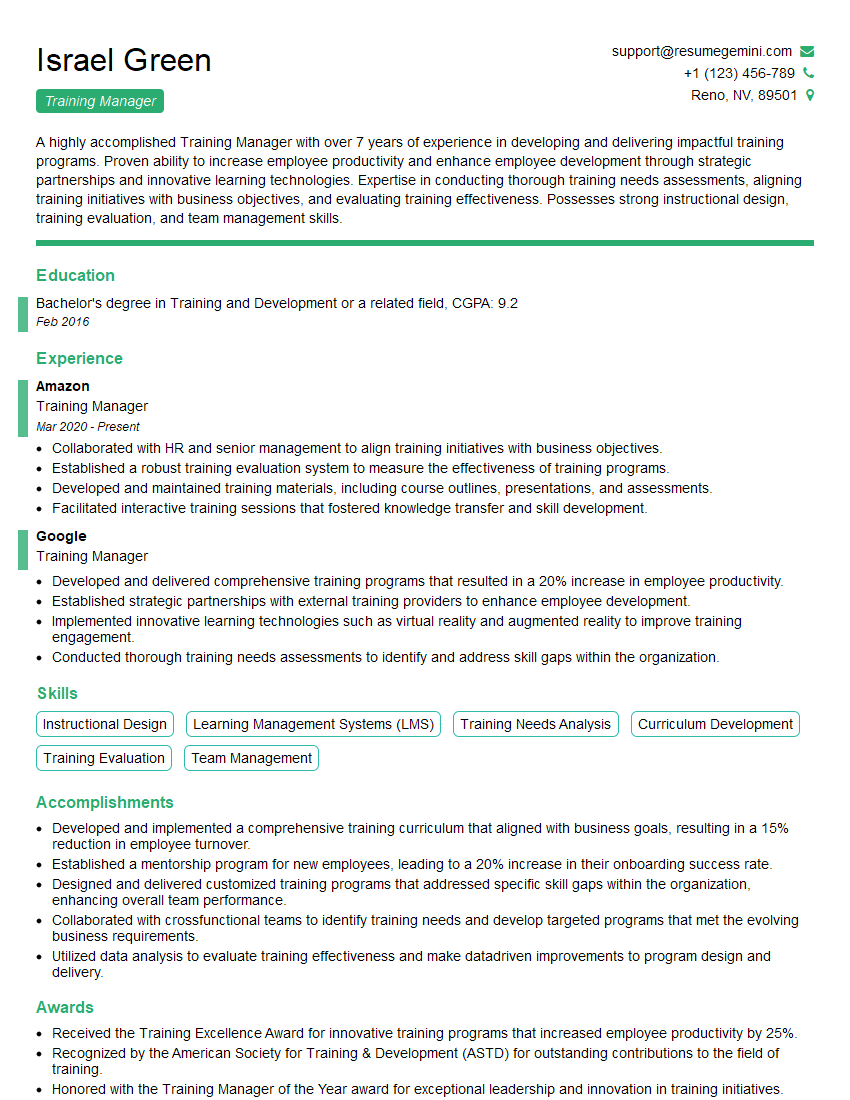
Training Manager Resume Sample
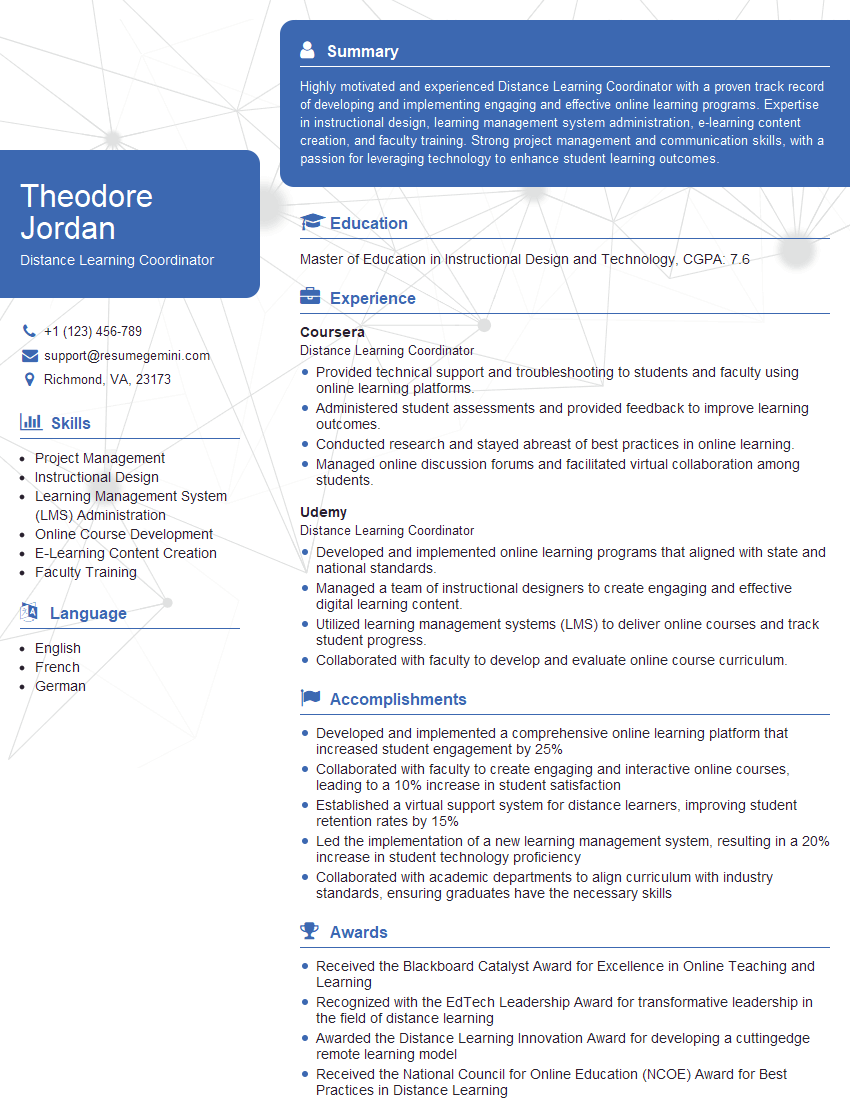
Distance Learning Coordinator Resume Sample
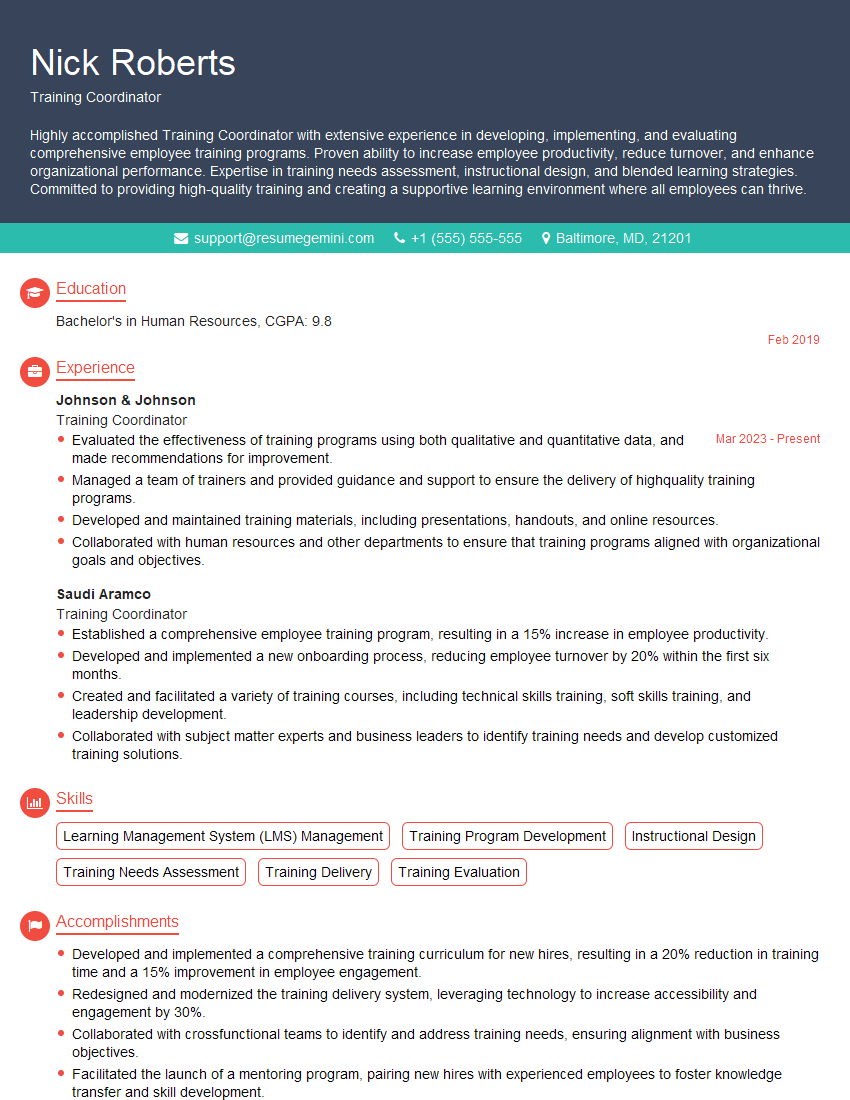
Training Coordinator Resume Sample
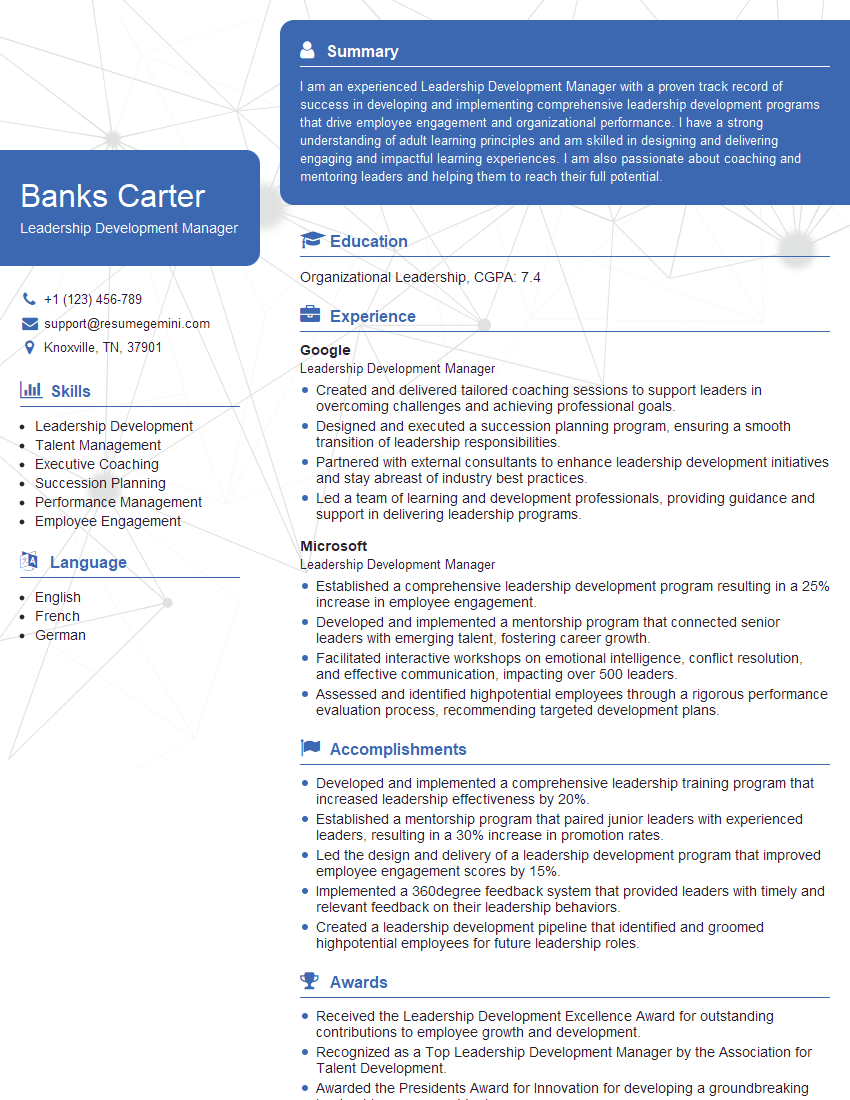
Leadership Development Manager Resume Sample
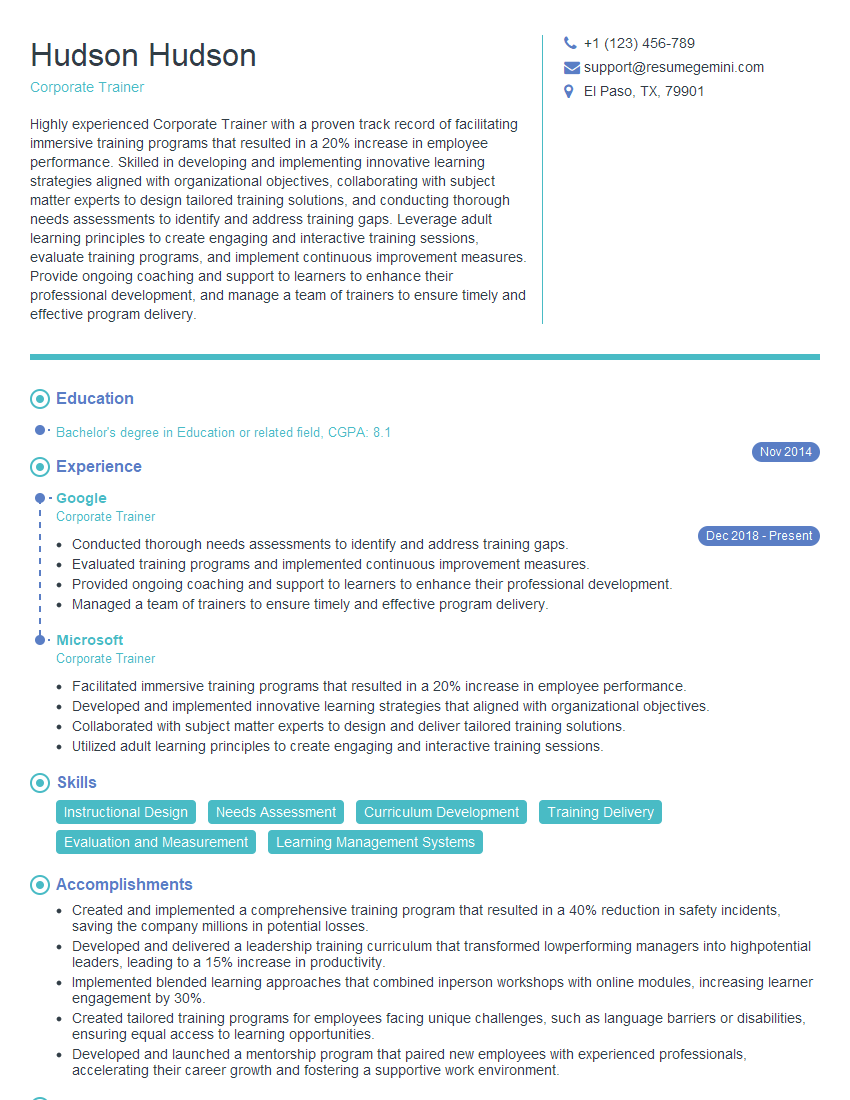
Corporate Trainer Resume Sample

Curriculum Developer Resume Sample
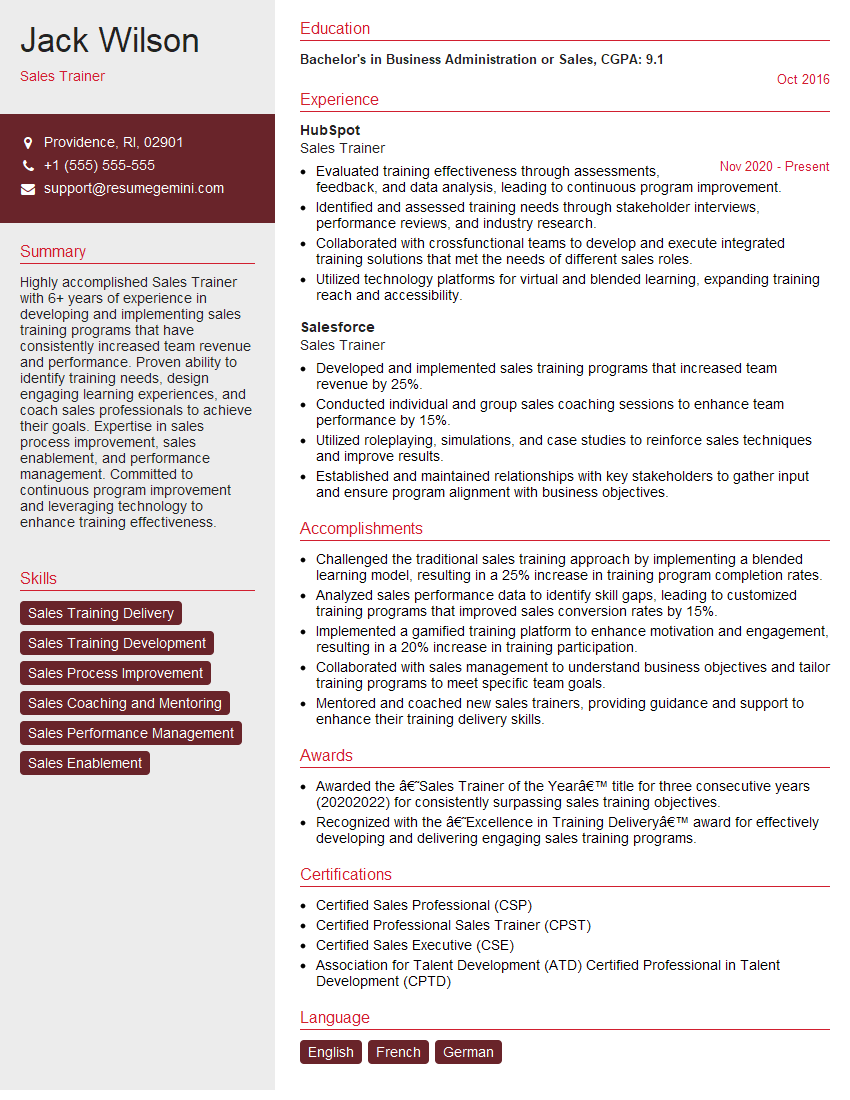
Sales Trainer Resume Sample
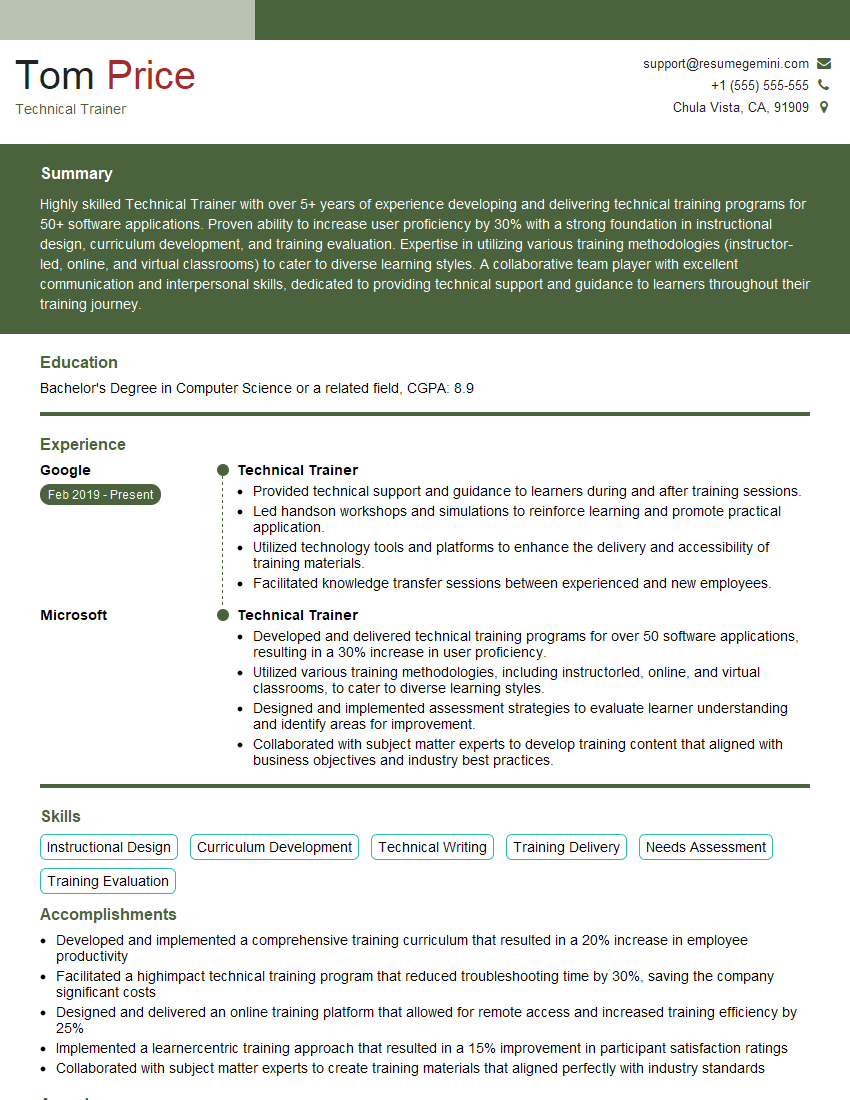
Technical Trainer Resume Sample

Training Specialist Resume Sample

Adult Education Instructor Resume Sample
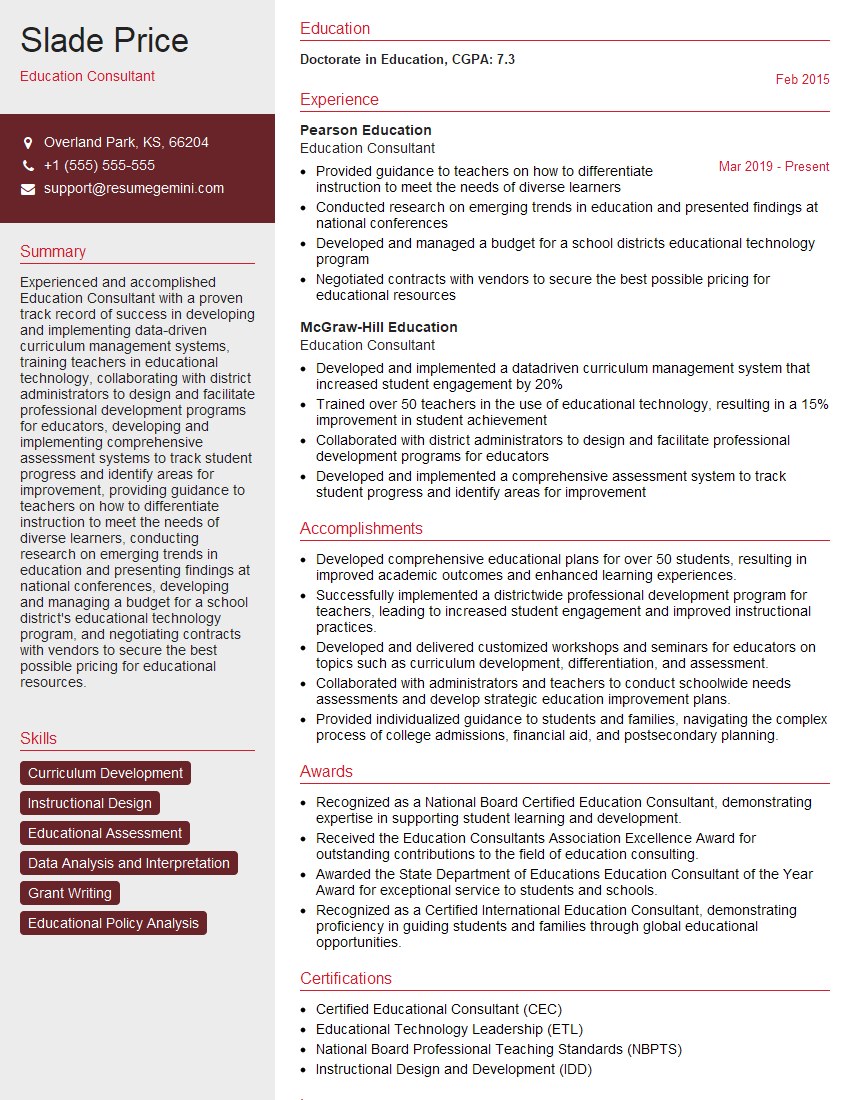
Education Consultant Resume Sample
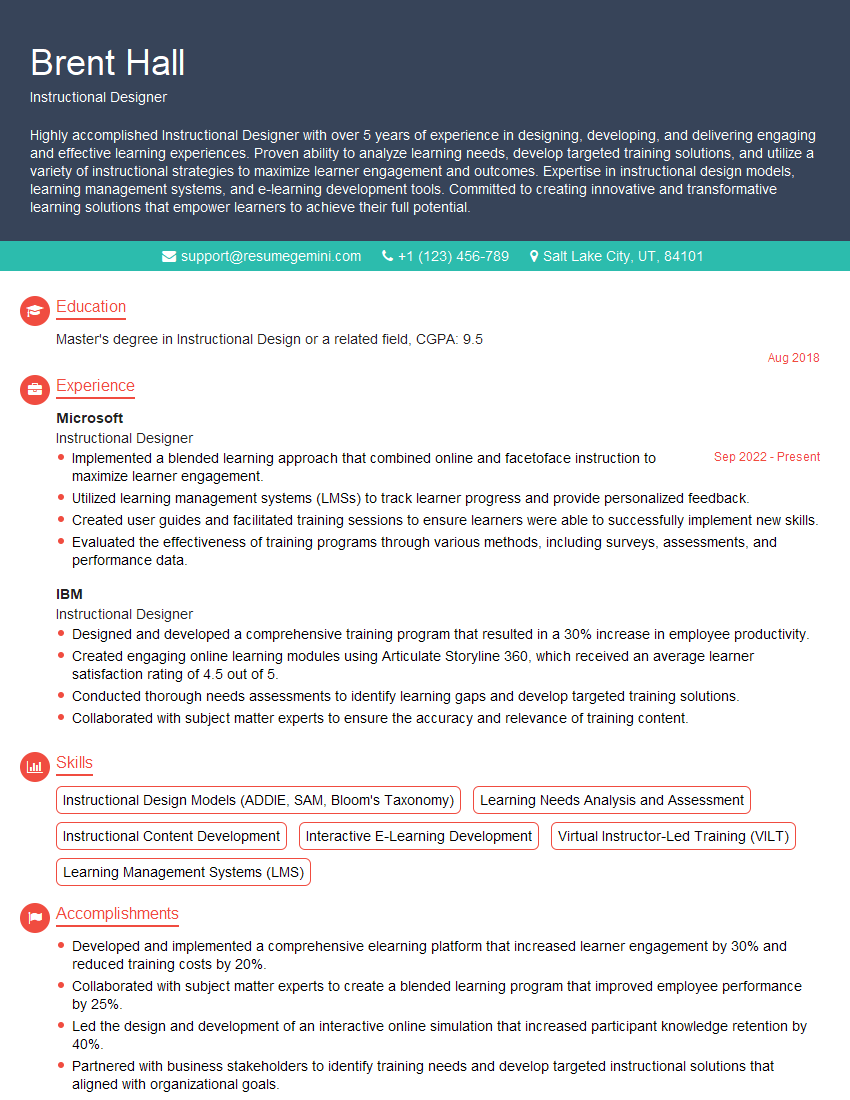
Instructional Designer Resume Sample
Explore more articles
Users Rating of Our Blogs
Share Your Experience
We value your feedback! Please rate our content and share your thoughts (optional).
What Readers Say About Our Blog
Very informative content, great job.
good