Interviews are more than just a Q&A session—they’re a chance to prove your worth. This blog dives into essential Product Safety Incident Investigation interview questions and expert tips to help you align your answers with what hiring managers are looking for. Start preparing to shine!
Questions Asked in Product Safety Incident Investigation Interview
Q 1. Describe your experience conducting root cause analyses for product safety incidents.
Root cause analysis (RCA) in product safety is crucial for understanding why an incident occurred, not just what happened. My experience involves employing various techniques to systematically identify the underlying causes, going beyond surface-level observations. This often involves a combination of methods like the ‘5 Whys,’ fault tree analysis, and fishbone diagrams. For example, in investigating a child’s toy that malfunctioned and caused injury, I wouldn’t simply stop at ‘the toy broke.’ I’d delve deeper: Why did it break? Was it due to a faulty design, substandard materials, or improper manufacturing? Why were those issues present? This iterative process helps uncover systemic problems requiring corrective action. Another instance involved a faulty electrical appliance; RCA revealed a design flaw in the thermal protection system, leading to overheating and fire. This highlighted the need for robust design reviews and rigorous testing protocols.
Q 2. Explain the process you follow to investigate a product safety incident.
Investigating a product safety incident follows a structured approach. First, I secure the scene (if applicable) and gather preliminary information, including witness statements and any initial evidence. Then, a detailed timeline is established, outlining the sequence of events. Next, the incident is meticulously documented, including photographs, videos, and any physical evidence. A team is assembled comprising experts in relevant fields (engineering, materials science, etc.). We then conduct interviews, analyze data, and apply appropriate analytical techniques (like RCA) to identify the root cause. Finally, the findings are compiled into a comprehensive report with recommendations for corrective and preventative actions. A crucial aspect is ensuring objectivity and impartiality throughout the investigation.
Q 3. What are the key regulatory requirements you consider during an investigation?
Regulatory requirements heavily influence product safety incident investigations. Compliance with standards like those set by the Consumer Product Safety Commission (CPSC) in the US, or the European Union’s General Product Safety Directive, is paramount. These regulations dictate reporting procedures, investigation methodologies, and documentation requirements. For instance, the CPSC mandates reporting certain types of injuries or hazards, and dictates the information needed in those reports. International standards, like ISO 14971 (risk management), also guide the process, influencing how we assess and mitigate risks. Non-compliance can lead to significant legal and financial consequences, so adhering to the applicable regulations is absolutely essential.
Q 4. How do you determine the scope of a product safety incident investigation?
Defining the scope of an investigation is critical to ensure efficiency and effectiveness. It’s determined based on several factors: the severity of the incident (number of injuries, potential for widespread harm), the nature of the product (complexity, potential for replication), and the regulatory requirements (mandatory reporting thresholds). For a minor incident with a low-risk product, the scope might be limited to immediate corrective actions. Conversely, a major incident with a high-risk product may require an extensive investigation involving multiple teams, external experts, and comprehensive testing. The scope is always documented clearly and reviewed to ensure it addresses all relevant aspects.
Q 5. What methods do you use to collect and analyze evidence during an investigation?
Evidence collection and analysis are central to a successful investigation. This involves various methods, including:
- Physical examination: Inspecting the product, identifying defects, and preserving evidence.
- Data acquisition: Gathering information from electronic control units (ECUs), sensors, or embedded systems.
- Witness interviews: Conducting structured interviews with individuals involved in the incident.
- Document review: Examining design specifications, manufacturing records, and user manuals.
- Testing and analysis: Conducting laboratory tests to assess material properties, mechanical strength, or electrical characteristics.
Q 6. How do you identify and prioritize potential hazards associated with a product?
Hazard identification and prioritization involve a systematic approach. I utilize Hazard and Operability Studies (HAZOP), Failure Mode and Effects Analysis (FMEA – discussed further below), and fault tree analysis to systematically identify potential hazards. These methods look at various failure modes, potential consequences, and the likelihood of those failures happening. Prioritization then involves a risk assessment, considering both the severity of potential harm and the probability of occurrence. A risk matrix helps visualize this, enabling us to focus efforts on addressing the most critical hazards first. For example, a sharp edge on a toy might be prioritized higher than a minor cosmetic defect, due to the potential for significant injury.
Q 7. Explain your experience with conducting Failure Mode and Effects Analysis (FMEA).
FMEA (Failure Mode and Effects Analysis) is a proactive risk assessment technique I use extensively. It involves systematically identifying potential failure modes in a product or process, evaluating their effects, and determining the severity, occurrence, and detectability of these failures. This analysis results in a risk priority number (RPN) for each failure mode, guiding prioritization of corrective actions. For instance, in analyzing a medical device, we’d examine each component for potential failures, such as a pump malfunctioning or a sensor failing. The severity of each failure (e.g., patient injury, death) is assessed, along with its likelihood of occurring and the chance of detection before it causes harm. A high RPN indicates a high-risk failure mode requiring immediate attention. The outcome is a prioritized list of design improvements or process changes aimed at reducing the risk associated with these potential failures.
Q 8. How do you determine the appropriate corrective actions to prevent future incidents?
Determining appropriate corrective actions to prevent future product safety incidents is a crucial step, demanding a thorough understanding of the root cause. It’s not simply about fixing the immediate problem; it’s about preventing similar incidents across the entire product lifecycle. This involves a multi-step process.
- Root Cause Analysis: We use techniques like the ‘5 Whys’ to drill down to the fundamental cause of the incident, going beyond superficial explanations. For example, if a toy breaks easily, the initial answer might be ‘poor material’. But the ‘5 Whys’ might reveal the root cause as ‘inadequate quality control checks during material sourcing’.
- Corrective Actions: Once the root cause is identified, we develop specific, measurable, achievable, relevant, and time-bound (SMART) corrective actions. This might involve redesigning the product, improving manufacturing processes, enhancing quality control procedures, or revising training materials for employees.
- Verification and Validation: We must then verify that the corrective actions are effective. This could involve testing the redesigned product, auditing manufacturing processes, or conducting employee competency assessments. We need to ensure the solution is robust and durable.
- Documentation: Every step, from the initial incident report to the final corrective action implementation and verification, is meticulously documented. This creates an auditable trail and provides valuable lessons learned for future prevention.
For instance, in an incident involving a faulty power cord on a consumer electronic device, identifying the root cause might reveal a supplier using sub-standard materials. The corrective action would then be switching to a higher-quality supplier and implementing stricter incoming material inspection protocols.
Q 9. Describe your experience with product recall procedures and best practices.
My experience with product recall procedures encompasses all phases, from initial assessment to post-recall analysis. Best practices center around speed, transparency, and customer focus.
- Rapid Assessment: A swift evaluation of the risk is paramount. This involves assessing the severity of the hazard, the number of affected units, and potential health consequences. Decisions about a recall need to be made swiftly but with careful consideration.
- Communication Plan: A clear and comprehensive communication plan is critical. This involves notifying regulatory bodies, distributors, retailers, and most importantly, consumers. Clear and concise language, multiple communication channels (website, email, phone), and multilingual support are crucial for effectiveness.
- Recall Execution: The recall itself should be efficiently managed, with clear instructions on how consumers can return the faulty product and receive a replacement or refund. Logistics must be meticulously planned to handle large quantities of returned goods.
- Post-Recall Analysis: Following the recall, a thorough analysis is conducted to understand what went wrong, identify gaps in the product safety management system, and implement preventive measures to avoid future recurrences. Data analysis from the recall itself is invaluable in preventing similar problems.
In one case, I was involved in a recall of children’s toys with small parts that posed a choking hazard. We implemented a multi-channel communication strategy, including direct mail, social media, and public service announcements, and established a dedicated customer service line to field inquiries. The post-recall analysis led to improved design standards and stricter quality control checks in the manufacturing process.
Q 10. How do you communicate findings and recommendations to stakeholders?
Communicating findings and recommendations effectively is key to successful incident prevention. I utilize various methods tailored to the audience.
- Formal Reports: Detailed reports are prepared for internal stakeholders, including management and engineering teams. These reports include the incident description, investigation methodology, root cause analysis, corrective actions, and recommendations for improved safety practices. They are objective, factual, and evidence-based.
- Executive Summaries: Concise summaries highlight key findings and recommendations for senior management. They focus on the impact and necessary actions, without unnecessary technical details.
- Presentations: I use presentations to communicate findings to larger audiences, such as company-wide meetings or regulatory agencies. These presentations utilize visual aids to enhance understanding.
- Informal Communication: Open communication channels are maintained throughout the investigation, providing regular updates to stakeholders. This builds trust and ensures everyone is informed.
I always ensure the communication is clear, concise, and tailored to the audience’s technical understanding. Using simple language and visual aids can significantly enhance comprehension.
Q 11. How do you manage conflicting priorities during an investigation?
Managing conflicting priorities during an investigation requires careful prioritization and clear communication. The investigation’s primary objective remains uncovering the root cause and implementing effective corrective actions to prevent future harm.
- Prioritization Matrix: A prioritization matrix can help weigh the urgency and importance of different tasks. This ensures that critical tasks related to safety are addressed first.
- Resource Allocation: Allocate resources (personnel, time, budget) effectively to ensure that the most critical tasks are completed efficiently. This might involve seeking additional resources if needed.
- Communication and Collaboration: Open communication with all stakeholders is vital. It helps to manage expectations and ensure everyone understands the prioritization strategy.
- Escalation Protocol: If conflicting priorities cannot be resolved internally, an escalation protocol should be in place to ensure timely decision-making at a higher level.
For example, if a parallel project demands resources needed for the investigation, I would communicate the potential safety implications of delaying the investigation and advocate for the necessary resources to ensure the timely and thorough completion of the investigation.
Q 12. What are the key elements of a comprehensive product safety incident report?
A comprehensive product safety incident report includes several key elements to provide a complete and accurate account of the event.
- Incident Description: A clear and concise description of the incident, including date, time, location, and involved parties.
- Product Information: Detailed information about the product involved, including model number, serial number, and manufacturing date.
- Witness Accounts: Statements from witnesses, if available, detailing their observations of the incident.
- Evidence Collection: Documentation of all evidence collected, including photographs, videos, and physical samples of the product.
- Root Cause Analysis: A detailed analysis of the root cause of the incident, using appropriate investigative techniques.
- Corrective Actions: A clear outline of the corrective actions taken or planned to prevent similar incidents.
- Recommendations: Recommendations for improvements to product design, manufacturing processes, or safety procedures.
- Lessons Learned: A summary of the lessons learned from the incident and how these lessons can be applied to prevent future incidents.
Think of it like a detective’s case file – everything needs to be meticulously documented and easily accessible for future review and analysis. A well-written report facilitates efficient communication and informed decision-making.
Q 13. How do you handle sensitive or confidential information during an investigation?
Handling sensitive or confidential information during an investigation requires strict adherence to privacy regulations and company policies.
- Data Security: All sensitive data must be securely stored and accessed only by authorized personnel. This includes using secure storage systems, encryption, and access control measures.
- Confidentiality Agreements: Confidentiality agreements should be in place with all involved parties, ensuring that sensitive information is not disclosed without proper authorization.
- Data Anonymization: Whenever possible, data should be anonymized to protect the identities of individuals involved. This might involve removing identifying information while preserving the essential details of the incident.
- Compliance with Regulations: All actions must comply with relevant data privacy regulations, such as GDPR or CCPA. This includes obtaining necessary consents and adhering to data retention policies.
For instance, if an incident involves customer health information, strict adherence to HIPAA regulations is paramount. We’d ensure that all data is handled securely and only accessed by authorized personnel on a need-to-know basis.
Q 14. Explain your experience working with different types of safety testing and analysis.
My experience with safety testing and analysis is broad, encompassing various methodologies and technologies.
- Mechanical Testing: This involves testing the physical properties of products, such as strength, durability, and fatigue resistance. Examples include tensile testing, impact testing, and fatigue testing.
- Electrical Testing: This focuses on the electrical safety aspects of products, including insulation resistance, dielectric strength, and ground continuity. We use specialized equipment like oscilloscopes and multimeters.
- Chemical Testing: This involves analyzing the chemical composition of materials used in products to ensure they meet safety standards. This can include flammability testing and toxicity analysis.
- Environmental Testing: This assesses how products perform under various environmental conditions, including temperature, humidity, and vibration. We often use environmental chambers to simulate different conditions.
- Failure Analysis: This involves using advanced techniques like microscopy and spectroscopy to investigate the causes of product failures. This helps determine the root cause of an incident.
I’ve utilized these techniques in numerous investigations, from analyzing the failure of a pressure vessel to determining the cause of an electrical short in a consumer electronic device. The choice of testing methods depends heavily on the nature of the product and the type of incident.
Q 15. How familiar are you with various safety standards (e.g., ISO 14971)?
I’m very familiar with various safety standards, particularly ISO 14971, which is the cornerstone of risk management for medical devices. My understanding extends beyond simply knowing the clauses; I’ve applied its principles across numerous investigations involving diverse product categories. This includes understanding the risk management process, from hazard identification and risk analysis to risk evaluation and control. I’m also proficient in other relevant standards like IEC 60601 (for medical electrical equipment) and relevant industry-specific standards depending on the product in question. For example, I’m also familiar with the requirements outlined in the Consumer Product Safety Improvement Act (CPSIA) in the United States.
- ISO 14971: This standard guides the process of systematically identifying, analyzing, and evaluating hazards associated with a medical device throughout its lifecycle. It’s crucial in determining appropriate risk control measures.
- IEC 60601: This standard focuses on the safety of medical electrical equipment, specifying requirements for design, testing, and manufacturing.
- Industry-Specific Standards: Understanding the nuances of standards specific to certain industries (automotive, aerospace, etc.) is essential for comprehensive investigations.
Knowing these standards isn’t just about ticking boxes; it’s about using them to build a robust and defensible investigation, ensuring the safety and well-being of consumers.
Career Expert Tips:
- Ace those interviews! Prepare effectively by reviewing the Top 50 Most Common Interview Questions on ResumeGemini.
- Navigate your job search with confidence! Explore a wide range of Career Tips on ResumeGemini. Learn about common challenges and recommendations to overcome them.
- Craft the perfect resume! Master the Art of Resume Writing with ResumeGemini’s guide. Showcase your unique qualifications and achievements effectively.
- Don’t miss out on holiday savings! Build your dream resume with ResumeGemini’s ATS optimized templates.
Q 16. How do you ensure the accuracy and reliability of your investigation findings?
Ensuring accuracy and reliability is paramount. My approach is multifaceted and centers around rigorous methodology. This includes:
- Multiple Data Sources: I gather evidence from various sources – witness statements, product examination reports, manufacturing records, usage data, and technical specifications. Triangulating information from multiple sources helps validate findings and identify inconsistencies.
- Chain of Custody: Maintaining a strict chain of custody for all physical evidence is crucial to ensure its integrity and admissibility. This involves meticulous documentation and handling procedures.
- Peer Review: My findings are always subject to peer review by other experienced investigators. This process helps identify potential biases or oversights and strengthens the overall credibility of the report.
- Data Analysis Techniques: I utilize various data analysis techniques, including statistical analysis where appropriate, to identify patterns and trends within the collected data. This helps move beyond anecdotal evidence and identify root causes.
- Transparent Documentation: Detailed and transparent documentation is crucial. All steps of the investigation, from initial hypothesis to final conclusions, are carefully documented, allowing for scrutiny and reproducibility.
Think of it like building a house – you wouldn’t build it on a shaky foundation. Similarly, a reliable investigation needs a solid foundation of accurate and thoroughly documented evidence.
Q 17. Describe a situation where you had to make a difficult decision during an investigation.
In one investigation involving a children’s toy, we discovered a potential choking hazard related to a small detachable part. The initial assessment suggested a significant risk, requiring an immediate recall. However, the cost of a recall was immense, potentially impacting the company’s viability. The decision to recommend a recall versus implementing less drastic corrective actions was incredibly difficult.
We weighed the potential risks (severe injury or fatality) against the financial consequences of a recall. We used a formal risk assessment framework (following ISO 14971) and presented our findings clearly, including quantifiable risk estimations, to all stakeholders. Ultimately, the severity and likelihood of the hazard outweighed the economic considerations, leading to a recommended recall. This difficult decision emphasized the ethical responsibilities of product safety professionals: the safety of the consumer must always be prioritized.
Q 18. How do you handle pressure and tight deadlines during critical investigations?
Handling pressure and tight deadlines requires a structured and organized approach. I prioritize tasks using a risk-based approach, focusing first on the most critical aspects of the investigation. Effective time management techniques, clear communication with the team, and regular progress updates are vital. Utilizing appropriate investigation tools and software can also streamline the process, saving valuable time.
Furthermore, I’ve learned the importance of proactive communication. Keeping stakeholders informed about potential delays and challenges, rather than reacting to them, helps manage expectations and maintain collaborative spirit. Prioritizing sleep and self-care is equally important; burnout is a real risk in high-pressure situations.
Q 19. How do you work with multidisciplinary teams during an investigation?
Working with multidisciplinary teams is essential in complex investigations. Effective teamwork hinges on clear communication and well-defined roles. I ensure everyone understands the investigation’s scope, objectives, and timelines. Regular team meetings, facilitated using appropriate collaboration tools, are key to maintaining open communication and ensuring everyone is on the same page. I focus on fostering a collaborative environment where individuals feel comfortable sharing ideas and expressing concerns. Effective conflict resolution skills are vital to address any disagreements or differing viewpoints that might arise.
Think of it as an orchestra – each musician has a specific role, but their coordinated performance creates a harmonious result. Similarly, each member of the investigation team contributes their unique expertise, and their coordinated efforts lead to a comprehensive and effective investigation.
Q 20. How do you assess the effectiveness of implemented corrective actions?
Assessing the effectiveness of corrective actions requires a structured approach. This includes monitoring the implementation of the corrective actions, reviewing relevant data (e.g., defect rates, customer complaints) to check for improvement, and conducting follow-up investigations if necessary. It is also important to verify that the implemented corrective action has not introduced new hazards or problems. I often use statistical process control methods to track trends and gauge the effectiveness of changes over time. For example, I may use control charts to monitor the number of product defects after a corrective action has been implemented.
The goal is to ensure that the corrective action not only addresses the immediate problem but also prevents similar incidents from occurring in the future.
Q 21. Describe your experience with data analysis techniques used in product safety investigations.
Data analysis plays a crucial role in identifying root causes and trends. My experience encompasses a variety of techniques, depending on the data available. This includes:
- Descriptive Statistics: Calculating summary statistics like means, medians, and standard deviations to understand the distribution of data, such as the frequency of defects or failure rates.
- Inferential Statistics: Using statistical tests (e.g., hypothesis testing, regression analysis) to draw conclusions about the population based on sample data. For instance, determining if there’s a statistically significant relationship between a specific design feature and product failures.
- Data Visualization: Creating charts and graphs (histograms, scatter plots, etc.) to visualize data patterns and trends, making it easier to identify root causes and communicate findings effectively.
- Fault Tree Analysis (FTA): A deductive reasoning technique used to systematically identify and analyze the potential causes of a system failure. This technique can be particularly helpful in unraveling complex product failures.
Software tools like statistical packages (R, SPSS) and specialized investigation software are essential for efficient data analysis. The choice of technique depends heavily on the nature of the data and the investigation objectives.
Q 22. What are your strengths and weaknesses in this field?
My greatest strength lies in my methodical and analytical approach to investigations. I’m adept at identifying patterns, dissecting complex information, and formulating logical conclusions, even with incomplete data. I also excel at communicating complex technical information to diverse audiences, ensuring everyone understands the findings and recommendations. A weakness I’m actively working on is delegating tasks effectively during high-pressure situations. I tend to want to oversee every detail myself, but I recognize the importance of building strong teams and trusting their expertise. I’m improving this by implementing structured delegation processes and regularly checking in with team members, ensuring clear communication and support.
Q 23. How do you stay current with relevant safety regulations and best practices?
Staying current is crucial in this rapidly evolving field. I actively subscribe to and regularly review publications from organizations like the CPSC (Consumer Product Safety Commission), FDA (Food and Drug Administration), and relevant industry associations. I participate in professional development courses and conferences, attending webinars and workshops on new regulations and investigation techniques. I also actively network with other professionals in the field through professional organizations, exchanging insights and staying informed about emerging trends and best practices. For example, I recently completed a course on the latest updates to the ISO 14971 standard for risk management of medical devices. This ensures I’m applying the most current and effective methods to my work.
Q 24. Describe your experience with different incident reporting software or systems.
My experience encompasses various incident reporting software, including both proprietary systems and cloud-based solutions. I’ve worked with systems such as Jira for tracking and managing reported incidents, Salesforce for CRM related to customer complaints, and dedicated product safety databases tailored to specific industry regulations. I’m proficient in data extraction, analysis, and reporting from these systems. In one case, migrating incident reports from a legacy system to a new cloud-based solution improved efficiency by 30% by enabling real-time data analysis and collaboration among team members. The experience taught me the importance of choosing software that aligns with the specific needs of the investigation and supports efficient collaboration and data management.
Q 25. Explain your understanding of legal and ethical considerations in product safety investigations.
Legal and ethical considerations are paramount in product safety investigations. We must adhere strictly to data privacy regulations like GDPR and CCPA, ensuring confidential information is handled responsibly and securely. Maintaining objectivity and impartiality throughout the investigation is crucial, avoiding biases that could compromise the integrity of the findings. Transparency with stakeholders, while respecting confidentiality where required, is key. We must also be mindful of potential legal liabilities and ensure our investigations comply with all relevant laws and regulations. For instance, in a case involving potential legal action, it’s crucial to meticulously document every step of the investigation and preserve all evidence following chain-of-custody protocols.
Q 26. How would you handle a situation where a product defect is discovered but the cause is unknown?
Discovering a defect without knowing the cause requires a systematic approach. We start by thoroughly documenting the defect, gathering all available data including product specifications, manufacturing records, and user reports. We’d then employ a structured root cause analysis methodology, such as the ‘5 Whys’ or a Fault Tree Analysis, to systematically explore potential causes. We’d also utilize failure analysis techniques, potentially involving laboratory testing and expert consultation to identify the underlying mechanism of failure. In one instance, a seemingly random product failure was traced back to a subtle change in a supplier’s raw material after a thorough analysis involving material testing and supplier audits.
Q 27. How do you manage expectations of stakeholders during a complex investigation?
Managing stakeholder expectations in a complex investigation requires proactive and transparent communication. Regular updates, tailored to the audience’s level of technical understanding, are vital. Setting realistic timelines and clearly communicating potential delays, along with the reasons behind them, fosters trust. We also establish clear communication channels, providing a single point of contact for each stakeholder group. We use regular progress reports and meetings to keep stakeholders informed and address their concerns. In a recent investigation, maintaining open communication prevented unnecessary anxiety and ensured all parties remained cooperative and supportive of the process.
Q 28. Describe your experience with conducting interviews with witnesses and other involved parties.
Interviewing witnesses and involved parties is a critical aspect of my work. I employ a structured approach, starting with open-ended questions to understand the overall context before delving into specific details. I use active listening techniques, paying close attention to both verbal and nonverbal cues. I meticulously document the interviews, including verbatim transcripts and observations. I also ensure all interviews are conducted ethically, obtaining consent and clearly explaining the purpose and scope of the interview. Building rapport and fostering trust is essential to obtain accurate and complete information. In one case, building a trusting relationship with a hesitant witness led to uncovering crucial information that significantly impacted the outcome of the investigation.
Key Topics to Learn for Product Safety Incident Investigation Interview
- Incident Classification and Reporting: Understanding different incident severity levels, regulatory reporting requirements (e.g., FDA, CPSC), and effective communication protocols.
- Root Cause Analysis Techniques: Applying methodologies like the “5 Whys,” fault tree analysis, fishbone diagrams, and HAZOP to identify the underlying causes of incidents.
- Data Collection and Analysis: Mastering techniques for gathering evidence (e.g., interviews, physical examination, documentation review), analyzing data effectively, and presenting findings clearly.
- Corrective and Preventive Actions (CAPA): Developing and implementing effective CAPA plans to prevent recurrence of similar incidents, including design changes, process improvements, and training programs.
- Incident Investigation Documentation: Maintaining meticulous records, including photographic evidence, witness statements, and detailed analysis reports, complying with legal and regulatory requirements.
- Risk Assessment and Management: Evaluating potential hazards associated with products, implementing risk mitigation strategies, and understanding the principles of risk-based decision-making.
- Legal and Regulatory Compliance: Staying abreast of relevant regulations and standards related to product safety and incident investigation in your industry.
- Communication and Collaboration: Effectively communicating findings to stakeholders (internal and external), collaborating with cross-functional teams, and presenting complex information concisely.
- Problem-Solving and Critical Thinking: Demonstrating strong analytical and problem-solving skills to navigate complex scenarios and arrive at logical conclusions.
- Ethical Considerations: Understanding the ethical implications of product safety incidents and maintaining objectivity during the investigation process.
Next Steps
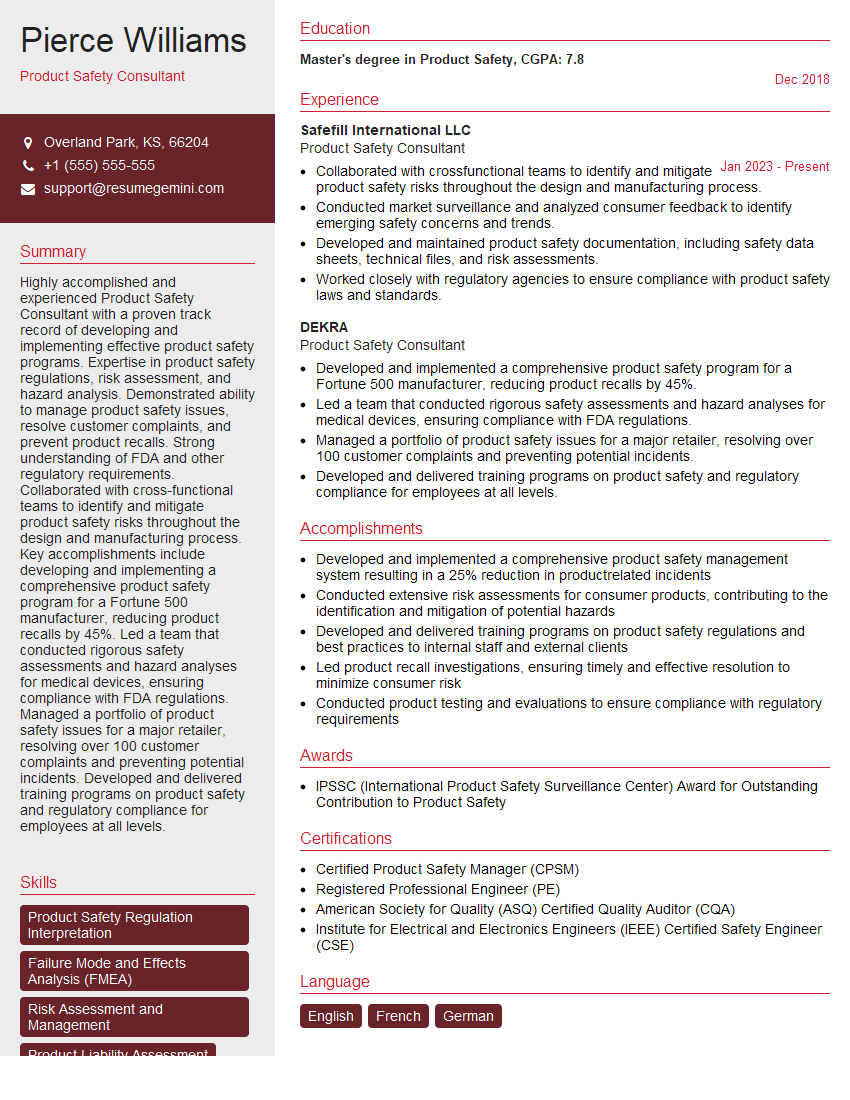
Mastering Product Safety Incident Investigation is crucial for career advancement within product development, manufacturing, and quality assurance. A strong understanding of these principles demonstrates commitment to safety and opens doors to leadership roles. To increase your job prospects, create an ATS-friendly resume that highlights your relevant skills and experience. We strongly recommend using ResumeGemini to build a professional and impactful resume tailored to your experience. ResumeGemini provides examples of resumes specifically designed for Product Safety Incident Investigation professionals, helping you showcase your expertise effectively.
Explore more articles
Users Rating of Our Blogs
Share Your Experience
We value your feedback! Please rate our content and share your thoughts (optional).
What Readers Say About Our Blog
Very informative content, great job.
good