Preparation is the key to success in any interview. In this post, we’ll explore crucial Product Safety Regulation Interpretation interview questions and equip you with strategies to craft impactful answers. Whether you’re a beginner or a pro, these tips will elevate your preparation.
Questions Asked in Product Safety Regulation Interpretation Interview
Q 1. Explain the difference between mandatory and voluntary product safety standards.
Mandatory and voluntary product safety standards differ significantly in their legal enforceability. Mandatory standards are legally required and compliance is enforced by government agencies. Failure to meet mandatory standards can result in penalties, including fines, product seizures, and even criminal charges. Think of mandatory safety standards like seatbelts in cars – they’re not optional; they’re legally mandated for consumer protection.
Voluntary standards, on the other hand, are not legally required. They represent industry best practices and are often developed by organizations like ANSI or ISO. Companies choose to adopt voluntary standards to demonstrate a commitment to quality and safety, enhancing their brand reputation and potentially gaining a competitive edge. For instance, a company might choose to adopt a voluntary standard for sustainable manufacturing processes, even if not legally obligated to do so. While not legally mandated, adhering to voluntary standards often reflects positively on the company’s image and can offer a higher level of safety for consumers.
Q 2. Describe your experience with ISO 9001 and its relevance to product safety.
My experience with ISO 9001 is extensive. I’ve been involved in numerous implementations and audits across diverse industries. ISO 9001 is a quality management system standard, not a direct product safety standard, but it plays a crucial role in building a robust framework for ensuring product safety. It provides a structured approach to identifying and managing risks throughout the product lifecycle, from design to delivery.
Specifically, ISO 9001’s emphasis on risk-based thinking is directly relevant to product safety. By implementing a quality management system, organizations can proactively identify potential hazards and implement controls to mitigate them. This includes processes for design reviews, supplier management, and continuous improvement, all of which contribute directly to a safer product. For example, through thorough documentation and process control as mandated by ISO 9001, we were able to identify a potential flaw in a manufacturing process that could have led to a product malfunction, and corrected it before any incidents occurred. This prevented a potential safety hazard and reinforced the importance of the standard.
Q 3. How would you interpret and apply the requirements of [Specific Regulation, e.g., RoHS]?
Let’s take RoHS (Restriction of Hazardous Substances) as an example. This directive restricts the use of certain hazardous materials in electrical and electronic equipment. Interpreting and applying RoHS involves several steps. First, understanding the scope – which specific substances are restricted and which product categories are covered is paramount. Then, you need to identify all materials used in the product and verify that their composition complies with the maximum permitted concentration limits specified by the directive. This often necessitates material declarations from suppliers.
Further, you must consider exemptions. RoHS allows for certain exemptions under specific circumstances. Careful documentation is essential, proving compliance through testing and maintaining detailed records of all materials used. Non-compliance can lead to hefty fines and market access restrictions. For example, during a recent project, we discovered that a component contained lead above the permitted level. We then worked with the supplier to find a compliant alternative and ensured thorough documentation to show that the updated product fully complied with RoHS.
Q 4. What is a hazard analysis and how is it conducted for product safety?
A hazard analysis is a systematic process to identify potential hazards associated with a product. It aims to proactively assess what could go wrong and how it might cause harm to users, bystanders, or the environment. It’s a crucial first step in designing a safe product. The process usually involves:
- Hazard Identification: Brainstorming potential hazards using techniques like checklists, fault tree analysis, or hazard and operability studies (HAZOP). This involves considering the entire product lifecycle, including manufacturing, use, and disposal.
- Hazard Characterization: Defining the severity and likelihood of each identified hazard. This helps prioritize which hazards require immediate attention.
- Hazard Control: Developing and implementing control measures to mitigate the identified hazards. These controls can be design changes, warnings, or operational procedures.
For example, in analyzing a children’s toy, we identified a potential choking hazard from small parts. Our hazard control measures included redesigning the toy to eliminate small parts, implementing robust quality control, and including a prominent warning label indicating the age appropriateness of the product. The complete documentation was then meticulously maintained.
Q 5. Describe your experience with risk assessment methodologies.
My experience encompasses a variety of risk assessment methodologies, including Failure Mode and Effects Analysis (FMEA), Fault Tree Analysis (FTA), and Bowtie analysis. FMEA is a widely used technique where potential failure modes are identified, their severity, occurrence, and detectability are assessed, and a risk priority number (RPN) is calculated. This allows focusing on the most critical risks first. FTA is a top-down approach that identifies the various events that could lead to a particular failure or undesirable outcome. Bowtie analysis integrates both hazard identification and consequence management, resulting in a clearer overall risk picture.
The choice of methodology depends on the specific product and its intended use. For complex systems, a combination of methods might be used. For example, in assessing the safety of a medical device, we employed FMEA to identify potential component failures and FTA to analyze system-level failures, providing a comprehensive understanding of the potential risks.
Q 6. How do you handle conflicting safety regulations from different jurisdictions?
Conflicting safety regulations from different jurisdictions are a common challenge in international trade. The solution involves a multi-pronged approach. First, a thorough understanding of all applicable regulations is crucial. This often requires expert legal and technical advice. Second, prioritizing the most stringent regulations is key. Compliance with the strictest standards will generally ensure compliance with less stringent ones.
Third, exploring opportunities for harmonization and seeking exemptions or waivers where possible is important. This involves close communication with regulatory bodies in different regions. Fourth, maintaining detailed documentation is essential to demonstrate compliance with all applicable regulations regardless of their origin, and to efficiently address any discrepancies that may arise from inconsistencies in the various legal frameworks. For example, if a product must comply with both EU and US regulations, we would adhere to the stricter requirements from both and document all the steps taken to comply with each set of rules.
Q 7. Explain your understanding of product recall procedures.
Product recall procedures are critical for protecting consumers and maintaining a company’s reputation. A recall is initiated when a product is found to present a significant safety risk. The process generally includes:
- Identifying the Problem: This involves identifying a defect or hazard that poses a risk to consumers.
- Notification: Informing relevant regulatory bodies and, importantly, consumers about the recall. This often includes public announcements and direct contact with consumers who purchased the affected product.
- Recall Strategy: Developing a plan to retrieve the affected products from the market and provide remedies to consumers (repair, replacement, or refund).
- Remedy Execution: Implementing the recall strategy efficiently and effectively, ensuring consumers are compensated appropriately.
- Post-Recall Analysis: Conducting a thorough analysis of the recall to identify the root cause of the defect and implement corrective actions to prevent similar incidents in the future.
Effective communication with consumers is crucial during a recall. A well-managed recall demonstrates corporate responsibility and minimizes potential negative impacts on the company’s reputation. We recently managed a recall where clear communication, quick response time and a user-friendly return process minimised the negative impact for our clients.
Q 8. How do you ensure product labeling complies with all relevant regulations?
Ensuring product labeling complies with regulations is crucial for consumer safety and legal compliance. It involves a multi-step process that begins with a thorough understanding of all applicable regulations, which vary depending on the product, its intended use, and the target market. This includes federal, state, and international regulations.
- Identify Applicable Regulations: First, I identify every relevant regulation. For example, a children’s toy needs to adhere to the Consumer Product Safety Improvement Act (CPSIA) in the US, while a food product requires FDA compliance. Different countries will have their own regulations.
- Label Content Review: Next, I meticulously review the proposed label against these regulations. This involves checking for mandatory information such as warnings, instructions for use, manufacturer details, material composition, country of origin, and any required certifications (e.g., CE mark in Europe). The placement, font size, and language of this information are also critical.
- Testing and Validation: Sometimes, labels require testing to validate claims (e.g., testing to prove waterproofness if a label claims waterproof capabilities). This ensures the label’s claims accurately reflect the product’s characteristics.
- Regular Updates: Regulations frequently change, so continuous monitoring is necessary. I use subscription services and actively check government websites to stay abreast of these updates. Any changes necessitate an immediate label revision.
For instance, I once worked on a project where a slight change in the chemical composition of a cleaning product triggered a mandatory revision of the safety warnings on the label. This seemingly small detail required a complete re-evaluation and reprint, highlighting the importance of vigilance.
Q 9. What is your experience with safety testing and certification processes?
My experience in safety testing and certification spans over [Number] years, covering a wide array of products from [Product categories]. I’m proficient in both internal testing procedures and engaging with third-party testing laboratories.
- Internal Testing: This involves conducting basic tests such as drop tests, impact resistance, flammability checks (using appropriate testing standards), and electrical safety tests (depending on the product type). I’m familiar with equipment like impact testers, flammability chambers, and multimeters.
- Third-Party Testing: Many products require testing by a nationally recognized testing laboratory (NRTL) to obtain certification. I have experience coordinating with these labs, selecting appropriate tests, interpreting their reports, and addressing any findings. This ensures compliance with relevant standards and allows the product to bear the appropriate certification marks (e.g., UL, ETL, CSA).
- Standard Familiarity: I possess deep knowledge of various safety standards, including those issued by organizations like UL, IEC, ISO, and ASTM. I understand how these standards apply in different contexts and can effectively leverage them during testing and certification processes.
For example, in a previous role, I managed the certification process for a new line of power tools. This involved selecting the appropriate NRTL, coordinating testing procedures, ensuring the compliance of documentation, and navigating any necessary revisions for approval. The successful certification demonstrated our commitment to product safety and allowed us to confidently launch the products into the market.
Q 10. Describe your experience with conducting internal audits for product safety compliance.
Conducting internal audits for product safety compliance is a proactive measure to prevent potential incidents and maintain adherence to regulations. These audits are critical for identifying weaknesses and areas for improvement within a company’s safety procedures.
- Audit Planning: My approach begins with carefully planning the audit’s scope, identifying specific areas to review, and establishing a clear audit schedule. This often includes reviewing design documents, test reports, manufacturing processes, and quality control procedures.
- On-Site Assessments: I conduct on-site assessments to visually inspect products, facilities, and equipment. This allows me to identify any safety hazards or non-conformances with established standards and procedures.
- Documentation Review: A comprehensive review of all relevant documentation is essential to ensure records are complete, accurate, and compliant with regulations. This might include safety data sheets (SDS), product specifications, and testing results.
- Corrective Actions: Any non-conformances identified during the audit result in the development of corrective actions. I work with the relevant teams to implement these actions and verify their effectiveness.
- Reporting: The audit concludes with a detailed report summarizing the findings, corrective actions, and recommendations for improvement. This report is shared with relevant stakeholders.
In a previous audit, we uncovered a small but significant gap in our testing procedures for a particular component. The corrective action involved revising the testing protocols and retraining our staff. This prevented potential safety issues down the line and highlighted the value of proactive internal audits.
Q 11. How would you investigate a product safety incident?
Investigating a product safety incident requires a systematic and thorough approach. The goal is to identify the root cause of the incident, prevent recurrence, and address any necessary corrective actions.
- Incident Report: The initial step is to gather all available information through comprehensive incident reports. These reports should detail the circumstances of the incident, any injuries sustained, and any witness testimonies.
- Product Examination: A detailed examination of the product involved is essential. This may include visual inspection, destructive testing, or chemical analysis to determine whether any product defects contributed to the incident.
- Review of Processes: I review the entire product lifecycle, from design and manufacturing to distribution and use, to determine whether any procedural failures might have been a factor.
- Data Analysis: Statistical analysis of similar incidents (if any exist) can help uncover patterns or trends that may suggest underlying problems.
- Corrective Actions: Once the root cause is identified, a plan of corrective actions must be developed and implemented. This might involve product recalls, design changes, improved manufacturing processes, or enhanced training programs.
- Documentation: Meticulous documentation throughout the investigation is essential for maintaining a clear and accurate record of all findings and actions.
For example, I investigated an incident involving a malfunctioning appliance. Through a combination of product examination, process review, and analysis of customer feedback, we discovered a design flaw in the electrical circuitry. This flaw led to a product recall and redesign, ultimately preventing future incidents.
Q 12. How do you stay current with changes in product safety regulations?
Staying current with changes in product safety regulations is an ongoing process. It requires a proactive and multi-faceted strategy.
- Subscription Services: I subscribe to industry-specific newsletters and regulatory updates from relevant government agencies (e.g., CPSC in the US, EC in Europe). This provides timely alerts about changes in regulations and upcoming deadlines.
- Professional Organizations: Active participation in professional organizations related to product safety provides access to continuing education opportunities, networking events, and publications that keep me informed about the latest developments and best practices.
- Government Websites: Regular monitoring of government websites, including those of regulatory bodies, is critical for accessing official updates, announcements, and newly published guidelines.
- Industry Events: Attending conferences, seminars, and workshops related to product safety keeps me abreast of current trends and emerging challenges in the field.
For example, the recent updates to the EU’s REACH regulation require careful monitoring to ensure compliance for any products containing specific chemical substances. I actively follow these updates and implement necessary changes in our internal processes and product specifications.
Q 13. Explain your experience with product safety documentation and record-keeping.
Effective product safety documentation and record-keeping are paramount for demonstrating compliance and facilitating efficient investigations in case of incidents. I have extensive experience in maintaining a comprehensive system for managing this information.
- Centralized System: A well-organized and centralized system (physical or digital) is crucial for easy access and retrieval of critical documents. This ensures version control and traceability of documents.
- Document Control: Procedures for document control must be in place to ensure that all documents are up-to-date, reviewed regularly, and readily available to relevant personnel.
- Types of Documents: The documentation I manage includes, but is not limited to, design specifications, test reports, certificates of compliance, safety data sheets (SDS), manufacturing records, quality control records, and incident reports.
- Data Security: I prioritize secure storage and access to sensitive information, adhering to all relevant data privacy regulations. This includes physical security measures for paper records and secure digital storage solutions.
- Retention Policies: A clearly defined document retention policy ensures compliance with legal and regulatory requirements, balancing retention needs with efficient record management.
In my experience, a well-managed documentation system not only streamlines audits but also makes incident investigations more efficient, allowing for quicker resolution and reduced risk.
Q 14. How do you communicate product safety risks and compliance issues to different stakeholders?
Communicating product safety risks and compliance issues effectively requires tailored strategies for different stakeholders. Clarity, transparency, and appropriate language are key.
- Management: For upper management, I provide concise reports summarizing key findings, risks, and potential financial impacts, focusing on strategic recommendations and resource allocation for corrective actions.
- Engineering/Manufacturing Teams: I communicate with these teams using technical language and specific details, focusing on practical solutions and process improvements for resolving safety concerns and preventing future incidents.
- Regulatory Bodies: Communication with regulatory agencies requires precise and comprehensive documentation, ensuring compliance with their specific reporting requirements and deadlines.
- Customers: Communication with customers about product safety risks requires clarity and empathy, using easily understood language and avoiding technical jargon. This often involves collaborating with marketing and customer service departments to ensure smooth and transparent communication.
- Internal Teams: Effective internal communication within the company ensures that everyone is informed about safety updates, risks, and implemented corrective actions. This often involves training sessions, email alerts, and internal communication platforms.
For instance, when we identified a potential risk in a product, I communicated the issue to management, emphasizing potential financial implications and liability. Simultaneously, I worked with the engineering team to resolve the issue, and with the marketing team to craft a clear and concise customer communication strategy.
Q 15. Describe your experience with managing product safety throughout the product lifecycle.
Managing product safety throughout a product’s lifecycle is a continuous process, demanding vigilance from concept to disposal. It involves proactively identifying and mitigating hazards at each stage.
- Design Phase: This critical stage requires thorough hazard analysis (e.g., using Failure Mode and Effects Analysis – FMEA) to identify potential risks. We incorporate safety features during design, ensuring compliance with relevant standards and regulations right from the start. For example, in designing a children’s toy, we’d ensure small parts are appropriately sized to prevent choking hazards.
- Manufacturing Phase: Robust quality control measures are crucial. Regular inspections and testing at various points in the production process help guarantee consistent product quality and adherence to safety standards. This could involve material testing for toxicity or functionality testing to prevent malfunction.
- Distribution and Sale: Clear and accurate labeling, including warnings and instructions, is vital. We’d also maintain effective traceability systems to swiftly address any issues arising after product launch. This includes managing distribution channels to ensure products are not damaged or tampered with en route.
- Post-Market Surveillance: Continuous monitoring of product performance in the field is critical for detecting unforeseen problems. This might involve analyzing customer feedback, incident reports, and conducting post-market studies to spot emerging safety issues and swiftly implement corrective actions. For example, recalls are often implemented due to issues discovered after product release.
- End-of-Life Management: Safe disposal or recycling procedures must be considered from the beginning. We ensure that materials used and manufacturing processes are environmentally responsible, minimizing any negative impact at the end of the product’s lifespan.
My experience spans diverse industries, including medical devices and consumer electronics, where I’ve consistently implemented these strategies, resulting in a strong track record of product safety and regulatory compliance.
Career Expert Tips:
- Ace those interviews! Prepare effectively by reviewing the Top 50 Most Common Interview Questions on ResumeGemini.
- Navigate your job search with confidence! Explore a wide range of Career Tips on ResumeGemini. Learn about common challenges and recommendations to overcome them.
- Craft the perfect resume! Master the Art of Resume Writing with ResumeGemini’s guide. Showcase your unique qualifications and achievements effectively.
- Don’t miss out on holiday savings! Build your dream resume with ResumeGemini’s ATS optimized templates.
Q 16. How would you develop and implement a product safety management system?
Developing and implementing a Product Safety Management System (PSMS) requires a structured approach. It’s essentially creating a comprehensive framework that proactively manages all aspects of product safety.
- Define Scope and Policy: Clearly define the products covered by the PSMS, including any outsourced manufacturing components. Establish a formal safety policy outlining organizational commitment to product safety as the highest priority.
- Hazard Identification and Risk Assessment: Conduct thorough hazard identification and risk assessment for each product using established methods like FMEA or HAZOP (Hazard and Operability Study). This determines the potential hazards and their associated risks.
- Risk Control Measures: Develop and implement control measures to mitigate identified risks. These could be design changes, safety instructions, warning labels, or procedural modifications. A risk matrix helps prioritize which risks need immediate attention based on severity and likelihood.
- Testing and Verification: Implement a comprehensive testing program to verify the effectiveness of safety control measures. This includes testing for compliance with relevant standards and regulations.
- Record Keeping and Documentation: Maintain detailed records of all safety-related activities, including hazard analyses, risk assessments, testing results, and corrective actions. This is crucial for audits and traceability.
- Training and Communication: Provide appropriate training to all personnel involved in product development, manufacturing, and distribution about their responsibilities related to product safety.
- Continuous Improvement: Implement a process for reviewing and improving the PSMS regularly, using data gathered through post-market surveillance and incident reports to identify areas for improvement.
Effective implementation requires strong leadership commitment, cross-functional collaboration, and regular review and updates to keep the system current and effective. I have successfully implemented similar systems, resulting in significant improvements in product safety performance.
Q 17. Explain your experience with different types of product safety testing methods.
My experience encompasses a wide range of product safety testing methods, tailored to the specific characteristics of different products and relevant regulations.
- Mechanical Testing: This includes tests like impact resistance, tensile strength, and fatigue testing to assess the product’s ability to withstand physical stresses. For example, drop tests for electronics or stress tests for furniture.
- Electrical Testing: This covers insulation resistance, dielectric strength, and leakage current tests to ensure electrical safety for products with electrical components. For appliances, this would involve making sure the appliance won’t electrocute the user.
- Chemical Testing: This involves analyzing materials for toxicity, flammability, and other hazardous properties. For children’s toys, this could include testing for lead content or other harmful substances.
- Environmental Testing: This focuses on evaluating a product’s performance under various environmental conditions, such as temperature extremes, humidity, and vibration. For outdoor equipment, this would involve ensuring functionality in various weather conditions.
- Biocompatibility Testing (for medical devices): This assesses the compatibility of materials with living tissues, ensuring no harmful reactions in the body. This is crucial for implants or other medical devices in direct contact with the body.
Selecting the right testing methods depends heavily on the product, its intended use, and relevant safety standards. I have extensive experience interpreting test results and ensuring they align with regulatory requirements.
Q 18. Describe your experience with creating and implementing corrective and preventive actions (CAPA).
Corrective and Preventive Actions (CAPA) are crucial for addressing product safety issues and preventing their recurrence. My experience involves a systematic approach:
- Identify and Investigate: Thoroughly investigate the root cause of any safety issue, whether it’s a customer complaint, incident report, or internal finding. This often involves data analysis, interviews, and failure analysis.
- Corrective Actions: Implement immediate actions to correct the existing problem. This could involve a product recall, a design modification, or updated instructions.
- Preventive Actions: Implement measures to prevent similar issues from happening again. This could include process changes, improved training, or enhanced quality control procedures.
- Verification and Validation: Verify that corrective and preventive actions are effective and validated through additional testing or monitoring.
- Documentation and Review: Maintain detailed records of the entire CAPA process, including root cause analysis, implemented actions, and verification results. Regularly review the CAPA system for effectiveness and continuous improvement.
For example, if a faulty component led to a product malfunction, we would implement corrective actions by replacing that component in existing products and preventive actions by changing suppliers or improving quality control during component selection.
Q 19. How would you prioritize product safety issues based on their severity and likelihood?
Prioritizing product safety issues requires a structured approach. I typically utilize a risk matrix that considers both the severity of the potential harm and the likelihood of occurrence.
Severity: This assesses the potential consequences of a hazard, ranging from minor inconvenience to death or serious injury. We might use a scale from 1 (minor) to 5 (catastrophic).
Likelihood: This evaluates the probability of the hazard occurring, ranging from very unlikely to almost certain. This might also be a scale of 1 to 5.
By multiplying the severity and likelihood scores, we obtain a risk priority number (RPN). Issues with higher RPNs are prioritized for immediate action. This allows us to focus resources on the most critical issues first.
For example, a hazard with a high severity (e.g., potential for serious injury) and a high likelihood of occurrence (e.g., a design flaw that’s consistently replicated in production) would receive a high RPN and immediate attention, whereas a hazard with low severity and low likelihood would be addressed with a lower priority.
Q 20. What are some common challenges in ensuring product safety compliance?
Ensuring product safety compliance presents various challenges:
- Keeping up with evolving regulations: Product safety regulations are constantly evolving, both domestically and internationally. Staying informed about these changes and ensuring products remain compliant is a continuous challenge.
- Global supply chains: Managing product safety in complex global supply chains requires rigorous oversight of all suppliers and manufacturers. Ensuring everyone adheres to safety standards can be difficult.
- Cost of compliance: Meeting safety standards often involves significant investments in testing, design modifications, and quality control measures. Balancing cost considerations with safety requirements is crucial.
- Technological advancements: Rapid technological advancements can introduce new safety hazards that require new testing methods and expertise.
- Communication and coordination: Effective communication and coordination are critical across departments (e.g., design, manufacturing, legal) to ensure a consistent approach to product safety.
Addressing these challenges requires a proactive and multi-faceted approach, combining strong internal processes with collaboration with regulatory bodies and industry experts.
Q 21. Describe your experience working with external regulatory bodies.
My experience with external regulatory bodies has been extensive and positive. I’ve collaborated closely with agencies like the FDA (Food and Drug Administration), the CPSC (Consumer Product Safety Commission), and similar international organizations.
- Regulatory Submissions: I have a proven track record of preparing and submitting regulatory filings, ensuring they are comprehensive and meet all required standards. This often involves pre-submission meetings and responding to agency requests for information.
- Inspections and Audits: I’ve successfully managed regulatory inspections and audits, demonstrating a strong understanding of regulatory requirements and ensuring full compliance.
- Recall Management: I’ve coordinated with regulatory bodies throughout the recall process, including identifying the affected products, notifying regulatory agencies, and implementing corrective actions according to agency guidelines.
- Communication and Collaboration: Maintaining open and transparent communication with regulatory bodies is crucial for addressing concerns proactively and maintaining a positive working relationship. I have excellent communication skills and can translate technical information into easily digestible formats for regulatory personnel.
Building strong relationships with regulatory bodies is crucial for resolving issues efficiently and avoiding potential conflicts. I prioritize transparency and proactive engagement with these agencies to ensure compliance and product safety.
Q 22. How would you handle a situation where a product fails to meet safety standards?
Discovering a product failing to meet safety standards triggers a well-defined protocol. First, we’d immediately halt production and distribution. This prevents further potential harm. Then, a thorough root cause analysis is crucial. We’d investigate the manufacturing process, design flaws, material defects, or any other contributing factors. This involves meticulously examining production records, testing samples, and potentially using advanced analytical techniques like failure mode and effects analysis (FMEA).
Once the root cause is identified, corrective actions are implemented. This might involve redesigning the product, improving the manufacturing process, or enhancing quality control measures. A comprehensive recall plan, if necessary, would be developed and executed in accordance with relevant regulations. Transparency with customers and regulatory bodies is paramount. We would issue clear and concise communications, addressing concerns and outlining the corrective actions taken. Throughout this process, meticulous documentation is maintained for future audits and to prevent similar issues from recurring. For example, if a children’s toy was found to have small parts that could pose a choking hazard, we’d immediately recall the product, redesign it to eliminate the hazard, and implement stricter quality checks during production.
Q 23. What is your experience with different types of product liability claims?
My experience encompasses various product liability claims, ranging from negligence to breach of warranty and strict liability. Negligence claims arise when a manufacturer fails to exercise reasonable care in designing, manufacturing, or distributing a product, resulting in harm to the consumer. Breach of warranty claims involve a product failing to meet its advertised specifications or implied guarantees of merchantability and fitness for a particular purpose. Strict liability, however, holds manufacturers liable for defective products regardless of fault. This is particularly important for products with inherent design flaws.
For example, I’ve worked on cases involving defective medical devices resulting in injury, faulty automotive parts causing accidents, and consumer electronics malfunctioning and causing fire hazards. Each case required a unique approach focusing on evidence gathering, expert witness consultation, and legal strategy tailored to the specific claim and relevant jurisdiction. A key aspect is demonstrating adherence to safety standards and best practices to mitigate liability. Proper documentation of testing procedures, design reviews, and risk assessments is essential to build a strong defense.
Q 24. How do you ensure traceability and accountability within a product safety management system?
Traceability and accountability are foundational to a robust product safety management system. This is achieved through a comprehensive tracking system that follows the product throughout its entire lifecycle, from raw material sourcing to final disposal. Unique identification numbers (UIDs) assigned to each product, coupled with detailed production records, enable us to pinpoint the origin of components, the manufacturing processes involved, and the distribution channels utilized. This detailed record-keeping allows us to quickly identify and isolate the source of any safety issues.
Furthermore, clear lines of responsibility are crucial. Each stage of the product lifecycle—design, manufacturing, distribution, and post-market surveillance—has assigned individuals or teams accountable for specific tasks and quality control checks. This clearly defined responsibility matrix ensures that everyone involved understands their roles in maintaining product safety and that any lapses can be traced back to a specific individual or department. This system is complemented by regular audits and internal reviews to ensure the effectiveness of traceability and accountability measures. The goal is to build a ‘chain of custody’ for every item produced.
Q 25. Explain your experience with supply chain risk management related to product safety.
Supply chain risk management for product safety is a critical area of expertise. I have extensive experience working with suppliers to ensure that materials and components meet stringent safety standards. This involves thorough supplier audits and assessments, focusing on their manufacturing practices, quality control systems, and environmental health and safety procedures. We require suppliers to provide certifications and documentation demonstrating compliance with relevant regulations and industry best practices. We also conduct regular inspections and testing of incoming materials and components to verify their quality and safety.
In addition to audits, we employ risk mitigation strategies, including diversification of suppliers to avoid over-reliance on a single source, contractual agreements outlining safety requirements, and regular communication with suppliers to address any emerging issues. For example, if a critical component is sourced from a high-risk region prone to natural disasters, we’d implement contingency plans and explore alternative sourcing options. This proactive approach significantly reduces the potential for disruptions and compromises on product safety.
Q 26. Describe your understanding of ethical considerations in product safety.
Ethical considerations in product safety are paramount. It goes beyond simply complying with regulations; it’s about proactively striving to minimize harm and prioritize consumer well-being. This includes transparency in product information, including potential risks and limitations. It also requires a commitment to promptly addressing safety concerns and rectifying any defects, even if it results in financial losses. Ethical behavior involves actively participating in industry initiatives to improve product safety standards, sharing best practices, and cooperating with regulatory agencies.
A situation where a minor defect is discovered that does not strictly violate regulations but poses a potential risk, requires an ethical decision. While not legally mandated to address the issue, prioritizing consumer safety would ethically dictate taking corrective action. For example, we might voluntarily recall a product or implement design improvements even though the initial risk is perceived as small. Building a reputation for ethical conduct fosters trust with consumers and strengthens the long-term viability of the organization.
Q 27. How would you identify and mitigate potential product safety risks in the design phase?
Identifying and mitigating product safety risks in the design phase is the most effective and cost-efficient approach. This begins with hazard analysis and risk assessment using methods like FMEA. We systematically identify potential hazards associated with the product’s intended use and misuse. Then we analyze the severity, probability, and detectability of each hazard to determine its risk level. This helps prioritize risks and allocate resources appropriately.
Design reviews are another crucial step. These involve cross-functional teams evaluating the design for potential safety issues. We simulate real-world scenarios to test the product’s robustness and resilience. This might include stress testing, impact testing, and simulations to assess performance under various operating conditions. Based on this analysis, design modifications are implemented to eliminate or mitigate identified risks. For example, if the hazard analysis reveals a risk of electric shock, design changes might incorporate insulation, grounding, and safety interlocks to eliminate the hazard completely.
Q 28. What is your experience with using data analytics to improve product safety?
Data analytics plays a crucial role in enhancing product safety. We leverage data from various sources—manufacturing data, field reports, customer feedback, and warranty claims—to identify trends and patterns indicating potential safety issues. This enables proactive rather than reactive responses. For example, analyzing warranty claim data might reveal a higher-than-expected failure rate for a specific component, prompting an investigation and preventative measures.
Predictive analytics can also be employed to forecast potential safety problems. By combining historical data with machine learning algorithms, we can identify products at higher risk of failure and prioritize interventions. This might include enhanced inspections, targeted recalls, or improved design features. Data visualization tools allow us to represent complex data in an easily understandable format, which aids in identifying areas needing attention and communicating safety findings to stakeholders. Effectively using data analytics empowers more informed decisions, strengthening both product safety and cost-effectiveness.
Key Topics to Learn for Product Safety Regulation Interpretation Interview
- Understanding Global and Regional Regulations: Grasp the nuances of different product safety standards (e.g., CE marking, UL standards, FDA regulations) and their application across various industries.
- Risk Assessment and Mitigation: Learn to identify potential hazards associated with products, conduct thorough risk assessments, and develop effective mitigation strategies compliant with relevant regulations.
- Legal and Ethical Considerations: Familiarize yourself with the legal implications of product safety violations and the ethical responsibilities of professionals in this field.
- Product Lifecycle Management: Understand how product safety regulations impact each stage of a product’s life cycle, from design and manufacturing to distribution and disposal.
- Testing and Certification Procedures: Develop a strong understanding of various testing methodologies and certification processes required to demonstrate product safety compliance.
- Data Analysis and Reporting: Learn to interpret test data, create comprehensive reports detailing compliance status, and communicate findings effectively to stakeholders.
- Communication and Collaboration: Practice articulating technical information clearly and concisely, and demonstrate your ability to collaborate effectively with engineers, legal teams, and regulatory bodies.
- Problem-Solving and Critical Thinking: Develop the ability to analyze complex situations, identify root causes of safety issues, and propose effective solutions.
Next Steps
Mastering Product Safety Regulation Interpretation is crucial for career advancement in a variety of industries where product safety is paramount. A strong understanding of these regulations demonstrates a commitment to ethical practices and enhances your value as a skilled professional. To significantly improve your job prospects, creating a compelling and ATS-friendly resume is essential. We strongly encourage you to leverage ResumeGemini, a trusted resource for building professional resumes that highlight your skills and experience effectively. ResumeGemini provides examples of resumes tailored to Product Safety Regulation Interpretation to help you craft a document that showcases your expertise and secures you interviews.
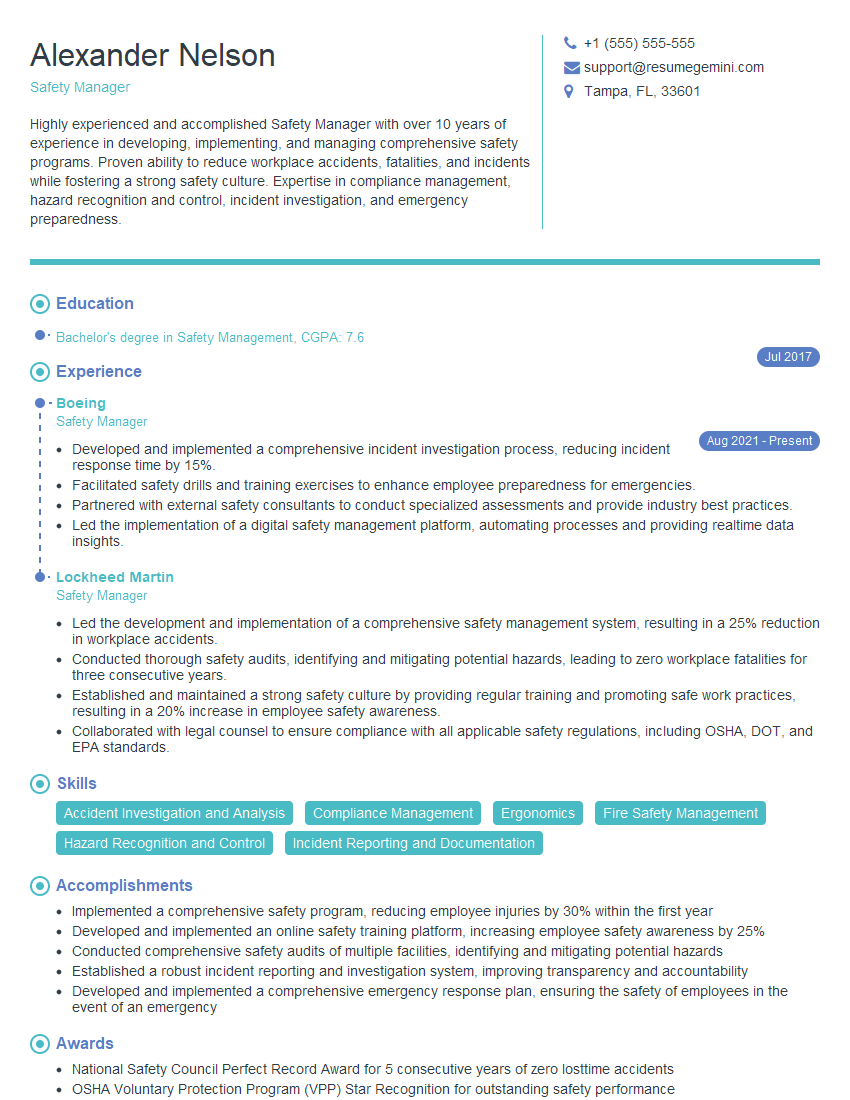
Safety Manager Resume Sample
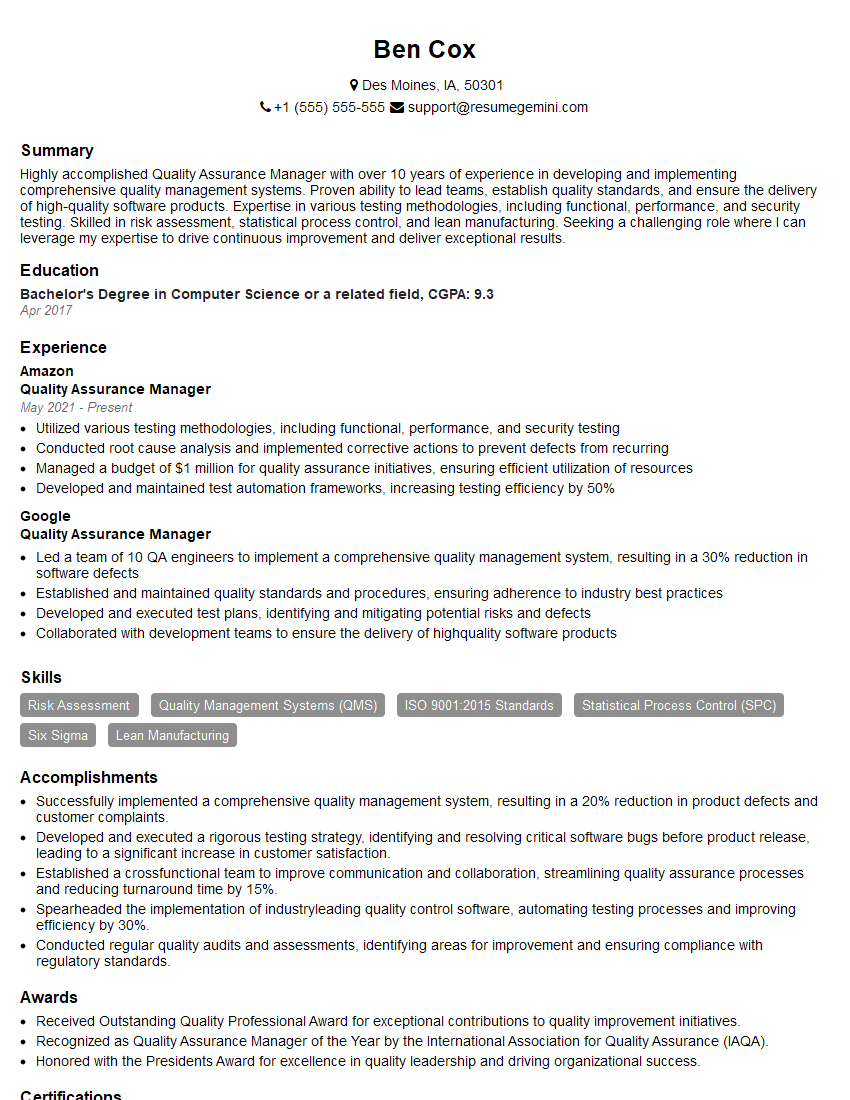
Quality Assurance Manager Resume Sample
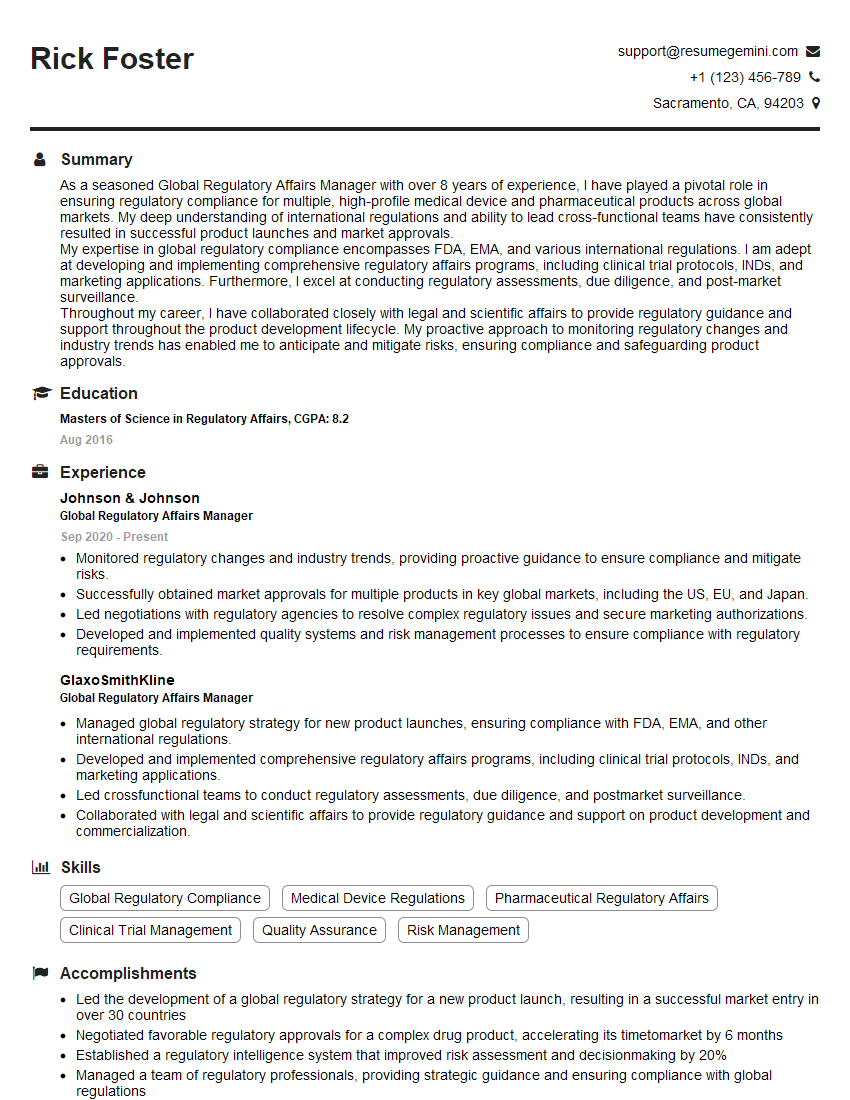
Global Regulatory Affairs Manager Resume Sample
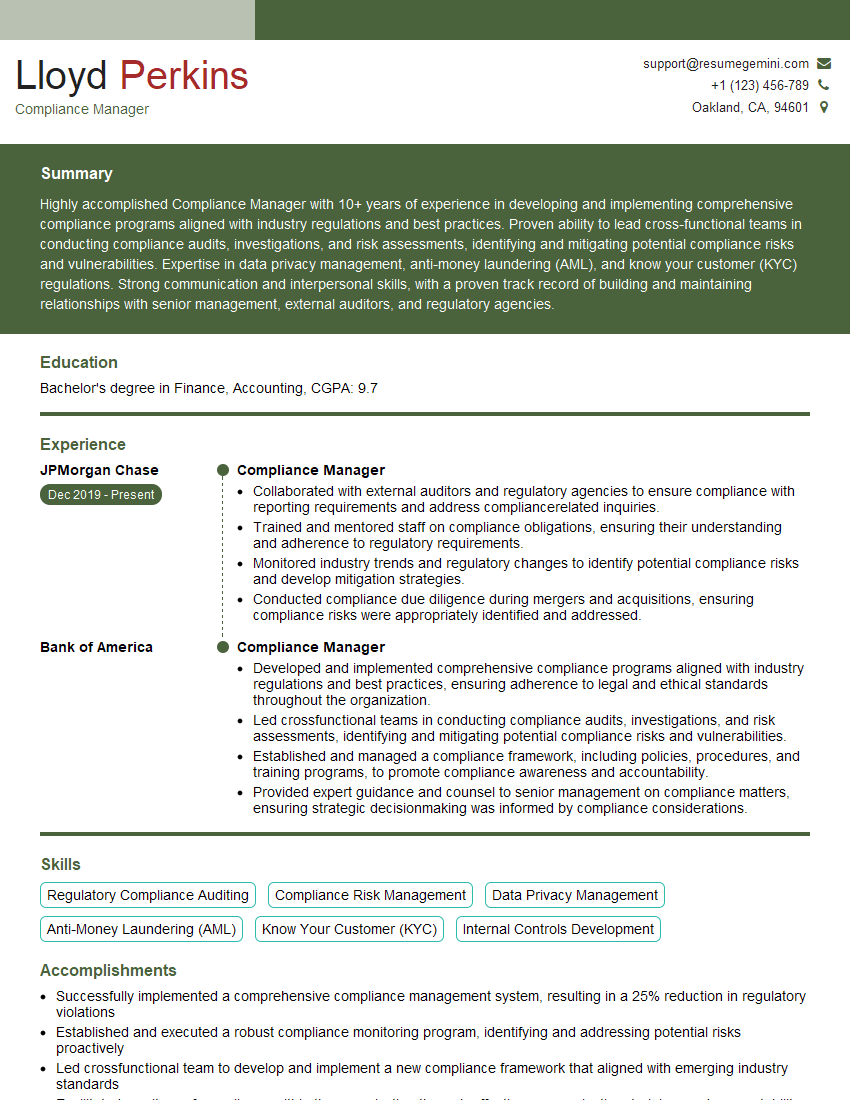
Compliance Manager Resume Sample
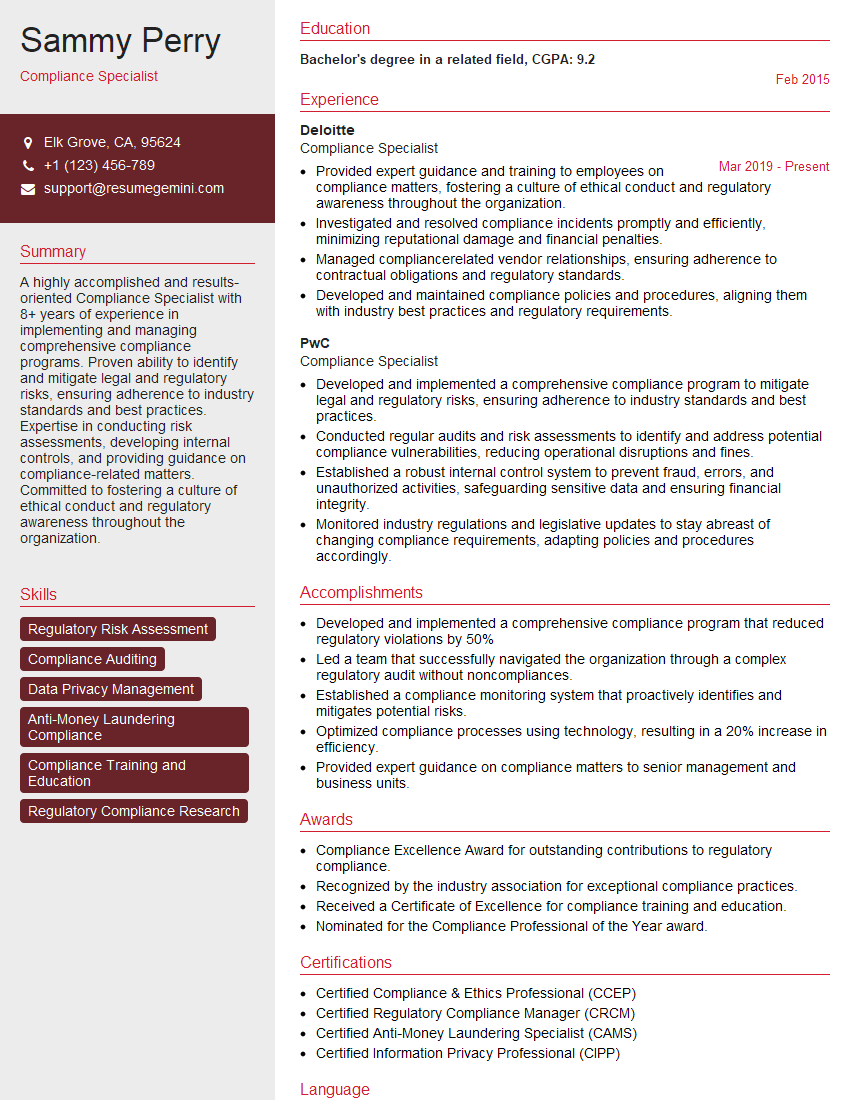
Compliance Specialist Resume Sample
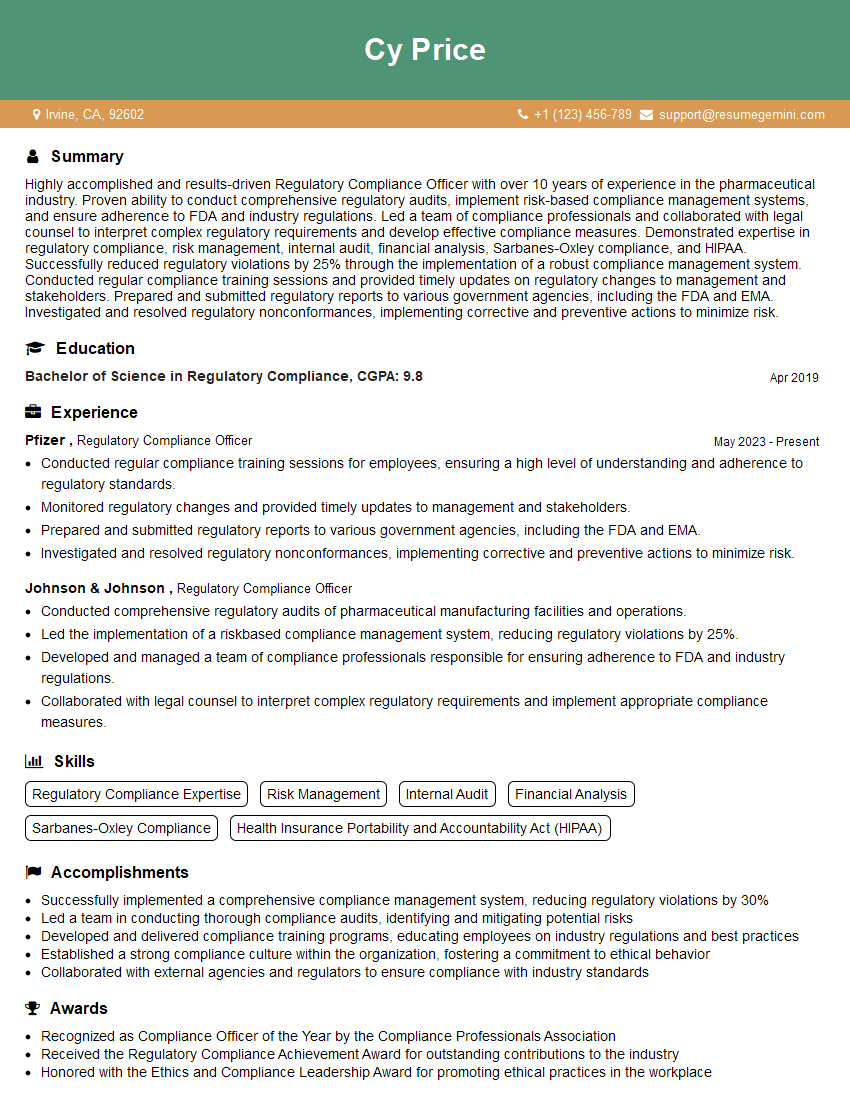
Regulatory Compliance Officer Resume Sample

Regulatory Affairs Consultant Resume Sample
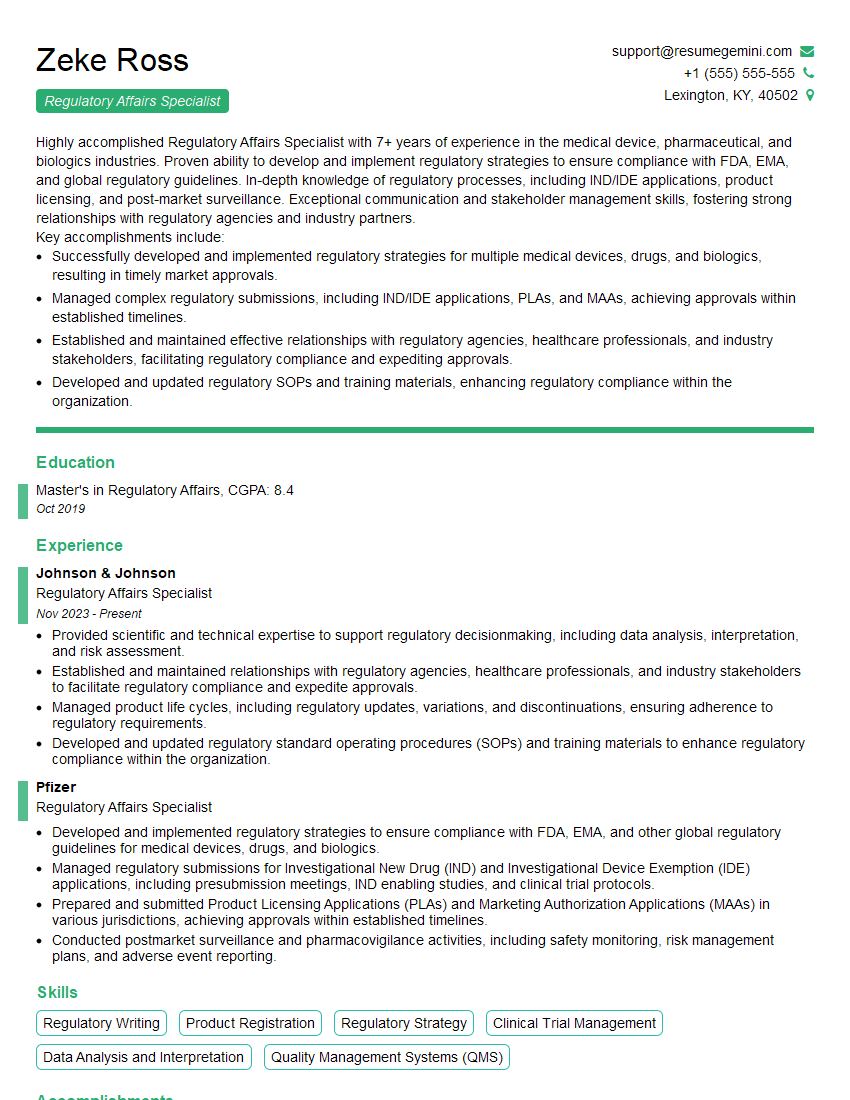
Regulatory Affairs Specialist Resume Sample
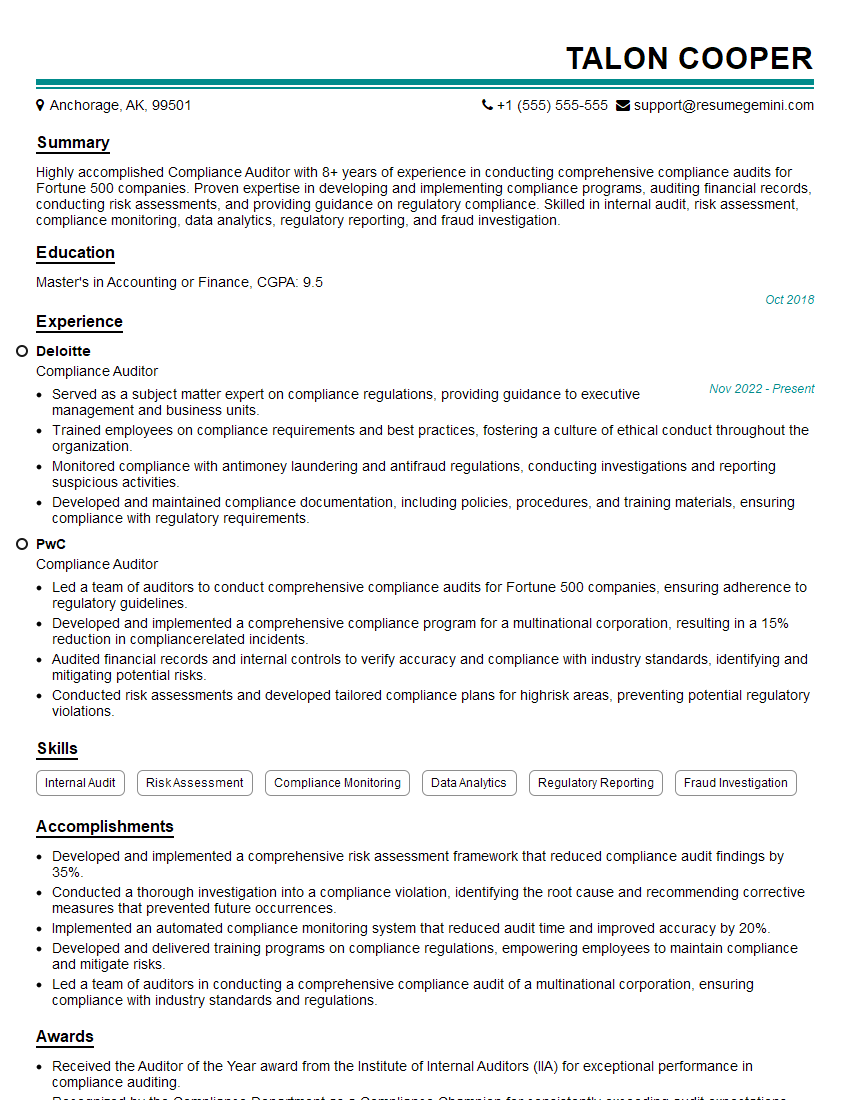
Compliance Auditor Resume Sample
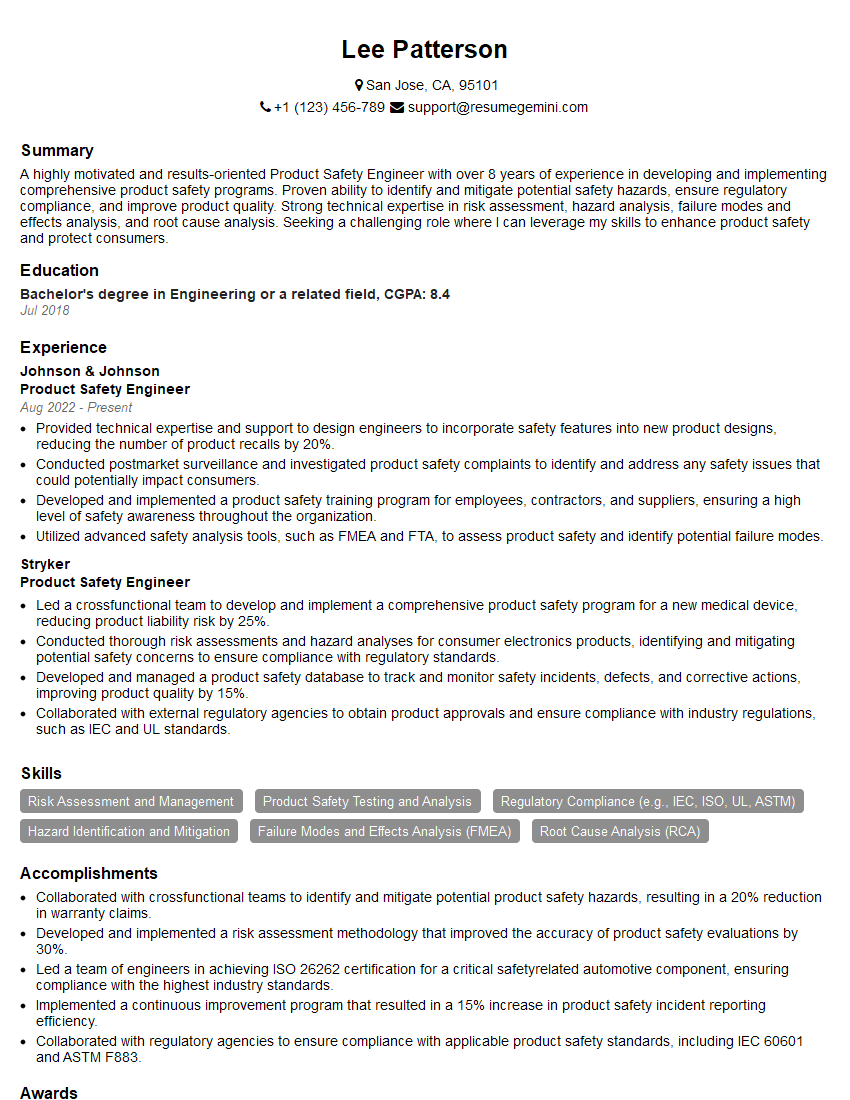
Product Safety Engineer Resume Sample
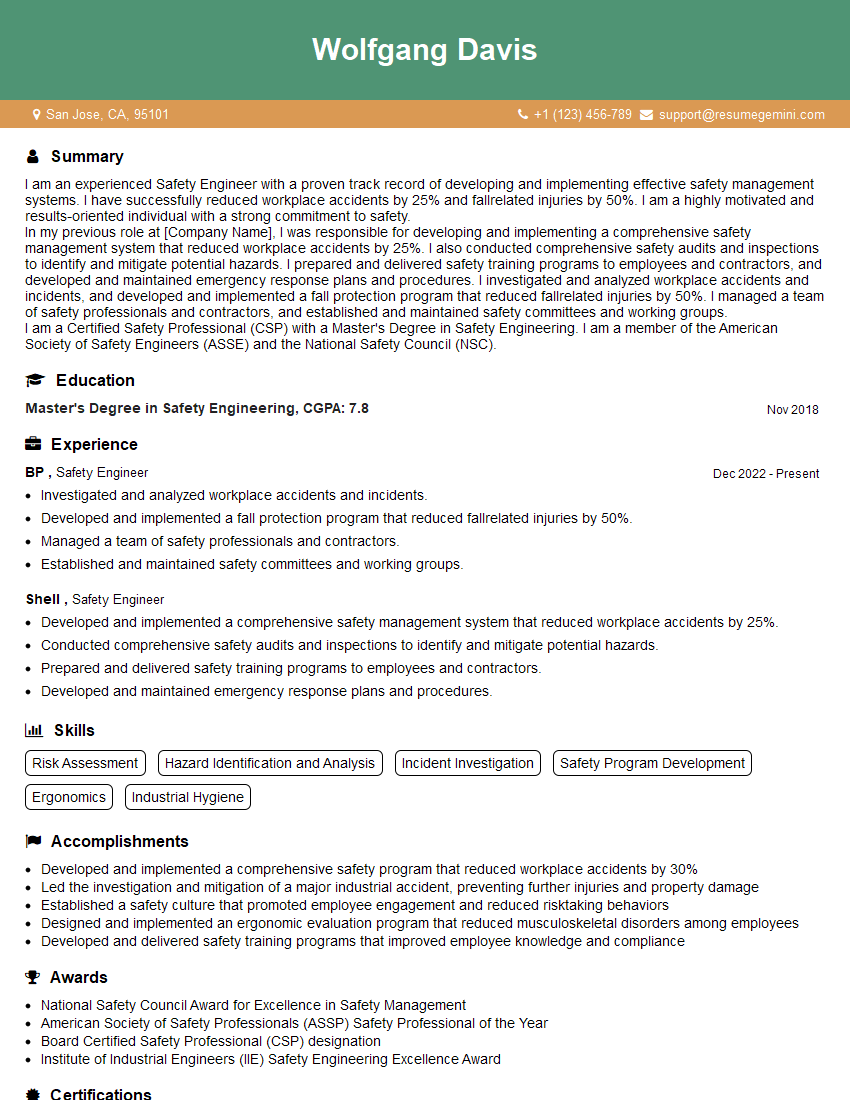
Safety Engineer Resume Sample
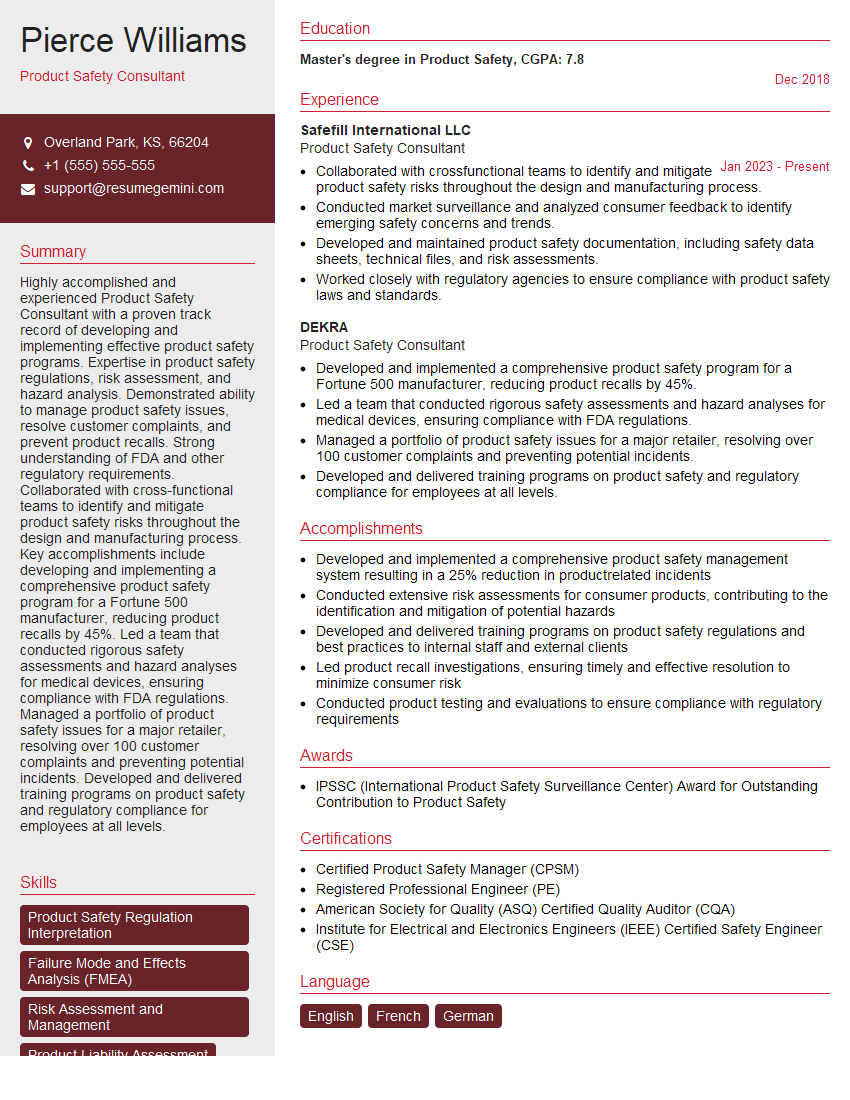
Product Safety Consultant Resume Sample
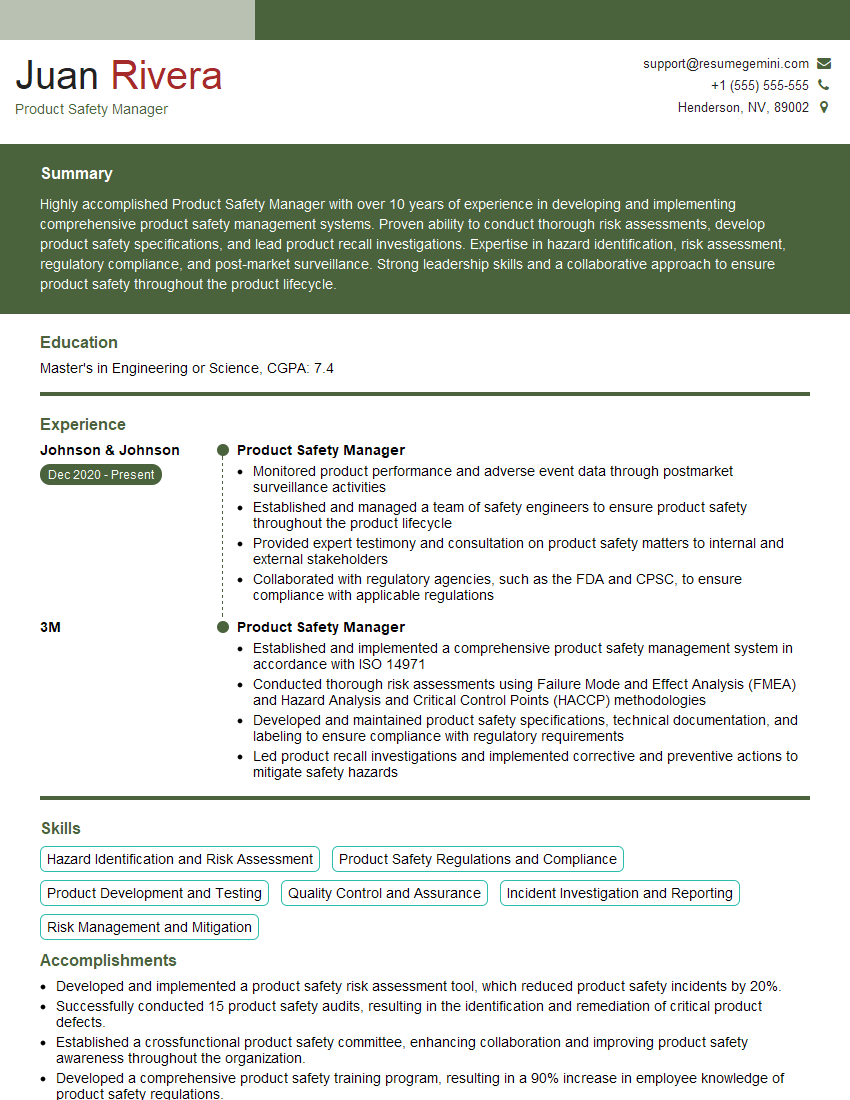
Product Safety Manager Resume Sample
- Safety Manager
- Quality Assurance Manager
- Global Regulatory Affairs Manager
- Compliance Manager
- Compliance Specialist
- Regulatory Compliance Officer
- Regulatory Affairs Consultant
- Regulatory Affairs Specialist
- Compliance Auditor
- Product Safety Engineer
- Safety Engineer
- Product Safety Consultant
- Product Safety Manager
Explore more articles
Users Rating of Our Blogs
Share Your Experience
We value your feedback! Please rate our content and share your thoughts (optional).
What Readers Say About Our Blog
Very informative content, great job.
good