The thought of an interview can be nerve-wracking, but the right preparation can make all the difference. Explore this comprehensive guide to Product Safety Testing Coordination interview questions and gain the confidence you need to showcase your abilities and secure the role.
Questions Asked in Product Safety Testing Coordination Interview
Q 1. Describe your experience with different product safety testing standards (e.g., UL, IEC, ISO).
My experience encompasses a wide range of product safety testing standards, including UL (Underwriters Laboratories), IEC (International Electrotechnical Commission), and ISO (International Organization for Standardization) standards. I’ve worked extensively with UL standards for North American markets, specifically UL 60950-1 for Information Technology Equipment and UL 1642 for power supplies. These standards dictate specific tests for safety features like insulation resistance, dielectric strength, and creepage distance. With IEC standards, I’m familiar with IEC 60335 for household appliances and IEC 62368-1 for audio/video, information and communication technology equipment. These often involve similar tests but with nuances reflecting international regulations. Finally, ISO standards, such as ISO 13485 for medical devices, provide a framework for quality management systems that directly impact the safety and reliability of testing processes. I’m adept at navigating the intricacies of each standard to ensure compliance and effective testing strategies.
For instance, while UL may focus heavily on flammability testing for certain products, IEC might prioritize electromagnetic compatibility (EMC) testing. Understanding these differences is crucial for ensuring products meet regulatory requirements in various global markets.
Q 2. Explain your understanding of risk assessment methodologies in product safety.
Risk assessment in product safety is a systematic process of identifying hazards, analyzing risks, and implementing control measures. I utilize a combination of qualitative and quantitative methods. Qualitative methods involve brainstorming sessions, hazard and operability studies (HAZOP), and failure mode and effects analysis (FMEA). These help identify potential hazards and their likelihood. Quantitative methods involve assigning numerical values to probabilities and severities of identified hazards, often using risk matrices. This allows prioritization of risks based on a calculated risk score.
For example, during the design phase of a new power tool, a HAZOP might identify the risk of electric shock. The FMEA then breaks down the potential causes of this shock, like faulty insulation or inadequate grounding. Quantitative analysis might assign a probability and severity level to each cause, allowing us to prioritize mitigation efforts on the most critical failure modes.
Q 3. How do you prioritize product safety testing activities within a project timeline?
Prioritizing product safety testing within a project timeline requires a structured approach. I begin with a risk assessment, identifying the most critical safety aspects of the product. Testing for those critical aspects is prioritized early in the process to identify and resolve any major safety concerns. This often involves creating a testing matrix that outlines the tests required, their urgency, and the resources needed. Less critical tests are then scheduled to be completed later. This approach ensures that we address the most significant safety risks first while still ensuring timely completion of the project. Project management tools and software are essential for tracking progress and ensuring accountability.
Imagine developing a new children’s toy. Tests for small parts ingestion (a high-risk hazard) would be prioritized over tests for minor cosmetic imperfections.
Q 4. Describe your experience with different testing equipment and methodologies.
My experience with testing equipment and methodologies spans various domains. For electrical safety, I’m proficient in using equipment like insulation resistance testers, hipot testers, and ground continuity testers. For mechanical testing, I’ve used tensile testers, impact testers, and fatigue testing machines. In environmental testing, I’m experienced with climate chambers (temperature and humidity) and vibration testers. Methodologies include destructive testing (e.g., breaking strength tests) and non-destructive testing (e.g., visual inspection, ultrasound). I am also familiar with more specialized equipment like flammability testers, EMC chambers and various chemical analysis tools depending on the product’s specific needs.
For instance, when evaluating the durability of a smartphone, I might use a drop test machine, coupled with visual inspection and X-ray analysis to evaluate internal damage, alongside thermal imaging to observe the heat build-up in critical areas.
Q 5. How do you manage and interpret product safety test data?
Managing and interpreting product safety test data requires meticulous record-keeping and statistical analysis. All data is documented using a Laboratory Information Management System (LIMS), ensuring traceability and auditability. Data analysis typically involves comparing test results against the relevant safety standards and specifications. Statistical analysis is used to assess the consistency and reliability of the results. Any deviations or anomalies are investigated thoroughly to identify potential causes. Data visualization tools are employed to present the results clearly and concisely in reports. This helps in identifying potential safety issues and informing design improvements or corrective actions.
For example, if a series of impact tests reveal a consistent pattern of failure at a specific stress level, this indicates a design weakness that needs to be addressed.
Q 6. What are your experiences with different types of safety testing, like mechanical, electrical, or chemical?
My experience encompasses various types of safety testing. Mechanical testing assesses the strength, durability, and stability of the product, including impact resistance and fatigue strength. Electrical testing covers insulation resistance, dielectric strength, and ground continuity, ensuring that the product is safe from electrical hazards. Chemical testing examines the composition and potential toxicity of materials used in the product. This often involves identifying potentially hazardous substances and ensuring compliance with relevant regulations. I’ve also worked with other specialized safety testing such as flammability testing, electromagnetic compatibility (EMC) testing, and ergonomic testing.
For example, in evaluating a children’s toy, we would conduct mechanical testing to ensure it can withstand the forces of play, chemical testing to verify the absence of harmful substances, and flammability testing to ensure it meets fire safety standards.
Q 7. How do you ensure the accuracy and reliability of test results?
Ensuring the accuracy and reliability of test results is paramount. This involves a multi-faceted approach: First, meticulous calibration and maintenance of all testing equipment are crucial. We follow strict schedules for calibration against traceable standards. Second, employing standardized testing procedures and adhering to the relevant safety standards guarantees consistency. Third, proper training of personnel is essential to ensure competence and adherence to protocols. Fourth, statistical analysis of test data helps in identifying outliers and assessing the overall reliability of the results. Finally, regular internal audits and external accreditations (like ISO 17025) provide independent verification of our quality management system and testing processes.
By maintaining rigorous quality control and using multiple checks and balances, we minimize the chance of errors and ensure the highest level of confidence in our test results.
Q 8. Explain your process for identifying and mitigating potential safety hazards in products.
Identifying and mitigating potential safety hazards is a systematic process that begins long before a product reaches the market. It involves a proactive approach, integrating safety considerations throughout the entire product lifecycle, from design and development to manufacturing, distribution, and use.
- Hazard Analysis and Risk Assessment (HARA): This crucial initial step involves identifying potential hazards – anything that could cause harm – through techniques like Failure Mode and Effects Analysis (FMEA) and Fault Tree Analysis (FTA). We systematically examine each component and process, considering potential failures and their consequences.
- Design for Safety: Once hazards are identified, we incorporate safety features into the product design. This might include using safer materials, incorporating safety mechanisms (e.g., overload protection), and designing for ease of use and maintenance. For example, if a hazard analysis reveals a risk of electrical shock, design modifications might include improved insulation or a safety interlock system.
- Testing and Verification: Rigorous testing is essential to validate the effectiveness of implemented safety measures. This includes various testing protocols, such as material testing, mechanical testing, electrical testing, and environmental testing (temperature, humidity, vibration etc.), tailored to the specific product and its intended use.
- Mitigation Strategies: Based on the risk assessment, we implement appropriate mitigation strategies. This could involve redesigning the product, adding warning labels, providing user instructions, or implementing quality control measures during manufacturing.
- Continuous Monitoring and Improvement: Post-market surveillance is crucial. We monitor for any reported incidents or safety concerns, analyze them through root cause analysis, and implement corrective actions to further enhance product safety.
Imagine designing a children’s toy. A HARA might reveal a choking hazard due to small parts. Mitigation would involve redesigning the toy to eliminate small parts, or adding a warning label emphasizing adult supervision.
Q 9. Describe a situation where you had to troubleshoot a problem during a product safety test.
During testing of a new power tool, we experienced inconsistent results in the overload protection mechanism. The tool would occasionally shut down prematurely, while other times it would continue operating even beyond its designed load capacity. This was a serious concern as inconsistent operation could lead to injury or damage.
Our troubleshooting involved a systematic approach:
- Reproducing the Issue: First, we attempted to consistently reproduce the inconsistent behavior. We meticulously documented the conditions under which the tool failed or continued operating beyond the overload limit.
- Data Analysis: We analyzed the data from multiple test runs, focusing on variables like voltage, current, and temperature readings. We were looking for patterns or anomalies. We compared these readings with our previously established parameters.
- Component-Level Investigation: Once we had a better understanding of the behavior, we began a component-level inspection. We carefully examined the overload protection circuit, looking for potential flaws or defects in the components such as the thermal fuse or the sensors.
- Environmental Factors: We checked the consistency of testing environment. Factors such as temperature and humidity can affect performance.
- Software Review: If the product uses software control, code was reviewed.
Eventually, we discovered a faulty batch of thermal fuses with inconsistent response times. Replacing these fuses resolved the problem, demonstrating the importance of thorough component-level inspection.
Q 10. How do you handle discrepancies or inconsistencies in test data?
Discrepancies in test data are inevitable, but handling them properly is critical to maintain data integrity. My approach involves a multi-step process:
- Review and Verification: The first step is to carefully review the test data, looking for any obvious errors or inconsistencies. This includes checking for data entry errors, instrument calibration issues, or inconsistencies in testing methodology.
- Identify Root Cause: After careful examination of the discrepancies we try to identify the root cause of the inconsistencies. This might involve revisiting the test setup, equipment calibration records, environmental factors, and operator training.
- Repeat the Test: If the cause of the inconsistency is identified, repeat the tests. Correct any identified errors or flaws in procedures and eliminate bias.
- Statistical Analysis: For complex data sets, we use statistical analysis to evaluate the significance of the differences. This helps determine whether the variation is within acceptable tolerances or indicative of a genuine problem. Statistical tools like ANOVA and t-tests might be employed.
- Documentation: All discrepancies, including the root causes, corrective actions, and final results, must be meticulously documented. The documentation helps maintain a clear audit trail.
For instance, if we find significant variations in tensile strength testing of a material, we might investigate factors such as sample preparation, testing machine calibration, or the environmental conditions during testing. The data is only useful once errors are resolved.
Q 11. Explain your understanding of regulatory compliance requirements for product safety.
Regulatory compliance is paramount in product safety. My understanding encompasses a wide range of regulations and standards, depending on the product category and target market. This includes, but isn’t limited to:
- International Standards (e.g., ISO): ISO standards provide widely recognized best practices and requirements for various aspects of product safety, such as materials, design, manufacturing, and testing.
- Regional Regulations (e.g., EU Directives, FDA Regulations): Each region has specific regulations that must be adhered to. For example, the EU has strict directives regarding the safety of electrical appliances, while the FDA regulates the safety of medical devices and food products.
- National Standards: Many countries have their own national standards that might complement or enhance international regulations.
- Specific Industry Standards: Certain industries have additional standards based on unique safety concerns. For example, the automotive industry has its own stringent safety requirements.
Understanding and complying with these regulations is not just about avoiding legal penalties; it’s about ensuring the safety and well-being of consumers. Ignoring regulations can result in product recalls, legal issues, and brand damage.
Q 12. How do you stay current with evolving product safety standards and regulations?
Staying current with evolving standards and regulations is an ongoing process requiring continuous effort. My strategy includes:
- Subscription to Regulatory Databases: I subscribe to industry-specific databases that track changes in regulations and standards. These services provide alerts on updates and offer access to the latest versions of documents.
- Industry Conferences and Webinars: Attending industry conferences and webinars allows me to learn from experts and network with other professionals. These events often cover the latest developments in product safety regulations.
- Professional Organizations: Membership in relevant professional organizations such as ASTM International provides access to publications, training materials, and expert networks.
- Regulatory Agency Websites: I regularly review the websites of relevant regulatory agencies (e.g., the FDA, CPSC) for updates, announcements, and guidance documents.
- Internal Training and Collaboration: Sharing knowledge and best practices internally ensures the entire team remains up-to-date on regulatory changes.
This continuous learning is crucial because safety standards constantly evolve in response to technological advancements, new hazards, and improving safety practices.
Q 13. Describe your experience with conducting root cause analysis of safety incidents.
Conducting root cause analysis of safety incidents is a critical step in improving product safety. My approach generally follows a structured methodology, such as the “5 Whys” technique or a more formal approach like Fishbone diagrams.
- Gather Information: The first step involves collecting comprehensive information about the incident, including details about the product, the circumstances under which the incident occurred, and any injuries or damages sustained. This often involves interviews with affected parties, reviewing incident reports, and examining the damaged product.
- Identify Contributing Factors: We carefully examine the gathered information to identify all contributing factors that led to the incident. This might involve considering design flaws, manufacturing defects, improper use, or external factors.
- Root Cause Determination: We use techniques like the “5 Whys” to drill down into the contributing factors until we reach the root cause – the fundamental reason why the incident occurred. A Fishbone diagram helps visually map out all contributing factors.
- Corrective Action Plan: Once the root cause is identified, we develop a corrective action plan to prevent similar incidents from happening in the future. This might involve redesigning the product, implementing new quality control procedures, or updating user manuals.
- Verification: Once implemented, we must verify that the corrective actions were effective in addressing the root cause.
For example, if a coffee maker caused a fire, we might find that the root cause was a defective heating element due to improper manufacturing procedures. The corrective action would involve improving the manufacturing process to eliminate this defect.
Q 14. How do you communicate complex technical information about product safety to non-technical audiences?
Communicating complex technical information about product safety to non-technical audiences requires clear, concise, and relatable language. I employ several strategies:
- Avoid Jargon: I avoid using technical jargon and acronyms that a non-technical audience might not understand. Instead, I use plain language that is easily understood.
- Visual Aids: Using visual aids, such as charts, diagrams, and images, is effective in communicating complex information. Visual aids can break down complex concepts into more digestible pieces.
- Analogies and Examples: Using analogies and real-world examples can help non-technical audiences relate to the information and understand its importance.
- Storytelling: Framing the information within a narrative or story can make it more engaging and memorable. A relatable story illustrating the potential consequences of a safety hazard helps people connect with the message.
- Focus on the Key Messages: I always prioritize the key messages that are most important for the audience to understand. This ensures that they grasp the critical information without getting bogged down in technical details.
For example, when explaining the importance of electrical safety to a group of homeowners, I might use analogies comparing electrical circuits to water pipes, and illustrate how short circuits can cause damage and fires.
Q 15. Describe your experience with generating and managing safety test reports.
Generating and managing safety test reports is a crucial part of ensuring product safety. It involves meticulously documenting every step of the testing process, from initial planning to final conclusions. This ensures transparency, accountability, and facilitates potential investigations.
My experience involves using various software platforms to create comprehensive reports, including data tables, charts, graphs, and detailed narratives. For example, I’ve used specialized software like TestRail to manage test cases, track progress, and generate reports. I also utilize spreadsheet programs like Excel to analyze large datasets and create visualizations of test results. The reports always clearly outline the test methodologies, equipment used, test samples, results obtained (including any deviations from expected outcomes), and a comprehensive conclusion detailing whether the product met the specified safety standards. Each report also includes a detailed chain of custody for the tested samples, guaranteeing their integrity throughout the process. I’ve also developed templates for standardized reporting, ensuring consistency and efficiency across projects.
In a recent project involving a new children’s toy, I meticulously documented each drop test, impact test, and material flammability test. The final report clearly showed that the toy met all relevant safety standards and included high-resolution images and video footage of the tests conducted. This thorough documentation was essential in securing product approval and gaining consumer trust.
Career Expert Tips:
- Ace those interviews! Prepare effectively by reviewing the Top 50 Most Common Interview Questions on ResumeGemini.
- Navigate your job search with confidence! Explore a wide range of Career Tips on ResumeGemini. Learn about common challenges and recommendations to overcome them.
- Craft the perfect resume! Master the Art of Resume Writing with ResumeGemini’s guide. Showcase your unique qualifications and achievements effectively.
- Don’t miss out on holiday savings! Build your dream resume with ResumeGemini’s ATS optimized templates.
Q 16. How do you collaborate with engineers, designers, and other stakeholders to ensure product safety?
Collaboration is key in product safety. It’s not a siloed activity; it requires open communication and a shared understanding of safety goals. I foster collaboration by actively engaging with engineers, designers, and other stakeholders throughout the entire product lifecycle. This starts from the design phase, where I participate in design reviews to identify potential safety hazards early on. I translate complex technical findings into easily understandable language for non-technical stakeholders, ensuring everyone is on the same page.
For instance, I might work with engineers to select appropriate test methods and standards, ensuring they align with the product’s intended use and target market. With designers, I discuss potential design modifications to mitigate identified risks. Regular meetings, shared documentation, and clear communication channels (e.g., project management software) are essential for maintaining this collaborative environment. I also actively seek feedback from all stakeholders to enhance the testing process and ensure that safety considerations are fully integrated into the product design and development process.
In one project, my collaboration with designers led to a redesign of a power tool’s safety guard, significantly reducing the risk of injury. This was achieved through a series of collaborative meetings and detailed risk assessments.
Q 17. What are some common challenges you face in product safety testing, and how do you overcome them?
Product safety testing presents several challenges. One common challenge is balancing the need for thorough testing with time and budget constraints. Another challenge is dealing with unexpected results or failures that require further investigation and potentially redesign. Sometimes, it’s difficult to accurately simulate real-world conditions in a controlled testing environment, which might lead to inaccuracies in results. Also, keeping up-to-date with ever-evolving safety standards and regulations can be demanding.
To overcome these challenges, I employ several strategies. First, I prioritize testing, focusing on high-risk areas and critical functionalities. This allows for efficient allocation of resources. I utilize risk assessment methodologies to identify critical areas requiring more in-depth investigation. Secondly, I develop contingency plans to deal with unexpected outcomes, including allocating time and resources for troubleshooting and potential redesign. To improve the realism of testing, I often use advanced simulation techniques and explore options such as field testing or user studies. Finally, I stay abreast of the latest safety regulations through continuous professional development and memberships in relevant professional organizations.
For example, in a project with time constraints, we prioritized tests based on a detailed Failure Mode and Effects Analysis (FMEA) to focus on the most critical areas. This allowed us to complete the testing within the allotted time while still addressing the highest risks.
Q 18. Describe your experience with using statistical analysis techniques in product safety testing.
Statistical analysis plays a vital role in interpreting test results and ensuring objectivity. I regularly employ techniques such as hypothesis testing, analysis of variance (ANOVA), and regression analysis to identify trends, draw conclusions, and make informed decisions. These techniques help determine whether observed differences in test results are statistically significant or simply due to random variation. For instance, when analyzing the lifespan of a product, I use statistical methods to determine if there’s a significant difference between two different manufacturing processes.
Specifically, I use statistical software packages like Minitab or R to analyze large datasets and conduct these analyses. Understanding confidence intervals and p-values is essential in interpreting the results and making informed decisions regarding product safety. For example, I might use a t-test to compare the mean breaking strength of two different material batches to determine if there’s a statistically significant difference between them. This quantitative approach ensures that our conclusions are data-driven and objective, adding scientific rigor to our safety assessments.
Q 19. How do you ensure the traceability of testing materials and procedures?
Traceability of testing materials and procedures is critical for ensuring the validity and reliability of the test results. This is achieved through detailed documentation and a robust tracking system. This includes meticulously documenting the origin, handling, and storage of all test materials. Each step of the testing process is recorded, with clear identification numbers or codes assigned to each test sample and associated documentation. I use barcodes or RFID tags for some materials to further enhance traceability. Detailed standard operating procedures (SOPs) govern every aspect of the testing process, leaving no room for ambiguity.
A chain-of-custody document is meticulously maintained for each sample, recording every person who handled the sample and the dates and times of each transfer. This comprehensive documentation allows us to easily trace the history of each test sample and ensure that the results are accurately linked to the specific product being tested. In case of any dispute, this meticulous record-keeping is crucial for demonstrating the validity of the testing process.
Think of it like a detective solving a crime: meticulous documentation helps us track the journey of every piece of evidence (test sample), allowing us to confidently state what happened and when. In the event of a recall or investigation, this thorough record-keeping is invaluable.
Q 20. What is your experience with different types of safety certification?
My experience encompasses a wide range of safety certifications, including but not limited to UL, CE, FCC, RoHS, and various industry-specific standards. Each certification has specific requirements and testing protocols that must be adhered to. Understanding these nuances is crucial for ensuring product compliance and market access.
For instance, UL certification (Underwriters Laboratories) is commonly required for electrical products in North America, while CE marking (Conformité Européenne) is mandatory for products sold within the European Economic Area. I have practical experience working with testing laboratories accredited to perform the necessary tests for each certification. My role involves coordinating with these labs, preparing the necessary documentation, and ensuring that all testing requirements are met. I also understand the implications of these certifications regarding product design, labeling, and marketing claims.
The specific requirements for each certification can vary significantly, and staying updated on these changes is a continuous process. For example, the requirements for RoHS compliance (Restriction of Hazardous Substances) have evolved over time, impacting the material selection and manufacturing processes for many products.
Q 21. Explain your approach to managing safety testing within budget constraints.
Managing safety testing within budget constraints requires a strategic approach that balances thoroughness with efficiency. This starts with careful planning and prioritization of tests. I use risk assessment methodologies to identify the critical tests that must be performed, focusing resources on those areas that pose the highest risks. This prioritization prevents unnecessary spending on lower-priority tests. I also meticulously evaluate different testing laboratories and services to secure the most cost-effective options without compromising quality. Negotiating favorable contracts and exploring options such as in-house testing (where applicable) can further help optimize costs.
Utilizing efficient testing methodologies and optimizing the use of testing equipment are also vital strategies. This might involve leveraging automation where possible or exploring cost-effective alternatives that don’t sacrifice accuracy. Throughout the entire process, transparent communication and regular monitoring of expenses are crucial. I routinely prepare and review budgets, track progress, and make adjustments as needed to maintain fiscal responsibility. This proactive approach ensures that safety testing is conducted comprehensively and within the allotted budget, without compromising the integrity of the process.
For example, in a recent project, we were able to reduce testing costs by 15% by optimizing the test plan and negotiating favorable rates with a testing laboratory. This was achieved by careful planning and thorough comparison of different testing options.
Q 22. Describe your experience with using different test management software.
Throughout my career, I’ve utilized several test management software platforms, each offering unique strengths. For instance, I’ve extensively used Jira for tracking test cases, managing defects, and collaborating with cross-functional teams. Its Kanban boards and customizable workflows proved invaluable for maintaining organization and transparency across complex projects. I also have experience with TestRail, which excels in test case organization and reporting. Its detailed reporting features facilitated the generation of comprehensive test summaries and progress updates for stakeholders. Finally, I’ve worked with simpler systems like Microsoft Excel for smaller projects requiring less robust functionality. Choosing the right software always depends on the project’s scope, team size, and specific requirements. For larger, more intricate projects, Jira or TestRail’s advanced features are crucial; for smaller, simpler tests, a spreadsheet might suffice. The key is adapting the tool to the task, not the other way around.
Q 23. How familiar are you with different types of failure analysis techniques?
My familiarity with failure analysis techniques is extensive, encompassing both destructive and non-destructive methods. For example, I’m proficient in visual inspection, which involves carefully examining the failed component for any obvious defects. This is often the first step and can reveal simple issues like cracks, corrosion, or missing parts. I’m also adept at using more sophisticated techniques like Scanning Electron Microscopy (SEM) for microscopic analysis, identifying material fatigue or internal flaws not visible to the naked eye. Furthermore, I have significant experience with root cause analysis methodologies like the ‘5 Whys’ technique to progressively drill down to the fundamental reasons behind a product failure, which is extremely helpful in preventing future incidents. Finally, I frequently incorporate statistical analysis to identify trends and patterns in failure data, which is vital in predicting and preventing future failures. Each technique plays a vital role, and the best approach depends heavily on the nature of the failure and the information needed.
Q 24. How do you ensure the ethical conduct of product safety testing?
Ethical conduct is paramount in product safety testing. I ensure this through several key strategies. First, I adhere strictly to all relevant safety standards and regulations, such as those established by ISO and relevant government agencies. Second, I maintain complete transparency and objectivity in my testing procedures and reporting, avoiding any conflicts of interest or bias. This includes carefully documenting all testing processes and results to maintain auditability. Third, I prioritize the safety and well-being of the testing personnel, ensuring appropriate safety equipment is used and safety procedures are meticulously followed. Fourth, I always promote a culture of honesty and integrity within the team, encouraging open communication and the reporting of any ethical concerns. A real-world example: if a test reveals a potential safety hazard, I’d immediately report it to the appropriate personnel, halting further production or sales until the issue is resolved – even if it means extra work or delays.
Q 25. What are your experiences with product recalls and related safety investigations?
I have been involved in several product recalls and subsequent safety investigations. In one instance, a children’s toy was recalled due to a small part that could detach and pose a choking hazard. My role involved assisting in the investigation by analyzing the failed components, identifying the root cause of the failure (a manufacturing defect in the adhesive), and collaborating with the design and manufacturing teams to implement corrective actions. This involved reviewing the design specifications, improving quality control procedures, and ensuring the new design met all relevant safety standards before the product was re-released. The experience highlighted the importance of rigorous testing throughout the product lifecycle and the critical role of timely and effective communication during a recall.
Q 26. Describe your experience with conducting safety audits or inspections.
Conducting safety audits and inspections is a regular part of my work. I typically follow a structured approach, starting with a review of the relevant safety documentation, including standard operating procedures, risk assessments, and training records. Then, I conduct a thorough on-site inspection of the facilities, equipment, and processes, checking for compliance with safety standards and regulations. This often involves interviewing personnel to assess their understanding of safety procedures and their adherence to them. I then prepare a detailed report summarizing my findings, including any identified non-compliances, and provide recommendations for corrective actions. A recent audit of a manufacturing plant revealed inconsistencies in the implementation of safety protocols. My report led to improved training programs and better adherence to safety guidelines, significantly improving the overall safety environment.
Q 27. How do you ensure that all necessary safety precautions are followed during testing?
Ensuring safety precautions are paramount. This involves several layers: First, a comprehensive risk assessment is conducted before any testing begins to identify potential hazards and develop appropriate mitigation strategies. This may include using specialized safety equipment, controlling environmental conditions, or limiting access to testing areas. Second, all personnel involved in the testing are provided with thorough training on the specific safety procedures relevant to the testing process. Third, clear and visible safety signage and instructions are displayed in testing areas. Finally, regular safety checks and audits are conducted to ensure ongoing compliance with safety protocols. For example, when working with potentially hazardous materials, we always use appropriate personal protective equipment (PPE), such as safety glasses, gloves, and respirators, and maintain a safe distance from the testing area.
Q 28. How would you approach the testing of a completely new and unfamiliar product?
Testing a completely new and unfamiliar product requires a systematic approach. I start by thoroughly reviewing all available documentation, including design specifications, materials lists, and intended use cases. Then, I conduct a comprehensive hazard analysis to identify potential risks associated with the product’s design, materials, and intended use. This informs the development of a detailed testing plan that covers all aspects of the product’s safety, addressing the identified hazards. This plan outlines the specific tests to be conducted, the testing methods, and the acceptance criteria. I then proceed with the testing, closely monitoring the results and adapting the plan if necessary. Finally, a thorough report is produced, summarizing the testing results and conclusions. For example, when faced with a novel medical device, I would collaborate closely with medical professionals to ensure that the testing adequately addresses the unique safety considerations related to its use.
Key Topics to Learn for Product Safety Testing Coordination Interview
- Regulatory Compliance: Understanding relevant safety standards (e.g., ISO, IEC, UL) and their application to different product categories. This includes knowing how to interpret regulations and ensure products meet the required criteria.
- Testing Methodologies: Familiarity with various testing methods, including destructive and non-destructive testing, and their appropriate use based on product characteristics and regulatory requirements. Practical application involves selecting the right tests to ensure thorough safety evaluation.
- Risk Assessment and Management: Understanding hazard identification, risk analysis, and risk mitigation strategies. This involves applying theoretical knowledge to real-world scenarios to proactively minimize potential safety risks associated with products.
- Testing Coordination and Project Management: Efficiently managing multiple testing projects simultaneously, coordinating with internal and external testing labs, and adhering to deadlines. Practical applications include developing and managing project timelines, budgets, and communication plans.
- Data Analysis and Reporting: Analyzing test data, interpreting results, and preparing comprehensive reports for stakeholders. This requires strong analytical skills and the ability to communicate complex technical information clearly and concisely.
- Communication and Collaboration: Effectively communicating technical information to engineers, management, and regulatory bodies. This includes strong written and verbal communication skills and the ability to work collaboratively in a team environment.
- Root Cause Analysis and Corrective Actions: Investigating product failures, identifying root causes, and implementing corrective actions to prevent future incidents. This involves problem-solving skills and a systematic approach to resolving issues.
Next Steps
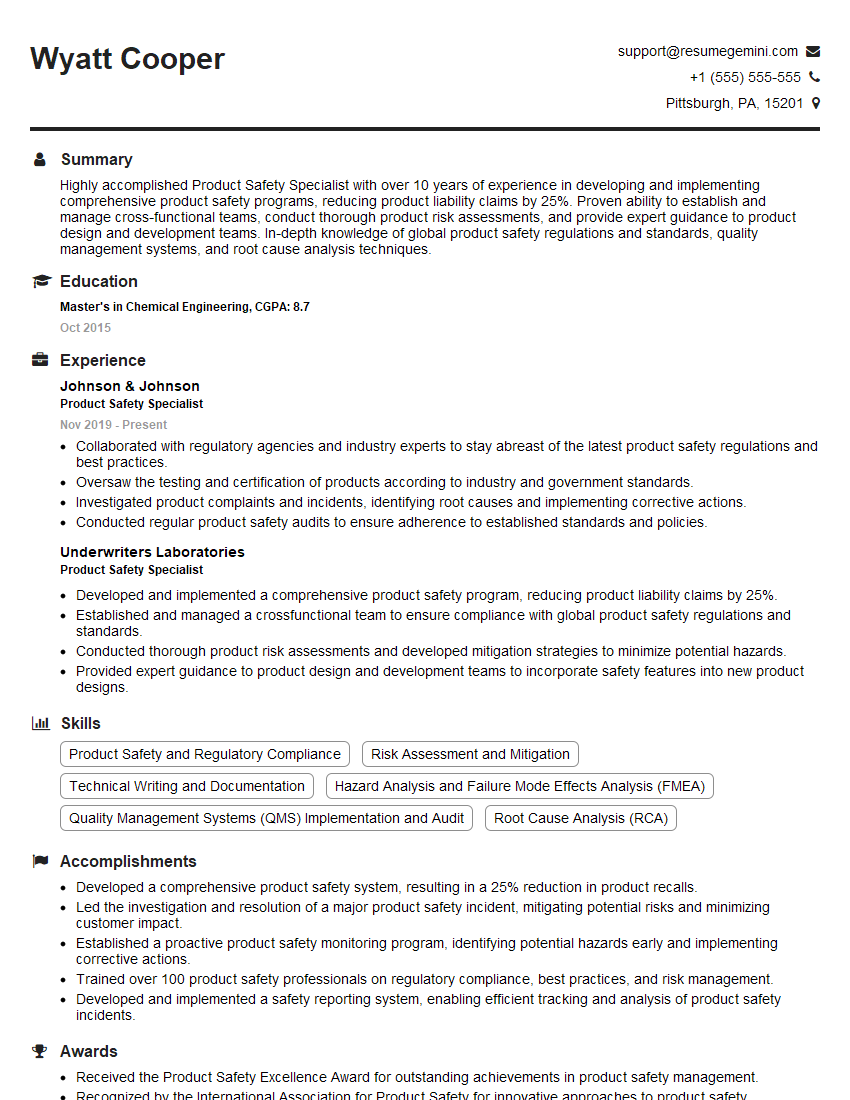
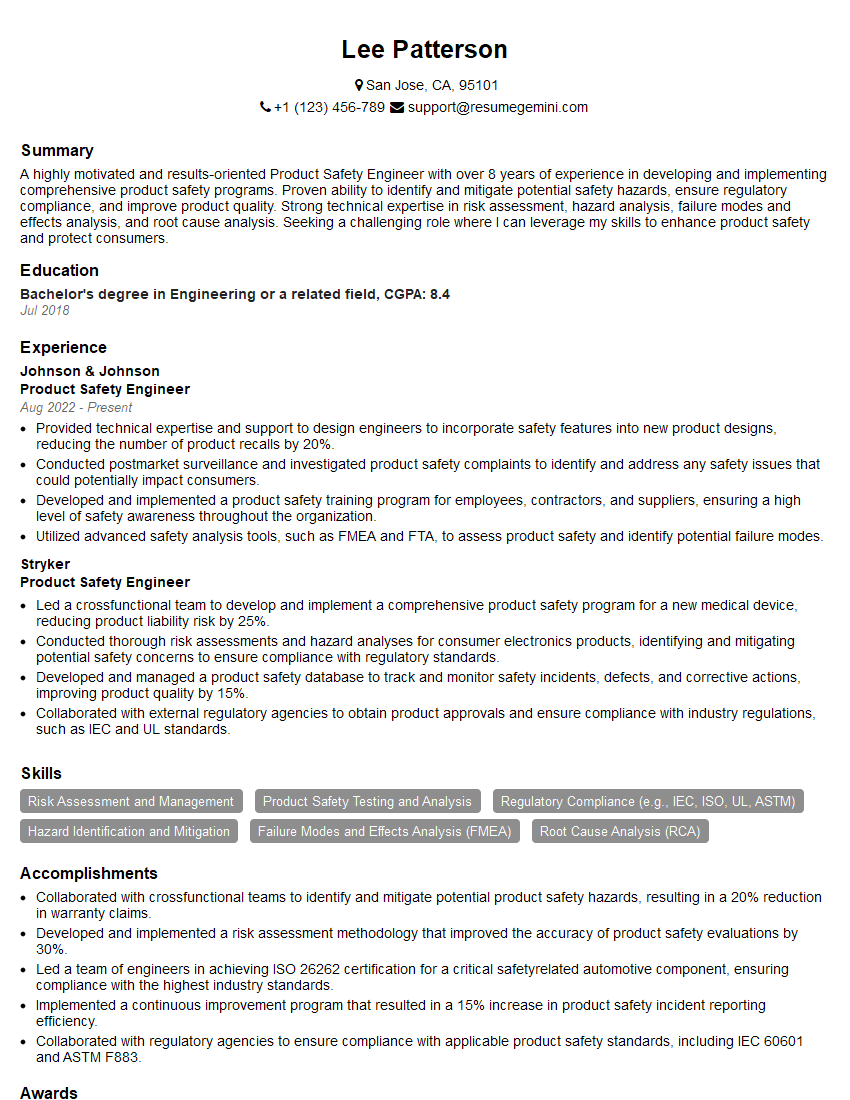
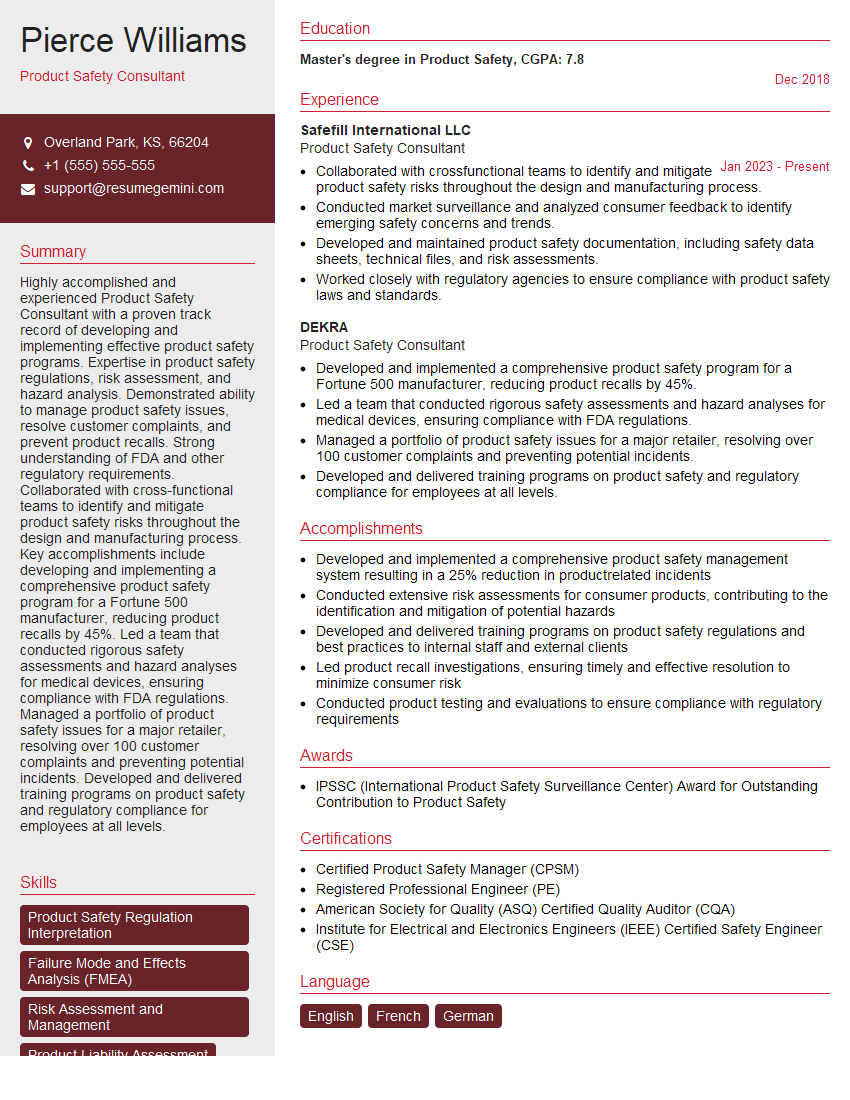
Mastering Product Safety Testing Coordination opens doors to exciting career advancements, offering opportunities for increased responsibility, higher compensation, and greater influence within your organization. To maximize your job prospects, creating a strong, ATS-friendly resume is crucial. This is where ResumeGemini can be a valuable asset. ResumeGemini provides a user-friendly platform to build a professional resume that effectively highlights your skills and experience. We offer examples of resumes tailored to Product Safety Testing Coordination to guide you in crafting a compelling application that showcases your expertise and secures that interview.
Explore more articles
Users Rating of Our Blogs
Share Your Experience
We value your feedback! Please rate our content and share your thoughts (optional).
What Readers Say About Our Blog
Very informative content, great job.
good