Unlock your full potential by mastering the most common Production Record Keeping and Inventory Management interview questions. This blog offers a deep dive into the critical topics, ensuring you’re not only prepared to answer but to excel. With these insights, you’ll approach your interview with clarity and confidence.
Questions Asked in Production Record Keeping and Inventory Management Interview
Q 1. Explain the difference between FIFO and LIFO inventory methods.
FIFO (First-In, First-Out) and LIFO (Last-In, First-Out) are two common methods for valuing inventory and tracking the flow of goods. They differ significantly in how they assume items are sold.
FIFO: Imagine a bakery. The first batch of croissants made are the first ones sold. FIFO assumes the oldest inventory is sold first. This leads to a lower cost of goods sold (COGS) during periods of inflation because you’re selling the cheaper items first, resulting in higher net income and higher ending inventory value.
LIFO: Now, imagine a hardware store. The last shipment of nails received is the first used. LIFO assumes the newest inventory is sold first. During inflation, LIFO leads to a higher COGS, lower net income, and a lower ending inventory value (because the more expensive, newer items are being sold).
Example: Let’s say you have 10 units at $10 each and then purchase another 10 at $12 each. Under FIFO, if you sell 15 units, your COGS would be (10 * $10) + (5 * $12) = $160. Under LIFO, it would be (10 * $12) + (5 * $10) = $170. The choice of method impacts financial statements and tax liabilities.
Q 2. Describe your experience with cycle counting and its benefits.
Cycle counting is a powerful inventory control technique that involves regularly counting a small subset of inventory rather than doing a complete physical count annually. It’s like regularly checking your bank balance instead of waiting until the end of the year for reconciliation.
In my previous role, we implemented a cycle counting system that targeted high-value and high-volume items more frequently. We used a pre-defined schedule and assigned specific areas to different team members. Each count was verified against the system records, and any discrepancies were investigated and resolved immediately.
Benefits: Cycle counting helps to:
- Reduce the time needed for a full physical inventory.
- Identify and correct errors early and frequently, preventing larger discrepancies from accumulating.
- Improve inventory accuracy, leading to better production planning and reduced stockouts.
- Enhance operational efficiency by preventing disruptions from large-scale inventory counts.
Q 3. How do you ensure inventory accuracy?
Ensuring inventory accuracy involves a multi-pronged approach encompassing accurate record-keeping, regular cycle counting, and robust inventory management software.
- Accurate Data Entry: Training staff on proper procedures for recording inventory transactions (receipts, issues, adjustments) is paramount. Using barcode scanners and automated systems minimizes manual entry errors.
- Regular Cycle Counting: As mentioned earlier, scheduled cycle counting is crucial for detecting and correcting discrepancies before they become significant problems.
- Inventory Management Software: Implementing a robust system that tracks inventory levels in real-time, integrates with production and sales data, and supports reporting and analysis is key. This enables better visibility and control.
- Physical Verification: Periodically conducting a full physical inventory count serves as a benchmark to validate the accuracy of the system data.
- Process Improvement: Regularly reviewing and optimizing inventory processes to identify and address potential areas for error is essential.
Think of it like keeping your home organized – if you clean up regularly, a large cleaning effort is unnecessary, and you can quickly find what you need. This same principle applies to inventory management.
Q 4. What are some common inventory management software packages you’re familiar with?
I have extensive experience with several inventory management software packages, including:
- SAP ERP: A comprehensive enterprise resource planning system with strong inventory management capabilities.
- Oracle NetSuite: A cloud-based ERP offering robust inventory control features, particularly suited for businesses of various sizes.
- Microsoft Dynamics 365: Another powerful ERP system with integrated inventory management tools.
- Fishbowl Inventory: A more specialized inventory management software well-suited for smaller to mid-sized businesses.
My experience spans both cloud-based and on-premise systems, allowing me to adapt to various organizational needs and technical infrastructures.
Q 5. Explain the importance of accurate production records.
Accurate production records are the backbone of efficient manufacturing and informed decision-making. They provide a detailed history of production activities, enabling organizations to track key metrics, identify bottlenecks, and optimize processes.
Importance:
- Cost Control: Accurate records allow for precise cost tracking, helping identify areas where costs can be reduced.
- Quality Control: Linking production output to specific batches of raw materials helps trace and resolve quality issues effectively.
- Production Planning: Historical production data informs future planning, aiding in efficient resource allocation and capacity management.
- Compliance: Many industries have regulatory requirements for maintaining accurate production records, ensuring traceability and accountability.
- Performance Measurement: Key performance indicators (KPIs) such as output per hour, defect rate, and material usage can only be tracked accurately with reliable production records.
Q 6. How do you handle discrepancies in inventory records?
Handling discrepancies in inventory records requires a systematic approach focusing on investigation, root cause analysis, and corrective action.
- Identify the Discrepancy: Clearly define the nature and extent of the difference between physical count and recorded inventory.
- Investigate the Root Cause: Examine the potential sources of error. This may include data entry mistakes, equipment malfunction, theft, or damage.
- Adjust Records: Once the cause is identified, make the necessary adjustments to the inventory records to reflect the actual physical count.
- Implement Corrective Actions: Address the root cause to prevent future discrepancies. This may involve retraining staff, upgrading equipment, enhancing security measures, or improving inventory management procedures.
- Document Everything: Maintain a detailed record of the discrepancy, the investigation, and the corrective actions taken.
Consider the discrepancy investigation as a detective story – you need to gather clues, analyze the evidence, and arrive at the solution. Thorough documentation helps to ensure the problem is truly resolved.
Q 7. What methods do you use to track production output and efficiency?
Tracking production output and efficiency relies on a combination of methods, leveraging technology and data analysis.
- Production Monitoring Systems: Real-time data capture from machines, sensors, and automated systems provides granular insights into production rates, downtime, and material usage.
- Manufacturing Execution Systems (MES): These systems integrate data from various sources, providing a comprehensive overview of production performance.
- Key Performance Indicators (KPIs): Defining and monitoring relevant KPIs such as Overall Equipment Effectiveness (OEE), production cycle time, and yield rate helps measure and manage efficiency.
- Data Analysis and Reporting: Utilizing dashboards and reports to visualize production data and identify trends, bottlenecks, and areas for improvement is crucial.
- Standard Operating Procedures (SOPs): Well-defined SOPs provide guidelines for efficient production processes, minimizing variability and errors.
Think of it as using a car’s dashboard – you need to monitor various parameters (speed, fuel level, engine temperature) to ensure efficient and safe driving. Similarly, monitoring various KPIs helps to manage production efficiently.
Q 8. Describe your experience with implementing inventory control procedures.
Implementing effective inventory control procedures is crucial for optimizing operational efficiency and profitability. My experience encompasses designing and implementing systems across various industries, from manufacturing to retail. This involves a multi-faceted approach starting with a thorough needs assessment. I begin by identifying the current inventory management processes, pinpointing weaknesses, and defining clear objectives. Then, I select appropriate software, often integrating with existing ERP systems, to manage stock levels, track movement, and generate reports. Key elements of my implementation strategy include:
- Defining clear roles and responsibilities: Assigning specific tasks related to receiving, storage, picking, and packing to ensure accountability.
- Establishing standardized procedures: Creating documented processes for all inventory-related activities to minimize errors and inconsistencies.
- Implementing barcode or RFID technology: This drastically improves accuracy and speed in tracking inventory across all stages of the supply chain.
- Regular audits and reconciliation: Conducting periodic physical inventory counts to verify system accuracy and identify discrepancies. This is vital to maintaining data integrity.
- Training staff: Providing comprehensive training on the new system and procedures ensures everyone understands their role and how to use the technology effectively. I’ve found that hands-on training and ongoing support are key to successful implementation.
For example, in a previous role at a manufacturing company, I implemented a new inventory management system that reduced stockouts by 15% and improved order fulfillment times by 10%. This was achieved through a combination of better forecasting, improved stock tracking, and efficient warehouse management.
Q 9. How do you identify and address inventory shrinkage?
Inventory shrinkage, the difference between the recorded inventory and the actual physical count, can be a significant problem. Identifying its causes requires a systematic approach. I typically use a multi-pronged strategy focusing on:
- Regular physical inventory counts: Conducting cycle counts frequently to catch discrepancies early. This is more efficient than annual full counts.
- Analyzing inventory data: Identifying patterns in shrinkage, such as high loss rates for specific products or during particular times of year. This helps pinpoint potential theft or damage issues.
- Improving security measures: Implementing better security protocols such as improved surveillance, access control, and employee background checks, where appropriate.
- Addressing damage and spoilage: Implementing proper storage and handling procedures to minimize damage and spoilage. This might include better temperature control or improved packaging.
- Investigating discrepancies: Thoroughly investigating any significant discrepancies to identify the root cause. This often requires interviewing staff and reviewing transaction data.
For instance, in a retail environment, I discovered high shrinkage of small, easily concealed items. By implementing improved security cameras and better employee training, we significantly reduced losses.
Q 10. Explain your understanding of just-in-time inventory management.
Just-in-Time (JIT) inventory management is a strategy that aims to minimize inventory holding costs by receiving materials only when they are needed for production. It relies on close collaboration with suppliers to ensure timely delivery. The core principle is to eliminate waste by reducing storage space, handling costs, and the risk of obsolescence. Successful JIT implementation requires:
- Reliable suppliers: Establishing strong relationships with suppliers who can consistently deliver high-quality materials on time.
- Efficient production processes: Having highly efficient production processes that minimize downtime and optimize material flow.
- Accurate demand forecasting: Precisely predicting demand to ensure accurate ordering and timely delivery. This often involves sophisticated forecasting techniques.
- Robust quality control: Implementing stringent quality control measures to ensure that incoming materials meet specifications and avoid defects. This minimizes waste caused by rejected materials.
- Flexible production: The ability to adjust production schedules quickly to accommodate changes in demand.
Imagine a car manufacturer using JIT. Instead of storing thousands of tires, they receive a precise number of tires just as they’re needed on the assembly line, minimizing storage costs and reducing the risk of having obsolete tires if car designs change.
Q 11. How do you manage obsolete or slow-moving inventory?
Managing obsolete or slow-moving inventory is crucial to avoid tying up capital and space. My approach involves a multi-step process:
- Identification: Regularly reviewing inventory levels to identify items that have not moved in a specific timeframe (defined by business needs). This might involve using ABC analysis to prioritize high-value, slow-moving items.
- Analysis: Investigating the reasons for slow movement. This could be due to changes in demand, seasonal trends, or defects.
- Strategies for disposal: Implementing strategies such as discounting, promotional offers, or liquidating to other businesses or online marketplaces. Sometimes, scrapping or recycling might be the most cost-effective option.
- Process improvements: Addressing underlying causes. For example, if slow movement is due to a defect, this needs to be addressed through quality control improvements to prevent future issues.
- Prevention: Implementing better demand forecasting and production planning to minimize the risk of future obsolescence.
For example, I once helped a retailer clear out slow-moving seasonal items by partnering with a charity, donating the excess stock for tax benefits while also improving their brand image.
Q 12. Describe your experience with inventory forecasting techniques.
Accurate inventory forecasting is essential for efficient inventory management. My experience includes using various techniques, including:
- Moving Average: This simple method averages sales data over a specific period to predict future demand. It is best used when demand is relatively stable.
- Exponential Smoothing: This assigns weighted averages to recent data, giving more weight to more recent sales, making it better for handling trends.
- ARIMA (Autoregressive Integrated Moving Average): This sophisticated statistical model analyzes historical data to identify trends and seasonality for more accurate forecasting.
- Regression Analysis: This explores the relationship between inventory demand and external factors like economic indicators or marketing campaigns.
- Qualitative Forecasting: Incorporating expert opinions and market research to adjust forecasts based on non-numerical factors.
The choice of technique depends on data availability, demand characteristics, and the level of accuracy needed. I always validate forecast accuracy against actual results and adjust the method as needed. In a previous role, I implemented ARIMA modeling to improve sales forecasts, leading to a reduction in stockouts and overstocking.
Q 13. How do you ensure data integrity in your inventory system?
Ensuring data integrity in the inventory system is paramount. This involves a combination of processes and technologies:
- Regular data backups: Regularly backing up inventory data to prevent data loss due to system failures or other unforeseen circumstances.
- Data validation rules: Implementing data validation rules in the inventory management system to prevent incorrect data entry. For example, restricting negative quantities or impossible values.
- User access controls: Limiting access to the inventory system based on user roles and responsibilities. This helps prevent unauthorized changes or deletions.
- Regular audits and reconciliation: Comparing system data with physical inventory counts to identify and correct discrepancies.
- Data cleansing: Periodically reviewing and cleaning the inventory database to remove duplicate entries or outdated information.
- System integration: Integrating the inventory system with other systems (e.g., point-of-sale, ERP) to ensure data consistency across the organization.
For example, I’ve implemented automated data validation checks which flag inconsistencies like negative stock levels or mismatched product codes in real-time, allowing immediate correction and minimizing errors.
Q 14. What metrics do you use to track inventory performance?
Tracking inventory performance requires key metrics that provide insights into efficiency and profitability. Common metrics I use include:
- Inventory Turnover Rate: The number of times inventory is sold or used in a given period. A higher rate indicates efficient inventory management.
- Days Sales of Inventory (DSI): The average number of days it takes to sell inventory. Lower DSI is generally better.
- Inventory Holding Cost: The cost of storing and maintaining inventory, including storage space, insurance, and obsolescence.
- Stockout Rate: The percentage of orders that cannot be fulfilled due to insufficient inventory. Aim is for a rate close to zero.
- Inventory Accuracy: The percentage of inventory items accurately recorded in the system compared to physical counts. High accuracy is essential.
- Fill Rate: The percentage of demand met from available stock. Higher fill rate signifies efficient inventory planning.
These metrics are regularly monitored and analyzed to identify areas for improvement and inform decision-making regarding inventory levels, purchasing strategies, and warehouse operations. I use dashboards and reports to visualize this data and track progress toward key goals.
Q 15. Explain your experience with conducting inventory audits.
Inventory audits are crucial for ensuring accuracy and efficiency in inventory management. They involve physically counting and verifying the stock on hand against the recorded inventory levels. This process helps identify discrepancies, such as shrinkage, damage, or inaccuracies in the inventory system. My experience includes conducting both cycle counting (auditing smaller sections regularly) and full physical inventory counts (counting everything at once, usually during a production shutdown). For example, in my previous role at Acme Manufacturing, I led a team that conducted monthly cycle counts, reducing inventory discrepancies by 15% within six months. During a full inventory count, we used a barcode scanning system to expedite the process and improve accuracy, uncovering a previously unnoticed issue with mislabeling.
The process typically involves:
- Planning: Defining scope, timeline, resources, and team roles.
- Counting: Physically counting items, verifying against location labels and identifying damaged goods.
- Reconciliation: Comparing physical counts to system records and identifying discrepancies.
- Reporting: Documenting findings, identifying root causes of discrepancies, and recommending corrective actions.
Career Expert Tips:
- Ace those interviews! Prepare effectively by reviewing the Top 50 Most Common Interview Questions on ResumeGemini.
- Navigate your job search with confidence! Explore a wide range of Career Tips on ResumeGemini. Learn about common challenges and recommendations to overcome them.
- Craft the perfect resume! Master the Art of Resume Writing with ResumeGemini’s guide. Showcase your unique qualifications and achievements effectively.
- Don’t miss out on holiday savings! Build your dream resume with ResumeGemini’s ATS optimized templates.
Q 16. How do you handle inventory adjustments?
Inventory adjustments are necessary to correct discrepancies between physical counts and recorded inventory levels. These adjustments can arise from various factors, including theft, damage, obsolescence, or errors in data entry. My approach involves a thorough investigation into the cause of the discrepancy before making any adjustments. Simply adjusting numbers without understanding the root cause is a recipe for ongoing problems. Think of it like fixing a leak – you need to find the source before patching it.
For example, if a significant shortage is discovered in a specific product line, I would first investigate potential causes such as theft, damage, or inaccurate production records. Once the cause is identified, I would document the adjustment, including the date, reason, quantity, and affected product. This documentation is crucial for maintaining audit trails and preventing future inaccuracies. We use a dedicated software module for logging and approving these adjustments, ensuring proper authorization and transparency.
Q 17. Describe your experience with barcode scanning and RFID technology.
Barcode scanning and RFID (Radio-Frequency Identification) technologies are instrumental in enhancing inventory management efficiency and accuracy. I’ve extensively used barcode scanning in various roles, incorporating it into cycle counting, receiving shipments, and tracking production output. RFID technology offers even more advanced capabilities, allowing for real-time tracking of items throughout the supply chain.
For instance, in a previous project, we implemented a barcode scanning system which reduced the time spent on cycle counts by 40%, significantly improving accuracy and freeing up staff for other value-added tasks. I’m also familiar with the setup and management of RFID systems, understanding their advantages for managing high-volume or fast-moving inventory where real-time tracking is critical. For example, integrating RFID into a warehouse allowed us to track the location of high-value parts in real-time, minimizing loss and improving order fulfillment speeds.
Q 18. What are the key performance indicators (KPIs) you use to measure inventory management success?
Key Performance Indicators (KPIs) are essential for measuring the success of inventory management. I utilize a variety of KPIs to monitor performance, including:
- Inventory Turnover Rate: This measures how quickly inventory is sold or used. A higher rate generally indicates efficient inventory management.
- Inventory Accuracy: This represents the percentage of inventory records that match the physical count. High accuracy is crucial for reliable data.
- Stockout Rate: This measures the frequency of running out of stock for a particular item. Low stockout rates demonstrate effective forecasting and planning.
- Carrying Costs: These include storage, insurance, and obsolescence costs. Efficient management minimizes carrying costs.
- Order Fulfillment Rate: This KPI measures the percentage of orders fulfilled on time and in full. Strong inventory management directly improves this.
By regularly monitoring these KPIs, I can identify areas for improvement and make data-driven decisions to optimize inventory management strategies.
Q 19. How do you prioritize tasks when managing inventory?
Prioritizing tasks in inventory management requires a structured approach. I typically use a combination of urgency and importance to prioritize tasks. This is often represented by an Eisenhower Matrix (Urgent/Important). For instance:
- Urgent and Important: Addressing immediate stockouts, resolving critical inventory discrepancies.
- Important but Not Urgent: Implementing improvements to forecasting models, streamlining inventory processes.
- Urgent but Not Important: Handling expedited requests, addressing minor discrepancies.
- Neither Urgent nor Important: Tasks that can be delegated or postponed.
Additionally, I leverage inventory management software to identify items nearing stockout thresholds or with high carrying costs, automatically flagging these for priority attention. This systematic approach ensures efficient resource allocation and timely problem resolution.
Q 20. Explain your experience with managing multiple inventory locations.
Managing multiple inventory locations necessitates a robust inventory management system capable of tracking inventory across different sites. I have experience using enterprise resource planning (ERP) systems to consolidate inventory data from multiple warehouses and distribution centers. This ensures a unified view of inventory levels, simplifying stock allocation, transfer decisions, and overall management. For example, in my role at Global Distributors, I implemented a centralized inventory management system, connecting three separate warehouse locations. This reduced discrepancies, optimized stock allocation and resulted in faster order fulfillment across all locations.
Key considerations for managing multiple locations include:
- Centralized Inventory Management System: To provide a single source of truth for all inventory data.
- Efficient Stock Transfer Processes: To minimize downtime and costs associated with moving inventory between locations.
- Location-Specific Policies: To accommodate differences in local regulations and operational procedures.
- Clear Communication and Coordination: To ensure seamless collaboration between teams at different locations.
Q 21. How do you collaborate with other departments to ensure efficient inventory management?
Collaboration is paramount for efficient inventory management. I actively engage with various departments including procurement, production, sales, and shipping to ensure smooth workflow and accurate information flow. For example, close collaboration with the production department is vital to understand production schedules and adjust inventory levels accordingly. Similarly, close ties with the sales team provide insights into demand forecasts, helping us optimize stock levels and prevent stockouts.
Effective collaboration involves:
- Regular Meetings: To discuss inventory levels, identify potential issues, and align strategies.
- Shared Data Access: To ensure all relevant stakeholders have access to real-time inventory data.
- Open Communication Channels: To facilitate quick resolution of problems and avoid delays.
- Defined Roles and Responsibilities: To clarify accountability and streamline decision-making.
By fostering strong cross-functional relationships, I ensure that inventory management supports the overall operational efficiency of the organization.
Q 22. What is your experience with implementing and maintaining an inventory control system?
Implementing and maintaining an inventory control system involves a multi-step process, starting with needs assessment and selection of the right software or system (ERP, specialized inventory management software, or even a spreadsheet system for smaller operations). I have extensive experience in this process, having implemented and managed systems for companies ranging from small startups to large multinational corporations. This includes everything from initial system design and configuration to ongoing maintenance, user training, and data integrity checks.
For example, at my previous role at Acme Manufacturing, I led the implementation of a new ERP system, replacing an outdated system that was prone to errors. This involved a detailed analysis of existing processes, customization of the new system to fit our specific needs, thorough testing, and a phased rollout to minimize disruption. The result was a significant improvement in inventory accuracy, reduced lead times, and a substantial decrease in stockouts.
Another crucial aspect is ongoing maintenance, including regular data backups, system updates, and addressing user queries. I’ve developed robust procedures for data validation to ensure accuracy and prevent discrepancies. This includes regularly reconciling physical inventory counts with system records, identifying and resolving any discrepancies promptly.
Q 23. How do you handle situations where there is a shortage of materials?
Material shortages are a common challenge in production, and handling them effectively requires a proactive and multi-faceted approach. My strategy typically involves a combination of immediate actions and longer-term solutions.
- Immediate Actions: First, I identify the extent and impact of the shortage. Then, I explore immediate solutions such as expediting orders from existing suppliers, sourcing alternative suppliers, or substituting materials if possible without compromising quality or product specifications. I also prioritize production, focusing on critical products first.
- Long-term Solutions: To prevent future shortages, I conduct a thorough root cause analysis, examining factors such as inaccurate demand forecasting, unreliable suppliers, or inadequate safety stock levels. I then implement corrective actions, which might include adjusting safety stock levels based on historical data and demand forecasts, negotiating better supply contracts with longer lead times, or diversifying our supplier base. Furthermore, I’d improve forecasting accuracy using techniques like time series analysis or machine learning algorithms.
For instance, in one case, a critical component went on backorder unexpectedly. By quickly identifying substitute component, negotiating expedited delivery with our primary supplier, and coordinating with the production team, we minimized production downtime and met critical deadlines.
Q 24. Explain your experience with using reports to track and analyze inventory data.
Reports are the lifeblood of effective inventory management, providing insights into inventory levels, turnover rates, and potential issues. My experience includes designing, generating, and analyzing various reports to monitor key inventory metrics, identify trends, and support data-driven decision-making.
- Types of Reports: I utilize a range of reports, including inventory turnover reports (identifying slow-moving and obsolete items), stock level reports (highlighting items nearing depletion or exceeding optimal levels), ABC analysis reports (classifying items based on value and usage), and cycle counting reports (tracking accuracy of physical inventory counts).
- Data Analysis Techniques: I use data analysis techniques to interpret report data, identify trends, and make informed decisions. This includes applying statistical methods to forecast future demand, identifying outliers (unusual stock movements), and calculating key performance indicators (KPIs) such as inventory holding costs, order fulfillment rates, and stockout rates.
For example, through analyzing inventory turnover reports, I once identified several slow-moving items that were tying up significant capital. This led to a strategy of reducing the order quantities for these items, implementing sales promotions to clear out excess stock, and adjusting future purchasing plans based on actual sales data.
Q 25. Describe your experience with supply chain optimization.
Supply chain optimization is a critical aspect of effective inventory management. It involves streamlining processes and improving efficiency across the entire supply chain, from sourcing raw materials to delivering finished goods. My experience encompasses various aspects of supply chain optimization, including supplier relationship management, logistics optimization, and demand forecasting.
- Supplier Relationship Management: I collaborate closely with suppliers to ensure timely delivery and consistent quality. This includes negotiating favorable contracts, implementing robust quality control procedures, and building strong relationships based on trust and open communication.
- Logistics Optimization: I utilize techniques such as route optimization software and strategic warehousing to minimize transportation costs and delivery times. This also includes exploring options like Just-in-Time (JIT) inventory management to reduce storage costs and minimize waste.
- Demand Forecasting: Accurate demand forecasting is crucial for optimizing inventory levels. I use statistical forecasting methods to predict future demand and adjust production plans accordingly. I also leverage historical data, market trends, and sales forecasts to improve the accuracy of my predictions.
In a past project, by optimizing our logistics network and implementing a more efficient warehousing system, we reduced transportation costs by 15% and improved order fulfillment times by 10%, resulting in significant savings and improved customer satisfaction.
Q 26. How do you use data analysis to improve inventory management efficiency?
Data analysis is fundamental to improving inventory management efficiency. I use various analytical techniques to extract meaningful insights from inventory data, enabling data-driven decision-making and continuous improvement.
- Descriptive Analytics: I use descriptive analytics (e.g., creating dashboards, summary reports) to understand past performance and current inventory status. This provides insights into inventory levels, turnover rates, and potential issues.
- Predictive Analytics: I employ predictive analytics (e.g., forecasting models, machine learning algorithms) to predict future demand and optimize inventory levels. This helps to avoid stockouts and minimize holding costs.
- Prescriptive Analytics: I use prescriptive analytics (e.g., optimization algorithms) to determine the optimal inventory levels, reorder points, and safety stock levels. This enables proactive management of inventory and minimizes disruptions.
For instance, by analyzing historical sales data and market trends using a time series forecasting model, I was able to accurately predict a seasonal surge in demand. This allowed us to adjust our production schedule and inventory levels proactively, avoiding potential stockouts and ensuring timely delivery to customers.
Q 27. What experience do you have with lean manufacturing principles?
Lean manufacturing principles are integral to efficient inventory management. My experience involves applying these principles to reduce waste, improve efficiency, and optimize inventory levels. This includes focusing on reducing waste in all areas, including overproduction, waiting, transportation, inventory, motion, over-processing, and defects.
- Just-in-Time (JIT) Inventory: I have implemented JIT inventory systems in several projects, minimizing inventory holding costs and reducing the risk of obsolescence. This requires close collaboration with suppliers to ensure timely delivery of materials.
- Kanban Systems: I’ve used Kanban systems to manage workflow and inventory levels, visualizing the flow of materials and identifying bottlenecks. This ensures that production is optimized and inventory is managed efficiently.
- 5S Methodology: I am proficient in implementing the 5S methodology (Sort, Set in Order, Shine, Standardize, Sustain) to create a more organized and efficient work environment, reducing waste and improving overall productivity.
For example, in one project, we implemented a Kanban system to manage the flow of parts in a production line. This resulted in a significant reduction in work-in-progress (WIP) inventory, reduced lead times, and improved overall efficiency.
Q 28. Describe a time you solved a significant inventory management problem.
One significant inventory management problem I solved involved a recurring issue of inaccurate inventory counts leading to frequent stockouts of a key component for our flagship product. This resulted in production delays, lost sales, and significant customer dissatisfaction.
My approach involved a multi-step process:
- Root Cause Analysis: I investigated the reasons behind the inaccurate counts, identifying inconsistencies in the inventory tracking system, inadequate training for warehouse personnel, and a lack of standardized procedures for cycle counting.
- Process Improvement: I implemented several changes, including improved training for warehouse staff on inventory management procedures, the introduction of barcode scanning technology to automate inventory tracking, and the development of a standardized cycle counting schedule.
- System Enhancement: We upgraded our inventory management software to improve data accuracy and reporting capabilities. This included implementing real-time inventory tracking features and integrating the system with our production planning software.
- Performance Monitoring: I established key performance indicators (KPIs) to monitor inventory accuracy and identify potential issues. Regular reports and analysis allowed us to proactively address any discrepancies and ensure that the improved processes were consistently followed.
The results were dramatic. We significantly improved inventory accuracy, reduced stockouts by over 80%, and streamlined the production process. Customer satisfaction increased, and we avoided significant financial losses associated with production delays and lost sales.
Key Topics to Learn for Production Record Keeping and Inventory Management Interview
- Production Data Accuracy and Integrity: Understanding methods for ensuring accurate and reliable data entry, including data validation techniques and error correction procedures. Practical application: Implementing a system to prevent duplicate entries or inconsistencies in production records.
- Inventory Control Systems: Familiarity with various inventory management systems (e.g., FIFO, LIFO, weighted average cost), their applications, and advantages/disadvantages. Practical application: Analyzing inventory levels to optimize stock and prevent stockouts or overstocking.
- Record Keeping Compliance and Auditing: Knowledge of relevant industry regulations and best practices for maintaining accurate and auditable production records. Practical application: Preparing for internal or external audits by demonstrating meticulous record-keeping procedures.
- Inventory Forecasting and Demand Planning: Utilizing data analysis techniques to predict future inventory needs and optimize production schedules. Practical application: Developing accurate demand forecasts to minimize waste and maximize efficiency.
- Production Reporting and Analysis: Generating reports and using data visualization tools to analyze production efficiency, identify bottlenecks, and inform decision-making. Practical application: Presenting key performance indicators (KPIs) to management to demonstrate production performance and areas for improvement.
- Warehouse Management Systems (WMS): Understanding the role and functionality of WMS software in managing inventory and streamlining warehouse operations. Practical application: Optimizing warehouse layout and processes for efficient picking, packing, and shipping.
- Problem-Solving and Troubleshooting: Developing strategies for identifying and resolving discrepancies in production records or inventory discrepancies. Practical application: Implementing solutions to address inconsistencies or errors found during inventory audits.
Next Steps
Mastering Production Record Keeping and Inventory Management is crucial for career advancement in operations, supply chain, and manufacturing. A strong foundation in these areas demonstrates efficiency, accuracy, and problem-solving skills – highly sought-after qualities in today’s competitive job market. To significantly increase your chances of landing your dream role, focus on creating a compelling, ATS-friendly resume that showcases your skills and experience effectively. ResumeGemini is a trusted resource to help you build a professional and impactful resume. We provide examples of resumes tailored to Production Record Keeping and Inventory Management to give you a head start. Let ResumeGemini help you unlock your career potential!

Operations Manager Resume Sample
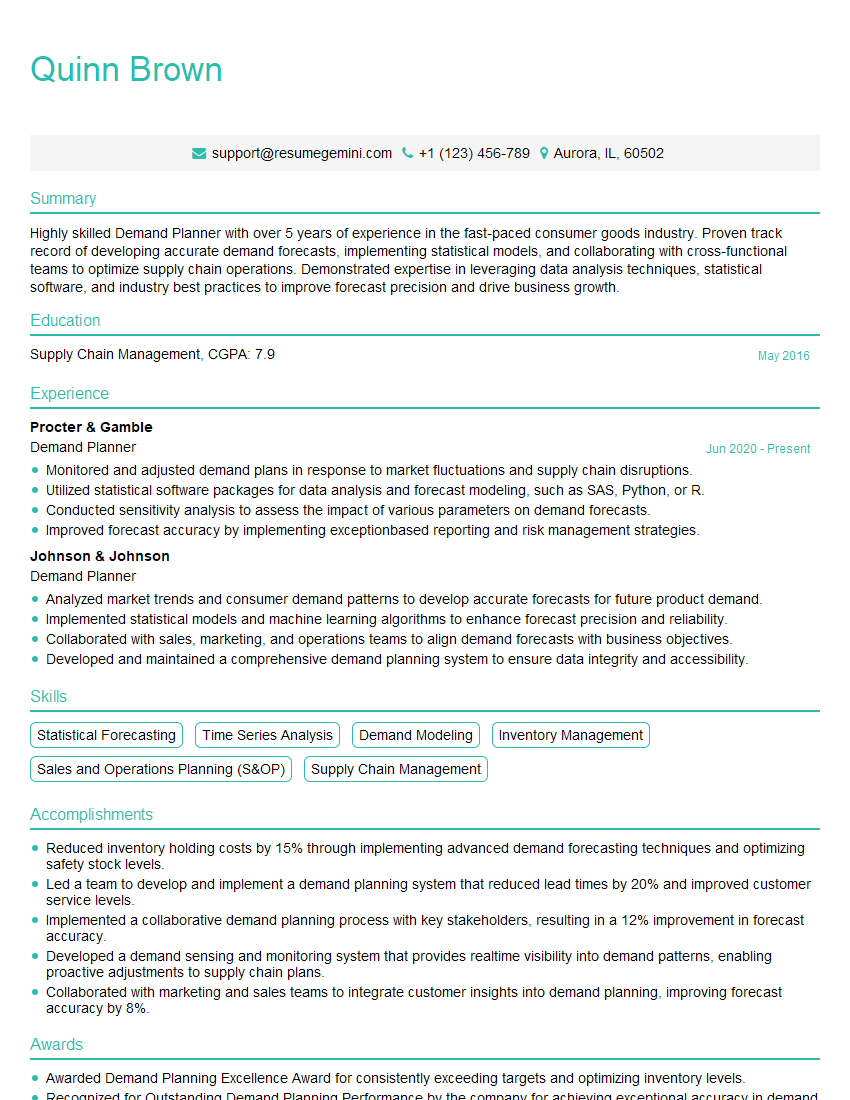
Demand Planner Resume Sample
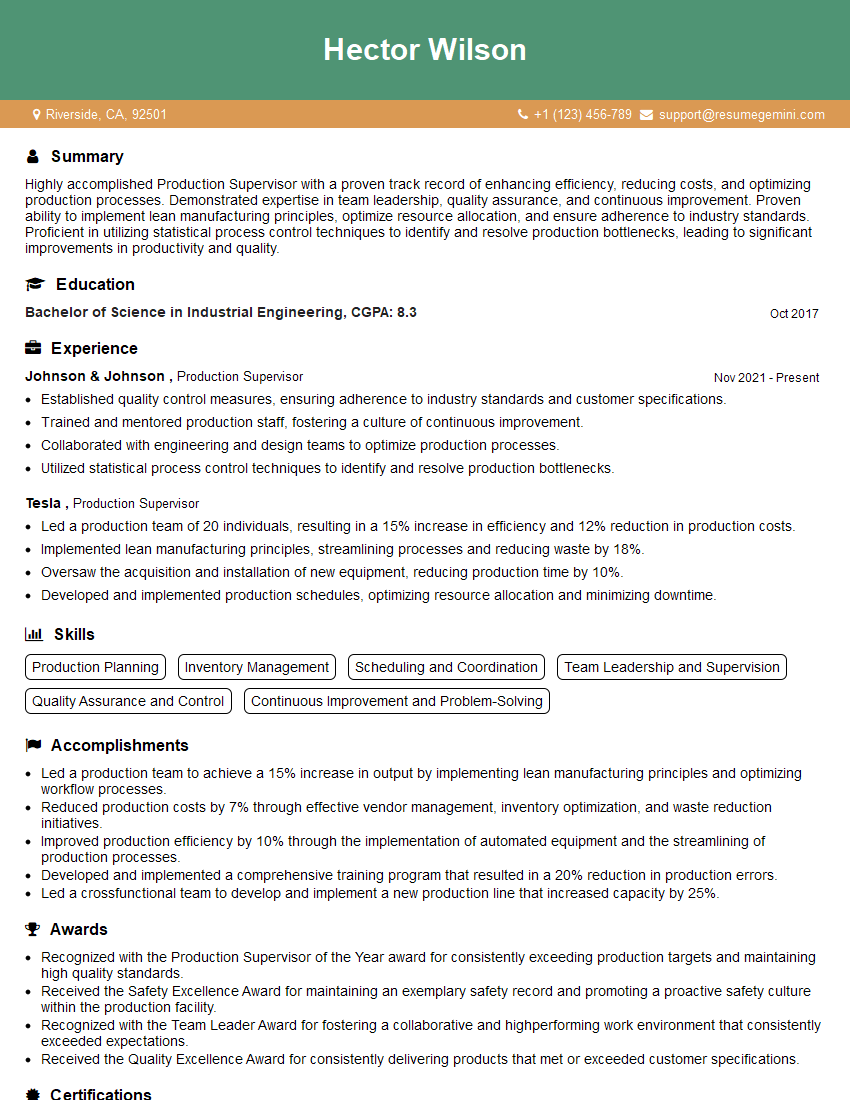
Production Supervisor Resume Sample
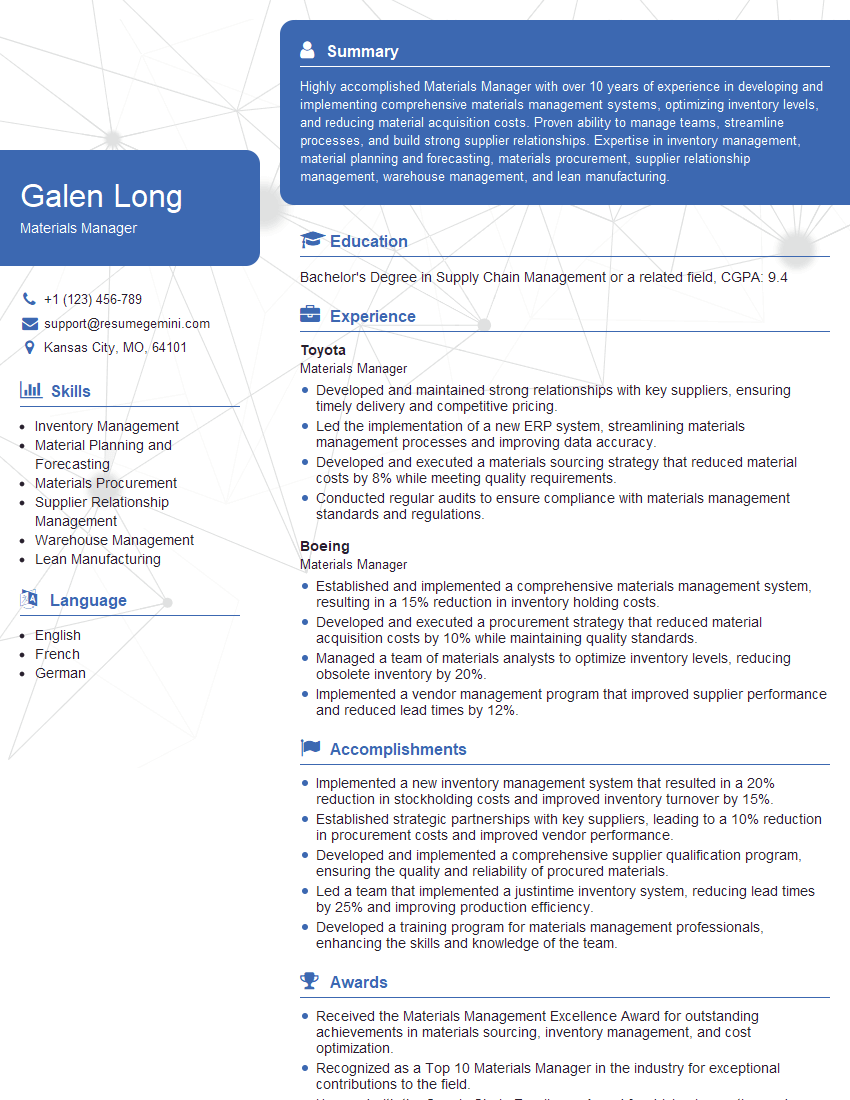
Materials Manager Resume Sample
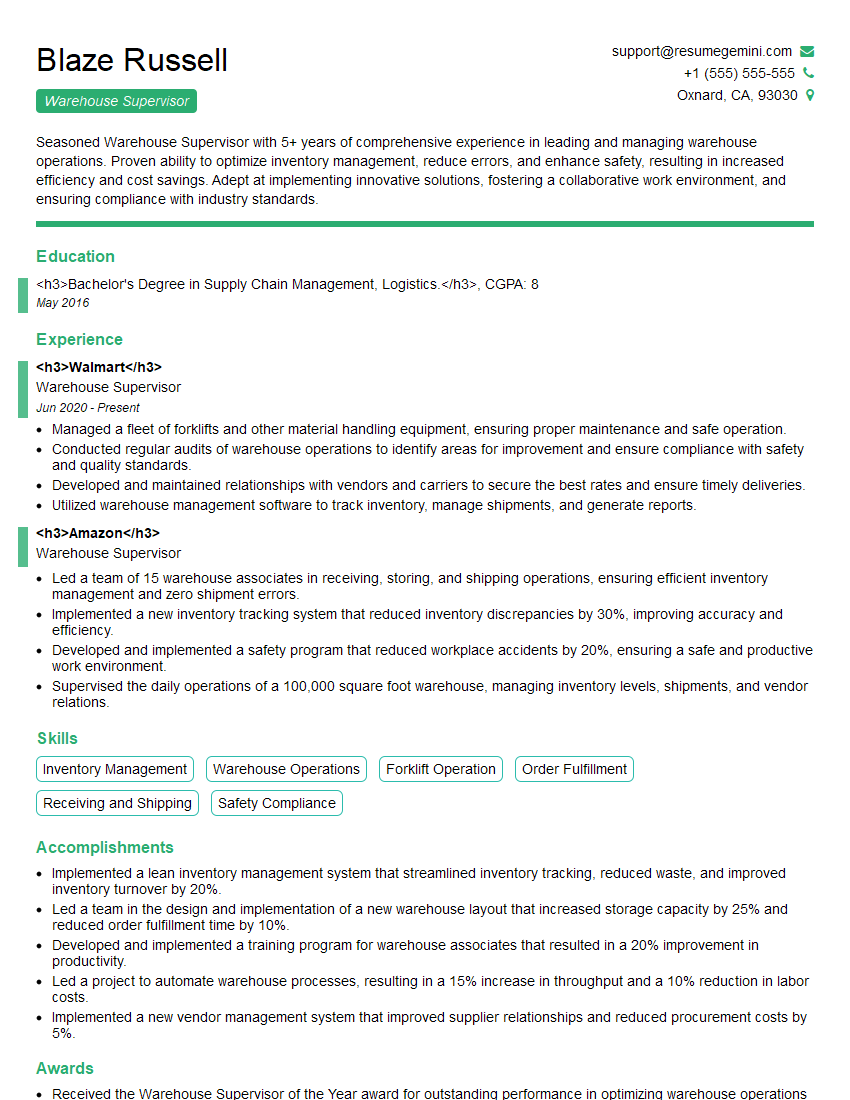
Warehouse Supervisor Resume Sample
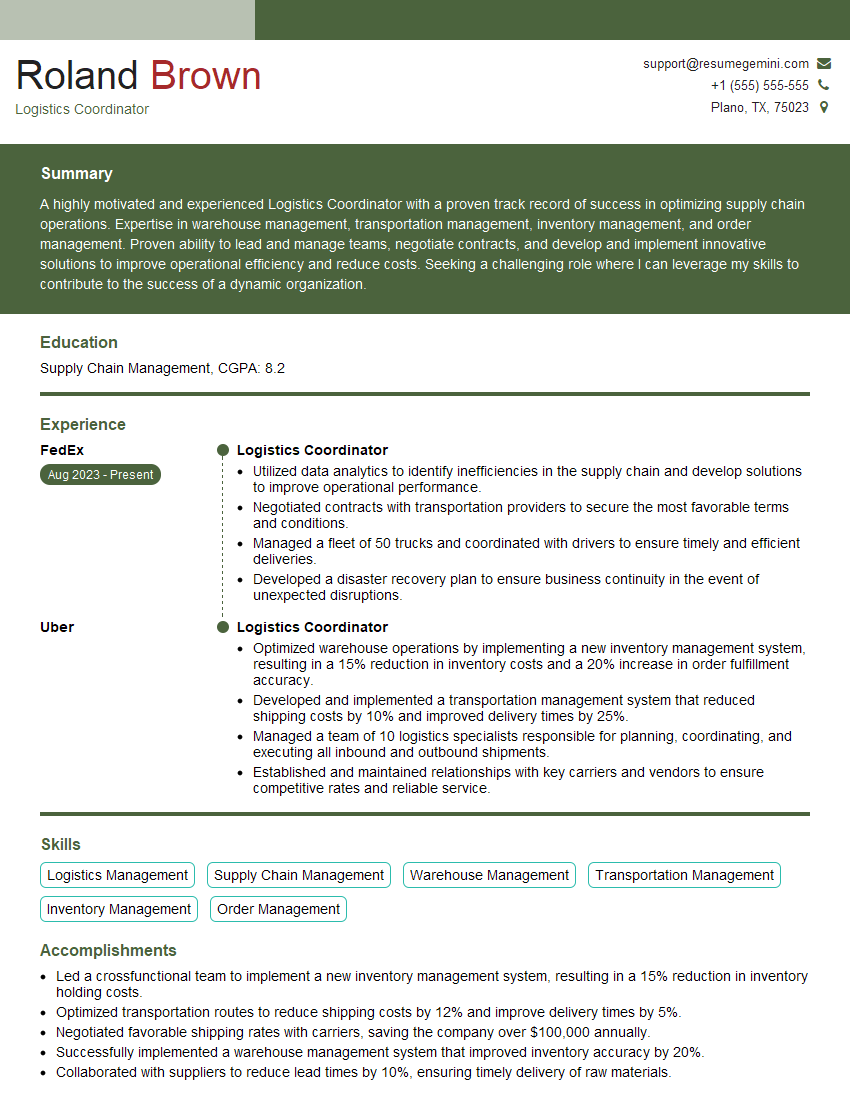
Logistics Coordinator Resume Sample
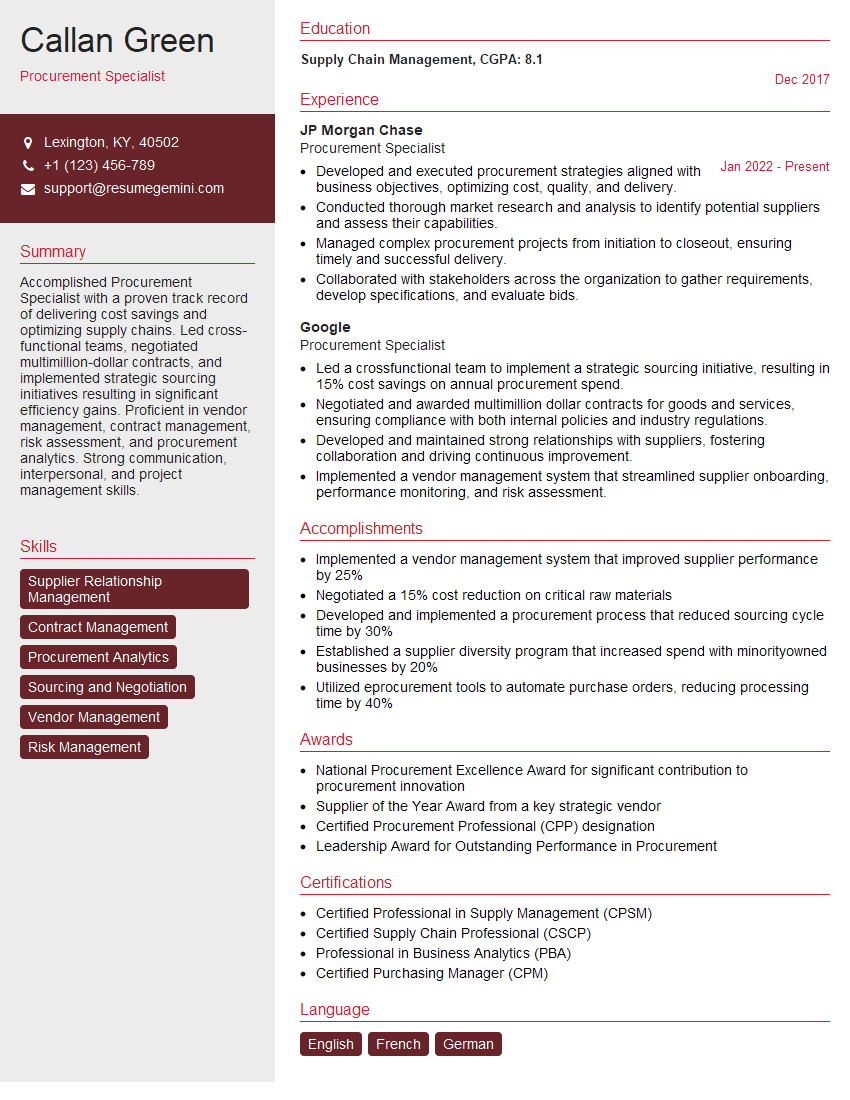
Procurement Specialist Resume Sample
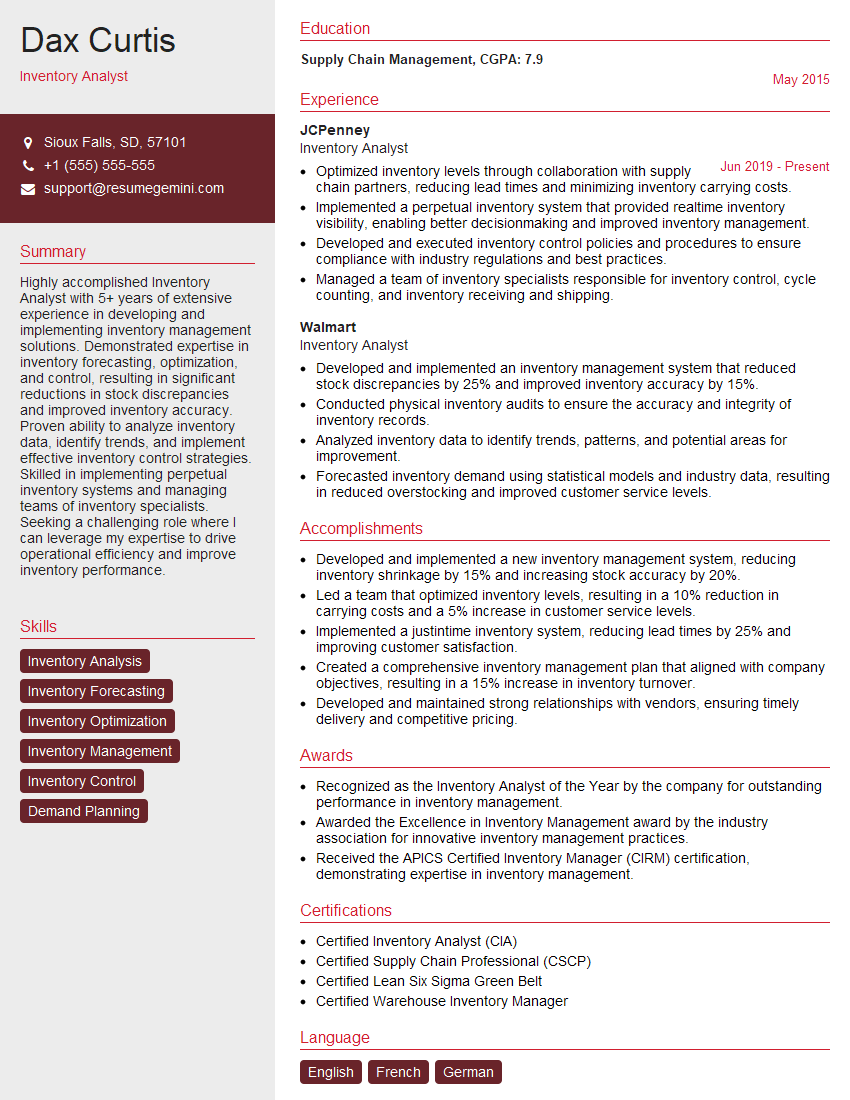
Inventory Analyst Resume Sample
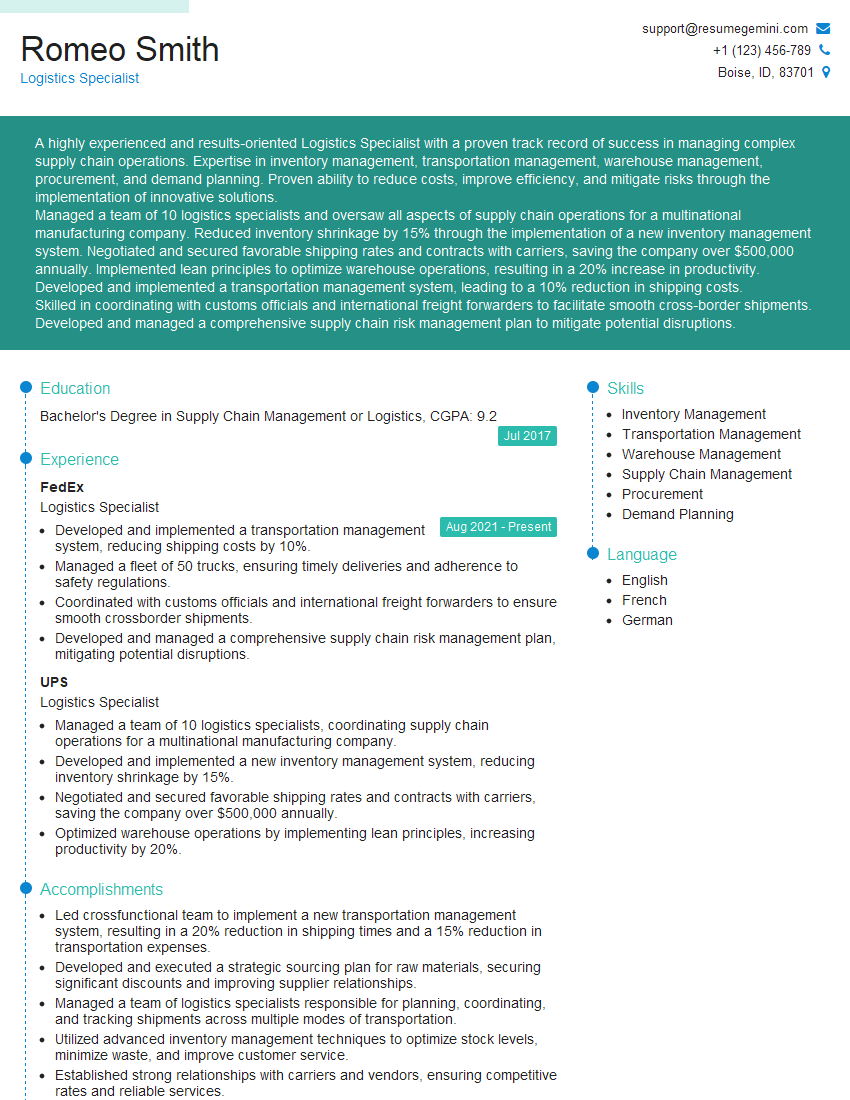
Logistics Specialist Resume Sample
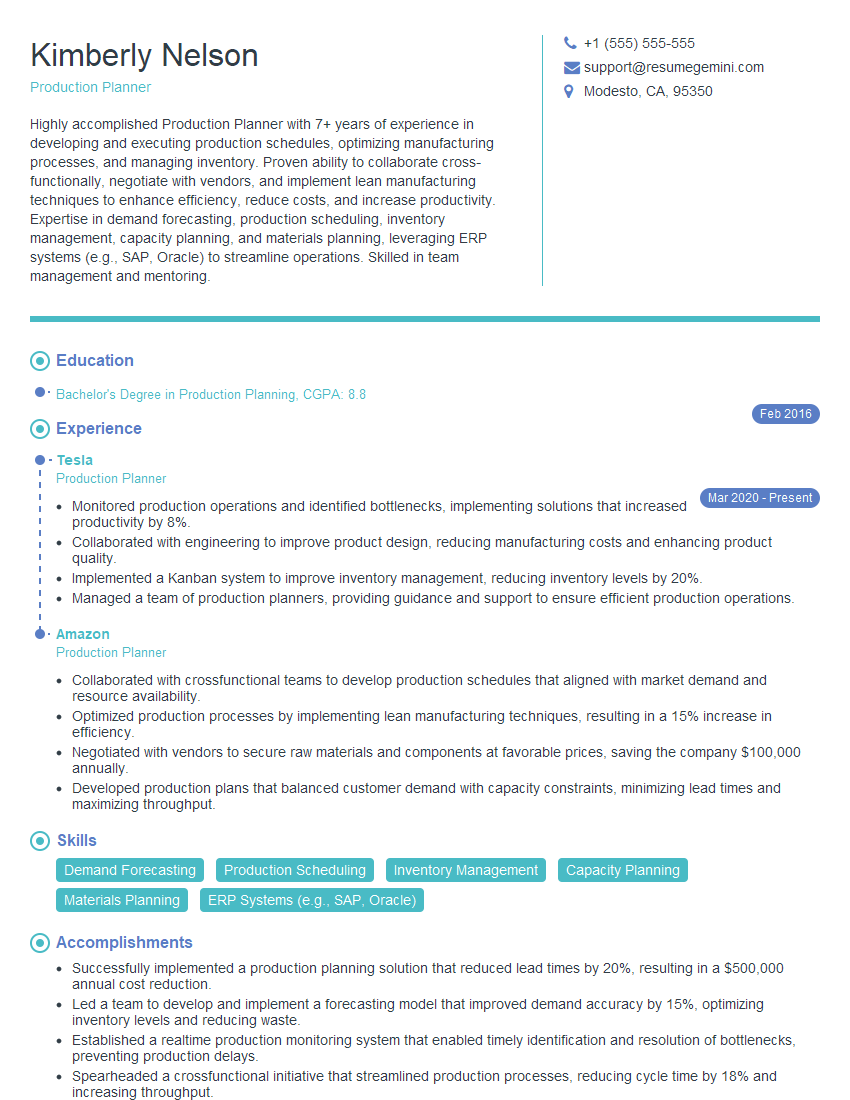
Production Planner Resume Sample
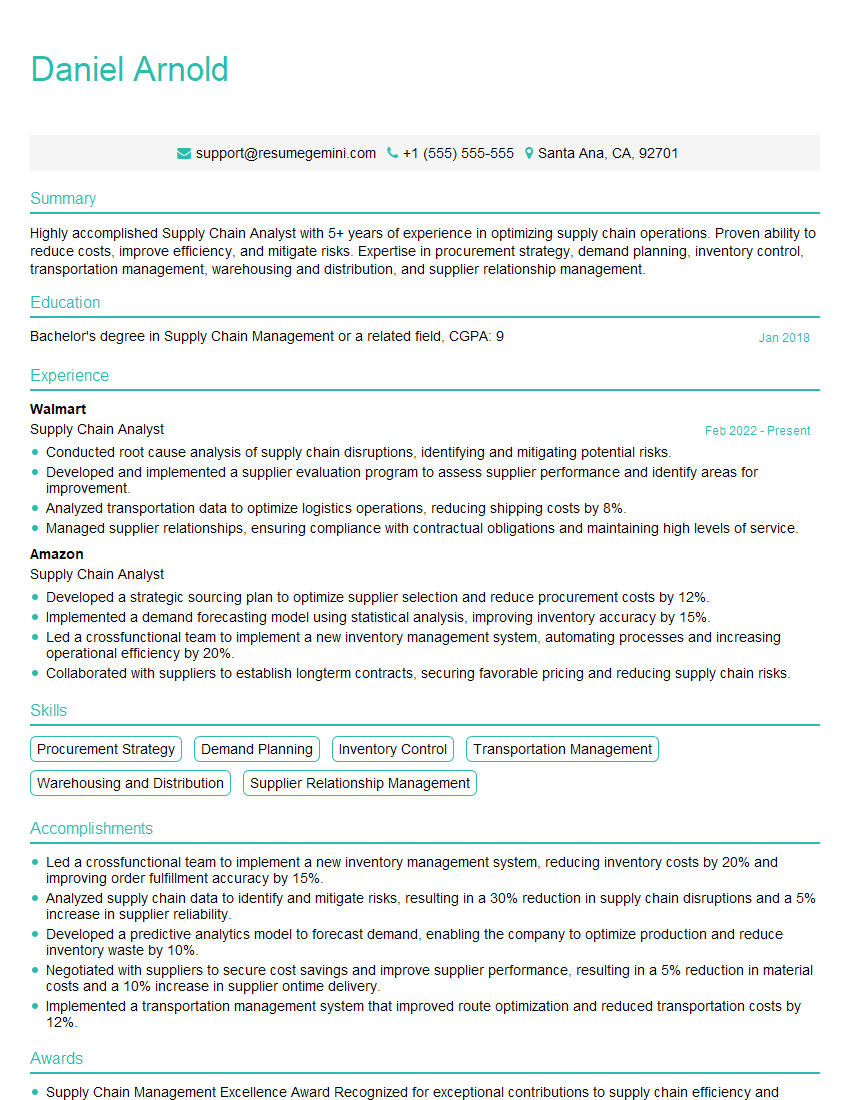
Supply Chain Analyst Resume Sample
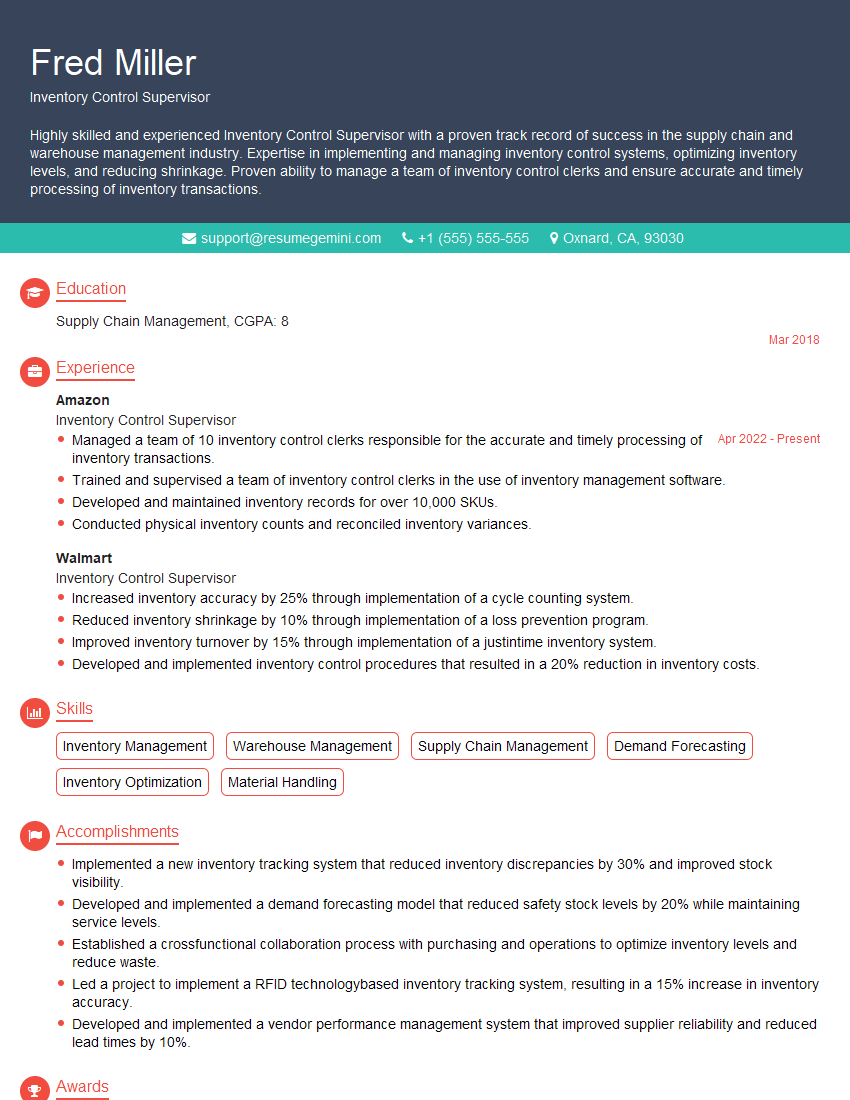
Inventory Control Supervisor Resume Sample
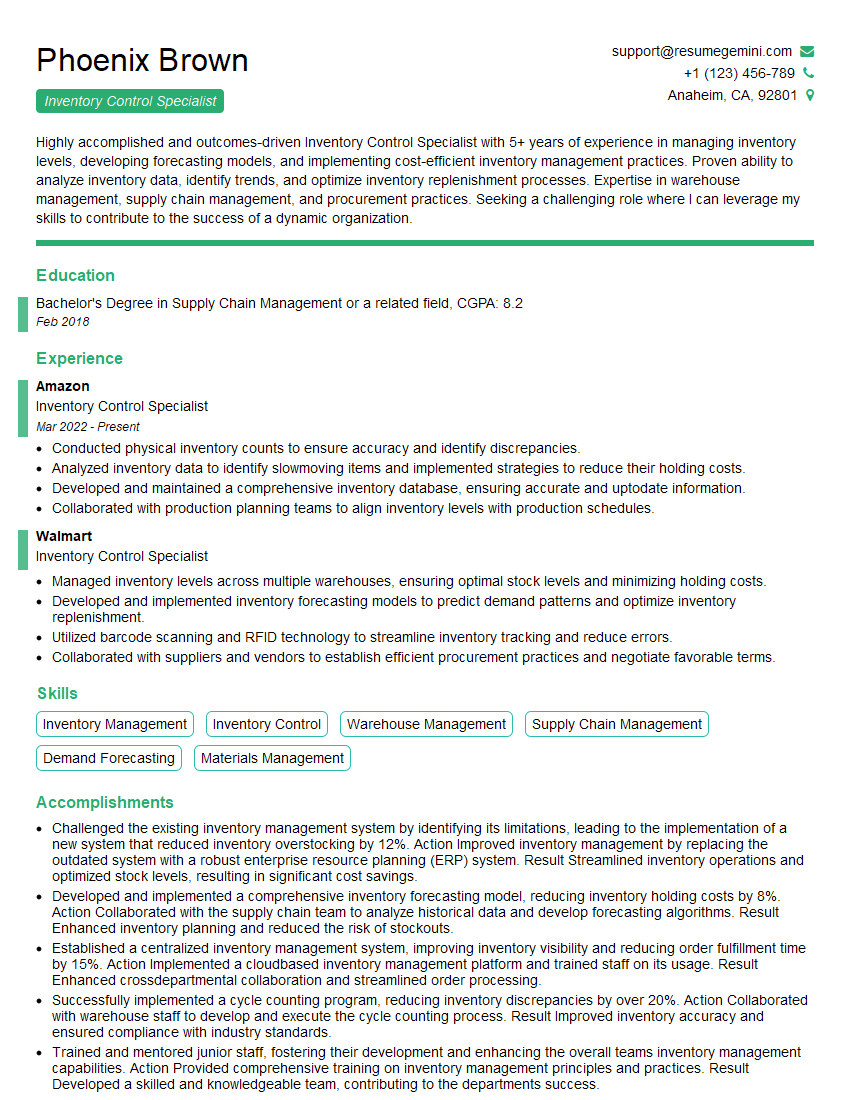
Inventory Control Specialist Resume Sample
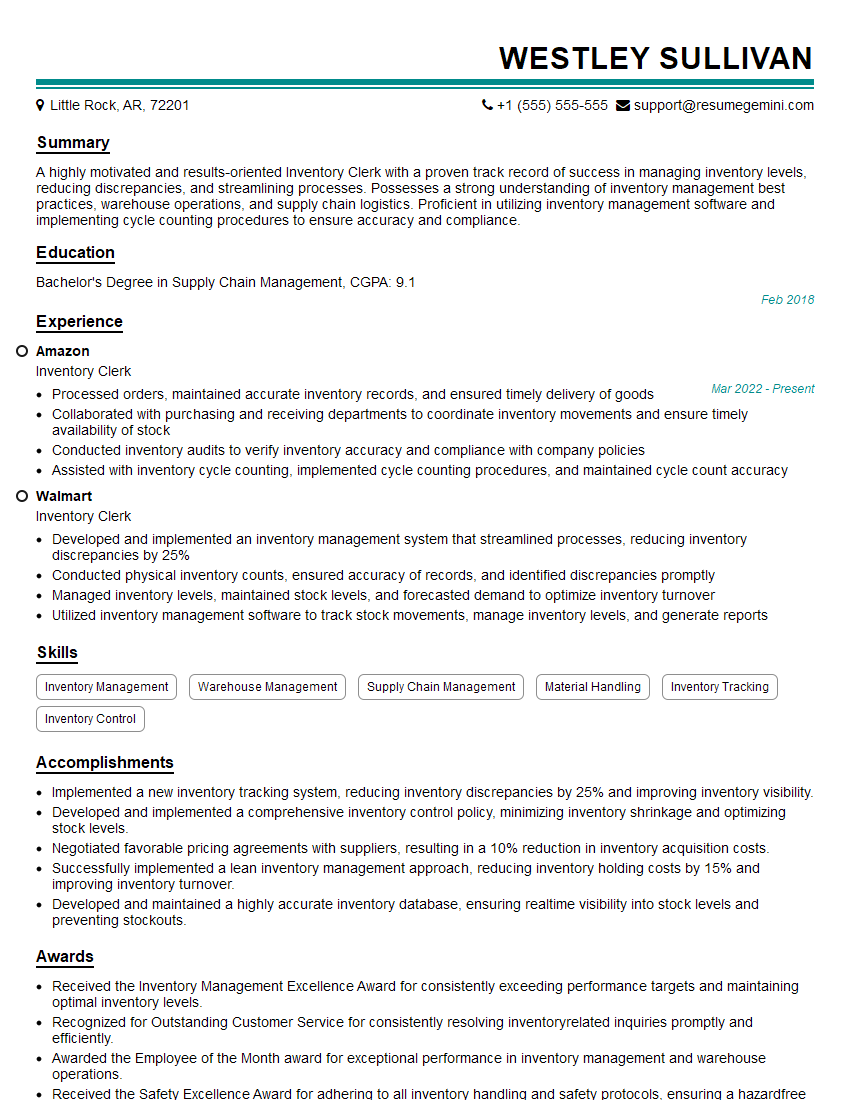
Inventory Clerk Resume Sample
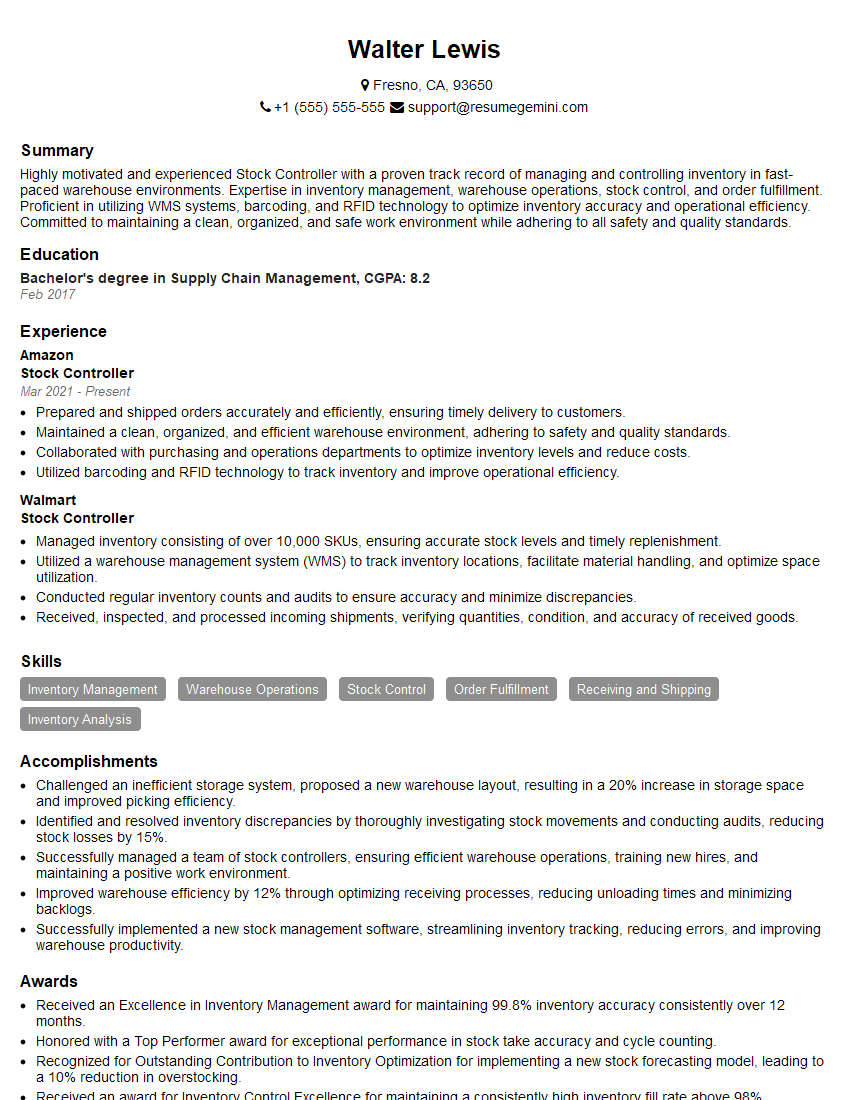
Stock Controller Resume Sample
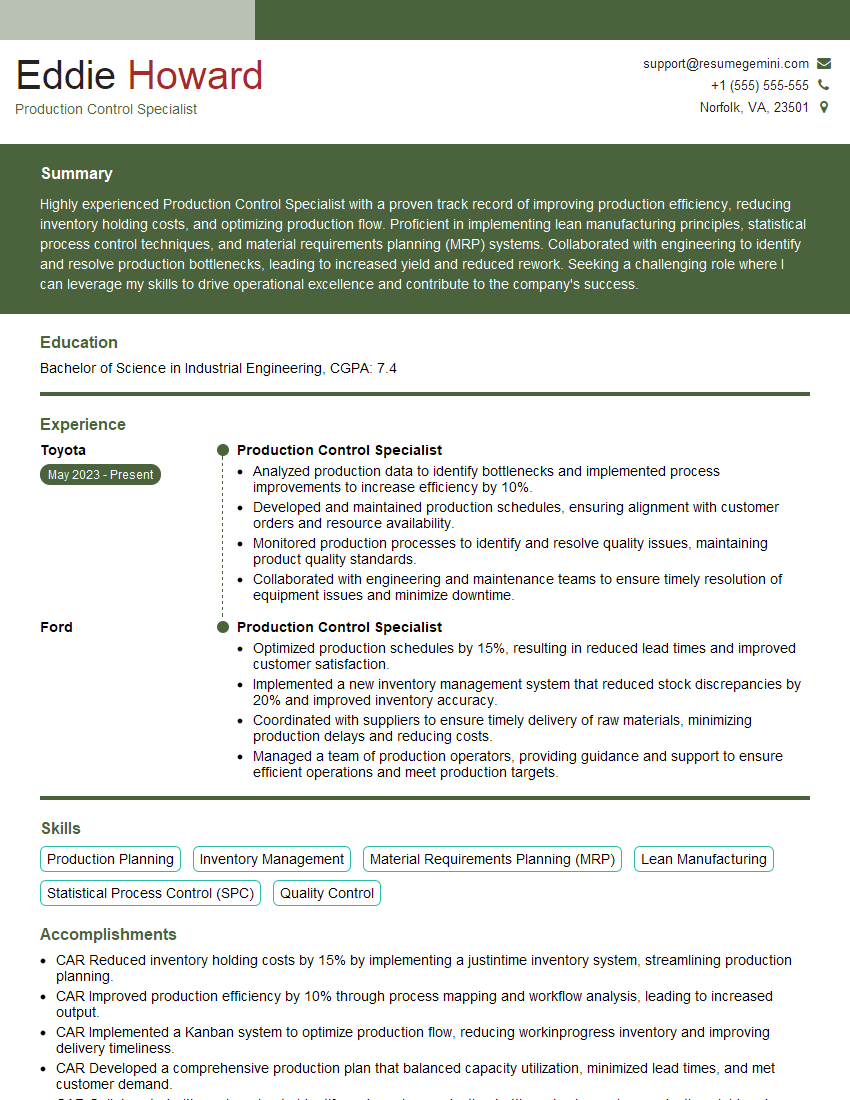
Production Control Specialist Resume Sample
- Operations Manager
- Demand Planner
- Production Supervisor
- Materials Manager
- Warehouse Supervisor
- Logistics Coordinator
- Procurement Specialist
- Inventory Analyst
- Logistics Specialist
- Production Planner
- Supply Chain Analyst
- Inventory Control Supervisor
- Inventory Control Specialist
- Inventory Clerk
- Stock Controller
- Production Control Specialist
Explore more articles
Users Rating of Our Blogs
Share Your Experience
We value your feedback! Please rate our content and share your thoughts (optional).
What Readers Say About Our Blog
Very informative content, great job.
good