Feeling uncertain about what to expect in your upcoming interview? We’ve got you covered! This blog highlights the most important Proficient in various sewing techniques interview questions and provides actionable advice to help you stand out as the ideal candidate. Let’s pave the way for your success.
Questions Asked in Proficient in various sewing techniques Interview
Q 1. Describe your experience with various sewing machine types (e.g., industrial, domestic).
My experience encompasses both domestic and industrial sewing machines. Domestic machines, like those commonly used at home, are versatile but have limitations in terms of speed and durability. I’m proficient in using various models, understanding their stitch settings, tension adjustments, and maintenance. For instance, I’ve extensively used Singer and Brother machines for various projects, from quilting to garment construction. Industrial machines, on the other hand, are designed for high-volume production and offer superior speed, power, and stitch consistency. I’ve worked with industrial straight stitch machines, overlock machines, and coverstitch machines in a previous role, focusing on efficient and precise mass production of apparel items. The key difference lies in their robustness and operational capacity. Industrial machines require a different skill set, emphasizing consistent operation at high speeds, which I’ve developed through hands-on experience.
Q 2. Explain the difference between serging and overlocking.
While both serging and overlocking create a finished edge on fabric, preventing fraying, there’s a subtle difference. Overlocking, generally performed on a serger (although it can be done with other specialized machines), cuts and sews the raw edges simultaneously, creating a neat, closed seam. It’s like a simultaneous trimming and stitching. This is great for preventing fraying and providing a professional finish, especially on knit fabrics. Serging, on the other hand, refers specifically to the type of stitch created by the serger; a type of overlock stitch that interlocks the fabric edges. Think of overlocking as the broader process, while serging is a specific type of overlock stitch. They often are used interchangeably, but technically serging is the stitch type created by an overlock process. In practice, I frequently use a serger (an overlock machine) for both processes to ensure clean and strong seams, especially in projects involving lightweight fabrics or stretch materials.
Q 3. How do you select the appropriate needle and thread for different fabrics?
Needle and thread selection is crucial for achieving professional results. The fabric dictates the needle type and thread weight. For delicate fabrics like silk or chiffon, I’d use a very fine needle, like a size 70/10 or 80/12, and a lightweight thread, such as silk or a fine polyester thread. For heavier fabrics such as denim or canvas, a heavier needle, like a size 90/14 or 100/16, and a stronger thread, such as a heavy-duty polyester or cotton thread, is necessary. The needle’s point also matters—a sharp needle for woven fabrics and a ballpoint needle for knits to prevent snagging. I always test my needle and thread combination on a scrap of the fabric before starting the project to avoid any surprises. For instance, using a ballpoint needle on a silk would prevent damage to delicate silk fibers. Similarly, a universal needle would be appropriate for cotton fabrics.
Q 4. Describe your experience with different seams (e.g., French seams, flat-felled seams).
My experience includes a wide range of seams, each suited for different applications and desired aesthetics. French seams are exceptionally neat, enclosing the raw edges completely, ideal for fine fabrics or garments where a clean finish is paramount. They involve two rounds of stitching, creating an almost invisible seam. Flat-felled seams, more durable, are commonly used in heavy-duty applications like denim. They’re built by encasing one seam allowance within the other, creating a reinforced, flat seam that is very durable and strong. Other seams I frequently employ include standard seams, Hong Kong seams (for a decorative finish), and welt seams (for pocket construction). The choice depends heavily on the fabric type, garment construction, and desired durability and aesthetic.
Q 5. How do you handle difficult fabrics like silk or leather?
Sewing silk and leather requires specialized techniques. For silk, I use a fine needle, a walking foot (to prevent slippage), and often use a lighter touch on the machine. Using a fine needle like a 70/10 or a 80/12 is key to avoiding holes or damage, and the walking foot ensures even feeding of both the upper and lower fabrics so that it doesn’t shift or pull during stitching. Additionally, pressing the seams carefully on a low heat setting is crucial to prevent damage. For leather, I might use specialized needles designed for leather or use a strong thread like polyester and stitch slowly and steadily to avoid breakage or skipped stitches. A roller foot might also be necessary to help the fabric move smoothly under the needle, and using a walking foot prevents shifting and slippage, especially with thick or slippery leather.
Q 6. Explain your process for creating a professional finish on a garment.
A professional finish involves meticulous attention to detail. This begins with accurate cutting and precise stitching, and extends to seam finishing, such as serging, overlocking, or pinking, to prevent fraying. Pressing each seam is vital for achieving a crisp, clean look and to set the shape of the garment. Details like clean edges, well-finished hems (double stitched, blind hemmed, or surged depending on the garment), and careful attention to buttonholes and button attachment create a polished, high-quality garment. For instance, I would always use a well-pressed seam finish that matches the seams inside the garment. The final pressing is equally crucial, ensuring all seams are smooth, flat and professional. I often use tailor’s tacks to make sure my construction is seamless and smooth.
Q 7. What are your preferred methods for pattern alteration?
My preferred methods for pattern alteration depend on the type of adjustment needed. For simple adjustments like lengthening or shortening a garment, I’d typically adjust the pattern pieces themselves. More complex adjustments, such as altering the fit at the bust or waist, might involve creating a new sloper or using a method such as the full-bust adjustment (FBA) or swayback adjustment. I often use muslin mock-ups to test alterations before working with the final fabric, allowing me to refine the fit before committing to the final garment. This method allows me to adjust the pattern and confirm the final fit before cutting the final material. I would always carefully document the alterations made to the original pattern to help reproduce the changes for future projects.
Q 8. Describe your experience with pattern grading.
Pattern grading is the process of scaling a garment pattern to different sizes. It’s crucial for mass production or creating custom-fit clothing. I’m proficient in both manual and digital grading methods. Manual grading involves meticulously measuring and adjusting pattern pieces using a ruler and other tools. This requires a keen eye for detail and a solid understanding of garment construction. I’ve graded patterns for various styles, from simple T-shirts to complex tailored jackets, ensuring consistent proportions and ease of movement across size ranges. Digital grading software significantly streamlines the process by automating many of these calculations, allowing for quicker turnaround times while maintaining accuracy. I’m experienced in using industry-standard software like Optitex and Gerber Accumark. For example, when grading a bodice pattern, I’ll meticulously adjust the bust, waist, and hip measurements to ensure a proper fit for each size, taking into consideration the different body types.
Q 9. How do you troubleshoot common sewing machine problems?
Troubleshooting sewing machine problems requires a systematic approach. I always start by checking the most common issues: Is the machine plugged in? Is the bobbin properly wound and inserted? Is the needle correctly inserted and in good condition? A bent or dull needle is a frequent culprit of skipped stitches or broken threads. Beyond these basics, I’ll check the tension settings – both upper and lower. Incorrect tension can lead to puckering, loose stitches, or broken threads. I’m experienced in diagnosing problems related to timing, which often requires a deeper understanding of the inner workings of the machine. If I’m unsure of the cause, I carefully clean and lubricate the machine according to the manufacturer’s instructions. A well-maintained machine is less prone to problems. For instance, if the stitching is uneven, I’ll systematically check the needle, tension, and the bobbin case. If that doesn’t solve the issue, I’ll look for any lint build-up that might be hindering the machine’s function.
Q 10. How do you maintain and care for your sewing equipment?
Maintaining sewing equipment is paramount for its longevity and optimal performance. Regular cleaning is crucial – I remove lint and dust from the machine using a soft brush, and I meticulously clean the bobbin case and feed dogs. Lubrication is equally important. I use a high-quality sewing machine oil sparingly and according to the manufacturer’s recommendations. I always store my machines in a dust-free environment, covered to prevent damage. I also regularly check the needle for damage or wear and replace it as needed. Similarly, I ensure my shears are sharp and regularly oiled to maintain their effectiveness. Additionally, I keep my pressing equipment clean, frequently cleaning the iron plate and replacing the distilled water. I believe in preventative maintenance. It’s much easier to prevent a problem than to fix one.
Q 11. What experience do you have with different types of zippers and closures?
My experience encompasses a wide range of zippers and closures. I’m adept at installing standard separating zippers, invisible zippers, and coil zippers, each requiring a slightly different technique. I’m also comfortable working with various closures such as hooks and eyes, buttons, snaps, and even more complex closures like metal or plastic buckles. For example, installing an invisible zipper requires precision to ensure it’s completely concealed within the seam allowance. With metal zippers, I can adjust slider functions, and with coil zippers, I am experienced in working with different types of zipper tape. I consider the fabric and garment style when choosing the appropriate type of closure to ensure both functionality and aesthetic appeal. Each closure presents unique challenges requiring different methods to ensure durability and a clean finish.
Q 12. How do you ensure the accuracy and consistency of your stitching?
Ensuring accurate and consistent stitching involves several key steps. Firstly, proper preparation is essential. I always check the fabric for any flaws and pre-wash fabrics that might shrink. Accurate cutting using sharp shears and precise marking of seam allowances also contributes significantly. Correct needle and thread selection for the fabric type is another critical factor. Maintaining consistent tension settings on the sewing machine is also key. I always test my stitch length and tension on a scrap piece of fabric before starting on the actual garment. Finally, I regularly check my stitching throughout the process, correcting any inconsistencies as they arise. It’s like baking – precise measurements and proper technique create consistently good results. Careful preparation and consistent attention to detail are my guiding principles.
Q 13. What methods do you use for pressing and finishing garments?
Pressing and finishing are crucial for creating a professional-looking garment. I use a variety of pressing techniques, including pressing with the grain, pressing seams open or to one side, and using tailor’s ham or sleeve board for curved areas. The choice of pressing technique depends on the fabric type and garment construction. Beyond basic pressing, I use different finishing techniques such as edge stitching, understitching, and Hong Kong finishing, to create a durable and neat finish. For example, Hong Kong finishing is ideal for high-end garments, providing a clean and elegant seam finish, but it’s more time-consuming than other techniques. Using a tailor’s clapper is essential to make sharp creases and crisp edges, especially when working with delicate fabrics. Each garment requires a unique combination of these techniques to achieve a polished and professional look.
Q 14. Describe your experience with various types of embroidery.
My embroidery experience includes various techniques, from hand embroidery to machine embroidery. Hand embroidery skills encompass various stitches, including running stitch, backstitch, satin stitch, and French knots. I’ve worked on projects ranging from simple monograms to intricate designs on garments and household items. Machine embroidery involves using an embroidery machine to create designs with different thread types and colors. I’m experienced in digitizing embroidery patterns and converting them into machine-readable formats using software like Embrilliance or Wilcom. I also have experience with free-motion embroidery, allowing for more creative and free-flowing designs. I find both hand and machine embroidery extremely versatile and satisfying. Each technique offers unique aesthetic and practical applications, greatly enriching the possibilities for garment embellishment.
Q 15. What software or technology are you familiar with for pattern making or design?
My experience with pattern-making and design software includes proficiency in industry-standard programs like Adobe Illustrator and Photoshop for creating and manipulating digital patterns. I also utilize specialized CAD software such as Lectra Modaris and Gerber Accumark for more advanced pattern grading and marker making. These programs allow for precise measurements, efficient scaling, and the creation of complex designs which would be far more time consuming and less accurate by hand. For example, using Illustrator, I can easily create a base pattern, then quickly adjust it to create different sizes, eliminating the need for manual recalculations and reducing the risk of errors. In addition, I’m familiar with simpler, more accessible tools such as Pattern Design software, which offers a balance of ease of use and functionality for simpler projects.
Career Expert Tips:
- Ace those interviews! Prepare effectively by reviewing the Top 50 Most Common Interview Questions on ResumeGemini.
- Navigate your job search with confidence! Explore a wide range of Career Tips on ResumeGemini. Learn about common challenges and recommendations to overcome them.
- Craft the perfect resume! Master the Art of Resume Writing with ResumeGemini’s guide. Showcase your unique qualifications and achievements effectively.
- Don’t miss out on holiday savings! Build your dream resume with ResumeGemini’s ATS optimized templates.
Q 16. How do you manage your time and prioritize tasks in a sewing environment?
Time management in sewing is crucial. I employ a combination of techniques including detailed project planning, using checklists, and breaking down large projects into smaller, manageable tasks. Prioritization is based on deadlines, complexity, and client requirements. I use a Kanban-style system, visually tracking projects on a whiteboard or digital equivalent. This helps me see what’s in progress, what’s next, and identify any potential bottlenecks. For example, if I have a rush order for alterations and a larger custom dress order, I prioritize the alterations to meet the urgent deadline while scheduling blocks of time for the dress project. Effective time management is about more than just speed; it’s about maintaining accuracy and quality throughout the process.
Q 17. Describe a time you had to troubleshoot a challenging sewing project.
I once encountered a significant challenge while constructing a bespoke wedding gown featuring intricate beading and embroidery on a delicate silk fabric. The beading kept shifting during the sewing process, causing the fabric to pucker and the overall design to look uneven. My troubleshooting involved experimenting with different backing fabrics to provide more stability, using a water-soluble stabilizer for the beading sections, and switching to smaller, more manageable beading sections. I also adjusted my sewing technique, using smaller stitches and a slower speed to ensure precise placement. Ultimately, through careful experimentation and persistent problem-solving, I successfully completed the gown to the client’s satisfaction. This experience emphasized the importance of meticulous planning and adaptability in handling unexpected challenges.
Q 18. How do you handle constructive criticism on your sewing work?
I value constructive criticism as an opportunity for professional growth. I approach it with an open mind, actively listening to the feedback and asking clarifying questions to fully understand the concerns. I view negative comments not as personal attacks, but as indicators of areas where I can improve my skills and techniques. For instance, if a client points out a slight imperfection in the stitching, I analyze the feedback, assess whether the issue affects the garment’s overall functionality or aesthetics, and determine the best course of action, which might involve refining my technique or even reworking a specific section of the garment. This process ensures continuous learning and enables me to deliver superior quality work consistently.
Q 19. What are your strategies for quality control in sewing?
My quality control strategies encompass multiple stages of the sewing process. It begins with careful fabric selection and pre-washing to avoid shrinkage and color bleeding. I meticulously check patterns for accuracy before cutting, and I use quality thread and needles appropriate for the fabric. During the sewing process, I regularly inspect my work for consistent stitching, accurate seam allowances, and proper alignment. After completion, I conduct a final quality check, inspecting the garment for any flaws in stitching, finishing, or overall fit. I also pay close attention to details like buttonholes, zippers, and hems. My quality control approach ensures each garment meets the highest standards and client expectations.
Q 20. What is your experience with industrial sewing equipment?
I possess extensive experience operating various industrial sewing machines, including single-needle, double-needle, overlock, coverstitch, and buttonhole machines. I’m comfortable with both basic operation and advanced techniques such as blind stitching, topstitching, and specialized embroidery. I understand the importance of machine maintenance, including proper lubrication, needle changes, and tension adjustments, to ensure optimal performance and the longevity of the equipment. In previous roles, I’ve worked with both standard and high-speed industrial sewing equipment, which has allowed me to adapt to different production environments and enhance my efficiency. My experience extends to industrial sewing machine maintenance and minor repairs.
Q 21. How do you interpret and follow technical specifications for garment construction?
Interpreting technical specifications is fundamental to garment construction. I approach this by meticulously reviewing all provided documentation, including sketches, measurements, material specifications, and construction details. I pay close attention to terms like seam allowances, ease, and grading. Any ambiguity is clarified with the client or designer before proceeding. For instance, if a specification calls for a particular type of seam finish, such as French seams or Hong Kong seams, I ensure I understand the required technique and execute it precisely. This systematic approach ensures that the final garment adheres to the design specifications and meets the required quality standards. My ability to accurately translate technical drawings and specifications into finished garments is a critical skill.
Q 22. Describe your experience with different types of sewing techniques (e.g., hand-sewing, machine sewing).
My sewing experience encompasses both hand-sewing and machine sewing, with a strong proficiency in both. Hand-sewing allows for intricate detail work and repairs, which I often use for finishing seams, creating buttonholes, or mending delicate fabrics. I’m adept at various hand stitches, including running stitch, backstitch, slip stitch, and blanket stitch, each suited for specific applications. Machine sewing, on the other hand, provides efficiency for larger projects and consistent stitch quality. I’m experienced with various machine stitches, including straight stitch, zig-zag stitch, overlock stitch, and decorative stitches, and I’m comfortable working with both industrial and domestic sewing machines. I’ve worked extensively with different sewing machine techniques such as free-motion quilting, appliqué, and embroidery.
- Hand-sewing Example: I recently hand-stitched a decorative lining for a bespoke handbag, requiring precise placement and delicate stitching to maintain a clean finish.
- Machine sewing Example: In my previous role, I used an industrial sewing machine to construct over 100 identical garments within a tight deadline, leveraging the machine’s speed and consistency to maintain quality and efficiency.
Q 23. How would you approach a project with an unfamiliar fabric or pattern?
When encountering an unfamiliar fabric or pattern, I follow a structured approach. First, I meticulously study the pattern instructions and fabric content label. I’ll then conduct a thorough pre-wash of the fabric to check for shrinkage and colorfastness, a crucial step to avoid unexpected alterations in the final product. Next, I create a test garment using scrap fabric to experiment with the pattern’s construction and the fabric’s behavior. This allows me to identify any potential challenges, adjust the seam allowance if needed, and practice any unfamiliar techniques. For instance, if the fabric is unusually slippery, I’d experiment with different pressing techniques or seam finishes to ensure a clean and professional result.
If the pattern is complex, I’ll break it down into smaller, manageable steps. I find it helpful to use a tailor’s chalk or marking pen to transfer the pattern pieces onto the fabric accurately. Finally, thorough research on the internet or consulting with other experienced sewists can further enrich my understanding and avoid potential pitfalls.
Q 24. What safety measures do you observe when using sewing equipment?
Safety is paramount in my sewing practice. I always ensure that my sewing machine is properly grounded and that the area around it is clear of obstructions. Before using any sewing machine, I check the machine’s functionality ensuring the needles are secure and the power cord is intact. I never leave a running machine unattended. When using pins, needles, or scissors, I handle them with care and keep them organized in designated containers. For tasks like using rotary cutters or cutting on the fabric, I always use a self-healing cutting mat to protect my work surface and prevent accidents. I also wear safety glasses, particularly when using rotary cutters or working with fabrics that may produce fibers that could irritate the eyes.
Furthermore, I always unplug the machine before making any adjustments or cleaning. Regular maintenance, including cleaning the machine’s bobbin area and lubricating moving parts, is part of my standard procedure to maintain machine functionality and safety.
Q 25. How do you calculate fabric yardage for a given pattern?
Calculating fabric yardage requires careful consideration of several factors. Firstly, the pattern instructions will provide an estimate of the required yardage, usually based on specific sizes. However, this is just a starting point. I always add extra yardage to account for potential errors, matching patterns, and fabric shrinkage. The type of fabric also plays a crucial role; fabrics with directional prints (like stripes or florals) or those needing specific grain alignment might necessitate additional yardage.
I usually add at least an extra half-yard to a yard, depending on the complexity of the pattern and the fabric. For example, if a pattern suggests 2 yards of fabric, I might purchase 2.5 to 3 yards, particularly if the fabric is directional or prone to stretching.
It is crucial to check your pattern’s layout diagrams which illustrate the most efficient arrangement of pattern pieces on the fabric, minimizing wastage. Always double-check measurements and compare them with the available width of your selected fabric to make the most informed decision on yardage.
Q 26. Explain your understanding of fabric drape and how it affects garment design.
Fabric drape refers to the way a fabric hangs or falls. It’s influenced by factors like fiber content, weave structure, and weight. Understanding drape is critical in garment design because it significantly impacts the final garment’s silhouette and overall appearance. For example, a stiff fabric like linen will produce a structured, tailored look, whereas a flowing fabric like silk will create a softer, more fluid drape.
When designing garments, I carefully consider the fabric’s drape. A fabric with poor drape might require additional interfacing to provide structure and maintain the desired shape, while a very flowing fabric may not be suitable for fitted garments. I often use muslin to create a test garment before using the final fabric. This allows me to observe how the fabric drapes, and make adjustments to the pattern if needed. This is especially important when working with new fabrics or creating designs with complex draping elements.
Q 27. What is your experience working within deadlines in a fast-paced sewing environment?
I thrive in fast-paced environments and am accustomed to working under pressure to meet deadlines. In my previous role at [Previous Company Name], I regularly handled multiple projects simultaneously, prioritizing tasks based on urgency and deadline. I utilize efficient time management strategies, such as creating detailed schedules, breaking down large projects into smaller, manageable tasks, and effectively prioritizing. This allowed me to consistently deliver high-quality work within the specified timeframe, even during peak seasons with increased workload.
My experience also includes working with other team members, which enhances efficiency and allows for collaboration and the sharing of workloads. Communication and precise planning are crucial in these circumstances; I always ensure clear communication with team members and supervisors to anticipate any potential issues before they hinder productivity.
Q 28. Describe your knowledge of different fabric types and their properties.
My knowledge of fabric types is extensive, encompassing natural fibers like cotton (known for its breathability and absorbency), linen (strong and durable with a crisp drape), silk (luxurious with a smooth drape), and wool (warm and insulating); and synthetic fibers like polyester (durable and wrinkle-resistant), nylon (strong and elastic), and rayon (soft and fluid). I understand the properties of each fiber and how these properties influence the fabric’s drape, durability, and suitability for various garment types.
Beyond fiber content, I consider weave structures such as twill (diagonal weave offering durability), satin (smooth, lustrous surface with a floaty weave), and jersey (knitted structure for flexibility). Understanding these factors allows me to select the appropriate fabric for a project, considering factors like the intended use, the desired aesthetic, and the garment’s construction methods. For example, a tightly woven cotton would be suitable for a tailored shirt, whereas a loosely woven linen would be ideal for a summer dress, owing to its breathability.
Key Topics to Learn for Proficient in Various Sewing Techniques Interview
- Hand Sewing Techniques: Mastering basic stitches (running stitch, backstitch, whip stitch, etc.) and their applications in different fabrics. Understand the selection of appropriate needles and threads for various projects.
- Machine Sewing Techniques: Demonstrate proficiency in operating sewing machines, including straight stitching, zig-zag stitching, buttonholes, and various decorative stitches. Discuss different machine types and their suitability for specific tasks.
- Pattern Making and Alterations: Explain your understanding of drafting and manipulating patterns to create garments that fit various body types. Discuss techniques for adjusting patterns to achieve desired styles and sizes.
- Fabric Selection and Properties: Demonstrate knowledge of different fabric types (natural and synthetic), their properties (drape, weight, texture), and suitability for various projects. Understand how fabric choice impacts construction methods.
- Garment Construction: Discuss your experience in constructing various garments, such as skirts, blouses, trousers, or dresses. Highlight your skills in assembling different components, finishing seams, and incorporating details like zippers and closures.
- Troubleshooting and Problem-Solving: Explain how you approach common sewing challenges, such as skipped stitches, fabric puckering, or fitting issues. Demonstrate your ability to identify and resolve problems efficiently.
- Sewing Machine Maintenance: Describe your knowledge of basic sewing machine maintenance, including cleaning, oiling, and troubleshooting minor malfunctions.
- Specialized Techniques (if applicable): If you possess expertise in areas like embroidery, quilting, tailoring, or alterations, be prepared to discuss these skills in detail.
Next Steps
Mastering various sewing techniques is crucial for career advancement in the fashion and textile industries, opening doors to diverse and rewarding opportunities. To maximize your job prospects, create a strong, ATS-friendly resume that highlights your skills and experience effectively. ResumeGemini is a trusted resource that can help you build a professional resume that showcases your capabilities to potential employers. Examples of resumes tailored to showcasing proficiency in various sewing techniques are available to help you get started.

Quilter Resume Sample

Textile Designer Resume Sample
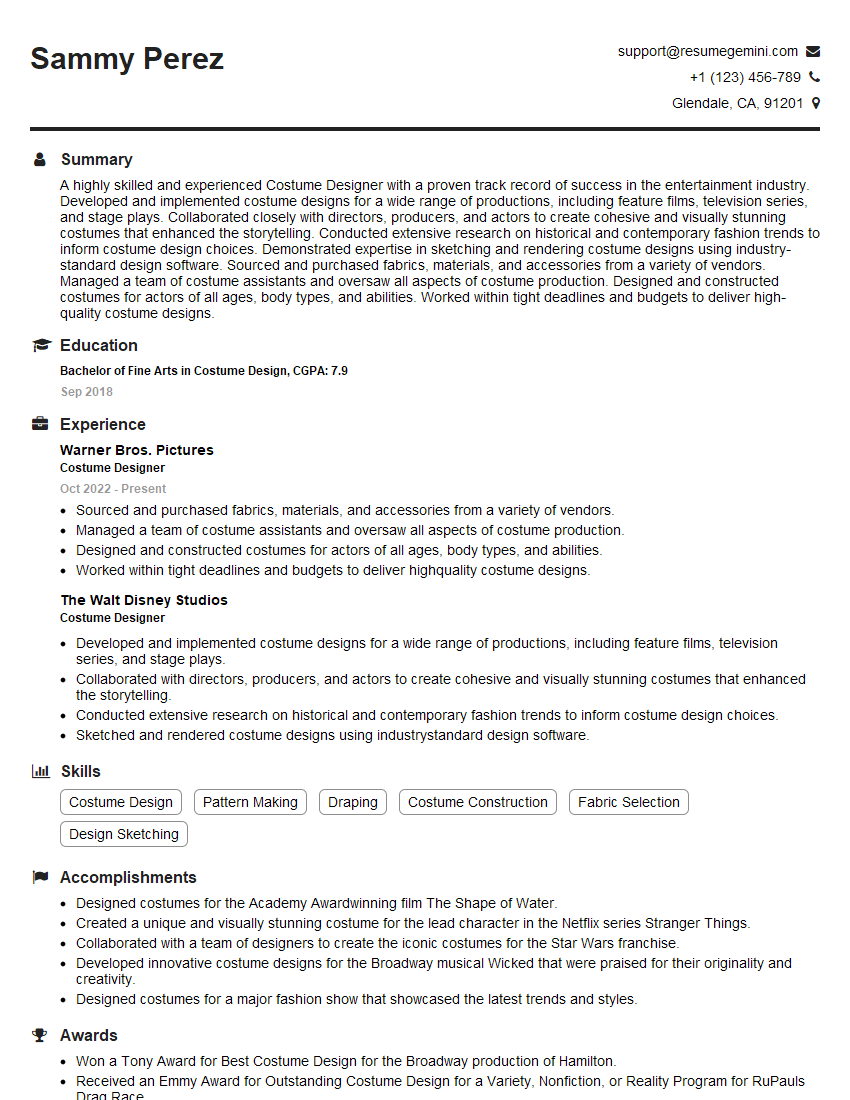
Costume Designer Resume Sample
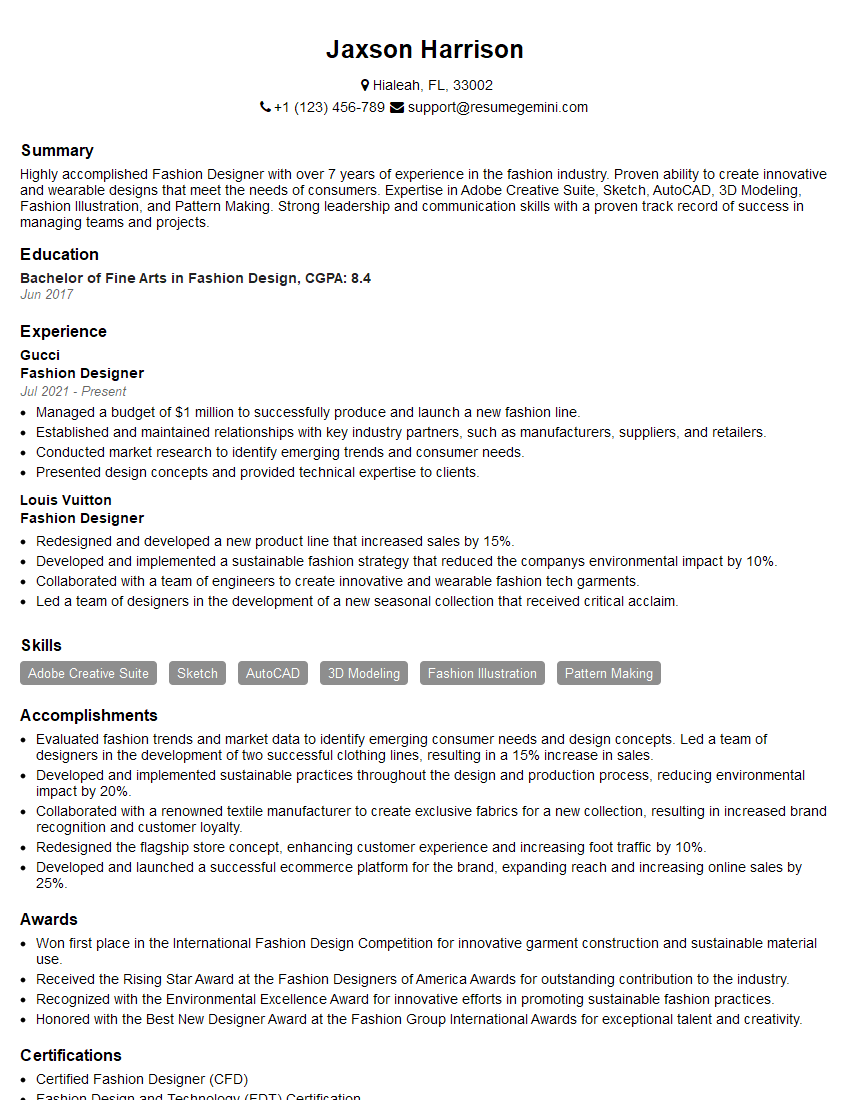
Fashion Designer Resume Sample

Draper Resume Sample

Seamstress Resume Sample
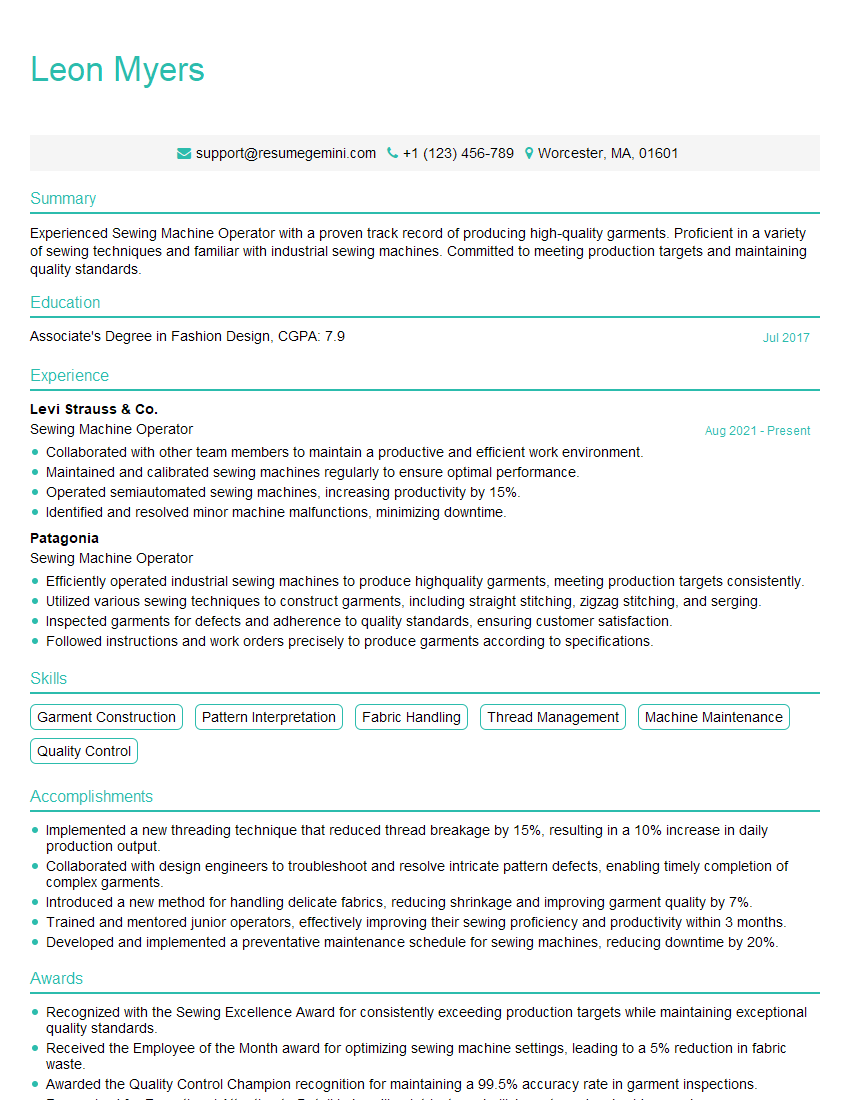
Sewing Machine Operator Resume Sample
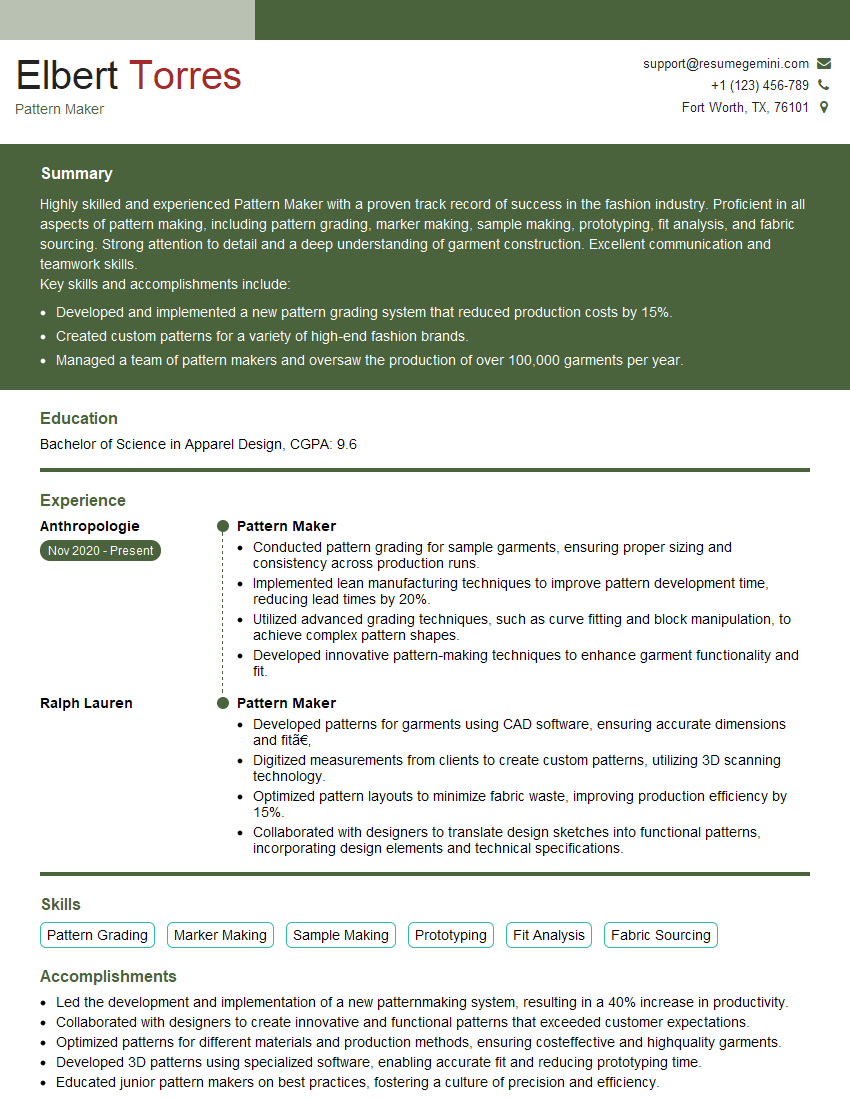
Pattern Maker Resume Sample
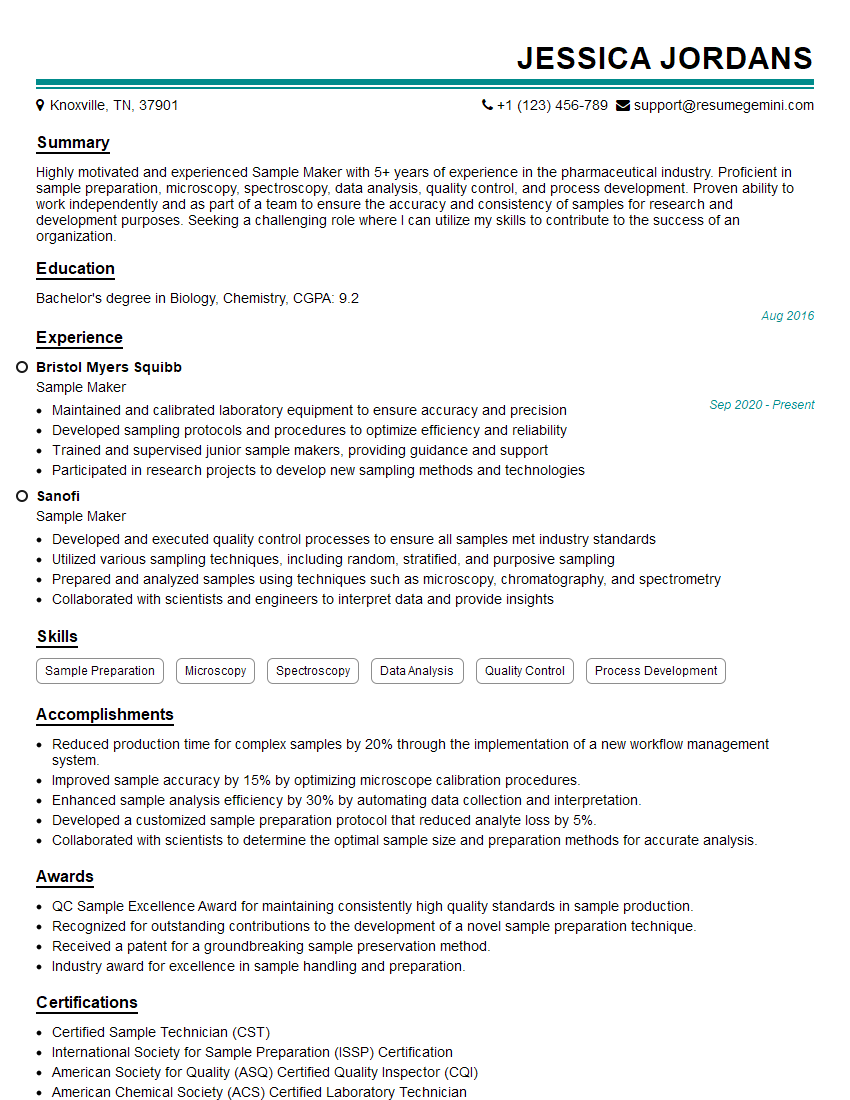
Sample Maker Resume Sample
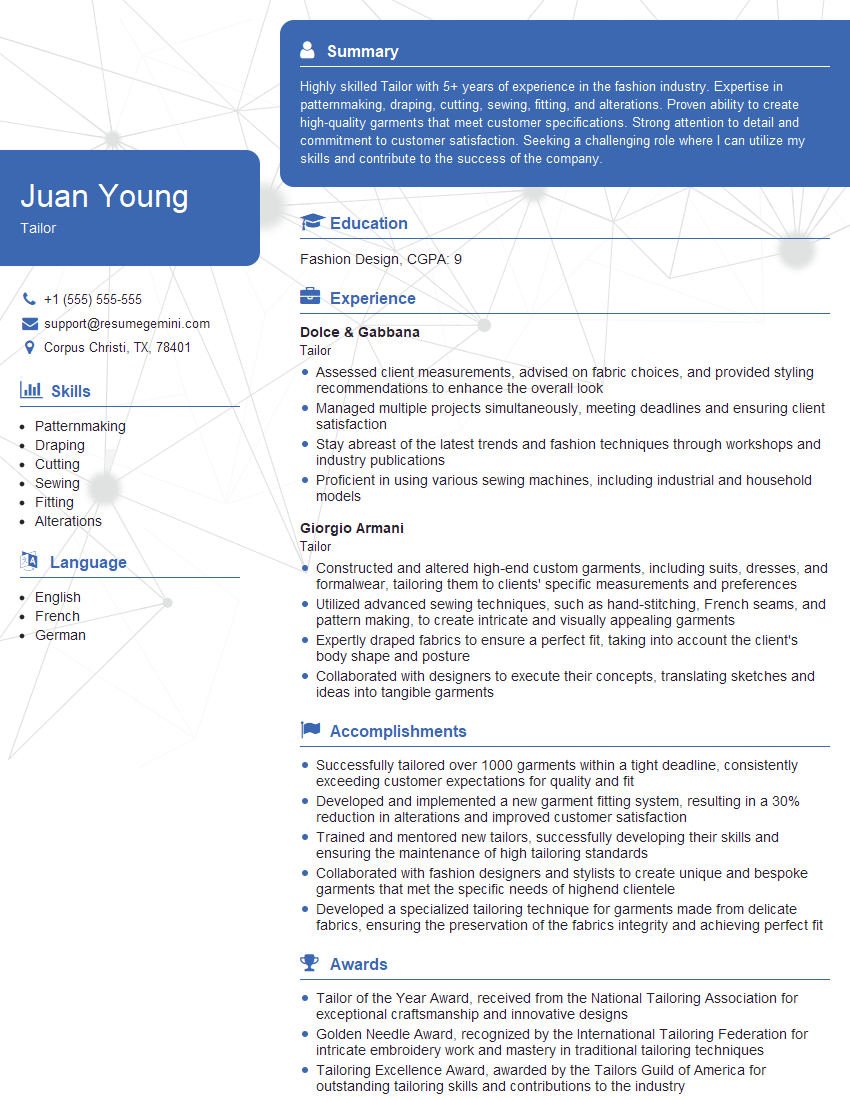
Tailor Resume Sample

Embroidery Specialist Resume Sample
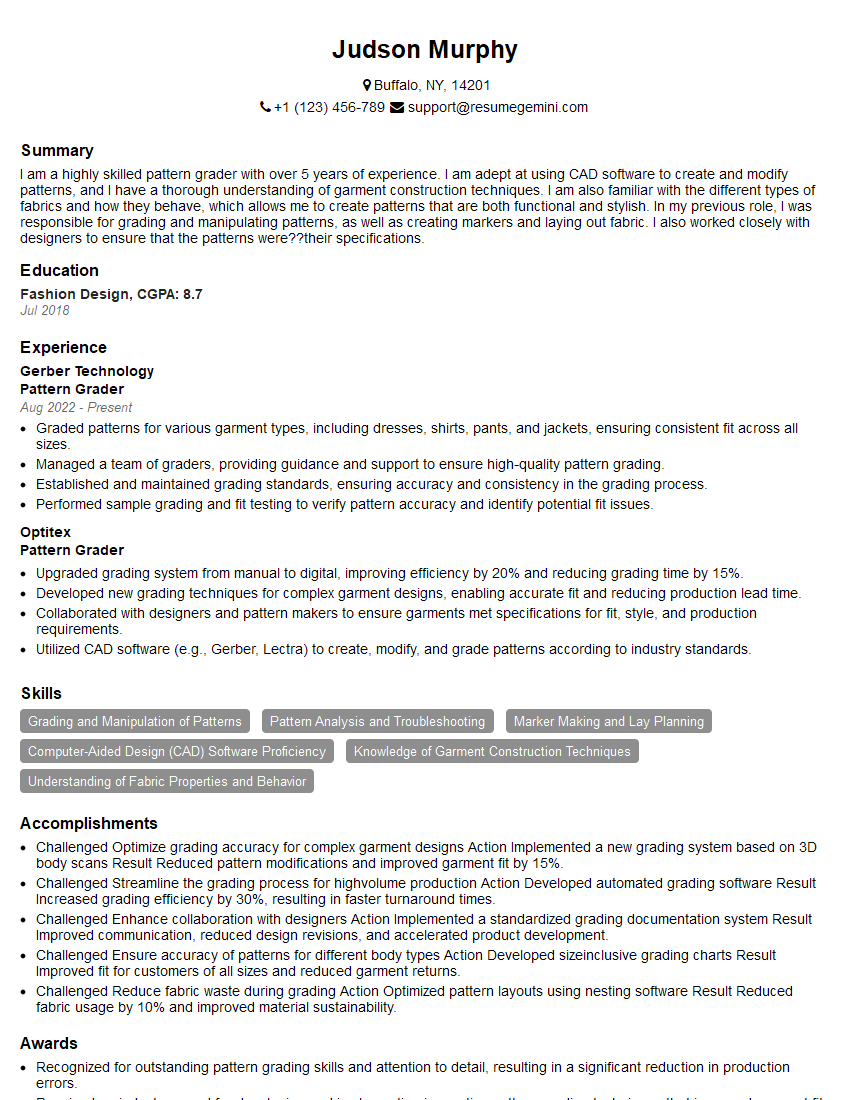
Pattern Grader Resume Sample
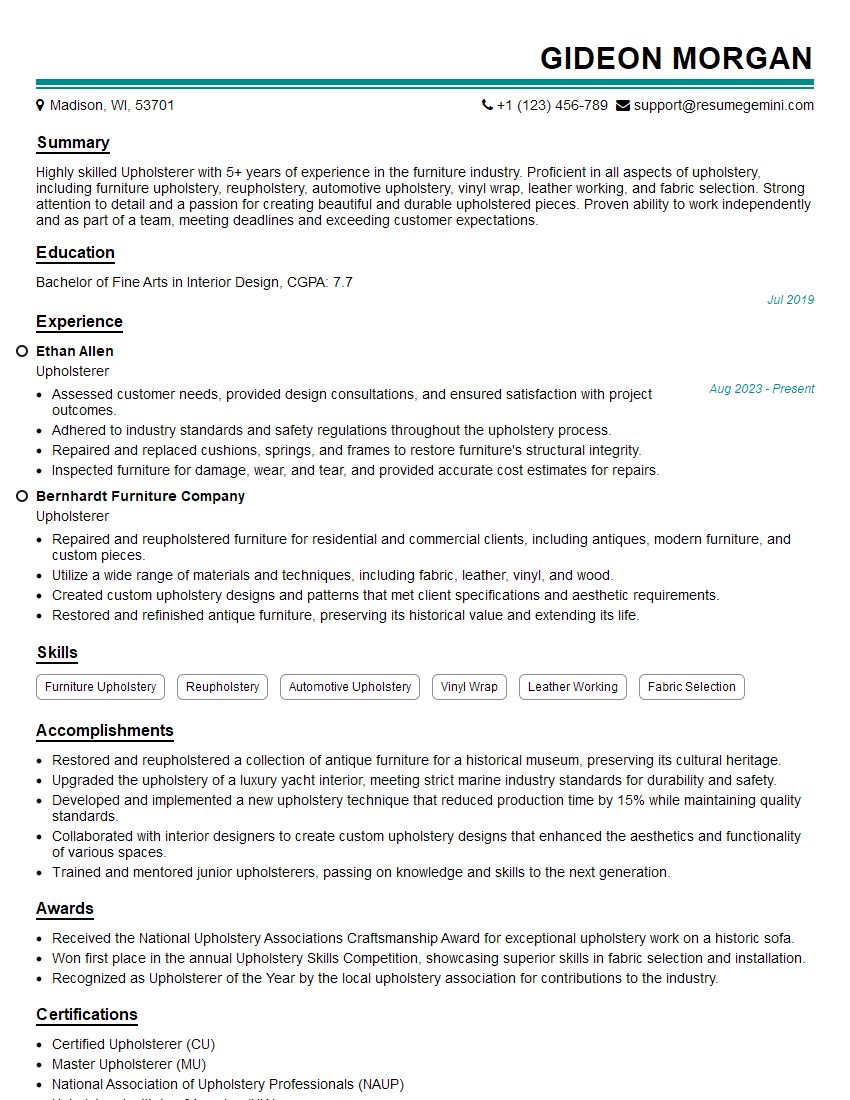
Upholsterer Resume Sample
Explore more articles
Users Rating of Our Blogs
Share Your Experience
We value your feedback! Please rate our content and share your thoughts (optional).
What Readers Say About Our Blog
Very informative content, great job.
good