Every successful interview starts with knowing what to expect. In this blog, we’ll take you through the top Program Curation interview questions, breaking them down with expert tips to help you deliver impactful answers. Step into your next interview fully prepared and ready to succeed.
Questions Asked in Program Curation Interview
Q 1. Describe your experience in developing and implementing a learning program.
Developing and implementing a learning program is a multifaceted process that involves needs analysis, content creation, delivery method selection, and evaluation. In my previous role at Acme Corporation, I led the development of a comprehensive onboarding program for new sales representatives. This involved:
- Needs Analysis: We conducted surveys, interviews, and shadowing sessions to understand the knowledge and skills gaps of new hires.
- Content Development: I collaborated with subject matter experts to create engaging learning materials including videos, interactive modules, and case studies. These materials covered sales techniques, product knowledge, and company culture.
- Delivery Method: We implemented a blended learning approach, combining online modules with in-person workshops and mentoring sessions. This catered to different learning styles and ensured effective knowledge transfer.
- Evaluation: We used pre- and post-tests, performance reviews, and feedback surveys to measure the program’s effectiveness and identify areas for improvement. We saw a 20% increase in sales performance within the first quarter of implementation.
Q 2. How do you identify the learning needs of a target audience?
Identifying learning needs is crucial for program success. It’s like building a house – you need a solid foundation. My approach involves a multi-pronged strategy:
- Performance Data Analysis: Reviewing existing performance metrics (e.g., sales figures, error rates) to identify skill gaps.
- Surveys and Questionnaires: Gathering feedback directly from the target audience about their needs and expectations. This helps to understand their current knowledge and identify areas where they feel they lack proficiency.
- Interviews and Focus Groups: Conducting in-depth discussions to uncover underlying reasons for performance issues or skill deficiencies.
- Observation and Shadowing: Observing employees in their work environment to identify challenges and opportunities for improvement.
- Gap Analysis: Comparing the current skills and knowledge of the audience with the required competencies to pinpoint specific learning needs.
For example, if sales representatives consistently struggle with closing deals, this highlights a need for training on negotiation techniques.
Q 3. Explain your process for selecting and sequencing learning content.
Selecting and sequencing content requires a thoughtful approach. The goal is to create a logical flow that builds upon prior knowledge and enhances learning retention. My process follows these steps:
- Content Prioritization: Identifying the most crucial topics and information based on the learning needs analysis.
- Logical Sequencing: Arranging content in a progressive order, from foundational concepts to more advanced topics.
- Chunking and Modularity: Breaking down complex information into smaller, manageable units to improve comprehension and engagement. This allows learners to digest information in smaller, easily manageable pieces.
- Varied Content Types: Incorporating diverse learning materials, such as videos, interactive exercises, case studies, and real-world examples, to cater to different learning preferences and maintain learner engagement. Using a range of activities helps to address different learning styles and keeps the learning experience dynamic and interesting.
- Assessment Integration: Including regular assessments (quizzes, tests, assignments) to reinforce learning and provide feedback. This allows for continuous feedback and reinforcement of learning, improving retention.
For instance, a sales training program might start with basic product knowledge, followed by sales techniques, and conclude with advanced negotiation strategies.
Q 4. What strategies do you use to ensure the effectiveness of a learning program?
Ensuring program effectiveness requires a proactive approach. I utilize several strategies, including:
- Engaging Content Design: Creating interactive and relevant content that caters to different learning styles and keeps learners actively involved. Using storytelling, gamification, and real-world examples can enhance the learning process.
- Effective Instructional Design: Applying established instructional design principles, such as ADDIE (Analysis, Design, Development, Implementation, Evaluation), to structure the learning experience.
- Regular Feedback and Iteration: Continuously gathering feedback from learners and making adjustments to the program based on their input. This ensures the content remains relevant and effective.
- Supportive Learning Environment: Creating a supportive and collaborative learning environment where learners feel comfortable asking questions and interacting with each other and instructors.
- Technology Integration: Leveraging technology to enhance the learning experience, such as using learning management systems (LMS), interactive simulations, and virtual reality (VR).
Q 5. How do you measure the success of a learning program?
Measuring program success involves collecting data from multiple sources. This isn’t just about test scores; it’s about real-world impact. My approach includes:
- Pre- and Post-Tests: Assessing knowledge and skill levels before and after the program to measure learning gains.
- Performance Metrics: Tracking key performance indicators (KPIs) related to the program’s objectives, such as sales figures, productivity, or error rates.
- Learner Feedback Surveys: Gathering feedback from learners on their learning experience, satisfaction, and perceived value of the program.
- Return on Investment (ROI): Calculating the return on investment to demonstrate the economic value of the program.
- Qualitative Data Collection: Gathering qualitative data, such as observations and interviews, to get a comprehensive understanding of the program’s impact.
For example, if the goal was to improve customer service ratings, we’d track customer satisfaction scores before and after the training, correlating any improvements to the program’s effectiveness.
Q 6. What are the key principles of adult learning theory, and how do you apply them?
Adult learning theory emphasizes self-direction, experience-based learning, and relevance to real-world situations. Key principles include:
- Self-Concept: Adults are self-directed learners who need to feel ownership of the learning process. I incorporate this by providing choices in learning activities and encouraging learners to identify their own learning goals.
- Prior Experience: Adults bring rich prior experiences to the learning process. I leverage this by connecting new information to their existing knowledge base.
- Readiness to Learn: Adults are most ready to learn when they perceive a need for the knowledge or skill. I emphasize the practical applications of the learning content.
- Orientation to Learning: Adults are problem-centered learners; I focus on solving real-world problems and applying knowledge immediately.
- Motivation to Learn: Adults are motivated by internal factors, such as self-improvement and career advancement. I create opportunities for learners to achieve a sense of accomplishment.
In practice, I design programs that are highly interactive, relevant, and applicable to their daily work, empowering them to take ownership of their learning journey.
Q 7. Describe your experience with different learning modalities (e.g., online, in-person, blended).
I’ve worked extensively with various learning modalities, each offering unique advantages and challenges:
- Online Learning: I have experience designing and delivering eLearning courses using platforms such as Moodle and Articulate Storyline. This offers scalability and flexibility, ideal for geographically dispersed learners. Challenges include maintaining engagement and addressing technical issues.
- In-Person Learning: Facilitating workshops, seminars, and training sessions provides opportunities for immediate feedback and interaction among participants. This excels in building rapport and fostering collaborative learning. However, it’s less scalable and more expensive.
- Blended Learning: Combining online and in-person components provides the best of both worlds. For example, learners can complete online modules at their own pace, followed by in-person workshops for hands-on practice and group discussions. This approach caters to diverse learning styles and maximizes effectiveness.
The choice of modality depends on the learning objectives, target audience, budget, and available resources. A blended approach often provides the most effective solution.
Q 8. How do you incorporate diverse learning styles into your program design?
Incorporating diverse learning styles is crucial for effective program curation. It’s about recognizing that learners process information differently – some are visual, some auditory, some kinesthetic. My approach involves a multi-modal design, offering a variety of learning experiences.
- Visual Learners: I incorporate plenty of images, diagrams, infographics, and videos. For example, in a program on project management, instead of just explaining Gantt charts, I’d include interactive diagrams and video tutorials showing how to build one.
- Auditory Learners: Podcasts, audio lectures, and discussions are key. Think incorporating audio summaries of key concepts or group projects that involve presentations.
- Kinesthetic Learners: Hands-on activities, simulations, and real-world case studies are essential. For a marketing program, this could mean running mock marketing campaigns or participating in role-playing scenarios.
- Read/Write Learners: Providing comprehensive text materials, worksheets, and opportunities for reflection and writing is important. This could include summaries, case studies, and reflective journaling prompts.
Ultimately, I aim for a balanced approach, catering to a wide range of preferences within a single program. This increases engagement and knowledge retention for all learners.
Q 9. How do you manage the budget and resources for a learning program?
Budget and resource management is critical. It begins with a detailed needs analysis, defining the scope of the program, anticipated costs (instructor fees, materials, technology, marketing, etc.), and available resources. I use a phased budgeting approach.
- Phase 1: Needs Assessment & Planning: This phase involves determining the program’s goals, target audience, and content requirements. It helps estimate initial costs.
- Phase 2: Resource Allocation: Based on the needs assessment, I allocate resources (personnel, technology, materials) across different program activities. This involves prioritizing needs and finding cost-effective solutions.
- Phase 3: Monitoring & Evaluation: Continuous monitoring tracks expenditures against the budget, enabling adjustments as needed. Regular evaluations help identify areas for cost optimization.
For example, if the budget is tight, I might explore open-source LMS options or utilize free online resources to supplement paid materials. Tracking key performance indicators (KPIs) allows me to demonstrate the return on investment (ROI) of the program and secure future funding.
Q 10. Describe your experience with learning management systems (LMS).
My experience with Learning Management Systems (LMS) spans several platforms, including Moodle, Canvas, and Blackboard. I’m proficient in using them for course delivery, content management, assessment, and communication.
- Content Management: I can efficiently upload and organize learning materials, including documents, videos, and interactive exercises.
- Assessment & Grading: I’m adept at creating and deploying various assessments, like quizzes, assignments, and exams, and managing student submissions and grades.
- Communication & Collaboration: I leverage LMS features to facilitate communication with learners through announcements, discussion forums, and private messaging.
- Tracking & Reporting: I use LMS analytics to track student progress, identify areas of difficulty, and generate reports to evaluate program effectiveness.
In a recent project, I migrated a large program from one LMS to another, ensuring seamless transition for both instructors and students. This involved careful planning, data migration, and extensive testing.
Q 11. How do you ensure the accessibility and inclusivity of your learning programs?
Accessibility and inclusivity are paramount. I design programs that cater to learners with diverse needs and abilities, adhering to WCAG (Web Content Accessibility Guidelines) and other relevant standards.
- Captioning & Transcription: All video and audio content includes captions and transcripts for learners with hearing impairments.
- Alternative Text for Images: All images have descriptive alternative text, making them accessible to visually impaired learners using screen readers.
- Keyboard Navigation: The program is designed to be fully navigable using only a keyboard, eliminating reliance on a mouse.
- Color Contrast: Sufficient color contrast is maintained throughout the program materials to ensure readability for users with visual impairments.
- Flexible Learning Options: I offer diverse learning formats, providing flexibility to accommodate different learning styles and needs. This could include text-based materials, audio recordings, and interactive exercises.
For example, in one program, I implemented assistive technology integration, allowing learners to utilize screen readers and other assistive devices seamlessly. This ensured that all learners could participate fully in the program regardless of their abilities.
Q 12. How do you stay current with trends and best practices in program curation?
Staying current requires continuous professional development. I actively engage in several strategies:
- Professional Organizations: I’m a member of relevant professional organizations, attending conferences and workshops to learn about the latest trends and best practices.
- Industry Publications & Journals: I regularly read industry publications and journals, staying updated on research and innovations in program curation.
- Online Courses & Webinars: I participate in online courses and webinars offered by reputable institutions and organizations.
- Networking: I actively network with other program curators and professionals in the field, sharing ideas and learning from their experiences.
Recently, I attended a workshop on microlearning strategies, which has significantly impacted my approach to designing more engaging and effective short-form learning experiences.
Q 13. Describe your experience with needs analysis for a learning program.
Needs analysis is the cornerstone of effective program design. It involves systematically identifying the knowledge and skills gaps that the program aims to address. My process typically includes:
- Identifying Target Audience: Defining the learner characteristics (experience level, learning objectives, etc.).
- Gathering Data: Employing methods such as surveys, interviews, focus groups, and analyzing existing performance data to determine learning needs.
- Analyzing Data: Identifying patterns and trends in the collected data to pinpoint specific skill gaps and areas for improvement.
- Developing Learning Objectives: Based on the needs analysis, I define clear, measurable, achievable, relevant, and time-bound (SMART) learning objectives for the program.
For instance, in a recent needs analysis for a sales training program, we found that sales representatives lacked proficiency in using CRM software. This led to incorporating CRM training modules into the overall program design.
Q 14. How do you collaborate with subject matter experts (SMEs)?
Collaboration with Subject Matter Experts (SMEs) is essential for ensuring program content accuracy and relevance. I foster strong working relationships with SMEs through:
- Clear Communication: Establishing clear communication channels and setting expectations early in the process.
- Collaborative Content Development: Involving SMEs in the design and development process, ensuring their expertise is reflected in the program materials.
- Regular Feedback Loops: Establishing mechanisms for obtaining regular feedback from SMEs throughout the development process.
- Respectful Collaboration: Creating a collaborative environment where SMEs feel valued and respected, leading to high-quality contributions.
In one project, I worked closely with a team of engineers to develop a technical training program. By regularly engaging with the engineers, ensuring their input was prioritized and incorporated into design, we developed a very successful program.
Q 15. How do you handle feedback and revisions during program development?
Handling feedback and revisions is crucial for creating effective learning programs. My approach is iterative and collaborative. I actively solicit feedback throughout the development process, starting from initial design concepts and continuing through pilot testing and beyond. This feedback comes from various sources: subject matter experts, potential learners, and stakeholders.
I use a structured feedback form to ensure consistency and track progress. For example, I might ask questions like: ‘How clear were the learning objectives?’, ‘Was the content engaging?’, and ‘What suggestions do you have for improvement?’.
Once feedback is collected, I analyze it systematically, identifying recurring themes and prioritizing critical changes. I then implement these revisions, carefully documenting all modifications and their rationale. This documentation is essential for tracking the evolution of the program and demonstrating accountability. Finally, I communicate the implemented changes clearly to all stakeholders.
For instance, in a recent project developing a cybersecurity training program, initial feedback indicated the technical terminology was too dense for the target audience. We addressed this by simplifying the language and adding more visual aids, resulting in a significantly improved learner experience and increased comprehension.
Career Expert Tips:
- Ace those interviews! Prepare effectively by reviewing the Top 50 Most Common Interview Questions on ResumeGemini.
- Navigate your job search with confidence! Explore a wide range of Career Tips on ResumeGemini. Learn about common challenges and recommendations to overcome them.
- Craft the perfect resume! Master the Art of Resume Writing with ResumeGemini’s guide. Showcase your unique qualifications and achievements effectively.
- Don’t miss out on holiday savings! Build your dream resume with ResumeGemini’s ATS optimized templates.
Q 16. What software or tools are you proficient in using for program curation?
My proficiency spans several software and tools crucial for program curation. For content creation, I’m adept at using Articulate Storyline 360, Adobe Captivate, and Lectora. These allow me to develop interactive e-learning modules, simulations, and assessments. For managing learning content and tracking learner progress, I’m experienced with Learning Management Systems (LMS) such as Moodle, Canvas, and Blackboard.
Beyond these, I utilize project management tools like Asana and Trello for organizing tasks and collaborating with team members. Furthermore, I use data analysis software such as Excel and SPSS for evaluating program effectiveness and identifying areas for improvement. Finally, I am familiar with various authoring tools for creating different types of learning materials, from simple presentations to complex branching scenarios.
Q 17. How do you address challenges in delivering a learning program?
Challenges in delivering learning programs are inevitable. My approach to addressing them involves proactive planning, flexible adaptation, and effective communication. Potential challenges might include limited resources, unexpected technical issues, or changes in learner needs or organizational priorities.
To mitigate these, I employ a risk assessment process early in development, identifying potential roadblocks and developing contingency plans. For example, if budget constraints are anticipated, I explore cost-effective alternatives, such as utilizing open-source tools or repurposing existing materials. If technical issues arise, I have backup plans in place, ensuring smooth delivery.
Throughout the program’s lifecycle, I maintain open communication with all stakeholders, keeping them informed of any progress, challenges, and necessary adjustments. This transparency builds trust and fosters collaboration in resolving problems effectively. For instance, in a project with a tight deadline, we successfully navigated a technical glitch by leveraging our pre-planned backup strategy and communicating the delay transparently to the learners, minimizing disruption.
Q 18. Describe your experience with program evaluation and improvement.
Program evaluation and improvement is an integral part of my process. I utilize a multi-faceted approach, combining quantitative and qualitative data collection methods. Quantitative methods include pre- and post-tests to measure knowledge gain, learner satisfaction surveys to gauge the learning experience, and completion rates to assess engagement. Qualitative methods include focus groups, interviews, and feedback forms to gather detailed insights into learners’ perceptions and experiences.
This data is then analyzed to identify areas of strength and weakness within the program. I use the findings to inform revisions and improvements. For example, low scores on a post-test might indicate a need for more focused instruction on a particular topic. Negative feedback regarding engagement may suggest a need for more interactive activities or a more learner-centric approach.
The iterative nature of this evaluation process allows for continuous improvement. The feedback gathered informs the next iteration of the program, ensuring it remains relevant, effective, and engaging. For example, after evaluating a leadership development program, we incorporated more case studies and simulations based on learner feedback, significantly improving the perceived practical application of the program’s content.
Q 19. How do you ensure the quality and relevance of learning content?
Ensuring the quality and relevance of learning content is paramount. My strategy involves several key steps: firstly, thorough needs analysis to clearly define learning objectives and the target audience’s knowledge gaps. This ensures the content addresses specific needs. Secondly, subject matter expert (SME) review is critical to validate the accuracy and completeness of the information presented.
Thirdly, I use a variety of content creation methods, incorporating diverse media such as videos, interactive simulations, and gamification to maintain learner engagement. Fourthly, I conduct rigorous testing and pilot programs to identify and address any issues before the full rollout. Finally, I regularly review and update the content to reflect evolving best practices and ensure continued relevance.
For example, in developing a training module on new software, we ensured the content aligned with the latest software version and incorporated user feedback from pilot testing to clarify confusing aspects before the full-scale implementation.
Q 20. What is your approach to designing engaging and interactive learning experiences?
Designing engaging and interactive learning experiences is fundamental to successful program curation. My approach focuses on leveraging various instructional design principles and multimedia elements to cater to different learning styles and preferences. I incorporate interactive exercises, simulations, games, and collaborative activities to actively involve learners in the learning process, rather than simply presenting information passively.
Storytelling, real-world examples, and relatable scenarios make the content more meaningful and memorable. I use branching scenarios to create personalized learning paths, adapting to learners’ choices and knowledge levels. I also incorporate gamification elements, such as points, badges, and leaderboards, to foster motivation and healthy competition.
For example, in a sales training program, we incorporated a virtual sales simulation where learners interacted with realistic customer profiles, received feedback based on their actions, and learned from their successes and mistakes in a safe, controlled environment.
Q 21. How do you create a positive and supportive learning environment?
Creating a positive and supportive learning environment is critical for maximizing learner engagement and success. My approach starts with clear communication of expectations and learning objectives. I foster a sense of community and collaboration through group discussions, peer learning activities, and forums where learners can interact with each other and the instructor. I encourage questions and provide prompt, constructive feedback.
I use positive reinforcement and celebrate learner achievements to boost motivation and confidence. I promote a culture of respect and inclusivity, creating a safe space where learners feel comfortable taking risks and asking for help without judgment. I use technology effectively to enhance communication and collaboration, such as using online forums or discussion boards for asynchronous communication and video conferencing for synchronous sessions.
For instance, in a recent online course, we implemented a dedicated forum where learners could discuss course materials, share resources, and support each other. This facilitated a sense of community and enhanced the overall learning experience.
Q 22. Explain your process for creating assessments to measure learning outcomes.
Creating effective assessments begins with clearly defining learning objectives. I use a backward design approach, starting with the desired learning outcomes and then working backward to design assessments that accurately measure whether those outcomes have been achieved. This ensures alignment between learning activities and evaluation.
My process involves several key steps:
- Defining Learning Objectives: I collaborate with stakeholders to identify precise, measurable, achievable, relevant, and time-bound (SMART) learning objectives. For example, instead of a vague objective like “understand marketing,” a SMART objective would be “Participants will be able to identify and explain three key marketing strategies with 80% accuracy after completing the module.”
- Choosing Assessment Methods: The choice of assessment method depends on the learning objective. For knowledge recall, multiple-choice questions or short answer questions are suitable. For application of knowledge, I might use case studies, simulations, or practical exercises. For higher-order thinking skills, I incorporate problem-solving scenarios or projects.
- Developing Assessment Items: I craft clear and unambiguous questions or tasks that directly assess the specified learning objectives. I avoid ambiguity and ensure that the assessment is fair and equitable for all learners.
- Pilot Testing and Revision: Before deploying the assessment to the larger group, I conduct pilot testing with a small group to identify any issues with clarity, difficulty, or time constraints. Feedback from the pilot test informs revisions to ensure the assessment is effective and reliable.
- Establishing Scoring Rubrics: For subjective assessments like essays or projects, I develop detailed scoring rubrics to ensure consistent and fair evaluation. These rubrics clearly outline the criteria for evaluating each aspect of the assessment.
By following this structured approach, I create assessments that are both valid (measuring what they intend to measure) and reliable (yielding consistent results).
Q 23. How do you manage the timelines and milestones for a learning program?
Managing timelines and milestones for a learning program requires a well-defined project plan. I utilize project management tools and methodologies, often employing a Gantt chart to visually represent tasks, dependencies, and deadlines. This allows for clear visibility of the project’s progress.
My approach typically includes these steps:
- Needs Analysis and Planning: Thorough needs analysis informs the scope of the program and the subsequent timeline. We define key deliverables and break them down into smaller, manageable tasks.
- Milestone Definition: Key milestones are established, such as content creation completion, pilot testing, feedback incorporation, and final program launch. Each milestone has a specific deadline.
- Task Assignment and Resource Allocation: Tasks are assigned to team members with appropriate expertise, and resources (budget, technology, etc.) are allocated accordingly.
- Regular Monitoring and Reporting: I use project management software to track progress against the timeline. Regular progress reports keep stakeholders informed and highlight any potential delays.
- Risk Management: Identifying and mitigating potential risks is crucial. This includes having contingency plans for unforeseen delays or resource constraints.
For example, in a recent program, we utilized a Kanban board to visualize the workflow and track the progress of each task. This helped us to identify bottlenecks early on and adjust the timeline as needed.
Q 24. How do you handle unexpected issues or changes during program implementation?
Unexpected issues are inevitable in program implementation. My approach focuses on proactive risk management and a flexible, adaptable mindset. I view challenges as opportunities for improvement and learning.
My strategy involves:
- Proactive Risk Assessment: Identifying potential problems (e.g., technical glitches, unexpected learner needs, changes in organizational priorities) before they arise.
- Contingency Planning: Developing backup plans for various scenarios. For instance, having alternative content delivery methods in case of technical failures.
- Communication and Collaboration: Open communication with stakeholders is vital. Addressing issues promptly and involving the team in problem-solving promotes collaboration and fosters a sense of shared responsibility.
- Data-Driven Decision Making: Monitoring program performance using data analytics helps identify areas needing adjustment. Learner feedback and performance data guide decisions on how to adapt the program.
- Flexibility and Adaptability: Being willing to adjust the program’s scope, timeline, or content based on the identified issues. Sometimes, it’s necessary to re-prioritize tasks or make trade-offs.
For example, during a recent program, a significant change in company policy necessitated a quick revision of some modules. By working collaboratively with subject matter experts and leveraging our flexible project management system, we successfully adapted the program while minimizing disruption.
Q 25. What is your experience with different learning content formats (e.g., videos, articles, interactive exercises)?
I have extensive experience with various learning content formats, recognizing that the optimal format depends on the learning objective and learner preferences. I strive to create a blended learning experience that leverages the strengths of each format.
- Videos: Effective for conveying complex information, demonstrating procedures, or showcasing real-world examples. I ensure videos are concise, engaging, and visually appealing.
- Articles: Suitable for providing in-depth information, definitions, or background knowledge. I prioritize clear, concise writing and use visuals to enhance understanding.
- Interactive Exercises: Essential for active learning and knowledge application. These include quizzes, simulations, branching scenarios, and gamified elements to enhance engagement. I focus on making them relevant and challenging.
- Infographics: Excellent for summarizing key information in a visually appealing way. They effectively condense large amounts of data into easily digestible formats.
- Podcasts: Provide flexibility for learners to access content on the go and often facilitate a more conversational and relatable learning experience.
I also consider accessibility when choosing and designing content, ensuring compatibility with assistive technologies for learners with disabilities.
Q 26. Describe a time you had to adapt a learning program based on learner feedback.
In a recent leadership development program, initial learner feedback revealed that participants found the case studies overly complex and time-consuming. While the case studies were designed to promote critical thinking, their length hindered engagement and effective learning.
Based on this feedback, we made several key adaptations:
- Simplified Case Studies: We revised the case studies, focusing on the most essential aspects and removing extraneous information.
- Shorter, More Focused Modules: We broke down the lengthy case study modules into smaller, more digestible segments.
- Interactive Elements: We incorporated more interactive elements like polls and short quizzes within the modules to maintain learner engagement.
- Additional Support Materials: We provided supplemental materials such as templates and checklists to guide learners through the analysis process.
These changes led to a significant improvement in learner satisfaction and comprehension. Post-program evaluations showed increased engagement and better learning outcomes compared to the initial pilot group.
Q 27. How do you ensure that your learning programs align with organizational goals?
Aligning learning programs with organizational goals is critical for demonstrating return on investment (ROI). My process begins with a thorough understanding of the organization’s strategic objectives and translating them into specific learning needs.
I employ the following strategies:
- Strategic Alignment: I collaborate with organizational leaders to clearly define the business needs and objectives the learning program should address. This involves understanding the organization’s strategic plan and identifying skill gaps.
- Performance Metrics: I establish measurable performance metrics that directly link the learning program’s outcomes to the organization’s goals. This could involve tracking employee performance improvements, productivity gains, or reduction in error rates.
- Needs Analysis: A thorough needs analysis identifies the knowledge, skills, and attitudes employees need to achieve the organizational goals. This forms the basis for the learning program’s content and design.
- Curriculum Mapping: Mapping the learning program’s curriculum to the organization’s strategic goals ensures that the learning content is directly relevant and impactful. This enhances the program’s effectiveness.
- Continuous Evaluation: Regular evaluation and feedback mechanisms help to ensure that the learning program remains aligned with evolving organizational goals and addresses any emerging needs.
For instance, in a recent project, the organization aimed to improve customer satisfaction. Our learning program focused on enhancing employee communication and problem-solving skills, directly impacting customer interactions. We tracked customer satisfaction scores to measure the program’s effectiveness in achieving this organizational goal.
Key Topics to Learn for Program Curation Interview
- Understanding Program Goals & Objectives: Defining the scope, target audience, and measurable success metrics of a program. This involves analyzing stakeholder needs and aligning them with program outcomes.
- Content Strategy & Development: Creating a comprehensive content plan that supports program goals. This includes selecting appropriate content formats, identifying knowledge gaps, and ensuring content quality and consistency.
- Curriculum Design & Development: Structuring learning pathways, selecting appropriate learning materials, and designing engaging learning experiences. Consider various learning styles and accessibility needs.
- Project Management & Program Delivery: Managing timelines, resources, and budgets effectively to ensure successful program implementation. This includes risk management and stakeholder communication.
- Evaluation & Measurement: Defining key performance indicators (KPIs) and developing methods for tracking and evaluating program effectiveness. This involves data analysis and reporting to demonstrate impact.
- Technology & Tools for Program Curation: Familiarity with Learning Management Systems (LMS), content creation tools, and data analytics platforms commonly used in program curation.
- Adaptability & Continuous Improvement: Demonstrating the ability to adapt to changing program needs and incorporating feedback for continuous improvement. This includes iterative program refinement based on data and stakeholder input.
Next Steps
Mastering Program Curation opens doors to exciting career opportunities in education, training, and organizational development. A strong understanding of these principles is highly sought after by employers. To significantly boost your job prospects, focus on crafting an ATS-friendly resume that highlights your skills and experience effectively. ResumeGemini is a trusted resource that can help you build a professional and impactful resume tailored to the Program Curation field. We provide examples of resumes specifically designed for Program Curation professionals to help guide you. Take the next step towards your dream career – start building your winning resume today!

Knowledge Manager Resume Sample
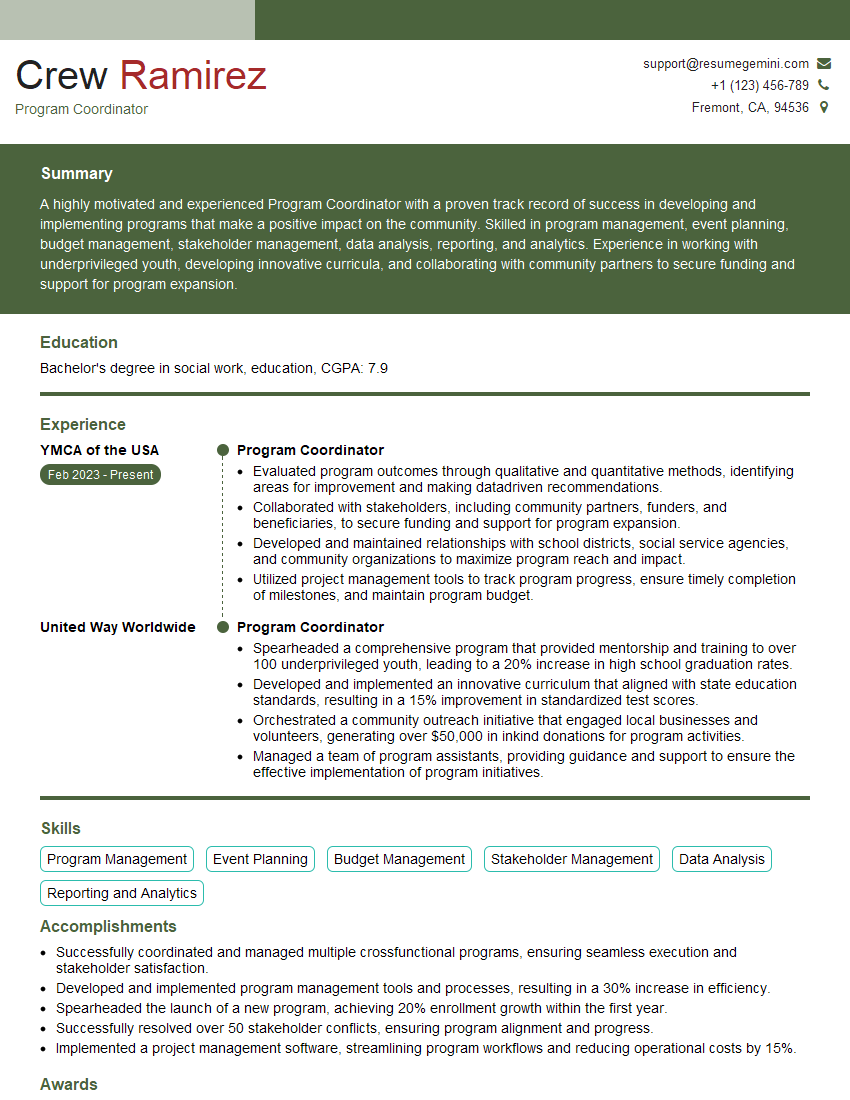
Program Coordinator Resume Sample

Curriculum Developer Resume Sample

Information Architect Resume Sample

Content Strategist Resume Sample
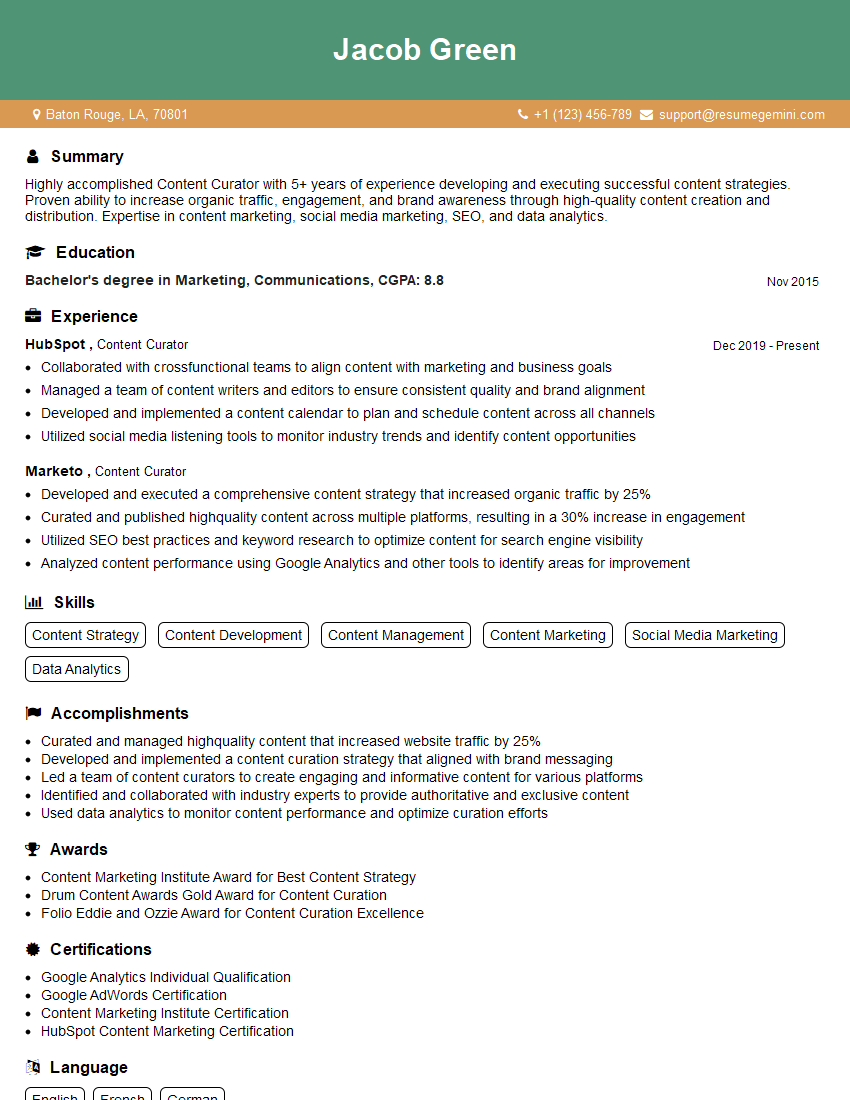
Content Curator Resume Sample
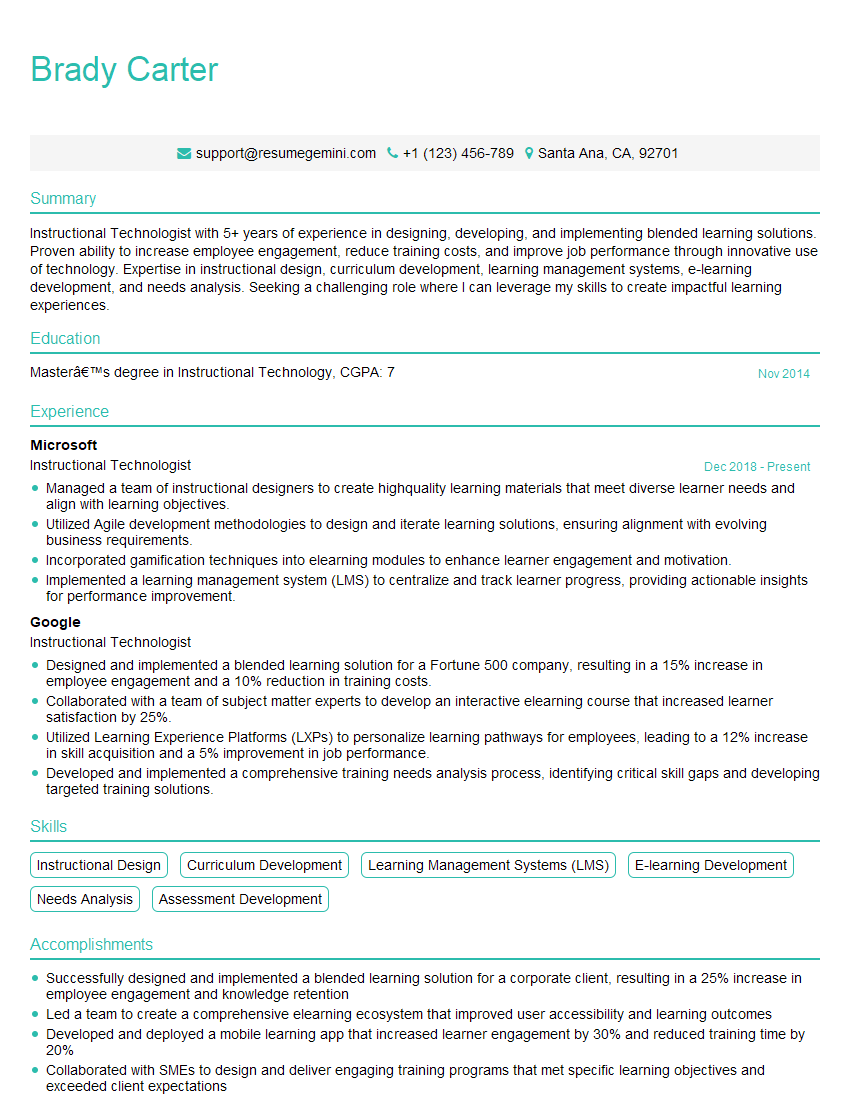
Instructional Technologist Resume Sample
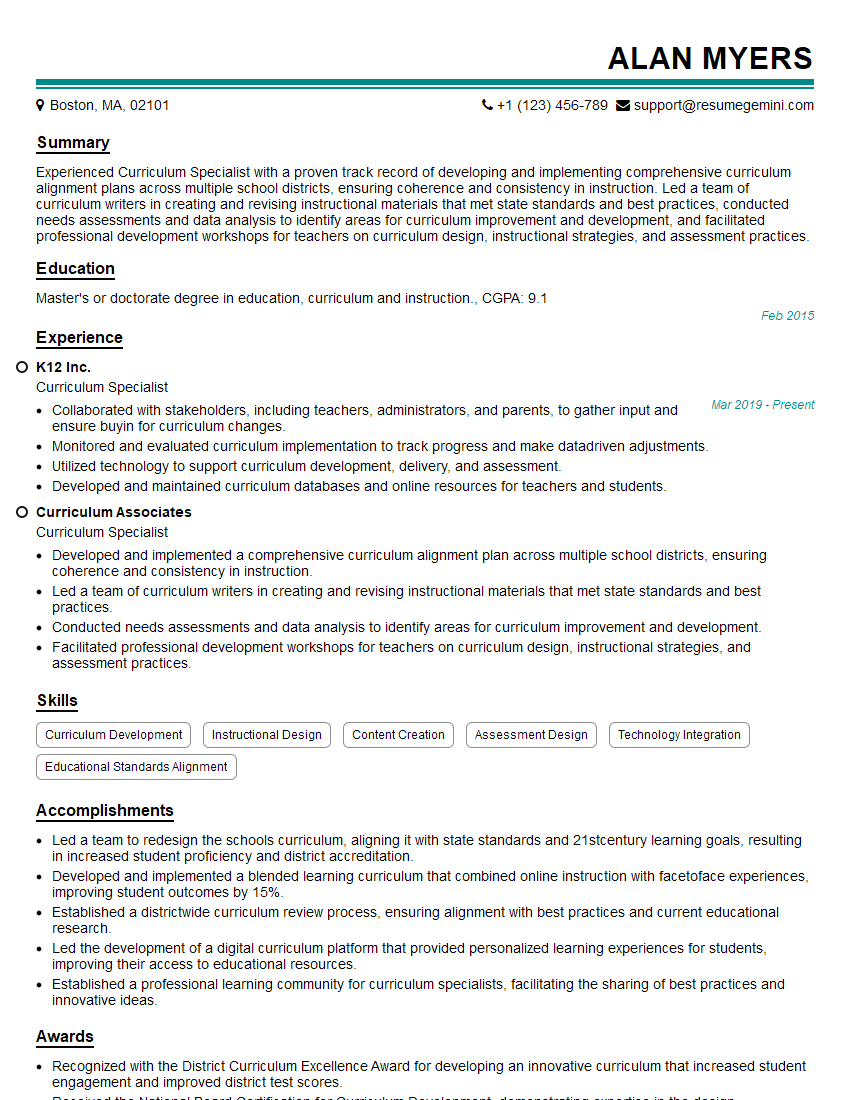
Curriculum Specialist Resume Sample
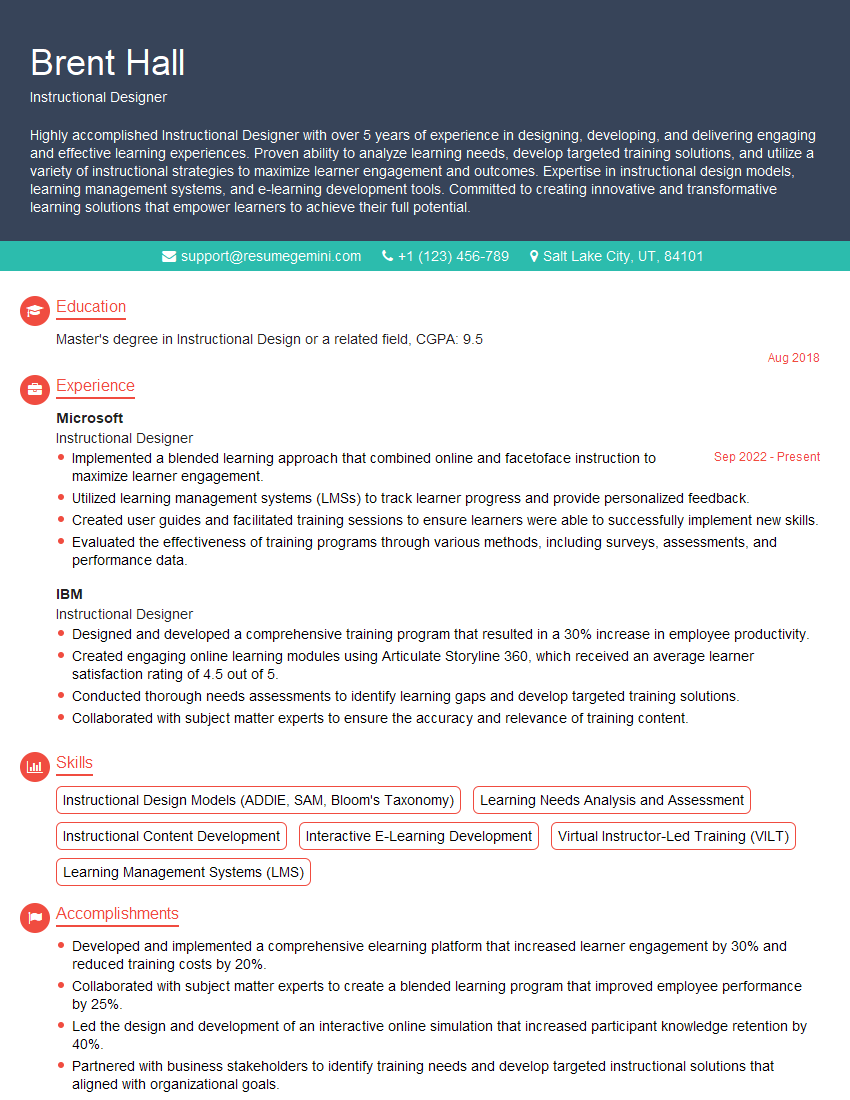
Instructional Designer Resume Sample
Explore more articles
Users Rating of Our Blogs
Share Your Experience
We value your feedback! Please rate our content and share your thoughts (optional).
What Readers Say About Our Blog
Very informative content, great job.
good