Every successful interview starts with knowing what to expect. In this blog, we’ll take you through the top Proofing and Approval interview questions, breaking them down with expert tips to help you deliver impactful answers. Step into your next interview fully prepared and ready to succeed.
Questions Asked in Proofing and Approval Interview
Q 1. Describe your experience with different types of proofreading (e.g., grammar, style, fact-checking).
Proofreading encompasses various levels of scrutiny. Grammar proofreading focuses on the correct use of grammar rules – subject-verb agreement, tense consistency, punctuation, etc. Style proofreading ensures consistency in writing style, including things like tone, voice, and sentence structure. Fact-checking verifies the accuracy of information presented, confirming data, statistics, and citations. I’ve worked extensively in all three areas. For example, I once proofread a marketing brochure where grammar proofreading corrected several comma splices and subject-verb disagreements, improving readability. Style proofreading ensured the overall tone was consistent with the brand’s voice – professional yet friendly. Finally, fact-checking verified all the statistical claims presented, ensuring the company was not making misleading statements.
Another project involved a scientific paper where accurate fact-checking was paramount. I cross-referenced every statistic and claim against reputable sources, making sure the methodologies were sound and the conclusions justifiable.
Q 2. What software or tools do you use for proofreading and why?
My toolset includes a combination of software and techniques. I rely heavily on Microsoft Word’s built-in grammar and spell-check, but I don’t solely depend on them. Word’s features provide a first pass, flagging potential errors, but I always perform a manual review. Beyond Word, I utilize Grammarly for its advanced grammar and style suggestions, especially for catching nuances that Word sometimes misses. For example, Grammarly is excellent at detecting passive voice overuse and suggesting stronger, more active alternatives. For complex technical documents, I often employ specialized style guides (like those provided by scientific journals) and cross-reference information with the original source documents.
Q 3. Explain your process for reviewing a document for accuracy and consistency.
My review process is meticulous and systematic. It begins with a comprehensive first read for overall coherence and understanding. I then perform a detailed second read, focusing on specific aspects: grammar, style, consistency of terminology, and factual accuracy. I meticulously check for inconsistencies in headings, formatting, numbering, and citations. I use a color-coded system for marking errors on digital documents to maintain organization and clarity. For instance, I might use red for grammatical errors, green for stylistic issues, and blue for factual inconsistencies. This helps prioritize corrections and ensures nothing is missed. After corrections, a final read ensures the edits didn’t introduce new problems.
Imagine reviewing a recipe book. A first read checks if the instructions flow logically. Then, a second read examines each step for precision – ensuring the correct measurements and cooking times are specified consistently. My review process applies a similar level of detail.
Q 4. How do you handle conflicting style guides or guidelines?
Conflicting style guides require careful consideration and a clear decision-making process. Firstly, I identify the key areas of conflict. Then, I determine the most appropriate style guide to follow, based on the project’s requirements and audience. If there’s no clear preference or the project requires a unique style, I’ll establish a consistent style guide that aligns with the document’s purpose. Clear communication with the client is crucial in these situations, ensuring they understand the rationale behind the chosen style decisions. I may present a short summary comparing and contrasting the conflicting styles to ensure we’re all on the same page.
For example, if one style guide recommends using serial commas and the other doesn’t, I’d choose one and apply it consistently throughout the document. I would document this choice for future reference.
Q 5. How do you prioritize multiple proofreading tasks with varying deadlines?
Prioritization is key when juggling multiple proofreading tasks. I use a project management approach, listing all tasks with deadlines. I then organize them using a prioritization matrix, considering factors such as urgency, impact, and complexity. Tasks with the most immediate deadlines and highest impact are tackled first. I break down larger projects into smaller, manageable chunks, and regularly review my progress to ensure I stay on schedule. Time blocking is a powerful tool. I allocate specific time slots for each task, which minimizes interruptions and maximizes productivity. This prevents me from being overwhelmed and ensures timely delivery for all clients.
Q 6. What is your approach to identifying and correcting errors in complex technical documents?
Proofreading complex technical documents requires a deep understanding of the subject matter. I often start by familiarizing myself with the relevant terminology and concepts, sometimes using external resources to augment my knowledge. Then, I approach the document methodically, focusing on precision and accuracy. I verify all technical terms, formulas, and figures. I also cross-reference information with known reliable sources. If I encounter concepts I don’t fully grasp, I seek clarification before proceeding. Collaboration with subject matter experts may be required to ensure complete accuracy. This meticulous step-by-step approach guarantees correctness in this challenging area.
For instance, when working on a technical manual for a medical device, I thoroughly reviewed technical specifications and diagrams, double-checking for accuracy and consistency across the whole document.
Q 7. How familiar are you with different citation styles (e.g., APA, MLA, Chicago)?
I’m proficient in several citation styles, including APA, MLA, and Chicago. I understand their nuances and can apply them consistently and accurately. My experience extends beyond simply formatting citations; I understand the underlying principles of proper attribution and academic honesty. I use citation management software like Zotero to assist in managing citations and formatting them correctly, ensuring consistency and accuracy. It’s important to note the subtle differences between styles (e.g., how in-text citations and bibliographies are formatted). I carefully adapt my approach based on the requirements of the project and the preferences of the client. Mistakes in citations can have significant consequences, so precision and attention to detail are key.
Q 8. Describe a time you found a significant error in a document. How did you handle it?
In a recent project involving a white paper on sustainable energy solutions, I discovered a significant factual error concerning the carbon footprint of a particular technology. The document claimed a lower carbon footprint than was supported by reputable scientific studies.
My approach involved a multi-step process. First, I meticulously documented the error, noting the specific page number, paragraph, and the conflicting data. I then consulted peer-reviewed studies and credible sources to verify the correct information. After confirming the error, I prepared a concise yet comprehensive explanation of the correction, clearly referencing the sources supporting the revised data. I presented these findings to the lead author and project manager, explaining the potential impact of the misinformation and suggesting appropriate revisions. The correction was smoothly integrated, ensuring the accuracy and credibility of the final document.
Q 9. How do you ensure the accuracy of numerical data and figures in a document?
Ensuring the accuracy of numerical data is paramount. My process is multifaceted and involves several checks and balances. Initially, I carefully review all figures for internal consistency. This means cross-referencing data points within the document to ensure they align and don’t contradict each other. For example, if a table shows a total sum, I manually calculate it to verify its accuracy. Secondly, I use data validation tools, including spreadsheets with built-in formulas, to check calculations, and identify any discrepancies. Finally, I always review the source data. This could involve verifying the figures against original research, databases, or company reports. For very critical data, I’ll even have a second person independently verify the calculations to minimize the risk of human error.
Q 10. How do you manage feedback and revisions from multiple stakeholders?
Managing feedback from multiple stakeholders requires a structured approach. I typically use a centralized system, such as a collaborative online document or a project management platform, to track all comments and revisions. This ensures transparency and avoids confusion. I organize feedback by stakeholder and comment type (e.g., factual correction, stylistic change, structural suggestion). I then prioritize revisions based on their impact and urgency. Where there are conflicting suggestions, I communicate with the relevant stakeholders to find consensus, ensuring that all feedback is addressed, or at the very least, a justified decision is documented for any feedback that can’t be accommodated. Regular update meetings are vital to keep everyone informed of progress and address any outstanding questions.
Q 11. How would you explain a complex grammatical concept to a non-technical audience?
Let’s take the concept of the ‘passive voice.’ It can seem intimidating, but it’s simply about who’s performing the action in a sentence. In the active voice, the subject performs the action (e.g., ‘The dog chased the ball’). In the passive voice, the action is performed on the subject (e.g., ‘The ball was chased by the dog’). Think of it like this: active voice is direct and emphasizes the actor, while passive voice is indirect and may downplay the actor. For clarity, active voice is often preferred, particularly in technical writing. But passive voice can be useful for objectivity or when the actor is unknown. For example, ‘Mistakes were made’ is better than trying to assign blame.
Q 12. How do you stay updated on changes in grammar rules and style guidelines?
Staying current with grammar and style is crucial. I regularly consult reputable style guides such as the Chicago Manual of Style and the Associated Press Stylebook. I also subscribe to grammar and writing newsletters and follow relevant linguistic experts on social media to receive updates on evolving conventions. Participating in professional development workshops and attending conferences related to editing and publishing helps me stay informed about industry best practices and emerging trends. Continuously practicing and refining my skills through real-world projects is essential to maintaining a high level of proficiency.
Q 13. What is your experience with using style guides and maintaining brand consistency?
I have extensive experience using style guides to maintain brand consistency across various documents. I carefully examine the client’s style guide (or develop one if needed) to understand their preferred tone, terminology, formatting standards (fonts, headings, spacing, etc.), and visual identity. This includes paying close attention to logo usage, color palettes, and voice and tone guidelines. Using a style guide ensures consistency throughout a document, creating a cohesive and professional brand image. I often create internal style sheets or templates for recurring projects to streamline the process and consistently adhere to the specified guidelines.
Q 14. How do you handle ambiguous or unclear instructions from clients or supervisors?
When confronted with ambiguous instructions, my approach involves proactive clarification. I never hesitate to ask clarifying questions. This includes seeking further details regarding the scope of the project, specific requirements, or the intended audience. I carefully document all instructions and communications, including emails and meeting notes, to ensure a clear understanding of expectations. I might create a visual representation such as a flowchart or outline to confirm my interpretation of the instructions. If the ambiguity persists, I present different potential interpretations to my supervisor or client, proposing solutions for each, and actively collaborating to ensure everyone is on the same page before proceeding.
Q 15. Describe your experience with proofreading various media formats (e.g., print, web, video).
My experience spans a wide range of media formats. In print, I’ve worked extensively on brochures, marketing materials, books, and academic papers, focusing on ensuring typographical accuracy, consistent style, and clear communication. For web content, I’ve proofread website copy, blog posts, and online articles, paying close attention to SEO best practices and digital readability. My video experience includes reviewing scripts, closed captions, and subtitles, ensuring accuracy and synchronization with the visuals. In each case, my approach is tailored to the specific medium, considering the unique challenges and best practices involved.
For instance, while a minor typo in a blog post might be easily corrected, a similar error in a legal document could have significant ramifications. Similarly, ensuring readability in a web article requires attention to shorter sentences and paragraph lengths, unlike a book where longer, more complex prose is acceptable.
Career Expert Tips:
- Ace those interviews! Prepare effectively by reviewing the Top 50 Most Common Interview Questions on ResumeGemini.
- Navigate your job search with confidence! Explore a wide range of Career Tips on ResumeGemini. Learn about common challenges and recommendations to overcome them.
- Craft the perfect resume! Master the Art of Resume Writing with ResumeGemini’s guide. Showcase your unique qualifications and achievements effectively.
- Don’t miss out on holiday savings! Build your dream resume with ResumeGemini’s ATS optimized templates.
Q 16. What is your experience with using track changes and collaborating with others on a document?
Track changes is an indispensable tool in my workflow. I’m proficient in using it across various platforms like Microsoft Word, Google Docs, and Adobe Acrobat. Collaboration is seamless; I can clearly identify edits, offer suggestions, and respond to feedback from other team members within the document itself. This allows for a transparent and traceable revision process. I also utilize commenting features to discuss specific issues that might require further clarification or discussion.
For example, if a writer uses an ambiguous phrase, I might use track changes to suggest a clearer alternative and add a comment explaining my rationale. This ensures a constructive collaborative environment where everyone’s input is valued and the final document reflects a shared understanding.
Q 17. How do you manage your workflow to ensure efficient proofreading?
My workflow prioritizes efficiency and accuracy. I typically begin by reviewing the document’s overall structure and content to understand its purpose and target audience. Then, I employ a multi-pass approach. The first pass focuses on big-picture issues like content flow and consistency. The second pass targets grammatical errors, punctuation, and spelling. The final pass checks for stylistic inconsistencies and factual accuracy.
I use checklists tailored to the specific type of document to ensure thoroughness. For instance, a website proofread will have a checklist covering SEO keywords, link integrity, and accessibility, whereas a legal document will include points regarding compliance and regulatory language. This structured approach minimizes the risk of overlooking crucial details and ensures consistent quality.
Q 18. How do you handle high-pressure situations and tight deadlines?
High-pressure situations and tight deadlines are common in my profession. My strategy is to stay organized and prioritize tasks effectively. I break down large projects into smaller, manageable chunks, setting realistic deadlines for each. I also leverage technology to improve efficiency, such as using grammar and spell-check tools (as a first step, never as a replacement for thorough proofreading!). I communicate proactively with stakeholders to manage expectations and highlight potential roadblocks.
For example, if a deadline seems unattainable, I’ll discuss the possibility of prioritizing the most critical sections or requesting an extension, rather than compromising quality under pressure. Open communication and realistic planning are key to navigating these situations successfully.
Q 19. What is your approach to ensuring the legal compliance of a document?
Ensuring legal compliance requires careful attention to detail and a thorough understanding of relevant laws and regulations. My approach involves identifying the type of document (contract, marketing material, etc.) and researching any applicable legal requirements. This might include reviewing privacy policies, copyright laws, or specific industry regulations. I also cross-reference the document with style guides or legal precedents to ensure consistency and adherence to best practices. When uncertain, I always consult legal experts or relevant guidelines to avoid errors.
For instance, I would carefully examine marketing materials for claims that might be considered misleading or deceptive under consumer protection laws, and legal documents for any clauses that might be ambiguous or unenforceable.
Q 20. What are some common mistakes you frequently encounter in documents?
Common mistakes I frequently encounter include:
- Typos and spelling errors: These are surprisingly common, even in professionally produced documents.
- Punctuation errors: Incorrect comma usage, missing apostrophes, and misused semicolons can significantly affect clarity.
- Grammatical errors: Subject-verb agreement issues, incorrect tense usage, and faulty sentence structure are prevalent.
- Inconsistent style: Variations in capitalization, formatting, and citation styles can disrupt the document’s overall appearance and readability.
- Factual inaccuracies: Incorrect dates, statistics, or names can damage credibility.
The frequency of these errors highlights the importance of a thorough and methodical approach to proofreading.
Q 21. How do you differentiate between errors of grammar, style, and fact?
Differentiating between errors of grammar, style, and fact requires a nuanced understanding of language and the document’s context.
- Grammar refers to the rules governing sentence structure, word order, and parts of speech. Examples include subject-verb agreement, tense consistency, and pronoun usage.
- Style encompasses the choices made to present information, including tone, voice, word choice, and formatting. Inconsistencies in style can detract from a document’s professionalism and readability. For example, mixing different citation styles or switching between formal and informal language within the same document.
- Fact refers to the accuracy of the information presented. Verifying facts might involve consulting reliable sources, checking statistics, and confirming dates and names. A factual inaccuracy could range from a minor detail to a critical misrepresentation of information.
A skilled proofreader identifies and corrects all three types of errors to produce a polished and accurate final product.
Q 22. Explain your process for verifying the accuracy of data and references.
Verifying data and reference accuracy is crucial for producing reliable documents. My process involves a multi-step approach combining manual checks with technological aids. First, I meticulously cross-reference all data points with their original sources. This might involve checking against multiple sources to ensure consistency and avoid relying on a single potentially flawed reference. For example, if a document cites a statistic from a research paper, I’ll verify that statistic within the paper itself, checking for any qualifying statements or methodological limitations. Secondly, I use fact-checking websites and databases to independently verify factual claims, particularly those that are readily verifiable. Finally, I employ a systematic approach to data entry verification, such as double-checking numbers and dates, and using checksums or other validation techniques where appropriate to detect discrepancies.
For example, in a financial report, I would verify all financial figures against the original accounting ledger and supporting documentation. In a scientific paper, I would verify all experimental data against lab notes and statistical analyses to ensure consistency. This rigorous approach minimizes errors and enhances the credibility of the final document.
Q 23. How do you handle discrepancies between a document and its source materials?
Discrepancies between a document and its source materials require careful investigation and resolution. My first step is to identify the nature and extent of the discrepancy. Is it a minor typographical error, a significant factual inaccuracy, or a misunderstanding of the source material? Once identified, I trace the discrepancy back to its source. Was there a transcription error? An outdated source? Or a misinterpretation of the original data?
I then carefully document the discrepancy and propose a resolution. This often involves consulting with the original authors or subject matter experts. For example, if a scientific paper cites a conflicting study, I would reach out to the authors of both papers for clarification. In cases where the source material is flawed, I may suggest alternative sources or provide context to help the reader understand the limitations of the data. The resolution always prioritizes accuracy and clarity, even if it necessitates revisions to the document.
Q 24. How do you determine the severity of an error and prioritize its correction?
Determining the severity of an error and prioritizing its correction is crucial for efficient and effective proofreading. I utilize a tiered system. Critical errors are those that fundamentally alter the meaning or accuracy of the document, such as misstated facts, incorrect calculations, or contradictory information. These take top priority, as they risk misinforming the reader. For example, in a medical report, an incorrect diagnosis would be a critical error.
Moderate errors are those that affect the clarity or style of the document but do not significantly impact the overall meaning. These include grammatical errors, punctuation mistakes, inconsistencies in formatting, and minor factual inaccuracies. Minor errors are primarily stylistic or typographical in nature and minimally affect the meaning or overall understanding. I use a prioritization matrix that considers both the severity of the error and its potential impact on the reader. Critical errors are addressed first, followed by moderate, and finally minor. This approach ensures that the most impactful corrections are made first.
Q 25. Describe your experience with using automated proofreading tools.
I have extensive experience using various automated proofreading tools, including grammar and spell checkers like Grammarly and ProWritingAid, as well as style guides and plagiarism checkers. These tools are invaluable for identifying basic grammatical errors, spelling mistakes, and potential plagiarism issues. However, I recognize their limitations. Automated tools are not perfect and often miss context-dependent errors or nuanced stylistic issues. They are excellent first-pass tools, but not a replacement for human judgment.
I typically use automated tools to catch the low-hanging fruit—the obvious errors. This significantly speeds up the proofreading process, allowing me to focus my attention on more complex issues of style, clarity, and accuracy that require human judgment and understanding of context. It’s about leveraging technology to enhance efficiency, not replace human expertise.
Q 26. How do you ensure the readability and clarity of a document?
Ensuring readability and clarity is paramount. My approach involves several strategies. First, I strive for concise and precise language, avoiding jargon or overly complex sentence structures. I actively look for passive voice and rewrite sentences to be more active and direct. I also pay close attention to word choice, selecting terms that are clear, unambiguous, and appropriate for the intended audience. Second, I employ a variety of formatting techniques to improve readability. This includes using headings, subheadings, bullet points, and white space to break up large blocks of text and make the document visually appealing and easy to navigate.
Third, I focus on logical flow and structure, ensuring that information is presented in a clear and coherent manner. Finally, I always test the readability of the document by having another person, preferably someone from the target audience, read through it. Their feedback provides invaluable insights into whether the document is truly accessible and understandable.
Q 27. How do you balance speed and accuracy in your proofreading work?
Balancing speed and accuracy is a constant challenge in proofreading. My strategy involves a methodical approach that combines efficiency with meticulous attention to detail. I begin with a quick scan of the document to get an overall impression and identify any glaring errors. This allows me to prioritize areas that need more careful scrutiny. Then, I move to a more thorough, systematic review, carefully checking each sentence for grammatical errors, spelling mistakes, factual inaccuracies, and inconsistencies in style.
I avoid rushing, but I also work efficiently by utilizing automated tools where appropriate and focusing my attention on areas of higher risk. I break the proofreading process into smaller, manageable chunks to maintain focus and avoid fatigue. The key is to find a sustainable pace that allows me to maintain both high accuracy and timely delivery. This is something I’ve honed over years of experience, learning to adapt my approach depending on the complexity and length of the document.
Key Topics to Learn for Proofing and Approval Interview
- Understanding the Proofreading Process: Learn the different stages involved, from initial review to final approval, and the tools and techniques used at each stage.
- Types of Errors: Familiarize yourself with common grammatical, spelling, punctuation, and stylistic errors, as well as factual inaccuracies and inconsistencies.
- Style Guides and Standards: Understand the importance of adhering to specific style guides (e.g., AP, Chicago) and maintaining consistent formatting and terminology.
- Quality Assurance and Control: Explore methods for implementing and improving quality control processes within a proofing and approval workflow.
- Collaboration and Communication: Practice articulating feedback effectively and professionally, both verbally and in writing, to ensure clear understanding and efficient resolution of issues.
- Software Proficiency: Demonstrate familiarity with relevant software used in proofing and approval, such as Microsoft Office Suite, Adobe Acrobat, and specialized content management systems.
- Workflow Optimization: Discuss strategies to streamline the proofing and approval process, minimizing turnaround time and improving efficiency.
- Legal and Ethical Considerations: Understand the importance of accuracy and compliance with legal and ethical standards in relation to content approval.
- Problem-Solving and Decision-Making: Prepare examples showcasing your ability to identify and resolve issues efficiently and decisively within a proofing and approval context.
Next Steps
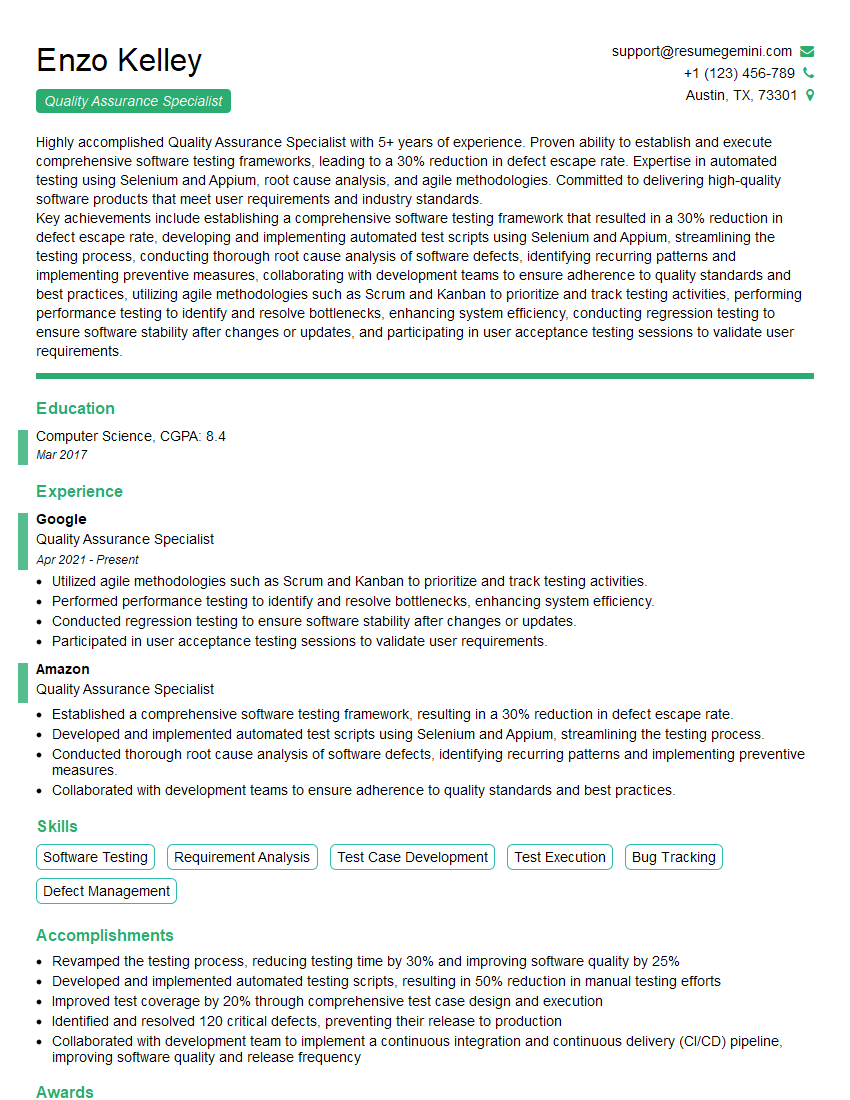
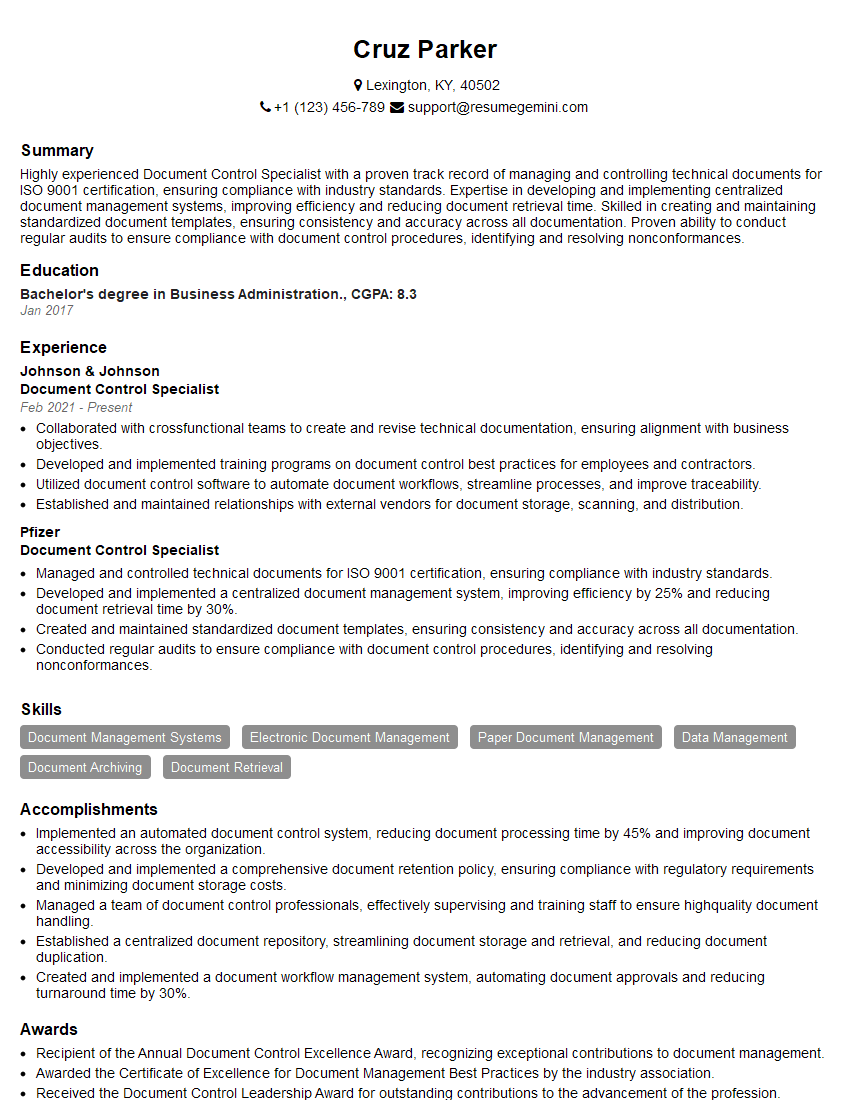
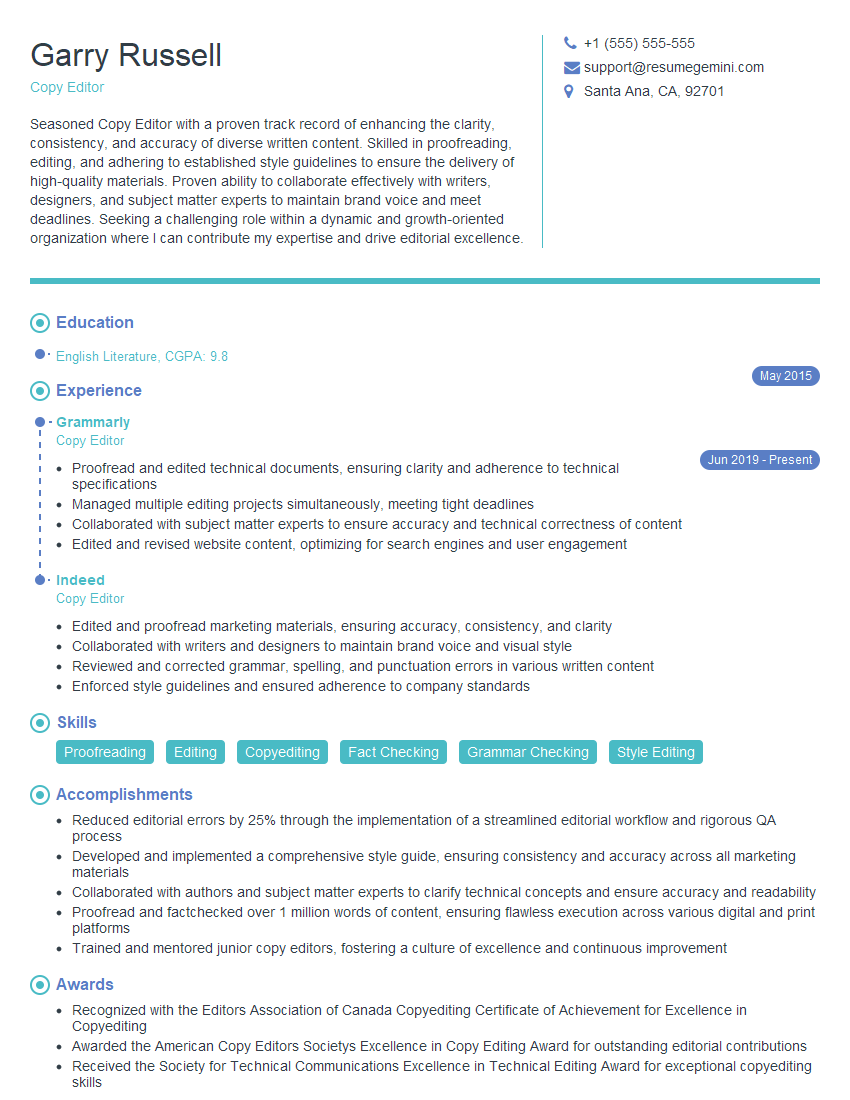
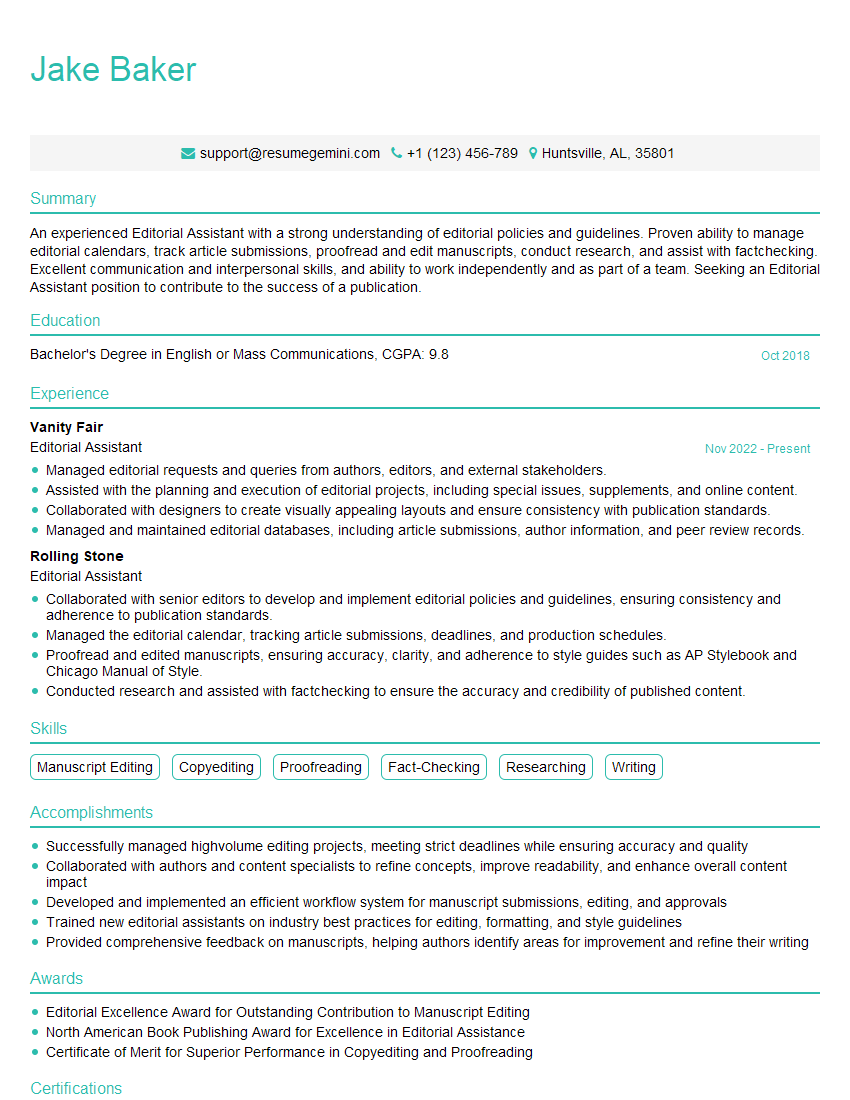
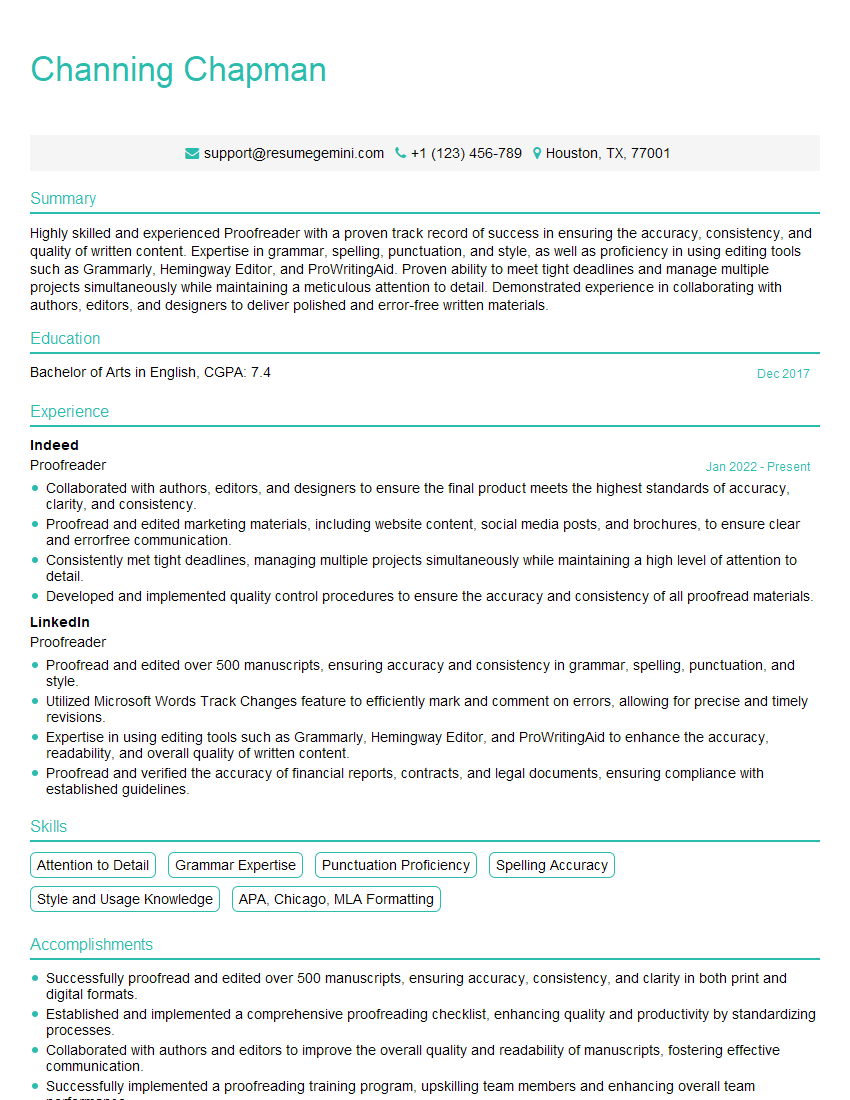
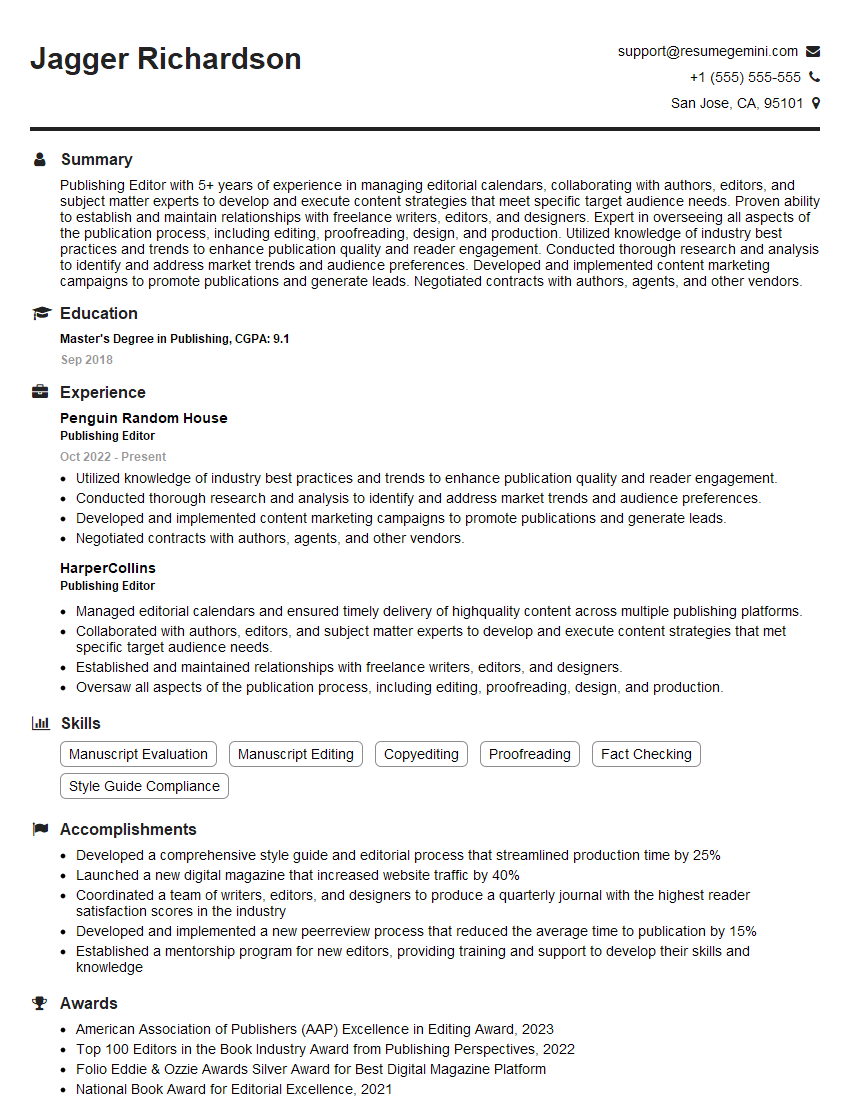
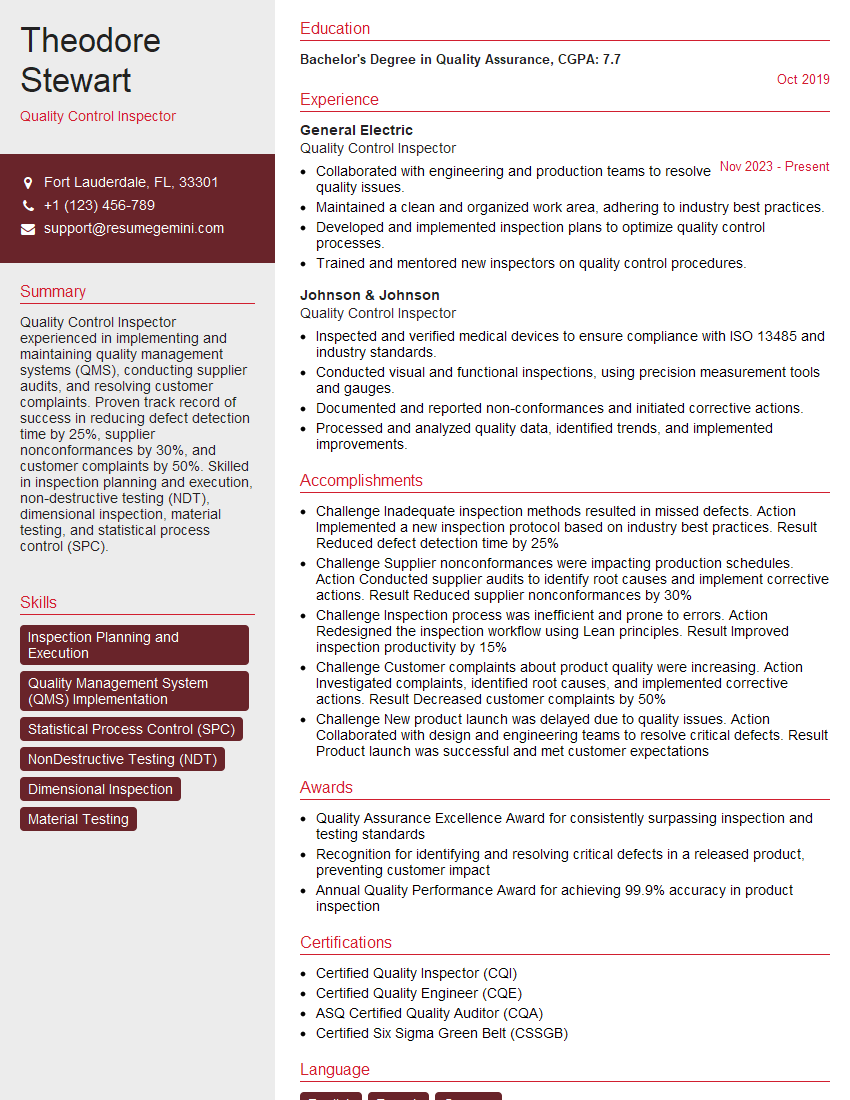
Mastering proofing and approval skills is crucial for career advancement in various fields, opening doors to roles with greater responsibility and higher earning potential. An ATS-friendly resume is your key to unlocking these opportunities. To build a powerful and effective resume that highlights your skills and experience, leverage the expertise of ResumeGemini. ResumeGemini provides a trusted platform and resources to create a professional resume that stands out. Examples of resumes tailored to Proofing and Approval roles are available, giving you a head start in crafting your winning application.
Explore more articles
Users Rating of Our Blogs
Share Your Experience
We value your feedback! Please rate our content and share your thoughts (optional).
What Readers Say About Our Blog
Very informative content, great job.
good