The thought of an interview can be nerve-wracking, but the right preparation can make all the difference. Explore this comprehensive guide to Railroad Safety Regulations Knowledge interview questions and gain the confidence you need to showcase your abilities and secure the role.
Questions Asked in Railroad Safety Regulations Knowledge Interview
Q 1. Describe the role of the Federal Railroad Administration (FRA) in ensuring railroad safety.
The Federal Railroad Administration (FRA) is the primary agency responsible for ensuring railroad safety in the United States. Its role is multifaceted, encompassing rulemaking, enforcement, and oversight of all aspects of railroad operations. Think of the FRA as the safety watchdog for the entire railroad industry.
The FRA’s responsibilities include:
- Developing and enforcing safety regulations: The FRA creates and updates regulations covering various aspects of railroad safety, from track maintenance to hazardous materials transportation and employee training.
- Conducting inspections and investigations: FRA inspectors regularly audit railroads to ensure compliance with regulations. They investigate accidents and incidents to determine causes and identify areas for improvement.
- Issuing safety advisories and alerts: The FRA shares information about safety risks and best practices to prevent accidents.
- Granting and revoking certifications: The FRA certifies railroads, personnel, and equipment to ensure they meet safety standards.
- Promoting research and technology: The FRA invests in research to develop and implement advanced safety technologies.
For example, the FRA’s regulations dictate the frequency of track inspections, the acceptable limits for track geometry defects, and the training requirements for railroad employees. Failure to comply with these regulations can result in significant penalties for railroads.
Q 2. Explain the significance of the Federal Railroad Safety Act of 2015.
The Federal Railroad Safety Act of 2015 (FRSA) represents a significant overhaul of railroad safety legislation in the U.S. It significantly increased the FRA’s authority and resources to improve railroad safety. Think of it as a major upgrade to the safety system.
Key aspects of the FRSA include:
- Increased enforcement powers: The act granted the FRA stronger enforcement tools, including higher penalties for violations.
- Emphasis on Positive Train Control (PTC): The FRSA mandated the implementation of PTC, a technology that prevents train collisions, derailments, and overspeed incidents.
- Improved data collection and analysis: The act improved the FRA’s ability to collect and analyze safety data to identify trends and address emerging risks.
- Strengthened whistleblower protections: The act protects railroad employees who report safety violations without fear of retaliation.
- Focus on risk-based oversight: The FRA shifted towards a more risk-based approach, focusing resources on areas with the highest potential for accidents.
The FRSA’s impact is evident in increased scrutiny of railroad operations and a stronger focus on proactive safety measures. For instance, the PTC mandate has driven significant investment in technology upgrades across the railroad industry.
Q 3. What are the key components of a comprehensive railroad safety management system (SMS)?
A comprehensive Railroad Safety Management System (SMS) is a proactive, systematic approach to managing safety risks within a railroad organization. It’s a holistic framework, not just a checklist, and aims to prevent accidents before they happen. Imagine it as a robust safety net.
Key components include:
- Safety Policy and Objectives: A clearly defined commitment to safety from top management, with measurable goals and targets.
- Hazard Identification and Risk Assessment: A systematic process to identify potential hazards and assess their associated risks.
- Risk Mitigation: Implementing controls and measures to reduce or eliminate identified risks.
- Safety Training and Communication: Providing employees with the necessary training and information to perform their jobs safely.
- Incident Reporting and Investigation: A transparent system for reporting incidents, conducting thorough investigations, and implementing corrective actions.
- Performance Monitoring and Review: Tracking key safety performance indicators and regularly reviewing the effectiveness of the SMS.
- Continuous Improvement: Constantly evaluating and improving the SMS to enhance safety performance.
A well-implemented SMS leads to a safer working environment, fewer accidents, and improved overall operational efficiency. It’s not just about compliance; it’s about creating a safety culture.
Q 4. How do you ensure compliance with FRA regulations regarding track maintenance?
Ensuring compliance with FRA regulations regarding track maintenance involves a multi-layered approach that combines meticulous record-keeping, regular inspections, and proactive maintenance strategies. Think of it as a continuous cycle of monitoring and improvement.
The process typically includes:
- Regular Inspections: Conducting frequent inspections of the track infrastructure, including visual inspections, geometry car measurements, and ultrasonic testing to detect defects.
- Defect Reporting and Repair: Promptly reporting and repairing any identified defects according to FRA guidelines and established procedures.
- Record Keeping: Maintaining detailed records of all inspections, repairs, and maintenance activities. These records are crucial for demonstrating compliance during FRA audits.
- Preventive Maintenance: Implementing a proactive maintenance schedule to address potential issues before they become safety hazards.
- Training and Qualification: Ensuring that track maintenance personnel are properly trained and qualified to perform their duties safely and effectively.
- Use of Technology: Utilizing advanced technologies such as track geometry cars, ultrasonic testing equipment, and Geographic Information Systems (GIS) to enhance the efficiency and accuracy of track inspections and maintenance.
Failure to maintain proper track standards can lead to derailments and other catastrophic accidents. Therefore, rigorous adherence to FRA regulations is paramount.
Q 5. Describe the procedures for investigating a railroad accident.
Investigating a railroad accident is a complex process requiring a thorough and systematic approach. It’s crucial to understand the sequence of events to prevent similar incidents in the future. Think of it as a detailed puzzle needing careful reconstruction.
The typical procedure involves:
- Securing the Scene: Protecting the accident site and ensuring the safety of personnel.
- Data Collection: Gathering evidence, including witness statements, photos, videos, and physical evidence.
- Reconstruction: Using the collected data to reconstruct the sequence of events leading to the accident.
- Cause Determination: Identifying the root cause(s) of the accident.
- Reporting: Preparing a detailed report outlining the findings of the investigation.
- Corrective Actions: Implementing measures to prevent similar accidents from occurring in the future.
The investigation often involves multiple agencies, including the FRA, local law enforcement, and the railroad itself. A thorough investigation is critical to improving railroad safety.
Q 6. What are the reporting requirements for railroad accidents and incidents?
Reporting requirements for railroad accidents and incidents are stringent and are governed by FRA regulations. Timely and accurate reporting is crucial for safety and regulatory compliance. Think of it as a vital communication network for safety.
The regulations dictate that railroads must report:
- Accidents: Any event resulting in a fatality, injury requiring hospitalization, or property damage exceeding a certain threshold.
- Incidents: Events that could have resulted in a more serious accident, such as near misses or equipment malfunctions.
These reports must be filed within specified timeframes to the FRA using designated reporting systems. Failure to report can lead to severe penalties. The FRA uses this data to identify safety trends, track performance, and improve overall safety in the railroad industry. The information is also used for statistical analysis and safety improvement initiatives.
Q 7. Explain the different types of track defects and their potential safety risks.
Track defects pose significant safety risks, potentially leading to derailments and other accidents. Understanding the different types is crucial for effective track maintenance and safety. Think of it as understanding potential weaknesses in a structure.
Common track defects and their associated risks include:
- Broken Rails: A complete fracture of the rail, leading to immediate derailment risk.
- Gauge Widening/Narrowing: Deviation from the standard distance between the rails, causing instability and derailment.
- Spiking Problems: Loose or missing spikes, leading to rail movement and potential derailment.
- Rail Alignment Issues: Misalignment of the rails, leading to uneven track and derailment.
- Cross Level: Unevenness across the track, causing instability and potential derailment.
- Vertical Alignment Issues: Unevenness along the track, creating instability and affecting train dynamics.
- Track Settling/Subgrade Issues: Settlement of the trackbed, reducing track stability and causing potential derailment.
Regular inspections and timely repairs are vital to mitigate these risks. Ignoring track defects can lead to severe consequences.
Q 8. How do you ensure the safety of workers during track maintenance activities?
Ensuring worker safety during track maintenance is paramount and relies on a multi-layered approach. It starts with a robust safety plan that’s specific to the task and location, including detailed risk assessments identifying potential hazards like moving trains, energized equipment, and falling objects. This plan dictates the use of appropriate Personal Protective Equipment (PPE), such as high-visibility clothing, hard hats, safety glasses, and steel-toe boots.
Crucially, protection-of-work (POW) methods are implemented. This involves using devices such as speed restrictions, temporary traffic controls, and, most importantly, flag persons or train protection systems to ensure that trains are stopped before workers enter the track area. Regular safety briefings and training are essential to reinforce safe work practices and emergency procedures. Frequent communication among workers and supervisors is critical, and everyone must know the location of emergency equipment and understand how to use it. For example, a supervisor might use a radio to maintain constant contact with the track workers and the train dispatcher to coordinate safe access to the work zone. Finally, thorough post-task reviews identify areas for improvement in safety procedures.
Q 9. What are the regulations surrounding the operation of locomotives and trains?
Locomotive and train operation is governed by stringent regulations focused on safety and efficiency. These regulations cover various aspects, including crew qualifications (engineers and conductors must possess appropriate licenses and undergo regular medical examinations), locomotive maintenance (regular inspections and repairs are mandatory to ensure mechanical integrity), and operating rules (these rules dictate safe train speeds, spacing, and signaling procedures). The Federal Railroad Administration (FRA) in the US, for instance, publishes detailed regulations outlining these requirements. Key elements include adherence to speed limits, proper use of brakes and signaling devices, and comprehensive reporting of incidents. For example, engineers are trained to recognize and react appropriately to signals, ensuring the safe movement of trains through various track conditions. A failure to adhere to these rules can result in serious penalties.
Q 10. Describe the safety procedures for handling hazardous materials on railroads.
Handling hazardous materials on railroads requires meticulous adherence to safety protocols designed to minimize the risk of accidents and environmental damage. This starts with proper classification and labeling of hazardous materials according to established standards (e.g., DOT regulations in the US). Transporting such materials requires specialized containers and equipment, and strict adherence to shipping regulations is crucial. Emergency response plans must be in place and regularly practiced, including procedures for containment, cleanup, and evacuation in case of a spill or accident. Detailed training is provided to personnel involved in handling these materials. For example, employees handling corrosive materials would be trained on protective clothing, emergency shut-off procedures, and proper cleanup techniques. Thorough documentation of all activities, including shipment manifests and emergency response actions, is required to facilitate traceability and accountability.
Q 11. What are the regulations concerning the use of signals and communications systems?
Signal and communication systems are integral to railroad safety. Regulations mandate the use of standardized signals, both visual (e.g., semaphores, lights) and audible (e.g., horns, bells), to regulate train movements and prevent collisions. These systems must be regularly inspected and maintained to ensure reliability. Communication systems, such as radios and train dispatching systems, are crucial for facilitating communication between train crews, dispatchers, and maintenance personnel. These systems ensure that everyone is aware of the location and status of trains and any potential hazards. Strict protocols govern communication procedures, especially in emergency situations. For example, a specific signal sequence would indicate an approaching train, and a breakdown in communications might trigger a mandatory stop for all trains in a certain area. The failure of these systems can significantly impact safety.
Q 12. Explain the safety measures in place for protecting railroad crossings.
Protecting railroad crossings involves a combination of engineering, operational, and educational measures. Engineering controls include installing gates, flashing lights, and bells at crossings to warn drivers of approaching trains. The type and number of safety devices depend on factors such as traffic volume, train frequency, and sight distance. Operational controls include enforcing speed limits for trains approaching crossings and implementing procedures to ensure that gates are functioning correctly. Educational initiatives aim to increase public awareness of railroad safety, emphasizing the importance of caution and attention at crossings. For instance, campaigns may educate drivers to stop and look both ways before crossing the tracks. Regular inspection and maintenance of crossing equipment are vital to ensuring that the safety measures remain effective.
Q 13. How do you ensure the safe handling of locomotives and train cars in a yard?
Safe handling of locomotives and train cars in a yard relies on established procedures and robust safety measures. Yardmasters coordinate the movement of trains within the yard, using a system of signals and communication to guide locomotives and cars. Workers must be properly trained in safe coupling and uncoupling procedures, and strict rules govern the use of hand signals and other communication methods. Track maintenance within the yard is crucial, ensuring that tracks and switches are in good condition to prevent derailments. Proper lighting and visibility are also essential, especially at night. For example, a specific hand signal sequence would be used to indicate the direction in which a railcar should be moved. Regular inspections and maintenance of yard equipment, including locomotives and switching devices, are crucial to ensure operational safety.
Q 14. Describe the emergency response procedures for a derailment.
Emergency response to a derailment involves a coordinated effort between various parties, including railroad personnel, emergency medical services, fire departments, and environmental protection agencies. Initial response focuses on securing the scene to prevent further injuries or damage. This may involve evacuating nearby residents and establishing a security perimeter. Containment and cleanup of hazardous materials, if involved, is a priority, as is the stabilization of the derailed cars to prevent further damage. Investigation into the cause of the derailment is conducted to identify contributing factors and prevent future incidents. Detailed reporting and documentation are crucial for regulatory compliance and future safety improvements. Emergency response plans are typically rehearsed regularly to test the effectiveness and coordination of all parties involved. A clear communication chain is essential for coordinating efforts efficiently.
Q 15. What are the requirements for railroad employee training and qualification?
Railroad employee training and qualification are paramount to safety. Requirements vary by role and are dictated by federal regulations (like those from the Federal Railroad Administration or FRA) and often supplemented by company-specific policies. Generally, training focuses on several key areas:
- Rules and Regulations: Thorough understanding of the Federal Railroad Administration (FRA) regulations, company safety rules, and operating procedures is fundamental. This often includes detailed knowledge of signal systems, track geometry, and train handling techniques.
- Safety Practices: Training emphasizes safe work habits, including hazard recognition, personal protective equipment (PPE) use, and emergency response procedures. This often involves hands-on training and simulations.
- Job-Specific Skills: Specific training is provided based on the employee’s role. For example, engineers receive extensive training on locomotive operation, train handling, and emergency braking procedures. Track maintenance personnel receive training on safe track inspection, repair, and maintenance techniques. Signal maintainers need specialized training on signaling systems and troubleshooting.
- Ongoing Competency Assessments: Regular assessments, including written tests, practical exams, and performance evaluations, ensure employees maintain their qualifications and proficiency. These are often conducted annually or more frequently based on job criticality.
Failure to meet these training and qualification requirements can result in significant penalties, including fines and potential legal repercussions for the railroad company. Think of it like a pilot needing recurrent training – their skills and knowledge must be constantly updated and verified.
Career Expert Tips:
- Ace those interviews! Prepare effectively by reviewing the Top 50 Most Common Interview Questions on ResumeGemini.
- Navigate your job search with confidence! Explore a wide range of Career Tips on ResumeGemini. Learn about common challenges and recommendations to overcome them.
- Craft the perfect resume! Master the Art of Resume Writing with ResumeGemini’s guide. Showcase your unique qualifications and achievements effectively.
- Don’t miss out on holiday savings! Build your dream resume with ResumeGemini’s ATS optimized templates.
Q 16. How do you conduct a safety audit of a railroad facility?
A railroad facility safety audit is a systematic and documented process to evaluate the effectiveness of safety management systems. It involves a comprehensive review of various aspects, using a combination of document reviews, interviews, observations, and potentially sampling data. Here’s a step-by-step approach:
- Planning: Define the scope, objectives, and methodology of the audit. This includes identifying the specific areas to be audited and the relevant regulations and standards.
- Document Review: Examine safety manuals, training records, incident reports, and maintenance logs to assess compliance and identify potential hazards.
- On-Site Observation: Conduct physical inspections of the facility, observing work practices, equipment conditions, and adherence to safety procedures. Take photos and detailed notes.
- Interviews: Interview employees at various levels to gather their perspectives on safety issues, identify areas for improvement, and assess safety culture.
- Data Analysis: Analyze the collected data to identify trends, patterns, and potential hazards. Prioritize findings based on their severity and likelihood of occurrence.
- Reporting: Prepare a comprehensive report summarizing the audit findings, including observations, conclusions, and recommendations for corrective actions. This report is vital for effective decision-making.
For example, an audit might reveal inadequate PPE storage, inconsistent application of lockout/tagout procedures, or gaps in emergency response training. The findings should be clear, concise, and actionable, providing specific examples to support the conclusions.
Q 17. Explain the importance of risk assessment in railroad safety.
Risk assessment is the cornerstone of railroad safety. It’s a systematic process of identifying hazards, analyzing their potential consequences, and evaluating the likelihood of their occurrence. This allows railroad companies to prioritize safety efforts and allocate resources effectively. Think of it as a proactive approach to preventing accidents before they happen.
For example, a risk assessment might identify the risk of derailments due to track defects. By analyzing the probability of track defects occurring and the severity of a potential derailment, the railroad can determine the level of risk and implement appropriate mitigation strategies, such as increased track inspections or speed restrictions.
Without a robust risk assessment process, a railroad is essentially operating blindly, potentially overlooking critical hazards and increasing the risk of accidents. This can lead to significant financial losses, environmental damage, and, most importantly, injuries or fatalities.
Q 18. What are the different types of railroad safety inspections?
Railroad safety inspections vary in scope and frequency. They can be broadly classified into:
- Routine Inspections: These are regular inspections conducted by railroad employees to monitor the condition of tracks, signals, rolling stock, and other infrastructure. Frequency depends on the criticality of the asset.
- Targeted Inspections: These inspections are focused on specific areas or issues identified through previous inspections, incident reports, or risk assessments. They might investigate a reported track defect or a specific safety concern.
- Regulatory Inspections: These are conducted by government agencies like the FRA to ensure compliance with federal regulations. These are unannounced and can result in fines for non-compliance.
- Special Inspections: These are performed after significant events, such as derailments or accidents, to investigate the causes and identify contributing factors. They are often thorough and involve experts from various fields.
Each type of inspection follows specific procedures and documentation requirements, ensuring a comprehensive and consistent approach to safety oversight.
Q 19. Describe the processes for implementing corrective actions following a safety audit.
Implementing corrective actions after a safety audit is crucial for improving safety performance. This involves a structured process:
- Prioritization: Prioritize the findings based on their severity and potential impact. Focus on high-risk issues first.
- Action Planning: Develop detailed action plans for each identified issue. This includes defining specific actions, assigning responsibilities, setting deadlines, and allocating resources.
- Implementation: Carry out the planned actions, ensuring that all necessary changes are made. This may involve equipment repairs, changes to procedures, additional training, or improved communication.
- Verification: Verify that the implemented corrective actions have been effective in resolving the identified issues. This might involve follow-up inspections or data analysis.
- Documentation: Maintain detailed records of all corrective actions, including the dates, responsible parties, and verification results. This ensures accountability and provides evidence of improvements.
For example, if an audit reveals inadequate training on emergency response procedures, corrective actions might include developing and delivering new training programs, testing employee comprehension, and updating emergency response plans. Without proper documentation and verification of these steps, the improvement is meaningless.
Q 20. Explain the role of safety culture in preventing railroad accidents.
A strong safety culture is essential for preventing railroad accidents. It’s more than just rules and regulations; it’s a shared set of values and beliefs that prioritizes safety above all else. A positive safety culture encourages employees to report hazards, participate in safety initiatives, and actively contribute to a safe work environment. It’s about fostering a sense of responsibility and accountability at all levels of the organization.
Imagine a workplace where employees feel comfortable speaking up about safety concerns without fear of retribution. This open communication is crucial for identifying and addressing potential hazards before they lead to accidents. Conversely, a poor safety culture can lead to underreporting of incidents, a lack of employee engagement in safety initiatives, and ultimately, an increased risk of accidents.
Cultivating a strong safety culture requires leadership commitment, employee involvement, effective communication, and a system for recognizing and rewarding safe behaviors.
Q 21. What are the best practices for managing safety risks associated with extreme weather conditions?
Extreme weather conditions pose significant risks to railroad operations. Effective management requires a multi-faceted approach:
- Predictive Monitoring: Closely monitor weather forecasts and utilize advanced weather warning systems to anticipate potential disruptions. This allows for proactive measures to be taken.
- Preemptive Measures: Develop and implement preemptive plans for various weather events, including high winds, heavy rain, snow, and extreme temperatures. This might include speed restrictions, temporary track closures, or equipment modifications.
- Emergency Response Plans: Establish clear emergency response plans for dealing with weather-related incidents, including derailments, washouts, or signal failures. Regular drills should be conducted to ensure preparedness.
- Equipment Maintenance: Regular maintenance and inspection of track, rolling stock, and signaling systems are crucial to minimize the impact of extreme weather. This includes addressing issues like potential icing or water damage.
- Employee Training: Train employees on safe operating procedures during extreme weather conditions, including appropriate safety precautions and emergency response actions.
For example, during heavy snowfall, a railroad might implement speed restrictions to reduce the risk of derailments. In the event of a flood, emergency response plans will define how to isolate affected areas, protect equipment, and ensure the safety of personnel.
Q 22. How do you handle disagreements or conflicts concerning safety procedures?
Handling disagreements about safety procedures requires a collaborative, yet firm approach. My first step is always to listen carefully to all perspectives, ensuring everyone feels heard and respected. This often involves clarifying the points of contention, identifying the root cause of the disagreement, and referencing the relevant safety regulations or best practices.
For example, if a disagreement arises regarding the use of a particular piece of safety equipment, I’d initiate a discussion referencing the specific regulation mandating its use and highlighting potential risks associated with non-compliance. If the disagreement persists, I would escalate the issue to a supervisor or safety committee, providing a detailed report including all viewpoints and supporting evidence. The goal is to reach a consensus based on facts and established safety standards, not on individual preferences or opinions. Ultimately, safety is non-negotiable, and I’m prepared to advocate for its implementation even when facing resistance.
Q 23. Describe a time you had to enforce a safety regulation despite opposition.
During a track inspection, I discovered a significant section of damaged track that wasn’t reported by the previous crew. Immediately, I stopped all train traffic on that section, despite facing strong opposition from the train dispatcher who was under pressure to maintain schedule. He argued that the delay would cause significant disruption. However, the risk of derailment posed by the damaged track far outweighed the inconvenience of a temporary delay.
I explained the situation clearly, showing him photographic evidence of the damage and referencing the relevant section of the Federal Railroad Administration (FRA) regulations regarding track maintenance and safety. I also highlighted the potential for catastrophic consequences, including injury, death, and significant property damage. Ultimately, he agreed to the closure, prioritizing safety over schedule. Following the repair, a full investigation was conducted, and the previous crew was retrained on proper inspection procedures.
Q 24. Explain how you prioritize safety measures in a high-pressure work environment.
Prioritizing safety in high-pressure situations demands a structured approach. I utilize a risk-based prioritization model. First, I conduct a rapid risk assessment, identifying potential hazards and their associated likelihood and severity. This process is often done collaboratively with the team, leveraging their on-the-ground experience. Then, I rank the hazards according to a predefined scale (e.g., a matrix combining probability and severity scores). This allows me to focus my attention and resources on the most critical safety issues.
For example, if faced with a deadline for a project alongside a potential safety concern, I wouldn’t compromise safety to meet the deadline. Instead, I’d communicate the safety concern to my superiors, providing the risk assessment and justifying the need for a revised timeline. This often involves clearly illustrating the potential costs associated with an accident versus the costs of a slight schedule delay. Open communication and demonstrable risk assessment are crucial for effective safety prioritization in a demanding environment.
Q 25. How do you stay current with changes and updates in railroad safety regulations?
Staying current with railroad safety regulations is paramount. I regularly subscribe to and actively follow updates from the FRA, Association of American Railroads (AAR), and other relevant safety organizations. I participate in industry conferences, webinars, and training sessions to learn about the latest safety regulations, best practices, and technological advancements.
Furthermore, I maintain a personal library of relevant regulations and guidelines, ensuring I have quick and easy access to the most up-to-date information. I also utilize online resources and professional networks to discuss emerging trends and challenges in railroad safety. Continuous learning is essential to ensure that my knowledge base remains current and relevant, protecting both personnel and assets.
Q 26. Describe your experience with using safety management software or systems.
I have extensive experience using various safety management systems, including software designed for incident reporting, risk assessment, and compliance tracking. One system I frequently used allowed for real-time reporting of near misses and safety incidents, enabling prompt investigation and corrective actions. The system also facilitated the tracking of safety training completion, ensuring everyone received necessary updates. The data analytics component of the system provided valuable insights into safety trends, helping to identify areas for improvement and to proactively address potential hazards.
For example, the system helped identify a recurring pattern of near misses related to a specific type of equipment. This data allowed for the implementation of additional safety procedures and training specific to this equipment, significantly reducing the likelihood of future incidents. My experience includes not just using these systems but also contributing to their configuration and optimization to better fit the needs of the organization.
Q 27. Explain how you would contribute to a positive safety culture within a railroad organization.
Building a positive safety culture requires a multifaceted approach. First, leadership commitment is critical. Safety must be prioritized at all levels of the organization, from upper management to frontline employees. This means actively promoting a ‘safety-first’ mindset and holding individuals accountable for maintaining safe practices. Second, open communication is essential. Creating a culture where employees feel comfortable reporting safety concerns without fear of reprisal is crucial. This necessitates clear reporting channels and a demonstrated commitment to promptly investigating and resolving reported issues.
Furthermore, I’d advocate for robust safety training programs, emphasizing practical skills and hazard awareness. Regular safety meetings, drills, and safety campaigns are also essential to reinforce safety messages and keep the topic top of mind. Finally, celebrating safe work practices and recognizing individuals who go above and beyond to promote safety is critical to build morale and foster a shared commitment to a safe working environment. A strong safety culture isn’t just about rules; it’s about shared values and a collective responsibility for each other’s well-being.
Key Topics to Learn for Railroad Safety Regulations Knowledge Interview
- Federal Railroad Administration (FRA) Regulations: Understanding the core principles and key regulations governing railroad safety, including track safety, signal systems, and train operations.
- Hazard Identification and Risk Assessment: Practical application of risk assessment methodologies to identify potential hazards in various railroad environments and develop mitigation strategies. This includes understanding different types of risks (e.g., human error, equipment failure, environmental factors).
- Accident Investigation and Reporting Procedures: Knowledge of FRA reporting requirements and the process of conducting thorough accident investigations, including data collection, analysis, and reporting.
- Safety Management Systems (SMS): Understanding the principles and implementation of SMS within a railroad organization, including roles and responsibilities, and continuous improvement strategies.
- Train Control Systems: Familiarity with various train control technologies (e.g., positive train control, automatic train protection) and their role in enhancing safety.
- Emergency Response Procedures: Knowledge of emergency response plans and procedures, including incident command systems and communication protocols.
- Communication and Teamwork in Safety: Understanding the importance of effective communication and teamwork in maintaining a safe working environment. This includes clear and concise reporting of safety concerns and proactive collaboration.
- Specific Regulations Related to Your Target Role: Research and understand the specific regulations most relevant to the specific railroad safety role you are applying for. This shows initiative and targeted preparation.
Next Steps
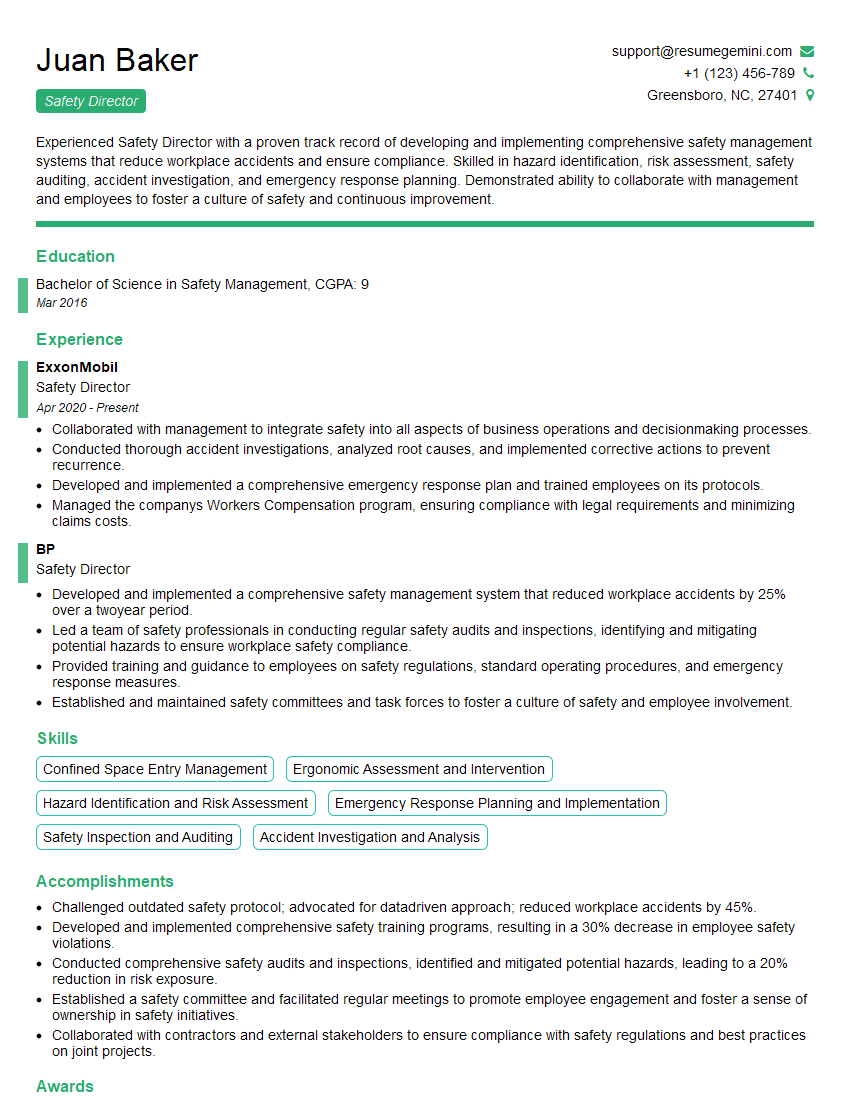
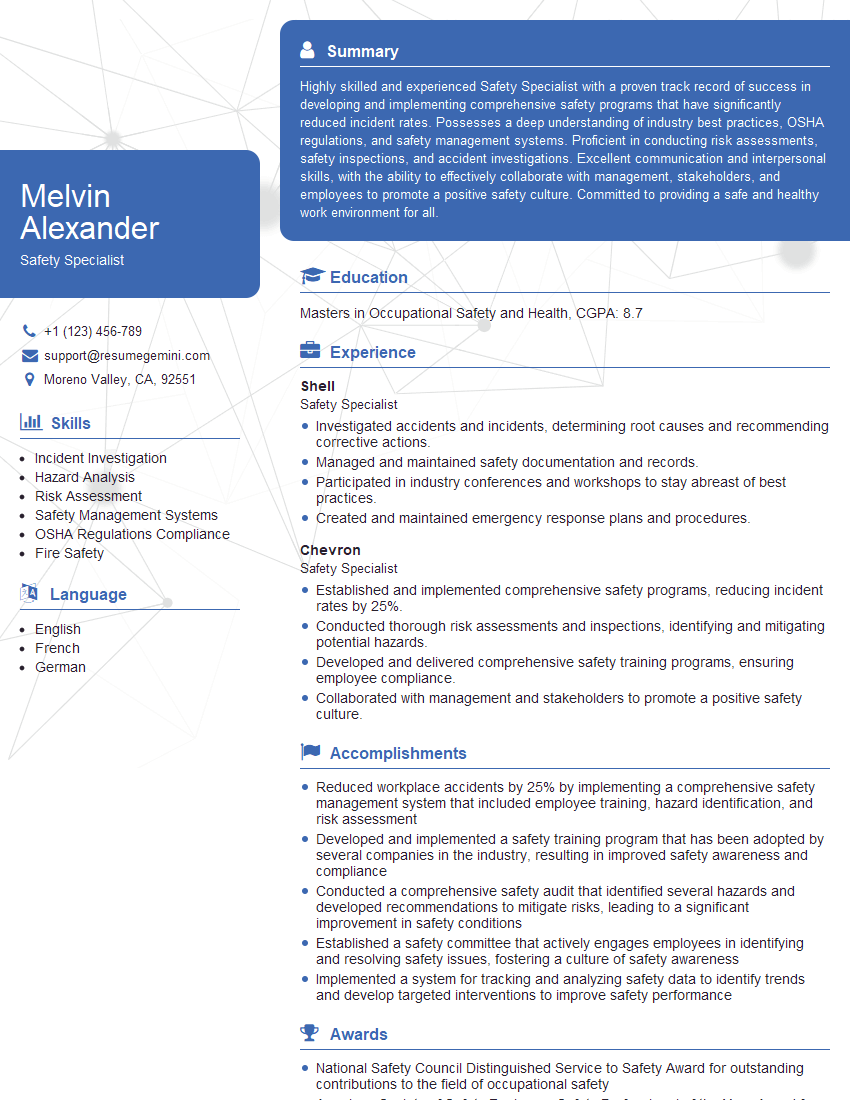
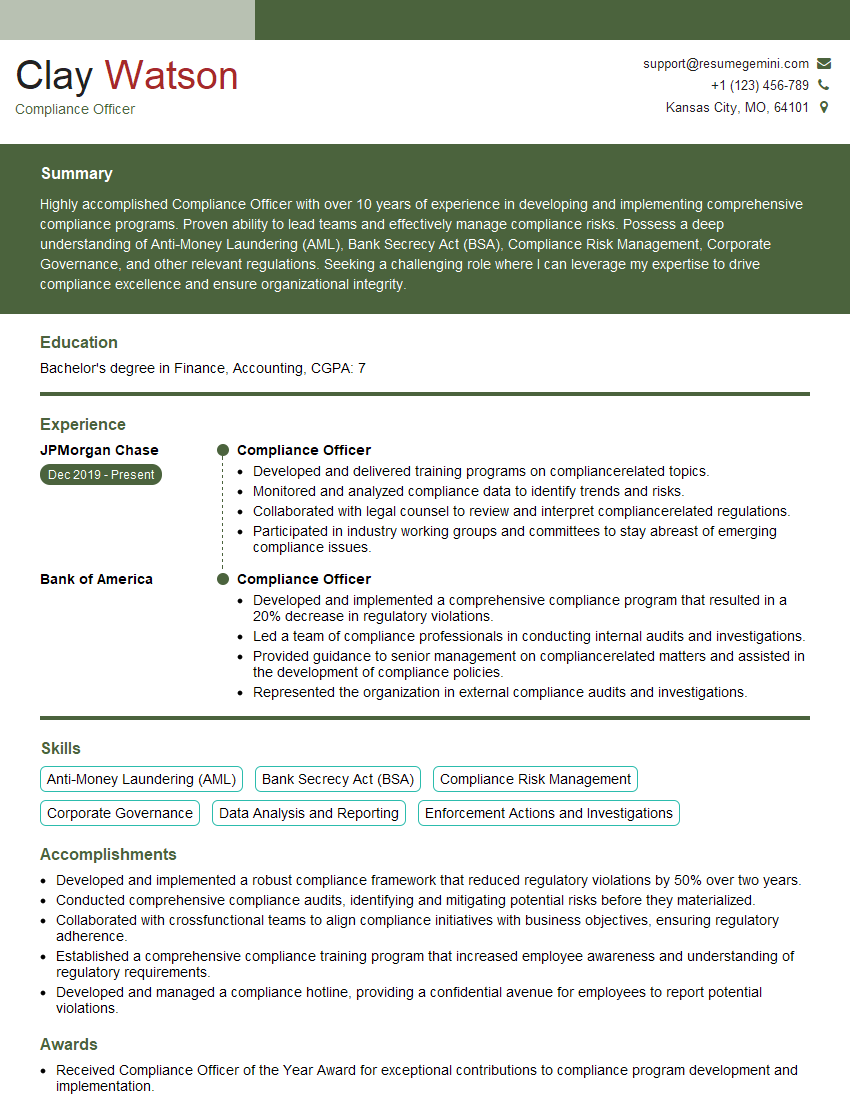
Mastering Railroad Safety Regulations Knowledge is crucial for career advancement in this critical field. A strong understanding of these regulations demonstrates your commitment to safety and professionalism, opening doors to higher-level positions and increased responsibility. To maximize your job prospects, create an ATS-friendly resume that highlights your expertise and experience. ResumeGemini is a trusted resource that can help you build a professional and impactful resume, showcasing your skills effectively. Examples of resumes tailored to Railroad Safety Regulations Knowledge roles are available to help you get started.


Explore more articles
Users Rating of Our Blogs
Share Your Experience
We value your feedback! Please rate our content and share your thoughts (optional).
What Readers Say About Our Blog
Very informative content, great job.
good