Every successful interview starts with knowing what to expect. In this blog, we’ll take you through the top Safety Harness and Ladder Climbing interview questions, breaking them down with expert tips to help you deliver impactful answers. Step into your next interview fully prepared and ready to succeed.
Questions Asked in Safety Harness and Ladder Climbing Interview
Q 1. Explain the different types of safety harnesses and their applications.
Safety harnesses come in various types, each designed for specific applications. The choice depends heavily on the work environment and the potential fall hazards.
- Full-body harnesses: These offer the most comprehensive protection, encompassing the chest, legs, and back. They are ideal for situations with a high risk of falls from significant heights, like working on skyscrapers or wind turbines. Think of it like a hug from your safety equipment, providing all-around protection.
- Chest harnesses: These harnesses primarily protect the chest and upper body and are often used in conjunction with other safety equipment, like a lifeline system. They might be appropriate for work on rooftops or in confined spaces where a full-body harness might be cumbersome.
- Positioning harnesses: These are designed to keep the worker securely positioned while performing tasks at height. They typically include attachment points for tools and equipment, making them practical for tasks like window cleaning or painting.
- Fall arrest harnesses: These are specifically designed to arrest a fall, preventing serious injury. They have strategically placed attachment points and strong webbing designed to withstand significant forces during a fall. These are critical in construction, industrial maintenance, and other high-risk situations.
- Work positioning harnesses: These support a worker while preventing a fall, primarily intended for tasks where the worker needs to be securely positioned at height.
The selection of the harness type depends on many factors, including the potential fall distance, the work environment, the specific task, and relevant safety regulations.
Q 2. Describe the proper inspection procedure for a safety harness.
Inspecting a safety harness before each use is crucial for ensuring your safety. A thorough inspection should be a routine part of your pre-work checklist.
- Visual Inspection: Carefully examine all straps, buckles, and stitching for any signs of wear, tear, cuts, abrasions, burns, or chemical damage. Look for fraying, broken stitching, or deformation of the webbing. Pay close attention to the attachment points – these bear the most stress in a fall.
- Buckle and Connector Check: Ensure that all buckles and connectors function smoothly and securely. Try to open and close them several times to ensure they are not jammed or damaged. Listen for any unusual sounds.
- Webbing Inspection: Check the webbing for any stiffness, unusual discoloration, or signs of melting. A stiff or brittle strap indicates potential failure. Check for any embedded objects or debris.
- D-Ring Check: Examine the D-rings or attachment points for any deformation or damage. Make sure they are properly seated and not showing any signs of wear.
- Label Check: Verify that the harness is properly labeled with the manufacturer’s information, size, and relevant certifications. Ensure the harness is not expired.
If you find any damage or defect, the harness should be immediately removed from service and replaced. It’s better to be safe than sorry. Think of it like checking your car’s tires before a long drive – essential for a safe journey.
Q 3. What are the limitations of a full-body harness?
While full-body harnesses offer the greatest protection, they also have limitations:
- Cumbersomeness: They can be bulky and restrictive, especially in confined spaces or when performing intricate tasks. This can affect worker comfort and dexterity, potentially increasing the risk of other accidents.
- Entanglement: In some environments with obstacles or equipment, the additional straps can increase the risk of entanglement, which can be extremely dangerous.
- Heat Stress: The covering of the full body can lead to overheating in hot and humid environments, potentially causing heat exhaustion or heat stroke.
- Cost: Full-body harnesses are generally more expensive than other types.
Therefore, while offering superior fall protection, the user must weigh the advantages against these potential limitations when selecting the right harness for a specific job.
Q 4. How do you select the appropriate safety harness for a specific task?
Selecting the appropriate safety harness involves considering several factors:
- Type of work: Different tasks demand different harness types. High-rise work requires a full-body harness, while confined space work might necessitate a smaller, more maneuverable design. Positioning work needs a harness with the correct positioning straps.
- Potential fall distance: The higher the potential fall, the more robust and effective the harness needs to be. A longer fall requires a stronger system with appropriate fall arrest equipment.
- Work environment: The surrounding environment influences harness choice. A cluttered environment might rule out a full-body harness due to entanglement risks. Hot and humid environments require consideration of heat stress.
- Worker comfort and mobility: The harness must be comfortable enough to be worn for extended periods without causing fatigue or discomfort. This is critical for productivity and safety.
- Compliance with regulations: The selected harness must meet all applicable industry standards and safety regulations. Always consult local and national standards.
A risk assessment is crucial before selecting a harness. This assessment should identify potential hazards, the type of fall protection needed, and the best choice for both safety and practicality.
Q 5. Describe the steps for properly donning and doffing a safety harness.
Proper donning and doffing are essential for harness effectiveness and safety. Always refer to the manufacturer’s instructions for your specific harness model.
Donning:
- Lay the harness on a flat surface and inspect it thoroughly.
- Put the leg straps on first, ensuring they are positioned correctly.
- Adjust the chest strap to a comfortable but snug fit.
- Attach the dorsal D-ring to the lifeline or anchor point.
- Double-check all buckles and straps to ensure they are securely fastened.
Doffing:
- Disconnect from the anchor point.
- Loosen all straps and buckles systematically.
- Remove the harness carefully, ensuring no part of the equipment gets tangled or caught.
- Inspect the harness for any damage that may have occurred during use.
Practicing the procedure before working at heights is beneficial. Imagine it like putting on a seatbelt in a car – it’s a simple yet crucial step that needs to be performed correctly every time.
Q 6. Explain the importance of regular harness inspections.
Regular harness inspections are paramount for preventing accidents and ensuring that your equipment continues to offer the protection it was designed for. A damaged harness is essentially useless and can be more dangerous than having no harness at all.
- Preventative Maintenance: Regular inspections identify potential problems before they become serious issues. Early detection prevents catastrophic equipment failure during a fall.
- Extended Lifespan: Proper care and regular inspections prolong the harness’s lifespan, helping you avoid frequent and costly replacements.
- Legal Compliance: Many jurisdictions have strict regulations regarding the regular inspection and maintenance of safety equipment. Failing to comply can result in penalties and legal liabilities.
- Worker Confidence: Knowing your equipment is in good working order boosts worker confidence and allows them to focus on their tasks, minimizing distractions and promoting safety.
Think of it like servicing your car—regular maintenance ensures it runs smoothly and safely, reducing the risk of unexpected breakdowns. Regular inspections are a small investment with significant safety returns.
Q 7. What are the common causes of harness failure?
Harness failure can stem from several causes:
- Wear and Tear: Abrasion, cuts, and general wear and tear from continuous use gradually weaken the harness’s structure, potentially leading to failure. This is why regular inspections are crucial.
- Chemical Exposure: Exposure to chemicals can degrade the harness’s materials, making them brittle and prone to failure. Always use harnesses appropriate for the chemical environment.
- Improper Storage: Storing the harness in direct sunlight, extreme temperatures, or damp conditions can damage the materials and reduce its lifespan.
- Incorrect Use: Misuse or improper adjustment can overload specific parts of the harness, causing failure. Always follow manufacturer instructions.
- Manufacturing Defects: While rare, manufacturing defects can result in a weakened or compromised harness. Purchasing from reputable manufacturers and checking for certifications helps mitigate this risk.
Identifying the cause of a harness failure is critical for preventing future incidents. A thorough investigation, including an inspection of the failed harness, is necessary to understand why the failure occurred.
Q 8. How do you identify and address a damaged safety harness?
Identifying and addressing damage in a safety harness is crucial for preventing falls. Think of your harness as your lifeline; any compromise weakens that lifeline significantly. A thorough inspection is paramount before each use.
- Visual Inspection: Carefully examine all straps, buckles, stitching, and D-rings for any signs of wear, cuts, abrasions, burns, or discoloration. Look for fraying, broken stitching, distorted metal parts, or unusual stiffness.
- Functional Check: Ensure all buckles and adjusters function smoothly and securely. Test the locking mechanisms of the buckles multiple times. Check the webbing for any signs of weakening or stretching. Try to identify any areas that feel unusually soft or brittle compared to the rest of the harness.
- Documentation: Keep detailed records of inspections, noting any observed damage, and the date of the inspection. Many harnesses require regular inspections according to manufacturer guidelines; some even have tags that need to be signed and dated. This documentation helps track the harness’s lifespan and is crucial for safety audits and incident investigations.
- Damaged Harness Handling: Never use a damaged harness. Immediately take it out of service. Label it clearly as damaged and follow your company’s procedures for disposal or repair. Only qualified personnel should attempt repairs, and repairs should only be done using manufacturer-approved parts and methods.
Example: Imagine finding a small cut on a leg strap. This seemingly minor damage could compromise the strap’s strength, especially during a fall. Immediately removing the harness from service prevents a potentially catastrophic outcome.
Q 9. What are the different types of fall arrest systems?
Fall arrest systems are designed to prevent a worker from hitting the ground during a fall. Different systems offer varying levels of protection and suitability depending on the work environment.
- Self-Retracting Lifeline (SRL): These devices automatically retract the lifeline, minimizing the fall distance. They are popular for their ease of use and compact design, particularly useful in confined spaces.
- Shock-Absorbing Lanyard: These extendable lanyards have an energy-absorbing component that helps to reduce the impact force on the worker in the event of a fall. They are commonly used with fixed anchor points.
- Full Body Harness: Essential for all fall arrest systems, this harness distributes the impact force over a larger area of the body to minimize injury. It has multiple attachment points for various fall protection devices.
- Anchor Point: This is the structural element to which the fall protection system is secured. The anchor point must be strong enough to withstand the forces generated during a fall, exceeding the worker’s weight and the forces imposed by the system.
Example: A worker on a rooftop might use an SRL attached to a fixed anchor point on the building, while a worker on a ladder might use a shock-absorbing lanyard attached to a secure beam above.
Q 10. Explain the principles of anchor point selection.
Anchor point selection is critical for fall protection. A poorly chosen anchor point is as dangerous as having no fall protection at all. The anchor point must be structurally sound and capable of withstanding the forces generated during a fall.
- Structural Integrity: Ensure the anchor point is capable of supporting at least 5000 pounds (22.7 kN). This is often determined through structural engineering calculations and should be verified by a qualified professional. The anchor should be designed for this type of load and usage.
- Accessibility and Positioning: The anchor should be conveniently located to ensure the fall arrest system doesn’t create tripping hazards or restrict movement. It must be positioned to minimize the fall distance.
- Material and Condition: Inspect the anchor for damage, corrosion, or wear. Avoid using anchors made of materials that could weaken or fail under load (e.g., corroded steel).
- Redundancy: Where feasible, consider using redundant anchor points (multiple points) to increase safety and security, especially in high-risk situations.
Example: A steel beam embedded in concrete is a far superior anchor point compared to a wooden beam or a rusty hook bolted into a wall.
Q 11. Describe the proper techniques for ladder climbing.
Proper ladder climbing techniques are paramount to prevent falls and injuries. Think of it like climbing a mountain—controlled movements and careful planning are key.
- Ladder Inspection: Before climbing, inspect the ladder for damage and ensure it is suitable for the task. Look for cracked rails, loose rungs, or damaged feet.
- Three-Point Contact: Maintain three points of contact with the ladder at all times—two hands and one foot, or two feet and one hand. This prevents loss of balance and ensures stability.
- Body Positioning: Keep your body centered on the ladder, and avoid reaching too far to the side. Carry tools in a tool belt to minimize reaching.
- Climbing Technique: Climb facing the ladder, using both hands and feet to move steadily. Avoid rushing or making sudden movements.
- Safe Descent: Descend using the same slow, controlled manner as you climbed, maintaining three points of contact.
- Avoid Overreaching: Never overreach when working from a ladder. If your work area requires reaching too far, reposition the ladder.
Example: Imagine painting a high wall. Instead of reaching out for distant areas, carefully reposition the ladder to bring your work closer, maintaining three-point contact and avoiding overreaching.
Q 12. What are the safety regulations for ladder use?
Ladder safety regulations vary depending on location and industry, but common themes include ensuring the ladder is the right type for the job, correctly positioned, and used by trained personnel.
- Proper Ladder Type: Use the correct ladder type for the task (e.g., extension ladder, stepladder, straight ladder). Choose a ladder long enough to extend at least 3 feet above the landing point.
- Secure Base: The ladder base must be stable and placed on a level surface. Use ladder stabilizers if necessary on uneven ground. The base should be positioned at a 4:1 ratio (4 feet out for every 1 foot of height).
- Proper Angle: Place the ladder at the correct angle. This is typically achieved with the 4:1 rule. A too-steep angle reduces stability, while a too-shallow angle can cause the ladder to slip.
- Regular Inspection: Ladders must be regularly inspected and maintained in good condition, removing those damaged or exceeding their service life.
- Training: Employees must receive proper training on safe ladder usage before being permitted to use one.
- Fall Protection: In some settings, fall protection equipment such as harnesses and lanyards may be required when working at heights on ladders.
Example: OSHA in the United States has specific regulations regarding ladder use, including requirements for inspection, angle, and the use of fall protection equipment at certain heights.
Q 13. How do you assess the stability of a ladder before climbing?
Assessing ladder stability is a critical first step before climbing. Remember, a wobbly ladder is an accident waiting to happen. A thorough assessment is essential for safety.
- Visual Inspection: Look for damage, such as cracks, loose rungs, or broken parts. Check for any warping or bending of the ladder.
- Foot Placement: Ensure the ladder’s base is stable and placed on a level surface. Feel for any sinking or shifting when you apply gentle pressure.
- Ladder Angle: Verify the correct angle using the 4:1 rule (four feet out for every foot of height). An incorrect angle significantly reduces stability.
- Ground Stability: Check that the ground beneath the ladder’s feet is level, firm, and capable of supporting the combined weight of the ladder and climber. Avoid soft or uneven ground.
- Leveling: If the ground is uneven, use boards, blocks, or similar materials to create a stable and level surface for the ladder’s feet.
Example: Imagine setting up a ladder on soft soil. The ladder might sink or shift, making climbing extremely dangerous. Firmly setting the base on a solid surface or using leveling boards is critical before even considering climbing.
Q 14. What are the risks associated with ladder climbing?
Ladder climbing presents several potential risks, and understanding them is crucial for mitigating those risks and preventing accidents.
- Falls: This is the most significant risk, resulting in serious injuries or fatalities. Falls can be caused by slipping, reaching too far, improper ladder placement, or ladder failure.
- Electrocution: Contact with overhead power lines is a serious danger. Ensure the ladder is kept a safe distance from any electrical hazards.
- Crushing Injuries: Improperly secured ladders can fall, causing crushing injuries. Secure the ladder adequately to prevent it from moving during use.
- Muscle Strains and Sprains: Overexertion and improper climbing techniques can lead to muscle strains, sprains, or other injuries.
- Object Impacts: Falling tools or materials can cause injury. Secure tools properly, and clear the area around the ladder of potential hazards.
Example: Working near power lines without taking adequate safety measures poses a high risk of electrocution. Always maintain a safe distance and ensure that the power is turned off if possible.
Q 15. Explain the procedures for working safely at heights.
Working safely at heights requires a multi-layered approach prioritizing prevention and mitigation. It begins with a thorough risk assessment identifying potential hazards like unstable surfaces, overhead obstructions, and weather conditions. This assessment dictates the appropriate fall protection measures.
- Planning and Preparation: Before commencing any work, plan the task meticulously. This includes selecting appropriate equipment, designating a competent person to supervise, and establishing clear communication channels.
- Engineering Controls: Where feasible, eliminate the need for working at heights entirely. This might involve using scissor lifts, scaffolding, or extending the reach of tools. If working at height is unavoidable, utilize collective protection systems like guardrails and safety nets.
- Personal Protective Equipment (PPE): If engineering controls are insufficient, personal protective equipment is essential. This includes safety harnesses, lanyards, and appropriate footwear. Regular inspection and maintenance of all PPE are critical.
- Training and Competence: All personnel working at heights must receive comprehensive training on hazard identification, equipment usage, rescue procedures, and emergency response. Regular refresher training is recommended.
- Permit-to-Work Systems: Formal permit-to-work systems ensure that all necessary precautions are in place before work begins. These systems document risk assessments, control measures, and emergency procedures.
Example: Imagine installing a window on a high-rise building. A risk assessment would identify potential falls, falling objects, and weather hazards. The solution could involve scaffolding with guardrails, a safety net below, and workers using harnesses and lanyards connected to the scaffolding.
Career Expert Tips:
- Ace those interviews! Prepare effectively by reviewing the Top 50 Most Common Interview Questions on ResumeGemini.
- Navigate your job search with confidence! Explore a wide range of Career Tips on ResumeGemini. Learn about common challenges and recommendations to overcome them.
- Craft the perfect resume! Master the Art of Resume Writing with ResumeGemini’s guide. Showcase your unique qualifications and achievements effectively.
- Don’t miss out on holiday savings! Build your dream resume with ResumeGemini’s ATS optimized templates.
Q 16. What are the components of a personal fall arrest system (PFAS)?
A Personal Fall Arrest System (PFAS) comprises several interconnected components, each crucial for effective fall protection. A failure in any single component can compromise the entire system.
- Body Harness: The harness is worn by the worker and distributes the impact force across the body in the event of a fall. It should fit snugly but comfortably, allowing for unrestricted movement.
- Lanyard: This is a flexible connection between the harness and the anchorage point. Lanyards come in various lengths and materials, with shock-absorbing capabilities to lessen the impact force on the worker.
- Anchorage Point: This is a structural element capable of withstanding the force of a fall. It should be independently verified for its strength and suitability. Examples include structural beams, purpose-built anchor points, or robust scaffolding.
- Connector(s): These are the connecting elements—typically snap hooks or carabiners—linking the lanyard to the harness and the anchorage point. They must be inspected regularly for damage or wear.
- (Optional) Self-Retracting Lifeline (SRL): An SRL automatically retracts the lifeline, limiting the fall distance and reducing the swing fall risk.
Example: A painter working on a tall wall would use a body harness, a shock-absorbing lanyard, and snap hooks to connect to a securely anchored lifeline above.
Q 17. Describe the process of rescuing a fallen worker.
Rescuing a fallen worker is a critical and potentially hazardous procedure requiring specialized training and equipment. The primary goal is to safely remove the injured worker from the fall hazard while minimizing further injury.
- Assess the Situation: Before attempting a rescue, ensure the scene is safe. Shut down any machinery and address any immediate dangers.
- Call Emergency Services: Immediately contact emergency medical services and inform them of the situation. Their expertise is crucial in handling the injured worker.
- Use Appropriate Rescue Equipment: Depending on the situation, this could involve a rescue harness, ropes, pulleys, or specialized lifting equipment. Never attempt a rescue without adequate training and equipment.
- Stabilize the Injured Worker: Carefully assess the worker’s injuries and provide any necessary first aid. Ensure their head and neck are stabilized to prevent further injury.
- Secure a Safe Rescue Path: Establish a safe path to retrieve the fallen worker. This might involve using ropes and pulleys, or employing a rescue platform.
- Careful Extraction: Carefully and smoothly remove the worker from the fall zone, employing appropriate lifting and lowering techniques.
- Post-Rescue Procedures: Once the worker is rescued, provide continued medical attention and document the incident thoroughly. Investigate the cause of the fall to prevent future incidents.
Example: If a worker falls from a ladder, a trained rescuer would use a rescue harness and ropes to safely lower the worker to the ground, maintaining spinal stability during the process.
Q 18. What are the emergency procedures for a fall from height?
Emergency procedures following a fall from height prioritize immediate response and safety. The steps are crucial for minimizing injury and preventing further complications.
- Call Emergency Services: This is the most important step. Contact emergency medical services immediately to ensure prompt medical attention.
- Secure the Area: Isolate the accident site to prevent further injuries and preserve evidence for investigation.
- Assess the Injured Worker: Check for consciousness, breathing, and pulse. Provide first aid as needed, but avoid unnecessary movement.
- Do Not Move the Injured Worker: Unless absolutely necessary for immediate life-saving measures, refrain from moving the injured worker. Movement could worsen spinal injuries.
- Control Bleeding: If there’s bleeding, apply direct pressure to the wound to stem the flow of blood.
- Maintain Body Temperature: If the worker appears cold or is shivering, take measures to maintain body temperature, using blankets or other means.
- Coordinate Rescue Efforts: If the worker is in a difficult-to-reach location, coordinate with emergency services and potentially specialized rescue teams.
- Post-Incident Procedures: Once the injured worker is safely evacuated, document the incident fully, preserving evidence and conducting a thorough investigation.
Example: If a worker falls from a roof, emergency services would be called, the area secured, and first aid administered while waiting for paramedics. The fall would then be investigated to prevent future occurrences.
Q 19. How do you calculate the fall distance and stopping distance?
Calculating fall distance and stopping distance is critical for selecting appropriate fall protection equipment and ensuring worker safety. These distances are not interchangeable.
- Fall Distance: This is the vertical distance a worker falls before the fall arrest system engages. It’s influenced by the worker’s height, the length of the lanyard, and any slack in the system.
Fall Distance = Height of Fall - Length of Lanyard - Stopping Distance: This is the additional distance a worker travels after the fall arrest system activates. It’s determined by the system’s energy absorption capabilities. The stopping distance is often specified by the manufacturer of the equipment.
Example: Imagine a worker is 10 feet above the ground, using a 6-foot lanyard. The fall distance before the system engages is 4 feet (10 feet – 6 feet). The stopping distance is an additional distance determined by the lanyard’s shock absorber. The total distance traveled is the sum of both distances.
Important Note: These calculations are simplified. Factors like swing falls, the worker’s weight, and the system’s condition can affect both distances.
Q 20. Explain the concept of swing fall and how to mitigate it.
A swing fall occurs when a worker falls from height, and the fall arrest system doesn’t stop them directly below the anchorage point. Instead, they swing out and impact a wall, structure, or other object.
- Causes: Swing falls primarily result from a lack of proper positioning, insufficient anchorage points, or using overly long lanyards.
- Mitigation Strategies:
- Proper Anchorage Point Selection: Choose anchorage points directly above the worker to minimize the swing radius.
- Appropriate Lanyard Length: Use the shortest lanyard that allows for safe movement and minimizes swing distance.
- Self-Retracting Lifelines (SRLs): SRLs significantly reduce swing fall risks by minimizing the fall distance and keeping the worker closer to the anchorage point.
- Multiple Anchorage Points: For some tasks, using multiple anchorage points or a horizontal lifeline system can limit swing falls.
- Personal Fall Arrest System (PFAS) Selection: Utilize systems that limit swing fall potential such as those with shorter lanyards or SRLs.
Example: A worker on a steep roof might experience a swing fall if the anchorage point is too far away. Using an SRL and placing the anchorage point closer to the worker would mitigate this risk.
Q 21. What is the importance of proper anchorage in fall protection?
Proper anchorage is paramount in fall protection. The entire system’s effectiveness hinges on the strength and reliability of the anchorage point. A failure here can lead to catastrophic consequences.
- Strength and Stability: The anchorage point must be capable of withstanding at least five times the potential impact force of a falling worker. This ensures sufficient safety margins even under extreme conditions.
- Structural Integrity: The anchorage must be structurally sound and properly secured to the building or structure. It should be free from any visible damage or deterioration.
- Material Suitability: The anchorage point material should be suitable for the environment and resist corrosion, wear, and other forms of degradation. Regular inspections are critical.
- Independent Verification: It’s vital to independently verify the strength and suitability of the anchorage point before use. A competent person should assess the structure and ensure it meets the required standards.
- Certification and Documentation: Ensure that the anchorage point has the necessary certifications and documentation verifying its capacity and compliance with relevant safety standards.
Example: Using a poorly secured hook on a weakened roof beam as an anchorage point is extremely dangerous. The anchorage should be a structurally sound structural element independently verified by a qualified professional.
Q 22. What are the different types of fall arrest devices?
Fall arrest systems are crucial for preventing injuries from falls at height. Several devices contribute to a complete system. They broadly fall into these categories:
- Self-retracting lifelines (SRLs): These are compact units that automatically retract the lifeline, minimizing the distance a worker can fall. They are versatile and suitable for various applications. Think of them like a constantly tensioned, retractable leash for your safety.
- Shock-absorbing lanyards: These devices lengthen upon impact to reduce the forces on the worker’s body during a fall. Imagine a bungee cord – it stretches to absorb energy. They’re often used in conjunction with anchor points.
- Full-body harnesses: These harnesses distribute the impact forces across the body in the event of a fall, preventing serious injury. They’re the foundation of any fall protection system; think of them as the crucial link between the worker and the arrest system.
- Vertical lifelines: These are systems using a cable or rope running vertically to provide a continuous fall arrest system along the length of a structure. They are common in multi-story buildings.
- Horizontal lifelines: These are similar to vertical lifelines, but they run horizontally, often providing protection along the edge of a rooftop or platform.
The choice of device depends on the specific work environment and the potential fall hazards. A risk assessment is crucial to determine the appropriate fall protection equipment.
Q 23. How do you ensure the compatibility of different components of a fall protection system?
Ensuring compatibility within a fall protection system is paramount for its effectiveness. Incompatibility can lead to system failure and severe injury. Compatibility checks involve verifying several factors:
- Strength ratings: All components, including the harness, lanyard, SRL, and anchor point, must have strength ratings exceeding the potential forces generated during a fall. These ratings are usually expressed in kilonewtons (kN).
- Connector compatibility: Connectors (e.g., carabiners, snap hooks) must be compatible with the components they connect. Incorrect connectors can easily fail under load. Look for proper certifications and markings.
- Manufacturer recommendations: Always refer to the manufacturer’s instructions for each component. They’ll specify compatible equipment and usage limitations. Don’t assume compatibility—verify it!
- Regular inspections: All components should be regularly inspected for damage, wear, and tear. A damaged component renders the entire system unsafe. This is a legal requirement in most jurisdictions.
A simple analogy is building with Lego bricks. Different brands or sizes won’t fit together properly, creating an unstable structure. Fall protection components require the same attention to detail and compatibility.
Q 24. Describe the role of a competent person in fall protection.
A competent person in fall protection is an individual with the necessary training, experience, and authority to identify, assess, and control fall hazards. They are the key to a safe working environment.
- Risk assessment: They conduct thorough risk assessments to identify potential fall hazards and determine appropriate control measures.
- Equipment selection: They select appropriate fall protection equipment based on the identified hazards and the specific work tasks.
- Training and supervision: They ensure that workers receive proper training on the safe use of fall protection equipment and supervise their work to enforce safe practices.
- Inspection and maintenance: They oversee the inspection and maintenance of fall protection equipment to ensure its continued effectiveness.
- Emergency response planning: They develop and implement emergency response plans in case of a fall.
Imagine a construction foreman overseeing a high-rise project – that person should ideally be the competent person, ensuring everyone is working safely and to the required standards.
Q 25. What are the legal requirements for working at heights in your region?
Legal requirements for working at heights vary by region but generally involve adherence to national or regional standards and regulations. These typically mandate:
- Risk assessments: Conducting thorough risk assessments before any work at heights commences.
- Fall protection plans: Developing and implementing written fall protection plans that outline the control measures to be used.
- Equipment selection and use: Selecting and using appropriate fall protection equipment that complies with relevant standards (e.g., ANSI, OSHA).
- Training and competency: Ensuring workers receive adequate training and are competent in the use of fall protection equipment.
- Inspections and maintenance: Regularly inspecting and maintaining fall protection equipment.
- Record-keeping: Maintaining detailed records of risk assessments, inspections, training, and incidents.
Failure to comply with these regulations can result in significant fines and legal repercussions. It’s crucial to stay informed about the specific regulations in your jurisdiction.
Q 26. How do you communicate hazards and risks associated with working at heights?
Effective communication is critical to mitigating risks associated with working at heights. This communication should be multi-faceted:
- Toolbox talks: Regular toolbox talks should address specific hazards, safe work practices, and the proper use of fall protection equipment. They should be interactive and encourage questions.
- Pre-task planning meetings: Before commencing any work at heights, pre-task planning meetings should involve all workers to discuss potential hazards and the control measures in place. This is a vital step.
- Written procedures: Clear written procedures outlining safe work practices, emergency procedures, and equipment usage should be readily available to all workers. These procedures must be accessible and understandable.
- Visual aids: Using visual aids, such as posters and diagrams, can effectively communicate key safety messages. A picture is often worth a thousand words.
- Regular inspections and feedback: Regular safety inspections and feedback sessions provide opportunities to identify and address any communication gaps or potential hazards. This promotes a culture of safety.
Communication isn’t just about delivering information; it’s about fostering a culture of shared responsibility for safety.
Q 27. Explain the importance of pre-task planning for work at heights.
Pre-task planning for work at heights is essential for ensuring worker safety and preventing incidents. This involves a systematic approach:
- Hazard identification: Identifying all potential fall hazards at the worksite. This includes assessing the height of the work, the type of surface, and the presence of any obstacles.
- Risk assessment: Evaluating the likelihood and severity of each identified hazard to determine the level of risk.
- Control measures: Determining the appropriate control measures to mitigate the identified risks. This might include engineering controls, administrative controls, or personal protective equipment (PPE).
- Equipment selection: Selecting the appropriate fall protection equipment based on the control measures and the specific work task.
- Communication plan: Developing a communication plan to ensure that all workers are aware of the hazards, control measures, and emergency procedures.
- Emergency response plan: Developing an emergency response plan in case of a fall or other incident.
Think of a mountain climbing expedition. Experienced climbers always have detailed plans, considering routes, equipment, and potential problems. Work at heights requires the same level of planning and preparation.
Q 28. Describe your experience with different types of access equipment
Throughout my career, I’ve worked extensively with various types of access equipment, encompassing both ladder systems and specialized equipment for fall protection:
- Ladders: I’m proficient in selecting and using various ladders, including stepladders, extension ladders, and rolling ladders, ensuring compliance with safety standards and appropriate use for different tasks. I understand the importance of proper ladder setup and securing to prevent tipping.
- Scaffolding: I have significant experience working with various scaffolding systems, including tube and clamp, system scaffolding, and mobile tower scaffolds. I know the proper erection, dismantling, and inspection procedures for different scaffolding types to ensure stability and safety.
- Aerial work platforms (AWPs): I am experienced in the safe operation and maintenance of AWPs, including scissor lifts and boom lifts, following manufacturer’s instructions and undergoing relevant training for safe operation. I understand the importance of proper load limits and pre-use inspections.
- Rope access techniques: I have utilized and overseen rope access techniques for certain high-risk projects, ensuring compliance with industry best practices. This includes the use of specialized harnesses, ropes, and other equipment for vertical access.
My experience encompasses understanding the limitations of each access equipment and selecting the appropriate method for the task and the prevailing conditions. Safety is the top priority in every selection and operation.
Key Topics to Learn for Safety Harness and Ladder Climbing Interview
- Understanding Harness Components and Functionality: Learn the different parts of a safety harness, their purpose, and how to properly inspect them for damage or wear. This includes understanding load-bearing capacity and limitations.
- Proper Donning and Doffing Techniques: Master the correct procedures for putting on and taking off a safety harness, ensuring it’s fitted securely and comfortably without compromising safety.
- Anchor Point Selection and Assessment: Learn to identify suitable and structurally sound anchor points for fall protection systems. Understand the factors to consider when assessing anchor integrity and load capacity.
- Safe Ladder Climbing Practices: Familiarize yourself with the best practices for ascending and descending ladders, including three-point contact, proper body positioning, and load limitations.
- Fall Protection Systems: Understand different fall protection systems, their applications, and limitations. This includes self-retracting lifelines (SRLs), shock-absorbing lanyards, and other relevant equipment.
- Hazard Identification and Risk Mitigation: Learn to identify potential hazards associated with working at heights and implement appropriate safety measures to mitigate risks. This includes understanding OSHA or relevant safety regulations.
- Emergency Procedures: Be prepared to discuss procedures in case of a fall or other emergency situations, including rescue techniques and communication protocols.
- Regular Inspections and Maintenance: Understand the importance of regular equipment inspections and maintenance procedures to ensure continued functionality and safety.
- Practical Application of Learned Concepts: Be ready to describe real-world scenarios where you’ve applied these safety procedures and the problem-solving involved.
Next Steps
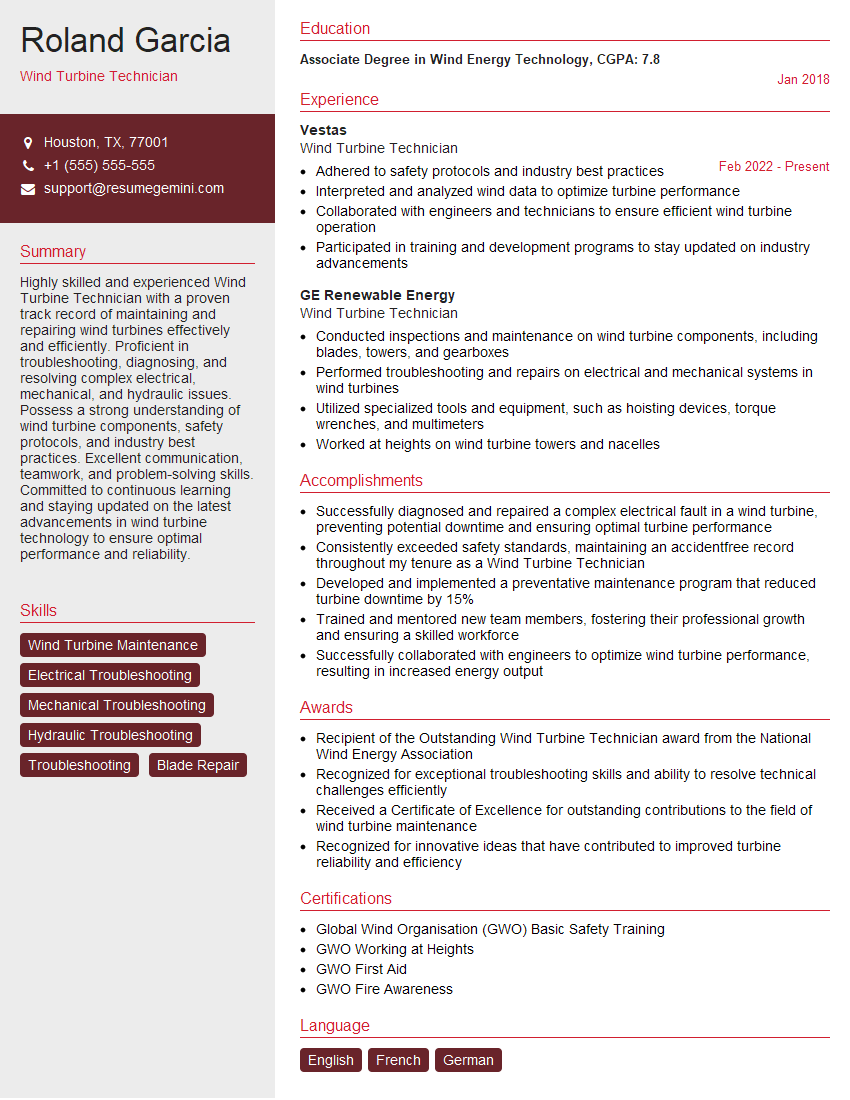
Mastering safety harness and ladder climbing techniques is crucial for career advancement in many industries demanding height-related work. A strong understanding of these safety protocols demonstrates your commitment to workplace safety and your professionalism. To significantly boost your job prospects, create an ATS-friendly resume that highlights your skills and experience effectively. ResumeGemini is a trusted resource to help you build a professional and impactful resume tailored to your experience. Examples of resumes specifically designed for candidates with experience in Safety Harness and Ladder Climbing are available to help you get started.







Explore more articles
Users Rating of Our Blogs
Share Your Experience
We value your feedback! Please rate our content and share your thoughts (optional).
What Readers Say About Our Blog
Very informative content, great job.
good