Feeling uncertain about what to expect in your upcoming interview? We’ve got you covered! This blog highlights the most important Sewer Pumping interview questions and provides actionable advice to help you stand out as the ideal candidate. Let’s pave the way for your success.
Questions Asked in Sewer Pumping Interview
Q 1. Describe the different types of sewer pumps and their applications.
Sewer pumps come in various types, each suited for specific applications. The choice depends on factors like flow rate, head pressure, solids handling capacity, and budget.
- Submersible Pumps: These are fully submerged in the wastewater, ideal for deep pits or wet wells. They’re robust and handle solids effectively, commonly used in lift stations. Think of them as underwater workhorses.
- Non-Submersible (Dry Pit) Pumps: Located outside the wastewater, these pumps are easier to maintain but require a dry well to prevent submersion. They are excellent for applications where accessibility for maintenance is crucial.
- Centrifugal Pumps: The most common type, they use a spinning impeller to increase the fluid’s velocity and pressure. Their versatility makes them suitable for a wide range of applications, from small residential systems to large municipal networks. They’re like the ‘general purpose’ tool in a sewer pump toolbox.
- Positive Displacement Pumps: These pumps move a fixed volume of wastewater with each stroke, making them ideal for handling highly viscous fluids or those with a high concentration of solids. Imagine them as precisely measuring and moving wastewater, perfect for sticky situations.
- Vortex Pumps: These handle solids exceptionally well, shredding and pumping even large debris. They’re a strong choice when dealing with significant clogging potential. Think of them as the ‘garbage disposal’ of the sewer pump world.
For example, a large lift station might use a combination of submersible pumps for primary pumping and centrifugal pumps for boosting pressure in the main sewer line. Smaller residential systems often rely on a single, smaller submersible pump.
Q 2. Explain the principle of operation of a centrifugal pump.
A centrifugal pump operates on the principle of converting rotational energy into hydraulic energy. Imagine a spinning wheel (impeller) inside a casing. As the impeller rotates, it accelerates the fluid (wastewater) towards the outer edge. This increased velocity translates into higher pressure, forcing the wastewater out of the discharge pipe. The key is the impeller’s design – its shape and blade angles determine the pump’s efficiency and pressure capabilities. Think of it like a spinning fan – the faster it spins, the more air (or in this case, wastewater) it moves, and the further it moves it.
The fluid enters the pump at the center (eye of the impeller) and is then accelerated outwards by the impeller. The increase in velocity converts to pressure, pushing the fluid out the discharge nozzle. This process is continuous as long as the impeller is rotating.
Q 3. What are the common causes of sewer pump failure?
Sewer pump failures stem from a combination of factors; some are mechanical, others environmental. Common causes include:
- Wear and tear: Impeller wear, bearing failure, and seal leaks are common culprits resulting from continuous operation and exposure to harsh wastewater.
- Blockages: Rags, debris, and grease build-up can impede the pump’s flow and damage the impeller or motor.
- Corrosion: Exposure to corrosive wastewater and chemicals leads to degradation of pump components.
- Motor failure: Overheating, voltage surges, or mechanical wear can damage the motor itself.
- Electrical problems: Faulty wiring, damaged controls, or power fluctuations can cause pump malfunction.
- Lack of maintenance: Ignoring scheduled maintenance, such as lubrication and inspection, dramatically shortens a pump’s life.
For example, a failure due to a clogged impeller would manifest as decreased flow or complete pump stoppage. A failing seal would cause leakage, leading to a reduction in efficiency or even complete pump failure.
Q 4. How do you troubleshoot a pump that is not priming?
A pump that doesn’t prime (fill with liquid before starting) indicates a problem in the suction side. Here’s a systematic troubleshooting approach:
- Check for Leaks: Inspect all suction-side connections for leaks. Even small leaks can prevent priming.
- Verify Suction Lift: Ensure the pump is not positioned too high relative to the wastewater level. The maximum suction lift is limited by atmospheric pressure.
- Inspect the Foot Valve (if applicable): A clogged or damaged foot valve will prevent the pump from drawing liquid.
- Examine the Suction Line: Ensure the suction line is clear of blockages, kinks, or air leaks. Air leaks are significant since air doesn’t readily transfer to the pump.
- Check the Priming System (if equipped): Verify the priming system’s functionality. This may involve checking the level of priming liquid in the pump or activating any automatic priming mechanisms.
- Inspect Impeller for Damage: A damaged impeller may prevent proper suction. This would often be accompanied by other issues such as noise or decreased flow.
Remember to always follow the manufacturer’s instructions and safety guidelines. Working on a pump without understanding the system can be dangerous.
Q 5. What safety precautions should be taken when working with sewer pumps?
Working with sewer pumps presents significant safety hazards. Always prioritize these precautions:
- Lockout/Tagout Procedures: Before any maintenance or repair, completely de-energize the pump and its associated electrical equipment using proper lockout/tagout procedures. This is absolutely critical.
- Personal Protective Equipment (PPE): Wear appropriate PPE including safety glasses, gloves, boots, and potentially a respirator, depending on the specific situation and wastewater content. Wastewater is often contaminated.
- Confined Space Entry Procedures: If working inside a pump pit or wet well, follow strict confined space entry protocols. These environments pose risks of oxygen deficiency, toxic gases, and drowning.
- Working at Heights: If accessing the pump from an elevated position, use fall protection equipment.
- Awareness of Hazardous Materials: Be aware of potential hazards from the wastewater itself, including pathogens, chemicals, and gases.
- Proper Lifting Techniques: Use proper lifting techniques and equipment when handling heavy pump components.
Remember that safety is not negotiable. A momentary lapse in attention can have serious consequences. Always err on the side of caution.
Q 6. Explain the process of maintaining and cleaning a sewer pump.
Regular maintenance and cleaning are crucial for extending a sewer pump’s lifespan and preventing failures. A typical maintenance schedule includes:
- Regular Inspections: Visually inspect the pump for leaks, corrosion, and signs of damage. Listen for unusual noises during operation.
- Cleaning: Regularly clean the pump casing, impeller, and suction line to remove debris and prevent blockages. The frequency depends on the wastewater characteristics.
- Lubrication: Lubricate bearings and other moving parts according to the manufacturer’s recommendations.
- Seal Replacement: Replace worn-out seals promptly to prevent leaks.
- Motor Checks: Check the motor windings for overheating or damage. A thermal imager is beneficial for this.
- Fluid Analysis: If possible, analyze wastewater samples to identify potential corrosive elements.
A detailed maintenance log is crucial. This will help you track pump performance, identify trends, and schedule preventative maintenance before problems arise. Imagine it as a medical chart for your pump.
Q 7. How do you perform a visual inspection of a sewer pump?
A visual inspection forms the foundation of sewer pump maintenance. It involves a systematic examination to identify potential problems early.
- External Inspection: Check the pump casing for cracks, corrosion, or damage. Look for any signs of leakage around seals or connections.
- Motor Inspection: Examine the motor for any signs of overheating (discoloration, burn marks), loose connections, or damage to the wiring.
- Impeller Inspection (if accessible): Inspect the impeller for wear, damage, or signs of clogging. A worn impeller will impact efficiency and could lead to premature failure.
- Suction and Discharge Pipes: Check for blockages, corrosion, or damage in the pipes. This is also the time to observe flow conditions.
- Wiring and Electrical Connections: Ensure all wiring is properly secured and that there are no frayed wires or loose connections.
- Control Panel: Check the control panel for any indications of errors or alarms.
Take photos or videos to document the inspection findings. Clear documentation helps you track changes over time and provides evidence in case of future issues. Think of it as creating a photographic history of the pump’s health.
Q 8. What are the different types of pump seals and their maintenance?
Sewer pumps utilize various seal types to prevent leakage between the pump shaft and the casing. The choice depends on factors like the pumped liquid, pressure, and speed. Common types include:
- Packing Seals: These consist of compressible material (like graphite or PTFE) packed around the shaft. They require regular adjustment and lubrication to maintain a tight seal and prevent wear. Think of it like packing a suitcase tightly – you need to adjust it as the contents shift.
- Mechanical Seals: These are more sophisticated, employing precisely machined faces that rub against each other, creating a seal. They’re often preferred for higher pressures and cleaner liquids, requiring less maintenance than packing seals but still needing periodic inspection and replacement.
- Cartridge Seals: These are pre-assembled units that simplify installation and maintenance. They are a self-contained unit which makes servicing efficient.
Maintenance for both types involves:
- Regular Inspection: Checking for leaks, wear, and damage. This is crucial for preventing costly breakdowns and environmental issues.
- Lubrication: Proper lubrication (where applicable) is vital for reducing friction and extending seal life. The type of lubricant depends on the seal material and the pumped medium.
- Adjustments: Packing seals need periodic tightening to compensate for wear. Improper adjustment can damage the shaft or lead to leaks.
- Replacement: Seals have a limited lifespan and should be replaced proactively according to manufacturer recommendations or when signs of wear are detected.
Ignoring seal maintenance can lead to costly repairs, environmental contamination, and downtime.
Q 9. Describe the importance of regular lubrication for sewer pumps.
Regular lubrication in sewer pumps is paramount for preventing premature wear and tear, extending the life of components, and ensuring efficient operation. Think of it like lubricating the joints in your body – without it, movement becomes difficult and damage is likely.
Lubrication reduces friction between moving parts, like bearings and seals. This minimizes heat generation, prevents seizing, and extends the operational lifespan of the pump. Insufficient lubrication can lead to increased energy consumption, premature bearing failure, shaft damage, and ultimately, pump failure – resulting in costly repairs, downtime, and potentially environmental hazards.
A lubrication schedule should be established, considering the pump’s operating hours, the type of lubricant used, and the manufacturer’s recommendations. The right lubricant needs to be chosen, considering the working conditions such as temperature and compatibility with the pump’s materials.
Q 10. How do you interpret pressure gauges and flow meters on a sewer pump system?
Pressure gauges and flow meters provide crucial real-time data on the performance of a sewer pump system. Interpreting these readings allows for quick identification of potential issues.
Pressure Gauges: These indicate the pressure developed by the pump and the pressure within the piping system. A significant drop in pressure may indicate a clog, valve malfunction, or a problem with the pump itself. Conversely, excessively high pressure may indicate restrictions downstream or pump overpressure, which could damage the system.
Flow Meters: These measure the volume of wastewater being pumped. A sudden decrease in flow indicates a potential blockage or problem with the pump. Consistent low flow, even with adequate pressure, might suggest a leak in the system.
Example: A low pressure reading coupled with a low flow rate indicates a likely blockage in the system, requiring immediate attention. Conversely, high pressure and low flow may signal a problem in the discharge lines.
Regular monitoring of these gauges and meters is essential for proactive maintenance and to prevent costly emergencies.
Q 11. What are the common causes of clogging in sewer pumps?
Clogging in sewer pumps is a common problem, often caused by a combination of factors. The most frequent culprits include:
- Grease and Fats: These solidify in pipes and pumps, restricting flow.
- Sanitary Products: Wipes, feminine hygiene products, and diapers don’t break down and can easily accumulate.
- Construction Debris: Sand, gravel, and other materials entering the system during construction or repairs.
- Root Intrusion: Tree roots can grow into sewer lines, causing blockages.
- Inorganic Solids: Sand, silt, and grit can accumulate over time.
Preventing clogging requires a multi-faceted approach, including regular inspection and cleaning of the pump and associated piping, educating the public about proper waste disposal, and implementing measures to prevent debris from entering the system.
Q 12. How do you handle a sewer pump emergency?
Handling a sewer pump emergency requires a swift and coordinated response to minimize disruption and potential environmental damage. The steps generally involve:
- Assess the situation: Determine the nature and extent of the emergency (e.g., complete pump failure, overflow, leakage).
- Activate emergency procedures: Follow established protocols for notification of relevant personnel (maintenance staff, supervisors, emergency services if necessary).
- Isolate the affected area: Shut down the pump and isolate the affected section of the sewer system to prevent further problems.
- Implement temporary solutions: This could include employing temporary pumps, diverting flow, or using bypass systems if available.
- Repair or replace the failed component: Depending on the severity of the problem, initiate repairs or replacement of faulty parts.
- Document the incident: Thoroughly document the cause, duration, and actions taken to address the emergency for future reference and improved preventative measures.
Having a well-defined emergency response plan and regularly scheduled preventative maintenance are crucial for mitigating the impact of such events.
Q 13. Explain the process of replacing a pump seal.
Replacing a pump seal is a specialized task that requires proper training and safety precautions. The exact procedure varies depending on the pump design and seal type. The general steps are:
- Isolate and de-energize the pump: Ensure the pump is completely shut down and disconnected from the power source.
- Drain the pump casing: Remove any remaining wastewater from the pump casing.
- Remove the pump cover: Access the pump’s internal components, carefully noting the arrangement of parts for reassembly.
- Remove the old seal: Carefully remove the old seal, taking precautions not to damage the shaft or other parts.
- Inspect the shaft and seal housing: Check for wear or damage that may need to be addressed before installing the new seal.
- Install the new seal: Install the new seal according to the manufacturer’s instructions, ensuring proper alignment and seating.
- Reassemble the pump: Carefully reassemble the pump, paying attention to the correct positioning of all parts.
- Prime the pump and test the system: After reassembly, prime the pump with water and test its operation, checking for any leaks or unusual noises.
Always refer to the manufacturer’s instructions and safety guidelines before attempting seal replacement. If unsure, contact qualified personnel.
Q 14. How do you identify and correct misalignment in a pump system?
Misalignment in a pump system can cause excessive vibration, premature wear, and ultimately, pump failure. Identifying and correcting misalignment is crucial for efficient and reliable operation.
Identification: Misalignment is often detected through excessive vibration, unusual noises, and increased bearing wear. Specialized tools like dial indicators and laser alignment systems can precisely measure misalignment.
Correction: Correcting misalignment involves adjusting the pump’s position relative to the driver (motor or engine). This might involve shimming (using thin metal plates) between the pump base and the foundation to adjust the alignment. Laser alignment systems provide precise guidance for adjustments.
Example: If the pump shaft is slightly off-center from the motor shaft, you may need to loosen the pump’s mounting bolts, add shims to one side, and re-tighten the bolts until the alignment is corrected as indicated by a laser alignment tool.
Regular alignment checks as part of a preventative maintenance program are critical to prevent the costly consequences of misalignment.
Q 15. What are the different types of pump controls?
Sewer pump controls are crucial for efficient and reliable operation. They manage the starting, stopping, and operational parameters of the pumps, preventing overflows and ensuring optimal performance. Different types exist depending on the system’s complexity and needs.
- Level Control: This is the most common type, using sensors (e.g., float switches, pressure transducers, ultrasonic level sensors) to monitor the wastewater level in a wet well. When the level reaches a pre-set high point, the pump starts; when it reaches a low point, the pump stops. This is simple and cost-effective, but less precise than other methods.
- Flow Control: These systems activate pumps based on the inflow rate. Sensors measure the flow, triggering pumps when the rate exceeds a certain threshold. This is efficient as it only runs pumps when needed, saving energy. Think of it like your household water tap – more flow means more water usage.
- Time Control: These systems operate pumps on a predetermined schedule, regardless of level or flow. They’re simple but inefficient, often leading to unnecessary pump operation and energy waste. Generally avoided unless absolutely necessary.
- Combination Control Systems: Many modern systems combine level and flow control, providing more sophisticated management. This allows for optimized pump operation based on both factors, leading to better energy efficiency and reduced wear.
- Programmable Logic Controllers (PLCs): These are sophisticated computer-based systems capable of controlling multiple pumps and incorporating advanced algorithms for optimized operation. PLCs provide monitoring, data logging, and remote control capabilities, enhancing operational efficiency and troubleshooting.
Career Expert Tips:
- Ace those interviews! Prepare effectively by reviewing the Top 50 Most Common Interview Questions on ResumeGemini.
- Navigate your job search with confidence! Explore a wide range of Career Tips on ResumeGemini. Learn about common challenges and recommendations to overcome them.
- Craft the perfect resume! Master the Art of Resume Writing with ResumeGemini’s guide. Showcase your unique qualifications and achievements effectively.
- Don’t miss out on holiday savings! Build your dream resume with ResumeGemini’s ATS optimized templates.
Q 16. Explain the concept of flow equalization in a sewer system.
Flow equalization in a sewer system aims to smooth out variations in wastewater flow. Sewage flow fluctuates significantly throughout the day, peaking during periods of high water usage (e.g., morning and evening). Uneven flow can overload the treatment plant or pumping station, leading to overflows and environmental issues.
Flow equalization uses a storage tank (equalization basin) to buffer the incoming flow. During peak flow periods, excess wastewater is stored in the basin. Then, during periods of lower flow, the stored wastewater is released at a more consistent rate to the downstream treatment facilities. Imagine it like a reservoir regulating river flow. This prevents surges and ensures consistent operation of downstream components.
Q 17. Describe the different types of pump motors and their characteristics.
Sewer pumps employ various motor types, each with its characteristics:
- Induction Motors: These are the most common type due to their robustness, simplicity, and relatively low cost. They’re relatively easy to maintain and readily available. However, they can be less efficient than other types at partial loads.
- Submersible Motors: As their name suggests, these motors are submerged within the wastewater. This eliminates the need for separate pumps and reduces vibration. They’re ideal for wet well applications, offering compact design and less risk of leaks. However, maintenance requires the entire unit to be lifted out.
- Variable Frequency Drives (VFDs): VFDs allow for precise speed control of motors, optimizing pump performance based on demand. This significantly improves energy efficiency by only running the pump at the speed required. VFDs offer smooth starting and stopping, reducing wear and tear on the equipment.
- DC Motors: While less common in sewer pumping, DC motors are increasingly used in certain applications due to their precise speed control and efficiency. They generally require more complex control systems compared to induction motors.
Q 18. How do you perform a vibration analysis of a sewer pump?
Vibration analysis is critical for predictive maintenance in sewer pumps. Excessive vibration can indicate mechanical problems, such as bearing wear, impeller imbalance, or misalignment.
The process typically involves:
- Data Acquisition: Using vibration sensors (accelerometers), collect vibration data at key points on the pump and motor. Data is often collected at multiple locations and frequencies.
- Data Analysis: Analyze the collected data using specialized software. This involves identifying frequencies and amplitudes of vibration. Excessive vibration at specific frequencies can pinpoint potential problems (e.g., higher frequencies might suggest bearing problems).
- Spectrum Analysis: Analyze the frequency spectrum of the vibration data. This helps to identify specific mechanical faults based on their characteristic frequency signatures.
- Comparison to Baseline Data: Compare current vibration readings with baseline data taken when the pump was in optimal condition. Changes in vibration patterns might signal the onset of problems.
- Corrective Action: Based on the analysis, take necessary action. This could range from minor adjustments to major repairs or replacements.
Effective vibration analysis significantly reduces downtime and prevents catastrophic failures.
Q 19. What are the environmental regulations related to sewer pump operations?
Environmental regulations governing sewer pump operations vary by location, but common themes include:
- Wastewater Discharge Permits: These permits set limits on the quality and quantity of wastewater discharged, requiring facilities to meet specific effluent standards for pollutants such as suspended solids, biochemical oxygen demand (BOD), and nutrients.
- Spill Prevention Control and Countermeasure (SPCC) Plans: These plans outline procedures to prevent and respond to spills of hazardous substances or wastewater. Regular inspections and drills are often mandated.
- Air Emissions: Regulations may address emissions from pump engines or other equipment, particularly for volatile organic compounds (VOCs) and greenhouse gases.
- Noise Pollution: Limits on noise levels from pump operation may be enforced to minimize impact on surrounding communities.
- Hazardous Waste Management: Regulations dictate the proper handling, storage, and disposal of any hazardous materials used in the operation and maintenance of the pump system.
Compliance with environmental regulations is essential to protect public health and the environment and avoids significant penalties.
Q 20. Describe the importance of proper record keeping for sewer pump maintenance.
Proper record-keeping is crucial for efficient and proactive sewer pump maintenance. Detailed records enable:
- Predictive Maintenance: Tracking pump performance data (e.g., run times, energy consumption, vibration readings) allows for early detection of potential issues, enabling preventative measures.
- Troubleshooting and Repairs: Comprehensive historical data facilitates quick diagnosis and resolution of problems, reducing downtime.
- Compliance with Regulations: Accurate records are essential to demonstrate compliance with environmental and safety regulations, avoiding potential penalties.
- Cost Savings: Preventative maintenance based on historical data minimizes unexpected repairs and extends the lifespan of equipment, saving considerable costs.
- Improved Efficiency: Optimized maintenance schedules based on data analysis maximize pump efficiency and operational effectiveness.
A well-maintained record-keeping system might include logbooks, computerized maintenance management systems (CMMS), or a combination. Data should include dates, descriptions of work performed, parts used, and observations of pump performance. Think of it as a medical chart for your pumping station – it tells the story of the system’s health and guides its care.
Q 21. How do you calculate pump efficiency?
Pump efficiency is a measure of how effectively a pump converts input power into hydraulic power. It’s typically expressed as a percentage. The most common way to calculate pump efficiency is using the following formula:
Efficiency (%) = (Hydraulic Power Output / Input Power) x 100
Where:
- Hydraulic Power Output is the power transferred to the fluid being pumped. This can be calculated as
(Flow Rate x Head x Specific Weight of Fluid) / Efficiency factor - Input Power is the power consumed by the pump motor (usually measured in kilowatts or horsepower).
For example, if a pump motor consumes 10 kW of power and the hydraulic power output is 7 kW, the efficiency is (7/10) x 100 = 70%. This means 30% of the power is lost due to friction, heat, and other inefficiencies within the pump. Higher efficiency indicates a more efficient pump, leading to lower operating costs and reduced energy consumption. Regular maintenance and the use of efficient pump designs are crucial for maintaining high efficiency.
Q 22. What are the different types of piping used in sewer systems?
Sewer systems utilize a variety of piping materials, each chosen based on factors like cost, durability, chemical resistance, and the specific application. Common types include:
- Ductile Iron Pipe: Strong, durable, and resistant to corrosion, making it suitable for high-pressure applications and areas with aggressive soils. It’s a popular choice for main sewer lines.
- High-Density Polyethylene (HDPE) Pipe: Lightweight, flexible, and resistant to many chemicals. It’s often used for smaller diameter pipes and lateral connections, especially in areas where trenchless installation is preferred.
- PVC (Polyvinyl Chloride) Pipe: A cost-effective option suitable for less demanding applications. It’s lighter than ductile iron but not as strong or resistant to high temperatures.
- Concrete Pipe: Used for large-diameter sewer lines, particularly gravity sewers. Its strength and durability make it ideal for handling large volumes of wastewater.
- Clay Pipe: While less common now, vitrified clay pipe is still found in older sewer systems. It’s durable but brittle and susceptible to damage from ground movement.
The selection of piping material depends on a thorough engineering assessment considering factors like flow rate, pressure, soil conditions, and the presence of corrosive chemicals in the wastewater.
Q 23. How do you select the appropriate size pump for a given application?
Selecting the right pump size is crucial for efficient and reliable sewer pumping. It’s not simply about choosing the biggest pump; an oversized pump can be inefficient and costly. The process involves several steps:
- Determine flow rate: Calculate the maximum flow rate the system needs to handle during peak periods. This involves considering population density, rainfall patterns, and infiltration/inflow.
- Calculate total dynamic head (TDH): TDH is the total energy required to lift and move the wastewater. It accounts for friction losses in the piping system, elevation changes, and pressure at the discharge point. This often requires specialized software or engineering calculations.
- Consider the characteristics of the wastewater: The presence of solids, abrasives, or corrosive materials impacts pump selection. Sludge pumps are needed for high-solids wastewater, while chemical-resistant pumps are required for aggressive wastewater.
- Select a pump with sufficient capacity: The pump’s flow rate and head must exceed the calculated flow rate and TDH, with a safety margin. This ensures the pump can handle peak demands and unexpected surges.
- Verify pump performance curves: Manufacturers provide performance curves that show the relationship between flow rate, head, and power consumption. This helps select the most efficient pump for the specific application.
Imagine a restaurant needing a grease trap pump. A small pump would clog, but an overly large one would be overkill and costly to operate. Careful calculation based on peak usage ensures the correct size.
Q 24. Explain the concept of NPSH and its importance in pump operation.
Net Positive Suction Head (NPSH) is the minimum pressure head required at the pump’s suction to prevent cavitation. Cavitation occurs when the pressure within the pump drops below the vapor pressure of the liquid, causing vapor bubbles to form and collapse. This collapse creates shock waves that damage the pump impeller, reducing efficiency and lifespan.
Available NPSH (NPSHa) is the pressure available at the pump’s suction, while Required NPSH (NPSHr) is the minimum pressure the pump needs to operate without cavitation. The key relationship is: NPSHa > NPSHr. If NPSHa is less than NPSHr, cavitation will occur.
Imagine a straw in a drink; NPSH is like the pressure pushing the liquid up the straw. Insufficient pressure means the liquid can’t reach the top. Similarly, inadequate NPSH in a pump prevents it from efficiently drawing in wastewater.
Ensuring sufficient NPSH is vital for pump longevity and performance. Strategies include increasing the suction pressure (e.g., using a priming pump) or lowering the pump’s location relative to the liquid source.
Q 25. Describe different methods of pump testing.
Pump testing methods vary depending on the pump type and application. Common methods include:
- Performance Testing: This involves measuring the pump’s flow rate, head, and power consumption at various operating points. This verifies the pump’s performance against the manufacturer’s specifications and identifies any issues.
- Leak Testing: Checks for leaks in the pump casing, seals, and piping connections. This is essential for preventing wastewater leaks and maintaining system integrity. Pressure testing is often used for this.
- Vibration Analysis: Monitors pump vibrations to detect potential problems such as bearing wear, impeller imbalance, or misalignment. Excessive vibration indicates a problem that needs immediate attention.
- Acoustic Emission Testing: This more advanced technique detects internal defects, such as cracks or fatigue, by monitoring high-frequency acoustic waves generated within the pump.
- Non-destructive Testing (NDT): Methods like ultrasonic testing or magnetic particle inspection can be employed to identify internal defects without damaging the pump.
Regular pump testing is crucial for preventative maintenance and early detection of problems that can prevent costly repairs or downtime.
Q 26. What are the safety protocols for confined space entry in sewer pump stations?
Safety protocols for confined space entry in sewer pump stations are stringent due to the inherent hazards. These include:
- Permit-required confined space entry program: This involves a detailed assessment of the hazards, development of a rescue plan, and proper training for personnel.
- Atmospheric monitoring: Before entry, the atmosphere must be tested for oxygen levels, flammable gases, and toxic gases. Continuous monitoring is often required during entry.
- Ventilation: Adequate ventilation is essential to remove hazardous gases and ensure sufficient oxygen. This may involve using blowers or other ventilation equipment.
- Personal protective equipment (PPE): Workers must wear appropriate PPE, including respirators, protective clothing, safety harnesses, and lifelines.
- Rescue plan: A detailed rescue plan must be in place and communicated to all personnel. This may involve specialized rescue equipment and trained personnel.
- Lockout/Tagout procedures: To prevent accidental startup of equipment, lockout/tagout procedures must be followed.
- Confined space entry training: All personnel entering confined spaces must receive specialized training.
Ignoring these protocols can lead to serious injury or death. Safety should always be the top priority.
Q 27. How do you handle hazardous materials encountered during sewer pump maintenance?
Handling hazardous materials encountered during sewer pump maintenance requires specialized procedures and equipment. This involves:
- Proper identification: Accurately identifying the hazardous material is the first step. This may involve laboratory analysis.
- Personal protective equipment (PPE): Select appropriate PPE based on the specific hazards, such as chemical-resistant suits, gloves, respirators, and eye protection.
- Safe handling procedures: Follow established procedures for handling and disposing of hazardous materials, including proper containment and decontamination.
- Emergency response plan: Have a plan in place to handle spills or other emergencies involving hazardous materials.
- Waste disposal: Dispose of hazardous materials according to all applicable regulations and permits.
- Proper training: Ensure all personnel handling hazardous materials are properly trained and understand the risks involved.
For example, encountering asbestos requires specialized removal procedures and handling by certified professionals, whereas spilled oil might involve absorbent materials and specific cleanup steps. Each situation requires a tailored approach.
Q 28. What are the best practices for preventing sewer backups?
Preventing sewer backups involves a multi-pronged approach that focuses on proactive maintenance and system design:
- Regular maintenance: Regularly inspect and clean sewer lines and pump stations to remove clogs and debris. This is essential for preventing blockages.
- Proper grease management: Prevent grease from entering the sewer system through proper grease trap maintenance and education.
- Root intrusion control: Implement strategies to prevent tree roots from entering and damaging sewer lines. This might involve root barriers or line repair.
- Infiltration/inflow control: Identify and repair any cracks or leaks in the sewer system that allow groundwater or stormwater infiltration.
- Proper system design: Ensure the sewer system is adequately sized and designed to handle peak flow rates and prevent overflows. This includes consideration of drainage basins and flow patterns.
- Public education: Educate residents on proper disposal practices to prevent blockages caused by improper waste disposal.
Think of it like maintaining a home’s plumbing: regular cleaning, addressing leaks promptly, and avoiding pouring inappropriate substances down the drain all prevent costly backups.
Key Topics to Learn for Your Sewer Pumping Interview
- Pump System Operation and Maintenance: Understanding the mechanics of various pump types (e.g., centrifugal, positive displacement), their operational principles, and routine maintenance procedures.
- Troubleshooting and Repair: Diagnosing common pump malfunctions, identifying potential causes, and implementing effective repair strategies. This includes familiarity with preventative maintenance schedules.
- Safety Procedures and Regulations: Knowledge of OSHA regulations and best practices for working in confined spaces, handling hazardous materials (e.g., sewage), and ensuring personal safety.
- Hydraulics and Fluid Mechanics: Grasping fundamental concepts like flow rate, pressure, head loss, and their relevance to sewer pumping systems. This includes understanding pipe sizing and flow calculations.
- SCADA Systems and Monitoring: Familiarity with Supervisory Control and Data Acquisition (SCADA) systems used to monitor and control sewer pump stations. Understanding data interpretation and alarm response procedures.
- Wastewater Treatment Processes: A basic understanding of the overall wastewater treatment process and how sewer pumping contributes to its efficiency. This helps demonstrate a holistic understanding of the system.
- Electrical Systems and Controls: Knowledge of the electrical components within pump stations, including motor starters, control panels, and safety circuits. Basic electrical troubleshooting skills are beneficial.
- Pump Station Design and Layout: Understanding the factors that influence pump station design, such as flow requirements, topography, and environmental considerations. This can show you think beyond day-to-day operation.
Next Steps
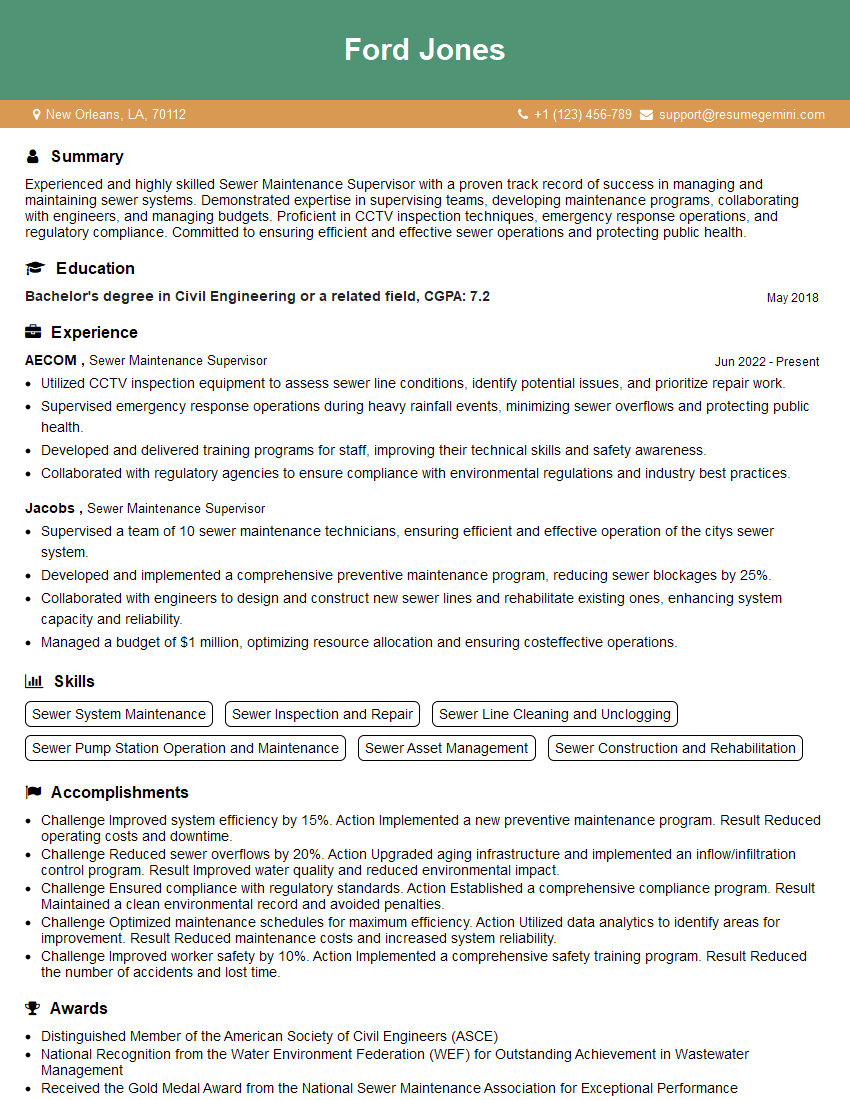
Mastering sewer pumping principles opens doors to a rewarding and stable career with opportunities for advancement into supervisory roles, specialized training, and increased earning potential. To maximize your job prospects, crafting a compelling and ATS-friendly resume is crucial. ResumeGemini is a trusted resource that can help you build a professional and impactful resume tailored to the specific requirements of sewer pumping positions. Examples of resumes tailored to this field are available within ResumeGemini to guide you. Invest time in refining your resume – it’s your first impression to potential employers.

Explore more articles
Users Rating of Our Blogs
Share Your Experience
We value your feedback! Please rate our content and share your thoughts (optional).
What Readers Say About Our Blog
Very informative content, great job.
good