Feeling uncertain about what to expect in your upcoming interview? We’ve got you covered! This blog highlights the most important Ship Structure Design interview questions and provides actionable advice to help you stand out as the ideal candidate. Let’s pave the way for your success.
Questions Asked in Ship Structure Design Interview
Q 1. Explain the different types of ship structural members and their applications.
Ship structural members are categorized based on their function and location. Think of a ship as a complex puzzle; each piece plays a crucial role in its overall strength and integrity. Key members include:
- Longitudinal Strength Members: These run along the length of the ship and resist longitudinal bending moments caused by waves and cargo distribution. Examples include the keel, keelson, longitudinal bulkheads, and side shell plating. The keel, the ship’s backbone, is a prime example – it bears the brunt of longitudinal stress.
- Transverse Strength Members: These run across the ship’s width and resist transverse bending and shear forces. Examples include frames (ribs), beams, and transverse bulkheads. Imagine frames like the ribs of a human body; they provide support and rigidity.
- Deck and Bottom Structures: The deck plating forms the ship’s weathertight upper surface, while the bottom plating forms the watertight lower surface. Both are crucial for overall strength and watertight integrity.
- Bulkheads: These are vertical partitions that divide the ship into compartments. They enhance watertight integrity and improve structural strength by providing support and subdividing the hull, limiting the effect of damage.
- Pillars and Girders: These provide additional support, particularly in areas that experience high stress concentrations, like engine rooms or cargo holds. They act as internal bracing.
The application of each member depends on the vessel’s type and size, as well as its intended operational profile. For instance, a tanker needs robust longitudinal strength members to withstand the bending moment from the heavy cargo, while a cruise ship might require more emphasis on transverse strength to accommodate passenger spaces.
Q 2. Describe the process of structural analysis for a ship hull.
Structural analysis of a ship hull is a complex process involving several steps to ensure the hull can withstand the anticipated loads and maintain its structural integrity throughout its lifespan. It typically involves:
- Load Definition: This critical first step involves identifying all forces acting on the hull, including hydrostatic pressure, wave loads, cargo weight, and machinery loads. Accurate load estimation is paramount for a reliable analysis.
- Idealization: The complex geometry of the ship is simplified into a mathematical model. This often involves representing the hull structure as a collection of interconnected beams, plates, and stiffeners.
- Finite Element Analysis (FEA): This sophisticated numerical technique is commonly used to solve the complex equations governing the structural behavior of the hull under the defined loads. The hull is divided into numerous smaller elements, and the computer solves for stress and displacement at each element. Sophisticated software is used for this step.
- Verification and Validation: The results of the FEA are compared against design standards and classification society rules. This iterative process may involve design modifications to satisfy all requirements.
- Fatigue Analysis: This is a critical aspect, addressing the cumulative effect of repeated cyclic loads that can lead to fatigue failure over time. (This will be detailed further in Question 3).
The end result of the analysis provides a detailed picture of stress distribution, displacement, and potential areas of weakness in the hull structure, allowing for informed design decisions and optimization. Think of it as a thorough health check-up for the ship, ensuring its structural fitness for its operational life.
Q 3. How do you account for fatigue in ship structure design?
Fatigue in ship structures is a significant concern because repeated cyclical stresses from wave action, engine vibrations, and cargo loading can lead to crack initiation and propagation, eventually causing catastrophic failure. Accounting for fatigue involves:
- Fatigue Load Assessment: This involves accurately determining the nature and magnitude of cyclical loads the ship will experience throughout its lifetime. Statistical methods are often used based on operational profiles and environmental conditions.
- Stress Analysis: Detailed stress analysis, often using FEA, is conducted to identify locations in the hull subjected to high stress ranges. This pinpoints areas vulnerable to fatigue damage.
- S-N Curve Application: S-N curves (Stress vs. Number of cycles to failure) are used to estimate the fatigue life of structural members under various stress ranges. These curves are material-specific and account for factors like the weld quality and surface finish.
- Fatigue Life Prediction: By combining stress analysis results and S-N curves, a fatigue life prediction can be obtained for each critical location. This involves summing the damage caused by all cyclic load events over the ship’s lifetime.
- Design Modifications: If the predicted fatigue life is shorter than the desired operational life, design modifications are necessary. This can involve increasing the thickness of critical members, optimizing the structural geometry, or incorporating stress-relieving measures.
Ignoring fatigue can have devastating consequences, leading to unexpected structural failures and potential loss of life. Therefore, rigorous fatigue assessment is essential for safe and reliable ship design.
Q 4. What are the main considerations for corrosion protection in ship structures?
Corrosion protection is paramount in ship structure design, as marine environments are incredibly harsh. Neglecting corrosion protection can lead to significant structural weakening and premature failure. Key considerations include:
- Material Selection: Using corrosion-resistant materials like stainless steel or high-strength, low-alloy (HSLA) steels with improved corrosion resistance is crucial. The selection should be based on the specific environmental conditions and the required mechanical properties.
- Protective Coatings: Applying high-quality coatings like paints, epoxy resins, or zinc-rich primers creates a barrier against seawater and atmospheric elements. Regular inspection and maintenance are essential for long-term effectiveness.
- Cathodic Protection: This is an electrochemical method that involves using sacrificial anodes (e.g., zinc or aluminum) to protect the steel hull. These anodes corrode preferentially, preventing corrosion of the hull structure. Impressed current cathodic protection systems are also used, particularly on larger vessels.
- Design for Drainage and Ventilation: Proper design ensures efficient water drainage and ventilation in enclosed spaces, reducing the risk of water accumulation and moisture buildup that accelerate corrosion.
- Regular Inspection and Maintenance: Routine inspections, cleaning, and repainting are crucial to identify and address corrosion issues promptly, preventing them from escalating and compromising structural integrity.
A well-designed corrosion protection strategy is a crucial aspect of ensuring the longevity and safety of a ship structure.
Q 5. Explain the role of finite element analysis (FEA) in ship design.
Finite Element Analysis (FEA) is an indispensable tool in modern ship design, providing a powerful means to predict the structural behavior of complex geometries under various loading conditions. It goes beyond simpler methods by enabling a highly detailed and precise analysis.
- Complex Geometry Modeling: FEA can accurately model the intricate shapes of ship hulls, including complex structures like curved plates, stiffeners, and welds, which are difficult to handle with simpler methods.
- Stress and Strain Prediction: FEA calculates the stress and strain distribution throughout the hull structure under various loading conditions, enabling designers to identify potential weak points and optimize the design for strength and weight efficiency. It pinpoints areas of high stress concentration.
- Fatigue Life Prediction: FEA is vital in fatigue analysis, providing precise stress range data for each element, facilitating more accurate fatigue life predictions.
- Optimization Studies: FEA is used for optimization studies, helping designers explore different design alternatives to minimize weight, material costs, and maximize strength.
- Validation of Analytical Methods: FEA results can be used to validate the accuracy of simpler, more approximate analytical methods, improving confidence in design calculations.
In essence, FEA allows for a more thorough and accurate understanding of a ship’s structural behavior, leading to safer, more efficient, and cost-effective designs. It’s akin to having a sophisticated ‘x-ray vision’ for the ship’s structural health.
Q 6. Discuss the importance of classification society rules and regulations.
Classification society rules and regulations are paramount in ship design and construction, ensuring the safety and seaworthiness of vessels. These organizations, like DNV, ABS, Lloyd’s Register, etc., establish standards and guidelines based on extensive research and experience. Their role is crucial for several reasons:
- Safety Standards: They provide a framework for minimum structural strength requirements, ensuring ships can withstand anticipated loads and environmental conditions. This minimizes the risk of structural failure and enhances maritime safety.
- Quality Control: Classification societies conduct inspections and surveys throughout the design, construction, and operational life of a ship, verifying that the design and construction meet the specified standards and ensuring quality control.
- International Recognition: Their rules are widely recognized internationally, facilitating trade and ensuring consistency in ship design and construction standards across the globe.
- Credibility and Trust: Classification society certification provides assurance to ship owners, operators, and insurers, enhancing trust in the vessel’s structural integrity and safety.
- Continuous Improvement: Classification societies continuously update their rules based on new research, technological advancements, and lessons learned from incidents, leading to the constant improvement of safety standards.
Compliance with classification society rules is not simply a matter of fulfilling regulatory requirements; it’s fundamentally a commitment to ensuring the safety and seaworthiness of ships, protecting lives, and promoting a safe and sustainable maritime industry. A classification society certificate is a crucial stamp of approval for a ship’s seaworthiness.
Q 7. How do you handle dynamic loads in ship structural design?
Dynamic loads, such as those caused by waves, ship motions, and machinery operation, are significant factors in ship structural design. Neglecting them can lead to structural fatigue, resonance, and even catastrophic failure. Handling dynamic loads effectively requires:
- Dynamic Load Assessment: This involves determining the magnitude, frequency, and direction of dynamic loads acting on the ship. This may involve using specialized software and considering environmental conditions, ship motions, and operational profiles.
- Dynamic Analysis: This typically employs time-domain or frequency-domain analysis methods to assess the structural response to dynamic loads. Time-domain analysis simulates the dynamic behavior of the structure over time, while frequency-domain analysis examines the response at specific frequencies. FEA is crucial in this step.
- Modal Analysis: This helps identify the natural frequencies and vibration modes of the ship structure. This information is crucial for preventing resonance, which can amplify dynamic loads significantly and lead to failure.
- Design for Damping: Incorporating features that dissipate dynamic energy, such as structural damping or vibration isolation systems, can reduce the impact of dynamic loads on the structure.
- Fatigue Analysis Under Dynamic Loads: The fatigue analysis should consider the effects of dynamic load cycles on the structural life, accounting for stress variations over time.
Effective management of dynamic loads ensures the structural integrity of the vessel under operational conditions, enhancing safety and extending the vessel’s operational life. Ignoring these loads can lead to premature failure and potentially catastrophic consequences.
Q 8. Explain the concept of buckling in ship structures and how it’s prevented.
Buckling in ship structures refers to a sudden and potentially catastrophic failure mode where a structural member, subjected to compressive loads, collapses unexpectedly. Imagine a soda can; if you squeeze it from the sides, it will buckle inwards. Similarly, in ships, plating and stiffeners can buckle under the compressive forces generated by waves, cargo weight, or other external loads.
Preventing buckling involves several strategies:
- Increasing Section Modulus: A larger section modulus (a measure of a beam’s resistance to bending and buckling) increases the structural member’s resistance to buckling. This can be achieved by increasing the thickness or altering the cross-sectional shape of the member.
- Stiffeners and Frames: Adding stiffeners (longitudinal members) and frames (transverse members) to plating significantly improves its resistance to buckling by distributing the compressive load over a larger area. Think of them as support beams for a shelf, preventing it from collapsing.
- Material Selection: High-strength steels with high yield strengths are chosen to withstand higher compressive loads before buckling. These materials offer greater resistance to deformation.
- Proper Design and Fabrication: Avoiding abrupt changes in geometry, ensuring proper welding techniques, and precise fabrication tolerances all contribute to a structure less susceptible to buckling.
- Finite Element Analysis (FEA): Sophisticated computer simulations using FEA help predict buckling behavior under various load conditions. This allows engineers to optimize the design before construction.
For instance, in designing a large container ship’s hull, careful consideration is given to the spacing and size of stiffeners to prevent buckling of the hull plating under the immense pressures from cargo and waves.
Q 9. What are the different types of welding used in shipbuilding, and their suitability?
Several welding methods are used in shipbuilding, each with its advantages and disadvantages:
- Shielded Metal Arc Welding (SMAW): A versatile and widely used process, particularly for thick sections. It’s relatively inexpensive and portable but requires skilled welders to achieve high-quality welds.
- Gas Metal Arc Welding (GMAW): Also known as MIG welding, it’s a high-speed process suitable for various thicknesses. It’s more efficient than SMAW, producing cleaner welds, but requires more specialized equipment.
- Gas Tungsten Arc Welding (GTAW): Known as TIG welding, it produces extremely high-quality welds with excellent penetration and appearance. However, it’s slower and more expensive than SMAW or GMAW, making it more suitable for critical joints.
- Submerged Arc Welding (SAW): Used for automated high-speed welding of thick sections, particularly in large-scale fabrication. It’s very productive and efficient but requires significant investment in equipment.
The choice of welding method depends on factors like material thickness, joint design, required weld quality, production rate, and cost. For instance, SMAW might be used for smaller repair jobs, while SAW would be preferred for the automated welding of long longitudinal seams in a tanker’s hull.
Q 10. Describe the process of designing a ship’s structural section modulus.
Designing a ship’s structural section modulus involves determining the geometric properties of a structural member to resist bending moments and shear forces. It’s a crucial step in ensuring the strength and stability of the vessel.
The process generally involves these steps:
- Define the Loading Conditions: Determine the forces acting on the structural member, considering factors like wave loads, cargo weight, and self-weight of the structure.
- Select Material Properties: Choose the appropriate material (steel grade) and determine its relevant properties such as yield strength and elastic modulus.
- Determine the Required Section Modulus: Using appropriate structural analysis techniques (e.g., beam theory), calculate the required section modulus (S) based on the bending moment (M) and allowable bending stress (σ):
S = M / σ - Select a Suitable Cross-Section: Choose a cross-sectional shape (I-beam, T-beam, etc.) that provides the required section modulus. This often involves using standard section tables or performing optimization calculations to minimize weight while maintaining strength.
- Verify Strength and Stability: Conduct further analysis to verify that the selected section is adequate to resist shear forces, torsional loads, and buckling under the expected loading conditions. Finite Element Analysis (FEA) is often employed for complex geometries.
For example, determining the section modulus of a ship’s main deck girder requires considering the weight of the deck and superstructure, along with the dynamic forces imposed by waves. The chosen girder section must then have a sufficient section modulus to prevent excessive deflection and potential failure.
Q 11. How do you ensure the structural integrity of a ship during extreme weather conditions?
Ensuring structural integrity during extreme weather involves a multi-faceted approach:
- Robust Design: Employing higher safety factors in the design calculations to account for uncertainties in the loading conditions and material properties. This means designing the ship stronger than what’s minimally required.
- Advanced Structural Analysis: Utilizing sophisticated software like FEA to simulate the ship’s behavior in extreme sea states, considering wave impacts, slamming loads, and green water effects. This allows for identification and mitigation of potential weak points.
- Material Selection: Using high-strength, corrosion-resistant steels to withstand extreme stress and fatigue. Proper surface treatment and corrosion protection are also crucial.
- Redundancy: Designing structural elements to offer some level of redundancy, meaning that the failure of one component doesn’t necessarily lead to a complete structural collapse. This can involve using multiple load paths.
- Regular Inspection and Maintenance: Implementing a comprehensive maintenance program to regularly inspect and repair any damage or corrosion, preventing small issues from developing into major structural problems.
- Damage Control Systems: Incorporating damage control systems like watertight compartments and effective pumping systems to limit the consequences of any structural damage that might occur.
For instance, a cruise ship operating in the North Atlantic must be designed to withstand extremely high waves and winds. This requires specialized structural designs, robust materials, and comprehensive maintenance programs.
Q 12. Explain the impact of material selection on ship structural performance.
Material selection significantly impacts ship structural performance. The choice of material affects weight, strength, cost, and durability.
- Strength and Stiffness: Higher strength steels allow for lighter structures, reducing fuel consumption and improving efficiency. However, higher strength steels may be more expensive and difficult to weld.
- Corrosion Resistance: Corrosion can significantly weaken a ship’s structure. Materials with high corrosion resistance, such as stainless steels or specially coated steels, are vital in marine environments.
- Weldability: The ease with which a material can be welded influences the construction process and cost. Some high-strength steels are more challenging to weld than mild steel, requiring specialized techniques.
- Fatigue Resistance: Ships experience cyclic loading due to waves and operational stresses. Materials with high fatigue resistance are essential to prevent fatigue cracks and failures.
- Cost: The cost of different materials varies considerably. Engineers must balance the cost of materials with the overall design and operational costs.
For example, using high-strength steel in a container ship’s hull can reduce weight, allowing for greater cargo capacity. However, the cost and weldability of these steels need to be considered during design.
Q 13. What are the common failure modes of ship structures?
Common failure modes in ship structures include:
- Buckling: As discussed earlier, this involves the sudden collapse of a structural member under compressive loads.
- Yielding: Permanent deformation of a structural member due to exceeding its yield strength. This usually doesn’t lead to immediate failure but reduces the structural capacity.
- Fracture: Complete separation of a structural member due to excessive stress or fatigue. Brittle fracture is particularly dangerous, occurring suddenly without warning.
- Corrosion: Deterioration of material due to environmental factors, reducing the structural strength and leading to potential failure.
- Fatigue: Progressive cracking and failure of a material due to repeated cyclical loading. Fatigue cracks can initiate from stress concentrations and gradually propagate until failure occurs.
- Welding Defects: Poor welding techniques can lead to defects like porosity, lack of fusion, and cracks, significantly reducing weld strength and overall structural integrity.
Understanding these failure modes is crucial for designing robust and reliable ship structures. Regular inspection and maintenance programs are essential to detect and address potential problems before they lead to catastrophic failure.
Q 14. Describe the design considerations for collision avoidance structures.
Design considerations for collision avoidance structures focus on minimizing damage during collisions and ensuring the continued seaworthiness of the vessel.
- Double Hulls: Double hulls create a void space between the inner and outer hulls, providing additional protection against grounding and collision damage. This design is particularly common in tankers to prevent oil spills.
- Strengthened Bow and Stern: The bow and stern are often designed with enhanced structural strength to withstand impacts. This might involve using thicker plating, additional stiffeners, or specialized structural members.
- Strategic Placement of Bulkheads: Watertight bulkheads are strategically placed to limit the extent of flooding in case of collision damage. These compartments help to maintain buoyancy and prevent the ship from sinking.
- Crashworthy Structures: Incorporating design features that absorb impact energy and distribute the force effectively, minimizing damage to vital components.
- Collision Simulation: Employing advanced computer simulations to analyze potential collision scenarios and assess the structural response. This aids in optimizing the design for collision resistance.
The design of collision avoidance structures varies significantly depending on the type of vessel and its intended operating conditions. Tankers, for instance, require more robust collision protection than smaller passenger ferries due to the potential environmental consequences of an oil spill.
Q 15. How do you incorporate environmental factors into ship structural design?
Incorporating environmental factors is crucial for designing robust and safe ships. These factors significantly impact the structural integrity and lifespan of a vessel. We consider several key aspects:
- Wave Loads: Ships experience significant forces from waves, particularly in harsh sea states. We use specialized software to simulate wave-induced loads, considering wave height, period, and direction. This helps determine the required structural strength to withstand wave impacts and bending moments.
- Wind Loads: Wind exerts pressure on the superstructure and hull, potentially causing significant stresses. We account for wind speed, direction, and gust factors during design, ensuring the structure can withstand these forces without damage.
- Ice Loads: For vessels operating in icy waters, ice loads are a primary concern. Design involves considering the impact of ice pressure, crushing, and abrasion on the hull structure. Special ice classes and reinforced hull sections are often required.
- Temperature Effects: Temperature variations can lead to thermal stresses in the hull structure. We consider thermal expansion and contraction, particularly in materials with different thermal expansion coefficients, to prevent potential cracking or buckling.
- Corrosion: Marine environments are highly corrosive. We select appropriate materials resistant to corrosion and consider protective coatings to extend the vessel’s lifespan. Regular maintenance and inspections are also factored into the design life.
For example, a tanker designed for Arctic operation requires significantly thicker plating and stronger structural members compared to a container ship operating in calmer waters. The design process incorporates detailed environmental load calculations to determine the optimal structural configuration for each specific operational scenario.
Career Expert Tips:
- Ace those interviews! Prepare effectively by reviewing the Top 50 Most Common Interview Questions on ResumeGemini.
- Navigate your job search with confidence! Explore a wide range of Career Tips on ResumeGemini. Learn about common challenges and recommendations to overcome them.
- Craft the perfect resume! Master the Art of Resume Writing with ResumeGemini’s guide. Showcase your unique qualifications and achievements effectively.
- Don’t miss out on holiday savings! Build your dream resume with ResumeGemini’s ATS optimized templates.
Q 16. Explain the concept of hydrostatic pressure and its effect on ship design.
Hydrostatic pressure is the pressure exerted by a fluid at rest due to gravity. In shipbuilding, this refers to the pressure of water acting on a submerged hull. The pressure increases linearly with depth, meaning that deeper submerged sections experience significantly higher pressure.
This pressure has a profound effect on ship design:
- Hull Strength: The hull must withstand the immense hydrostatic pressure at its deepest point. The thickness of the plating and the arrangement of structural members are directly influenced by this pressure. Submarines, for instance, require significantly thicker hulls than surface vessels.
- Compartmentalization: Dividing the hull into watertight compartments is essential to maintain buoyancy and stability in case of hull damage. Hydrostatic pressure affects the design of bulkheads and their ability to withstand potential flooding in one compartment.
- Submersible Design: Designing submarines and other submersibles requires meticulous consideration of hydrostatic pressure. These vessels often utilize spherical or cylindrical shapes to better distribute pressure and prevent collapse.
Imagine a glass bottle submerged deep in the ocean. The water pressure will eventually crush the bottle unless it’s designed to withstand such forces. Similarly, a ship’s hull must be designed to safely bear the hydrostatic pressure it encounters, and its structural integrity relies heavily on this understanding.
Q 17. What are the different types of structural steel used in shipbuilding?
Several types of structural steel are used in shipbuilding, each with specific properties tailored to different applications. Some common types include:
- High-Tensile Steel: Offers higher strength-to-weight ratio compared to mild steel, allowing for lighter yet equally strong structures. This is particularly important for reducing fuel consumption.
- Mild Steel: A cost-effective option widely used for less critical structural members. It’s readily weldable and relatively easy to fabricate.
- Weathering Steel (Corten Steel): This steel forms a protective oxide layer, reducing the need for extensive painting and maintenance. It’s often used for exposed superstructures.
- Aluminum Alloys: Lighter than steel, aluminum alloys are used for superstructures and certain hull components where weight reduction is paramount. However, they require specialized welding techniques and may be more susceptible to corrosion in marine environments.
- Special High-Strength Steels: Advanced steels with improved properties, such as yield strength and toughness, are used in demanding applications like ice-class vessels or structures requiring exceptional strength.
The choice of steel depends on factors such as cost, strength requirements, weldability, corrosion resistance, and the overall design goals. The material selection process involves detailed analysis to ensure the optimum balance of performance and cost-effectiveness.
Q 18. Discuss the importance of stability and its impact on structural design.
Stability is paramount in ship design, ensuring the vessel remains upright and seaworthy in various conditions. A stable ship is less likely to capsize and poses less risk to its crew and cargo. Structural design plays a significant role in achieving stability:
- Hull Form: The shape of the hull directly affects stability. A wider beam and deeper draft generally contribute to greater stability.
- Ballast Tanks: These tanks can be filled or emptied with water to adjust the ship’s center of gravity, improving stability in different loading conditions.
- Structural Integrity: A strong and intact hull structure is essential for maintaining stability. Damage or failure can compromise buoyancy and lead to instability.
- Weight Distribution: Careful consideration is given to the weight distribution of cargo, machinery, and other components to ensure the vessel’s center of gravity remains within acceptable limits.
For example, a container ship needs to maintain stability despite varying cargo loads. Design considerations include the arrangement of containers and the use of ballast water to prevent excessive listing or rolling. A lack of attention to stability can lead to catastrophic consequences, like the capsizing of the Costa Concordia cruise ship, highlighting the critical role of structural design in ensuring stability.
Q 19. Explain the process of damage stability assessment.
Damage stability assessment is a crucial process determining a ship’s ability to remain afloat and stable after suffering damage, such as flooding in one or more compartments. It involves a detailed analysis of the ship’s behavior under various damage scenarios:
- Damage Scenarios: We consider various damage scenarios, including flooding of different compartments, hull breaches, and structural failures.
- Hydrostatic Calculations: We use hydrodynamic software to calculate the vessel’s stability and buoyancy after flooding, considering the changes in water plane area, center of buoyancy, and center of gravity.
- Intact Stability: The ship’s initial stability characteristics are analyzed before introducing any damage.
- Damaged Stability: The stability characteristics after flooding are analyzed. Key parameters such as the remaining righting moment and angle of heel are carefully evaluated.
- Regulations and Standards: The assessment must comply with relevant international regulations and classification society rules.
This involves using sophisticated software to simulate different damage conditions and assess the ship’s response. The results are used to design features such as watertight bulkheads, double-bottom arrangements, and other damage control measures to enhance the ship’s survivability after damage. This process is critical to ensure the safety of the crew and the prevention of environmental pollution.
Q 20. What software are you proficient in for ship structural design and analysis?
I am proficient in several software packages commonly used in ship structural design and analysis, including:
- ABAQUS: A powerful finite element analysis (FEA) software used for detailed structural analysis under various loading conditions, including wave loads, ice loads, and hydrostatic pressure.
- ANSYS: Another widely used FEA software similar to ABAQUS, offering a comprehensive suite of tools for structural analysis and optimization.
- SESAM: A specialized software package for ship structural analysis, focusing on global structural behavior and response to various environmental loads.
- AutoCAD: Used for creating detailed 2D and 3D drawings of structural components and assemblies.
- AVEVA Marine: A comprehensive suite of software for the entire shipbuilding process, including structural design, modeling, and production planning.
My experience spans using these tools for diverse projects, from small workboats to large-scale tankers and cruise vessels. I am adept at setting up models, running analyses, interpreting results, and making design recommendations based on the findings.
Q 21. Describe your experience with structural detailing and drawing production.
My experience with structural detailing and drawing production is extensive, encompassing various stages of the design process. I’m familiar with creating detailed drawings of structural members, assemblies, and connections according to industry standards.
- 2D and 3D Modeling: Proficient in using CAD software to create detailed drawings, including plans, sections, and elevations. I also have experience with 3D modeling for visualization and interference checks.
- Material Specifications: I ensure all drawings clearly indicate material types, dimensions, tolerances, and surface finishes.
- Weld Details: I’m adept at specifying weld types, sizes, and configurations to meet structural requirements and welding codes.
- Fabrication Drawings: I create detailed fabrication drawings for shipyard use, ensuring clarity and completeness for efficient construction.
- Collaboration: I’ve worked extensively with fabrication teams, providing technical support and resolving issues that arise during the construction process.
For example, I was involved in a project where I created detailed drawings for a complex hull section of a liquefied natural gas (LNG) carrier. The accuracy and precision of these drawings were critical to ensuring the successful fabrication and assembly of the ship. I have a strong track record in delivering high-quality drawings that meet industry standards and facilitate efficient shipbuilding.
Q 22. How do you manage and resolve conflicts between design and construction constraints?
Resolving conflicts between design and construction constraints requires a collaborative and iterative approach. It’s rarely a case of simply choosing one over the other; instead, we aim for optimal solutions that satisfy both. This involves close communication with the shipyard, engineers, and other stakeholders.
My strategy involves:
- Early Collaboration: Involving construction experts early in the design phase helps identify potential clashes before they become major issues. This allows for proactive design modifications and avoids costly rework later.
- Trade-off Analysis: We often face situations where design elegance clashes with construction practicality. A robust trade-off analysis, weighing the cost, time, and risk of each option against performance, helps make informed decisions. For example, using a simpler welding method might marginally compromise strength but significantly reduces construction time and cost, potentially making it the better overall option.
- Value Engineering: This systematic approach explores alternative design and construction methods to achieve the same functionality at a lower cost without sacrificing safety or performance. For instance, using readily available steel sections instead of custom-fabricated ones might reduce both cost and lead time.
- Iterative Design: The design process is never linear; regular design reviews and feedback loops with the construction team allow us to address and refine the design based on constructability concerns. This might involve adjusting tolerances, simplifying assembly sequences, or modifying material specifications.
For instance, on a recent project involving a large container ship, the initial design proposed complex hull plating arrangements that were difficult to fabricate. Through value engineering, we simplified the arrangement without compromising structural integrity, saving the client significant time and resources.
Q 23. Explain your approach to quality control in ship structural design.
Quality control in ship structural design is paramount; it ensures the vessel’s safety and longevity. My approach is multifaceted and emphasizes both process and product quality.
- Design Review Process: We implement a rigorous design review process with multiple layers of checks and balances. Each design stage undergoes detailed scrutiny by experienced engineers, including peer reviews, independent verification, and management reviews. This helps catch errors early and prevents costly mistakes later on.
- Finite Element Analysis (FEA): We use FEA extensively to simulate the ship’s structural behavior under various loading conditions. This enables us to identify weak points in the design and optimize the structure for strength and stiffness before construction even begins. We compare the results of our simulations with established standards and best practices.
- Material Selection and Testing: Strict quality control measures govern the selection and testing of materials. We adhere to international standards and ensure traceability of materials from procurement through installation. Regular testing ensures compliance with specified material properties.
- Documentation and Drawings: Accurate and detailed documentation is crucial. We use CAD software to produce precise drawings and specifications. Clear, unambiguous documentation minimizes misinterpretations and construction errors.
- Compliance with Standards: We strictly adhere to international standards and regulations such as those set by the International Maritime Organization (IMO) and classification societies like ABS or DNV. This ensures the vessel’s design meets the required safety and performance criteria.
Think of it like building a skyscraper: every weld, every beam, every connection needs to be rigorously checked to ensure the overall stability and safety of the structure.
Q 24. Describe your experience with structural modifications to existing vessels.
Modifying existing vessels requires a detailed understanding of the original design, material properties, and existing structural conditions. It’s a far more complex undertaking than designing a new vessel from scratch.
My experience involves a systematic approach:
- Structural Survey: A thorough survey is crucial to assess the current condition of the vessel, identifying existing damage, corrosion, or weakening. Non-destructive testing (NDT) methods are employed to assess the integrity of existing welds and materials.
- Finite Element Analysis (FEA) of Existing Structure: FEA is essential to predict the effect of modifications on the existing structure, ensuring that the changes do not compromise the overall strength and integrity of the vessel. The analysis incorporates the condition assessed during the survey.
- Detailed Design: The design of modifications must consider the interaction with the original structure and ensure compatibility with the existing systems. This often involves reinforcement to compensate for stress concentrations caused by the modifications.
- Construction Supervision: Rigorous supervision during the construction phase ensures the modifications are executed according to the design specifications and that the work adheres to safety standards.
- Post-Modification Testing: Once completed, thorough testing is necessary to validate the structural integrity of the modifications and ensure the vessel meets regulatory compliance.
For example, I worked on a project to modify a bulk carrier to increase its cargo capacity. This required careful consideration of the hull’s strength and stability, employing FEA to ensure the modifications wouldn’t compromise the vessel’s seaworthiness.
Q 25. How do you handle unexpected design challenges or changes during a project?
Unexpected challenges and changes are inevitable in any design project. My approach centers on adaptability, thorough planning, and open communication.
- Contingency Planning: We always include contingency plans to address foreseeable risks and potential delays. This includes having alternative design solutions readily available for unexpected issues.
- Risk Assessment: We perform regular risk assessments to identify potential problems and their impact. This helps prioritize actions and manage risks effectively.
- Problem-Solving Teams: For significant challenges, we assemble cross-functional teams that include design engineers, shipyard personnel, and relevant experts to brainstorm and develop solutions. This fosters a collaborative environment and leverages collective expertise.
- Change Management: A formal change management process is crucial for tracking and approving design modifications. This ensures that all parties are aware of the changes and that they are incorporated into the design documentation.
- Communication: Open and transparent communication with all stakeholders is vital to manage expectations and address concerns effectively. Regular updates and progress reports minimize misunderstandings and potential conflicts.
For example, a sudden change in regulatory requirements during a project necessitated a design modification. Our contingency plans, alongside proactive communication with the client, allowed us to adjust the design swiftly without significant delays.
Q 26. Discuss your understanding of various ship types and their specific structural requirements.
Different ship types have drastically different structural requirements dictated by their operational profiles and cargo handling needs.
- Container Ships: Require a strong, stiff hull structure to withstand the stresses of heavy container loads and the harsh ocean environment. Large hatch openings and cellular structures add complexity to the design.
- Bulk Carriers: Designed to carry large quantities of bulk cargo like grain or ore. Their structure must be robust enough to handle the weight of the cargo and withstand significant bending stresses.
- Tankers: Need strong, leak-proof tanks for carrying liquids. The structure must withstand internal pressure and the forces imposed by the liquid cargo during movement. Compartmentalization is critical for damage control.
- Cruise Ships: Emphasize passenger comfort and luxury. The structure must be stable, comfortable, and aesthetically pleasing. The design incorporates significant public spaces, which influence the structural layout.
- Offshore Support Vessels: Operate in demanding offshore environments. Their structure needs to be highly resistant to dynamic loads and fatigue. The structure often accommodates dynamic positioning (DP) systems and heavy deck equipment.
Understanding these specific requirements is crucial for designing a safe and efficient vessel. For example, a design suitable for a tanker wouldn’t be appropriate for a container ship due to the completely different loading and stress profiles.
Q 27. Explain your experience with different types of structural connections.
Ship structural connections are critical for overall strength and integrity. Different connection types have their strengths and weaknesses depending on the application.
- Welding: A commonly used method for joining steel plates, offering high strength and rigidity. Different welding techniques are used depending on the thickness of the plates and the required strength. Quality control is critical to ensure weld integrity.
- Bolting: Provides a readily adjustable connection, often used for modular assemblies or where repairs might be needed. Bolting design must account for fatigue loads and the potential for loosening.
- Riveting: A traditional method, still used in some applications. It provides a strong, reliable connection but is less efficient than welding for large structures.
- Advanced Joining Techniques: Modern ship design might incorporate advanced methods such as adhesive bonding or friction stir welding for specific applications. These techniques offer benefits such as improved fatigue resistance or reduced weight.
The choice of connection type depends on many factors, including the type of loading, accessibility during construction, required strength, and cost. For instance, welding is generally preferred for primary structural members, while bolting is more suitable for secondary structures or access panels.
Q 28. How do you ensure compliance with international maritime regulations?
Ensuring compliance with international maritime regulations is non-negotiable. This involves a multi-stage process that begins at the design stage and continues through construction and operation.
- Classification Society Rules: We work closely with classification societies (like ABS, DNV, Lloyd’s Register) throughout the design process to ensure compliance with their rules and regulations. These rules cover a broad range of aspects, from structural strength to fire safety.
- International Maritime Organization (IMO) Conventions: We adhere to relevant IMO conventions, such as the International Convention for the Safety of Life at Sea (SOLAS) and the International Convention for the Prevention of Pollution from Ships (MARPOL). These conventions define minimum safety and environmental standards.
- Flag State Regulations: The vessel’s flag state (the country under whose flag it will operate) has its own regulations and requirements, which we must also meet. These can vary considerably depending on the nation.
- Plan Approval: We submit detailed design plans to the classification society for approval before construction begins. This review ensures the design conforms to all applicable regulations.
- Surveys and Inspections: Regular surveys and inspections are conducted during the construction process to verify that the vessel is built according to the approved plans and meets regulatory requirements.
Non-compliance can lead to serious consequences, including delays, fines, and even the prohibition of the vessel from operating. Therefore, strict adherence to regulations is paramount. It’s analogous to getting a building permit and passing all building inspections before a building can be occupied.
Key Topics to Learn for Ship Structure Design Interview
- Hydrostatics and Stability: Understanding buoyancy, stability criteria, and the impact of loading conditions on ship behavior. Practical application: Analyzing a vessel’s stability in various sea states.
- Structural Analysis: Mastering finite element analysis (FEA) techniques and their application to ship structures. Practical application: Evaluating stress and deflection in critical structural components under load.
- Material Selection: Knowledge of different materials used in ship construction (steel, aluminum, composites) and their properties, including fatigue and corrosion resistance. Practical application: Justifying material choices based on cost, strength, and environmental factors.
- Welding and Joining Techniques: Understanding various welding processes and their impact on structural integrity. Practical application: Assessing the quality of welds and identifying potential defects.
- Structural Design Codes and Regulations: Familiarity with relevant classification society rules (e.g., DNV, ABS, LR) and international maritime regulations. Practical application: Ensuring designs comply with all safety and regulatory requirements.
- Fatigue and Fracture Mechanics: Understanding fatigue failure mechanisms and applying fracture mechanics principles to predict lifespan and prevent catastrophic failures. Practical application: Designing structures to withstand cyclic loading and prevent fatigue cracks.
- Shipyard Practices and Construction: General knowledge of shipbuilding processes, including design, fabrication, assembly, and testing. Practical application: Understanding the practical limitations and constraints of construction techniques.
- Advanced Topics (for Senior Roles): Optimization techniques, structural health monitoring, and innovative design approaches (e.g., lightweight structures, composite materials).
Next Steps
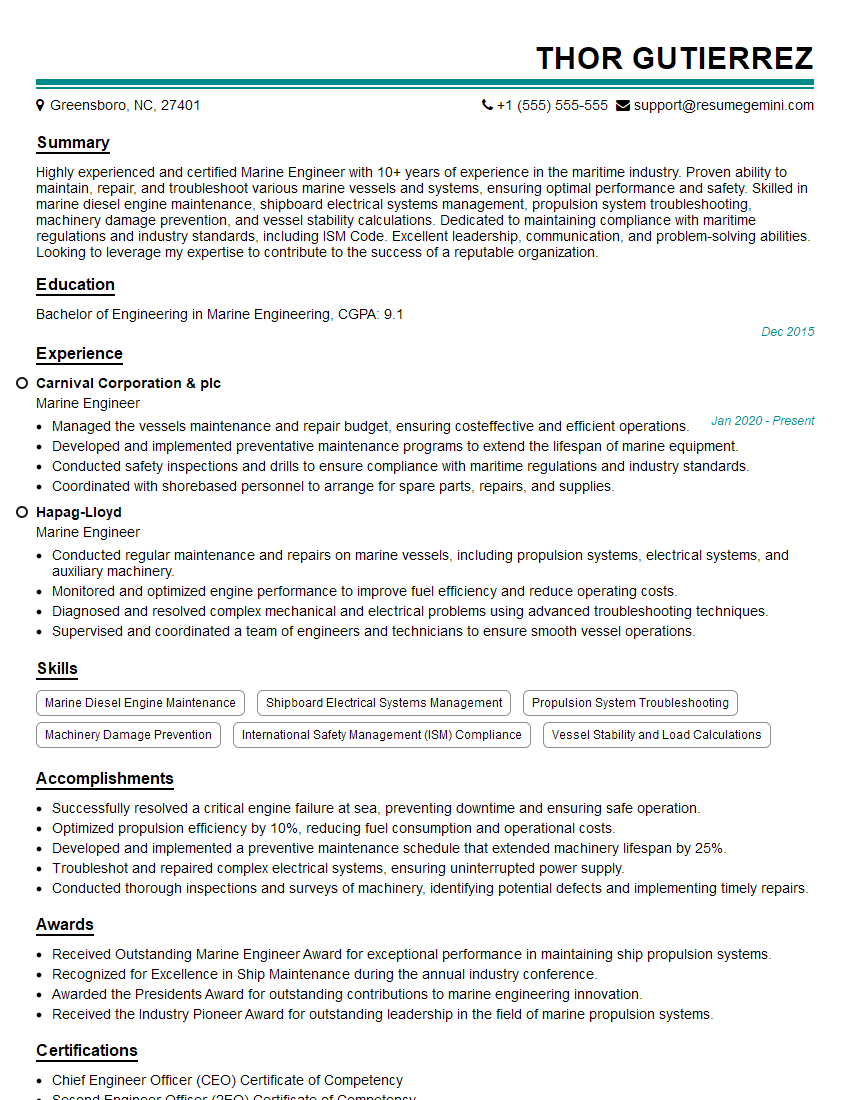
Mastering Ship Structure Design is crucial for a rewarding and successful career in the maritime industry, opening doors to exciting opportunities and advancement. A well-crafted resume is your key to unlocking these opportunities. To stand out to potential employers and ensure your application gets noticed, create an ATS-friendly resume that highlights your skills and experience effectively. ResumeGemini is a trusted resource that can help you build a professional and impactful resume. They provide examples of resumes tailored to Ship Structure Design to help guide you in crafting yours, giving you a significant advantage in your job search.
Explore more articles
Users Rating of Our Blogs
Share Your Experience
We value your feedback! Please rate our content and share your thoughts (optional).
What Readers Say About Our Blog
Very informative content, great job.
good