Feeling uncertain about what to expect in your upcoming interview? We’ve got you covered! This blog highlights the most important Tile Cutting interview questions and provides actionable advice to help you stand out as the ideal candidate. Let’s pave the way for your success.
Questions Asked in Tile Cutting Interview
Q 1. What types of tile cutting tools are you proficient with?
As a seasoned tile cutter, my proficiency spans a range of tools, each suited for specific tasks. I’m highly skilled in using:
- Wet Saws: These are my workhorses for precise, straight cuts, especially in ceramic and porcelain tiles. I’m comfortable with various models, from smaller benchtop saws to larger, more powerful floor models.
- Dry Saws: Ideal for quick cuts on softer tiles like mosaic or some natural stone, minimizing water usage and setup. I carefully select the right abrasive blade to prevent chipping.
- Angle Grinders with Diamond Blades: These are invaluable for intricate cuts, curves, and shaping tiles, allowing for a high degree of precision and flexibility. The right blade choice is crucial here.
- Tile Nippers: Excellent for smaller cuts and snapping tiles along scored lines. Perfect for quick adjustments or trimming.
- Manual Tile Cutters: These hand-operated tools offer a great balance of control and speed for straight cuts, particularly on thinner tiles.
My expertise lies not only in operating these tools but also in selecting the appropriate tool for the specific tile material and the desired cut. For example, a wet saw is preferred for a precise straight cut in a hard porcelain tile, while tile nippers are best suited for small, quick adjustments to a mosaic tile.
Q 2. Describe your experience with wet saws versus dry saws.
Wet saws and dry saws offer distinct advantages and disadvantages. My experience shows that the choice depends heavily on the tile material, the type of cut, and the overall job requirements.
Wet saws use water to cool the blade and lubricate the cutting process, reducing dust and preventing the blade from overheating, particularly important when cutting dense porcelain. This results in cleaner, more precise cuts, especially for larger tiles. However, they require more setup time and produce wet slurry, which needs to be cleaned up. They’re best suited for large-scale projects where precision is paramount.
Dry saws are faster to set up and don’t produce excess water. They are more portable and generate less mess, making them ideal for quick cuts on smaller jobs or when working in confined spaces. However, they generate considerably more dust, and the blade can overheat more easily, potentially leading to chipping, particularly with harder tiles. This makes blade selection even more critical. I carefully consider the pros and cons of each before choosing the right saw for a given task.
Q 3. How do you determine the appropriate blade for different tile types?
Selecting the appropriate blade is crucial for achieving clean, accurate cuts and preventing damage to the tile. The blade’s material, grit, and diameter all need to be matched to the tile type.
For porcelain tiles, I typically use continuous rim diamond blades with a high concentration of diamond segments. For ceramic tiles, a slightly softer blade might suffice. Natural stone tiles, like marble or granite, require specialized blades designed to avoid scratching or chipping. The blade’s diameter is determined by the saw’s capacity, and the grit depends on the tile’s hardness; a finer grit is needed for harder tiles, while a coarser grit is suitable for softer materials. Always refer to the manufacturer’s recommendations for the specific tile and blade combination to avoid breakage and ensure longevity.
Incorrect blade selection can lead to chipped edges, cracked tiles, and a dull, inefficient cut. I always make sure I have the right blade on hand before starting any project.
Q 4. Explain the process of cutting intricate shapes in tile.
Cutting intricate shapes demands precision and skill. I frequently employ angle grinders with specialized diamond blades for curved and complex cuts. For precise curves and radiuses, I often use a template or stencil to guide the grinder.
Alternatively, for more delicate work, I might use a combination of scoring tools and tile nippers for smaller, controlled breaks along the marked lines. For very intricate designs, I sometimes pre-cut sections with a wet saw to create the basic shape, then use the angle grinder to refine the details. This multi-step approach minimizes the risk of cracking or chipping. Always remember to wear appropriate safety gear during these operations.
For example, cutting a curved edge for a countertop might involve using a template to guide an angle grinder, while creating a mosaic tile pattern could involve scoring and snapping individual pieces using tile nippers.
Q 5. How do you ensure accurate cuts to minimize waste?
Accurate cuts and minimal waste are paramount for efficient tile installation. My strategies involve careful planning and precise execution.
- Precise Measurement: I meticulously measure and mark the tiles before cutting. I double-check measurements to avoid costly mistakes.
- Layout Planning: Creating a detailed layout helps me identify where cuts will be needed and optimize tile placement to minimize waste. Software programs and sketches are used to plan complex layouts.
- Using Templates: I utilize templates for repetitive cuts, ensuring consistency and accuracy.
- Utilizing Scraps: I carefully save scraps to use for infill cuts or smaller details whenever possible, minimizing material waste.
- Adjusting Tile Size: When working with variations in wall size or layout, I carefully plan the placement to accommodate small adjustments, which are usually required to fill in gaps without major cuts.
Through careful planning and attention to detail, I can often achieve a waste rate of less than 5%, significantly improving project efficiency and cost-effectiveness.
Q 6. What safety precautions do you take when using tile cutting tools?
Safety is my top priority. When using tile cutting tools, I always adhere to these safety precautions:
- Eye Protection: I always wear safety glasses or a face shield to protect my eyes from flying debris.
- Hearing Protection: Ear protection is essential when using noisy tools like wet saws and angle grinders.
- Respiratory Protection: A dust mask is crucial when working with dry saws to prevent inhaling silica dust, particularly when cutting stone.
- Gloves: I wear work gloves to protect my hands from sharp edges and potential cuts.
- Proper Clothing: Long pants and closed-toe shoes are essential to protect my skin and feet from flying debris.
- Tool Maintenance: I regularly inspect and maintain my tools to ensure they are in good working order, including checking blades for wear and tear.
- Work Area: I maintain a clean and organized work area to avoid tripping hazards.
Ignoring these safety measures can lead to serious injuries. Safety is a non-negotiable aspect of my work.
Q 7. How do you handle different tile sizes and formats during installation?
Handling different tile sizes and formats requires a flexible approach. My process involves careful planning and the strategic selection of cutting tools.
For large format tiles, I typically use a wet saw for straight cuts and an angle grinder for more complex shapes. The added precision of the wet saw minimizes the risk of breakage. For smaller tiles, I might use manual cutters or tile nippers, depending on the cut’s complexity and the material’s hardness.
When dealing with a mix of sizes and formats, I carefully plan the layout to minimize cuts and waste. Pre-cutting tiles to the correct size ahead of installation is crucial for efficiency. Different tiling patterns also influence the cutting process, with some patterns requiring more precise cutting than others. I also always double-check my measurements to ensure a seamless fit regardless of tile size or format.
Q 8. Describe your experience with cutting large format tiles.
Cutting large format tiles requires precision and the right tools. My experience involves working with tiles ranging from 24×24 inches to 48×48 inches and even larger, utilizing various methods depending on the tile material and the desired cut. For straight cuts, I primarily use a wet saw with a diamond blade specifically designed for the tile type – porcelain requires a different blade than ceramic. This ensures a clean, precise cut minimizing chipping. For very large tiles, I sometimes use a bridge saw for added support and stability, especially when making multiple cuts. Safety is paramount; I always wear appropriate safety gear, including eye protection, a dust mask, and hearing protection. I’ve also successfully used score-and-snap methods for smaller, less precise cuts on larger format tiles where a perfect cut is not essential, but I always emphasize the limitations of this approach on larger, more expensive tiles.
For example, on a recent project involving large porcelain floor tiles, the use of a wet saw with a continuous rim diamond blade ensured clean, precise cuts even with intricate patterns. The bridge saw was particularly useful in managing the weight and stability of these large pieces during the cutting process. The right choice of tool, based on tile type and cut precision needed, is key.
Q 9. How do you manage challenging cuts, such as curves or angles?
Challenging cuts like curves and angles require specialized tools and techniques. For curves, I utilize a wet tile saw with a curved blade or a specialized angle grinder with a diamond blade. The key is to make multiple, shallow passes to avoid chipping or cracking. A template can be very useful here. For angles, a miter saw with a diamond blade is ideal for precise cuts. I often use a jig to ensure accurate angle replication, especially when making multiple cuts at the same angle. For intricate designs, I use a combination of these tools along with manual methods such as scoring and snapping, and if the tile is suitable, a tile nibbler. Planning the cuts and making precise measurements is crucial, and a little practice and a steady hand go a long way.
One time, I had to cut a curved edge on a large format mosaic tile. Creating a template from cardboard, and carefully making multiple passes with a wet tile saw with a fine diamond blade, ensured a smooth, accurate curve without damaging the tile’s surface. Precision and patience are key to success with these challenging cuts.
Q 10. What are the common problems encountered during tile cutting, and how do you address them?
Common problems include chipping, cracking, uneven cuts, and dust. Chipping often results from using the wrong blade, applying too much pressure, or not using enough water (in the case of wet saws). To mitigate chipping, I always select the correct blade for the tile type and use a steady hand with appropriate water flow. Cracking can occur from applying excessive force, poor blade condition, or inherent tile defects. To prevent cracking, I use a slow and steady approach to cutting, and carefully inspect tiles for flaws before cutting. Uneven cuts are usually due to blade wear or improper alignment of the tile in the saw. Regular blade maintenance and accurate alignment are paramount here. Finally, dust is a major concern. The use of a wet saw significantly reduces dust, but I always use appropriate respiratory protection.
For example, if a tile chips during the cutting process, I immediately assess the cause (dull blade, excessive pressure etc.) correct the issue, and if the damage is minor, I may be able to salvage the tile by careful grinding and polishing.
Q 11. How do you ensure consistent tile spacing and alignment?
Consistent tile spacing and alignment are achieved through careful planning and the use of appropriate tools. Before starting, I create a layout plan to determine tile placement, including cuts and spacing. I use spacers of consistent thickness between tiles during installation, ensuring uniform gaps throughout the project. A level and straight edge are continuously used to verify alignment. For larger areas, laser levels significantly enhance accuracy and efficiency. Regular checks throughout the installation process help maintain consistency. I often work in sections, completing one area before moving on, allowing for better control over alignment.
For example, on a large kitchen backsplash project, the use of laser levels ensured perfectly aligned tiles despite some slight inconsistencies in the wall itself. The consistent use of spacers made sure the grout lines were even and the final result was highly professional.
Q 12. Explain your process for preparing a surface for tile installation.
Surface preparation is critical for successful tile installation. The surface must be clean, dry, level, and structurally sound. I start by removing any loose material, debris, or old adhesive. Any cracks or imperfections in the substrate must be repaired using appropriate materials like cement patching compound. For uneven surfaces, I might apply a self-leveling compound to create a perfectly flat base. Once the surface is prepared, I apply a suitable bonding agent or primer to improve adhesion. The chosen adhesive and primer will depend upon the surface type (concrete, drywall etc.) and the type of tile. The substrate needs to be correctly prepared to ensure the tiles bond properly and last.
For instance, when installing tiles on a concrete floor, it’s essential to ensure the surface is free from dust and any contaminants, then apply a suitable concrete primer before installing the tiles. A lack of this surface preparation can lead to tile failure.
Q 13. What are the different types of grout, and which ones are suitable for various tile types?
Grout comes in various types, each suited to different tile types and applications. Cement-based grout is durable, water-resistant, and suitable for most interior and exterior applications. Epoxy grout is exceptionally durable, stain-resistant, and ideal for high-traffic areas or wet environments such as showers. Unsanded grout is suitable for smaller grout lines (typically under 1/8 inch) and is used with smaller format tiles and mosaics. Sanded grout is for larger grout lines (typically over 1/8 inch) and larger tiles. The choice depends on the tile size, the environment, and the desired aesthetic. Incorrect grout selection can lead to issues such as cracking, staining, or poor adhesion.
For example, for a bathroom floor installation with larger format tiles, I would select a sanded, epoxy grout for its superior durability and water resistance. For a mosaic tile backsplash, an unsanded grout is necessary because of the thin grout joints.
Q 14. How do you achieve a smooth and even grout finish?
Achieving a smooth and even grout finish involves careful application and finishing techniques. I apply the grout using a rubber grout float, working it into the joints at a consistent depth and angle. Once the grout has set slightly, I use a damp sponge to remove excess grout, working in small sections to avoid smearing. After the initial cleaning, I allow the grout to cure completely and then perform a final cleaning using a soft cloth. For tougher grout lines, or where the grout is stained, grout haze removal products can be used. Regular cleaning and maintenance will help preserve the smooth, even finish.
A key technique is to use a sponge with enough dampness to remove excess grout without disturbing the grout lines. I often use a specific grout sponge for this job, and I rinse it frequently to prevent the sponge from becoming clogged with grout.
Q 15. Describe your experience with different tile installation methods.
Tile installation methods vary depending on the substrate, tile type, and desired aesthetic. I’m proficient in several, including thin-set mortar application for most ceramic and porcelain tiles, which involves spreading mortar, setting tiles, and ensuring proper spacing. I also have extensive experience with modified thin-set for larger format tiles and challenging substrates, offering superior adhesion and crack resistance. For delicate natural stone, I utilize a modified thin-set with a backer board for additional support. Furthermore, I’m skilled in the use of various adhesive systems like epoxy for heavy-duty applications or wet-set methods for certain mosaic installations. Each method demands precision and an understanding of material properties for optimal results. For example, I recently completed a project using large-format porcelain tiles on a concrete slab, requiring precise leveling and the use of modified thin-set to prevent cracking. Another project involved a delicate mosaic backsplash requiring the careful and meticulous application of a wet-set method.
Career Expert Tips:
- Ace those interviews! Prepare effectively by reviewing the Top 50 Most Common Interview Questions on ResumeGemini.
- Navigate your job search with confidence! Explore a wide range of Career Tips on ResumeGemini. Learn about common challenges and recommendations to overcome them.
- Craft the perfect resume! Master the Art of Resume Writing with ResumeGemini’s guide. Showcase your unique qualifications and achievements effectively.
- Don’t miss out on holiday savings! Build your dream resume with ResumeGemini’s ATS optimized templates.
Q 16. How do you handle uneven surfaces before tile installation?
Uneven surfaces are a major obstacle to successful tile installations. Addressing this requires a multi-step approach. First, I thoroughly assess the surface’s irregularities, using a straight edge and level to identify high and low points. For minor imperfections, a self-leveling compound can effectively create a smooth, even base. For more significant unevenness, I’ll use cement backer board, ensuring proper adhesion to the substrate with construction adhesive. This provides a stable, flat surface ready for tiling. If the substrate is significantly damaged, such as cracked concrete, repairs are necessary *before* backer board installation, ensuring a durable finished product. Careful attention to this initial phase is crucial. Neglecting it will directly impact the finished installation, leading to issues such as cracking tiles, grout lines that aren’t uniform and an overall subpar look.
Q 17. How do you calculate the quantity of tiles needed for a project?
Accurately calculating tile quantity prevents costly material shortages or excessive waste. I begin by precisely measuring the area to be tiled – length and width – to determine the square footage. Then, I account for cuts and waste, typically adding 10-15% for standard rectangular tiles and significantly more for intricate designs or complex cuts. For example, a room measuring 10ft x 12ft equals 120 sq ft. Adding 10% waste results in a material requirement of approximately 132 sq ft. This calculation must consider tile size, which significantly impacts waste. Larger tiles, for example, produce less waste compared to smaller tiles, affecting the overall calculation. I always recommend purchasing tiles from the same dye lot to ensure consistent color and avoid noticeable shading variances.
Q 18. What is your experience with different tile materials (ceramic, porcelain, natural stone)?
My experience encompasses a wide range of tile materials. Ceramic tiles are versatile, offering diverse styles and price points. I’m adept at installing both glazed and unglazed varieties, understanding the specific requirements for each. Porcelain tiles are known for their durability and water resistance; I’m experienced in handling their denser nature and larger formats, requiring precise cutting and handling. Natural stone, such as marble, granite, and travertine, present unique challenges, requiring specialized tools and techniques to account for variations in thickness and potential fragility. I understand the importance of proper sealing for natural stone to protect it from staining and damage. Each material needs a tailored approach, from selecting the right adhesive to managing the cutting process to avoid chipping or cracking. I recently completed a project featuring a stunning marble floor, requiring meticulous attention to detail and specialized tools for cutting the intricate patterns.
Q 19. Describe your experience with troubleshooting tile installation issues.
Troubleshooting tile installation issues is a regular part of the job. Common problems include uneven grout lines, which often stem from improper spacing or inconsistent tile thickness. I address this by checking for consistent spacing during installation and using spacers diligently. Another frequent issue is lippage (uneven tile heights), resolved by ensuring a level substrate before tiling. Cracking tiles often result from inadequate substrate preparation or incorrect thin-set application. I carefully review the substrate and ensure proper adhesive application to resolve these issues. In such cases, understanding the root cause – be it material defect, poor application, or substrate issues – is essential for selecting the most effective remedy. For instance, I once resolved a lippage problem by carefully removing and re-installing a section of the tiles, ensuring a level surface under each tile using the appropriate leveling system.
Q 20. How do you maintain the quality of your work throughout a project?
Maintaining quality throughout a project relies on meticulous planning and execution. I start by carefully reviewing the project specifications, understanding client expectations, and selecting appropriate materials. During installation, I rigorously follow best practices for each step, from substrate preparation to final grout cleaning. Consistent quality control checks are implemented at each stage, ensuring proper adherence to the design plans and addressing any issues promptly. I frequently use a level to check the evenness of the tiles throughout the installation, ensuring all tiles are installed at the same height to avoid lippage issues. I also maintain cleanliness throughout the process to avoid contamination of the materials, contributing to a high-quality finished product. A project’s success depends on this consistent attention to detail – from initial planning to final cleanup – and I’m committed to delivering flawless results.
Q 21. Explain your process for cleaning up after tile cutting and installation.
Clean-up after tile cutting and installation is crucial for both aesthetics and safety. I immediately remove any excess grout using a damp sponge, avoiding letting it dry and creating a difficult-to-remove mess. Tile dust and debris are carefully cleaned using a vacuum cleaner, paying close attention to corners and crevices. For natural stone, specialized cleaners are used to avoid damaging the surface. I dispose of waste materials appropriately, recycling whenever possible. This process is important not only for the final appearance but also for the safety of the workers and homeowners. Any sharp edges or pieces of broken tile are carefully removed and discarded to minimize the risk of injuries. A final walk-through allows for a thorough inspection and to address any leftover debris.
Q 22. What is your experience with thinset mortar application?
Thinset mortar application is crucial for successful tile installation. It’s the adhesive that bonds the tiles to the substrate. My experience encompasses various types of thinset, from modified mortars for demanding applications to standard mortars for simpler projects. Proper application involves several key steps:
- Substrate Preparation: Ensuring the substrate is clean, level, and properly primed is paramount. Any dust, debris, or loose material needs to be removed for optimal adhesion.
- Mixing the Mortar: I always follow the manufacturer’s instructions precisely, using the correct water-to-powder ratio to achieve the right consistency. Too much water weakens the bond, while too little makes it difficult to work with.
- Application Techniques: I use a notched trowel to apply the thinset, creating consistent grooves that ensure even coverage and adequate adhesive contact. The trowel notch size depends on the tile size and type.
- Back-buttering: For larger or heavier tiles, I often back-butter them, applying a thin layer of thinset to the back of the tile as well. This provides extra bonding security.
- Open Time: It’s important to be mindful of the thinset’s open time – the amount of time before it begins to set. I work efficiently to ensure proper placement and prevent the mortar from drying out before the tile is properly seated.
For instance, on a recent bathroom renovation, I used a modified thinset with excellent water resistance for the shower walls to ensure long-term durability.
Q 23. How do you ensure proper ventilation while working with tile cutting tools?
Ventilation is crucial when using tile cutting tools, especially wet saws, due to the generation of dust and potentially harmful fumes. My approach involves a multi-pronged strategy:
- Local Exhaust Ventilation: I always use a wet saw with a built-in water system to suppress dust and a local exhaust system connected to the saw to pull airborne particles away from the work area. This is the most effective method.
- Room Ventilation: If working in an enclosed space, I open windows and doors to create cross-ventilation. If this is insufficient, I might use a portable fan to assist in air circulation.
- Respiratory Protection: I consistently wear a dust mask or respirator, specifically an N95 or better, to protect against inhaling fine dust particles. This is essential, regardless of other ventilation measures.
- Proper Tool Use: I ensure that my tools are in good working condition. A poorly maintained saw can generate more dust than necessary.
Think of it like cooking – you wouldn’t want to be inhaling fumes while working with a gas stove without proper ventilation, and the same principle applies here.
Q 24. Describe your experience with measuring and layout techniques for tile installation.
Accurate measuring and layout are fundamental to a professional tile installation. I employ a meticulous approach using several techniques:
- Careful Measurements: I start with precise measurements of the area to be tiled, accounting for doors, windows, and any irregularities in the substrate. I double-check my measurements to avoid errors.
- Creating a Layout: I create a full-scale layout on the floor, using cardboard or the tiles themselves, to visualize the final pattern and to determine the best arrangement for cutting tiles. This allows me to minimize cuts and waste.
- Establishing Reference Lines: I use a chalk line or laser level to establish perfectly straight and level reference lines, ensuring consistent spacing and alignment. This is essential for a clean and professional look.
- Calculating Cuts: I carefully calculate the sizes needed for border tiles, cuts around obstacles, and any pattern adjustments. I make a detailed cut list to guide the cutting process.
- Dry Laying: Before applying any thinset, I dry-lay the tiles to check the layout and ensure everything fits perfectly. This prevents costly mistakes later on.
For example, on a recent kitchen backsplash, creating the initial layout with the tiles themselves allowed us to perfectly center a striking feature tile.
Q 25. What are your preferred methods for cutting mosaic tiles?
Mosaic tiles require specialized cutting techniques due to their small size and often delicate nature. My preferred methods depend on the material and the type of cut needed:
- Wet Saw: For precise cuts and larger quantities, a wet saw with a fine-toothed blade is ideal. The water keeps the blade cool and minimizes dust.
- Tile Nippers: These are excellent for making small, precise cuts, particularly for removing small portions of a tile to fit around curves or corners. They are less efficient for large cuts.
- Grinder with Diamond Blade: A small angle grinder with a diamond blade is useful for cutting intricate shapes or making relief cuts. Always wear proper safety equipment.
- Manual Scoring and Snapping: For certain types of mosaic tiles, scoring with a tile scorer and then carefully snapping the tile along the score line can work well.
The choice of tool depends on the tile type and the desired outcome. I always select the method that ensures the cleanest, most precise cut, minimizing the risk of chipping or damage to the tile.
Q 26. How do you handle damaged or defective tiles during installation?
Handling damaged or defective tiles during installation is an essential part of the process. My strategy involves several steps:
- Inspection: Before starting the installation, I thoroughly inspect all tiles for cracks, chips, or other defects. This helps to identify potential problems early on.
- Replacement: If possible, I replace damaged tiles immediately with spare tiles. It’s vital to have extra tiles on hand for just this reason.
- Careful Cutting and Sorting: If a tile is only slightly damaged, I may try to cut out the damaged area carefully and use a smaller portion of the tile, provided it doesn’t compromise the structural integrity of the tile or the overall design.
- Documentation: If replacing tiles is impossible, I always document the issue and try to locate suitable replacement tiles from the supplier.
- Creative Solutions: In some cases, I can incorporate damaged tiles into the design, using their imperfections to create a unique artistic feature (if appropriate for the design style).
For example, on a recent project, a damaged corner tile was incorporated into a design around a fireplace, adding a unique character.
Q 27. What software or tools do you use for creating tile layouts and designs?
While many tile layouts are created manually, I also utilize software tools to enhance efficiency and create more complex designs. I’m proficient with:
- SketchUp: This software allows me to create 3D models of the installation area and experiment with different tile patterns and layouts. It’s particularly helpful for complex projects.
- AutoCAD: For precise and detailed drawings, AutoCAD is indispensable. I use it for creating detailed plans, ensuring accurate cuts and placement.
- Specialized Tile Design Software: There are several specialized software programs available for designing tile layouts, but I find SketchUp and AutoCAD sufficient for my needs.
These tools are especially valuable for large projects or designs involving intricate patterns where precise calculations and visualizations are critical.
Q 28. Describe a time you had to solve a challenging tile cutting problem.
One of the most challenging tile cutting problems I encountered involved installing tiles around a curved, irregularly shaped window. The tiles were large, and achieving a seamless, aesthetically pleasing fit required careful planning and precise cutting.
My solution involved a multi-step process:
- Precise Measurements: I used a flexible measuring tape to meticulously measure the curve of the window at numerous points.
- Template Creation: I created a template from flexible material (cardboard wasn’t suitable here) to replicate the window’s exact shape.
- Trial Cuts: I made several test cuts on scrap tiles to refine my cutting technique and ensure a tight fit.
- Wet Saw Precision: I used a wet saw with a fine-tooth blade for the final cuts, making multiple passes to create a gradual curve and avoid breakage.
- Grinding and Finishing: I carefully ground and sanded the edges of the tiles for a perfect, seamless fit.
The final result was a flawless installation that perfectly integrated the tiles around the curved window. This experience reinforced the importance of patience, precision, and adaptable problem-solving skills in this profession.
Key Topics to Learn for Tile Cutting Interview
- Tile Selection and Properties: Understanding different tile types (ceramic, porcelain, natural stone), their strengths, weaknesses, and suitability for various applications. Knowing how these properties influence cutting techniques.
- Cutting Techniques and Tools: Mastering various cutting methods, including wet saw operation, manual scoring, and specialized tools for intricate cuts. Understanding the safety procedures associated with each method.
- Measuring and Layout: Accurately measuring and planning tile layouts to minimize waste and ensure a professional finish. This includes understanding concepts like offsets and patterns.
- Precision Cutting: Achieving precise cuts for complex designs and installations, including mitered corners, curves, and coping. Practical experience with different cutting tools will be key.
- Troubleshooting and Problem Solving: Identifying and resolving common issues encountered during tile cutting, such as chipping, cracking, and uneven cuts. Demonstrating your ability to adapt to challenges on the job.
- Safety Procedures: Understanding and adhering to all safety regulations related to tile cutting tools and equipment. This includes proper use of personal protective equipment (PPE).
- Material Waste Management: Efficiently managing tile waste and disposal in accordance with industry best practices and environmental regulations.
Next Steps
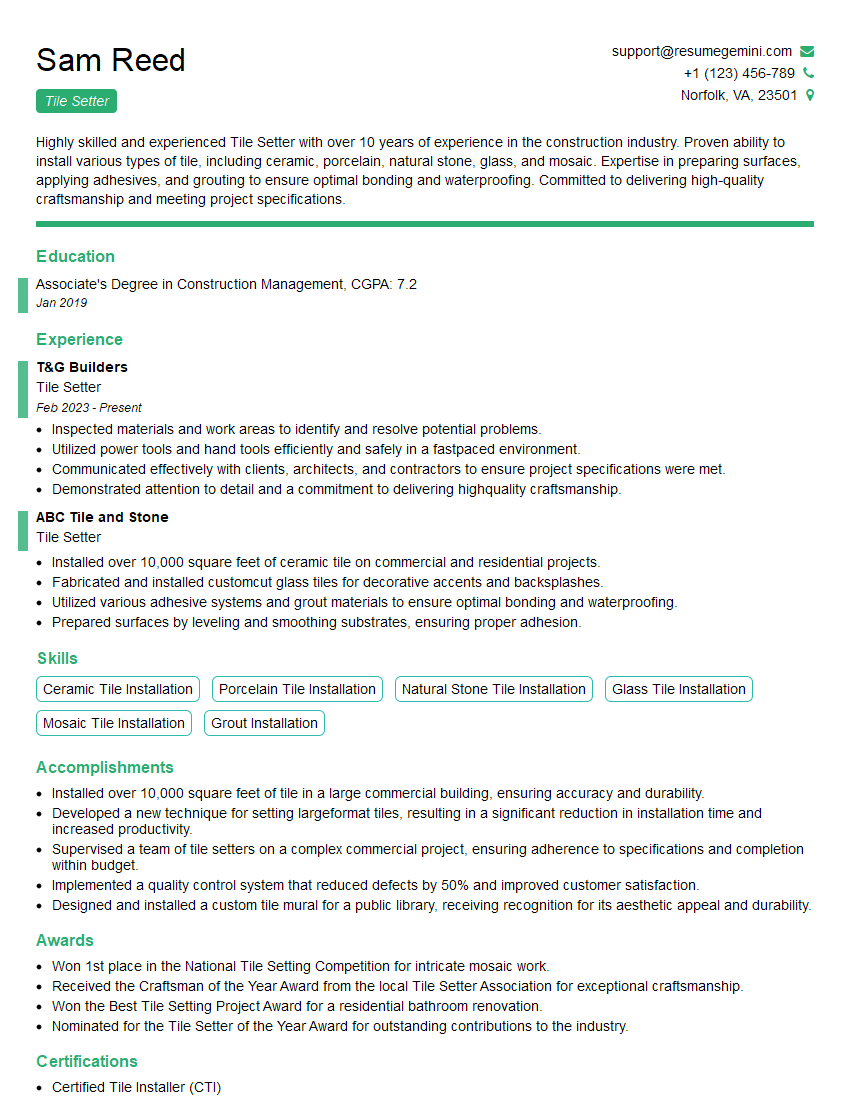
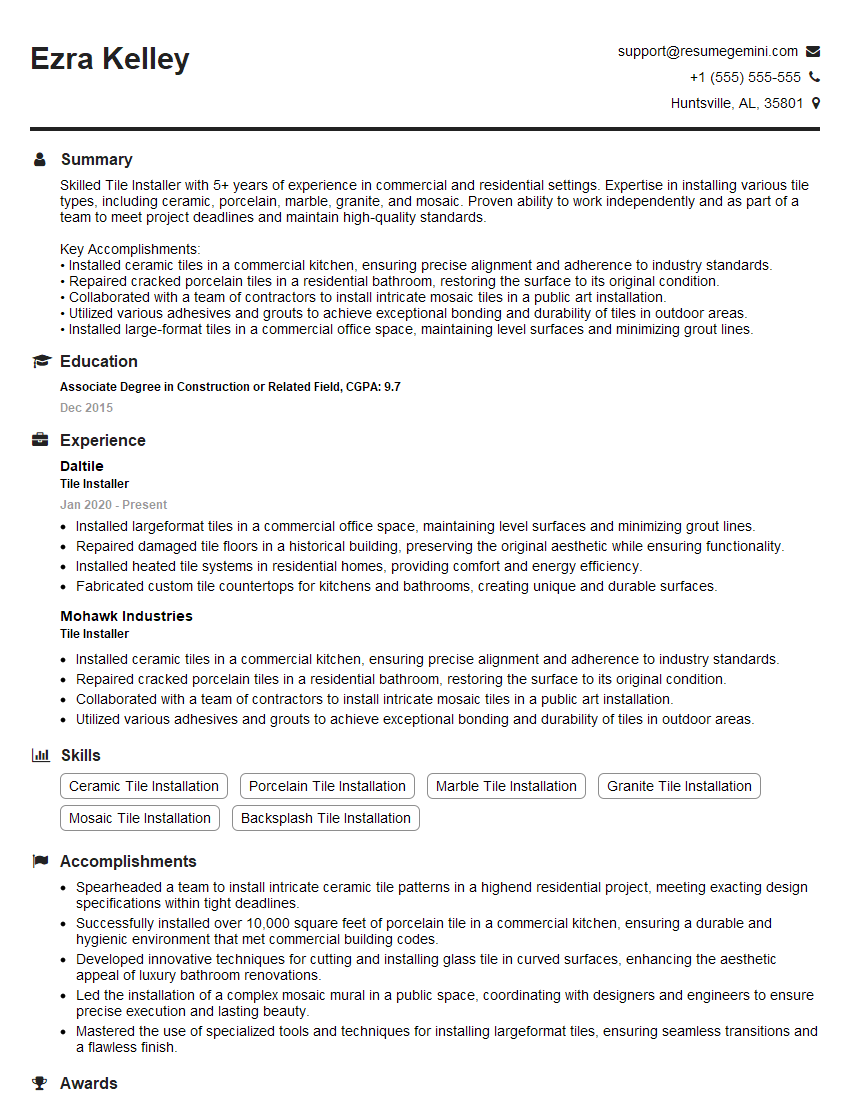
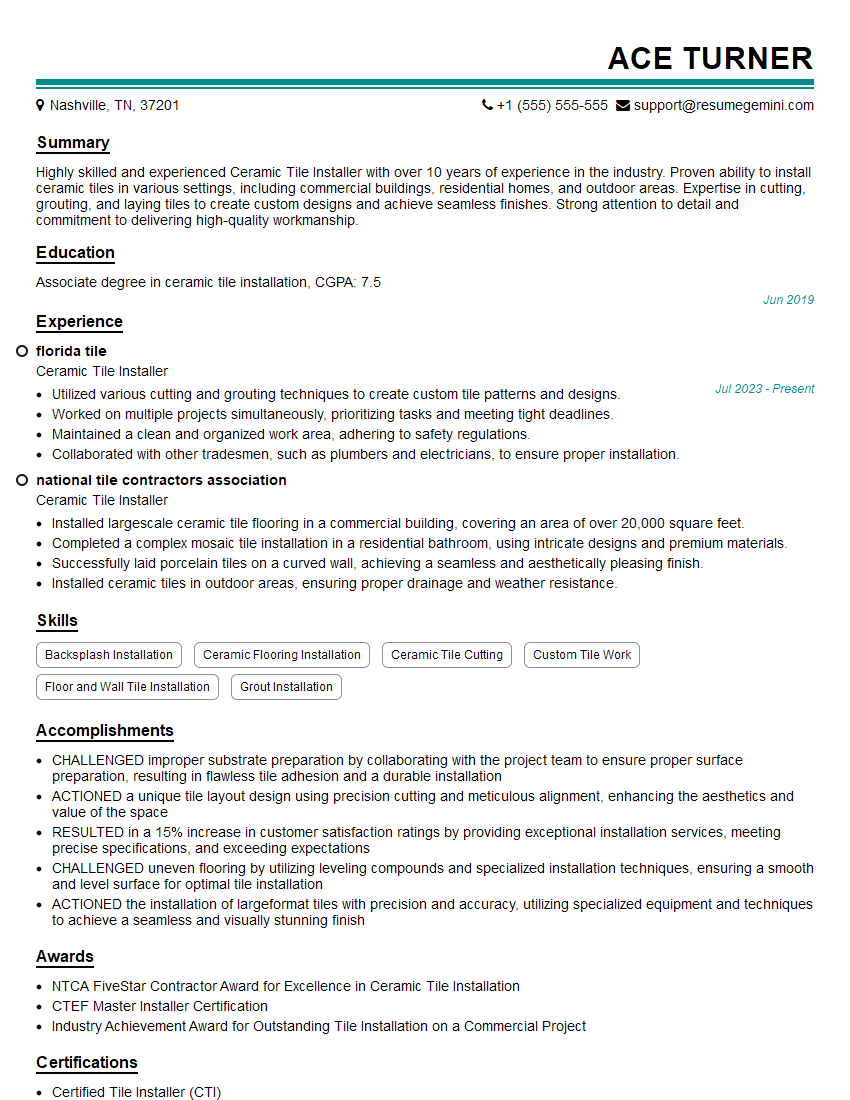
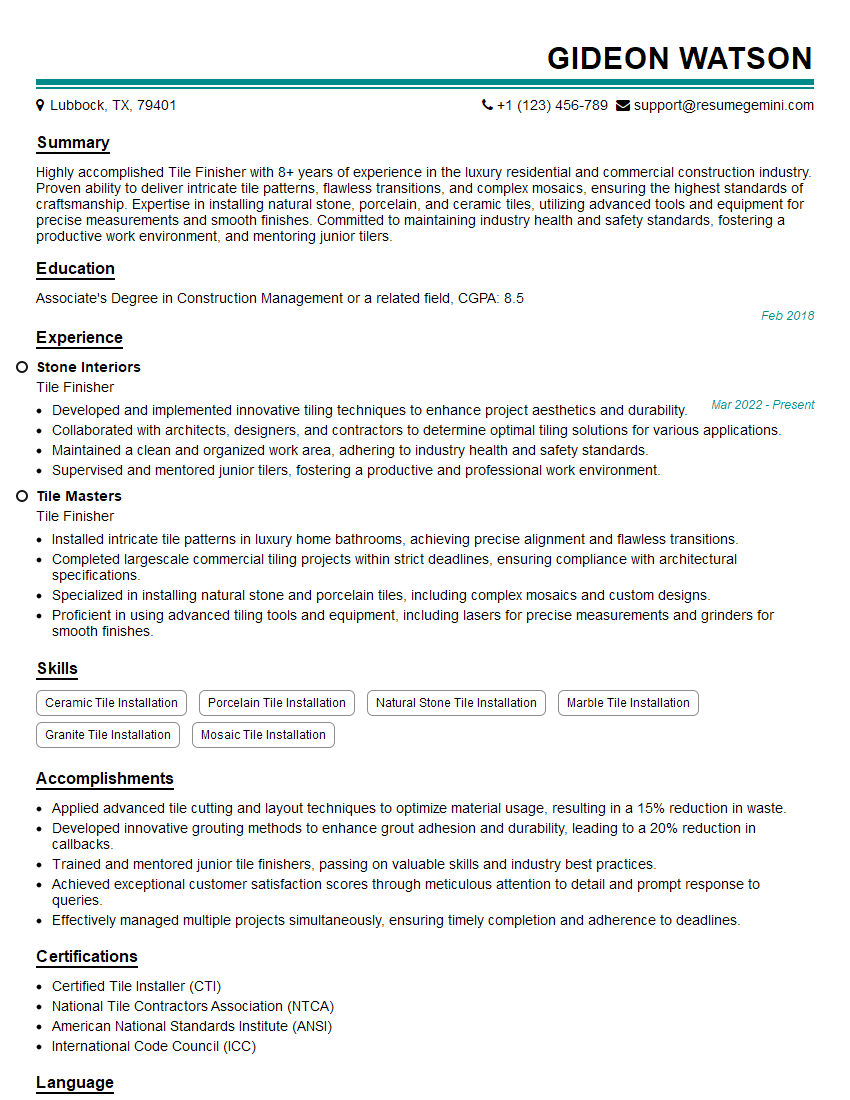
Mastering tile cutting opens doors to rewarding careers in construction, renovation, and design. Proficiency in this skill demonstrates precision, attention to detail, and problem-solving abilities – highly valued attributes in the industry. To maximize your job prospects, crafting a strong, ATS-friendly resume is crucial. ResumeGemini is a trusted resource to help you build a professional and effective resume that showcases your skills and experience. We provide examples of resumes tailored specifically to the Tile Cutting field to guide you in creating your own winning application.
Explore more articles
Users Rating of Our Blogs
Share Your Experience
We value your feedback! Please rate our content and share your thoughts (optional).
What Readers Say About Our Blog
Very informative content, great job.
good