Interviews are more than just a Q&A session—they’re a chance to prove your worth. This blog dives into essential Social Media Management Skills interview questions and expert tips to help you align your answers with what hiring managers are looking for. Start preparing to shine!
Questions Asked in Social Media Management Skills Interview
Q 1. What social media platforms are you most proficient in, and why?
My strongest skills lie in managing platforms like Instagram, Facebook, and Twitter, complemented by experience with LinkedIn and TikTok. This breadth is intentional. Instagram excels at visual storytelling and community building, perfect for showcasing products or creating a brand personality. Facebook allows for broader reach and detailed targeting options through advertising. Twitter is ideal for real-time engagement, news dissemination, and quick customer service. LinkedIn’s professional focus makes it perfect for B2B marketing and recruitment, while TikTok’s short-form video content is crucial for reaching younger demographics and leveraging trending sounds. The ‘why’ boils down to understanding each platform’s unique strengths and tailoring content to maximize their potential. I choose the platforms best suited to a client’s specific goals and target audience.
Q 2. Describe your experience creating and implementing a social media strategy.
Creating a social media strategy begins with a deep dive into the client’s goals, target audience, and competitive landscape. For example, a new restaurant might aim to increase brand awareness and drive foot traffic. We’d then define specific objectives – perhaps a 20% increase in Instagram followers within three months. This informs content pillars: high-quality food photography, behind-the-scenes glimpses of the kitchen, and engaging stories from happy customers. Next, a content calendar is developed, scheduling posts across platforms based on optimal engagement times, utilizing a mix of organic content (high-quality images, videos, interactive polls) and paid advertising. We use analytics tools to track progress, regularly adjusting the strategy based on what’s working (or not). For example, if customer engagement is low on certain types of posts, we pivot to a new strategy. The whole process is iterative, constantly optimized for the best results.
Q 3. How do you measure the success of a social media campaign?
Success isn’t just about vanity metrics (likes and followers). We measure success through a combination of key performance indicators (KPIs). Website traffic driven by social media, lead generation, engagement rates (likes, comments, shares), brand mentions, and ultimately, return on investment (ROI) for paid campaigns are all critical. For example, a successful campaign might show a 15% increase in website clicks from social media, a 10% rise in lead generation, and a positive ROI on ad spend. We use tools like Google Analytics, platform-specific analytics dashboards (Facebook Insights, Instagram Insights), and social listening tools to track these metrics. Regular reporting allows for course correction and ensures the strategy remains effective.
Q 4. What key performance indicators (KPIs) are most important to you when managing social media?
My focus is always on KPIs directly linked to business goals. Reach and engagement are important, but they’re means to an end. I prioritize:
- Website Traffic: How many visitors are coming to the client’s website from social media?
- Lead Generation: How many qualified leads are being generated through social media efforts? This is particularly crucial for B2B clients.
- Conversion Rate: Of those leads, how many are converting into paying customers or achieving the desired action (e.g., making a purchase, signing up for a newsletter)?
- Return on Investment (ROI): For paid campaigns, is the investment generating a positive return?
- Brand Sentiment: What is the overall tone of conversations around the brand on social media?
By focusing on these KPIs, we can demonstrate the tangible value of social media management.
Q 5. How do you handle negative comments or feedback on social media?
Handling negative comments requires a thoughtful and empathetic approach. Ignoring them is never an option. My process involves:
- Acknowledging the comment: A simple ‘We appreciate your feedback’ goes a long way.
- Empathizing with the customer: Show understanding of their frustration or concern.
- Offering a solution: If possible, provide a resolution or explain the situation.
- Taking the conversation offline (if necessary): For sensitive or complex issues, offer to contact the customer privately.
- Learning from the feedback: Negative comments offer valuable insights into areas needing improvement.
The goal isn’t to delete negative comments but to manage the conversation effectively, turning a negative experience into a positive one (or at least a neutral one) whenever possible. Transparency and accountability are key.
Q 6. Describe your experience with social media advertising and budgeting.
I’ve managed social media advertising campaigns across various platforms, utilizing different budgeting strategies depending on the client’s needs and resources. For example, some clients prefer a fixed monthly budget, while others might opt for a performance-based approach. I’m proficient in setting up and optimizing ad campaigns using tools like Facebook Ads Manager and Google Ads, focusing on precise targeting and A/B testing to maximize ROI. My experience includes creating compelling ad creatives, analyzing campaign performance, and adjusting bids and targeting as needed to achieve optimal results. A crucial aspect is providing regular reports that clearly demonstrate the effectiveness of the spend. Transparency and data-driven decision-making are critical for successful social media advertising.
Q 7. What is your process for identifying relevant social media influencers?
Identifying relevant influencers starts with clearly defining the target audience and campaign objectives. Then, I use a multi-pronged approach:
- Platform-Specific Searches: Utilize each platform’s search and discovery features to find influencers relevant to our niche.
- Influencer Marketing Platforms: Tools like Upfluence or AspireIQ provide databases of influencers and facilitate collaborations.
- Competitor Analysis: Identify influencers who are already working with competitors to see who’s resonating with our target audience.
- Manual Research: Directly searching for relevant hashtags, keywords, and topics to find potential candidates.
- Engagement Rate Analysis: Scrutinize an influencer’s engagement rate (likes, comments, shares relative to their follower count) to assess their authenticity and reach.
- Audience Alignment: Ensure the influencer’s audience aligns with our target demographic and interests.
Ultimately, selecting the right influencers is about finding a good fit—authenticity, relevance, and a genuine connection with their audience are paramount.
Q 8. How do you stay up-to-date on the latest social media trends and algorithm changes?
Staying ahead in the ever-evolving world of social media requires a multi-pronged approach. It’s not enough to passively observe; you must actively seek out information from reputable sources.
Industry Publications and Blogs: I regularly read publications like Social Media Today, Hootsuite blog, and Neil Patel’s blog for insightful articles on the latest trends and algorithm updates. These provide expert analysis and practical tips.
Social Media Platforms’ Official Announcements: Each platform (Facebook, Instagram, Twitter, etc.) has a blog or help center where they announce algorithm changes and new features. This is the primary source for accurate information.
Social Media Marketing Conferences and Webinars: Attending industry events allows for networking and learning from leading experts. Webinars often offer concise updates on the latest developments.
Following Key Influencers: I follow influential social media marketers and analysts on Twitter and LinkedIn to stay informed about discussions and emerging trends. Their insights often offer a unique perspective.
Experimentation and Data Analysis: Beyond external resources, I constantly experiment with different posting strategies and content formats on my managed accounts and analyze the data to observe what’s working best. This hands-on approach provides invaluable real-time insights.
Q 9. Explain your experience using social media analytics tools.
My experience with social media analytics tools is extensive. I’m proficient in using both built-in analytics dashboards (like those provided by Facebook, Instagram, and Twitter) and dedicated analytics platforms such as Google Analytics, Sprout Social, and Hootsuite.
I utilize these tools to track key metrics such as:
- Reach and Impressions: Understanding how many people are seeing our content.
- Engagement: Measuring likes, comments, shares, and click-through rates to gauge audience interest.
- Website Traffic: Analyzing how social media efforts drive traffic to the client’s website.
- Conversion Rates: Tracking the number of leads or sales generated through social media campaigns.
- Audience Demographics: Understanding the age, location, interests, and other characteristics of our followers.
For instance, I recently used Google Analytics to identify that Pinterest was driving significantly more high-value website traffic than Instagram for a client in the home décor industry. This allowed us to reallocate resources and optimize our Pinterest strategy for better results.
Q 10. How do you ensure brand consistency across all social media platforms?
Maintaining brand consistency across multiple social media platforms is crucial for building a strong brand identity. This involves creating a cohesive brand voice, visual style, and messaging strategy across all channels.
Brand Style Guide: I develop or work with the marketing team to create a comprehensive brand style guide that outlines the brand’s voice (tone, style), logo usage, color palette, and image guidelines. This document serves as a reference point for all social media content.
Consistent Messaging: I ensure that the core message and overall tone remain consistent across all platforms, adapting the language and style to suit each platform’s specific audience and format.
Visual Consistency: Using consistent imagery, filters, and design elements across platforms contributes to a unified brand aesthetic. This often involves using a pre-defined set of images and templates for various content formats.
Content Repurposing: Strategic repurposing of content allows for efficient content distribution while maintaining consistency. A blog post can be transformed into multiple Instagram Stories, tweets, or Facebook posts.
For example, if a brand’s voice is playful and informal, that tone should be reflected consistently, even if the content format changes – from a LinkedIn post to an Instagram Reel.
Q 11. Describe your experience with social listening and crisis communication.
Social listening and crisis communication are vital aspects of social media management. Social listening involves actively monitoring online conversations and mentions related to the brand, industry, or competitors. Crisis communication is the strategic response to negative situations or online controversies.
Social Listening Tools: I use tools like Brand24, Mention, or Talkwalker to track brand mentions, identify potential issues, and gauge public sentiment.
Proactive Monitoring: I set up alerts for specific keywords, hashtags, and brand mentions to ensure swift identification of potential crises.
Crisis Communication Plan: I collaborate with the marketing and PR teams to develop a comprehensive crisis communication plan, outlining steps for responding to negative situations. This plan includes pre-approved statements, communication channels, and escalation procedures.
In a real-world scenario, if a product defect is reported online, the crisis communication plan guides my response – promptly acknowledging the issue, offering solutions, and addressing customer concerns transparently and empathetically across various platforms.
Q 12. How do you adapt your social media strategy based on performance data?
Data-driven decision-making is fundamental to successful social media management. I regularly analyze performance data to identify areas for improvement and adapt the strategy accordingly.
Regular Performance Reviews: I conduct weekly or bi-weekly reviews of key metrics, identifying trends and patterns in engagement, reach, and conversions.
A/B Testing: I use A/B testing to compare the performance of different content formats, posting times, and call-to-actions to determine what resonates best with the target audience.
Campaign Optimization: Based on the data, I optimize campaigns by adjusting budget allocation, targeting parameters, and content strategies.
Iterative Approach: I view social media management as an iterative process, continuously refining the strategy based on ongoing data analysis and learnings.
For example, if data shows that video content performs significantly better than static images, we’ll adjust the content calendar to prioritize video creation and scheduling.
Q 13. What is your approach to content creation and scheduling?
My approach to content creation and scheduling is strategic and organized. I believe in creating high-quality, engaging content tailored to each platform’s audience and format.
Content Calendar: I use a content calendar (either a spreadsheet or a dedicated tool like Hootsuite or Later) to plan and schedule content in advance. This ensures a consistent flow of posts and allows for efficient time management.
Content Pillars: I define key content pillars based on the brand’s goals and audience interests. This ensures a cohesive and relevant content strategy.
Content Mix: I diversify content formats – using text, images, videos, Stories, Reels, and live streams – to cater to diverse preferences and maximize engagement.
Scheduling Tools: I utilize scheduling tools to automate posting across platforms, ensuring consistent posting times and optimizing reach.
Analytics-Driven Content: Content creation is guided by data analysis. Understanding what performs well informs future content decisions.
For instance, we might schedule engaging Instagram Reels on Wednesdays and Thursdays, knowing that audience engagement is typically higher on those days, based on past data.
Q 14. How do you collaborate with other marketing teams or departments?
Collaboration is key to successful social media management. I actively engage with other marketing teams and departments to ensure a cohesive marketing strategy.
Regular Meetings: I participate in regular meetings with marketing, sales, product development, and PR teams to share updates, discuss campaign performance, and align on marketing initiatives.
Cross-functional Communication: I maintain open communication channels with other teams, ensuring everyone is informed about social media activities and their impact.
Sharing Insights: I share key insights and data from social media with other teams to provide valuable context for their decision-making.
Content Collaboration: I work closely with content creators and designers to develop high-quality, on-brand content.
For example, if the sales team is launching a new product, I’ll coordinate a comprehensive social media campaign to promote the launch, ensuring alignment of messaging and timing with the sales strategy.
Q 15. Describe your experience with social media automation tools.
My experience with social media automation tools is extensive. I’ve worked with a variety of platforms, including Hootsuite, Buffer, Sprout Social, and Later. I understand that automation isn’t about replacing human interaction; it’s about optimizing efficiency. For instance, I utilize scheduling tools to pre-plan content for optimal reach across different time zones and to maintain a consistent posting schedule. This frees up my time to focus on more strategic initiatives like community engagement and performance analysis. I also leverage tools for tasks like social listening and reporting, allowing me to track brand mentions, analyze sentiment, and measure campaign effectiveness more accurately. I’m adept at choosing the right tool for the specific needs of each project, understanding the limitations and potential downsides of over-automation. For example, while scheduling tools are great, they shouldn’t replace spontaneous, real-time engagement with your audience.
I’m also proficient in using automation for tasks like auto-responding to common customer queries, a feature extremely useful in managing large communities and ensuring timely responses. This allows for a seamless and efficient customer experience without the need for constant manual intervention.
Career Expert Tips:
- Ace those interviews! Prepare effectively by reviewing the Top 50 Most Common Interview Questions on ResumeGemini.
- Navigate your job search with confidence! Explore a wide range of Career Tips on ResumeGemini. Learn about common challenges and recommendations to overcome them.
- Craft the perfect resume! Master the Art of Resume Writing with ResumeGemini’s guide. Showcase your unique qualifications and achievements effectively.
- Don’t miss out on holiday savings! Build your dream resume with ResumeGemini’s ATS optimized templates.
Q 16. How do you manage multiple social media accounts simultaneously?
Managing multiple social media accounts simultaneously requires a structured approach and the right tools. I typically use a social media management platform like Hootsuite or Sprout Social, which allow for centralized content creation, scheduling, and monitoring across various platforms. This approach streamlines workflows and prevents content duplication or inconsistencies. Think of it like a central command center for all your social media activity.
Beyond the tools, I develop tailored content calendars for each platform, recognizing that each audience and network has unique characteristics. A post that performs well on Instagram might not resonate with the same audience on LinkedIn. I tailor my content strategy, tone, and visual style to optimize performance on each platform. Furthermore, regular performance tracking and analysis are crucial. Using platform analytics and the reporting features within my management tools, I identify trends, measure engagement, and adjust my strategy accordingly for each account individually. This iterative process ensures that my approach stays relevant and effective.
Q 17. What experience do you have with community engagement on social media?
Community engagement is the heart of successful social media management. My approach centers around active listening, meaningful interaction, and building genuine relationships with the audience. I don’t just broadcast; I actively participate in conversations, respond to comments and messages promptly, and foster a sense of community around the brand. This means more than just liking posts; it’s about providing valuable insights, answering questions, addressing concerns, and creating a space where users feel heard and valued.
For example, in a previous role, I implemented a weekly Q&A session on Instagram Live, allowing users to directly engage with our team and build a stronger connection with the brand. We also actively monitored social mentions for both positive and negative feedback, using this information to inform product development and improve customer service. I see community engagement not just as a metric, but as a crucial element in building brand loyalty and advocacy.
Q 18. How do you deal with conflicting priorities within a social media strategy?
Conflicting priorities are inevitable in social media management. To address this, I rely on a combination of prioritization frameworks and clear communication. I typically use a method like the Eisenhower Matrix (urgent/important) to categorize tasks. This helps me focus on high-impact activities that align with overall strategic goals. I clearly communicate these priorities to the team, ensuring everyone is aligned on the most critical aspects.
Transparency is key. For instance, if an urgent crisis requires immediate attention, I might need to temporarily postpone less urgent tasks. I always document these changes and communicate the reasons behind them. This keeps stakeholders informed and fosters a sense of shared responsibility. By employing a flexible, yet structured approach, I successfully manage competing demands and maintain project momentum.
Q 19. What is your understanding of social media SEO and its impact?
Social media SEO (Search Engine Optimization) is crucial for driving organic traffic to your brand’s social media profiles and website. It’s about making your content discoverable through search engines, increasing your visibility and reach. This includes optimizing your profile and pages with relevant keywords, using consistent branding across all platforms, and creating high-quality, shareable content.
The impact of strong social media SEO is multifaceted. It can boost brand awareness, increase website traffic (via links in your social media posts), improve your search engine rankings (as search engines consider social signals), and build brand authority. Think of it like building a bridge between your social media presence and your search engine rankings; strong SEO practices on social media make your content easily accessible both on the platforms themselves and through search engine results.
Q 20. Describe a time you failed in social media management, and what you learned.
One time, I underestimated the importance of thoroughly researching a trending hashtag before using it in a campaign. I thought it was perfectly aligned with our brand message, but it turned out to be associated with a controversial topic unrelated to our brand. This resulted in negative engagement and damaged our brand reputation.
The key lesson I learned was the critical importance of comprehensive due diligence before participating in any online conversation, particularly around trending topics. Now, I always conduct thorough research and risk assessments before utilizing any hashtag, keyword, or engaging in any online discussion, making sure it truly aligns with our brand values and target audience.
Q 21. What are some common social media mistakes to avoid?
Several common social media mistakes to avoid include:
- Inconsistent posting schedule: Maintaining a regular posting schedule keeps your audience engaged.
- Ignoring analytics: Track your performance to understand what works and what doesn’t.
- Lack of audience engagement: Respond to comments and messages promptly and foster a two-way communication.
- Ignoring negative feedback: Addressing concerns shows that you value your audience.
- Poor quality content: Create visually appealing, informative content relevant to your audience.
- Ignoring brand voice and consistency: Maintain a consistent brand voice and aesthetic across all platforms.
- Using inappropriate hashtags: Research hashtags carefully before using them.
- Not having a clear strategy: Define your objectives and develop a plan to achieve them.
Avoiding these mistakes is essential for building a successful and impactful social media presence.
Q 22. How familiar are you with different social media advertising platforms (e.g., Facebook Ads, LinkedIn Ads)?
I possess extensive experience with various social media advertising platforms. My expertise spans across Facebook Ads, including detailed campaign management, audience targeting using custom and lookalike audiences, A/B testing different ad creatives and copy, and performance optimization through budget allocation strategies. I’m also proficient with LinkedIn Ads, focusing on professional networking and B2B lead generation. I understand the nuances of each platform, including their unique targeting options, ad formats, and reporting functionalities. For example, on Facebook, I’ve successfully leveraged detailed targeting to reach specific demographics and interests, resulting in significantly higher conversion rates compared to broader targeting. On LinkedIn, I’ve used sponsored content and text ads to effectively target decision-makers in specific industries, generating high-quality leads for clients. I constantly stay updated on the latest algorithm changes and best practices for each platform to ensure optimal campaign performance.
Q 23. What is your approach to creating engaging social media content?
My approach to creating engaging social media content is centered around understanding the target audience and crafting a content strategy aligned with their interests and the business objectives. This involves a multi-faceted approach:
- Audience Research: I thoroughly research the target audience to identify their demographics, interests, pain points, and online behavior. This informs the type of content that resonates most effectively.
- Content Pillars: I define core content pillars that align with the brand’s values and business goals. This ensures consistency and relevance across all content.
- Content Formats: I leverage a diverse mix of content formats – images, videos, infographics, stories, live streams – to maintain audience engagement and cater to various consumption preferences. For instance, short, engaging video content often performs well on platforms like TikTok and Instagram Reels, while longer-form articles might be more suitable for LinkedIn.
- Storytelling: I focus on storytelling to connect with the audience on an emotional level. This helps to build brand loyalty and foster a stronger connection.
- Call to Action (CTA): Each piece of content includes a clear call to action, guiding the audience towards a desired outcome, such as visiting a website, making a purchase, or signing up for a newsletter.
For example, for a client in the fitness industry, we created a series of short, inspirational workout videos on Instagram Reels and paired them with blog posts offering detailed workout plans on their website. This combination of formats resonated with the audience, increasing engagement and driving traffic to the client’s website.
Q 24. How do you use social media to achieve business objectives?
Social media is a powerful tool for achieving business objectives. My strategy is to align social media efforts with specific, measurable, achievable, relevant, and time-bound (SMART) goals. This might include:
- Brand Awareness: Increasing brand visibility and recognition through consistent posting and engaging content.
- Lead Generation: Capturing leads through targeted advertising and engaging content that encourages sign-ups or downloads.
- Website Traffic: Driving traffic to the company website through compelling content and strategic links.
- Sales Conversion: Promoting products or services directly on social media and using targeted advertising to drive sales.
- Customer Service: Responding to customer inquiries and resolving issues directly on social media platforms to enhance customer satisfaction.
For instance, to increase website traffic for an e-commerce client, I implemented a social media campaign featuring product demonstrations and behind-the-scenes glimpses into the company culture. This increased brand trust and drove significant traffic to their e-commerce website. The success was measured by tracking website clicks and conversions directly from social media platforms.
Q 25. Explain your experience with social media reporting and analytics dashboards.
I have extensive experience using social media reporting and analytics dashboards to track campaign performance and make data-driven decisions. I’m proficient with tools like Facebook Insights, LinkedIn Analytics, Google Analytics, and various third-party social media management platforms. I regularly monitor key performance indicators (KPIs) such as engagement rate, reach, impressions, website clicks, conversion rates, and cost per acquisition (CPA). I use these dashboards to identify trends, measure the effectiveness of different content strategies, and optimize campaigns for better results. For example, if I notice a decline in engagement with a particular type of content, I’ll analyze the data to understand the cause and adjust the content strategy accordingly. The dashboards provide valuable insights to identify areas for improvement and ensure the effectiveness of our social media strategy.
Q 26. How comfortable are you with working under pressure and meeting deadlines?
I’m highly comfortable working under pressure and meeting deadlines. In the fast-paced world of social media, adaptability and time management are critical. I prioritize tasks effectively, manage multiple projects simultaneously, and consistently deliver high-quality work within specified deadlines. I proactively identify potential challenges and implement contingency plans to mitigate risks. I thrive in dynamic environments and find solutions to unexpected issues, ensuring smooth workflow and timely completion of tasks. For instance, I once had to manage a social media crisis for a client and successfully navigated the situation by quickly implementing a crisis communication plan and addressing negative comments efficiently and professionally, mitigating potential long-term damage to their brand image.
Q 27. Describe your experience with social media A/B testing and optimization.
A/B testing is integral to my social media optimization strategy. I regularly conduct A/B tests on various aspects of social media campaigns to determine what resonates most effectively with the target audience. This includes testing different:
- Ad creatives: Images, videos, and text variations.
- Ad copy: Headlines, body text, and call-to-action variations.
- Targeting parameters: Refining audience segmentation to optimize reach and engagement.
- Posting times: Identifying the optimal time to post for maximum reach and engagement.
I use the data gathered from these tests to inform future campaign optimizations. For example, I might A/B test two different ad creatives with similar targeting parameters to see which one generates a higher click-through rate. Based on the results, I’ll adjust future campaigns to favor the higher-performing creative. This data-driven approach allows me to continually improve campaign performance and maximize ROI.
Q 28. What is your preferred style of communication in a professional social media setting?
My preferred communication style in a professional social media setting is clear, concise, and collaborative. I believe in open and transparent communication with both clients and colleagues. I prioritize active listening and strive to understand different perspectives before forming opinions or making decisions. I use a professional yet personable tone in all interactions, tailoring my language and communication style to the specific audience and platform. I proactively share updates and insights, ensuring everyone is informed and aligned. For example, I’ll use project management tools to share updates on campaign progress, actively solicit feedback from clients, and ensure any questions or concerns are promptly addressed. This proactive and transparent approach fosters trust and builds strong working relationships.
Key Topics to Learn for Social Media Management Skills Interview
- Social Media Strategy Development: Understanding how to define target audiences, set measurable goals, and create content calendars aligned with business objectives. Practical application: Developing a social media strategy for a fictional brand, including channel selection and KPI definition.
- Content Creation & Curation: Mastering various content formats (text, image, video) to engage different audiences. Practical application: Analyzing successful social media campaigns and identifying key elements for engagement.
- Community Management: Building and nurturing online communities, responding to comments and messages effectively, and managing brand reputation. Practical application: Developing strategies for handling negative feedback and crisis communication on social media.
- Social Media Analytics & Reporting: Using analytics tools to track key performance indicators (KPIs), measure campaign effectiveness, and generate insightful reports. Practical application: Interpreting social media analytics data to identify areas for improvement and demonstrate ROI.
- Social Media Advertising: Understanding different advertising platforms (e.g., Facebook Ads, Instagram Ads) and their functionalities for targeted campaign creation and management. Practical application: Creating a hypothetical social media ad campaign with a clear budget and target audience.
- Social Listening & Trend Analysis: Monitoring brand mentions, tracking industry trends, and identifying potential opportunities or threats. Practical application: Performing a competitive analysis of social media presence within a specific industry.
- Platform-Specific Best Practices: Understanding the nuances of each social media platform (e.g., Facebook, Twitter, Instagram, LinkedIn, TikTok) and adapting strategies accordingly. Practical application: Comparing and contrasting the optimal content strategies for different platforms.
- SEO and Social Media Integration: Understanding how to leverage social media to improve search engine optimization (SEO) and drive website traffic. Practical application: Developing strategies to incorporate relevant keywords into social media content and increase website engagement.
Next Steps
Mastering Social Media Management skills is crucial for career advancement in today’s digital landscape. These skills are highly sought after, opening doors to exciting opportunities in marketing, communications, and beyond. To maximize your job prospects, creating a strong, ATS-friendly resume is essential. ResumeGemini is a trusted resource that can help you build a professional resume that showcases your abilities effectively. ResumeGemini provides examples of resumes tailored to Social Media Management Skills, enabling you to craft a compelling document that highlights your unique qualifications and experience. Invest time in building a powerful resume – it’s your first impression to potential employers.
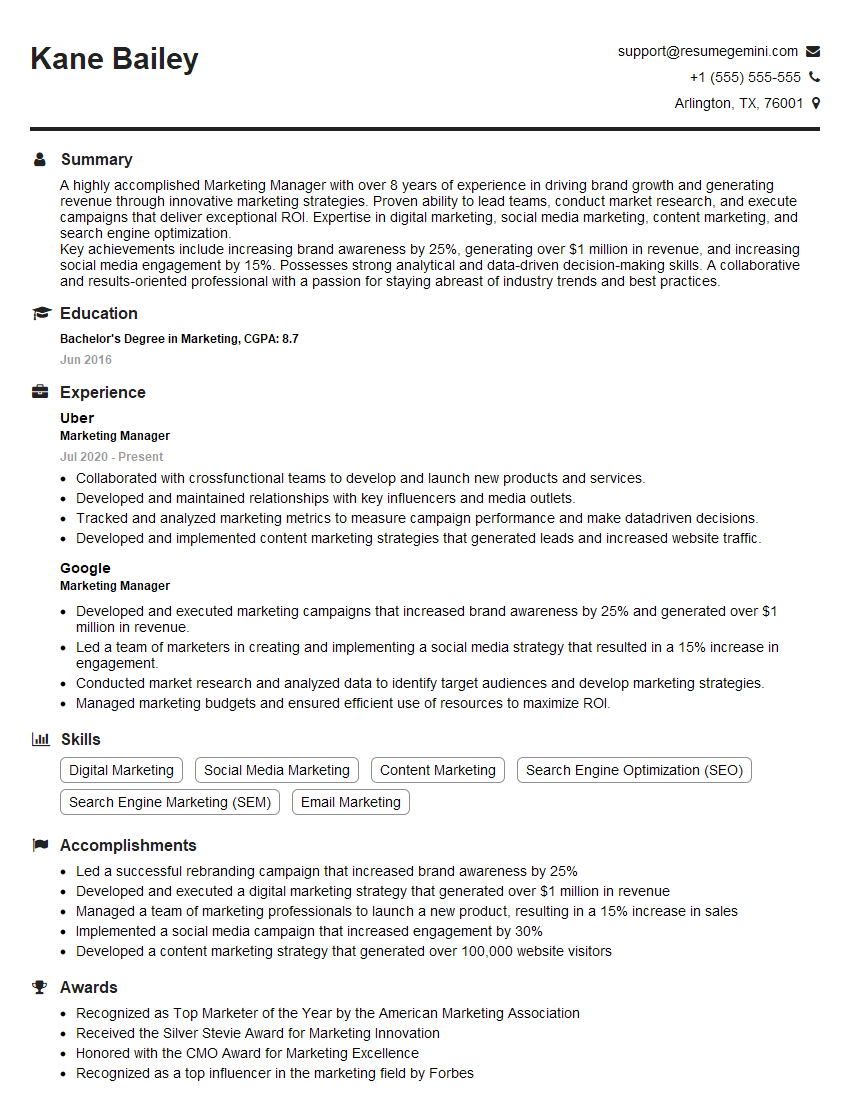
Marketing Manager Resume Sample

Communications Manager Resume Sample

Marketing Communications Manager Resume Sample
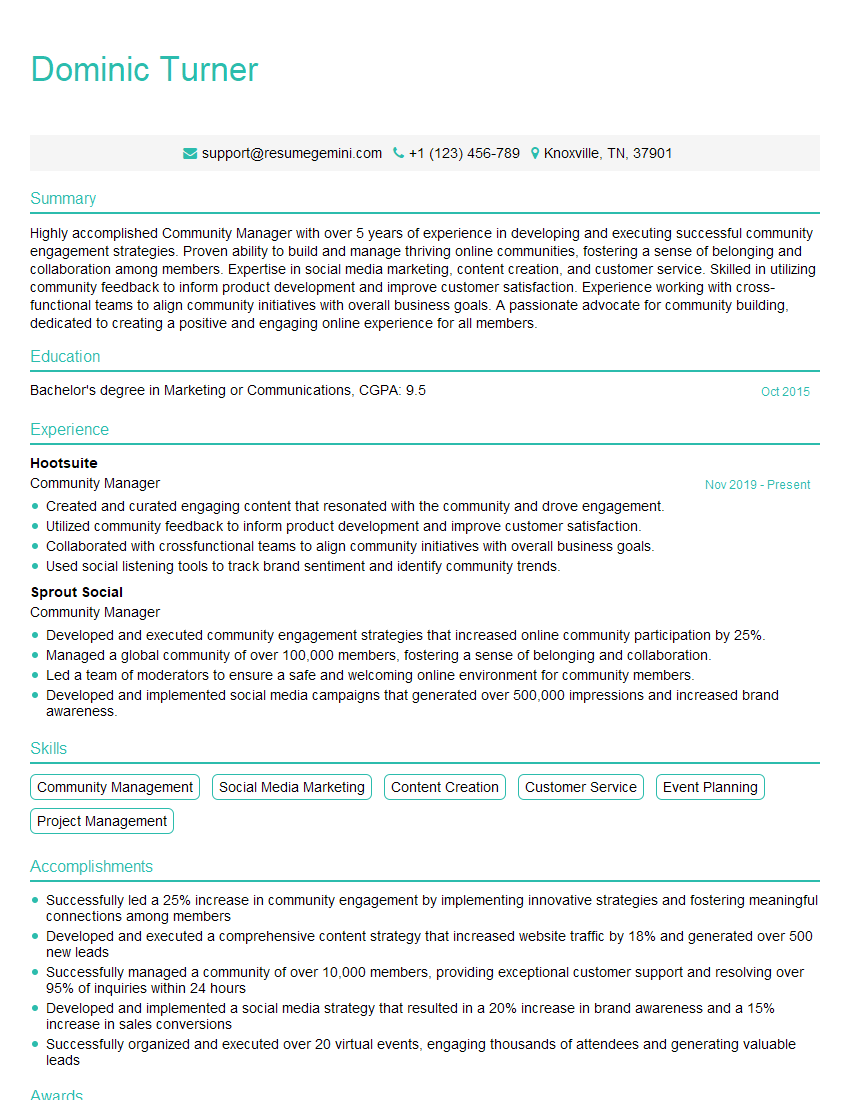
Community Manager Resume Sample

Social Media Manager Resume Sample
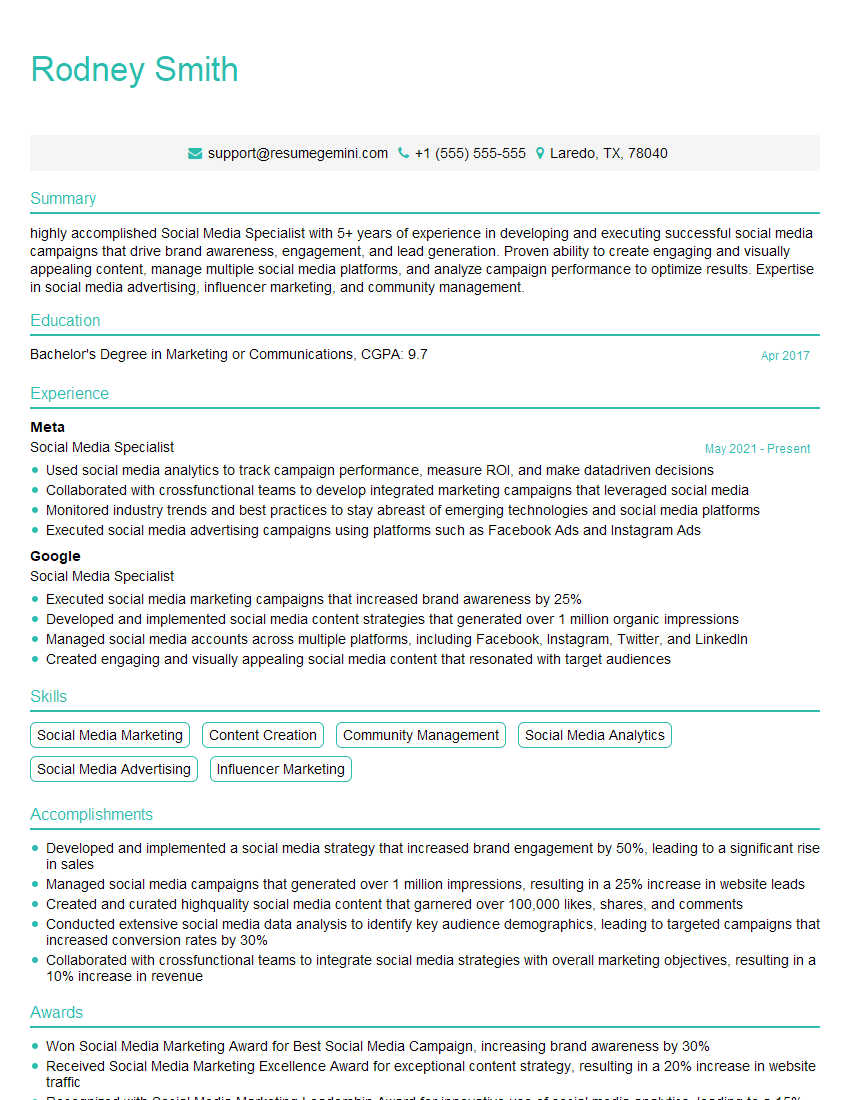
Social Media Specialist Resume Sample
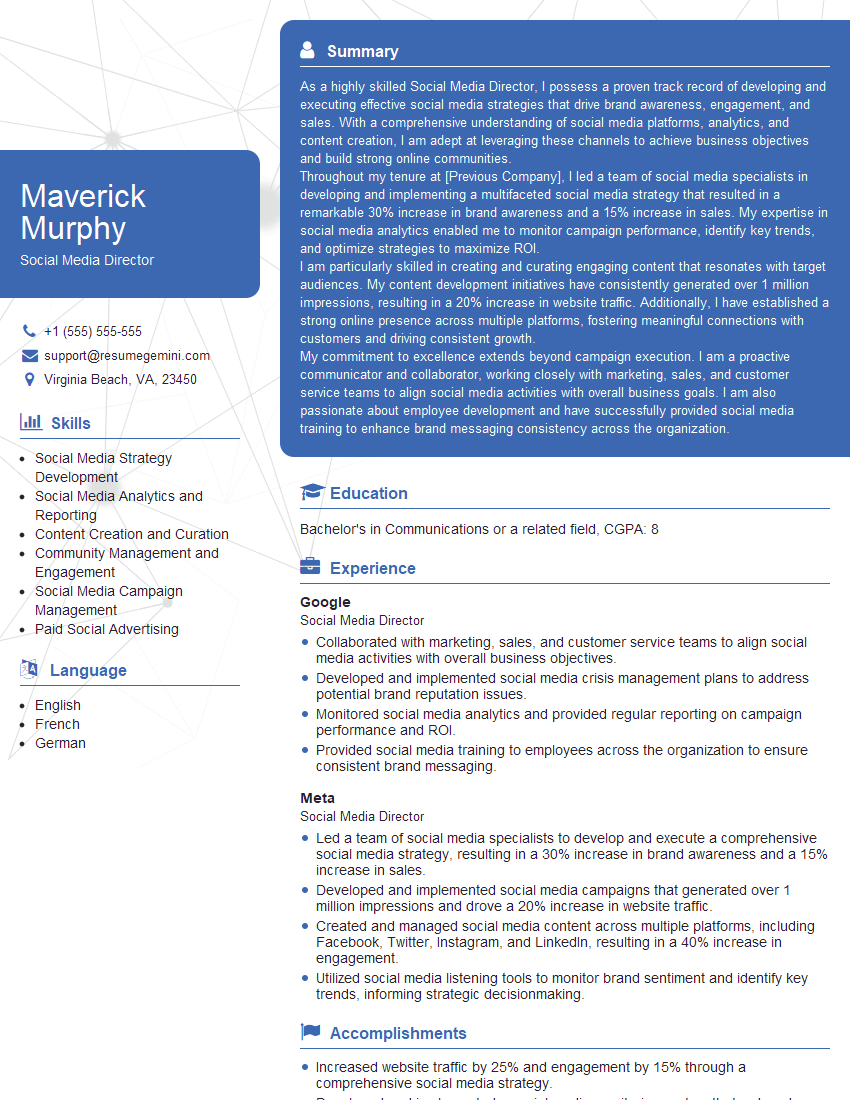
Social Media Director Resume Sample
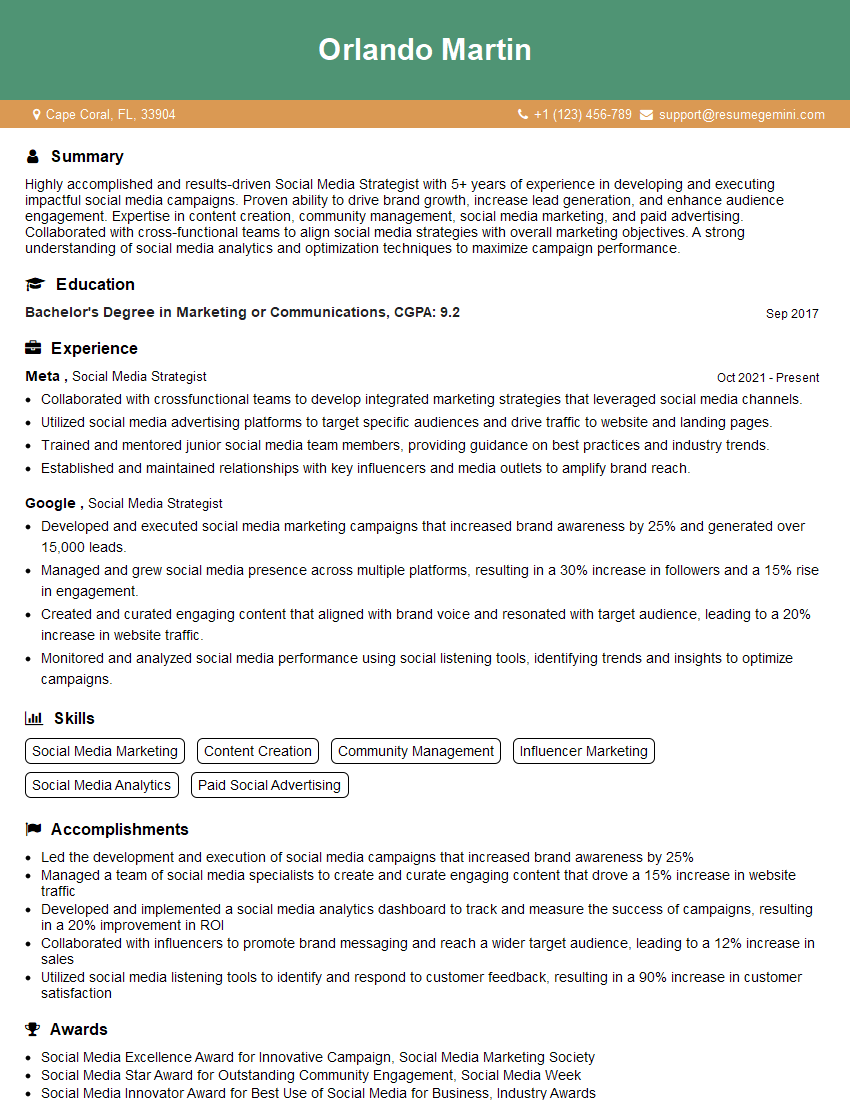
Social Media Strategist Resume Sample
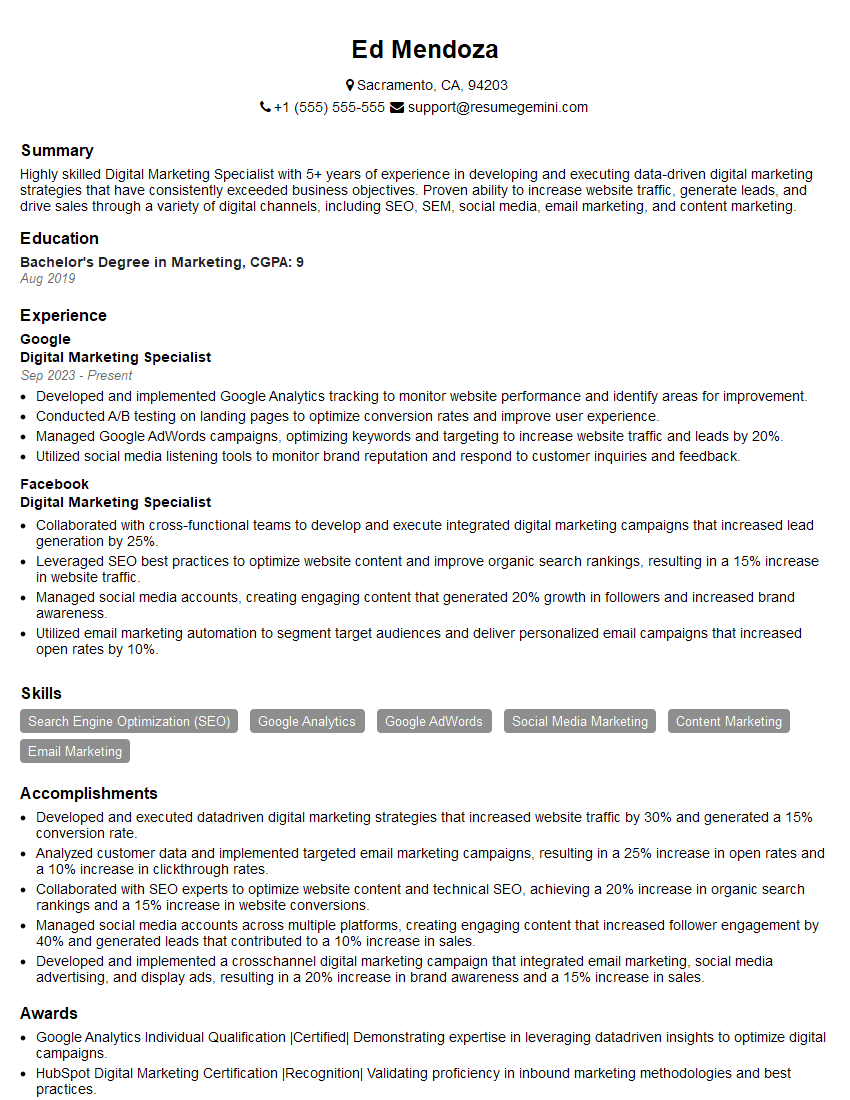
Digital Marketing Specialist Resume Sample
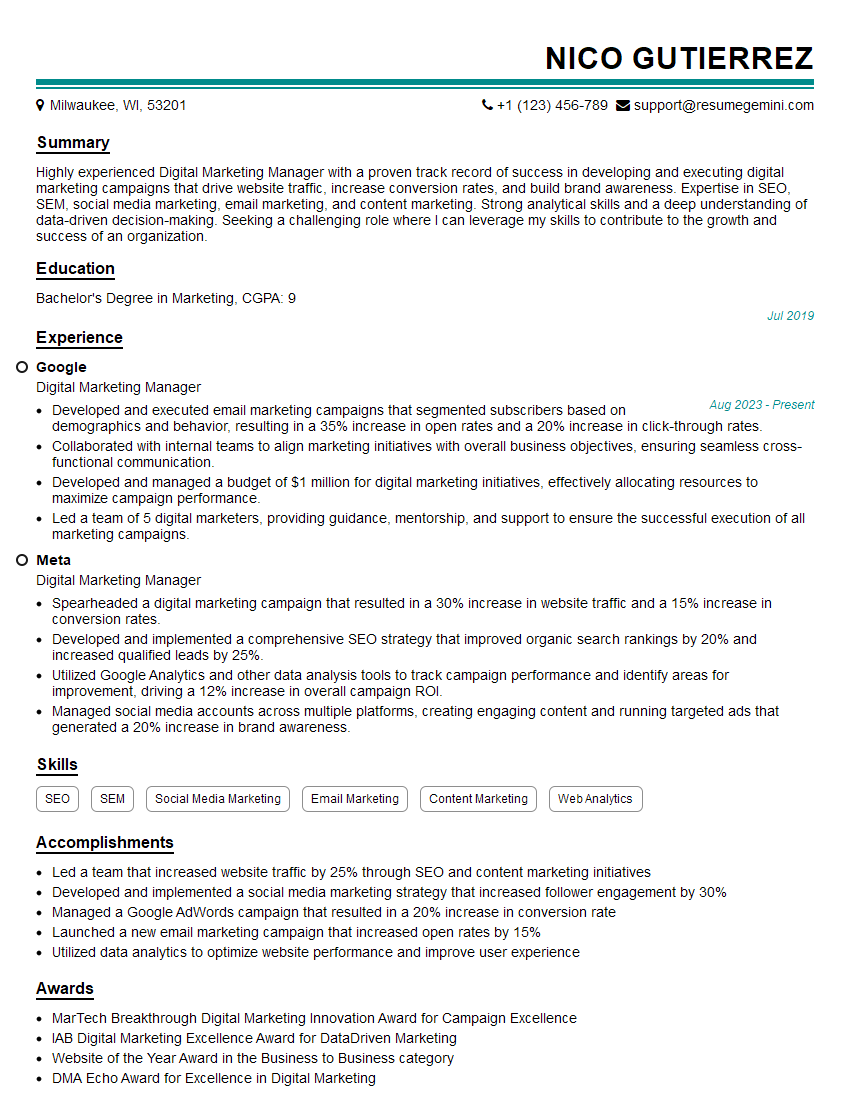
Digital Marketing Manager Resume Sample
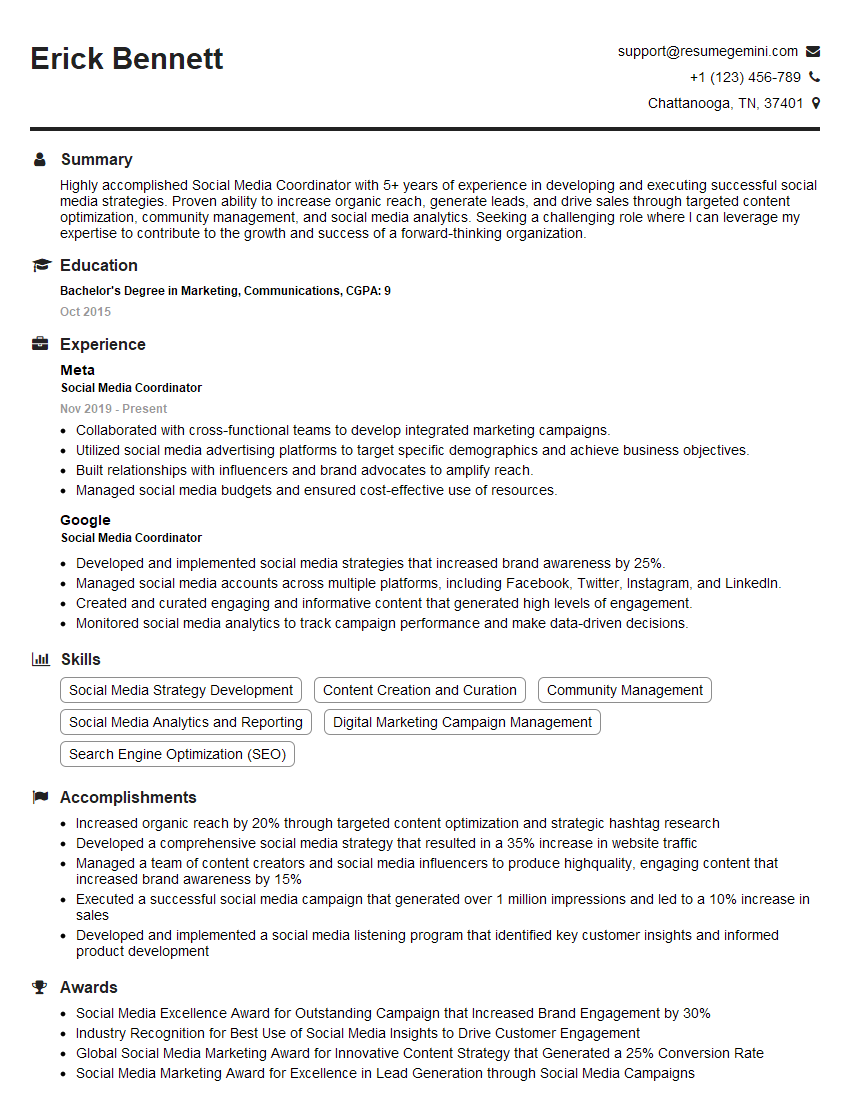
Social Media Coordinator Resume Sample
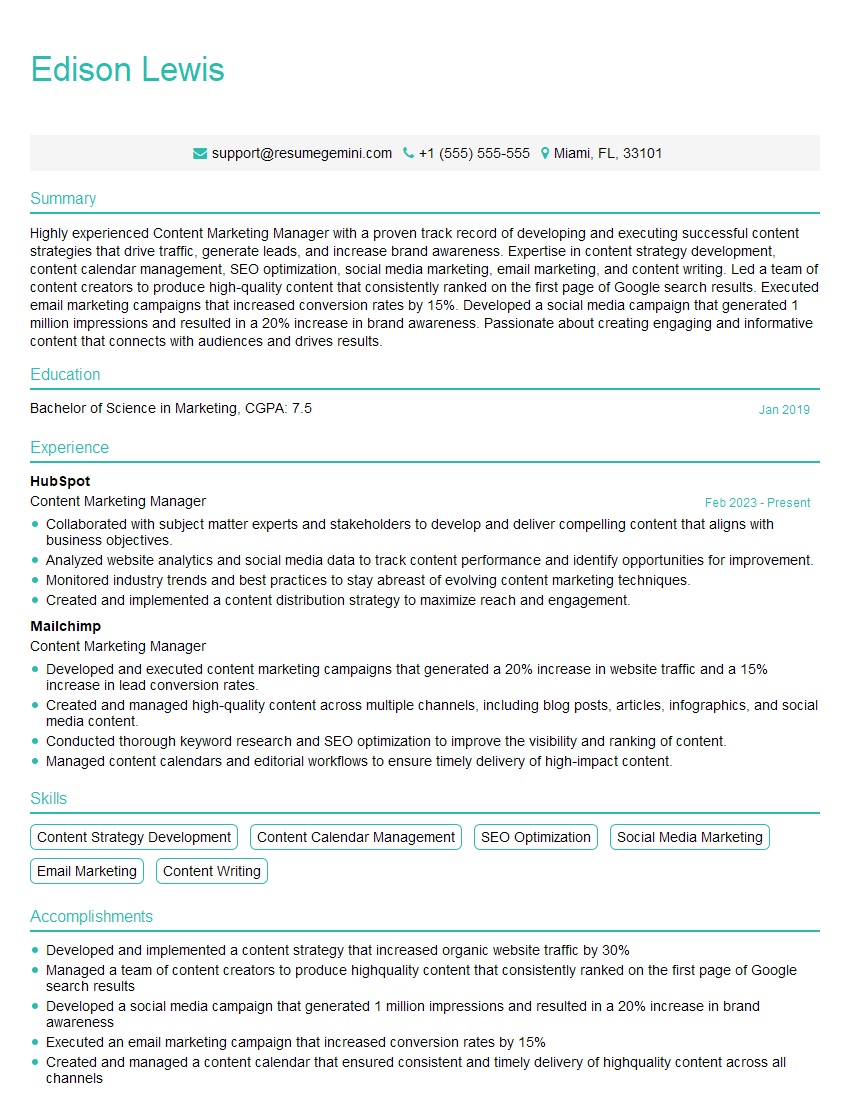
Content Marketing Manager Resume Sample

Social Media Marketing Manager Resume Sample
- Marketing Manager
- Communications Manager
- Marketing Communications Manager
- Community Manager
- Social Media Manager
- Social Media Specialist
- Social Media Director
- Social Media Strategist
- Digital Marketing Specialist
- Digital Marketing Manager
- Social Media Coordinator
- Content Marketing Manager
- Social Media Marketing Manager
Explore more articles
Users Rating of Our Blogs
Share Your Experience
We value your feedback! Please rate our content and share your thoughts (optional).
What Readers Say About Our Blog
Very informative content, great job.
good