Interviews are more than just a Q&A session—they’re a chance to prove your worth. This blog dives into essential Timber Cutting and Extraction interview questions and expert tips to help you align your answers with what hiring managers are looking for. Start preparing to shine!
Questions Asked in Timber Cutting and Extraction Interview
Q 1. Describe the different felling techniques used in timber harvesting.
Felling techniques are crucial for safe and efficient timber harvesting. The choice of technique depends on factors like tree size, species, terrain, and surrounding obstacles. Here are some common methods:
- Humboldt felling: This is a common technique for smaller trees where a notch is cut on the felling side, followed by a back cut, causing the tree to fall in the desired direction. Think of it like carefully guiding a falling domino.
- Open-faced felling: Suitable for larger trees, this method involves a larger notch and a back cut made further from the notch, allowing more control over the direction of fall. It’s like creating a hinge to guide the tree’s descent.
- Directional felling: This technique involves creating a precise notch and back cut to direct the tree’s fall, often used in challenging terrain or near obstacles. It’s like carefully aiming a giant arrow.
- Felling with wedges: Wedges are used to assist in controlling the direction of fall, particularly helpful when dealing with trees that are leaning or have a tendency to fall unexpectedly. It’s like using extra leverage to get the tree exactly where you want it.
Choosing the right technique is paramount to safety and efficiency. I’ve personally used all these techniques on various projects, adapting my approach depending on the specific circumstances.
Q 2. Explain the safety procedures involved in operating a chainsaw.
Chainsaw safety is non-negotiable. It starts with proper training and never waivers. Here’s a breakdown:
- Personal Protective Equipment (PPE): Always wear chaps, safety helmet with visor, gloves, hearing protection, and safety boots. These are not optional; they’re essential.
- Chainsaw Maintenance: Regularly sharpen and maintain the saw to ensure optimal performance and reduce the risk of kickback. A dull chain is a dangerous chain.
- Pre-felling Inspection: Thoroughly assess the tree and its surroundings before felling. Identify potential hazards like leaning trees, dead branches, and obstacles.
- Proper Felling Technique: Utilize the appropriate felling technique based on tree size, species, and surroundings. Incorrect technique is a major cause of accidents.
- Escape Route: Always have a clear escape route planned before starting to fell a tree. Know where to go if the tree starts falling unexpectedly.
- Communication: If working in a team, maintain clear communication to avoid accidents. It’s vital to have clear hand signals and verbal instructions.
I always emphasize safety briefings before starting any work. One time, a colleague almost had a serious accident due to a poorly maintained saw. That incident reinforced the importance of constant vigilance and preventative measures.
Q 3. What are the common types of logging equipment and their applications?
Logging equipment is diverse and specialized. Here are some common types and their applications:
- Chainsaws: Used for felling, limbing, and bucking trees. Essential for virtually every logging operation.
- Skidders and Forwarders: Used for extracting logs from the felling site. Skidders drag logs, while forwarders carry logs on a self-loading platform – each suitable for different terrain.
- Harvesters: These highly mechanized machines fell, limb, and buck trees, often processing logs on-site. They greatly increase efficiency but require a high level of skill and training.
- Grapple Skidders/Forwarders: These use grapples to pick up and manipulate logs, making them highly versatile for various log sizes and terrain.
- Feller Bunchers: These machines cut and bunch trees together, increasing efficiency in harvesting operations particularly in dense stands.
- Log Loaders: Used to load logs onto trucks for transportation.
The choice of equipment depends on factors like timber volume, terrain, and the desired level of mechanization. In my experience, using the right combination of equipment is key to optimizing productivity and minimizing operational costs.
Q 4. How do you assess tree risk before felling?
Assessing tree risk before felling is critical. It’s a process that demands experience and attention to detail. Here’s what I do:
- Visual Inspection: Carefully examine the tree for signs of decay, disease, leaning, dead branches, and other potential hazards. Look for cracks, splits, and unusual growth patterns.
- Tree Species Identification: Different tree species have varying vulnerabilities and risk factors. Understanding the species helps to anticipate potential problems.
- Wind Conditions: Strong winds significantly increase the risk of the tree falling unpredictably. I’ll always check weather forecasts before starting work.
- Soil Conditions: Wet, unstable soil can dramatically increase the risk of the tree falling in an unintended direction or causing soil erosion.
- Surrounding Obstacles: Identify and assess any obstacles near the tree that could be damaged or pose a risk if the tree falls, including other trees, power lines, and equipment.
I’ve seen numerous instances where a seemingly minor flaw led to a dangerous situation. A thorough risk assessment is never wasted time – it’s an investment in safety.
Q 5. Describe your experience with different types of skidders and forwarders.
I’ve worked extensively with various skidders and forwarders throughout my career. The choice depends greatly on the terrain and the type of operation.
- Skidders: I’ve used both cable and grapple skidders. Cable skidders are ideal for steep terrain and challenging conditions, offering flexibility in log manipulation. Grapple skidders are faster and more efficient on flatter, less challenging terrains, and are great for handling smaller logs efficiently.
- Forwarders: Forwarders are highly efficient for larger-scale operations, particularly on relatively flat terrain. They reduce ground disturbance as they carry logs rather than dragging them. I prefer them for operations where minimizing ground impact is crucial.
My experience includes operating both types across diverse terrains. I’ve found that understanding the limitations and capabilities of each machine is paramount to maximizing productivity and minimizing damage.
Q 6. How do you ensure efficient timber extraction from challenging terrain?
Efficient timber extraction from challenging terrain requires careful planning and the right equipment. Here are some key strategies:
- Route Planning: Plan efficient extraction routes that minimize ground disturbance and avoid obstacles. This often involves creating temporary roads or trails.
- Equipment Selection: Choose appropriate equipment for the terrain. Cable skidders excel on steep slopes, while forwarders are better suited for flatter areas. Sometimes a combination is necessary.
- Log Handling Techniques: Use appropriate log handling techniques to avoid damage to both the logs and the environment. Proper bunching and winching are crucial.
- Crew Coordination: Efficient coordination between the felling crew and the extraction crew is paramount to smooth and safe operations. Clear communication is essential.
- Environmental Protection: Implement measures to minimize soil erosion, protect waterways, and reduce overall environmental impact.
One memorable project involved extracting timber from a steep, rocky mountainside. We used a combination of cable skidders and carefully planned routes to successfully complete the operation while preserving the fragile ecosystem.
Q 7. What are the environmental considerations in timber harvesting?
Environmental considerations are paramount in modern timber harvesting. Sustainability is no longer optional; it’s essential.
- Selective Harvesting: Instead of clear-cutting, selective harvesting methods remove only mature or diseased trees, preserving the overall forest structure and biodiversity.
- Reforestation: Replanting harvested areas with suitable tree species is crucial for maintaining forest cover and restoring the ecosystem.
- Soil Protection: Implementing measures to minimize soil erosion and compaction is crucial for long-term forest health. This might involve using specialized equipment or employing specific harvesting techniques.
- Waterway Protection: Protecting waterways from sedimentation and pollution is critical. Buffer zones along streams and rivers should be established and maintained.
- Wildlife Habitat Conservation: Maintaining and improving wildlife habitat is essential, requiring careful planning and consideration for animal movements and nesting sites.
- Biodiversity Management: Protecting biodiversity requires maintaining a mix of tree species, ages, and structures to support a wide range of plants and animals.
Modern forestry practices increasingly emphasize minimizing environmental impact while ensuring a sustainable timber supply. I personally believe that responsible forest management is not just good for the environment but also beneficial for the long-term economic viability of the industry.
Q 8. How do you maintain your chainsaw and other equipment?
Maintaining chainsaw and other equipment is crucial for safety and efficiency. It’s akin to regularly servicing your car – preventative maintenance is far cheaper and safer than dealing with breakdowns in the field.
- Chainsaw Maintenance: This involves daily checks of the chain tension, lubrication (using bar oil), sharpening or replacing the chain (using a file or grinder), cleaning the air filter, and checking the spark plug. I also perform a more thorough monthly maintenance, including cleaning and inspecting the entire saw for damage or wear and tear. Regularly checking the fuel mixture is also essential.
- Other Equipment: For other equipment like felling wedges, axes, and winches, regular inspection for damage and sharpness is crucial. Axes and wedges require sharpening periodically, while winches need lubrication and checks for cable wear. Proper storage, shielding equipment from the elements, is vital for longevity.
- Personal Protective Equipment (PPE): Maintaining PPE is non-negotiable. This includes regularly checking and cleaning safety helmets, chainsaw chaps (protective legwear), gloves, safety glasses, and hearing protection. Damaged PPE should be immediately replaced.
Think of it this way: a well-maintained saw is a safe saw, and a safe saw is a productive saw. Neglecting maintenance can lead to costly repairs, injuries, and project delays.
Q 9. Explain the process of bucking logs and preparing them for transport.
Bucking logs and preparing them for transport is a crucial step, impacting both efficiency and the quality of the final product. It’s like meticulously preparing ingredients before cooking a fine meal.
- Felling the Tree: The process begins with careful felling of the tree, ensuring it falls in the designated direction to avoid damage.
- Limbing: Next, the branches (limbs) are removed from the trunk. This is usually done with a chainsaw, taking care to avoid damaging the log’s surface. The cut limbs are often gathered for firewood or other uses, reducing waste.
- Bucking: This is where the trunk is cut into manageable lengths (logs) suitable for transport. The length depends on the intended use and transport method. Precision is key here to avoid unnecessary waste and improve yield.
- Debarking (Optional): In some cases, the bark might be removed before transport, depending on the end-use of the timber. Debarking can be done manually or using mechanical debarkers. This step improves the quality and value of the timber.
- Sorting and Stacking: After bucking, logs are often sorted according to size and quality, and neatly stacked to facilitate easy loading and transport.
- Transport Preparation: Finally, the logs are loaded onto trucks or other transport vehicles, taking care to secure them properly to prevent shifting or damage during transit.
The entire process demands skill, precision, and adherence to safety protocols. Proper bucking not only makes transportation easier but also significantly reduces the risk of accidents during handling.
Q 10. Describe your experience with different harvesting systems (e.g., clearcutting, selective logging).
I have extensive experience with various harvesting systems, each with its own advantages and disadvantages. Choosing the right system depends heavily on the specific forest, its ecological characteristics, and the landowner’s objectives.
- Clearcutting: This method involves removing all trees from a designated area. It’s efficient for large-scale operations but can significantly impact the environment, leading to soil erosion and habitat loss. It’s often used for establishing even-aged plantations, but its environmental impact is a subject of ongoing debate. It’s like clearing a field for farming – effective but needs careful management after the harvest.
- Selective Logging: This is a more sustainable approach, where only mature or less desirable trees are removed, leaving the forest relatively intact. It’s better for biodiversity and minimizes environmental damage, but it’s less efficient and cost-effective in terms of timber volume per unit area harvested. It’s akin to pruning a garden, maintaining the overall health and appearance.
- Shelterwood Harvesting: A transition method, gradually removing mature trees over time to favor regeneration of the understory and create a more diverse forest structure. It’s a gentler approach compared to clearcutting.
- Seed-Tree Harvesting: Similar to Shelterwood but leaving a few seed trees to regenerate the stand.
My experience encompasses all these systems, and I understand the critical importance of selecting the most suitable method for each specific situation, balancing economic efficiency with environmental responsibility.
Q 11. How do you handle unexpected situations during timber extraction?
Unexpected situations are common in timber extraction. Being prepared and having a plan B is vital. It’s like having a spare tire in your car; you hope you don’t need it, but you’re glad you have it when you do.
- Tree Failure: If a tree falls unexpectedly or in an undesired direction, the immediate priority is ensuring the safety of everyone involved. This might involve using felling wedges, winches, or calling for additional support. We have established emergency procedures and communication protocols to deal with such events.
- Equipment Malfunction: If a chainsaw or other equipment malfunctions, having a backup or calling for repair is essential. Routine maintenance minimizes this risk, but sometimes things break unexpectedly. Carrying a well-stocked repair kit containing essential tools and spare parts is vital.
- Weather Events: Sudden changes in weather can halt operations temporarily. Safety procedures are in place, including establishing safe zones and temporarily suspending operations during severe weather such as thunderstorms or heavy rain.
- Unexpected Obstacles: Encountering underground utilities or unforeseen terrain difficulties requires immediate adaptation and possibly rerouting operations. Careful pre-harvest planning minimizes this risk but thorough site assessments are necessary.
My experience has taught me that adaptability, quick thinking, and robust safety protocols are key to effectively and safely managing such unplanned events.
Q 12. What are the legal and regulatory requirements for timber harvesting in your region?
Legal and regulatory requirements for timber harvesting vary by region, but generally involve obtaining necessary permits, adhering to environmental regulations, and complying with safety standards. Ignoring these regulations can result in hefty fines and legal repercussions.
- Permitting: Obtaining the necessary permits from relevant forestry agencies is a fundamental requirement. This typically involves submitting a detailed harvesting plan that outlines the intended activities, the area to be harvested, and mitigation measures for environmental protection.
- Environmental Regulations: These aim to minimize the environmental impact of logging activities. This may include restrictions on the type of harvesting method used, buffers around sensitive areas (waterways, wetlands), and measures to prevent soil erosion and protect wildlife habitats.
- Safety Regulations: Strict safety standards must be followed to protect workers. This includes the use of appropriate personal protective equipment (PPE), regular equipment maintenance, and the implementation of safe operating procedures. Regular safety briefings and training are also paramount.
- Landowner Agreements: Harvesting operations are often conducted on privately owned land, requiring adherence to specific agreements with the landowner regarding harvesting methods, timber volume, and payments.
Staying informed about these regulations is essential, and I maintain an ongoing understanding of the current laws and policies to ensure all activities are fully compliant.
Q 13. Explain your understanding of sustainable forestry practices.
Sustainable forestry practices prioritize the long-term health and productivity of forests, ensuring their continued ecological and economic value for future generations. It’s about managing forests responsibly and ensuring their continued provision of ecosystem services.
- Selective Logging and Reduced-Impact Logging: Choosing harvesting methods that minimize damage to the remaining forest, protecting soil and water resources.
- Reforestation and Afforestation: Replanting harvested areas to ensure forest regeneration and maintaining carbon sequestration.
- Biodiversity Conservation: Protecting and enhancing biodiversity through habitat management, leaving buffer zones, and maintaining forest structural complexity.
- Soil and Water Protection: Implementing measures to prevent soil erosion and maintain water quality during and after harvesting.
- Community Involvement: Engaging local communities in forest management decisions to ensure their benefit and support sustainable practices.
- Forest Certification: Obtaining third-party certification, such as FSC (Forest Stewardship Council) certification, demonstrating commitment to sustainable practices.
Sustainable forestry is not just about the trees; it’s about the entire ecosystem and the communities that depend on it. It requires a holistic approach encompassing ecological, social, and economic aspects of forest management.
Q 14. How do you measure timber volume and assess its quality?
Measuring timber volume and assessing its quality is crucial for determining the value of the harvested timber and ensuring fair compensation. This involves a combination of field measurements and assessments.
- Volume Measurement: This can be done using various methods. For smaller logs, direct measurements of length and diameter using a diameter tape can be used. For larger volumes, more sophisticated methods such as Smalian’s formula (
V = 0.25 * π * (d1 + d2) * h, where V=volume, d1 and d2 are the diameters at both ends, and h is the length) can be used. Modern technology also allows using laser scanning for volumetric estimation. - Quality Assessment: Assessing quality involves several factors, such as:
- Species Identification: Determining the tree species as different species have varying values.
- Defect Assessment: Identifying defects like knots, rot, cracks, and insect damage. These defects reduce the value and usability of the timber.
- Grading: Categorizing timber into grades based on quality, which impacts price. Grading systems vary depending on the intended use of the timber.
- Moisture Content: Measuring the moisture content of the timber to determine its suitability for different applications.
Accurate timber volume measurement and quality assessment are crucial for fair pricing and efficient resource management. Inaccurate assessments can lead to financial losses and disputes between parties involved in the timber trade.
Q 15. Describe your experience with GPS and GIS technologies in logging operations.
GPS and GIS technologies are indispensable in modern logging operations. They allow for precise mapping of the forest, identifying optimal harvesting routes, and minimizing environmental impact. My experience involves utilizing GIS software like ArcGIS to create detailed maps showing tree locations, species, size, and terrain features. This data is then integrated with GPS-enabled machinery, such as harvesters and forwarders. The GPS ensures machines follow pre-planned routes, preventing unnecessary ground disturbance. For example, in a recent project, we used GIS to plan skid trails that minimized the impact on sensitive wetlands, ensuring efficient timber extraction while preserving the ecosystem. We also used GPS to track the location of harvested timber, improving inventory management and reducing potential loss or theft. Real-time GPS tracking allows supervisors to monitor progress, allocate resources efficiently, and address any potential issues promptly.
Career Expert Tips:
- Ace those interviews! Prepare effectively by reviewing the Top 50 Most Common Interview Questions on ResumeGemini.
- Navigate your job search with confidence! Explore a wide range of Career Tips on ResumeGemini. Learn about common challenges and recommendations to overcome them.
- Craft the perfect resume! Master the Art of Resume Writing with ResumeGemini’s guide. Showcase your unique qualifications and achievements effectively.
- Don’t miss out on holiday savings! Build your dream resume with ResumeGemini’s ATS optimized templates.
Q 16. How do you manage a team during timber harvesting operations?
Managing a team in timber harvesting requires a blend of strong leadership, clear communication, and a focus on safety. I prioritize open communication channels, ensuring everyone understands their roles and responsibilities. Regular team briefings before each shift cover safety procedures, planned activities, and potential hazards. I emphasize collaborative problem-solving and empower team members to raise concerns or suggest improvements. For instance, I encourage feedback through daily debriefs to identify areas for process optimization or address potential issues before they escalate. Safety is paramount; I lead by example, consistently adhering to safety protocols and ensuring my team does the same. I also foster a culture of mutual respect and teamwork, creating a positive and productive work environment.
Q 17. How do you ensure workplace safety during timber extraction?
Workplace safety is my top priority. This involves a multifaceted approach starting with comprehensive pre-harvest planning that identifies and mitigates potential hazards. This includes risk assessments, creating detailed operational plans that account for terrain, weather conditions, and potential hazards such as falling trees or unstable ground. We implement strict safety protocols, including mandatory use of personal protective equipment (PPE), regular safety briefings, and emergency response training. Daily inspections of equipment are crucial, ensuring all machinery is in good working order. We employ experienced spotters to monitor the work area for safety, providing real-time warnings of any hazards. I’ve implemented a system of daily safety checklists to document inspections, maintenance, and potential hazards. Furthermore, we foster a culture of open communication where employees feel comfortable reporting safety concerns without fear of reprisal. We continuously evaluate our safety procedures, learning from incidents and implementing improvements to prevent future occurrences.
Q 18. What is your experience with pre-harvest planning?
Pre-harvest planning is the foundation of a successful and safe logging operation. It involves a detailed assessment of the area to be harvested, considering factors like tree species, size, density, terrain, soil conditions, and the presence of environmentally sensitive areas. This assessment informs the development of a harvesting plan that outlines cutting methods, road construction, and timber extraction routes. My experience includes using GIS technology to create detailed maps showing the location of trees, roads, and other relevant features. The plan also specifies the equipment to be used, the workforce required, and a schedule for the operation. This meticulous approach minimizes environmental impact, maximizes efficiency, and ensures the safety of the workforce. A detailed pre-harvest plan also helps to secure the necessary permits and approvals from relevant authorities.
Q 19. Explain your understanding of different timber species and their properties.
Understanding timber species and their properties is fundamental to effective logging. Different species have unique characteristics affecting their suitability for various applications. For instance, Douglas fir is known for its strength and durability, making it ideal for structural timber. Redwood is prized for its rot resistance and is often used in outdoor applications. Pine is commonly used for pulp and paper production. My knowledge encompasses not only species identification but also their growth characteristics, density, moisture content, and susceptibility to pests and diseases. This knowledge allows for optimized harvesting techniques, ensuring that timber is extracted and processed efficiently, while also considering the best use for different species. For example, choosing appropriate felling techniques based on species-specific characteristics is crucial for safety and efficient operation.
Q 20. How do you deal with damaged or defective timber?
Damaged or defective timber requires careful handling to avoid waste and ensure the safety of the crew. We assess the extent of the damage, determining whether the timber can be salvaged or must be discarded. Minor damage, such as surface checks or minor splits, might be acceptable depending on the intended use. However, significant damage such as rot or insect infestation necessitates removal and disposal. Salvageable timber might be graded down to a lower value category based on the defect. Proper segregation of damaged and undamaged timber during extraction and processing is essential to prevent contamination and maintain product quality. Disposal of defective timber follows environmental regulations, prioritizing methods that minimize environmental impact, often involving chipping or burning (depending on local regulations).
Q 21. Describe your experience with log scaling and grading.
Log scaling and grading are crucial for accurate timber valuation and efficient inventory management. Log scaling involves determining the volume of each log, typically using specialized measuring tools or software. This data is essential for calculating the total volume harvested and for determining payments to loggers. Grading assesses the quality of the timber based on factors like size, shape, defects, and species. Higher-grade logs fetch better prices due to their superior quality. My experience includes using both traditional scaling methods and modern digital tools that provide precise measurements and automated grading systems. Accurate scaling and grading practices ensure fair compensation for harvested timber, provide valuable data for forest management, and facilitate efficient inventory management. This precise data is also critical in analyzing the overall profitability of logging operations.
Q 22. What are your experience with different types of terrain and their impact on extraction?
Terrain significantly impacts timber extraction, dictating equipment choice, operational efficiency, and safety protocols. My experience spans diverse environments, from gently sloping hillsides to steep, rocky mountains and swampy lowlands.
- Gently Sloping Hillsides: These are generally the easiest to navigate. Forwarders and skidders can operate efficiently with minimal risk of rollovers or ground instability. However, even here, careful planning of roads and landings is crucial to minimize soil erosion.
- Steep, Rocky Mountains: These present significant challenges. Specialized equipment like cable logging systems might be necessary to extract timber safely and efficiently. The risk of landslides and equipment damage is much higher, demanding precise planning and experienced operators. We often need to create more extensive road systems and employ specialized techniques to prevent accidents.
- Swampy Lowlands: These require specialized equipment such as amphibious forwarders or tracked vehicles to prevent bogging. Ground bearing capacity is significantly reduced, and we have to meticulously plan routes to avoid excessive soil compaction and environmental damage. The additional work involved in maintaining the equipment also needs to be considered.
For example, on one project in the Appalachian Mountains, we used a cable logging system due to the steep slopes and rocky terrain, preventing damage to the soil and allowing for safe and efficient extraction of the timber. In contrast, in a coastal swamp project, we relied on amphibious equipment, minimizing environmental impact and maximizing productivity. Adapting to these diverse conditions is a key skill I’ve honed over years of experience.
Q 23. What are your skills in using and maintaining specialized logging equipment (e.g., feller bunchers, harvesters)?
I am proficient in operating and maintaining a wide range of specialized logging equipment, including feller bunchers, harvesters, skidders, and forwarders. My skills extend beyond basic operation to encompass preventative maintenance, troubleshooting, and minor repairs.
- Feller Bunchers: I’m experienced in selecting the optimal cutting head for various tree species and diameters, ensuring efficient felling and maximizing timber quality. I understand the importance of proper head maintenance to avoid damage and downtime.
- Harvesters: My expertise includes efficient delimbing and bucking techniques to optimize log lengths and reduce waste. I’m adept at adjusting harvester settings to different tree sizes and terrain conditions.
- Skidders & Forwarders: I understand the proper techniques for maneuvering these machines in challenging terrain, minimizing ground disturbance and potential damage to the surrounding forest. Regular maintenance is vital, and I’m knowledgeable about tracking wear, tire pressure, and hydraulic system checks.
For instance, I once resolved a hydraulic leak in a feller buncher during a critical stage of a project, saving significant downtime and demonstrating my problem-solving capabilities in the field. Preventative maintenance is crucial to reduce breakdowns. A regular check of cutting heads, lubrication, and tire pressure ensures efficient and safe operation.
Q 24. How do you prioritize safety and efficiency in your work?
Safety and efficiency are paramount in my work and are intrinsically linked. My approach integrates several key strategies:
- Pre-harvest Planning: Thorough planning, including identifying hazards, developing safe work procedures, and selecting appropriate equipment, significantly reduces risks.
- Risk Assessments: Regular risk assessments involving all team members identify potential hazards and implement mitigation strategies. This proactive approach prevents many accidents.
- Training & Communication: All team members undergo thorough safety training, and effective communication ensures everyone is aware of safety protocols and potential hazards. Regular toolbox talks are crucial.
- Equipment Maintenance: Regular maintenance of logging equipment is essential for both safety and efficiency. Properly maintained equipment reduces the chance of mechanical failures.
- Emergency Preparedness: Having emergency response plans in place and ensuring everyone is familiar with them is critical for responding to accidents or injuries promptly.
For instance, on one project, we implemented a system of daily safety briefings and hazard identification before commencing operations. This resulted in a significant decrease in minor incidents and a more productive working environment. A safe working environment leads to a more productive and efficient one.
Q 25. Explain your understanding of forest health and disease identification.
Understanding forest health is critical for sustainable logging practices. My knowledge encompasses disease identification, pest management, and the impact of logging practices on forest ecosystems.
- Disease Identification: I can identify common forest diseases like root rot, fungal infections, and insect infestations by examining tree symptoms (e.g., needle discoloration, cankers, dieback). Knowing the disease is crucial for taking appropriate action.
- Pest Management: I’m familiar with various pest control strategies, both biological and chemical, depending on the severity of the infestation and environmental sensitivity of the area. Integrated Pest Management (IPM) is always favored to reduce reliance on pesticides.
- Impact of Logging: I understand the ecological implications of logging practices and how to minimize negative impacts on forest health. This includes selective harvesting, minimizing soil disturbance, and protecting sensitive areas.
For example, I once identified a significant infestation of bark beetles in a stand of pine trees. By implementing a targeted removal program focusing on infected trees, we prevented further spread and helped preserve the health of the surrounding forest. Early identification and timely action are key to minimizing damage.
Q 26. Describe your experience with post-harvest site cleanup and reforestation.
Post-harvest site cleanup and reforestation are crucial for environmental stewardship and future forest productivity. My experience encompasses a range of techniques:
- Debris Removal: Efficient removal of slash (branches, tops, and other logging debris) is essential to minimize fire hazards and promote regeneration. Methods range from chipping to burning (when permitted and with proper safety measures).
- Soil Conservation: Protecting soil from erosion is critical. This might involve terracing, using erosion control blankets, or planting cover crops. Proper road construction and maintenance are vital.
- Reforestation: Planting seedlings of appropriate species, either by hand or machine, is key to restoring the forest. Species selection should account for site conditions and ecological considerations.
For example, on a recent project, we implemented a comprehensive post-harvest plan that included chipping slash, creating fire breaks, and planting a mix of native hardwood and conifer seedlings. This approach not only minimized environmental impact but also contributed to a healthy, productive forest ecosystem for future generations.
Q 27. How do you adapt to changing weather conditions during timber extraction?
Weather conditions significantly impact timber extraction operations, requiring flexibility and adaptability.
- Rain & Snow: Wet conditions can make roads impassable, increase the risk of ground instability, and reduce equipment traction. Operations may need to be halted during heavy rain or snow. The use of appropriate tires and equipment is vital.
- High Winds: Strong winds create a hazardous working environment, increasing the risk of tree falls and equipment damage. Work may need to be suspended for safety. Careful planning of felling directions minimizes the risks.
- Extreme Temperatures: Extreme heat can lead to operator fatigue and equipment malfunctions, while freezing temperatures can affect equipment performance and safety. Proper planning, safety measures, and equipment maintenance are essential.
For example, on a project with heavy snowfall, we adjusted our operations by focusing on work that could be conducted safely. Once snow removal teams were able to clear the roads, we were able to resume the full operation with minimal delay. Flexibility and a proactive approach are key.
Q 28. What are your experience with timber transportation and logistics?
Timber transportation and logistics are crucial for efficient delivery to mills or other destinations. My experience includes:
- Road Network Planning: Designing and maintaining efficient logging roads is essential for minimizing transportation costs and environmental damage. Careful planning of road design and construction considers factors like gradient and ground conditions.
- Load Planning & Hauling: Efficient load planning maximizes truck capacity while adhering to weight limits and safety regulations. Using various logging trucks and trailer combinations ensures an efficient transportation process.
- Coordination & Scheduling: Coordinating with trucking companies, mills, and other stakeholders is crucial for timely delivery and minimizing delays. Effective communication and scheduling is important to maintain efficiency.
For instance, on one project, I optimized the road network and load planning, reducing transportation costs by 15% and improving overall efficiency. This involved analyzing terrain, planning routes, and selecting appropriate hauling equipment. Careful planning and execution are critical aspects of timber transportation and logistics management.
Key Topics to Learn for Timber Cutting and Extraction Interview
- Safety Regulations and Procedures: Understanding and adhering to all relevant safety protocols, including personal protective equipment (PPE) usage and hazard identification.
- Tree Felling Techniques: Mastering various felling techniques based on tree size, species, and surrounding environment; practical application includes choosing the right felling direction and utilizing appropriate tools.
- Timber Harvesting Equipment: Familiarity with chainsaws, feller bunchers, skidders, and other machinery used in timber extraction; understanding maintenance and safe operation procedures.
- Log Handling and Transportation: Efficient and safe methods for loading, transporting, and unloading logs; knowledge of regulations concerning log transportation.
- Sustainable Forestry Practices: Understanding principles of sustainable harvesting, reforestation, and environmental impact mitigation; practical application includes selective cutting and minimizing soil erosion.
- Forestry Regulations and Compliance: Knowledge of relevant permits, licenses, and environmental regulations pertaining to timber harvesting in your region.
- Problem-solving and Decision-Making under Pressure: Demonstrating the ability to quickly assess situations, make sound judgments, and solve problems efficiently, particularly in challenging or unexpected circumstances.
- Teamwork and Communication: Highlighting experience in collaborating effectively within a team environment, communicating clearly and professionally with supervisors and colleagues.
- Land Navigation and Surveying: Basic understanding of using maps, compasses, and GPS for navigation within the forest and for accurate timber marking.
Next Steps
Mastering Timber Cutting and Extraction opens doors to a rewarding career with opportunities for advancement and specialization. Building a strong foundation in these key areas significantly improves your job prospects. To maximize your chances of landing your dream job, creating an ATS-friendly resume is crucial. ResumeGemini is a trusted resource that can help you build a professional and impactful resume designed to get noticed. We provide examples of resumes tailored to the Timber Cutting and Extraction field to help you get started. Take the next step towards your successful career in forestry!

Forestry Engineer Resume Sample
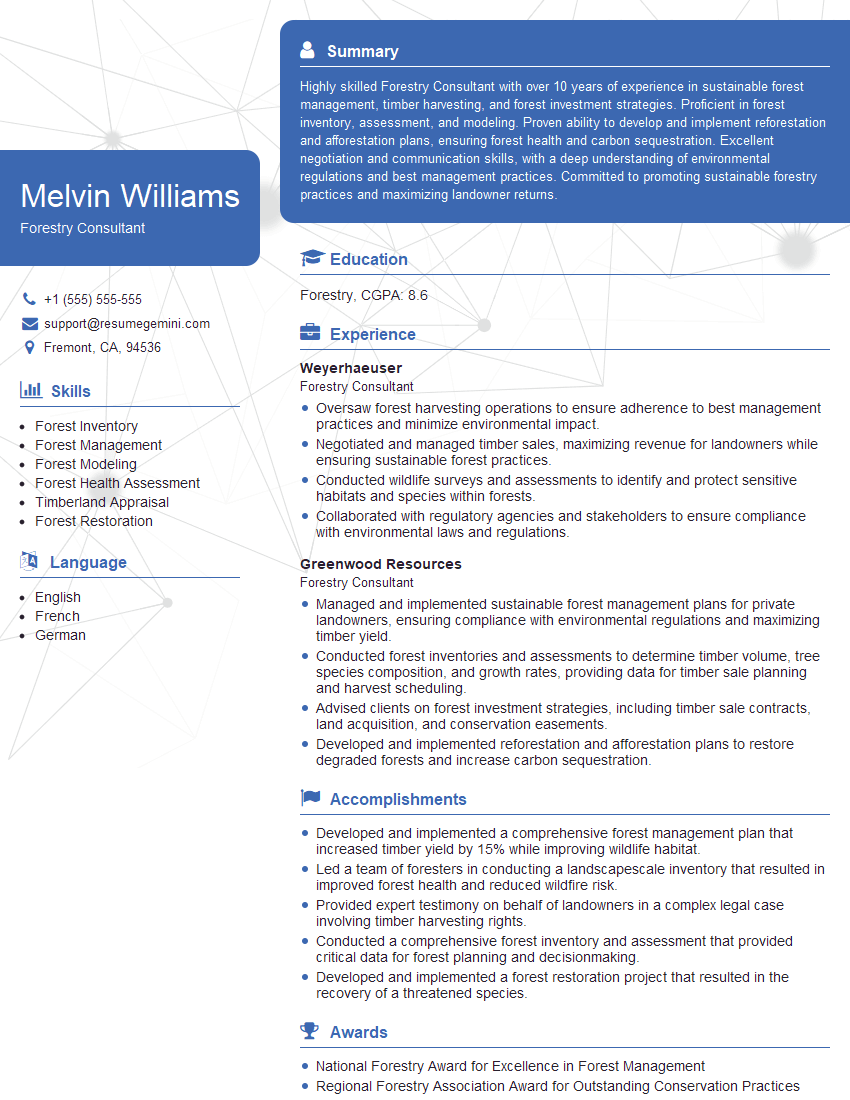
Forestry Consultant Resume Sample

Forestry Technician Resume Sample

Timber Cutter Resume Sample

Logging Supervisor Resume Sample

Harvester Operator Resume Sample

Bucker Resume Sample

Chain Saw Operator Resume Sample

Logger Resume Sample

Pulpwood Cutter Resume Sample

Skidder Operator Resume Sample

Tree Feller Resume Sample

Debarker Operator Resume Sample

Sawmill Worker Resume Sample
Explore more articles
Users Rating of Our Blogs
Share Your Experience
We value your feedback! Please rate our content and share your thoughts (optional).
What Readers Say About Our Blog
Very informative content, great job.
good