The thought of an interview can be nerve-wracking, but the right preparation can make all the difference. Explore this comprehensive guide to Stitching and Seaming interview questions and gain the confidence you need to showcase your abilities and secure the role.
Questions Asked in Stitching and Seaming Interview
Q 1. Explain the difference between a lockstitch and a chainstitch.
The lockstitch and chainstitch are two fundamental stitch types in sewing, differing significantly in their construction and resulting seam strength. A lockstitch is created by interlocking two threads—one from the needle and one from the bobbin—in a series of loops that interlock between the fabric layers. This creates a strong, secure seam resistant to unraveling, ideal for most garments and applications. Think of it like two sets of tiny knots tying together the fabric. In contrast, a chainstitch forms a chain of loops on one side of the fabric with a single continuous thread. It’s faster but less durable than a lockstitch, making it suitable for temporary stitches or decorative purposes. Imagine it like a chain made of thread loops, easily undone.
In practice, you’d use lockstitches for things like constructing seams in a shirt or trousers, where strength and durability are paramount. Chainstitches might be used for basting (temporary stitching) or for certain decorative embroidery effects. The lockstitch’s strength and double-thread construction are much more reliable for garments that will be subject to stress.
Q 2. Describe your experience with various sewing machine types (e.g., industrial, domestic).
My experience encompasses a wide range of sewing machine types. I’m proficient with both domestic and industrial machines, understanding their unique capabilities and limitations. Domestic machines are versatile but generally handle lighter fabrics and less demanding tasks. I’ve worked extensively with various models, mastering their controls, tension adjustments, and stitch selection for home projects and small-scale production. Industrial machines, on the other hand, are built for speed and durability, crucial for high-volume production. I have experience operating heavy-duty industrial machines for tasks such as creating durable seams on jeans or sewing heavy upholstery fabrics. This includes understanding specialized features like walking feet, which feed multiple layers evenly, and high-speed operation, improving efficiency for mass production. I can also troubleshoot and maintain both types of machines effectively.
Q 3. What are the different types of seams and when would you use each?
There are numerous seam types, each chosen based on the fabric’s characteristics and the garment’s construction needs. Here are a few common examples:
- French Seam: Encloses all raw edges, making it ideal for sheer or delicate fabrics requiring a clean finish. Think lingerie or blouses.
- Flat-Felled Seam: Extremely strong and durable, frequently used in denim or workwear where robustness is essential. This seam is practically indestructible.
- Seam: Simple, versatile, and widely applicable, making it a standard choice in various sewing tasks. Suitable for most fabrics and garments.
- Overlock Seam/Serged Seam: Uses a serger (overlock machine) to create a neat and prevents fraying, particularly beneficial for stretchy fabrics or knits. Often used in sportswear.
- Lapped Seam: One layer overlaps the other, primarily for aesthetics or added reinforcement, common in tailored garments.
The choice of seam depends entirely on the project’s requirements: durability, aesthetics, fabric type, and the desired finish.
Q 4. How do you identify and correct common stitching errors?
Identifying and correcting stitching errors is a crucial skill. Common issues include:
- Skipped Stitches: Often caused by a blunt needle, incorrect tension, or improper threading. Solution: Replace the needle, check and adjust tension, and re-thread the machine.
- Uneven Stitch Length: Indicates a problem with the machine’s stitch length regulator or inconsistent speed. Solution: Check and adjust the stitch length dial, and sew with steady speed.
- Puckering: Fabric gathers around the seam due to tension imbalances. Solution: Adjust tension, and use a walking foot or other techniques to control the feeding of the fabric.
- Broken Threads: Usually caused by a dull or damaged needle or low-quality thread. Solution: Use a new, sharp needle and high-quality thread.
Systematic troubleshooting involving checking needle, thread, tension, and feed mechanisms is key to resolving these problems. In some cases, understanding the machine’s internal mechanics, including the tension disks and feed dogs, is essential for proper diagnosis.
Q 5. Explain your process for selecting the appropriate needle and thread for a given fabric.
Needle and thread selection is paramount for achieving a high-quality stitch. The fabric’s weight, fiber type, and weave directly influence the appropriate choices.
- Fabric Weight: Lightweight fabrics like silk or chiffon require fine needles (sizes 60/8-70/10) and thin threads. Heavy fabrics like denim or canvas necessitate heavier needles (sizes 90/14-110/18) and stronger threads.
- Fiber Type: Natural fibers (cotton, linen, silk) often require sharp needles, while synthetic fibers (polyester, nylon) may benefit from ballpoint or stretch needles to prevent snagging or skipped stitches.
- Weave: Tightly woven fabrics need sharp needles, while looser weaves may tolerate ballpoint needles. Knits require stretch needles for smooth feeding.
Choosing the wrong combination can result in skipped stitches, broken needles, or damaged fabric. Understanding these relationships ensures a seamless sewing experience.
Q 6. How do you ensure consistent stitch length and tension?
Consistent stitch length and tension are essential for creating professional-looking seams. Stitch length is adjusted using the machine’s dial or settings, and it should be appropriate to the fabric and the stitch type. Tension is more nuanced. The goal is to have both the upper (needle) and lower (bobbin) threads interlocked equally, creating a balanced seam with no loops or puckering. This requires careful adjustment using the tension dials on the machine.
I usually start with the machine’s default settings and make small adjustments, testing on a scrap of the fabric before working on the main project. Visual inspection of the stitching, checking for thread imbalances, and feeling the fabric for pulling or puckering are indicators that adjustments are necessary. Adjustments are incremental, and patience is key to achieving the perfect balance.
Q 7. Describe your experience with different types of fabric and their sewing properties.
My experience covers a broad spectrum of fabrics, including natural fibers (cotton, linen, silk, wool), synthetics (polyester, nylon, rayon), and blends. Each fabric type behaves differently during sewing. For example, cotton is a relatively straightforward fabric; however, linen has a tendency to wrinkle and is less forgiving for tension. Silk is delicate and requires careful handling and specialized needles. Knits stretch and require specific stitching techniques (like using a stretch stitch or ballpoint needles) to avoid puckering or damage. Woven fabrics like denim or canvas require stronger threads, heavier needles, and reinforced stitches to withstand the strain. Understanding these characteristics allows me to choose the appropriate tools, techniques, and stitches to obtain optimum results. This knowledge extends to handling delicate lace, sturdy leather, and even unconventional materials, ensuring optimal results for any project.
Q 8. How do you handle challenging fabrics, such as leather or silk?
Handling challenging fabrics like leather and silk requires specialized techniques. Leather, for example, is thick and prone to tearing, so I use a heavier-duty needle and a walking foot on my sewing machine to ensure even feed and prevent slippage. A slower sewing speed is crucial to maintain control. With silk, which is delicate and can easily snag, I use a very fine needle and a lightweight thread. I often pre-wash silk to prevent shrinking after construction. Furthermore, using pins with ball heads prevents holes, and I might even use a basting stitch to hold the fabric in place before finishing stitches. Choosing the right stitch is also critical; a narrow zig-zag stitch can help with stretching and prevent the seams from breaking.
For instance, when working with a leather jacket, I’d use a strong, waxed thread and a specialized leather needle. For a silk blouse, a fine silk thread and a microtex needle are preferred. The seam allowance is also considered. A smaller seam allowance is usually preferred with delicate fabrics like silk to minimize bulk.
Q 9. What are your methods for preventing fabric puckering or distortion during sewing?
Preventing puckering and distortion involves careful preparation and execution. Proper pre-pressing of fabric is vital; this removes wrinkles and ensures the fabric lies flat. Using a sharp needle and the right thread weight for the fabric is key. Matching notches and grainlines accurately is crucial; misalignment can lead to uneven seams and distortion. Employing techniques like easing or pivoting at curves helps to smoothly navigate fabric curves and reduces stress on seams. When working with stretchy fabrics, using a stretch stitch, like a narrow zig-zag stitch, is vital to accommodate expansion without causing stress points.
Consider this: If you are sewing a curved seam on a dress, easing the fabric into the seamline by gently stretching the fabric as you sew prevents puckering on the concave side. Another technique is using clips along the seamline to distribute the stress and ensure flatness. This prevents the fabric from bunching at corners or curves. It’s all about control and precision!
Q 10. Explain your experience with different types of sewing machine feet.
My experience with various sewing machine feet is extensive. I regularly use a zipper foot for neat and even zipper insertion; its narrow design allows for stitching very close to the zipper tape. A walking foot is essential for sewing multiple layers or difficult fabrics like leather or heavy denim, providing consistent feed. A buttonhole foot is crucial for creating perfectly sized and consistent buttonholes. An overlock foot is used for finishing edges using an overlock stitch, preventing fraying. A blind hem foot creates an almost invisible hem, perfect for delicate fabrics and garments. Finally, a quilting foot offers guidance, particularly when sewing along a patterned template or working with intricate designs.
For example, when I’m making a pair of jeans, the walking foot ensures the layers of denim feed evenly, eliminating puckering. A buttonhole foot makes the buttonhole process smoother and more precise. My experience with these feet allows me to tackle varied projects with efficiency and precision.
Q 11. How do you maintain and troubleshoot sewing machines?
Maintaining and troubleshooting sewing machines is a crucial part of my workflow. Regular cleaning and oiling are essential to prevent malfunctions. I clean the bobbin area, hook, and feed dogs regularly, removing lint and thread build-up. Oiling moving parts keeps everything running smoothly. Common problems I troubleshoot include skipped stitches (often due to incorrect tension or a bent needle), inconsistent stitching (usually a tension or needle issue), and the machine jamming (often due to tangled thread or incorrect threading).
For example, if the machine is skipping stitches, I will start by checking the needle for any bends and replace it if needed. I will then assess the thread tension and adjust accordingly, testing small samples before proceeding with the main project. Troubleshooting is an iterative process requiring keen observation and systematic elimination of potential causes.
Q 12. Describe your quality control procedures during the stitching process.
My quality control procedures are rigorous. Each step of the stitching process is inspected: fabric preparation, cutting accuracy, stitch quality, and seam finishing. I check for consistent stitch length, proper seam allowance, and the absence of puckering, stretching, or other imperfections. Regular checks during the process allow for early detection of problems, saving time and resources later. Final inspections ensure the garment or item meets the required specifications and quality standards. This might include examining the item’s overall appearance, checking for flaws like loose threads, and assessing overall structural integrity.
I treat quality control like a layered approach. First, I meticulously inspect the fabric for any flaws before cutting. Then, I have quality checks at the end of each stage, such as the stitching of one seam or a completed panel. Finally, the end quality check involves a comprehensive look at the final garment, making sure everything fits and functions correctly.
Q 13. How do you interpret sewing patterns and specifications?
Interpreting sewing patterns and specifications involves understanding the pattern pieces, markings, seam allowances, and instructions. I begin by studying the pattern instructions and identifying the specific steps involved. I carefully match the pattern pieces to the fabric grainlines, ensuring proper alignment. Understanding different symbols on the pattern, such as notches and grainlines, is vital. Precise cutting, using sharp shears, is crucial to ensure accuracy. Following the instructions meticulously minimizes errors and ensures a successful outcome.
For example, I’ll often make a ‘muslin’ or test garment from a cheaper fabric before working with the final material. This helps me verify the pattern fit and make any necessary adjustments, avoiding costly mistakes with the main fabric.
Q 14. How do you manage time effectively during high-volume production?
Managing time effectively during high-volume production requires efficient planning and organization. I create a detailed schedule, breaking down tasks into smaller, manageable steps. Prioritizing tasks based on urgency and deadlines is important. Maintaining a clean and organized workspace minimizes wasted time searching for materials or tools. Utilizing time management techniques like time blocking and using checklists can also contribute to increased productivity and better time management. Finally, streamlining the sewing process by utilizing appropriate tools and machines is key for optimizing workflow and turnaround time.
I’ll often use assembly lines to optimize efficiency with high-volume projects, assigning specific tasks to team members. This allows for specialization and improves overall speed without compromising quality.
Q 15. Describe your experience working with sewing patterns and grading.
Working with sewing patterns and grading is fundamental to garment construction. My experience encompasses interpreting pattern instructions, making adjustments for fit (grading), and understanding the implications of altering different pattern pieces. I’m proficient in using both paper and digital patterns. For example, I’ve successfully graded a size small women’s blouse pattern up to a size large, adjusting the sleeve cap height, bodice width, and overall length to maintain the garment’s intended proportions and aesthetic. This involved meticulously calculating the necessary increase in seam allowances and understanding the impact of grading on the overall garment fit. I also have experience creating slopers, which are basic block patterns that serve as the foundation for creating other patterns.
In a professional setting, this skill is critical for accurately producing garments in a range of sizes, ensuring a consistent fit and minimizing alterations. I’m adept at using both manual and digital grading techniques.
Career Expert Tips:
- Ace those interviews! Prepare effectively by reviewing the Top 50 Most Common Interview Questions on ResumeGemini.
- Navigate your job search with confidence! Explore a wide range of Career Tips on ResumeGemini. Learn about common challenges and recommendations to overcome them.
- Craft the perfect resume! Master the Art of Resume Writing with ResumeGemini’s guide. Showcase your unique qualifications and achievements effectively.
- Don’t miss out on holiday savings! Build your dream resume with ResumeGemini’s ATS optimized templates.
Q 16. How familiar are you with different types of pressing equipment and techniques?
My familiarity with pressing equipment and techniques is extensive. I’m experienced with various irons, including steam irons, professional dry irons, and industrial pressing equipment such as steam presses and sleeve boards. Understanding the different fabrics and their specific pressing needs is paramount. For example, delicate silks require low heat and a press cloth, while heavier cottons may tolerate higher heat. The right technique involves more than just temperature; it also includes the direction and pressure of the iron to prevent unwanted creases or shine. I use different types of pressing tools, like clappers and ham, to create sharp creases and smooth seams. I’m also proficient in tailor’s tacks and other methods to prepare the fabric for pressing.
In a professional setting, proper pressing is integral to the quality of the finished garment; it enhances the overall appearance, sharpens the construction details, and helps to create a professional-quality finish.
Q 17. How do you ensure the accuracy of seam allowances?
Accuracy in seam allowances is crucial for a well-fitting garment. I ensure accuracy through several methods. First, I always double-check the pattern’s seam allowance specifications. I use a precise measuring tool like a seam gauge or ruler to mark seam allowances consistently on the fabric before cutting. During the sewing process, I regularly check the seam allowance using a measuring tool and adjust if necessary. Some machines have adjustable stitch lengths and I use this feature to aid consistency. Finally, I meticulously trim excess seam allowances to the correct size after sewing for a cleaner, more professional finish.
To maintain consistency across projects and avoid errors, I frequently use a tailor’s chalk or a fabric marking pen to visibly mark the seam allowance before stitching. Failing to do so has led to mistakes in the past, so the diligence is well-practiced. This methodical approach is crucial to avoid costly mistakes and ensure a high-quality garment.
Q 18. What is your experience with industrial sewing machines?
I have extensive experience operating various industrial sewing machines, including single-needle and double-needle machines, coverstitch machines, and sergers. I’m comfortable with different machine functionalities such as stitch length, tension, and differential feed adjustments. I can troubleshoot common machine malfunctions and perform basic maintenance tasks, such as changing needles and cleaning the bobbin case. For example, I’ve used industrial machines to stitch hundreds of identical garments in a production setting, requiring high speed and precision.
Working with industrial machines requires a different skillset than domestic machines, necessitating a greater understanding of speed, efficiency, and safety protocols. My experience has provided me with confidence in operating these machines safely and efficiently in a range of industrial settings.
Q 19. How do you handle fabric slippage during sewing?
Fabric slippage is a common challenge in sewing. My strategies to prevent this include using pins strategically around the seamline to hold the fabrics securely together. I use a walking foot attachment on my machine for slippery fabrics such as silk or satin; this foot helps to feed both layers of fabric evenly, preventing shifting. I also use a lightweight spray adhesive on less delicate fabrics to provide extra grip without affecting stitch quality. When working with multiple layers or heavier fabrics, I pre-baste the pieces together before sewing. This temporary stitch holds everything in place and allows the machine to feed the layers correctly.
In a production setting, it’s imperative that slippage is prevented, as it leads to distorted stitching and ultimately affects the garment’s fit and appearance. My experience allows me to tailor my approach to the fabric type and the project to ensure precision and accuracy.
Q 20. What safety measures do you follow while operating sewing machines?
Safety is paramount when working with sewing machines. I always ensure the machine is unplugged before cleaning, oiling, or making any adjustments. My work area is kept clean and free of clutter to prevent accidents. I never leave a running machine unattended. I use appropriate safety equipment, such as safety glasses and wear protective clothing to cover loose articles. I’m well-versed in the correct handling of needles and other sharp tools. I use needle threaders to minimize finger pricks. I am aware of the danger of sharp blades on sergers and always ensure they are in place and the blade guard is used.
Following these safety protocols consistently is not only necessary to prevent injuries but also crucial to maintain the equipment’s condition. The safety of oneself and the equipment goes hand-in-hand in a well-run sewing operation.
Q 21. Describe your experience with different types of stitching techniques (e.g., topstitching, blind stitching).
My experience encompasses a wide range of stitching techniques. I’m proficient in topstitching, which is used for decorative purposes or to secure seams and add durability. I’m skilled in blind hemming, creating nearly invisible seams for clean finishes, especially on hems. I’m also proficient in techniques like French seams, which are ideal for creating a neat, durable finish on sheer or lightweight fabrics; and flat felled seams which are exceptionally durable and ideal for things like workwear. I can execute various decorative stitches, adapting my techniques depending on the fabric and the garment’s intended use. For example, a delicate topstitch would be appropriate for a silk blouse, whereas a heavier stitch might be better for denim jeans.
Mastering these various techniques allows me to create garments with varying degrees of complexity and aesthetic appeal, each stitch type serving a specific purpose and adding to the garment’s overall quality and longevity.
Q 22. How do you handle variations in fabric weight and texture?
Handling variations in fabric weight and texture is crucial for achieving high-quality stitching. Different fabrics require adjustments in needle size, stitch length, and even the sewing machine settings. Think of it like baking – you wouldn’t use the same recipe and oven temperature for a delicate cake and a dense loaf of bread.
- Heavier fabrics (like denim or canvas) require stronger needles, longer stitch lengths for durability, and potentially a more powerful sewing machine to prevent breakage. I might use a size 16 needle and a stitch length of 3.0 mm for denim.
- Lighter fabrics (like silk or chiffon) need finer needles, shorter stitch lengths to prevent puckering, and lower machine tension to avoid damage. A size 9 or 11 needle with a stitch length of 2.0 mm or less might be appropriate for silk.
- Textured fabrics (like tweed or corduroy) might require a special needle, such as a ballpoint needle, to prevent snagging. The stitch length and tension might also need adjustment to account for the uneven surface.
I always pre-test my settings on a scrap piece of the fabric before starting the main project to ensure the best results. This prevents costly mistakes and ensures a professional finish.
Q 23. Explain your experience working in a team environment in a garment factory.
In my experience at [Previous Company Name], teamwork was essential for efficient production. We operated as a well-oiled machine, with each team member specializing in different stages of garment production, from cutting to sewing to finishing.
I worked closely with cutters to ensure accurate pattern placement and with other sewers to maintain consistency in stitch quality and seam allowance. We frequently communicated about any issues encountered, such as fabric defects or machine malfunctions, to ensure a smooth workflow and to solve problems collectively. I actively participated in team meetings, offering suggestions for improvement and contributing to a positive and collaborative work environment. My role often involved training and mentoring junior sewers, sharing my expertise to help raise the overall quality of the team’s work.
Q 24. How familiar are you with different types of embroidery machines and stitches?
My familiarity with embroidery machines extends to both industrial and domestic models. I’m proficient with various types including single-needle, multi-needle, and computerized embroidery machines. I understand the nuances of different stitch types, including satin stitch, fill stitch, chain stitch, and running stitch, and how to select the appropriate stitch for a given application.
For example, I know that satin stitch is ideal for creating solid blocks of color, while a running stitch is better for outlines or delicate details. My experience also involves troubleshooting common issues like thread breakage, needle jams, and tension problems, ensuring efficient and quality embroidery production. I’m comfortable working with different types of embroidery threads, such as rayon, polyester, and metallic threads, understanding their properties and how they impact the stitching process.
Q 25. How do you measure and mark fabric accurately?
Accurate measuring and marking is fundamental to successful garment construction. I use a combination of techniques to achieve precision. This includes:
- Accurate measuring tools: I always rely on calibrated rulers, measuring tapes, and French curves, ensuring precise measurements are consistently maintained.
- Proper marking techniques: I use tailor’s chalk, marking pencils, or tracing wheels to transfer pattern markings onto fabric, selecting the appropriate marking tool based on fabric type. I ensure marks are clear, precise, and easy to follow.
- Pattern layout: I meticulously lay out patterns to minimize fabric waste and ensure accurate grainlines. This ensures the garment fits correctly and looks its best.
- Checking and double-checking: Before cutting the fabric, I double-check all measurements and markings to avoid errors. A simple mistake at this stage can have significant repercussions later on.
For example, when working with intricate patterns, I might use a combination of chalk and a tracing wheel to ensure perfect transfer of markings onto delicate fabrics. This ensures perfect precision in cutting and stitching.
Q 26. What is your experience with different types of finishing techniques (e.g., serging, overlocking)?
I’m experienced with several finishing techniques used to neaten and reinforce seams, preventing fraying and improving the garment’s overall appearance and durability. These include:
- Serging (overlocking): Creates a professional-looking, durable, and finished edge by wrapping threads around the raw edge of the fabric. Ideal for preventing fraying in knits and woven fabrics.
- Overlocking: Similar to serging, but often produces a flatter seam finish, suitable for specific fabric types and styles. It’s crucial to choose the right stitch type and tension for different fabrics.
- Zigzag stitch: A simple yet effective method to prevent fraying, commonly used on lightweight fabrics or where a less bulky seam finish is desired.
- Pinking shears: Creates a decorative, serrated edge that minimizes fraying. It is suitable for fabrics that are less prone to unraveling.
The choice of finishing technique depends heavily on the fabric type, the garment style, and the desired aesthetic. For instance, serging is frequently used in sportswear due to its durability, while a zigzag stitch might be preferred for a delicate blouse to keep it from being too bulky.
Q 27. Explain your knowledge of different seam finishes and their purpose.
Different seam finishes serve distinct purposes, primarily to prevent fraying, increase durability, and improve the overall appearance of the garment. Here are a few examples:
- French seam: Encloses raw edges completely, creating a clean, professional finish that is ideal for lightweight fabrics and garments where a high-quality, durable seam is essential. It’s particularly effective for preventing unraveling of delicate textiles.
- Hong Kong seam: A decorative and durable finish that uses bias binding to enclose raw edges, particularly suited for higher-end garments where a sophisticated look is required.
- Serged seam: Provides a neat, finished edge, and increases durability. Commonly used in active wear and other garments where durability is important.
- Clean-finished seam: A simple but effective finish, suitable for sturdy fabrics where durability is key. The seam is pressed open and the raw edges are neatly trimmed, offering a flat, clean finish.
Choosing the right seam finish is vital. For example, a French seam would be appropriate for a silk dress, ensuring a smooth, invisible seam, while a serged seam might be more suitable for jeans, providing enhanced durability.
Q 28. How do you troubleshoot and resolve issues related to stitch quality?
Troubleshooting stitch quality involves a systematic approach. I start by identifying the problem, such as skipped stitches, uneven stitch length, or broken threads.
- Check the needle: A bent, dull, or incorrect needle size is a common cause of poor stitch quality. Replacing the needle is often the first step.
- Inspect the thread: Ensure the correct thread type and tension are used for the fabric. Knots or damage in the thread can also lead to issues.
- Adjust tension: Incorrect tension settings can cause skipped stitches, puckering, or broken threads. Adjusting the upper and lower tension dials can solve many issues.
- Check the bobbin: Ensure the bobbin is properly wound and inserted. A poorly wound or incorrectly placed bobbin often causes problems.
- Clean the machine: Lint and dust build-up can interfere with the machine’s operation. Regular cleaning and lubrication of the machine is crucial for optimal performance.
If the problem persists, I might consult a sewing machine manual or seek advice from a more experienced colleague. Understanding the mechanics of the sewing machine is key to effective troubleshooting.
Key Topics to Learn for Stitching and Seaming Interview
- Hand Stitching Techniques: Understanding various hand stitches (e.g., running stitch, backstitch, slip stitch) and their appropriate applications in garment construction and repair.
- Machine Stitching Techniques: Familiarity with different machine stitches (e.g., straight stitch, zigzag stitch, overlock stitch) and their optimal use for various fabrics and garment components. Practical application includes adjusting stitch length, tension, and pressure for different materials.
- Seam Finishes: Mastering various seam finishes (e.g., pinking, serging, zig-zagging) to prevent fraying and enhance durability. Understanding the importance of selecting the appropriate finish for different fabric types and garment styles.
- Fabric Selection and Properties: Knowledge of different fabric types (e.g., cotton, silk, wool) and their respective properties (e.g., drape, weight, texture). Understanding how fabric properties influence stitching and seaming techniques.
- Pattern Interpretation and Alterations: Ability to accurately interpret sewing patterns and make necessary adjustments for fit and style. This includes understanding seam allowances and marking techniques.
- Troubleshooting Common Stitching and Seaming Issues: Developing problem-solving skills to identify and rectify common issues such as skipped stitches, puckering, and uneven seams. This includes understanding the causes of these issues and implementing corrective actions.
- Industrial Sewing Machines: Familiarity with the operation and maintenance of industrial sewing machines, including different types of machines and their specific applications.
- Quality Control and Inspection: Understanding the importance of quality control in stitching and seaming, including techniques for inspecting finished garments for defects.
Next Steps
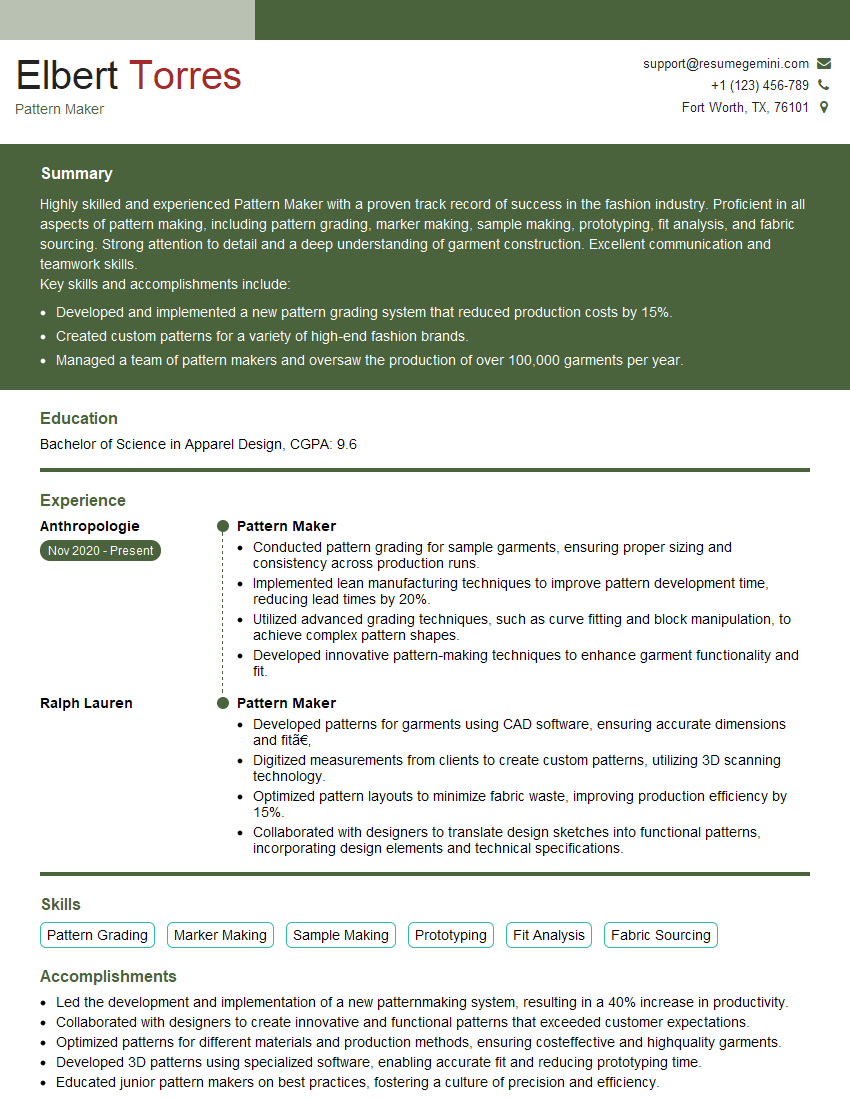
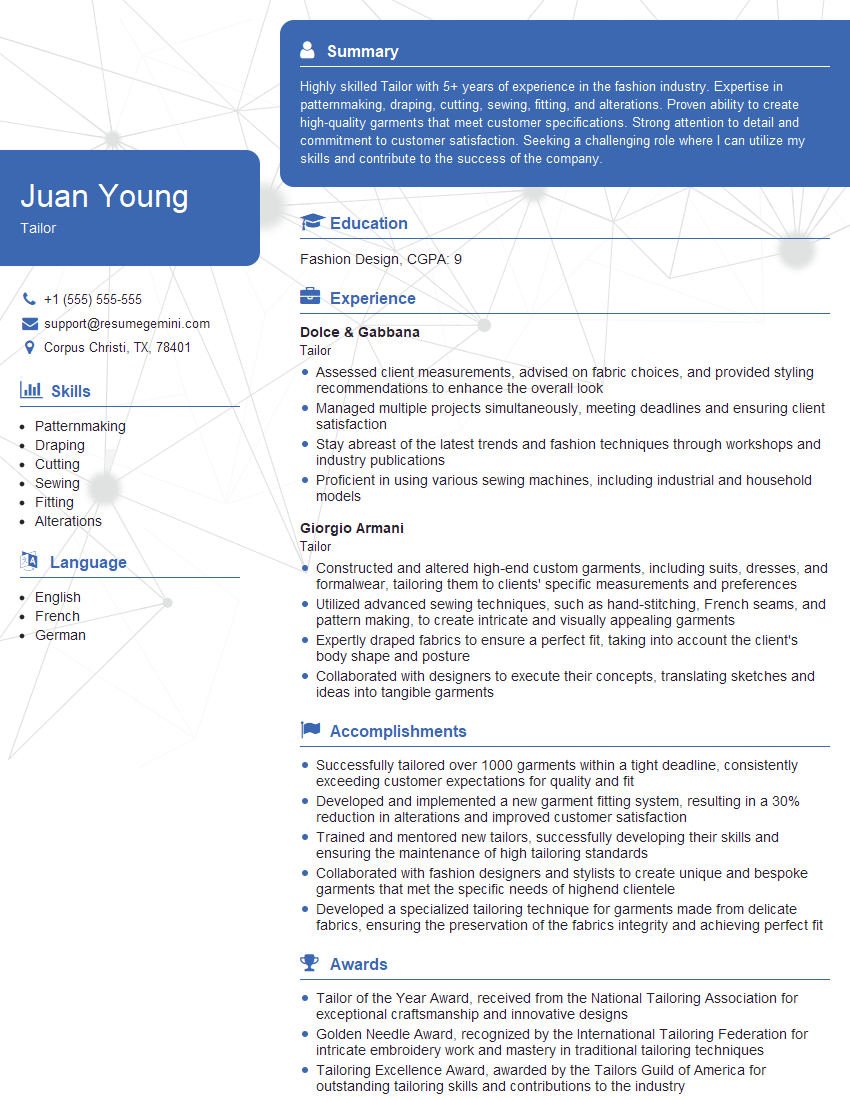
Mastering stitching and seaming techniques is crucial for career advancement in the fashion and textile industries, opening doors to a wide range of exciting opportunities. To maximize your job prospects, create an ATS-friendly resume that highlights your skills and experience effectively. ResumeGemini is a trusted resource to help you build a professional and impactful resume. Examples of resumes tailored to the Stitching and Seaming field are available to guide you. Invest time in crafting a compelling resume – it’s your first impression on potential employers.






Explore more articles
Users Rating of Our Blogs
Share Your Experience
We value your feedback! Please rate our content and share your thoughts (optional).
What Readers Say About Our Blog
good