The thought of an interview can be nerve-wracking, but the right preparation can make all the difference. Explore this comprehensive guide to Structural and Tectonic Analysis interview questions and gain the confidence you need to showcase your abilities and secure the role.
Questions Asked in Structural and Tectonic Analysis Interview
Q 1. Explain the difference between brittle and ductile deformation.
Brittle and ductile deformation describe how rocks respond to stress. Think of it like bending a piece of chalk versus bending a piece of gum. The chalk, representing brittle deformation, will fracture and break relatively easily at lower temperatures and pressures. Ductile deformation, like the gum, involves bending and folding without fracturing, typically occurring at higher temperatures and pressures deep within the Earth’s crust where rocks behave more like a plastic.
Brittle deformation results in faults (fractures with displacement) and joints (fractures without displacement). It’s characterized by abrupt failure. Imagine a dropped glass shattering; that’s brittle failure. Ductile deformation, on the other hand, leads to folds and other contortions. Visualize slowly bending a metal rod – that demonstrates ductile behavior.
The transition between brittle and ductile behavior depends on factors like temperature, pressure, confining pressure, strain rate, and rock type. At shallow depths, rocks behave more brittlely. As depth increases, so does temperature and pressure, favoring ductile behavior.
Q 2. Describe the different types of faults and their associated stress regimes.
Faults are fractures in the Earth’s crust along which rocks have moved. They are classified based on the relative movement of the blocks of rock on either side of the fault plane. The type of fault is directly related to the dominant stress regime that caused it.
- Normal Faults: Occur in extensional stress regimes (pulling apart). The hanging wall (block above the fault plane) moves down relative to the footwall (block below). Think of the Earth’s crust stretching like taffy, resulting in grabens (down-dropped blocks) and horsts (uplifted blocks). The Basin and Range province of the western United States is a classic example.
- Reverse Faults: These form in compressional stress regimes (pushing together). The hanging wall moves up relative to the footwall. Reverse faults with a dip angle of less than 45 degrees are called thrust faults. Mountain building is often associated with reverse faulting.
- Strike-Slip Faults: Develop under shear stress (horizontal movement). The blocks move horizontally past each other. The San Andreas Fault in California is a prominent example of a strike-slip fault.
Identifying the type of fault is crucial for understanding the tectonic history and stress conditions in a region. The orientation and displacement of the fault plane provide essential clues.
Q 3. How do folds form, and what are the key geometrical features to identify?
Folds are bends in rock layers formed by ductile deformation. They typically occur during compressional events, squeezing the rocks and causing them to buckle.
Imagine pushing a rug from both sides. The rug will wrinkle and fold; that’s analogous to how folds form in rock strata. The process is complex and influenced by factors like the initial layering of rocks, the intensity and direction of compression, and the rock’s rheology (deformational properties).
Key geometrical features to identify in folds include:
- Hinge Line: The line of maximum curvature on a fold.
- Limbs: The sides of the fold flanking the hinge line.
- Axial Plane: A plane that divides the fold into its limbs (approximately). It can be vertical or inclined.
- Fold Axis: The line formed by the intersection of the axial plane with the Earth’s surface.
- Fold Types: Anticlines (upward-arching folds), synclines (downward-arching folds), monocline (a step-like fold), and overturned folds (where one limb has been rotated beyond vertical).
Analyzing these features helps geologists understand the magnitude and direction of the compressional forces that caused the folding.
Q 4. What are the main principles of plate tectonics?
Plate tectonics is the unifying theory that explains the large-scale movements of Earth’s lithosphere (crust and upper mantle). It rests on several key principles:
- Earth’s lithosphere is divided into rigid plates: These plates are constantly in motion, interacting at their boundaries.
- Plate movement is driven by mantle convection: Heat from Earth’s core drives convection currents in the mantle, causing the plates to move.
- Plate boundaries are geologically active zones: Most earthquakes and volcanoes occur along plate boundaries. These boundaries are classified as divergent (plates moving apart), convergent (plates moving together), or transform (plates sliding past each other).
- Seafloor spreading at divergent boundaries creates new crust: Molten rock rises from the mantle at mid-ocean ridges, creating new oceanic crust and pushing existing plates apart.
- Subduction at convergent boundaries consumes crust: One plate slides beneath another, resulting in earthquakes, volcanoes, and the formation of mountain ranges.
Plate tectonics provides a framework for understanding the distribution of earthquakes, volcanoes, mountains, and ocean basins. It is a cornerstone of modern geology.
Q 5. Explain the concept of isostasy and its implications for topography.
Isostasy is the state of gravitational equilibrium between Earth’s crust and mantle. Imagine a large iceberg floating in water. A significant portion of the iceberg is submerged, but it floats because the buoyant force of the water counteracts the iceberg’s weight. Similarly, Earth’s crust ‘floats’ on the denser mantle. Higher elevation areas have deeper roots extending into the mantle, compensating for their weight.
Isostasy explains why mountain ranges have deep roots and why continents rise higher than ocean basins. The principle is based on Archimedes’ principle of buoyancy. Departures from isostatic equilibrium can result in uplift or subsidence. For example, the erosion of a mountain range can cause isostatic rebound, as the crust gradually rises to re-establish equilibrium. Conversely, the accumulation of glacial ice can depress the crust, resulting in isostatic subsidence. Understanding isostasy is essential for interpreting topographic features and tectonic processes.
Q 6. Describe the different types of unconformities and their geological significance.
Unconformities are gaps in the geological record representing periods of erosion or non-deposition. They represent significant geological events and are crucial for interpreting geological history.
- Angular Unconformity: Older rocks are tilted or folded, and then eroded before younger rocks are deposited horizontally on top. It indicates a period of deformation and erosion before renewed sedimentation.
- Disconformity: A gap in the stratigraphic record between parallel layers of sedimentary rocks. This indicates a period of erosion or non-deposition without any deformation.
- Nonconformity: Sedimentary rocks overlie igneous or metamorphic rocks. This indicates a significant period of erosion of older crystalline rocks before sedimentation started.
Recognizing unconformities is crucial for interpreting the timing and sequence of geological events. They often represent significant breaks in deposition, providing insights into past tectonic activity, sea-level changes, and periods of erosion.
Q 7. How are geological maps used in structural analysis?
Geological maps are essential tools in structural analysis. They provide a two-dimensional representation of the distribution of rock units, faults, folds, and other geological structures at the Earth’s surface. Geologists use these maps to:
- Identify and map geological structures: The spatial arrangement of rock units reveals the presence of folds, faults, and other structures.
- Determine the sequence of geological events: The superposition of rock layers, as indicated on the map, shows the relative ages of different formations and the sequence of geological events.
- Interpret the tectonic history of a region: The patterns of structures on a geological map reveal the nature and intensity of past tectonic processes.
- Assess geological hazards: Maps can help identify areas prone to landslides, earthquakes, or other geological hazards based on the distribution of faults and other structural features.
- Guide resource exploration: The distribution of rock units on geological maps can help in locating ore deposits, groundwater resources, and other valuable geological resources.
By integrating information from geological maps with field observations and other geophysical data, geologists can build three-dimensional models of the subsurface geology and gain insights into the tectonic evolution of a region.
Q 8. Explain the concept of stress and strain in rocks.
Stress and strain are fundamental concepts in rock mechanics. Think of it like this: stress is the force applied to a rock, while strain is the resulting deformation. Stress is measured in Pascals (Pa) or its multiples, representing force per unit area. Strain is a dimensionless quantity, representing the change in length or volume relative to the original dimensions.
There are different types of stress: compressive stress (squeezing), tensile stress (pulling apart), and shear stress (sliding). Each type of stress leads to specific types of strain. For instance, compressive stress can cause shortening and thickening (folding) whereas tensile stress results in lengthening and thinning (faulting). Shear stress causes rocks to slide past each other along fault planes.
The relationship between stress and strain is crucial in understanding how rocks behave under different geological conditions. It allows us to predict rock failure, which is important for tasks like assessing the stability of slopes, designing underground structures, and understanding earthquake mechanisms.
Example: Imagine a large ice sheet sitting on top of the bedrock. The weight of the ice exerts a tremendous compressive stress on the rocks below, leading to strain and possibly the formation of folds. When the ice melts, the stress is released, and the rocks may undergo elastic rebound, potentially leading to uplift.
Q 9. What are the different methods used to determine the age of rocks?
Determining the age of rocks is crucial in understanding Earth’s history. We primarily use two main methods: relative dating and absolute dating.
- Relative Dating: This method determines the chronological order of events without assigning specific numerical ages. Principles like superposition (older rocks are at the bottom), cross-cutting relationships (a feature cutting across another is younger), and fossil succession (the appearance and disappearance of fossils over time) are used.
- Absolute Dating (Radiometric Dating): This provides numerical ages by measuring the decay of radioactive isotopes within the rocks. The most common method involves Carbon-14 dating for organic materials (up to ~50,000 years), and Uranium-Lead dating for older rocks (millions to billions of years). The decay rate of these isotopes is known, allowing us to calculate the age based on the ratio of parent isotope to daughter product.
Choosing the appropriate method depends on the type of rock and the desired age range. For example, relative dating is useful for correlating rock sequences across large areas, while radiometric dating is essential for precise age determination of specific events.
Q 10. Describe the different types of seismic waves and their properties.
Seismic waves are vibrations that travel through the Earth, generated by earthquakes, explosions, or other sources. They are categorized into two main types: body waves and surface waves.
- Body Waves: These travel through the Earth’s interior. There are two subtypes:
- P-waves (Primary waves): These are compressional waves, meaning they travel by compressing and expanding the material. They are the fastest seismic waves and can travel through solids, liquids, and gases.
- S-waves (Secondary waves): These are shear waves, meaning they travel by shearing the material. They are slower than P-waves and can only travel through solids.
- Surface Waves: These travel along the Earth’s surface. They are generally slower than body waves but have larger amplitudes, resulting in greater ground motion. Two important types are:
- Love waves: These are shear waves that travel horizontally along the surface.
- Rayleigh waves: These are a combination of compressional and shear motion, resulting in a rolling motion of the ground.
Understanding the properties of these waves (velocity, amplitude, frequency) is crucial for locating earthquake epicenters, imaging the Earth’s interior structure, and assessing earthquake hazards.
Q 11. How are seismic reflection and refraction surveys used in structural analysis?
Seismic reflection and refraction surveys are geophysical techniques used extensively in structural analysis to image subsurface structures. They involve generating seismic waves and measuring their travel times to infer the subsurface structure.
- Seismic Reflection: This method uses the reflections of seismic waves from interfaces between layers with different acoustic impedance. By analyzing the travel times and amplitudes of the reflected waves, we can create a cross-section of the subsurface showing the location and geometry of geological layers, faults, and other structures. It’s like shining a light into the ground and interpreting the echoes.
- Seismic Refraction: This method uses the bending (refraction) of seismic waves as they pass through layers with different velocities. By analyzing the travel times of refracted waves, we can determine the velocity structure of the subsurface, which provides information about the rock types and their physical properties. It’s similar to observing how light bends as it passes from air to water.
These methods are crucial in petroleum exploration for locating hydrocarbon reservoirs, in engineering geology for assessing the stability of foundations, and in other applications such as groundwater investigation and mineral exploration. The data obtained are usually processed and interpreted using specialized software to generate images of the subsurface.
Q 12. Explain the principles of fault-slip analysis.
Fault-slip analysis is a technique used to determine the kinematics (movement) of faults. It involves analyzing the orientation of fault planes and the sense of displacement (slip vector) to understand the type of faulting (normal, reverse, strike-slip) and the stress regime that caused the faulting.
The analysis uses stereographic projections to represent the orientation of fault planes and slip vectors. By measuring the rake angle (the angle between the slip vector and the strike of the fault plane) and the dip angle (the angle of the fault plane from the horizontal), we can reconstruct the three-dimensional geometry of the fault movement. Additionally, striations, grooves, and other features on the fault surface can provide further information about the sense of slip.
Example: Analyzing striations on a fault surface that indicate movement from left to right would suggest a right-lateral strike-slip fault. A steeply dipping fault plane with a slip vector directed down the dip suggests normal faulting. This analysis is essential for understanding tectonic processes, seismic hazard assessment, and reservoir modeling in petroleum exploration.
Q 13. What are the main types of geological structures found in fold-and-thrust belts?
Fold-and-thrust belts are regions of intensely deformed rocks characterized by the formation of folds and thrust faults. These structures are commonly found in mountain ranges formed by continental collision. The main types of geological structures found in these belts include:
- Folds: These are bends in rock layers, formed by compressive stress. Common fold types include anticlines (upward folds) and synclines (downward folds). The geometry of folds can provide information about the amount and direction of shortening.
- Thrust Faults: These are low-angle reverse faults, where the hanging wall moves up and over the footwall. They often involve significant displacement and can stack rock layers on top of each other, forming imbricate fans or duplex structures.
- Detachment Faults: These are major faults that separate the deformed rocks from the underlying less deformed basement rocks. They often control the overall geometry of the fold-and-thrust belt.
- Cleavage: This refers to the planar fabric developed in rocks during deformation. It often forms parallel to the axial planes of folds and can indicate the direction of shortening.
Understanding the distribution and geometry of these structures is crucial for interpreting the tectonic history of the region, and for resource exploration (e.g., petroleum and mineral deposits) as the structures often trap hydrocarbons or create zones of mineralization.
Q 14. How are structural data used in petroleum exploration?
Structural data play a vital role in petroleum exploration. Understanding the three-dimensional geometry of faults, folds, and other geological structures is crucial for identifying and characterizing potential hydrocarbon reservoirs.
Structural maps and cross-sections created from seismic data and surface geological mapping are used to delineate the extent and shape of reservoirs. Faults can act as barriers or conduits for hydrocarbon migration, influencing reservoir compartmentalization and trap formation. The orientation and geometry of folds can create structural traps, where hydrocarbons accumulate. Understanding the structural framework helps determine the drilling locations, well trajectory planning, and reservoir simulation.
Furthermore, stress analysis can be used to predict the stability of reservoirs and the potential for induced seismicity during hydrocarbon extraction. This information is essential for minimizing environmental risks and ensuring efficient and safe production. Therefore, detailed structural analysis is an indispensable part of the exploration and production workflow in the petroleum industry.
Q 15. Explain the concept of basin analysis.
Basin analysis is a multidisciplinary approach used to understand the formation, evolution, and fill of sedimentary basins. Think of a basin as a large-scale depression in the Earth’s crust, which acts like a giant bathtub collecting sediment over millions of years. Basin analysis aims to reconstruct the geological history of this ‘bathtub’, including the tectonic setting that caused its formation, the types of sediments deposited, the changes in sea level, and the resulting rock formations. This involves integrating data from various sources like seismic surveys, well logs, stratigraphy (the study of rock layers), and structural geology to build a comprehensive model.
For example, analyzing the stratigraphy of a basin – the sequence and characteristics of rock layers – can reveal changes in the environment through time. A sudden shift from marine limestone to terrestrial sandstone might indicate a major tectonic uplift or a fall in sea level. Similarly, the presence of specific fossils can help date the layers and determine past climate conditions.
Practical applications include exploration for hydrocarbons (oil and gas), groundwater resources, and mineral deposits. Understanding the depositional history of a basin helps predict where these resources are most likely to be found. It’s also crucial for assessing the risk of geological hazards such as subsidence and landslides.
Career Expert Tips:
- Ace those interviews! Prepare effectively by reviewing the Top 50 Most Common Interview Questions on ResumeGemini.
- Navigate your job search with confidence! Explore a wide range of Career Tips on ResumeGemini. Learn about common challenges and recommendations to overcome them.
- Craft the perfect resume! Master the Art of Resume Writing with ResumeGemini’s guide. Showcase your unique qualifications and achievements effectively.
- Don’t miss out on holiday savings! Build your dream resume with ResumeGemini’s ATS optimized templates.
Q 16. Describe the different types of metamorphic rocks and their formation.
Metamorphic rocks are formed when existing rocks (protoliths) are transformed by heat, pressure, and/or chemically active fluids. The type of metamorphic rock that forms depends on the protolith’s composition and the intensity of metamorphism.
- Foliated metamorphic rocks: These rocks have a layered or banded texture due to the alignment of mineral grains under directed pressure. Examples include slate (formed from shale), schist (from shale or volcanic rocks), and gneiss (from granite or other felsic rocks). The degree of foliation increases with increasing metamorphic grade (intensity).
- Non-foliated metamorphic rocks: These rocks lack a layered texture, usually forming under conditions of uniform pressure. Examples include marble (formed from limestone or dolostone) and quartzite (from sandstone). The texture of these rocks often becomes coarser-grained with increasing metamorphism.
Imagine baking a cake: the original ingredients (protolith) are transformed by heat (temperature) and pressure (stress) in the oven into a completely different cake (metamorphic rock). The longer you bake (higher grade metamorphism), the more significant the changes.
Q 17. How are geological cross-sections constructed?
Geological cross-sections are two-dimensional representations of the subsurface geology along a chosen line. They are essential for visualizing the three-dimensional arrangement of rock units and structures. Construction involves several steps:
- Data Acquisition: This involves collecting data from various sources, including surface mapping, boreholes (drill cores), geophysical surveys (seismic reflection), and subsurface imaging techniques.
- Interpretation: The data is interpreted to understand the geometry and relationships between different rock units and structures (faults, folds).
- Projection: The interpreted data is projected onto a vertical plane, representing a slice through the Earth. This often involves making assumptions about the geometry of unseen subsurface structures, based on the available data.
- Construction: The cross-section is drawn, showing the different rock units, their contacts (boundaries), and geological structures. Symbols and colors are used to represent different rock types and structures.
Think of slicing a cake to see the layers inside. The cross-section is the image of that slice, showing the internal structure and arrangement of the layers.
Q 18. What are the key features of a convergent plate boundary?
Convergent plate boundaries are regions where two tectonic plates collide. The key features depend on the type of crust involved (oceanic or continental):
- Oceanic-Oceanic Convergence: One plate subducts (dives beneath) the other, creating a deep-sea trench, volcanic island arcs (e.g., Japan), and earthquakes. The subducting plate melts, generating magma that rises to form volcanoes.
- Oceanic-Continental Convergence: The denser oceanic plate subducts beneath the continental plate, forming a trench parallel to the coastline, a volcanic mountain range (e.g., Andes Mountains), and numerous earthquakes. The subduction zone can also lead to the formation of accretionary wedges, accumulating sediment scraped off the subducting plate.
- Continental-Continental Convergence: Both continental plates are less dense, leading to intense deformation and mountain building (e.g., Himalayas). Subduction is less common, resulting in widespread faulting, folding, and uplift, with fewer volcanoes.
These boundaries are characterized by significant seismic activity due to the friction and stress associated with plate movement. The location and depth of earthquakes help geologists determine the angle of subduction and the location of plate boundaries.
Q 19. Explain the concept of strain ellipsoids.
A strain ellipsoid is a three-dimensional representation of how a rock body has been deformed. Imagine a sphere of rock before deformation. After deformation, the sphere becomes an ellipsoid, reflecting the changes in shape and volume. The ellipsoid’s three axes (long, intermediate, and short) represent the principal strains (elongations or shortenings) in three mutually perpendicular directions.
The shape of the ellipsoid provides information about the type of strain experienced by the rock. For example, a prolate ellipsoid (football-shaped) indicates extensional strain, while an oblate ellipsoid (pancake-shaped) indicates compressional strain. The ratio of the axes provides a quantitative measure of the strain magnitude.
Understanding strain ellipsoids is crucial in structural geology because it allows geologists to infer the direction and magnitude of stress that caused the deformation, providing vital insights into the tectonic history of a region.
Q 20. Describe different methods for analyzing stress tensors.
Stress tensors are mathematical tools used to represent the state of stress at a point within a rock body. Several methods are employed for their analysis:
- Field Measurements: Direct measurements of stress are difficult, but some techniques, such as overcoring and hydraulic fracturing, can provide estimates of stress magnitudes and directions in rocks.
- Analysis of Rock Structures: The orientations and shapes of geological structures, such as faults, folds, and joints, can be used to infer the stress field that caused them. For example, the orientation of fault planes can be used to determine the direction of maximum principal stress.
- Numerical Modeling: Computer models can simulate stress fields in complex geological settings, accounting for factors like plate tectonics, sediment loading, and rock properties.
- Inverse Modeling: Using observed structural data (faults, folds), stress inversions are performed using numerical methods to determine the most plausible stress tensor for a region.
The analysis of stress tensors allows geologists to understand the forces that drive deformation in the Earth’s crust and to assess the stability of geological structures, which is crucial for hazard assessment and resource exploration.
Q 21. How do you interpret geological maps and cross-sections to understand structural geology?
Geological maps and cross-sections are fundamental tools for interpreting structural geology. They provide a visual representation of the spatial distribution of rock units and structures.
Geological Maps: These maps show the surface distribution of different rock types and geological structures. By studying the patterns and relationships between these units, we can infer the geometry of subsurface structures and the tectonic history of the area. For example, the presence of folded strata suggests compressional stress, while the presence of normal faults indicates extension.
Cross-sections: These provide a subsurface view of the geology along a specific line. By combining multiple cross-sections with geological maps, we can build a three-dimensional understanding of the geological structure. The cross-section can reveal the geometry of folds, faults, and other structures that are hidden from view at the surface.
By integrating information from both geological maps and cross-sections, we can understand the relationships between different rock units, the timing of geological events, and the tectonic processes that shaped the region. This process involves careful analysis of spatial relationships, structural patterns, and the application of geological principles to interpret the observed data.
Q 22. Explain the relationship between plate tectonics and mountain building.
Plate tectonics is the driving force behind mountain building, also known as orogeny. The Earth’s lithosphere is broken into several plates that constantly move and interact at their boundaries. These interactions, primarily convergent boundaries where plates collide, are responsible for the immense forces that create mountain ranges.
Imagine two giant rafts (tectonic plates) crashing into each other. The collision causes the edges of the rafts to buckle, fold, and uplift, forming mountains. This process involves significant deformation of the Earth’s crust, resulting in the formation of folded and faulted rocks. The type of mountain range formed depends on the nature of the colliding plates: oceanic-continental collisions produce volcanic mountain ranges (like the Andes), while continental-continental collisions result in massive, non-volcanic ranges (like the Himalayas).
Subduction zones, where one plate slides beneath another, also play a crucial role. The subducted plate melts, generating magma that rises and forms volcanoes, contributing significantly to mountain building in some settings. The process involves a complex interplay of compressional forces, faulting, folding, uplift, and erosion, all driven by plate tectonic movements. Understanding this connection is fundamental to reconstructing past tectonic events and predicting future mountain building processes.
Q 23. Discuss the role of structural geology in hazard assessment (e.g., earthquakes, landslides).
Structural geology is critical in hazard assessment, providing a framework for understanding the geometry and mechanics of geological structures that control the occurrence and impact of natural hazards. For earthquakes, we analyze fault geometries (orientation, displacement), rock strength, and stress fields to assess seismic hazard. Understanding fault slip rates and recurrence intervals helps in estimating the likelihood and magnitude of future earthquakes. The location, orientation, and geometry of faults are incorporated into seismic hazard maps used in building codes and land-use planning.
For landslides, structural analysis helps identify unstable slopes. We assess factors such as rock mass strength, joint patterns, and the orientation of bedding planes relative to the slope. Analysis of past landslide events reveals patterns and helps predict future failures. Slope stability analysis, using techniques like limit equilibrium methods, uses structural data to calculate factors of safety. Structural geology provides crucial insights into the mechanisms of slope failure, contributing to mitigation strategies like slope stabilization and early warning systems.
Q 24. What software packages are you familiar with for structural geological modeling?
I’m proficient in several software packages used for structural geological modeling. My experience includes:
- Move: A powerful tool for balanced cross-section construction and restoration, allowing me to quantitatively analyze deformation processes.
- StereoNet: I regularly use StereoNet for stereographic projection and analysis of structural data, crucial for understanding the three-dimensional orientation of geological features.
- GOCAD: For complex 3D geological modeling and visualization, particularly useful for large-scale projects and subsurface interpretation. I use this for generating 3D models of geological structures based on field data and geophysical surveys.
- Leapfrog Geo: This software is excellent for creating and manipulating 3D geological models, integrating different data types including drill hole data and geophysical surveys. It aids in resource estimation and mine planning in addition to structural analysis.
I am also familiar with scripting languages like Python, which I often integrate with these packages for automating data processing and analysis.
Q 25. Explain your understanding of paleostress analysis techniques.
Paleostress analysis involves determining the stress state that existed in the past, responsible for the formation of observed geological structures. It’s a crucial technique for understanding tectonic processes and reconstructing the history of deformation.
Several methods are employed:
- Analysis of fault slip data: This involves measuring the orientation of fault planes and the direction of slip on these faults. Using Mohr-Coulomb failure criterion, we can infer the principal stress directions and magnitudes.
- Analysis of stylolites: These are pressure-solution seams that form perpendicular to the maximum compressive stress, providing a direct indication of past stress orientations.
- Analysis of joints and fractures: Joint and fracture patterns are often influenced by the regional stress field. Statistical analysis of their orientations can provide insights into the paleostress regime.
- Finite element modeling: This numerical technique helps simulate the deformation process under different stress conditions, allowing us to test hypotheses about past stress states.
Combining these methods allows for a robust reconstruction of the paleostress field, vital for understanding the driving forces behind tectonic events such as mountain building and basin formation.
Q 26. Describe a challenging structural geological problem you encountered and how you solved it.
During a project in the Himalayas, we encountered a complexly deformed area where the traditional methods of structural analysis proved insufficient to decipher the deformation history. We were trying to understand the sequence of thrust faulting and folding in a region with significant tectonic overprinting. The challenge was the presence of multiple generations of structures, making it difficult to determine the chronological order of events.
Our solution involved a multi-faceted approach:
- Detailed field mapping: We meticulously mapped all structural elements, recording their orientations, geometries, and cross-cutting relationships.
- Kinematics analysis: We carefully analyzed the sense of shear and displacement on various faults, distinguishing different stages of deformation.
- Geochronology: We incorporated geochronological data (e.g., dating of cross-cutting intrusions) to constrain the timing of deformation events.
- 3D geological modeling: Using GOCAD, we constructed a 3D model integrating field data and geochronological constraints, allowing us to visualize the complex interplay of structures and understand their spatial relationships.
This integrated approach enabled us to successfully unravel the complex deformation history, resolving the chronological sequence of tectonic events and providing a more accurate representation of the region’s structural evolution.
Q 27. How do you use structural data to constrain the timing and kinematics of tectonic events?
Structural data are fundamental for constraining the timing and kinematics of tectonic events. We use several approaches:
- Cross-cutting relationships: Structures that cut across other structures are younger. This principle allows us to establish a relative chronological sequence of events.
- Fault displacement analysis: Measuring the displacement on faults helps determine the amount and direction of movement, providing insights into the kinematics of fault activity and the timing relative to other structural features.
- Folding kinematics: Analyzing the geometry and style of folds, and associated fault patterns, helps determine the direction and amount of shortening and the timing relative to other structural events.
- Geochronology: Integrating age dating techniques (e.g., radiometric dating of minerals or cross-cutting igneous intrusions) directly constrains the timing of deformation events.
- Paleomagnetism: This technique can provide information about the past orientation of the Earth’s magnetic field, helping to constrain the timing and rotation of tectonic blocks.
By combining these methods, we can build a comprehensive picture of the timing and kinematics of tectonic events, providing insights into the processes responsible for the observed geological structures. This information is vital for understanding plate tectonic reconstructions and the evolution of mountain belts.
Q 28. Explain your understanding of fractal analysis in structural geology.
Fractal analysis is a powerful tool in structural geology that helps quantify the self-similarity and scaling properties of geological structures. Many geological structures, like fracture networks and fault systems, exhibit fractal behavior, meaning they appear similar at different scales. This implies that the relationships between different scales of the structure may be related mathematically. This self-similarity is not perfect, however, and deviations from perfect fractal behavior are informative.
Fractal dimension is a key parameter used to characterize these structures. A higher fractal dimension suggests a more complex and interconnected network. For example, a highly fractured rock mass will typically have a higher fractal dimension than a rock mass with fewer, larger fractures. Fractal analysis can be applied to various aspects of structural geology, including:
- Fracture network characterization: Quantifying the spatial distribution and connectivity of fractures to assess rock mass properties and their impact on fluid flow and engineering stability.
- Fault system analysis: Understanding the scaling properties of fault networks to predict the distribution of seismicity and assess seismic hazards.
- Quantitative analysis of fold patterns: The patterns of folding in some areas exhibit fractal relationships.
While not always a primary analysis, fractal analysis provides a valuable quantitative tool to supplement traditional structural geological methods, offering new insights into the complex geometries of geological structures and their formation processes. The application of fractal analysis requires a solid understanding of its assumptions and limitations.
Key Topics to Learn for Structural and Tectonic Analysis Interview
- Stress and Strain Analysis: Understanding stress-strain relationships, constitutive models (linear elastic, plasticity), and failure criteria (e.g., Mohr-Coulomb, Tresca) is fundamental. Practical application includes predicting material behavior under load and designing for safety.
- Finite Element Analysis (FEA): Mastering FEA principles, meshing techniques, and interpreting results is crucial. Practical applications encompass analyzing complex structures and optimizing designs for efficiency and strength.
- Structural Mechanics: A strong grasp of beam theory, plate theory, and shell theory is essential. Practical applications include the design of bridges, buildings, and other infrastructure.
- Geotechnical Engineering Principles: Understanding soil mechanics, foundation design, and slope stability is vital, especially in tectonic analysis. Practical applications include designing foundations for structures in various soil conditions.
- Tectonic Plate Interactions: Knowledge of plate boundary types (convergent, divergent, transform), fault mechanics, and seismic activity is crucial for tectonic analysis. Practical applications include hazard assessment and earthquake-resistant design.
- Numerical Methods: Proficiency in numerical techniques for solving structural and tectonic problems is highly valued. This includes understanding the limitations and accuracy of different methods.
- Seismic Analysis and Design: Understanding earthquake loading, dynamic analysis techniques (e.g., time-history analysis, response spectrum analysis), and seismic design codes is important for structural safety.
- Software Proficiency: Familiarity with industry-standard software packages (e.g., ABAQUS, ANSYS, SAP2000) demonstrates practical skills and experience.
Next Steps
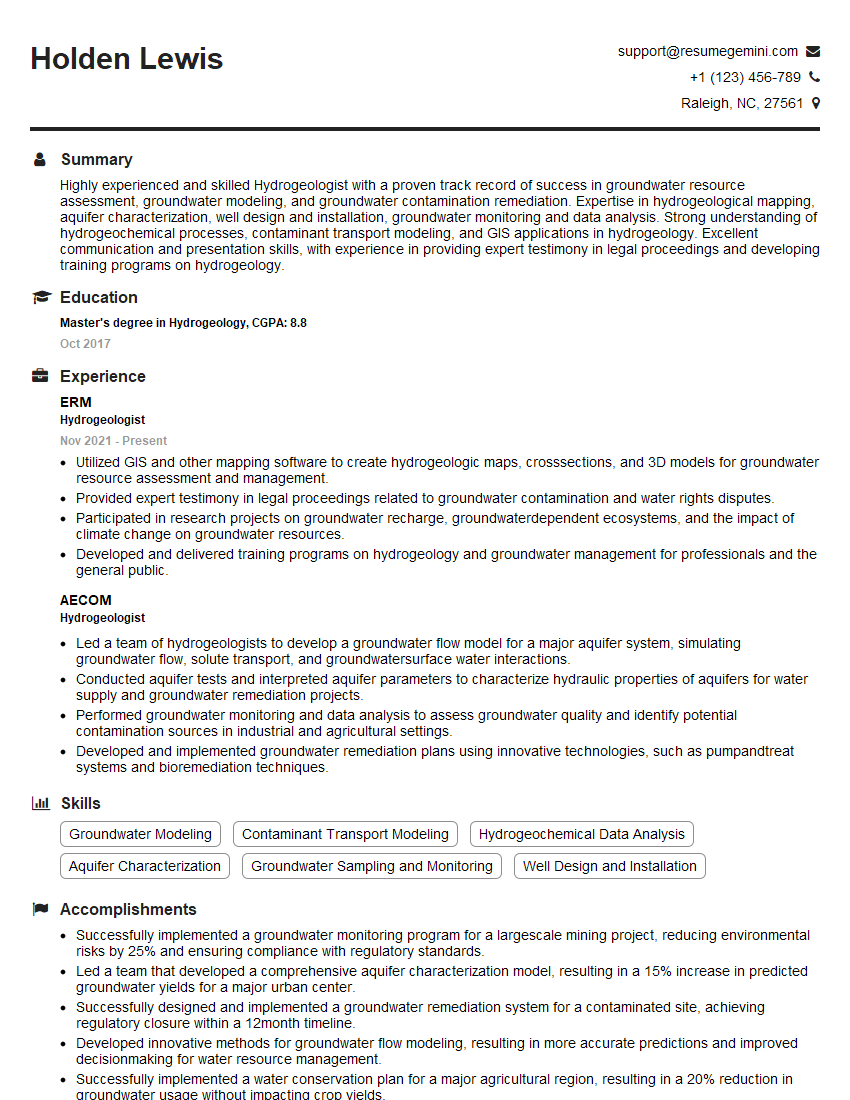
Mastering Structural and Tectonic Analysis opens doors to exciting career opportunities in civil engineering, geotechnical engineering, and related fields. A strong understanding of these principles is highly sought after by employers, leading to increased job prospects and career advancement. To significantly boost your chances, crafting an ATS-friendly resume is critical. ResumeGemini can help you create a professional and effective resume that highlights your skills and experience, increasing your visibility to potential employers. ResumeGemini provides examples of resumes tailored specifically to Structural and Tectonic Analysis roles, giving you a head start in your job search.





Explore more articles
Users Rating of Our Blogs
Share Your Experience
We value your feedback! Please rate our content and share your thoughts (optional).
What Readers Say About Our Blog
Very informative content, great job.
good