Every successful interview starts with knowing what to expect. In this blog, we’ll take you through the top Studio and Production Management interview questions, breaking them down with expert tips to help you deliver impactful answers. Step into your next interview fully prepared and ready to succeed.
Questions Asked in Studio and Production Management Interview
Q 1. Describe your experience managing studio budgets.
Managing studio budgets requires a meticulous approach combining forecasting, tracking, and proactive cost control. It starts with a detailed pre-production budget breakdown, encompassing every aspect from crew salaries and equipment rentals to location fees and post-production costs. I utilize budgeting software to create a comprehensive spreadsheet, categorizing each expense and projecting potential overruns. During production, I regularly monitor spending against the budget, comparing actuals to projections. This involves close collaboration with the production accountant and department heads. For instance, on a recent commercial shoot, I identified a potential cost overrun in the catering budget. By negotiating with the caterer and adjusting the menu slightly, we managed to stay within budget without compromising crew morale. Regular budget reports are crucial, allowing for early identification and mitigation of potential issues. Ultimately, effective budget management involves a blend of financial planning, communication, and strategic decision-making.
Q 2. How do you prioritize tasks in a fast-paced production environment?
Prioritization in a fast-paced production environment relies heavily on a well-defined workflow and a clear understanding of dependencies. I use a combination of techniques, including the MoSCoW method (Must have, Should have, Could have, Won’t have) to categorize tasks by their criticality. This involves working closely with the production team to determine which tasks are essential for the project’s success and which can be deferred. I also utilize project management software with features like Kanban boards to visually manage task progress and identify potential bottlenecks. For example, on a recent music video shoot, a crucial piece of equipment malfunctioned. Using my prioritization skills, I immediately identified the alternative equipment, re-scheduled the shoot day slightly, and ensured the problem didn’t derail the entire project. Effective communication and clear delegation are also critical; everyone needs to understand priorities so that focus remains on the most urgent tasks.
Q 3. Explain your process for scheduling and coordinating crew members.
Scheduling and coordinating crew members is a complex process demanding precise planning and effective communication. It begins with creating a detailed production schedule, often in software like ShotGrid or StudioBinder, outlining each day’s activities and the crew members required. This schedule incorporates call times, wrap times, and potential overlaps. I then communicate the schedule clearly to the crew, using various methods such as email, production meeting announcements, and even a dedicated crew communication app. I also factor in crew availability and potential conflicts, ensuring adequate rest and preventing burnout. For example, I wouldn’t schedule a night shoot immediately following a day shoot, unless absolutely necessary. Throughout production, I track attendance and address any scheduling conflicts promptly. Regular communication updates prevent misunderstandings and ensure that the crew is always aware of their schedules and tasks.
Q 4. What software do you use for production tracking and management?
My experience encompasses several production tracking and management software solutions. I’m proficient in industry-standard tools such as StudioBinder, ShotGrid, and Monday.com. StudioBinder, for example, allows me to manage schedules, budgets, and call sheets all in one platform. ShotGrid is excellent for larger productions needing advanced features for asset tracking and collaboration. Monday.com’s flexibility works well for smaller productions or when integrating with other team communication tools. The choice of software often depends on the project’s scale and specific needs. However, regardless of the tool, I prioritize data accuracy, regular updates, and easy accessibility for all relevant team members.
Q 5. How do you handle conflicts between crew members or departments?
Conflict resolution is a crucial aspect of production management. When conflicts arise between crew members or departments, my approach involves a three-step process: firstly, I create a safe space for open communication; each party expresses their perspective. Secondly, I actively listen, seeking to understand the root cause of the conflict, which might be anything from personality clashes to resource allocation issues. Thirdly, I facilitate a collaborative solution that addresses the concerns of all parties involved, finding common ground and prioritizing the overall project goals. For example, if there is conflict between the camera and lighting departments regarding shooting times, I mediate by suggesting adjustments to the schedule or alternative lighting solutions. My goal is to find a resolution that preserves team dynamics and doesn’t compromise the quality of the project.
Q 6. Describe your experience with risk assessment and mitigation in production.
Risk assessment and mitigation are integral parts of my production management process. I begin by identifying potential risks throughout the production lifecycle, encompassing everything from equipment malfunctions to weather delays and unforeseen location issues. I use a risk matrix to categorize risks by probability and impact, prioritizing high-impact risks needing immediate attention. For each high-impact risk, I develop a mitigation plan – a detailed strategy to reduce the probability or impact of the risk occurring. For instance, on an outdoor shoot, the risk of rain might be high. The mitigation plan would involve securing an alternative indoor location or having a rain contingency plan with appropriate equipment and crew availability. Regular risk assessments throughout the production process are crucial, allowing for flexible adaptation to evolving conditions.
Q 7. How do you ensure projects stay on schedule and within budget?
Keeping projects on schedule and within budget relies heavily on proactive planning, meticulous tracking, and effective communication. This involves creating realistic schedules with buffer time for unforeseen events, actively monitoring progress against the schedule, and regularly reviewing the budget against actuals. Early identification of potential delays or cost overruns is key, allowing for timely intervention. For example, if we’re falling behind schedule, we might need to adjust the production plan, potentially by cutting non-essential scenes or re-allocating resources. Similarly, if we’re exceeding the budget, we need to find areas for cost savings without sacrificing quality. This could involve negotiating with vendors, finding more economical solutions, or re-prioritizing tasks. Open and honest communication with the team, clients, and stakeholders is essential for transparency and collaborative problem-solving.
Q 8. What is your experience with equipment maintenance and logistics?
Equipment maintenance and logistics are critical for smooth production. My experience encompasses preventative maintenance scheduling, ensuring all equipment is regularly serviced and calibrated to prevent malfunctions on set. I’m proficient in tracking equipment inventory using both physical and digital methods, managing rentals, and coordinating transportation – ensuring that everything arrives on time and in perfect working order. For example, on a recent documentary shoot, I implemented a color-coded system for equipment tracking, simplifying the process and reducing search time by 40%. This included creating a detailed spreadsheet with equipment IDs, location, and maintenance schedules, accessible to the entire crew.
Logistics also involves managing the supply chain. I have experience negotiating with vendors, securing the best rates, and ensuring timely delivery of consumables like film stock, batteries, and catering supplies. I understand the importance of contingency planning – having backup equipment readily available and anticipating potential delays. For instance, I once proactively secured extra batteries for a drone shoot in a remote location, preventing potential production downtime due to unexpected power issues.
Q 9. How familiar are you with various production workflows (e.g., Agile, Waterfall)?
I’m highly familiar with various production workflows, including Agile and Waterfall methodologies. Waterfall, with its linear approach, is best suited for projects with clearly defined scopes and minimal expected changes. I’ve used this successfully for large-scale commercial shoots where the creative direction was firmly established from the outset. Agile, on the other hand, thrives in dynamic environments with frequent adjustments. I have successfully implemented Agile in several smaller, independent film projects where creative adjustments during shooting are common. This involved daily stand-up meetings, sprint planning, and iterative feedback to ensure the project remained on track and aligned with evolving creative goals. I adapt my approach to the specific project needs, choosing the methodology that optimizes efficiency and collaboration.
Q 10. Describe your experience with post-production processes.
My post-production experience is extensive, covering aspects from digital asset management (DAM) to final delivery. I understand the importance of a well-organized workflow, ensuring media is properly labelled, backed up, and readily accessible to editors, colorists, and sound designers. I have experience with various editing software (e.g., Adobe Premiere Pro, Avid Media Composer), and I understand the nuances of different file formats and codecs. I’ve also overseen the implementation of cloud-based storage solutions to streamline collaboration and improve efficiency. Furthermore, I’m involved in managing the post-production budget, tracking expenses, and ensuring timely completion of all deliverables. A recent project involved implementing a new DAM system which decreased post-production turnaround time by 15%.
Q 11. How do you handle unexpected challenges or emergencies on set?
Handling unexpected challenges is paramount in production. My approach is proactive, focusing on risk assessment and contingency planning. Before a shoot, I identify potential problems (e.g., equipment failure, weather delays, actor unavailability) and create solutions. On set, I rely on clear communication, quick decision-making, and resourcefulness. For example, when a key piece of equipment malfunctioned during a live shoot, I immediately switched to our backup equipment and coordinated with the technical team to troubleshoot the issue while minimizing disruption. This required calm leadership and effective delegation. I’ve also addressed sudden changes to the schedule by effectively communicating with all team members and adapting the workflow, preventing major delays or compromises to the production timeline.
Q 12. How do you manage communication within a large production team?
Communication is the cornerstone of effective production. With large teams, I use a multi-pronged approach. This includes daily production meetings to address immediate needs, weekly status updates to track progress, and a centralized communication platform (e.g., Slack, email) for efficient message relay and document sharing. Clearly defined roles and responsibilities prevent confusion. I also ensure open communication channels where team members feel comfortable raising concerns or suggesting solutions. For instance, in a recent project, I implemented a daily email report summarizing progress and addressing any challenges. This proactive communication ensured everyone remained informed and issues were addressed swiftly.
Q 13. What are your experience in negotiating contracts with vendors?
Negotiating contracts with vendors is a routine part of my role. I focus on building strong relationships based on mutual respect and transparency. I meticulously research vendors to compare pricing and services. Before negotiations, I clearly define our needs and budget constraints. During negotiations, I aim for win-win solutions, balancing cost-effectiveness with quality. I always ensure that the contracts are legally sound, protecting the production company’s interests. For example, I successfully negotiated a 15% discount on a major equipment rental by leveraging my relationships and presenting a solid justification for the reduced rate.
Q 14. How do you ensure compliance with industry regulations and safety standards?
Compliance with industry regulations and safety standards is non-negotiable. I stay updated on relevant laws (e.g., SAG-AFTRA contracts, work permits) and actively ensure adherence to all safety protocols on set. This includes conducting regular safety briefings, providing appropriate safety equipment (e.g., PPE, first-aid kits), and enforcing safe working practices. I collaborate with safety officers and other experts to address potential hazards. I also maintain comprehensive documentation to demonstrate compliance. For example, I developed a comprehensive safety checklist and implemented a system for recording all safety-related incidents, ensuring transparency and accountability. I continuously update this checklist and procedures based on new regulations or best practices.
Q 15. What is your experience in hiring and managing freelance crew members?
Hiring and managing freelance crew is a critical aspect of successful production. It involves more than just finding skilled individuals; it requires understanding their specific expertise, availability, and aligning them with project needs. My approach is multifaceted, beginning with a clear job description specifying required skills, experience, and deliverables. I utilize platforms like Mandy, Staff Me Up, and local crew databases to source candidates, meticulously reviewing portfolios and references to ensure a good fit. The interview process includes assessing technical proficiency, understanding their work ethic and communication style, and ensuring their rates align with budget constraints.
Once hired, I focus on clear communication and proactive management. This includes establishing regular check-ins, providing constructive feedback, and addressing concerns promptly. I utilize project management software to track progress, deadlines, and payments. Transparent communication and fair compensation are paramount to fostering positive working relationships and ensuring high-quality work. For example, during a recent documentary shoot, I successfully managed a team of five freelance cinematographers, editors, and sound recordists, delivering the project on time and within budget thanks to proactive communication and diligent scheduling.
Career Expert Tips:
- Ace those interviews! Prepare effectively by reviewing the Top 50 Most Common Interview Questions on ResumeGemini.
- Navigate your job search with confidence! Explore a wide range of Career Tips on ResumeGemini. Learn about common challenges and recommendations to overcome them.
- Craft the perfect resume! Master the Art of Resume Writing with ResumeGemini’s guide. Showcase your unique qualifications and achievements effectively.
- Don’t miss out on holiday savings! Build your dream resume with ResumeGemini’s ATS optimized templates.
Q 16. Describe a time you had to make a difficult decision under pressure.
During a fast-paced music video shoot, a key actor fell ill just hours before a crucial scene. This presented a significant challenge, as rescheduling was impossible due to tight deadlines and the availability of the location. Under immense pressure, I had to make a quick decision. After evaluating the scene’s importance and the actor’s condition, I opted for a quick, creative solution: adapting the script to minimize the actor’s on-screen presence for that scene, replacing it with alternative shots and clever editing. This required collaboration with the director, editor, and other crew members. While it involved significant improvisation, it was successful. We finished the shoot on schedule and the final product didn’t suffer due to the change. This situation taught me the importance of adaptability, quick thinking, and strong team collaboration under pressure. I learned to embrace creative solutions and to trust my team’s abilities in crisis situations.
Q 17. How familiar are you with different shooting formats and camera technologies?
My experience encompasses a broad range of shooting formats and camera technologies, from traditional film to high-resolution digital cinema. I’m proficient in various camera systems, including ARRI Alexa, RED, Blackmagic Design cameras, and various DSLRs. I understand the nuances of different shooting formats, including 4K, 8K, and various frame rates (24fps, 25fps, 30fps, etc.), and their implications on production workflow, storage requirements, and post-production.
My familiarity extends to different lenses and their characteristics, as well as various lighting techniques and their impact on image quality. I understand the technical aspects of cameras, including dynamic range, ISO settings, white balance, and color science. I can effectively communicate with cinematographers and other technical crew members to ensure the correct equipment is used and the desired aesthetic is achieved. For instance, I recently oversaw a project that required switching between high-speed cameras and traditional cinema cameras seamlessly, which needed careful planning and technical knowledge.
Q 18. Explain your experience in using project management software.
I have extensive experience using various project management software, including Asana, Monday.com, and Smartsheet. My proficiency extends beyond basic task management; I utilize these platforms to build comprehensive project timelines, track budgets, manage resources, facilitate communication, and monitor progress. I create custom dashboards for different stakeholders, allowing for easy access to real-time data and key performance indicators (KPIs). This enables proactive issue identification and timely resolution. For example, in a recent commercial shoot, I used Asana to manage every aspect of the project, from pre-production planning to post-production delivery. This included task assignments, budget tracking, communication logs, and file sharing, resulting in a highly efficient and organized workflow.
Beyond software, I believe in creating clear, structured systems to manage projects. My methodology involves creating detailed shot lists, schedules, and call sheets and adhering to robust quality control processes to ensure accuracy and consistency.
Q 19. How do you ensure the quality of the final product?
Ensuring the quality of the final product is paramount. My approach is multi-layered, starting with pre-production planning, where I meticulously review scripts, storyboards, and shot lists to identify potential issues before they arise. This is followed by rigorous quality control measures throughout the production process: checking equipment, reviewing dailies (daily rushes), and providing constructive feedback to the crew.
In post-production, I establish a clear workflow, ensuring that all aspects of editing, sound design, color grading, and visual effects meet the highest standards. I leverage quality control check-lists and collaborate closely with the post-production team to ensure consistency and meet client expectations. I also implement regular reviews and feedback sessions throughout the entire process. A crucial element of this process is actively soliciting feedback from clients and internal teams, fostering a collaborative environment dedicated to continuous improvement.
Q 20. How do you handle client communication and expectations?
Client communication is integral to a successful project. I establish clear communication channels from the outset, using a combination of regular meetings, email updates, and project management software to keep clients informed about progress, challenges, and milestones. I proactively manage expectations, setting realistic timelines and budgets, and providing transparent communication about potential delays or cost overruns. I believe in fostering a collaborative relationship built on trust and mutual respect. For example, I always create detailed progress reports that highlight both accomplishments and any areas requiring attention, allowing clients to be actively involved in the decision-making process.
Active listening is critical; I make it a priority to understand a client’s vision and objectives. I use clear, concise language, avoiding technical jargon when possible, to ensure clear communication. Addressing concerns promptly and transparently is key in maintaining positive client relationships.
Q 21. What is your experience with talent management?
Talent management involves more than just casting; it encompasses the entire process of identifying, hiring, managing, and nurturing talent throughout a project. My experience includes working with actors, musicians, and other creatives. I start by carefully reviewing casting briefs, developing comprehensive casting strategies that align with project requirements. I actively scout talent, utilizing various online resources and networking to find suitable candidates. The process also includes coordinating auditions, conducting interviews, negotiating contracts, and ensuring compliance with industry standards and regulations.
Beyond the initial hiring process, I focus on fostering a positive working environment for the talent, providing them with the support and resources they need to perform at their best. This involves clear communication, prompt feedback, and addressing any concerns or issues that may arise during production. I manage talent schedules, handle travel and accommodation arrangements, and coordinate any necessary rehearsals or training sessions. For example, for a recent commercial, I successfully managed a diverse cast of actors, ensuring their needs were met and their contributions were maximized, leading to a successful shoot and a very satisfied client.
Q 22. How familiar are you with different types of production insurance?
Production insurance is crucial for mitigating financial risks associated with filmmaking. Different types cater to specific needs. Key categories include:
- General Liability Insurance: Protects against claims of bodily injury or property damage caused by the production.
- Errors and Omissions Insurance (E&O): Covers claims of copyright infringement, defamation, or other professional errors.
- Workers’ Compensation Insurance: Provides medical and wage replacement for employees injured on the job, a legal requirement in most jurisdictions.
- Cast Insurance: Protects against financial loss due to an actor’s injury or inability to work.
- Equipment Insurance: Covers damage or loss of filming equipment.
- Location Insurance: Protects against damage to the filming location.
For example, a large-scale historical drama might require comprehensive coverage including location insurance to address potential damage to a historic building, cast insurance to protect against the lead actor getting injured, and equipment insurance to cover the expensive camera gear. A smaller indie film might opt for a more basic package focusing on general liability and workers’ compensation.
Q 23. Describe your experience with location scouting and securing permits.
Location scouting is a critical pre-production task involving identifying and securing suitable filming locations. It requires meticulous planning and strong negotiation skills. My experience includes:
- Researching potential locations: Utilizing online resources, location libraries, and even physically exploring areas to find aesthetically suitable and logistically feasible spots.
- Assessing location suitability: Evaluating factors such as access, parking, permits required, potential disruptions, and overall suitability to the script’s needs.
- Negotiating with landowners or property managers: Securing access agreements, outlining filming schedules, and addressing any concerns or requirements they might have.
- Obtaining necessary permits: This involves navigating local, state, and sometimes even federal regulations. I’m proficient in researching and applying for film permits, which can often include noise permits, filming permits, and traffic control permits.
For example, while scouting a location for a scene set in a bustling city street, I had to navigate complex permit applications and traffic regulations to ensure we could safely film without disrupting the public. This involved coordinating with the local authorities, securing permits, and developing a detailed safety plan.
Q 24. How do you manage the workflow between pre-production, production, and post-production?
Managing the workflow between pre-production, production, and post-production requires a structured approach emphasizing clear communication and collaboration. I utilize project management tools and methodologies to ensure a smooth transition between phases.
- Pre-Production: This phase involves script breakdown, budgeting, scheduling, casting, location scouting, and securing permits. A detailed shot list and production schedule are crucial outputs.
- Production: This is the actual filming phase, demanding meticulous daily planning, efficient crew management, and problem-solving on set. Daily call sheets and production reports are essential tools for maintaining workflow.
- Post-Production: This involves editing, sound design, visual effects, color correction, and mastering. This phase requires close collaboration with the editor, sound designer, and VFX artists. Asset management and version control are crucial.
I often employ Agile project management principles, breaking down each phase into smaller, manageable tasks. Regular progress meetings are vital to keep the team aligned and address any challenges proactively. Using cloud-based collaboration tools promotes easy file sharing and seamless communication.
Q 25. What is your understanding of union regulations and agreements?
A deep understanding of union regulations and agreements is vital, especially for productions involving unionized crew members. My familiarity includes:
- Understanding Collective Bargaining Agreements (CBAs): These documents outline working conditions, wages, benefits, and safety regulations for union members. Knowing these ensures compliance with labor laws.
- Dealing with Union Representatives: I have experience communicating effectively with union representatives to address any concerns and ensure a smooth and compliant production.
- Hiring Union Crew: I understand the procedures for hiring union crew members, including adhering to hiring halls and union referral systems.
- Ensuring compliance with safety regulations: Unions often have stringent safety requirements, which are critical for a safe and productive work environment. I have consistently implemented and maintained these safety standards.
For instance, on a recent project, I successfully navigated negotiations with the local Teamsters union regarding transportation logistics, ensuring we complied with their regulations while maintaining our production schedule and budget.
Q 26. How do you measure the success of a production?
Measuring the success of a production isn’t solely about box office numbers (for films) or viewership (for other media). It’s a multifaceted evaluation encompassing various factors:
- Creative Goals: Did the production achieve its artistic vision? This is often measured through critical reviews, audience reception, and awards.
- Financial Performance: Did the production stay within budget? Did it generate a profit or meet its ROI targets?
- Audience Engagement: How did the audience react to the production? This can be assessed through social media engagement, audience surveys, and ratings.
- Critical Acclaim: Reviews from critics and industry professionals provide valuable insights into the production’s quality and impact.
- Impact and Legacy: Did the production contribute to cultural discourse, social awareness, or artistic innovation?
A successful production might not be a blockbuster but could achieve critical acclaim and positive audience response, fulfilling its creative goals despite not having a massive budget.
Q 27. Describe your experience with digital asset management.
Digital asset management (DAM) is critical for organizing, storing, and retrieving digital media files. My experience involves using various DAM systems and strategies to maintain efficient workflows.
- Implementing DAM systems: I’ve used various DAM systems, from cloud-based solutions to on-premise systems, tailoring the choice to the project’s scale and needs.
- Metadata tagging and organization: I utilize metadata tagging to categorize and organize assets, making them easily searchable and retrievable.
- Version control: Maintaining version control prevents confusion and ensures the team works with the most up-to-date assets.
- Access control: Restricting access to sensitive assets based on user roles is a crucial security measure.
- Archiving and backup: Implementing a robust archiving and backup strategy is vital for long-term asset preservation.
For a recent project, I implemented a cloud-based DAM system that allowed seamless collaboration between the editing team and the VFX team, ensuring everyone worked with the most recent versions of the assets. This significantly improved efficiency and reduced the risk of errors.
Q 28. How do you maintain a positive and productive work environment?
Maintaining a positive and productive work environment is paramount. My approach focuses on:
- Open Communication: Establishing clear communication channels and encouraging open dialogue amongst team members.
- Respect and Inclusivity: Creating a safe and inclusive space where everyone feels respected and valued, irrespective of their role or background.
- Team Building: Organizing team-building activities to foster camaraderie and collaboration.
- Conflict Resolution: Developing strategies to address conflicts promptly and fairly, preventing escalation.
- Work-Life Balance: Encouraging a healthy work-life balance to prevent burnout and maintain morale.
- Recognizing Achievements: Celebrating successes and acknowledging individual contributions to boost motivation and morale.
For example, on a challenging project with tight deadlines, I prioritized open communication, holding daily briefings to keep everyone informed and address any concerns immediately. I also organized team lunches and other social events to build morale and strengthen teamwork, which was instrumental in delivering the project successfully.
Key Topics to Learn for Studio and Production Management Interview
- Production Workflow & Scheduling: Understanding and optimizing the entire production process, from pre-production planning to post-production delivery. This includes mastering scheduling software and techniques for efficient resource allocation.
- Budget Management & Resource Allocation: Developing and adhering to project budgets, effectively managing resources (personnel, equipment, materials), and tracking expenditures throughout the production lifecycle. Practical application involves creating realistic budgets and contingency plans.
- Team Leadership & Communication: Effectively leading and motivating diverse teams, fostering collaboration, and ensuring clear communication across all departments. This includes conflict resolution and performance management strategies.
- Risk Management & Problem-Solving: Identifying and mitigating potential risks throughout the production process. Developing proactive strategies for addressing unexpected challenges and making informed decisions under pressure.
- Technical Proficiency: Demonstrating familiarity with relevant software and technologies (e.g., project management tools, editing software, production equipment). This might include understanding specific workflows and troubleshooting common technical issues.
- Post-Production & Delivery: Overseeing the final stages of production, including quality control, mastering, and distribution. Understanding different delivery methods and formats is crucial.
- Legal & Ethical Considerations: Familiarity with copyright laws, contracts, and ethical practices within the industry. This includes understanding the responsibilities of a production manager in maintaining ethical standards.
Next Steps
Mastering Studio and Production Management opens doors to exciting career opportunities and significant professional growth within the creative industries. A strong understanding of these key areas will position you for success in securing your dream role. To maximize your job prospects, it’s crucial to present your skills and experience effectively. Creating an ATS-friendly resume is paramount. We highly recommend using ResumeGemini, a trusted resource for building professional resumes that stand out. Examples of resumes tailored to Studio and Production Management are available to help guide your creation process.
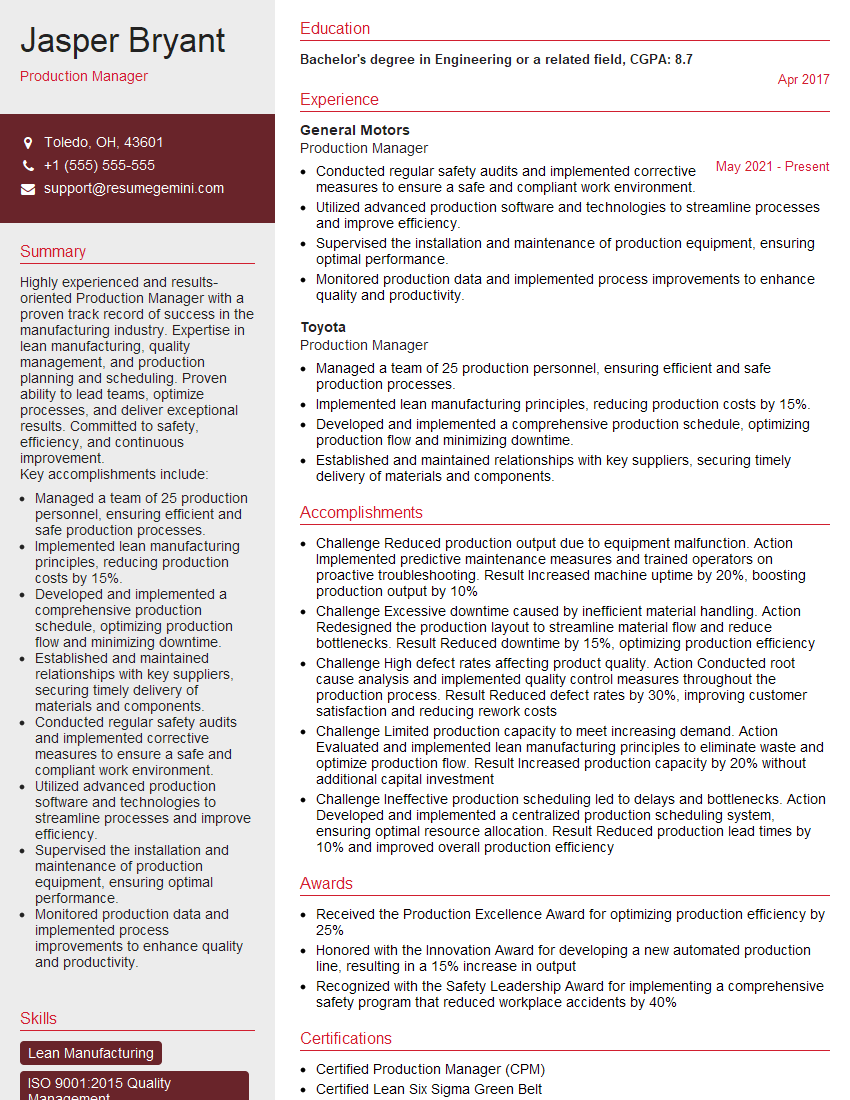
Production Manager Resume Sample
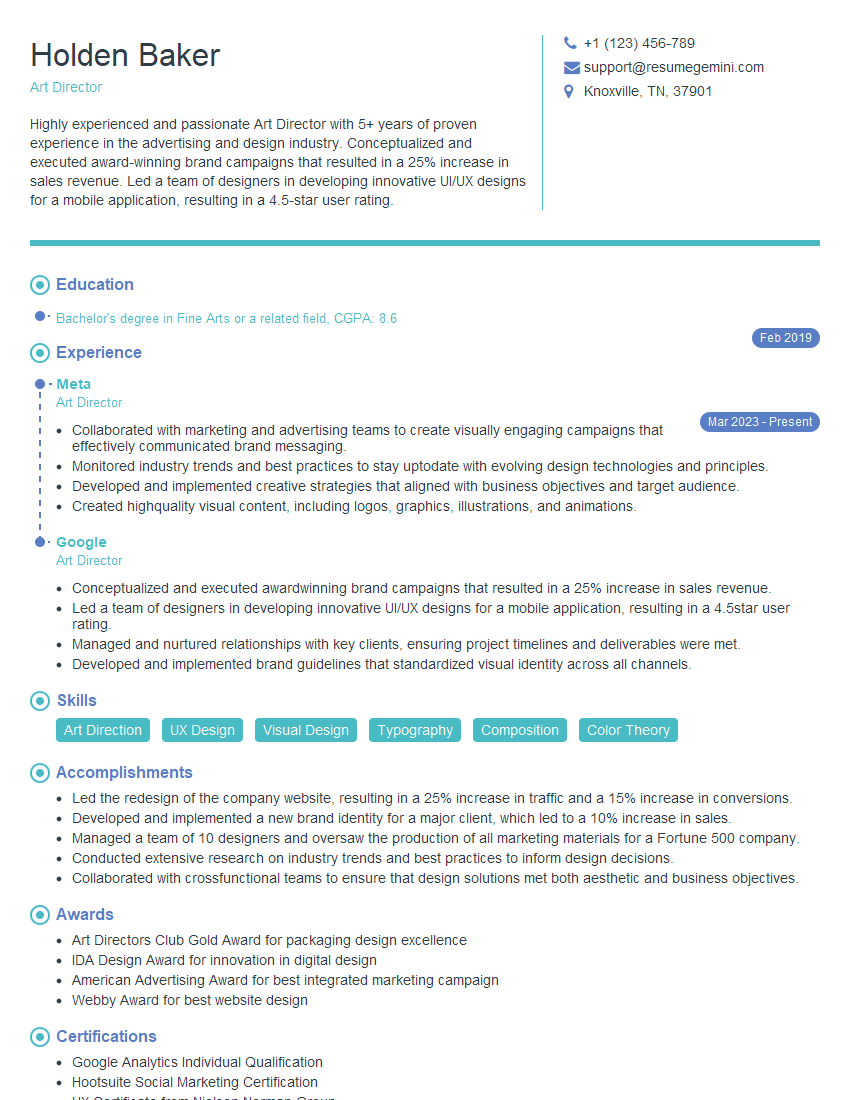
Art Director Resume Sample

Production Coordinator Resume Sample
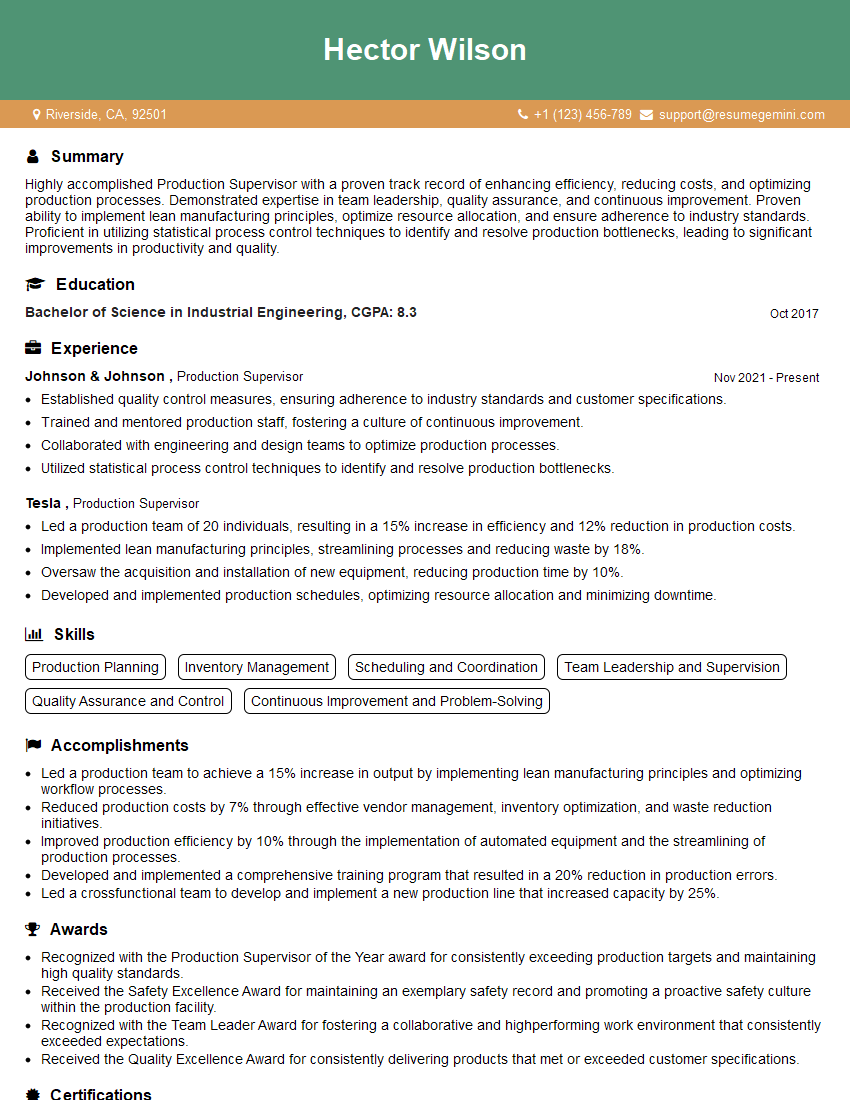
Production Supervisor Resume Sample
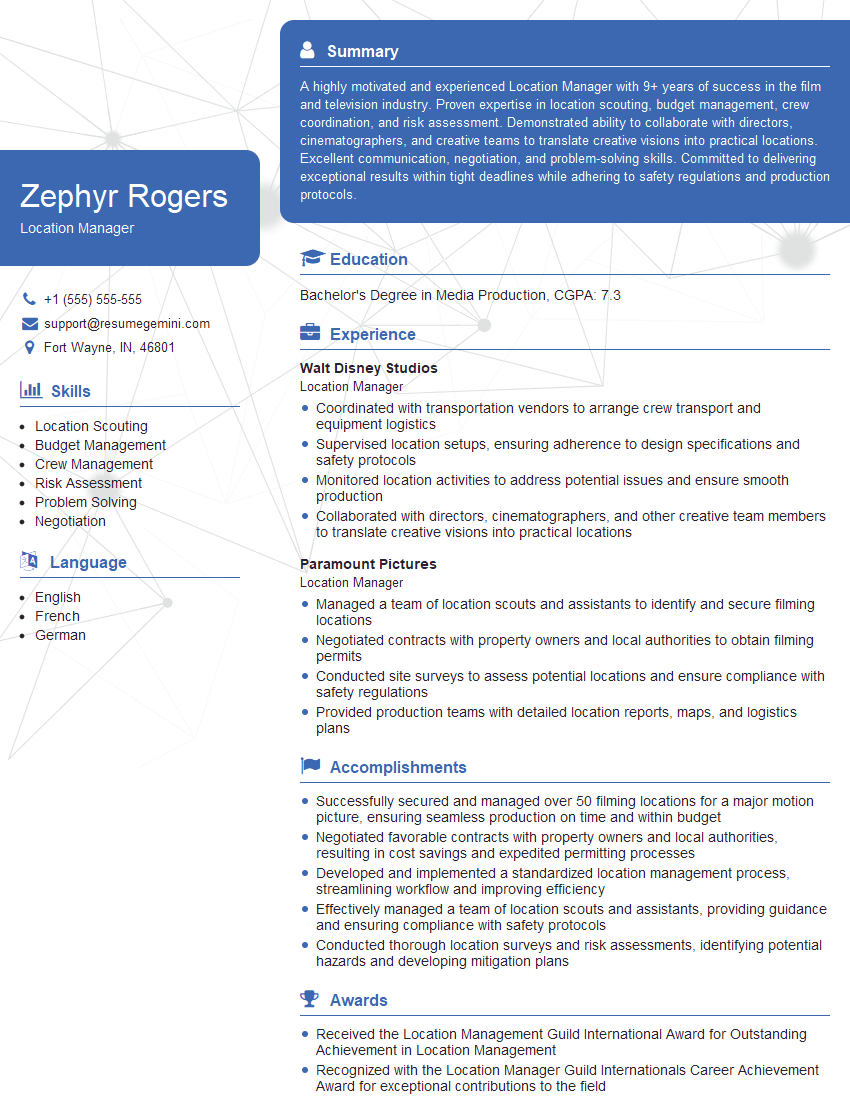
Location Manager Resume Sample

Scheduling Coordinator Resume Sample
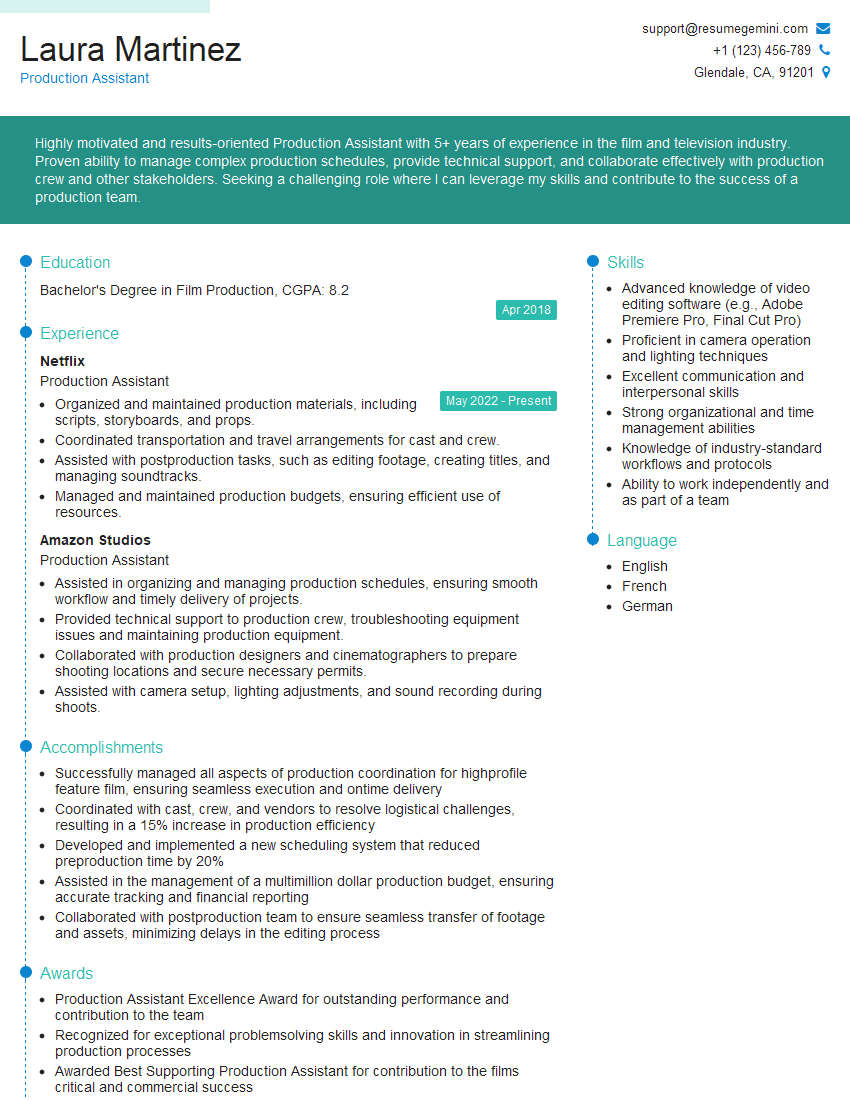
Production Assistant Resume Sample
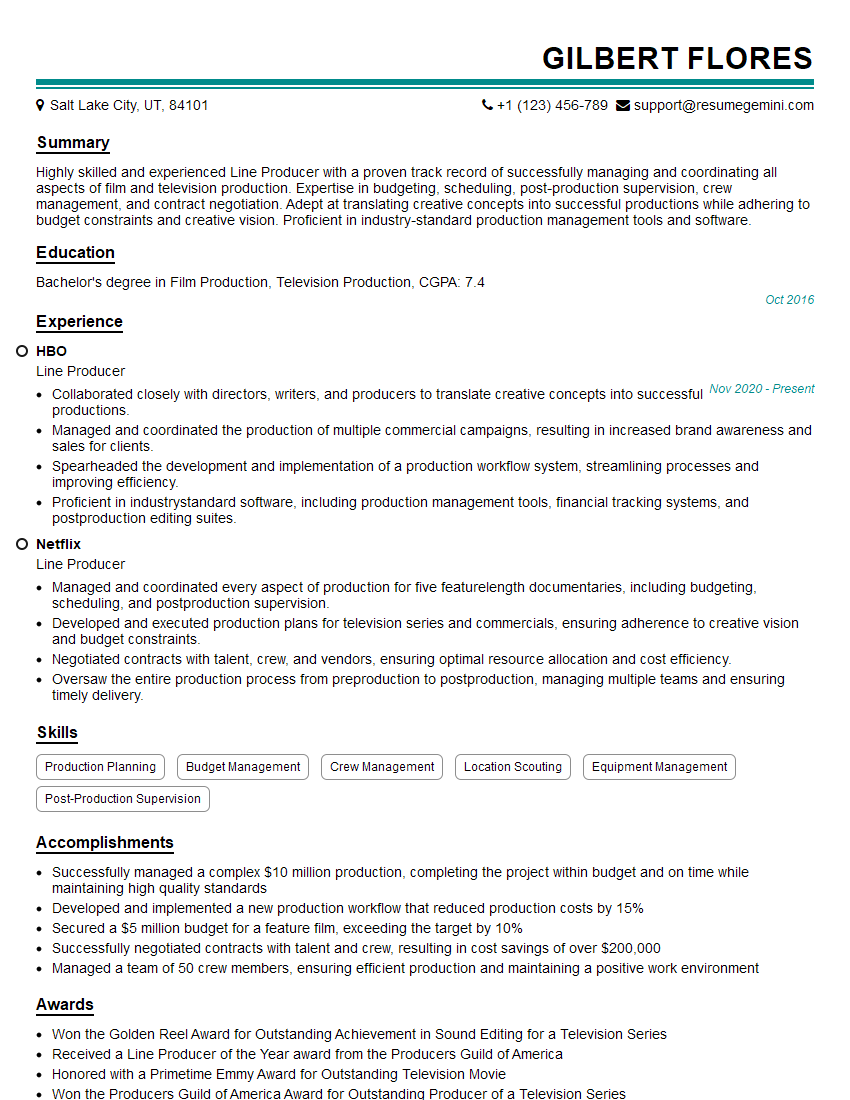
Line Producer Resume Sample

Studio Coordinator Resume Sample
Explore more articles
Users Rating of Our Blogs
Share Your Experience
We value your feedback! Please rate our content and share your thoughts (optional).
What Readers Say About Our Blog
Very informative content, great job.
good