The right preparation can turn an interview into an opportunity to showcase your expertise. This guide to Tensile Strength interview questions is your ultimate resource, providing key insights and tips to help you ace your responses and stand out as a top candidate.
Questions Asked in Tensile Strength Interview
Q 1. Define tensile strength and explain its significance.
Tensile strength is a material’s ability to withstand pulling forces before it breaks. Imagine a rubber band; you can stretch it, applying tensile stress, until it finally snaps. That breaking point represents its tensile strength. It’s a crucial material property because it dictates a material’s suitability for various applications. For instance, a bridge’s cables must have extremely high tensile strength to safely bear the weight of traffic, while the tensile strength of a plastic bag needs to be much lower. The significance lies in ensuring structural integrity and predicting failure in engineering designs.
Q 2. Explain the difference between ultimate tensile strength and yield strength.
Ultimate tensile strength (UTS) and yield strength are both measures of a material’s resistance to tensile stress, but they indicate different stages of deformation. UTS is the maximum stress a material can withstand before fracturing. It’s the point on the stress-strain curve where the material finally breaks. Yield strength, on the other hand, is the stress at which the material begins to deform plastically, meaning the deformation becomes permanent even after the stress is removed. Think of bending a paperclip; once you cross the yield point, it stays bent. UTS is relevant when considering the absolute maximum load a material can bear, while yield strength is crucial for ensuring that a component doesn’t undergo permanent deformation under working conditions.
Q 3. Describe the process of a tensile test, including sample preparation.
A tensile test is a standardized method for determining a material’s tensile strength. First, a carefully prepared sample, usually a standardized shape like a dog bone, is machined to precise dimensions. This ensures consistent results. The sample is then gripped securely in a tensile testing machine, a device that applies a controlled tensile force. The machine measures both the applied force and the resulting elongation of the sample. As the force increases, the machine records the stress (force per unit area) and strain (elongation per unit length). This data is plotted to create a stress-strain curve, from which yield strength and ultimate tensile strength are determined. The test continues until the sample fractures, providing valuable information about the material’s behavior under tension.
Q 4. What are the common units used to measure tensile strength?
Tensile strength is commonly measured in units of force per unit area. The most frequently used units are:
- Megapascals (MPa): This is the standard unit in the SI system.
- Pascals (Pa): A smaller unit, often used for materials with lower tensile strength.
- Pounds per square inch (psi): A common unit in the US customary system.
The choice of unit depends on the specific application and the magnitude of the tensile strength being measured.
Q 5. How does temperature affect tensile strength?
Temperature significantly affects tensile strength. Generally, as temperature increases, tensile strength decreases. This is because higher temperatures increase the atomic vibrations within the material, reducing the bonds’ effectiveness in resisting tensile forces. Imagine a chain; at higher temperatures, the links vibrate more, weakening the overall strength. However, some materials exhibit exceptions, particularly near phase transitions. Crystalline structures may change under temperature, influencing their tensile behavior. Therefore, specifying the testing temperature is crucial for accurate characterization and meaningful comparisons.
Q 6. Explain the concept of stress-strain curve and its interpretation.
A stress-strain curve is a graphical representation of a material’s response to tensile loading. The horizontal axis represents strain (the amount of deformation), and the vertical axis represents stress (the applied force per unit area). The curve typically shows several key regions: an initial elastic region (where deformation is reversible), a yield point (where plastic deformation begins), a region of plastic deformation (where the material permanently deforms), and finally, fracture (the point of material failure). Interpreting the curve allows engineers to determine crucial material properties like yield strength, ultimate tensile strength, ductility (ability to deform plastically), and toughness (ability to absorb energy before fracture). This is essential for selecting materials appropriate for specific applications.
Q 7. What is the Poisson’s ratio and how does it relate to tensile strength?
Poisson’s ratio is the ratio of transverse strain (change in width or thickness) to axial strain (change in length) when a material is subjected to uniaxial stress. For instance, if you pull on a rubber band, it becomes thinner as it stretches. Poisson’s ratio quantifies this effect. While not a direct measure of tensile strength, it’s a related material property that provides insights into the material’s elastic behavior and its response to tensile forces. It helps predict how a material will deform in multiple dimensions under tensile loading. A higher Poisson’s ratio indicates that the material contracts more in the transverse direction when stretched. This information is crucial for predicting dimensional changes in engineering designs.
Q 8. How does strain hardening affect tensile strength?
Strain hardening, also known as work hardening, is the strengthening of a metal by plastic deformation. When a metal is subjected to tensile stress beyond its yield point, it begins to deform plastically. This plastic deformation leads to the generation and movement of dislocations within the metal’s crystal structure. These dislocations impede each other, making it increasingly difficult for further plastic deformation to occur. This increased resistance to further deformation translates directly to an increase in tensile strength.
Imagine trying to bend a paperclip repeatedly. Initially, it bends easily. However, with each bend, it becomes progressively harder to deform further. This increased resistance to bending is analogous to strain hardening. The metal becomes stronger, but also more brittle, meaning it becomes more prone to fracturing under stress.
In practical terms, strain hardening is utilized in various manufacturing processes, such as cold rolling and drawing, to enhance the strength and hardness of materials. For instance, the cold rolling of steel sheets increases their tensile strength, making them suitable for applications requiring high strength and durability.
Q 9. Explain the different types of tensile testing machines.
Tensile testing machines come in various types, primarily categorized by their loading mechanism and capacity. They all share the common goal of applying a controlled tensile force to a specimen and measuring its response.
- Hydraulic Machines: These use hydraulic cylinders to apply the load. They are often used for high-capacity testing, capable of handling large forces. Hydraulic machines offer smooth and precise load control but can be slower than other types.
- Screw-driven Machines: These utilize a screw mechanism to apply the load. They are generally simpler and more economical than hydraulic machines, suitable for lower capacity tests. Their accuracy is usually less than hydraulic ones.
- Servo-hydraulic Machines: These combine hydraulic power with electronic servo-control systems. This gives superior accuracy and control over the loading rate and force. They are frequently found in advanced material testing laboratories.
- Electro-mechanical Machines: These use electric motors and precise gears to apply load. They provide a high degree of control and accuracy, making them suitable for a wide range of tests. They are often preferred for their quiet and clean operation.
The choice of machine depends on factors such as the required load capacity, the accuracy needed, and the budget.
Q 10. Describe the failure modes observed in tensile testing.
Tensile testing can reveal several failure modes, depending on the material’s properties and the testing conditions. These are some common modes:
- Fracture: This is the most common failure mode, where the specimen breaks completely. The fracture surface can provide valuable information about the material’s failure mechanism. A brittle fracture appears sudden with little plastic deformation, while a ductile fracture displays significant necking and deformation before failure.
- Yielding: The material undergoes permanent deformation (plastic deformation) without fracturing. The yield point marks the transition from elastic to plastic deformation.
- Necking: This occurs in ductile materials, where a significant reduction in the specimen’s cross-sectional area is observed before fracture. The necking region concentrates stress, leading to eventual failure.
- Buckling: Long, slender specimens may buckle under compressive stress, which can occur before the tensile strength is reached. This is related to the specimen geometry and material’s stiffness rather than its inherent strength.
Observing the failure mode aids in understanding the material’s behavior and identifying potential weaknesses.
Q 11. How does the geometry of a specimen influence tensile strength results?
The geometry of a tensile specimen significantly impacts the tensile strength results. Variations in cross-sectional area and gauge length (the length over which the elongation is measured) can cause differences in measured strength. A smaller cross-sectional area concentrates stress, leading to a higher measured tensile strength while a larger area would lower it. This is because strength is calculated as force per unit area.
Furthermore, the gauge length influences the measurement of elongation and strain. A longer gauge length might reveal more ductile behavior, while a shorter one might mask some deformation.
Standard test methods (like ASTM standards) specify precise dimensions for specimens to ensure consistent and comparable results. Deviation from these standards can lead to inaccurate and unreliable data. A proper calibration process is crucial to accurate measurement.
Q 12. Explain the importance of proper specimen alignment in tensile testing.
Proper specimen alignment is critical for accurate and reliable tensile testing. Misalignment introduces bending moments into the specimen, which are not pure tensile forces. These bending moments result in lower measured tensile strength, and can lead to premature failure at a lower load than expected. The bending stresses can significantly outweigh the actual tensile stresses creating inaccurate and unreliable data.
To ensure proper alignment, the specimen must be carefully centered in the grips of the testing machine and aligned along the axis of loading. This is often achieved with alignment aids and careful preparation of the specimen, especially ensuring the grips are properly secured to avoid slippage.
Even a slight misalignment can lead to significant errors. This can be avoided through careful set up and use of alignment tools, alongside careful operator training.
Q 13. What are the common standards used for tensile testing?
Several standards govern tensile testing procedures, ensuring consistency and comparability of results across different laboratories and testing facilities. Some of the most commonly used standards include:
- ASTM E8: This standard covers the standard methods for tensile testing of metallic materials.
- ISO 6892: This international standard provides methods for metallic materials tensile testing.
- ASTM D638: This standard specifies the method for tensile properties of plastics.
- ASTM D412: This standard outlines the procedure for determining the tensile properties of vulcanized rubber.
These standards specify requirements for specimen preparation, testing procedures, and data reporting. Adhering to these standards is crucial for ensuring the reliability and validity of tensile testing results.
Q 14. Describe how to calculate tensile strength from experimental data.
Tensile strength is calculated from experimental data obtained during a tensile test. The basic formula is:
Tensile Strength (UTS) = Maximum Load / Original Cross-sectional Area
Where:
- Maximum Load: This is the highest load applied to the specimen before fracture (obtained from the load cell of the testing machine).
- Original Cross-sectional Area: This is the area of the specimen’s cross-section before the application of any load. This is calculated from the initial dimensions of the specimen (e.g., diameter for a round specimen).
For example, if the maximum load is 10,000 N and the original cross-sectional area is 10 mm², then the tensile strength would be:
UTS = 10,000 N / 10 mm² = 1000 N/mm² or 1000 MPa
It is crucial to use the original cross-sectional area, and not the area at the point of failure, to calculate tensile strength.
Q 15. What are the limitations of tensile testing?
Tensile testing, while a powerful technique for evaluating material strength, has certain limitations. Firstly, it’s a destructive test; the specimen is permanently deformed or broken during the process. This means you need multiple samples for repeated testing and analysis. Secondly, the test conditions (temperature, humidity, loading rate) significantly impact the results, and subtle variations can lead to discrepancies. It primarily provides information about the material’s behavior under uniaxial tension, failing to capture its response to more complex loading scenarios like torsion or bending. Finally, the test only provides a macroscopic view of the material’s strength, neglecting the influence of microscopic defects which can be crucial. For example, a tiny crack invisible to the naked eye can severely compromise the material’s actual strength in real-world applications.
Career Expert Tips:
- Ace those interviews! Prepare effectively by reviewing the Top 50 Most Common Interview Questions on ResumeGemini.
- Navigate your job search with confidence! Explore a wide range of Career Tips on ResumeGemini. Learn about common challenges and recommendations to overcome them.
- Craft the perfect resume! Master the Art of Resume Writing with ResumeGemini’s guide. Showcase your unique qualifications and achievements effectively.
- Don’t miss out on holiday savings! Build your dream resume with ResumeGemini’s ATS optimized templates.
Q 16. How do you interpret a stress-strain curve showing necking?
A stress-strain curve showing necking indicates the onset of plastic instability in a ductile material. Necking is the localized reduction in cross-sectional area of the specimen during tensile testing. Before necking, the material undergoes elastic deformation (recoverable upon unloading). After the yield point, plastic deformation begins. As the load increases, the deformation becomes localized in a specific region, resulting in a visibly thinner section. This point marks the ultimate tensile strength (UTS). After necking, the true stress continues to increase, but the engineering stress (based on the original area) decreases because the area of the specimen keeps reducing. The fracture occurs after this point of maximum load, at the fracture strength. Imagine stretching a piece of taffy – it initially stretches uniformly but then thins in one spot before breaking; this thinning is analogous to necking. The location and extent of necking provide insights into the material’s ductility and homogeneity.
Q 17. Explain the influence of material defects on tensile strength.
Material defects, such as voids, inclusions, cracks, and dislocations, significantly reduce tensile strength. These defects act as stress concentrators, meaning stress is amplified around them, leading to premature failure under much lower applied loads than expected from a flawless material. Imagine a chain; its strength is limited by its weakest link. Similarly, a microscopic crack in a seemingly perfect specimen can dramatically lower its overall tensile strength. The size, shape, orientation, and distribution of these defects all play a role. For instance, a sharp crack concentrates stress more intensely than a blunt one. This is why techniques like non-destructive testing (NDT) are crucial in manufacturing to identify and manage these imperfections and ensure structural integrity.
Q 18. How does grain size affect the tensile strength of a material?
Grain size has a significant influence on tensile strength. Generally, finer-grained materials exhibit higher tensile strength than coarser-grained ones. This is because grain boundaries act as barriers to dislocation movement, a major mechanism of plastic deformation. In finer-grained materials, more grain boundaries exist, impeding dislocation motion and thus requiring a higher applied stress to cause deformation and eventual failure. This is analogous to trying to push a large number of small marbles (fine grains) compared to fewer larger marbles (coarse grains); the smaller marbles are harder to move collectively. However, extremely fine grain sizes can sometimes lead to slightly reduced ductility. The Hall-Petch relationship quantitatively describes this grain size effect on yield strength (which strongly correlates with tensile strength).
Q 19. Discuss the effect of alloying elements on tensile strength.
Alloying elements significantly influence tensile strength. The effect depends on the type and concentration of the added element and its interaction with the base metal. Some elements increase tensile strength by solid solution strengthening, where alloy atoms interfere with dislocation movement. Others form intermetallic compounds that enhance strength. For example, adding carbon to steel increases its strength up to a point, making it harder. Similarly, alloying aluminum with elements like copper and magnesium increases its strength substantially, making it suitable for aerospace applications. The choice of alloying elements is carefully designed to achieve a balance between strength, ductility, and other desirable properties like corrosion resistance. This tailoring is crucial for achieving specific performance characteristics in different engineering applications.
Q 20. Explain the relationship between tensile strength and hardness.
Tensile strength and hardness are closely related but not directly proportional. Hardness measures a material’s resistance to indentation or scratching. Tensile strength measures its resistance to tensile loading. Both properties are influenced by factors like grain size, dislocation density, and presence of precipitates. Generally, a higher hardness indicates a higher tensile strength, reflecting increased resistance to plastic deformation. Think of a hard material like steel, which is both strong in tension and resistant to scratching. However, the exact correlation varies depending on the material; some materials can be hard but not particularly strong in tension, while others exhibit a stronger correlation. Hardness tests, being simpler and less destructive, are often used as a preliminary assessment of tensile strength.
Q 21. How does fatigue affect tensile strength?
Fatigue significantly reduces tensile strength. Fatigue failure occurs when a material is subjected to repeated cyclic loading, even at stress levels well below its yield strength. These cyclic stresses lead to the initiation and propagation of microscopic cracks, eventually causing catastrophic failure. The number of cycles to failure is dependent on the applied stress amplitude and material properties. Fatigue reduces the material’s ability to withstand tensile loads, making it more susceptible to failure at stresses significantly lower than the static tensile strength. Consider a metal bridge; repeated loading from traffic can induce fatigue, reducing its ability to withstand a high load, potentially causing structural failure long before the material’s static tensile strength is exceeded. Understanding fatigue behavior is vital in designing components subjected to cyclic loads.
Q 22. Describe the influence of environmental factors on tensile strength.
Environmental factors significantly impact a material’s tensile strength. Think of it like this: a rubber band left in the sun will become brittle and lose its strength, while a metal exposed to corrosive chemicals will weaken. Temperature, humidity, and exposure to chemicals are key players.
- Temperature: High temperatures can cause thermal degradation, weakening the material’s molecular bonds and reducing tensile strength. Conversely, extremely low temperatures can make some materials brittle and prone to failure under stress.
- Humidity: Moisture can accelerate corrosion in metals, leading to a decrease in tensile strength. For certain polymers, humidity can cause swelling or plasticization, affecting their mechanical properties.
- Chemical Exposure: Exposure to chemicals can cause reactions that degrade the material’s structure, weakening it significantly. Acids, bases, and solvents can all have detrimental effects, depending on the material.
For instance, a steel bridge exposed to saltwater will corrode, reducing its load-bearing capacity (which directly relates to tensile strength) compared to an identical bridge in a dry climate. Understanding these environmental influences is crucial for material selection and designing structures with appropriate safety factors.
Q 23. Explain the difference between static and dynamic tensile testing.
The key difference between static and dynamic tensile testing lies in the rate at which the load is applied. Imagine stretching a rubber band slowly versus snapping it quickly – that’s the analogy.
- Static Tensile Testing: This involves applying a load gradually and steadily until the material fails. The load is increased at a controlled rate, allowing for precise measurement of stress and strain at various points. This is useful for determining the material’s ultimate tensile strength, yield strength, and elastic modulus under constant loading conditions.
- Dynamic Tensile Testing: In contrast, this method involves applying a load rapidly, simulating impact or shock. This is also known as impact testing. It’s often used to assess the material’s behavior under sudden, high-stress conditions. The results often reveal different properties, such as impact toughness, which are essential for materials used in situations prone to impacts (e.g., car bumpers, protective gear).
Choosing between static and dynamic testing depends entirely on the application. A bridge, for example, would benefit from static testing, while a car’s crumple zone would need dynamic testing to ensure it absorbs impact effectively.
Q 24. What are some non-destructive testing methods to assess tensile strength?
Non-destructive testing (NDT) methods offer a way to assess tensile strength without damaging the material. These are invaluable for quality control and ensuring product integrity without sacrificing the sample.
- Ultrasonic Testing: Uses high-frequency sound waves to detect internal flaws and variations in material properties that could indicate reduced tensile strength. The speed of sound varies with material density and stiffness, providing clues about the material’s overall strength.
- Magnetic Particle Testing: This is used for ferromagnetic materials and detects surface and near-surface cracks that compromise tensile strength. The test involves magnetizing the material and applying ferromagnetic particles, which accumulate at cracks, making them visible.
- Radiographic Testing (X-ray or Gamma-ray): This method uses penetrating radiation to create images of the internal structure of the material, revealing flaws that may weaken it. It’s useful for detecting internal voids or inclusions that reduce tensile strength.
While NDT methods don’t directly measure tensile strength, they provide valuable information on the material’s internal integrity, helping predict its strength and performance. They are crucial for evaluating the quality of components in industries like aerospace and automotive.
Q 25. How do you handle outliers in tensile strength data?
Outliers in tensile strength data can significantly skew results and mislead conclusions. Careful handling is crucial.
My approach involves a multi-step process:
- Identification: I’d first visually inspect the data using scatter plots, box plots, or histograms to identify potential outliers. Statistical methods, such as the Z-score or Interquartile Range (IQR), can also quantify how far from the mean or median the data points lie.
- Investigation: Once identified, I’d investigate the cause of the outliers. Were there errors in the testing procedure? Was the sample flawed? Environmental factors could also play a role.
- Data Handling: Based on the investigation, I would decide how to handle the outliers. If the outliers are due to identifiable errors, they should be removed or corrected. If the cause is unknown, I might use robust statistical methods less sensitive to outliers, or report the data including the outliers, noting their presence and potential impact. Simply discarding outliers without investigation is not acceptable and can lead to biased results.
For instance, if an outlier is due to a miscalibration of the testing machine, it’s necessary to correct the data. However, if the outlier is caused by a unique material anomaly that’s relevant to the application, it’s crucial to report it honestly.
Q 26. Describe a situation where you had to troubleshoot a tensile test.
During a tensile test on a new polymer alloy, we consistently observed lower-than-expected tensile strength. Initially, we suspected flaws in the material itself.
Our troubleshooting involved:
- Verification of the Testing Procedure: We carefully reviewed the testing setup, ensuring proper calibration of the testing machine, correct grip configurations, and consistent sample preparation.
- Material Characterization: We performed additional material analysis, including microscopic examination, to check for microstructural defects or inconsistencies.
- Environmental Factors: We checked for temperature and humidity variations within the testing environment, as these factors can influence results.
- Data Analysis: A thorough analysis of all the data points, including outliers, allowed us to pinpoint a trend— the inconsistencies were more pronounced at higher testing speeds.
It turned out that the polymer’s viscous nature was more affected by testing speed than we initially anticipated. This led to changes in testing protocols and a better understanding of the material’s viscoelastic properties, ultimately improving the accuracy of our tensile strength determination.
Q 27. How would you determine the tensile strength of a composite material?
Determining the tensile strength of a composite material is more complex than testing a homogeneous material because composites consist of multiple constituents (reinforcement and matrix) with different properties. The strength depends on the type and arrangement of these constituents.
The process typically involves:
- Specimen Preparation: Careful preparation of test specimens is critical, ensuring uniform distribution of the reinforcement and proper alignment with the loading direction. This often requires specialized techniques.
- Tensile Testing: Standard tensile testing procedures are applied, with data recorded for stress and strain during loading. The failure mode (e.g., fiber breakage, matrix cracking) is noted, as this is critical for understanding the material’s behavior.
- Data Analysis: The tensile strength is calculated from the stress-strain curve at the point of failure, but interpreting the data requires knowledge of composite mechanics to understand how different constituents contribute to the overall behavior.
- Micromechanical Modelling: For a deeper understanding, micromechanical models can be used to predict the composite’s behavior based on the properties of its constituents and their arrangement. This requires advanced knowledge of composite mechanics and material science.
Unlike homogeneous materials, a composite’s tensile strength can be highly anisotropic (different in different directions), depending on fiber orientation. Therefore, testing in multiple directions is often necessary to fully characterize its mechanical properties.
Q 28. Explain the significance of tensile strength in design considerations.
Tensile strength is paramount in design considerations, as it directly relates to a material’s ability to withstand tensile loads (forces that pull the material apart). It dictates the maximum load a component can bear before failing.
- Safety Factor: Engineers use tensile strength data to determine appropriate safety factors. This involves multiplying the expected load by a factor (often greater than 1) to account for uncertainties and variations in material properties and loading conditions. This ensures that the component can withstand loads exceeding the expected value without failure.
- Material Selection: Tensile strength is a major factor in material selection. For applications requiring high strength, materials with high tensile strength are chosen (e.g., high-strength steel for bridges, carbon fiber for aerospace components).
- Component Design: The geometry and dimensions of a component are designed to efficiently distribute stresses under load, maximizing load-bearing capacity within the material’s tensile strength limit. The design also factors in material failure modes to help design for safety.
- Fatigue Analysis: The design considers the material’s fatigue strength, which describes its ability to withstand repeated loading cycles without failing. Fatigue strength, although different from tensile strength, is closely related and just as important in long-term structural design.
Ignoring tensile strength in design can have catastrophic consequences, leading to structural failures and safety hazards. It’s the cornerstone of safe and reliable engineering.
Key Topics to Learn for Tensile Strength Interview
- Stress-Strain Relationship: Understand the fundamental concepts of stress, strain, elastic modulus (Young’s modulus), yield strength, ultimate tensile strength, and fracture strength. Be prepared to discuss the different stages of a stress-strain curve and their significance.
- Material Properties and Testing Standards: Familiarize yourself with common tensile testing standards (e.g., ASTM, ISO) and how they apply to different materials. Understand the influence of material properties like ductility, brittleness, and Poisson’s ratio on tensile strength.
- Factors Affecting Tensile Strength: Explore the impact of factors such as temperature, strain rate, microstructure, and surface finish on the tensile strength of materials. Be able to explain these influences conceptually and provide practical examples.
- Practical Applications: Be prepared to discuss real-world applications of tensile strength testing across various industries, such as aerospace, automotive, construction, and manufacturing. Consider examples of how tensile strength data informs material selection and design decisions.
- Failure Analysis: Understand common modes of tensile failure (e.g., ductile fracture, brittle fracture) and be able to interpret fracture surfaces to determine the cause of failure. This includes understanding the role of defects and imperfections.
- Problem-Solving Approaches: Practice applying your knowledge to solve hypothetical problems related to tensile strength. This might involve interpreting stress-strain curves, calculating stresses and strains, or analyzing material failure scenarios.
Next Steps
Mastering the principles of tensile strength is crucial for career advancement in engineering and materials science. A strong understanding of this fundamental concept opens doors to a wide range of exciting opportunities. To maximize your job prospects, it’s essential to create a compelling and ATS-friendly resume that highlights your relevant skills and experience. We highly recommend using ResumeGemini, a trusted resource, to build a professional and impactful resume. ResumeGemini offers examples of resumes tailored to the Tensile Strength field, providing valuable templates and guidance for your application process. Take the next step towards your dream career—build a standout resume today!

Research Scientist Resume Sample

Test Engineer Resume Sample

Aerospace Engineer Resume Sample

Chemical Engineer Resume Sample

Civil Engineer Resume Sample

Geotechnical Engineer Resume Sample

Structural Engineer Resume Sample

Manufacturing Engineer Resume Sample

Quality Control Engineer Resume Sample

Materials Engineer Resume Sample

Metallurgist Resume Sample

Welding Engineer Resume Sample
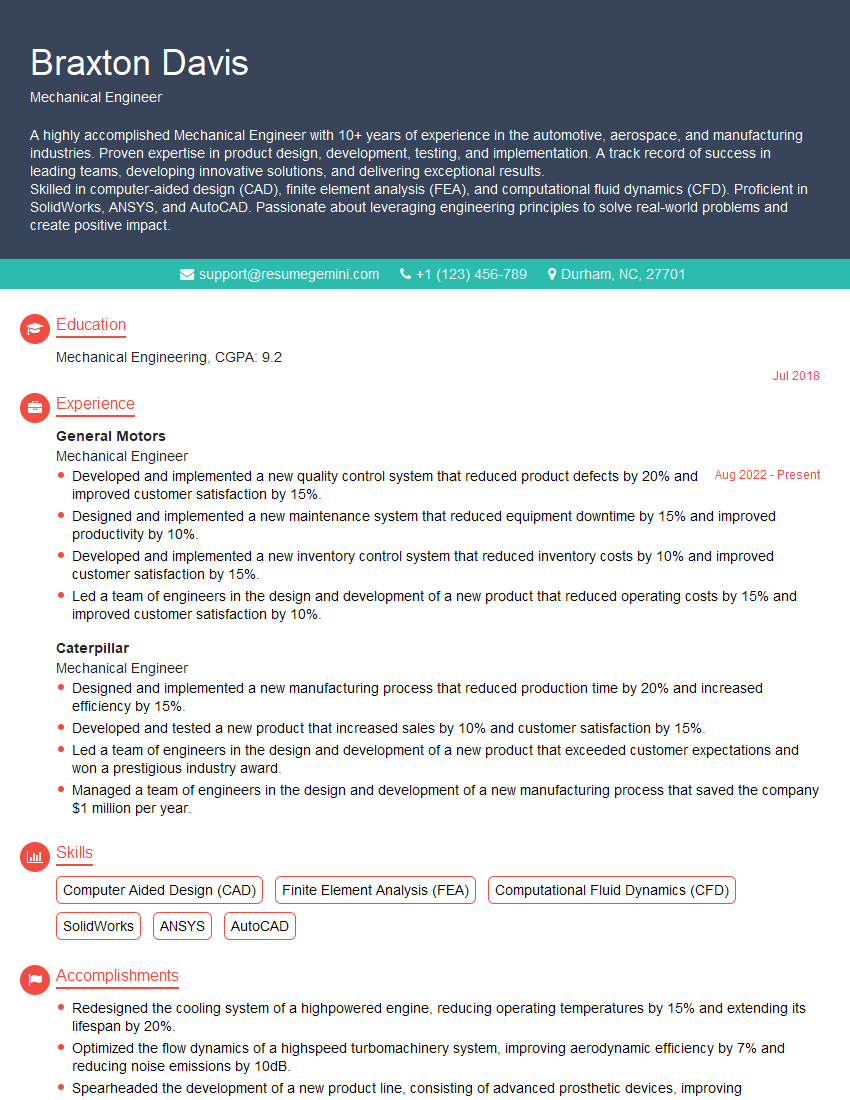
Mechanical Engineer Resume Sample

Automotive Engineer Resume Sample

Materials Scientist Resume Sample
Explore more articles
Users Rating of Our Blogs
Share Your Experience
We value your feedback! Please rate our content and share your thoughts (optional).
What Readers Say About Our Blog
Very informative content, great job.
good