Cracking a skill-specific interview, like one for Tolerancing and Fixturing, requires understanding the nuances of the role. In this blog, we present the questions you’re most likely to encounter, along with insights into how to answer them effectively. Let’s ensure you’re ready to make a strong impression.
Questions Asked in Tolerancing and Fixturing Interview
Q 1. Explain the concept of Geometric Dimensioning and Tolerancing (GD&T).
Geometric Dimensioning and Tolerancing (GD&T) is a symbolic language used on engineering drawings to define the size, form, orientation, location, and runout of features on a part. Instead of relying solely on plus/minus tolerances, GD&T uses symbols and zones to precisely communicate the acceptable variations allowed during manufacturing. This ensures parts fit and function correctly even with slight variations in manufacturing processes. Think of it as a highly precise instruction manual for manufacturing a part, reducing ambiguity and improving quality control.
For example, instead of simply stating a diameter of 10mm ±0.1mm, GD&T might specify a diameter of 10mm with a circularity tolerance of 0.05mm. This explicitly addresses the roundness of the feature, which is crucial for mating parts. The use of GD&T leads to clearer communication between designers, manufacturers, and inspectors, reducing errors and rework.
Q 2. Describe different types of tolerances (e.g., bilateral, unilateral).
Tolerances specify the permissible variation in a dimension. There are several types:
- Bilateral Tolerance: Allows variation above and below a nominal (target) value. For instance, 10 ± 0.1 means the acceptable range is 9.9 to 10.1. It’s like having a target range in a game; you can go slightly above or below.
- Unilateral Tolerance: Allows variation only in one direction from the nominal value. For example, 10 +0.1 indicates the acceptable range is 10 to 10.1. This is useful when one direction of variation is more critical than the other, like ensuring a shaft doesn’t protrude too far into a hole.
- Limit Dimensioning: Specifies only the maximum and minimum allowable values, without a nominal dimension. For example, 9.9 – 10.1 means the part must fall within this range, regardless of a target.
Choosing the right tolerance type depends heavily on the application and the functional requirements of the part.
Q 3. How do you determine the appropriate tolerance for a given feature?
Determining the appropriate tolerance is a crucial step and often involves considering several factors:
- Functional Requirements: How precisely does the feature need to be to ensure the part functions correctly? A tighter tolerance is needed for critical mating parts.
- Manufacturing Capabilities: What tolerances can the chosen manufacturing process realistically achieve? Attempting impossibly tight tolerances leads to increased costs and rejects.
- Material Properties: Material variation and potential for distortion during manufacturing can affect tolerances.
- Cost-Benefit Analysis: Tighter tolerances generally increase costs. Finding the balance between cost and functionality is important.
- Statistical Analysis: Using statistical process control (SPC) data can provide insights into manufacturing variability and inform tolerance setting.
Often, engineers use tolerance analysis software to simulate the effects of various tolerances on the overall assembly performance. This helps in optimizing the tolerances for each feature.
Q 4. Explain the importance of datum features in GD&T.
Datum features are fundamental reference points or surfaces used to establish the coordinate system for GD&T measurements. They are typically represented by a capital letter (A, B, C, etc.) on an engineering drawing. Think of them as the ‘foundation’ for measuring everything else on the part. Precise measurements rely on consistent and stable references. By defining datums, we eliminate ambiguity in measurements and ensure that everyone measures the part the same way.
For instance, if a hole needs to be located precisely relative to a surface, that surface would be designated as a datum feature. Measurements of the hole’s location would then be referenced to this datum, ensuring its proper positioning within the part.
Q 5. What are the different types of fixturing methods?
Various fixturing methods exist, each suited for specific applications and part geometries:
- 3-2-1 Principle: This fundamental approach uses three points to locate a part in space (locating), two points to orient it (orienting), and one point to support it (supporting). This ensures consistent and repeatable positioning.
- Jigs: Guide tools that hold and support workpieces during machining operations. They usually incorporate guides or bushings to direct tools.
- Fixtures: Hold workpieces securely for various operations, but unlike jigs, they don’t guide tools. They are more versatile.
- Clamps: Simple and effective for holding workpieces. Many types exist, ranging from hand-operated to pneumatic or hydraulic.
- Locating Pins and Bushings: Precisely locate and support parts based on their features, enhancing repeatability.
- Magnetic Fixtures: Suitable for ferrous materials, providing a quick and easy way to secure parts.
The choice of method depends on factors such as part complexity, material, and manufacturing processes.
Q 6. How do you design a fixture for a complex part?
Designing a fixture for a complex part requires a systematic approach:
- Analyze the Part: Identify critical features, surfaces, and areas requiring support and clamping. Understanding the part’s geometry is paramount.
- Determine the Machining or Assembly Operation: The fixture design will vary depending on the operation. A fixture for milling will be different from one for welding.
- Select Locating Points: Use the 3-2-1 principle to ensure accurate and repeatable positioning. Choose points that are robust and resistant to distortion under clamping forces.
- Design Clamping Mechanisms: Select appropriate clamps to secure the part without causing deformation or damage. Consider using multiple smaller clamps instead of a few large ones for better force distribution.
- Design Supporting Elements: Add supports to prevent deflection or vibration during operations. The supports should be strategically placed to avoid interfering with the tooling.
- Material Selection: Choose a material with appropriate strength, stiffness, and machinability. Steel is frequently used for its durability.
- Finite Element Analysis (FEA): For complex parts or high-precision applications, FEA can simulate the fixture’s performance to identify potential issues.
Remember to always prioritize safety and ergonomic design.
Q 7. What are the key considerations for fixture design?
Key considerations for fixture design include:
- Accuracy and Repeatability: The fixture must ensure consistent and accurate part positioning for reliable results.
- Rigidity and Stability: The fixture should be rigid enough to withstand the forces involved during the operation, preventing deformation or movement.
- Accessibility: Tooling and other equipment must have easy access to the workpiece.
- Safety: The design should prevent accidental injury to the operator. Consider incorporating safety features like guarding.
- Cost-Effectiveness: The fixture should be cost-effective to manufacture and maintain.
- Ease of Use: The fixture should be easy to load, unload, and operate.
- Maintainability: Consider wear and tear; design for easy repair and replacement of components.
Effective fixture design is crucial for efficient and high-quality manufacturing.
Q 8. Explain the concept of 3-2-1 principle in fixturing.
The 3-2-1 principle in fixturing is a fundamental guideline for ensuring the stable and repeatable location of a workpiece during machining or assembly. It dictates that a workpiece should be located using three points to determine its position and two more points to prevent rotation. Let’s break it down:
- Three Locating Points (Positional): These points define the workpiece’s X, Y, and Z coordinates. Imagine trying to hold a block on a table – you need at least three points of contact to prevent it from sliding or shifting. These are usually established with pins, vee-blocks, or similar.
- Two Orientation Points (Rotational): These two additional points prevent the workpiece from rotating around any axis. This could be achieved with a locating pin and a clamp, or two appropriately shaped features in the fixture. Without these, the part could tilt or twist under pressure.
- One Clamping Point (Securing): This single point applies sufficient force to hold the workpiece securely in place against the locating points. While more clamping points might seem safer, this is not always true. Over-clamping can cause distortion.
Example: Imagine fixturing a rectangular block. You might use three pins to locate the block at the corners, which defines its position. Two more contact points (such as a face against a support surface and a side against another surface) prevent rotation. Finally, a single clamp secures the block to the fixture.
Q 9. How do you ensure the accuracy and repeatability of a fixture?
Accuracy and repeatability in fixturing are paramount for consistent manufacturing processes. To ensure this, several strategies are employed:
- Precision Machining: The fixture itself needs to be manufactured with high precision. This means using accurate CNC machining techniques and precise measuring tools. Tolerances on the fixture’s features must be tighter than the tolerances of the workpiece.
- High-Quality Materials: Choosing materials with minimal deformation under stress is crucial. Steel is a popular choice due to its rigidity and stability.
- Proper Design: A well-designed fixture minimizes stress concentrations and ensures even clamping force distribution. This reduces the risk of workpiece deformation.
- Regular Inspection and Maintenance: Fixtures should be regularly inspected for wear and tear. Any damage or misalignment must be corrected or replaced.
- Calibration: Use calibrated measuring instruments like CMM (Coordinate Measuring Machine) or dial indicators to verify the fixture’s accuracy and repeatability.
- Fixture Verification and Validation (described below): A comprehensive process to systematically check the fixture’s performance.
Q 10. What are the common materials used in fixture construction?
The choice of material for fixture construction depends on several factors, including the workpiece material, the machining process, and the required fixture life. Common materials include:
- Steel: A highly popular choice due to its strength, rigidity, and good machinability. Various grades are available to meet specific requirements.
- Cast Iron: Offers good damping properties, making it suitable for applications where vibrations need to be minimized. It is also cost-effective.
- Aluminum: A lighter and less expensive option compared to steel, but with lower strength and rigidity. It’s often used for less demanding applications or prototypes.
- Composite Materials: These materials provide high strength-to-weight ratios and can be tailored to specific properties. However, they might be more expensive.
- Plastics: In some low-force applications, plastics can be used for their cost-effectiveness and ease of machining, but they generally offer lower stiffness and durability compared to metals.
Often, fixtures utilize a combination of materials for optimal performance and cost-effectiveness.
Q 11. Describe your experience with different types of clamping mechanisms.
My experience encompasses a broad range of clamping mechanisms, each with its strengths and weaknesses:
- Toggle Clamps: These are simple, manually operated clamps offering high clamping force with minimal effort. They’re widely used for their versatility and ease of use.
- Hydraulic Clamps: Provide high clamping forces with precise control, particularly useful for large or heavy workpieces. However, they are generally more complex and expensive.
- Pneumatic Clamps: Offer rapid clamping and releasing cycles, ideal for automation and high-speed production lines. Their force can be easily adjusted.
- Cam Clamps: These clamps use cam mechanisms for quick and secure clamping. They’re very reliable and can be integrated into automated systems.
- Magnetic Clamps: Useful for holding ferromagnetic materials, particularly for applications where quick setup and removal are essential. However, they’re not suitable for all materials and the clamping force can be affected by workpiece thickness.
The selection of the appropriate clamping mechanism depends on factors such as clamping force required, cycle time, workpiece material, and budget constraints.
Q 12. How do you select the appropriate clamping force for a given part?
Selecting the appropriate clamping force is critical to avoid workpiece damage or slippage. It involves a careful consideration of several factors:
- Workpiece Material: Brittle materials require lower clamping forces to avoid fracture. Ductile materials can withstand higher forces.
- Machining Process: High-speed machining might require higher clamping forces to prevent vibrations. Conversely, delicate operations need lower clamping pressures.
- Part Geometry: Complex shapes with slender sections need lower clamping force to prevent deformation.
- Fixture Design: A well-designed fixture distributes clamping force evenly across the workpiece. Poor design can lead to localized stress concentration.
- Safety Factor: A safety factor is always incorporated to account for variations in materials and machining conditions.
Often, a trial-and-error approach, coupled with careful monitoring of workpiece integrity during the machining process, is necessary to determine the optimal clamping force. Data acquisition systems can be employed to monitor clamping pressures and workpiece stress during operations.
Q 13. Explain the process of fixture verification and validation.
Fixture verification and validation is a systematic process to ensure the fixture meets its design specifications and performs as intended. It involves several key steps:
- Design Review: A thorough review of the fixture design to identify potential issues and ensure it adheres to safety standards and manufacturing requirements.
- Prototyping and Testing: A prototype fixture is often built and tested with sample workpieces. This involves measuring the accuracy of workpiece location and clamping force.
- Dimensional Inspection: Use precise measuring instruments (CMM, dial indicators) to verify the dimensional accuracy of the fixture. This ensures that the locating and clamping elements are within specified tolerances.
- Functional Testing: Testing the fixture’s ability to hold the workpiece securely during actual machining or assembly operations. This ensures the fixture performs as intended and minimizes the risk of workpiece movement.
- Repeatability Test: Repeatedly fixturing and measuring the same workpiece to verify the consistency and repeatability of the fixture’s performance. This assesses the variance in workpiece location.
- Documentation: Complete and well-maintained documentation of the verification and validation process is essential for traceability and quality control.
By following these steps, confidence in the fixture’s performance is established, leading to increased manufacturing efficiency and product quality.
Q 14. How do you handle part variations during fixture design?
Handling part variations during fixture design is crucial for robust and reliable manufacturing. Several strategies are employed:
- Tolerance Analysis: A thorough tolerance analysis is conducted to understand the range of variations in the workpiece dimensions. This involves analyzing geometric tolerances using GD&T (Geometric Dimensioning and Tolerancing).
- Compensating Features: Design the fixture with compensating features to accommodate part variations. This might involve using compliant elements, adjustable clamping mechanisms, or self-centering designs.
- Fixture Design for Maximum Tolerance Stack: The fixture should accommodate the maximum expected variation in workpiece dimensions. This often means designing the fixture with larger tolerances than the individual components.
- Redundant Locating Points: Using multiple locating points, where appropriate, increases stability and minimizes the impact of individual part variations.
- Statistical Process Control (SPC): SPC can monitor part variations over time, allowing for adjustments to the fixture or the manufacturing process as needed.
Remember, over-compensating for part variations can make the fixture too complex or expensive. The goal is to find a balance between robustness and cost-effectiveness. This often involves working closely with process engineers and quality control teams.
Q 15. What software tools are you proficient in for tolerancing and fixturing design?
Proficiency in software is crucial for efficient tolerancing and fixturing design. My expertise spans several key applications. I’m highly proficient in SolidWorks, utilizing its advanced features for tolerance analysis (including GD&T simulation) and creating detailed fixture designs. I also have extensive experience with Autodesk Inventor, particularly its capabilities in creating complex assemblies and generating manufacturing drawings with precise tolerance specifications. Furthermore, I’m familiar with dedicated tolerance analysis software like 3DCS, which allows for sophisticated Monte Carlo simulations to predict the overall variability of an assembly based on individual component tolerances. Finally, I have experience using CAD/CAM software for creating CNC programs for fixture manufacturing. This integrated approach ensures seamless transition from design to manufacturing.
Career Expert Tips:
- Ace those interviews! Prepare effectively by reviewing the Top 50 Most Common Interview Questions on ResumeGemini.
- Navigate your job search with confidence! Explore a wide range of Career Tips on ResumeGemini. Learn about common challenges and recommendations to overcome them.
- Craft the perfect resume! Master the Art of Resume Writing with ResumeGemini’s guide. Showcase your unique qualifications and achievements effectively.
- Don’t miss out on holiday savings! Build your dream resume with ResumeGemini’s ATS optimized templates.
Q 16. How do you interpret and apply ASME Y14.5 standards?
ASME Y14.5 is the bible of geometric dimensioning and tolerancing (GD&T). My interpretation and application go beyond simply understanding the symbols; it’s about strategically applying them to optimize designs for manufacturability and functionality. I start by understanding the design intent – what are the critical features and their functional requirements? Then I select the appropriate GD&T symbols and values to control form, orientation, location, and runout, ensuring they’re properly communicated on the drawings. For example, understanding the difference between a position tolerance and a profile tolerance is crucial. A position tolerance controls the location of a feature relative to a datum, while a profile tolerance controls the entire form and location of a feature’s surface. I also regularly utilize the principles of datum referencing to establish a stable and repeatable measurement system. A key aspect is using the Maximum Material Condition (MMC) and Least Material Condition (LMC) modifiers to accurately specify the acceptable variation range of a feature while considering the manufacturing process. For example, specifying a shaft diameter at MMC ensures that the tolerance covers potential manufacturing undersize, maintaining assembly function. I’m adept at interpreting complex tolerance stacks to identify potential assembly issues early in the design phase, avoiding costly rework later on.
Q 17. Describe your experience with statistical process control (SPC) and its application to tolerancing.
Statistical Process Control (SPC) is an essential element in ensuring that manufactured parts consistently meet the design tolerances. My experience involves using SPC techniques throughout the entire process, from initial design verification to ongoing production monitoring. During design, I use process capability analysis (Cpk) to evaluate if the chosen tolerances are realistically achievable considering the manufacturing process capabilities. This often involves collaboration with manufacturing engineers. In the manufacturing phase, I utilize control charts (e.g., X-bar and R charts) to monitor key characteristics of the parts. This allows for early detection of any shifts in the process mean or increased variability, enabling timely corrective actions. For example, if a control chart shows the average diameter of a shaft drifting outside the control limits, I would investigate the root cause—perhaps tool wear or material inconsistency—and implement necessary adjustments to bring the process back into control. This ensures that the parts consistently meet the tolerance specifications outlined in the design, minimizing scrap and rework. I’m comfortable using both manual and automated SPC systems to collect and analyze data effectively.
Q 18. Explain the difference between positional and perpendicularity tolerances.
Positional and perpendicularity tolerances both control the geometric relationship between features but in distinct ways. Positional tolerance controls the location of a feature’s center point relative to a datum reference frame. It specifies the allowable deviation of the center point from its ideal location. Think of it as ensuring a hole is drilled precisely where it needs to be on a part. The tolerance zone is a circle centered on the nominal position. Perpendicularity tolerance, on the other hand, controls the angular deviation of a feature from a datum plane or axis. It ensures the feature is truly perpendicular, or at a 90-degree angle. Imagine a shaft that needs to be exactly perpendicular to a surface. The tolerance zone is a pair of parallel planes, within which the feature must lie. In practice, a part might have both positional and perpendicularity tolerances specified, ensuring both precise location and orientation. For example, a mounting hole on a circuit board needs to be positioned accurately (position tolerance) and the mounting surface must also be perfectly perpendicular (perpendicularity tolerance) to the board. Incorrect application of these tolerances would result in a poorly functioning assembly.
Q 19. How do you account for thermal expansion during fixture design?
Thermal expansion is a critical consideration in fixture design, especially for precision applications. Ignoring it can lead to inaccurate measurements and compromised part quality. My approach involves several strategies. First, material selection plays a vital role. Choosing materials with low coefficients of thermal expansion (CTE) for critical fixture components minimizes dimensional changes with temperature fluctuations. Secondly, design for minimal thermal gradients is essential. This involves optimizing the fixture’s geometry and material distribution to minimize temperature differences within the fixture itself. Finally, compensating for expansion may be necessary. This could involve incorporating adjustable elements into the fixture design or using temperature-controlled environments during assembly and measurement processes. For example, using a fixture made from Invar (a low CTE alloy) is essential when working with components that require tight tolerance control under varying temperatures. A poorly designed fixture failing to address thermal expansion might lead to parts being clamped too tightly or loosely, potentially causing damage or leading to inaccurate measurements.
Q 20. Describe your experience with different types of measuring equipment used for verification.
Verification of tolerance and fixturing requires a range of measuring equipment, each suited for different tasks. My experience includes using coordinate measuring machines (CMMs) for high-precision measurements of complex geometries, providing detailed 3D data on part dimensions and form. CMMs are essential for verifying GD&T parameters and assessing the overall quality of parts. I’m also proficient in using optical comparators for quickly and accurately checking 2D features like holes, slots, and profiles. For simpler measurements, calipers, micrometers, and dial indicators are often sufficient. Moreover, I have experience utilizing laser scanners for rapid dimensional inspection of parts, particularly useful in reverse engineering or for quick quality checks. Beyond this, I have used height gauges, surface plate and various other gauging equipment to ensure high precision measurements. The choice of equipment depends on the specific requirements of the project, balancing accuracy, speed, and cost. I always ensure all measurement equipment is properly calibrated and traceable to national standards.
Q 21. How do you balance cost and performance in fixturing design?
Balancing cost and performance in fixturing is a crucial aspect of successful design. My approach is iterative, involving careful consideration at each stage. I begin with a thorough understanding of the part’s complexity, the required accuracy, and the production volume. For high-volume production, a more robust and potentially expensive fixture might be justified by its ability to ensure consistent part quality and minimize downtime. However, for low-volume production, a simpler, less expensive fixture could be sufficient. I explore various design options, evaluating their cost-effectiveness against their performance in terms of repeatability and accuracy. This might involve comparing the use of standard components (e.g., off-the-shelf clamps and tooling) versus custom-designed parts. Finite Element Analysis (FEA) may be used to optimize designs, minimizing material usage while maintaining structural integrity. Ultimately, the goal is to create a fixture that meets the necessary performance requirements while staying within the budget constraints. A common strategy is to modularize fixture designs, allowing for flexibility and reuse of components across different parts, minimizing the overall cost over the long run.
Q 22. What are some common challenges encountered in tolerancing and fixturing?
Tolerancing and fixturing, while crucial for manufacturing precision, present several common challenges. These often intertwine, impacting product quality and efficiency. Some key challenges include:
- Tight Tolerances: Meeting extremely precise dimensions and tolerances can be difficult and expensive, requiring specialized equipment and expertise. For instance, manufacturing a component with a tolerance of ±0.001mm requires highly accurate machines and meticulous process control.
- Complex Part Geometry: Intricate shapes and features demand sophisticated fixturing solutions to ensure accurate and repeatable positioning during manufacturing operations. Think of machining a turbine blade – the fixture must accommodate its complex curves and angles without introducing distortion.
- Part Variation: Even with tight tolerances, variations in raw materials, manufacturing processes, and environmental factors can lead to inconsistencies in part dimensions. This necessitates robust fixture designs that compensate for these variations.
- Fixture Design Complexity: Designing fixtures that are both effective and cost-efficient can be challenging, especially for high-volume production. Over-engineering can lead to unnecessary expense, while under-engineering might compromise accuracy and repeatability.
- Automation Integration: Integrating fixtures into automated production lines requires careful consideration of robotic interfaces, cycle times, and safety protocols.
Q 23. How do you address these challenges?
Addressing these challenges requires a multi-faceted approach:
- Statistical Tolerance Analysis (STA): Using STA, we can predict the overall tolerance stack-up and identify critical dimensions where tolerances need to be tightened or loosened strategically. This helps optimize designs for cost and manufacturability.
- Design for Manufacturing (DFM): Implementing DFM principles from the outset ensures that the design is feasible and cost-effective to manufacture. This includes simplifying part geometry whenever possible, selecting appropriate materials, and considering the capabilities of available manufacturing processes.
- Modular Fixture Design: Employing modular fixtures allows for flexibility and adaptability. Components can be easily replaced or rearranged to accommodate variations in part geometry or production needs.
- Advanced Fixture Concepts: Utilizing techniques like self-centering fixtures, flexible fixtures, and compliant mechanisms can improve accuracy and compensate for part variations. For example, a compliant mechanism can yield to slight part variations without affecting the overall accuracy.
- Simulation and Prototyping: Employing Finite Element Analysis (FEA) and creating prototypes help to validate fixture designs and identify potential issues early on in the development process.
- Process Capability Studies: Conducting capability studies helps in understanding the variability of manufacturing processes and allows for setting realistic tolerances.
Q 24. Describe your experience with designing fixtures for automation.
I have extensive experience in designing fixtures for automated assembly lines. A recent project involved designing a fixture for automated insertion of tiny electronic components onto a printed circuit board (PCB). The challenge was to achieve high placement accuracy and speed while ensuring the fixture could withstand the high-cycle demands of automation.
My approach involved developing a modular fixture with a combination of pneumatic and mechanical clamping systems to accurately position and hold the PCB. The component insertion was automated using a robotic arm with vision-guided placement. To enhance accuracy, I incorporated micro-adjustments in the fixture design allowing for precise component alignment, resulting in minimal component placement errors. The design also incorporated safety interlocks to prevent malfunctions and protect the operators and equipment during the automated cycle.
Q 25. Explain your understanding of tolerance stack-up analysis.
Tolerance stack-up analysis is the process of determining the cumulative effect of individual tolerances on a final assembly dimension. Imagine building a tower out of blocks – each block has its own slight variations in size. Tolerance stack-up analysis helps predict the total height variation of the tower, based on the individual variations of each block. This is crucial to ensure that the final assembly meets its design specifications.
The analysis considers various factors such as:
- Individual component tolerances: These are the permissible variations in the dimensions of each component.
- Assembly relationships: How the components are related to each other geometrically.
- Statistical methods: Methods used to combine individual tolerances and predict the overall variation (e.g., root sum square method, worst-case scenario).
Software tools are frequently used for this analysis, simplifying complex calculations and visualizing the results. This allows engineers to identify critical dimensions where tighter tolerances are needed or to adjust the design to reduce the overall tolerance stack-up.
Q 26. How do you communicate technical information effectively to different stakeholders?
Effective communication is paramount in my work. I tailor my communication style to the audience. With engineers, I use technical jargon and detailed drawings. With management, I focus on the impact on cost, schedule, and quality. With clients, I emphasize the functionality and benefits of the design.
I utilize various methods:
- Clear and concise documentation: Detailed drawings, specifications, and reports.
- Visual aids: 3D models, simulations, and charts to illustrate complex concepts.
- Presentations and workshops: To explain complex topics effectively to large groups.
- Active listening and feedback: To ensure that everyone understands and agrees on the design.
I believe in creating an environment of open communication, where everyone feels comfortable asking questions and providing feedback.
Q 27. Describe a time you had to troubleshoot a fixturing problem. What was the solution?
During the automated assembly of a medical device, we encountered a recurring issue where a critical component was being misaligned, leading to assembly failures. Initial investigation suggested problems with the robotic arm’s programming. However, after careful examination, I discovered that the fixture’s clamping mechanism wasn’t providing consistent clamping force across all parts. Variations in the part’s geometry were causing inconsistent clamping and subsequent misalignment.
The solution involved redesigning the clamping mechanism to incorporate a self-adjusting system that compensated for part variations. This involved integrating a pressure sensor to monitor clamping force and a micro-adjustment mechanism to fine-tune the clamping pressure based on the sensor readings. After implementing these changes, the assembly failures were significantly reduced, improving both product quality and production efficiency.
Q 28. How do you stay updated on the latest advancements in tolerancing and fixturing?
Staying current in tolerancing and fixturing requires a proactive approach. I utilize several methods:
- Professional organizations: Active participation in organizations like ASME (American Society of Mechanical Engineers) provides access to conferences, publications, and networking opportunities.
- Industry publications and journals: Regularly reviewing journals such as Manufacturing Engineering and Assembly Automation keeps me informed about the latest advancements in the field.
- Online resources and webinars: Participating in online courses and webinars offered by reputable organizations.
- Conferences and workshops: Attending industry events and conferences allows me to learn from experts and network with colleagues.
- Software training: Staying proficient with relevant CAD/CAM and CAE software is critical for applying the latest techniques.
Continuous learning is crucial in this dynamic field to ensure I remain at the forefront of best practices and innovations.
Key Topics to Learn for Tolerancing and Fixturing Interview
- Geometric Dimensioning and Tolerancing (GD&T): Understand fundamental GD&T symbols, their application in drawings, and how they define acceptable variations in part dimensions and geometry. Consider practical examples of how incorrect interpretation can lead to manufacturing issues.
- Types of Tolerances: Explore different tolerance types (e.g., bilateral, unilateral, limit dimensions) and their impact on part interchangeability and assembly. Practice applying these concepts to real-world scenarios.
- Fixturing Design Principles: Learn about the principles of robust fixture design, including locating, clamping, and supporting workpieces during manufacturing processes. Understand the importance of minimizing workpiece distortion and ensuring repeatability.
- Fixture Elements: Become familiar with common fixture elements such as locating pins, clamps, and support structures. Analyze how different element choices influence accuracy and efficiency.
- Material Selection for Fixtures: Understand the factors influencing material selection for fixtures, including strength, stiffness, wear resistance, and cost. Consider the implications of material choice on the overall fixture design and its performance.
- Tolerance Stack-up Analysis: Master the techniques for analyzing how individual tolerances accumulate to affect overall assembly tolerances. Practice performing tolerance stack-up calculations and identifying critical tolerances that need tighter control.
- Common Fixturing Mistakes and Solutions: Identify potential issues in fixturing designs, such as inadequate clamping, insufficient support, or improper location. Understand effective strategies for troubleshooting and optimizing fixture performance.
- Automation in Fixturing: Explore the integration of automation in fixturing systems, including robotic integration and automated clamping mechanisms. This showcases advanced knowledge and practical application of the field.
Next Steps
Mastering Tolerancing and Fixturing is crucial for advancing your career in manufacturing, engineering, and related fields. A strong understanding of these concepts demonstrates a crucial skill set highly valued by employers. To increase your chances of landing your dream role, focus on creating a compelling and ATS-friendly resume that effectively highlights your skills and experience. ResumeGemini is a trusted resource to help you build a professional resume that stands out. We provide examples of resumes tailored to Tolerancing and Fixturing roles to guide you.

Project Engineer Resume Sample
Applications Engineer Resume Sample
Process Engineer Resume Sample
Automation Engineer Resume Sample
Test Engineer Resume Sample
Design Engineer Resume Sample
Quality Engineer Resume Sample
Manufacturing Engineer Resume Sample
Metrologist Resume Sample
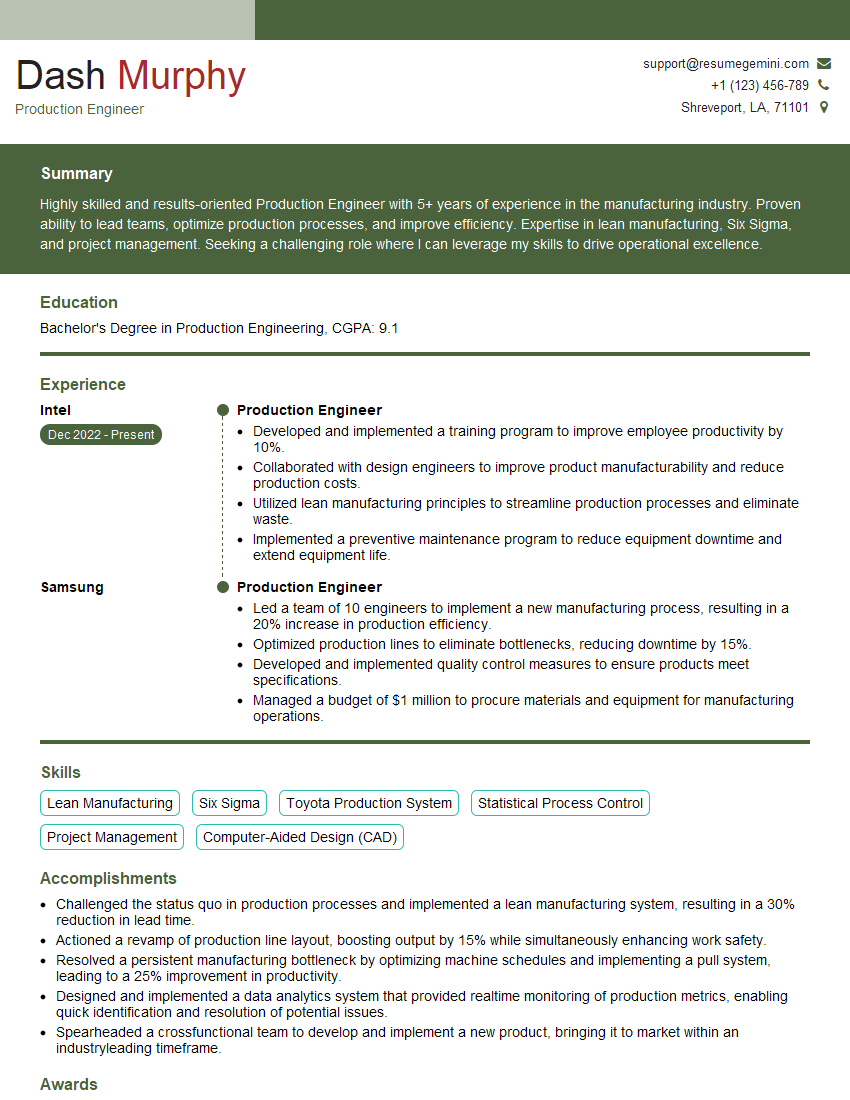
Production Engineer Resume Sample

Tooling Engineer Resume Sample
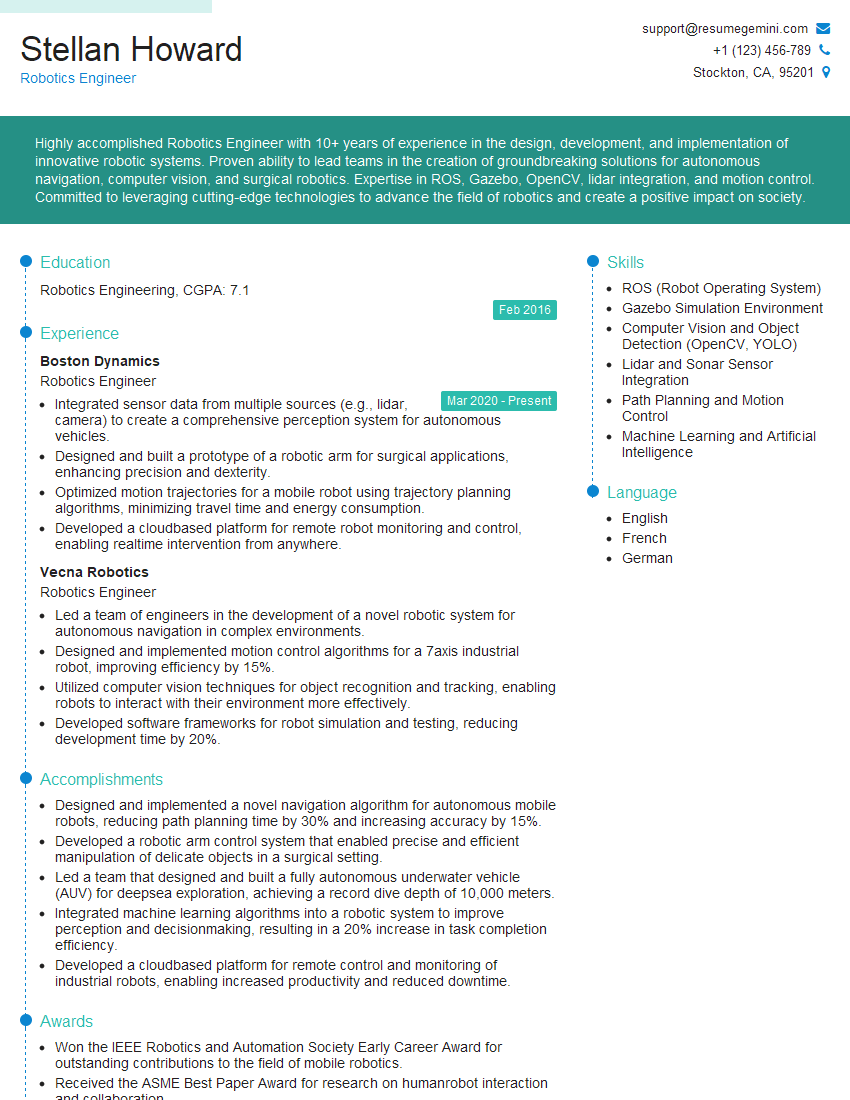
Robotics Engineer Resume Sample
Explore more articles
Users Rating of Our Blogs
Share Your Experience
We value your feedback! Please rate our content and share your thoughts (optional).
What Readers Say About Our Blog
Very informative content, great job.
good