Unlock your full potential by mastering the most common Training Debriefing interview questions. This blog offers a deep dive into the critical topics, ensuring you’re not only prepared to answer but to excel. With these insights, you’ll approach your interview with clarity and confidence.
Questions Asked in Training Debriefing Interview
Q 1. Describe your process for conducting a post-training debrief.
My process for conducting a post-training debrief is structured and participant-centered. It begins with setting a relaxed and safe environment, emphasizing that the debrief is for learning and improvement, not for blame. I start by reviewing the training objectives and then guide a structured discussion using a combination of open-ended questions and targeted prompts. This ensures we cover key aspects of the training, like what was learned, what challenges were faced, and what could be improved. I actively listen, take notes, and summarize key points throughout the session. Finally, I conclude by outlining action items, highlighting key takeaways, and expressing gratitude for participants’ contributions.
For example, after a customer service training, I might ask: ‘What were the most valuable skills or techniques you learned today?’, ‘What challenges did you anticipate facing in applying these skills to your job?’, and ‘What modifications to the training would make it even more effective?’
Q 2. What are the key components of an effective training debrief?
An effective training debrief hinges on several key components. First, a clear purpose – to identify what worked well, what needs improvement, and how to improve future training. Second, active participant involvement; everyone should have a voice. Third, a structured format – this could be a guided discussion, a feedback form, or a combination. Fourth, a focus on actionable insights; the debrief shouldn’t just be a recap, it should yield concrete improvements for the training and the trainees’ performance. Finally, timely feedback – the debrief should happen soon after the training while the experience is still fresh in everyone’s minds.
- Structured Discussion: Using open-ended questions to encourage discussion and reflection.
- Actionable Items: Identifying specific steps to improve future training or address identified weaknesses.
- Positive Reinforcement: Acknowledging and celebrating successes and achievements during the training.
Q 3. How do you ensure participant engagement during a debrief?
Ensuring participant engagement during a debrief is crucial for its success. I use several strategies to achieve this. I begin by creating a safe and inclusive environment where everyone feels comfortable sharing their thoughts and opinions. I employ a variety of methods to elicit feedback, including open-ended questions, group discussions, individual reflections, and anonymous feedback forms. I also use visual aids like whiteboards or flip charts to make the debrief more interactive and engaging. I actively listen to each participant and acknowledge their contributions, ensuring everyone feels heard and valued. Small group discussions can also be more conducive to open sharing than large group discussions.
For example, using a ’round robin’ technique where each person shares one key takeaway can ensure everyone participates and creates a sense of shared responsibility for the outcome.
Q 4. How do you handle negative feedback during a training debrief?
Negative feedback is an invaluable opportunity for improvement. Instead of dismissing it, I approach it as constructive criticism. I listen attentively, acknowledge the participant’s feelings, and ask clarifying questions to understand the root cause of their dissatisfaction. I avoid getting defensive and focus on understanding their perspective. I then collaboratively brainstorm solutions to address the issues raised. The goal is to turn negative feedback into a positive learning experience for both the participants and myself, improving future trainings.
For instance, if someone mentions the training was too fast-paced, I wouldn’t argue. I’d say something like, ‘I appreciate you pointing that out. Can you elaborate on what made it feel too fast? Perhaps we can adjust the pacing in future sessions by incorporating more breaks or slowing down certain sections.’
Q 5. What methods do you use to gather feedback during a debrief?
I use a multi-faceted approach to gather feedback during debriefs. This usually involves a combination of methods to get a holistic view. Firstly, open-ended questions during a group discussion allow for rich qualitative data. Secondly, a structured feedback form provides quantitative data and allows for anonymous input, encouraging honesty. Thirdly, informal conversations after the formal debrief can unearth additional insights. Finally, I also sometimes use anonymous suggestion boxes to encourage feedback even after the debrief has concluded.
Example: A feedback form might include rating scales for aspects like ‘material clarity,’ ‘trainer engagement,’ and ‘overall effectiveness,’ as well as a free-text section for additional comments.
Q 6. How do you identify key takeaways from a training debrief?
Identifying key takeaways requires careful analysis of the collected feedback. I start by summarizing the main points from the discussion and feedback forms. I look for recurring themes and patterns in the responses. This involves categorizing feedback into positive, negative, and suggestions for improvement. Then, I prioritize the most impactful findings – those with the potential for the most significant improvement in future trainings. I synthesize this information to develop concise, actionable takeaways that can directly inform improvements to the training program.
For instance, if multiple participants mention confusion about a specific technical concept, this becomes a key takeaway, indicating a need to revise that section of the training or add supplementary materials.
Q 7. How do you incorporate debrief feedback into future training programs?
Incorporating debrief feedback into future training programs is essential for continuous improvement. I start by documenting all key takeaways, both positive and negative. Then I prioritize the action items identified during the debrief. This might involve revising training materials, adjusting the training schedule, or incorporating new techniques based on the participant feedback. I also use the feedback to refine my own training delivery methods. This feedback loop helps to ensure that future training sessions are more effective and better aligned with the needs of the learners.
For example, if participants suggest adding hands-on exercises, I would incorporate them in the revised training materials. If they felt the pace was too slow, I’d look at how to condense the material or engage participants more actively.
Q 8. How do you tailor a debrief to different learning styles?
Tailoring a debrief to different learning styles is crucial for maximizing its effectiveness. Understanding that people process information differently – visually, auditorily, kinesthetically, or a combination – allows for a more inclusive and impactful experience.
For visual learners, I use diagrams, charts, and presentations with strong visuals to summarize key takeaways and highlight patterns. For example, I might use a flowchart to illustrate a complex process or a mind map to show the relationships between concepts.
Auditory learners benefit from discussions, group brainstorming, and verbal feedback. I encourage them to articulate their experiences and perspectives, using open-ended questions to facilitate this. Recording the debrief and providing a transcript afterwards can also be beneficial.
Kinesthetic learners thrive on hands-on activities. I might incorporate role-playing, simulations, or practical exercises to reinforce learning. For instance, after a sales training, we could role-play handling difficult customer objections.
Finally, I ensure the debrief includes a variety of methods to cater to all styles, combining visual aids with verbal discussions and active participation.
Q 9. How do you handle a situation where participants are reluctant to participate in a debrief?
Reluctance to participate in a debrief can stem from various factors, including fear of judgment, lack of trust, fatigue, or a belief that the debrief is unproductive. My approach is built on creating a safe and supportive environment.
Firstly, I emphasize the debrief’s purpose: it’s about collective learning and improvement, not individual blame. I explicitly state that there are no wrong answers, and all perspectives are valued.
Secondly, I start with easy-to-answer questions, building confidence and encouraging participation. Instead of broad questions like “What did you learn?”, I might begin with something specific like, “What was one moment that stood out to you during the exercise?”
Thirdly, I use non-threatening techniques like anonymous feedback forms or individual check-ins if direct participation remains challenging. Sometimes a private conversation addressing concerns is necessary. Ultimately, building rapport and demonstrating genuine interest in their perspectives is vital.
If the reluctance persists despite these efforts, I reflect on whether the debrief structure or the training itself requires adjustments.
Q 10. Describe a time you had to adapt your debriefing approach based on participant feedback.
During a leadership training program, participants felt the debrief was too theoretical and lacked practical application. Their feedback was invaluable. Initially, the debrief focused heavily on reviewing leadership theories, using mostly lectures and presentations. However, the participants, mostly mid-level managers, wanted more relevance to their daily challenges.
Based on this feedback, I completely revised my approach for the next session. I incorporated case studies that mirrored real-life scenarios they faced. We used these scenarios for interactive discussions and problem-solving sessions, which incorporated their individual experiences. I also introduced peer-to-peer coaching exercises during the debrief.
The change was significant. Participant engagement soared, and the post-training survey showed a substantial improvement in perceived practical value and overall satisfaction. This reinforced the importance of incorporating continuous feedback into my debriefing process.
Q 11. What are some common pitfalls to avoid during training debriefs?
Several common pitfalls can hinder the effectiveness of training debriefs.
- Dominating the conversation: The facilitator should guide, not lecture. Participants need space to share.
- Focusing solely on negatives: While constructive criticism is important, celebrating successes and acknowledging effort boosts morale and encourages future participation.
- Lack of clear objectives: Participants should understand the debrief’s purpose and intended outcomes from the outset.
- Ignoring individual differences: Failing to address diverse learning styles and communication preferences.
- Insufficient time allocation: A rushed debrief is unproductive. Adequate time allows for thoughtful reflection and discussion.
- Absence of action planning: The debrief should lead to concrete steps for improvement, not just general conclusions.
Q 12. How do you measure the effectiveness of your training debriefs?
Measuring the effectiveness of training debriefs involves both qualitative and quantitative methods.
Quantitative measures could include pre- and post-training assessments to measure knowledge gained, participant satisfaction surveys, and the tracking of on-the-job performance improvements (e.g., sales figures, error rates).
Qualitative measures rely on feedback gathered through open-ended survey questions, focus groups, or informal discussions. This helps understand how participants felt about the debrief process, what resonated with them, and what areas could be improved.
By combining these approaches, a comprehensive picture of the debrief’s effectiveness emerges, guiding future improvements.
Q 13. How do you use technology to enhance your training debriefs?
Technology significantly enhances training debriefs.
- Interactive whiteboards (like Miro or Mural) facilitate collaborative brainstorming and visual note-taking.
- Video conferencing tools (like Zoom or Teams) enable remote participation and recording of sessions for later review.
- Learning management systems (LMS) allow for pre- and post-debrief assessments, feedback collection, and the distribution of resources.
- Polling software (like Mentimeter) adds an element of interactivity, gathering real-time feedback and ensuring everyone’s voice is heard.
- Screen recording software captures the debrief session for later review by participants and facilitators, fostering continuous learning.
By strategically utilizing these tools, debriefs become more engaging, accessible, and data-driven.
Q 14. What are some examples of effective debriefing questions?
Effective debriefing questions should be open-ended, thought-provoking, and focused on specific aspects of the training. Here are some examples, categorized by purpose:
To encourage reflection:
- What was your biggest takeaway from today’s session?
- What surprised you the most?
- What challenges did you face, and how did you overcome them?
To analyze performance:
- What went well during the exercise/simulation?
- What could have been done differently?
- How could you apply what you learned to a real-world situation?
To foster collaboration:
- What did you learn from your team members?
- How could we improve the training process?
- What support do you need to apply these skills effectively?
Remember to tailor questions to the specific training content and participants’ experience levels.
Q 15. How do you ensure confidentiality during a training debrief?
Confidentiality is paramount in training debriefs, as participants might share honest feedback, including mistakes or areas needing improvement. To ensure this, I always begin by explicitly stating the importance of confidentiality and that all shared information will remain within the group unless otherwise agreed upon. I emphasize that feedback is intended for improvement, not blame. Furthermore, I avoid using names when discussing specific incidents and focus on behaviors or situations. In cases where sensitive information might be disclosed, I obtain explicit consent from the individual before sharing any details with the larger group. For example, if a participant discloses a personal challenge that impacted their performance, I would discuss this with them privately and summarize it generally to the group without identifying the individual. I might say, for instance, ‘One participant mentioned that a personal issue impacted their ability to fully focus on the training, highlighting the importance of prioritizing well-being’.
Career Expert Tips:
- Ace those interviews! Prepare effectively by reviewing the Top 50 Most Common Interview Questions on ResumeGemini.
- Navigate your job search with confidence! Explore a wide range of Career Tips on ResumeGemini. Learn about common challenges and recommendations to overcome them.
- Craft the perfect resume! Master the Art of Resume Writing with ResumeGemini’s guide. Showcase your unique qualifications and achievements effectively.
- Don’t miss out on holiday savings! Build your dream resume with ResumeGemini’s ATS optimized templates.
Q 16. How do you handle sensitive or controversial topics during a debrief?
Handling sensitive or controversial topics requires a delicate approach that prioritizes safety and respect. I start by creating a psychologically safe space where participants feel comfortable voicing concerns. I establish ground rules for respectful dialogue, emphasizing active listening and avoiding interruptions. When a controversial topic arises, I guide the discussion by asking open-ended questions that encourage reflection rather than judgment. I might ask: ‘What are the underlying factors contributing to this situation?’, or ‘What lessons can we learn from this experience?’. I actively manage the discussion, preventing it from becoming overly emotional or accusatory. If necessary, I’ll reframe the conversation to focus on solutions rather than dwelling on fault. For instance, if a dispute arises between two participants, I’ll steer the conversation towards what improvements could be made to avoid similar situations in the future. Post-debrief, if there are unresolved issues or ethical dilemmas, I’ll address them privately with the appropriate individuals.
Q 17. Explain the importance of action planning in a training debrief.
Action planning is crucial in a debrief because it transforms feedback into tangible improvements. Without a clear plan, valuable insights remain just that – insights. Action planning ensures that the debrief isn’t just a discussion but a catalyst for change. It involves identifying key areas for improvement, assigning responsibilities, setting deadlines, and defining success metrics. For example, if the debrief reveals a lack of clarity in a particular training module, the action plan might include revising the module, adding more visual aids, or providing supplementary materials. Each action item should have an owner (the person responsible), a deadline, and a measure of success. This structured approach facilitates accountability and ensures that the lessons learned are actually implemented, resulting in tangible improvements in future training sessions. The importance lies in bridging the gap between identifying problems and implementing solutions, thus maximizing the value of the debrief itself.
Q 18. How do you prioritize feedback received during a debrief?
Prioritizing feedback involves a combination of factors. I use a combination of quantitative and qualitative analysis. For example, if a particular issue is consistently raised by multiple participants, this suggests a higher priority. I also consider the potential impact of addressing each piece of feedback. For example, feedback related to safety or compliance would always take precedence over less critical issues. I use a simple prioritization matrix to visualize this, considering both the frequency of the feedback (impact) and its severity (urgency). High impact and high urgency issues receive top priority. I ensure that all feedback is recorded, even if not immediately prioritized. This ensures that nothing is overlooked, and less urgent issues can be addressed systematically in a secondary follow-up or next iteration of the training. This structured approach facilitates better decision-making and focused efforts on areas needing the most immediate attention.
Q 19. How do you track the implementation of action items from a debrief?
Tracking the implementation of action items requires a dedicated system. I typically use a project management tool like a shared spreadsheet or dedicated project management software. This allows easy tracking of each action item’s status (e.g., ‘To Do’, ‘In Progress’, ‘Completed’). The spreadsheet includes columns for the action item, owner, deadline, status, and any relevant notes. Regular follow-up meetings (e.g., weekly or bi-weekly) are scheduled to review progress and address any roadblocks. The responsibility for updating the status falls on the action item owner. I also conduct informal check-ins with owners to ensure timely completion and offer support where needed. This structured tracking ensures that everyone is on the same page and that the agreed-upon changes are being implemented effectively. The data collected throughout the process serves as valuable feedback for future training sessions, contributing to continual improvement.
Q 20. How do you ensure follow-up after a training debrief?
Follow-up is critical to ensure the debrief’s effectiveness and creates a sense of closure. I send a summary email within 24-48 hours of the debrief, reiterating key takeaways, agreed-upon action items, and assigned owners. I also schedule a short follow-up meeting (approximately 15-30 minutes) one to two weeks after the debrief to review progress on action items and address any challenges. I ensure individual participants receive timely feedback on their performance and areas for improvement. This targeted feedback is often shared during the follow-up meeting or communicated directly via email, depending on the participant’s preference. This multi-faceted follow-up approach reinforces commitment, addresses challenges proactively, and demonstrates a dedication to continuous improvement within the training program.
Q 21. Describe your experience using different debriefing formats (e.g., group discussions, surveys, individual interviews).
My experience spans various debriefing formats, each with its strengths and weaknesses. Group discussions offer a rich environment for sharing perspectives and brainstorming solutions; however, they can be dominated by certain personalities or lack depth in sensitive issues. Individual interviews offer in-depth feedback but are time-consuming and may not capture the group’s collective view. Surveys provide a quick and broad perspective but lack the nuance of personal interactions. I’ve found that a blended approach is often most effective. A group discussion can identify key themes, followed by individual interviews to delve deeper into sensitive issues. Surveys can then be used to supplement this data and obtain a broader perspective, especially concerning participant satisfaction. For example, I’ve utilized group discussions to identify key areas for improvement in a leadership training program, followed by individual interviews to understand participants’ personal experiences and gather in-depth feedback. A post-training survey then allowed me to quantify the impact of the training and satisfaction levels.
Q 22. How do you balance the need for thorough debriefing with time constraints?
Balancing thorough debriefing with time constraints requires a strategic approach. The key is to prioritize the most impactful learning points. Instead of trying to cover everything, focus on the 2-3 most critical areas for improvement. This might involve pre-debriefing questionnaires to identify key discussion points, or using a structured framework to guide the discussion and keep it focused. For example, if we’re debriefing a sales training, instead of reviewing every individual sales call, we might focus on the most common challenges faced by the trainees and discuss effective strategies to overcome those challenges.
Timeboxing is crucial. Allocate a specific time for the debrief and stick to it. This helps maintain focus and ensures the session doesn’t drag on. Consider using techniques like the ‘Plus/Delta’ method, where participants share what worked well (‘Plus’) and what could be improved (‘Delta’), to keep the feedback concise and impactful.
Q 23. How do you adapt your debriefing style to different levels of participants (e.g., entry-level vs. executive)?
Adapting my debriefing style depends heavily on the audience. For entry-level participants, I prioritize clear, simple language, positive reinforcement, and plenty of opportunities for questions. The focus is on building confidence and ensuring understanding of foundational concepts. I might use more visual aids and interactive exercises.
With executives, the debrief is more strategic and results-oriented. The language is more sophisticated, and the focus shifts towards high-level analysis of performance, return on investment, and broader organizational implications. I’d emphasize the connection between training and business objectives, providing data-driven insights and recommendations for future improvements. The discussions are often more focused on problem-solving and decision-making at a strategic level.
Q 24. How do you deal with conflicting feedback received during a debrief?
Conflicting feedback is a valuable opportunity for deeper learning. I address this by creating a safe space for open dialogue and encouraging participants to explain the reasoning behind their perspectives. Instead of dismissing conflicting opinions, I use them as a springboard for further discussion. For example, if one group praises a specific training method while another criticizes it, I facilitate a discussion to explore the reasons for this difference. This might reveal underlying issues with the training design or the participant’s prior experience.
I might ask clarifying questions such as: ‘Can you elaborate on what made you feel that way?’ or ‘Can we explore different perspectives on this issue?’. The goal isn’t to force consensus, but to understand the root causes of the different opinions and identify solutions that address the broader needs of the participants.
Q 25. What tools or technologies are you familiar with for conducting and documenting debriefs?
I’m proficient in using a variety of tools for conducting and documenting debriefs. For virtual debriefs, platforms like Zoom or Microsoft Teams are essential for facilitating real-time discussions and screen sharing. I often use collaborative document editing tools like Google Docs to allow participants to contribute their feedback directly and create a shared record of the discussion. This improves transparency and allows for asynchronous contributions.
For documenting and analyzing feedback, I utilize spreadsheets to organize data and identify trends. Specialized Learning Management Systems (LMS) often include features for conducting and tracking debriefs, making the process more streamlined and efficient. I also sometimes use mind-mapping software to visually represent key themes and insights emerging from the debrief session.
Q 26. Explain your understanding of Kirkpatrick’s Four Levels of Evaluation and how it applies to training debriefs.
Kirkpatrick’s Four Levels of Evaluation provides a valuable framework for assessing the effectiveness of training debriefs. It’s a hierarchical model, moving from basic reactions to long-term behavioral changes.
- Level 1: Reaction: This assesses participants’ immediate satisfaction with the debrief process – their engagement and feedback on the format, content, and facilitation.
- Level 2: Learning: This evaluates the extent to which participants acquired new knowledge, skills, or attitudes as a result of the debrief. This could be assessed through quizzes, knowledge checks, or observation of improved performance.
- Level 3: Behavior: This measures changes in participants’ on-the-job behavior after the debrief. Did they apply what they learned? This might involve observing performance on the job, analyzing data on performance metrics, or conducting post-training performance reviews.
- Level 4: Results: This is the highest level, assessing the overall impact of the debrief on business outcomes. Did it contribute to improved productivity, reduced errors, or increased sales? This requires careful analysis of key performance indicators (KPIs).
Applying this framework to debriefs means we can assess not just if the session was enjoyable, but also if it led to tangible improvements in knowledge, skills, behavior, and ultimately, business results.
Q 27. How do you ensure the debrief session contributes to improved learning outcomes?
Ensuring a debrief contributes to improved learning outcomes involves careful planning and execution. A well-structured debrief should be focused, engaging, and action-oriented. I make sure to:
- Set clear objectives: What specific learning points do we want participants to take away?
- Use active learning techniques: Instead of lecturing, I encourage discussion, problem-solving, and peer learning.
- Provide constructive feedback: Focus on specific behaviors and provide actionable suggestions for improvement.
- Link learning to practical application: Connect the training content directly to participants’ daily work and challenges.
- Develop an action plan: Participants should leave with concrete steps to apply their learning.
- Follow up: Check in with participants after the debrief to see how they are applying their learnings and offer support.
For example, a post-debrief email summarizing key takeaways and action items helps reinforce learning and ensures participants remain focused on applying their new skills.
Q 28. How do you use data from debriefs to inform future training needs analysis?
Data from debriefs is invaluable for informing future training needs analysis. By analyzing feedback on areas of strength and weakness, we can identify gaps in knowledge, skills, and attitudes. This allows us to tailor future training to better address these specific needs.
For example, if many participants struggle with a particular skill during a debrief, this highlights a need to dedicate more time and resources to that area in future trainings. Quantitative data, such as scores on knowledge checks or performance metrics, can be analyzed to further validate these findings. This iterative process ensures continuous improvement in training effectiveness and better alignment with organizational goals.
Key Topics to Learn for Training Debriefing Interview
- Effective Questioning Techniques: Learn how to elicit meaningful feedback from trainees, focusing on both positive aspects and areas for improvement. Consider different questioning styles and their appropriateness for various learning scenarios.
- Active Listening and Observation Skills: Practice actively listening to trainee responses and observing their behaviors during training sessions. Understand how to identify non-verbal cues and interpret them in the context of the training’s effectiveness.
- Identifying Training Gaps and Needs: Develop skills in analyzing feedback to pinpoint specific areas where training fell short or where further instruction is needed. Learn how to translate observations into actionable improvement strategies.
- Developing Actionable Improvement Plans: Master the creation of concrete plans based on debriefing findings. This includes setting realistic goals, assigning responsibilities, and establishing timelines for implementation.
- Facilitating Constructive Feedback: Learn techniques for delivering both positive reinforcement and constructive criticism in a supportive and encouraging manner. Practice delivering feedback effectively to trainees to foster a culture of growth and learning.
- Documenting and Reporting: Understand the importance of detailed and accurate documentation of training debriefings. Learn how to structure reports that effectively communicate findings and recommended actions to relevant stakeholders.
- Adapting Debriefing Strategies: Develop flexibility in adapting your debriefing approach to different training contexts, trainee personalities, and learning styles.
Next Steps
Mastering Training Debriefing is crucial for demonstrating your ability to facilitate effective learning and development within any organization. This skill showcases your commitment to continuous improvement and your ability to analyze and solve problems proactively. To maximize your job prospects, create an ATS-friendly resume that highlights your relevant skills and experiences. We strongly encourage you to use ResumeGemini, a trusted resource for building professional resumes, to craft a compelling document that showcases your expertise. Examples of resumes tailored to Training Debriefing are available to help guide you.
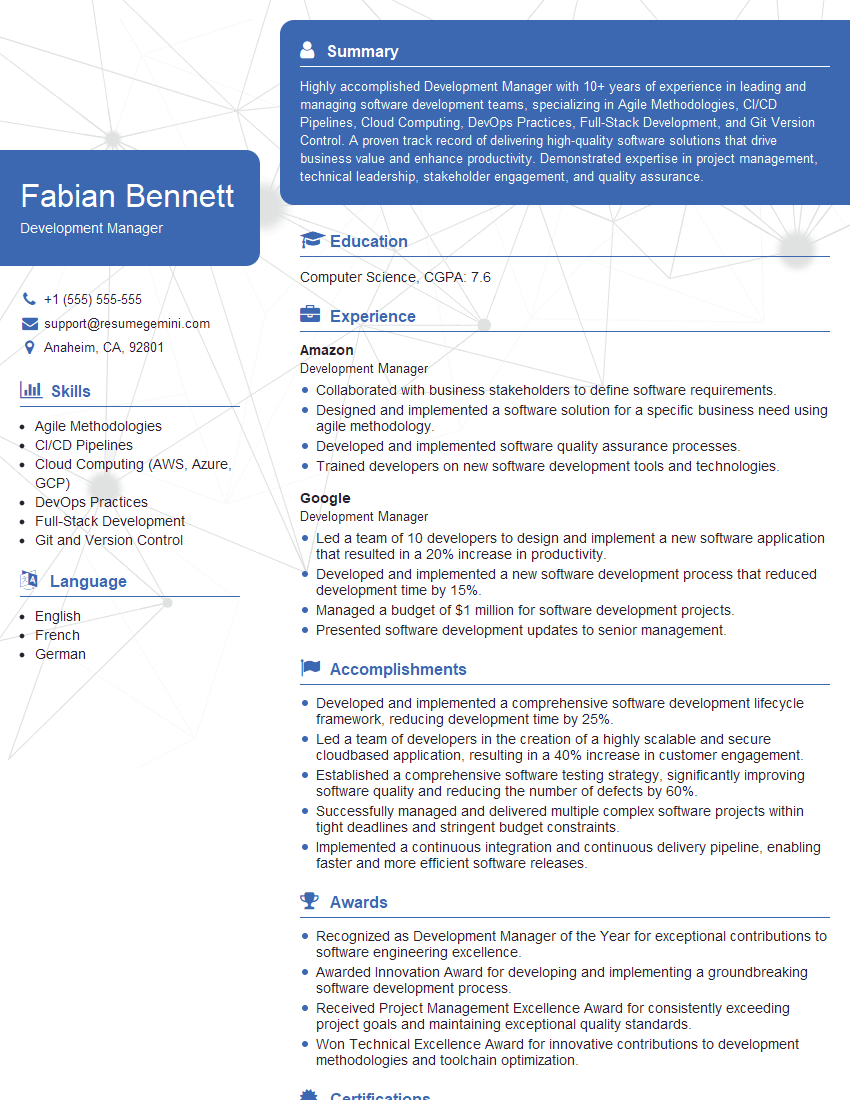
Development Manager Resume Sample
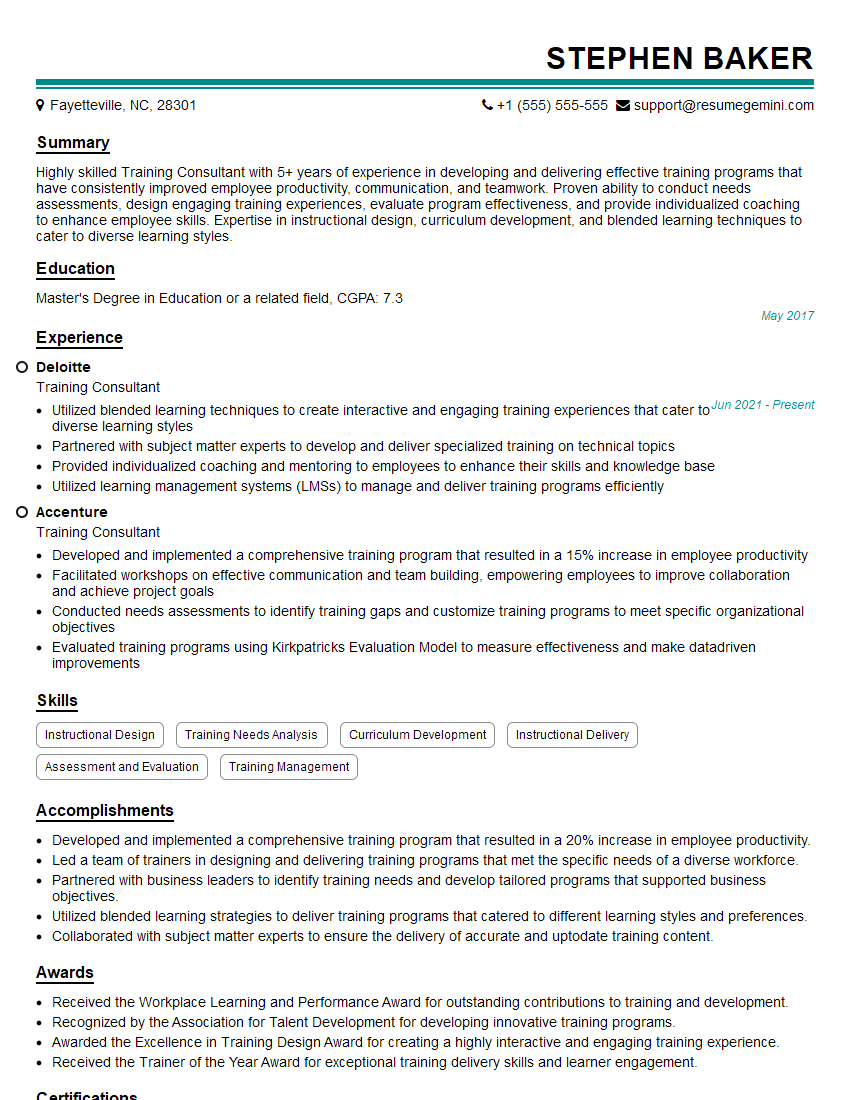
Training Consultant Resume Sample
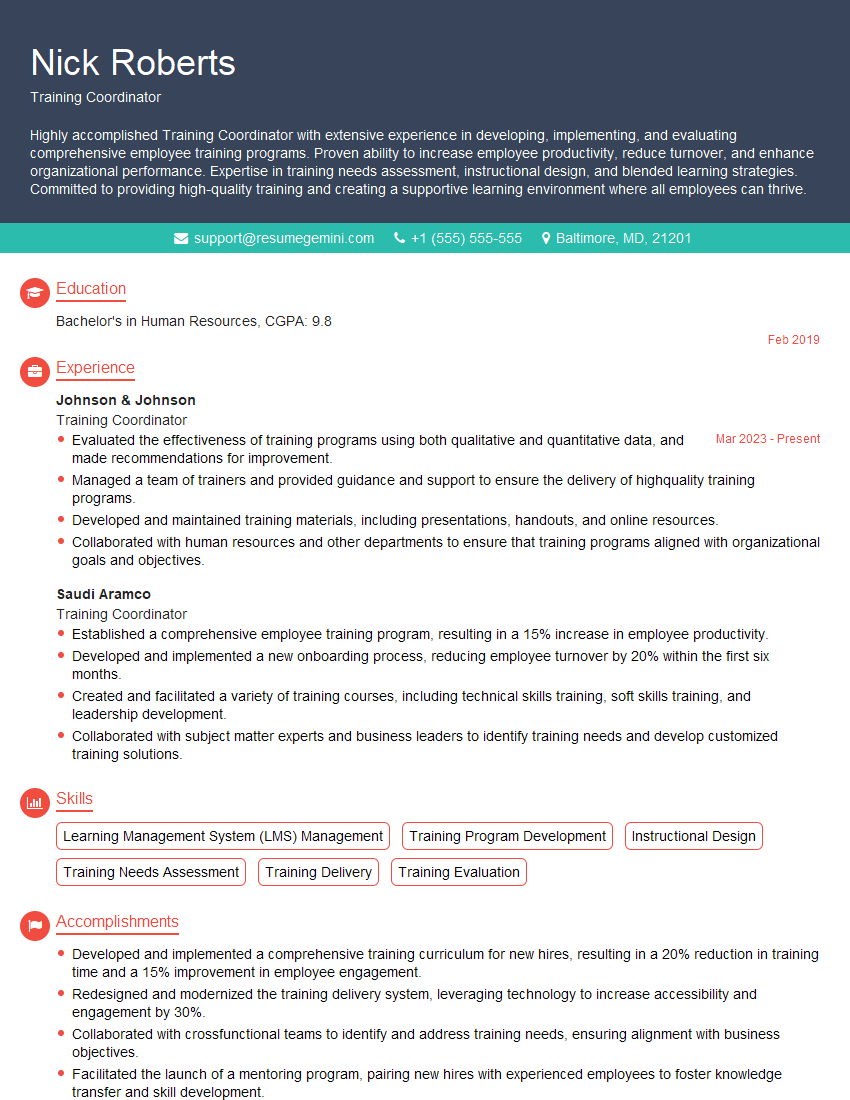
Training Coordinator Resume Sample
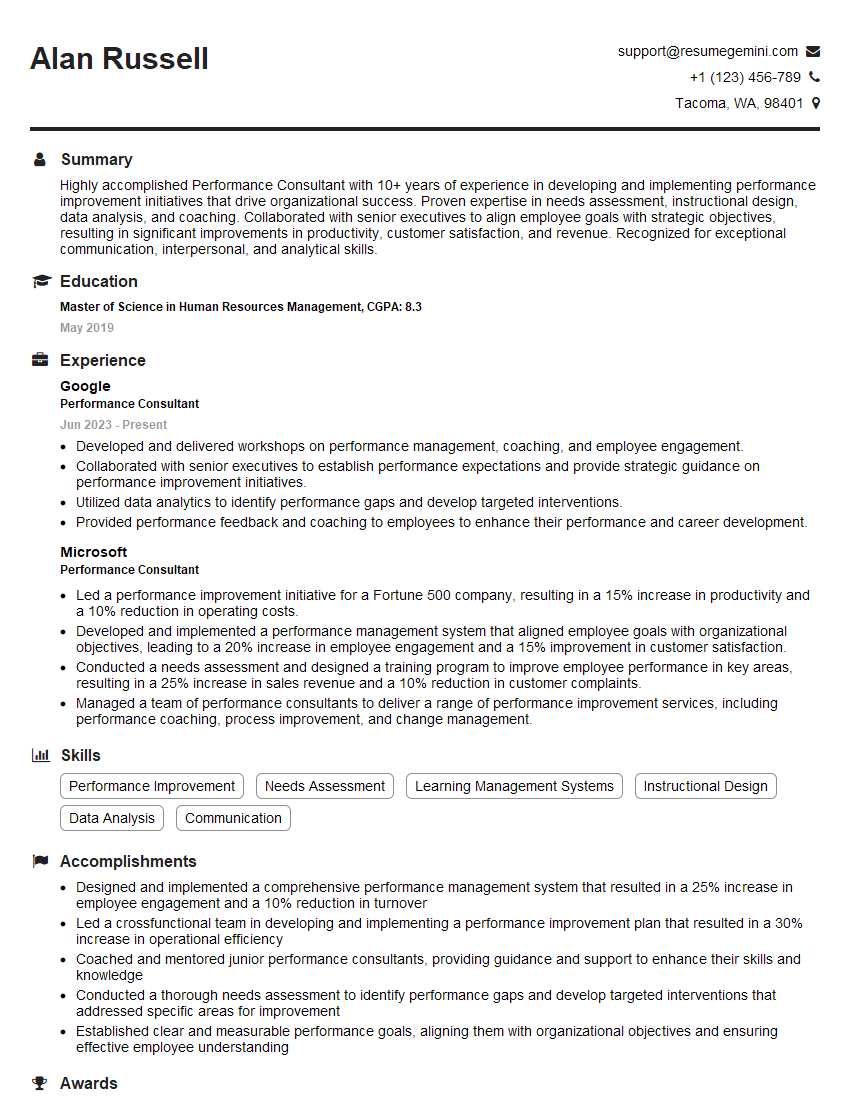
Performance Consultant Resume Sample
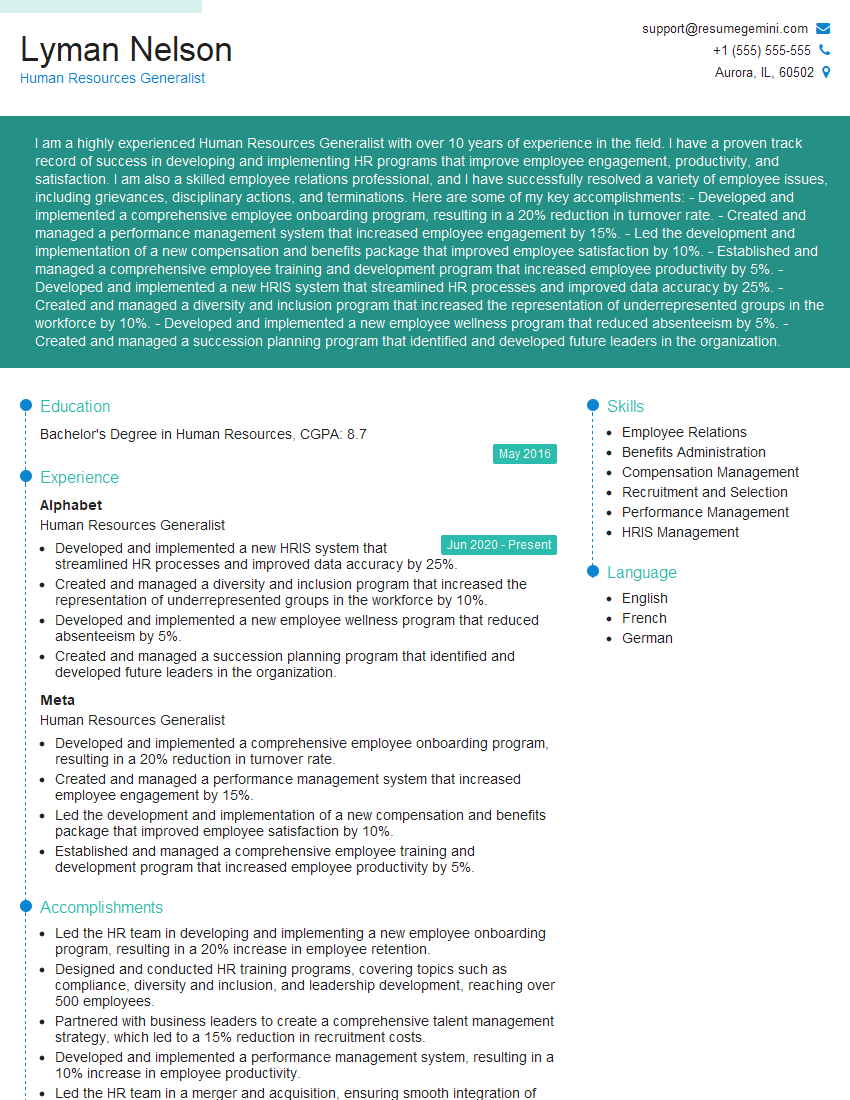
Human Resources Generalist Resume Sample
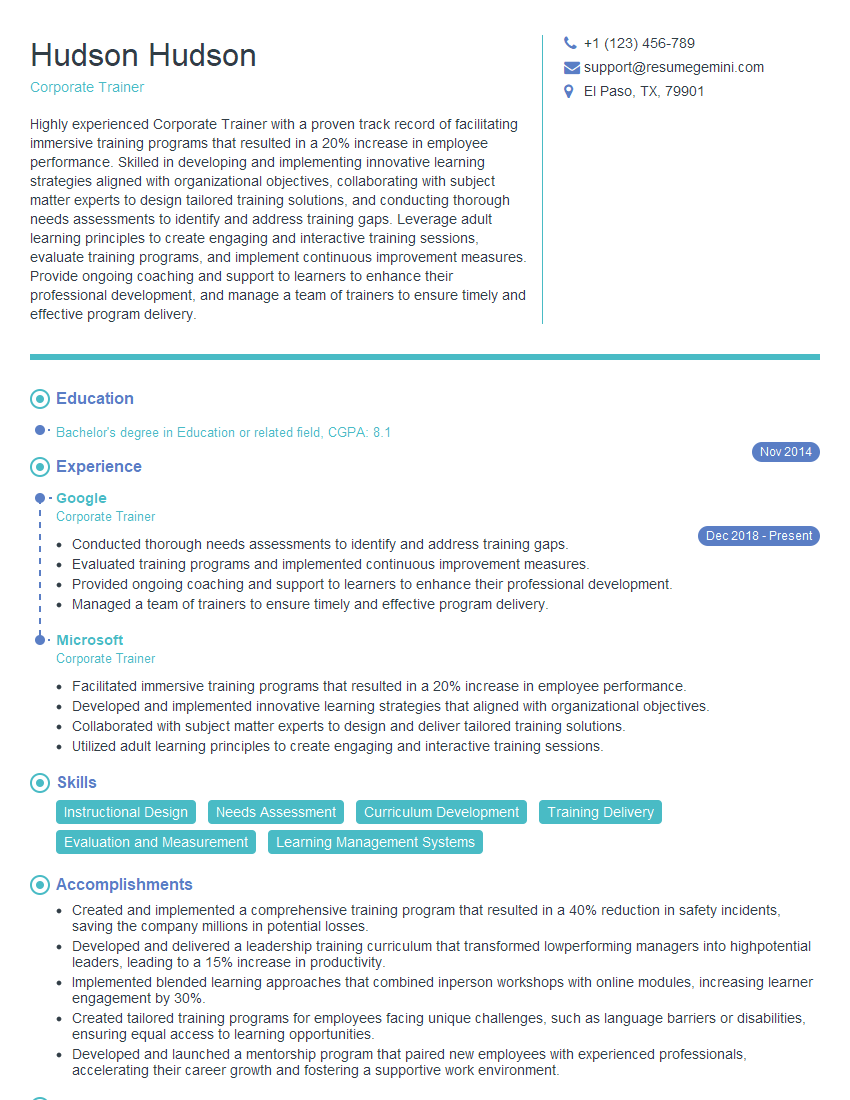
Corporate Trainer Resume Sample

Curriculum Developer Resume Sample
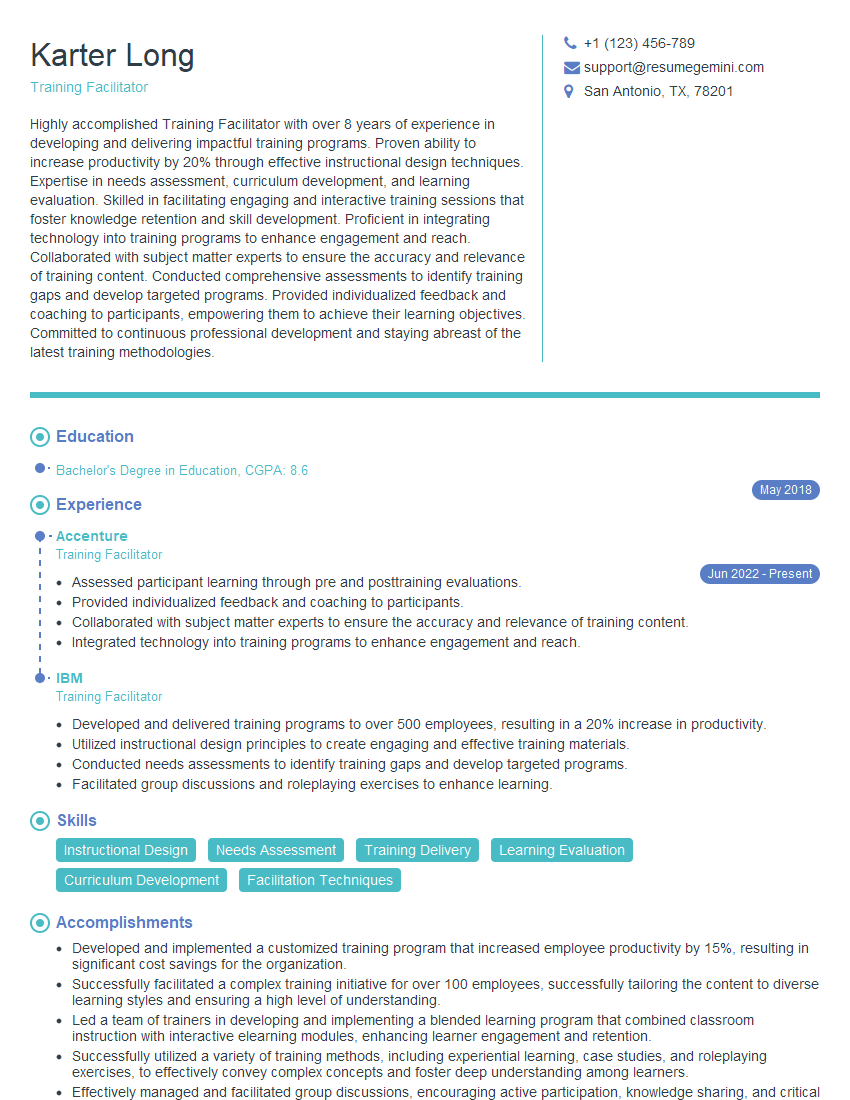
Training Facilitator Resume Sample
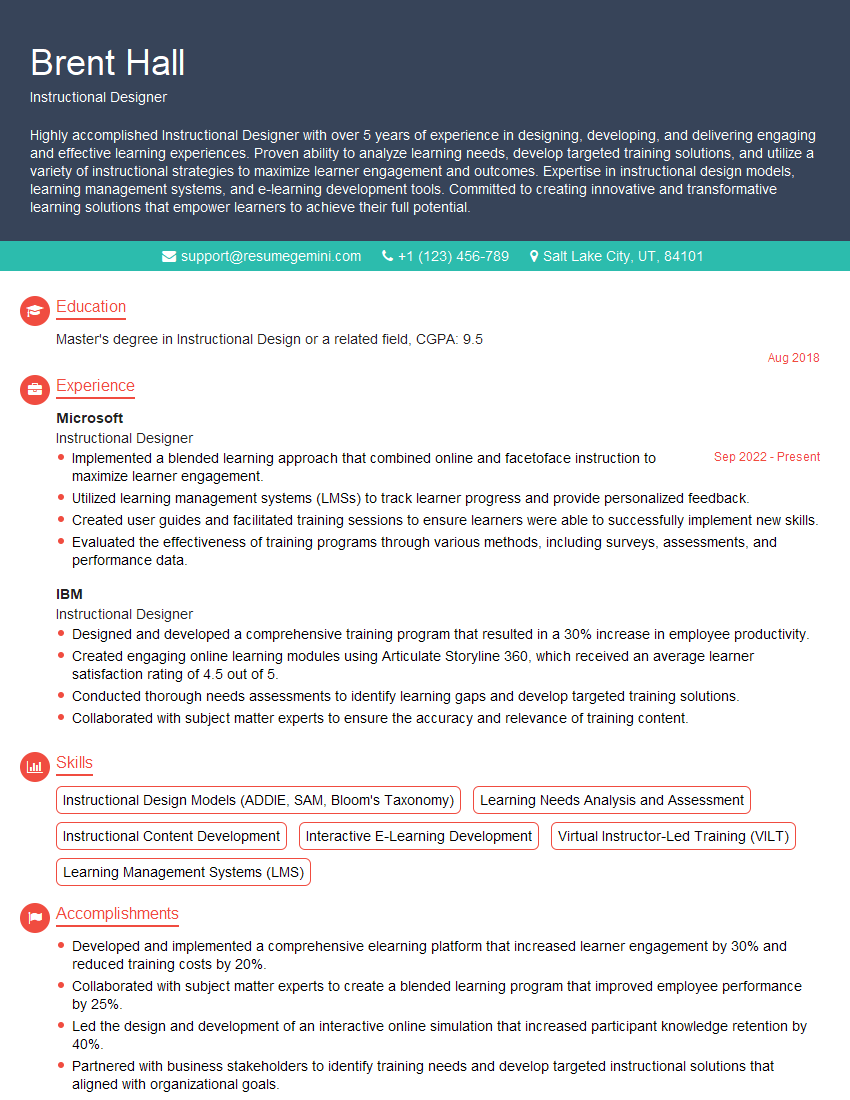
Instructional Designer Resume Sample
Explore more articles
Users Rating of Our Blogs
Share Your Experience
We value your feedback! Please rate our content and share your thoughts (optional).
What Readers Say About Our Blog
Very informative content, great job.
good