Feeling uncertain about what to expect in your upcoming interview? We’ve got you covered! This blog highlights the most important Trouble-shooting and Repair interview questions and provides actionable advice to help you stand out as the ideal candidate. Let’s pave the way for your success.
Questions Asked in Trouble-shooting and Repair Interview
Q 1. Describe your experience with diagnostic tools and equipment.
My experience with diagnostic tools and equipment is extensive, encompassing both hardware and software. I’m proficient with a wide range of tools, from basic multimeters and oscilloscopes to advanced diagnostic software for various systems. For example, in troubleshooting network issues, I regularly use network analyzers and packet sniffers to pinpoint bottlenecks or faulty components. When working with embedded systems, I utilize JTAG debuggers and logic analyzers for in-depth analysis at the hardware level. In the automotive field, I’ve used specialized scan tools to diagnose engine problems, ABS faults, and other complex systems. My expertise extends to understanding the limitations and capabilities of each tool and selecting the appropriate instrument for a given situation. I’m also comfortable interpreting the data provided by these tools and translating that data into actionable repair strategies.
For software diagnostics, I’m proficient with various debugging tools such as debuggers and profilers, enabling me to effectively track down errors and performance bottlenecks in code. I’m adept at utilizing logging and tracing mechanisms to gain insight into system behavior.
Q 2. Explain your process for troubleshooting a complex technical issue.
My process for troubleshooting a complex technical issue follows a structured approach, which I like to think of as a layered investigation. First, I gather as much information as possible about the problem – error messages, environmental conditions, recent changes to the system, and user observations. I then formulate a hypothesis about the root cause. This initial hypothesis might be based on prior experience or patterns identified in similar problems.
Next, I systematically test my hypothesis. This involves using appropriate diagnostic tools and techniques to validate or refute my initial assumptions. If my hypothesis is incorrect, I iterate on the process, refining my assumptions and conducting further tests. This iterative approach continues until I identify the root cause. Crucially, I document each step of the process, including my assumptions, test results, and any modifications made to the system.
Consider an example: If a server is unresponsive, my process might start with checking basic connectivity (cables, network configuration). If that’s fine, I’d move on to checking CPU usage, memory utilization, and disk I/O. If I find a memory leak, for example, I would then use debugging tools to pinpoint the exact location of the memory leak in the code. Only after identifying and addressing the root cause will I consider the issue resolved.
Q 3. How do you prioritize multiple repair requests or issues?
Prioritizing multiple repair requests or issues involves a multi-faceted approach. I use a combination of factors to determine urgency: impact, criticality, and dependencies. Issues impacting critical systems or causing significant downtime for users are given top priority. I also consider dependencies; for example, resolving a network problem might take precedence over a minor software glitch if the network outage affects multiple critical services. Finally, I utilize a ticketing system to track and manage repair requests effectively. This allows me to assign priorities, monitor progress, and ensure accountability.
I often employ a triage system, quickly assessing each issue to categorize it by urgency (high, medium, low). This allows me to focus on immediate needs while scheduling less urgent tasks for later. Regular communication with stakeholders is key in ensuring that everyone is aware of priorities and timelines.
Q 4. Describe a time you had to troubleshoot a problem with limited information.
One memorable instance involved a malfunctioning piece of specialized manufacturing equipment. The only information I had was that the machine had suddenly stopped working during operation, with no error codes or logs provided. The limited data initially made it feel like searching for a needle in a haystack. I started with a thorough visual inspection, checking all cables, connections, and power supplies. I listened carefully for any unusual noises. Then I systematically powered down and rebooted various components, observing the behavior of the machine at each step. I also checked the manufacturing process logs for clues. Eventually, through a process of elimination, I discovered that a faulty sensor was sending incorrect readings, causing the safety system to shut down the machine. Replacing the sensor immediately resolved the problem.
This experience reinforced the importance of methodical troubleshooting, even with scarce information. The systematic process of elimination, coupled with keen observation and careful attention to detail, proved to be the key to success.
Q 5. What is your experience with preventative maintenance?
Preventative maintenance is a cornerstone of reliable system operation. My experience includes developing and executing preventative maintenance plans for diverse systems ranging from computer networks and servers to industrial machinery. These plans typically include scheduled inspections, cleaning, component replacements (e.g., replacing failing hard drives before they cause data loss), software updates, and performance testing. I’m adept at creating maintenance schedules based on manufacturers’ recommendations, historical data, and risk assessments. This proactive approach helps to prevent costly failures, improve system uptime, and extend the lifespan of equipment.
For instance, regularly cleaning server racks improves airflow and prevents overheating. Similarly, proactively updating software patches safeguards against known vulnerabilities.
Q 6. How do you handle situations where you cannot immediately resolve a problem?
When faced with an irresolvable problem immediately, my first step is to escalate the issue appropriately. This involves clearly documenting the problem, including all troubleshooting steps taken and their outcomes. I then communicate the situation to the appropriate support team or supervisor, providing them with all the necessary context. I also focus on implementing temporary workarounds to minimize disruption if possible. For example, if a server is down, I might redirect traffic to a backup system.
Furthermore, I actively research potential solutions, consulting technical documentation, online forums, and contacting vendors for assistance. Maintaining open communication with stakeholders is crucial to keeping everyone informed of the progress (or lack thereof) and any potential impacts.
Q 7. What safety protocols do you follow when performing repairs?
Safety is paramount in my work. I adhere to strict safety protocols, which vary depending on the specific task and environment. These protocols include, but are not limited to: using appropriate personal protective equipment (PPE) such as safety glasses, gloves, and hearing protection; following lockout/tagout procedures when working with electrical equipment to prevent accidental energization; grounding equipment to prevent electrical shocks; following proper lifting techniques to avoid injuries; and ensuring adequate ventilation when working with chemicals or hazardous materials.
Before commencing any repair work, I thoroughly assess the risks associated with the task and implement appropriate mitigation strategies. Regular safety training keeps me updated on best practices and any changes in safety regulations. I believe that a strong safety culture contributes to a productive and accident-free working environment.
Q 8. How do you document your troubleshooting and repair procedures?
Effective documentation is crucial for troubleshooting and repair. My approach involves a structured, multi-step process. I begin by creating a concise problem statement, clearly defining the issue and the affected system. Then, I meticulously record every step taken during the troubleshooting process, including observations, tests performed, and the results obtained. This includes detailed notes on any changes made to the system’s configuration. I use a combination of written descriptions, diagrams (hand-drawn or digital), and screenshots to capture complex scenarios. For instance, if I’m dealing with a faulty circuit board, I’ll include a schematic highlighting the problematic components, along with photos showing the physical condition of the board. Finally, I document the solution, along with a summary of the root cause. This comprehensive documentation serves as a valuable reference for future repairs and helps prevent similar issues from recurring.
I utilize software like Microsoft Word or specialized documentation tools to maintain consistent formatting and searchability. This makes it easier to retrieve the information later, if needed. For example, a well-documented repair of a server’s power supply might include screenshots of the server’s event logs, voltage readings from a multimeter, and a clear description of the faulty component and its replacement.
Q 9. Explain your understanding of root cause analysis.
Root cause analysis (RCA) is a systematic approach to identifying the underlying cause of a problem, not just the symptoms. It goes beyond simply fixing the immediate issue to prevent similar problems from recurring. I employ a structured methodology, often involving the ‘5 Whys’ technique. This involves repeatedly asking ‘why’ to delve deeper into the cause until you reach the root issue. For example, if a computer is slow, asking ‘why’ might lead to identifying full hard drive, prompting a further ‘why’ to uncover a lack of regular backups and archiving of old data.
Beyond ‘5 Whys’, I use tools like fishbone diagrams (Ishikawa diagrams) to visually map out potential causes categorized by categories like people, methods, machines, materials, measurements, and environment. This helps systematically brainstorm and identify potential root causes. A successful RCA involves thoroughly reviewing available data, logs, and test results, incorporating expertise and domain knowledge to eliminate speculation. The final outcome is a clear, concise explanation of the fundamental cause of the failure, helping me propose effective preventive measures.
Q 10. Describe your experience working with schematics, diagrams, or manuals.
I have extensive experience working with schematics, diagrams, and manuals. I view them as essential tools for understanding the inner workings of any system. Schematics are crucial for tracing signal paths, identifying components, and understanding circuit behavior. Diagrams provide visual representations of system architecture, helping me understand the relationships between different parts. Manuals offer detailed information on the system’s operation, maintenance, and troubleshooting procedures. I’m proficient in interpreting various types of diagrams, including block diagrams, wiring diagrams, and flowcharts. I am comfortable using both physical and digital manuals, leveraging online resources when needed.
For instance, when repairing a complex piece of medical equipment, I rely on schematics to identify the exact location of a faulty component on a densely populated PCB. Without these documents, finding and replacing the faulty component would be significantly more challenging and time-consuming. My ability to effectively read and interpret this documentation is critical to efficient and accurate repair work.
Q 11. How familiar are you with different types of testing equipment (e.g., multimeters, oscilloscopes)?
I am highly proficient in using various testing equipment, including multimeters, oscilloscopes, signal generators, and logic analyzers. Multimeters are indispensable for measuring voltage, current, and resistance, enabling me to identify short circuits, open circuits, and other electrical faults. Oscilloscopes allow me to visualize waveforms, helping me diagnose signal integrity issues, timing problems, and other anomalies in electronic circuits. Signal generators allow me to simulate input signals to test circuit responses. Logic analyzers allow me to capture and analyze digital signals, which is often crucial in debugging digital systems.
For example, when troubleshooting a power supply issue, I would use a multimeter to verify the input and output voltages and currents. If I suspect a problem with a specific signal, I’d use an oscilloscope to examine the waveform and identify any abnormalities. My experience with these tools is fundamental to my ability to diagnose and repair a wide range of electronic systems effectively.
Q 12. What is your experience with soldering and other electronic repair techniques?
I have significant experience with soldering and various electronic repair techniques. I’m adept at surface mount technology (SMT) soldering, through-hole soldering, and desoldering using both manual and automated tools. Beyond soldering, I’m proficient in techniques like component replacement, circuit tracing, wire harness repair, and connector repair. I understand the importance of proper safety precautions and ESD (electrostatic discharge) protection when working with sensitive electronic components.
In a recent repair, I successfully replaced a surface-mount capacitor on a circuit board using a fine-tipped soldering iron and a magnifying glass. This involved carefully removing the old capacitor without damaging surrounding components, then precisely placing and soldering the new component. My attention to detail and mastery of these techniques ensures clean, efficient, and reliable repairs.
Q 13. How do you stay up-to-date with the latest technologies and repair techniques?
Staying up-to-date is vital in this rapidly evolving field. I actively engage in several strategies to maintain my expertise. I subscribe to industry publications and online forums where I can read about the latest advancements and repair techniques. I participate in online courses and workshops to gain knowledge on new technologies and tools. I also attend industry conferences and trade shows to network with other professionals and learn about cutting-edge solutions.
Furthermore, I dedicate time to hands-on learning by working on diverse projects, which presents opportunities to encounter and resolve challenges related to new and emerging technologies. Continuous learning is not just a professional goal, but a passion that ensures my skills and knowledge remain current and effective.
Q 14. Describe a time you had to troubleshoot a problem involving multiple systems.
I once encountered a complex issue involving a network outage affecting multiple systems within a company’s server room. The initial symptom was complete network unavailability. My systematic troubleshooting began with isolating the problem, starting with checking the network infrastructure, from cabling to the main network switch. I discovered the switch was malfunctioning, resulting in network disconnection for all systems reliant on that switch. But merely replacing the switch wouldn’t resolve the underlying issue.
This led to investigating potential causes of the switch failure, and through analyzing event logs and server logs, I identified a power surge preceding the network outage. This pointed to a faulty power supply unit (PSU) in the server rack powering the switch. I replaced the faulty PSU; this restored power stability to the switch and the entire network. Following this, I implemented preventive measures, such as adding a surge protector to the rack, which mitigated the risk of such issues reoccurring. This experience highlighted the importance of a structured approach to troubleshooting involving multiple dependent systems, focusing on isolating the problem and looking for hidden root causes.
Q 15. How do you handle pressure and tight deadlines when performing repairs?
Handling pressure and tight deadlines in repairs requires a methodical approach and strong organizational skills. I prioritize tasks using a system like Eisenhower Matrix (urgent/important), focusing on the most critical repairs first. This prevents feeling overwhelmed and ensures timely completion. For instance, if I’m facing multiple urgent repairs, I’ll quickly assess each one, prioritizing those with the highest impact and potential for escalation. I also utilize time-blocking techniques, allocating specific time slots for different tasks to manage my workload effectively. If a deadline seems impossible to meet, I proactively communicate with the client, explaining the situation and exploring options like prioritizing critical components or adjusting the scope of work.
Furthermore, I find that maintaining a calm and focused mindset is key. Deep breathing exercises and short breaks help me avoid burnout and maintain concentration under pressure. Regularly reviewing my progress and adjusting my schedule as needed further ensures I stay on track. Think of it like conducting an orchestra – each instrument (task) needs to play its part at the right time to create a harmonious whole (successful repair).
Career Expert Tips:
- Ace those interviews! Prepare effectively by reviewing the Top 50 Most Common Interview Questions on ResumeGemini.
- Navigate your job search with confidence! Explore a wide range of Career Tips on ResumeGemini. Learn about common challenges and recommendations to overcome them.
- Craft the perfect resume! Master the Art of Resume Writing with ResumeGemini’s guide. Showcase your unique qualifications and achievements effectively.
- Don’t miss out on holiday savings! Build your dream resume with ResumeGemini’s ATS optimized templates.
Q 16. How do you communicate technical information to non-technical audiences?
Communicating technical information to non-technical audiences requires simplifying complex concepts and avoiding jargon. I use analogies and relatable examples to explain technical issues. For example, instead of saying “The motherboard’s southbridge is malfunctioning,” I might explain, “Imagine your computer’s motherboard as a city. The southbridge is like the power grid – if it’s down, many parts of the city (your computer) won’t work.” I also use visual aids like diagrams or pictures to illustrate the problem and the solution. Active listening is crucial – I ensure they understand by asking clarifying questions and confirming their comprehension. I avoid technical terms unless absolutely necessary, and if I must use one, I always provide a simple explanation. Finally, keeping the language clear and concise, focusing on the impact on the user, not the technical details, is key.
Q 17. Describe your experience with different types of software used for diagnostics and repairs.
My experience with diagnostic software is extensive. I’m proficient with various tools, including specialized software for specific hardware like automotive diagnostic systems (e.g., OBD-II scanners), network diagnostic tools (e.g., Wireshark, SolarWinds), and general-purpose tools like system monitoring utilities (e.g., Task Manager, Resource Monitor). For example, when troubleshooting a network issue, I utilize Wireshark to capture and analyze network packets to pinpoint the source of connectivity problems. With automotive diagnostics, I use OBD-II scanners to read diagnostic trouble codes (DTCs) which provide crucial information about potential problems within the vehicle’s computer system. In addition, I’m comfortable using manufacturer-specific diagnostic software for more in-depth analysis when needed.
I’m also familiar with software used for repair documentation and parts ordering. Efficiently managing this information is critical for minimizing repair time and ensuring accuracy. Using these systems, I can maintain detailed records of all repairs, making future troubleshooting easier and improving the overall efficiency of the repair process.
Q 18. What is your experience with remote troubleshooting?
Remote troubleshooting requires excellent communication and problem-solving skills. I utilize various methods such as screen-sharing software (e.g., TeamViewer, AnyDesk), remote desktop access, and detailed email or phone instructions. For example, if a user reports a slow internet connection, I might guide them through checking their network settings, running a speed test, or restarting their modem and router remotely. It is important to clearly and patiently guide the user, confirming each step’s successful completion. Building rapport with the user, explaining the process clearly, and anticipating potential problems are crucial for effective remote troubleshooting. I carefully document every step, including the problem’s description, the actions taken, and the results, regardless of successful resolution. This ensures efficient resolution and allows for seamless handover if necessary.
Q 19. How do you determine the cost-effectiveness of a repair versus replacement?
Determining the cost-effectiveness of repair versus replacement involves a careful cost-benefit analysis. Factors considered include the cost of parts, labor, and the device’s remaining lifespan. For example, repairing an older device with a minor fault might be cost-prohibitive if the repair cost is close to the device’s replacement cost. Conversely, repairing a high-value device with significant remaining lifespan would be economically sensible even if the repair cost is substantial. I consider the device’s sentimental value as well. For example, an antique clock requiring expensive repairs might still be worth fixing for its historical significance. This decision is also based on the availability of replacement parts and potential future repair costs. A thorough analysis considering all factors ensures a financially sound decision.
Q 20. What is your experience with quality control procedures?
Quality control procedures are vital in ensuring the reliability and longevity of repairs. My approach involves meticulous work, double-checking every step, and using calibrated testing equipment for accuracy. After a repair, I thoroughly test the device to verify its proper functioning, checking for any residual issues. This includes functional tests, performance benchmarks, and stress tests where appropriate. Proper documentation of the repair process, including parts used and test results, is a critical part of the quality control process. Furthermore, regular calibration and maintenance of testing equipment maintain accuracy and ensure the continued reliability of the results. Following established procedures and checklists further enhances consistency and reduces errors.
Q 21. Describe a time you had to troubleshoot a problem outside of your area of expertise.
I once encountered a complex issue involving a customer’s home automation system that was malfunctioning. While my expertise lies in computer hardware, the problem involved a combination of networking, software integration, and home electrical systems, which were outside my direct specialization. However, I approached the problem systematically. First, I gathered as much information as possible from the client about the system’s behavior and any error messages. Then, I conducted thorough research, consulting online documentation, forums, and even reaching out to experts in home automation. I systematically tested each component of the system, isolating the problem to a faulty sensor. While I didn’t have direct experience with that specific sensor model, my methodical approach and resourceful use of available information allowed me to identify the problem and guide the customer to a solution. This experience taught me the importance of adaptability and the value of leveraging external resources when encountering unfamiliar situations.
Q 22. How do you handle customer complaints regarding repairs?
Handling customer complaints effectively is crucial for maintaining positive client relationships and ensuring repeat business. My approach involves active listening, empathy, and a structured problem-solving process. First, I acknowledge the customer’s frustration and validate their concerns. Then, I ask clarifying questions to fully understand the issue. This often involves asking about the symptoms, when they started, and any relevant history. Once I have a clear picture, I explain the likely cause and the proposed solution in straightforward, non-technical terms. If the repair requires additional time or parts, I’ll provide realistic timelines and keep the customer updated throughout the process. Finally, I follow up to ensure their satisfaction and address any lingering concerns.
For example, if a customer complains about a malfunctioning industrial oven, I wouldn’t just say ‘it’s broken’. Instead, I would ask specific questions: ‘When did this problem start?’,’What were you baking at the time?’, ‘Have you noticed any unusual smells or sounds?’ This detailed approach helps pinpoint the problem efficiently and build trust with the customer. I also document every interaction, from initial contact to resolution, to ensure accountability and facilitate future troubleshooting.
Q 23. How do you ensure the safety of yourself and others while performing repairs?
Safety is my top priority, both for myself and others. I adhere strictly to all relevant safety regulations and company protocols. Before starting any repair, I conduct a thorough risk assessment, identifying potential hazards such as electrical shocks, chemical exposure, or moving parts. I then implement appropriate safety measures, including using personal protective equipment (PPE) like safety glasses, gloves, and hearing protection. I also ensure the work area is properly secured, with warning signs and barriers where necessary. Furthermore, I’m trained in lockout/tagout procedures, ensuring machinery is safely de-energized before maintenance or repairs. This prevents accidental starts and injuries.
For instance, when working with high-voltage equipment, I never work alone. I always have a colleague present to monitor and assist, and we follow a strict procedure of lockout/tagout. Regular safety training and refreshers keep my knowledge and skills current and ensure consistent adherence to best practices. I believe in proactive safety – anticipating potential problems before they arise is better than reacting to accidents.
Q 24. Describe your experience with different types of machinery and equipment.
My experience encompasses a broad range of machinery and equipment. I’ve worked extensively on industrial machinery, including CNC machines, conveyors, and robotic systems. My expertise also extends to HVAC systems, electrical panels, and various types of pumps and compressors. I’m familiar with both mechanical and electrical systems and have experience troubleshooting and repairing hydraulic and pneumatic equipment. I’ve regularly diagnosed and solved problems related to both software and hardware components, particularly in automated systems. My experience also includes working with specialized tools and testing equipment common in various industrial settings.
For example, I successfully diagnosed and repaired a malfunctioning CNC milling machine by identifying a faulty control circuit board. This involved using specialized testing equipment to isolate the problem, ordering the replacement part, and carefully following the manufacturer’s instructions for installation and configuration. Another instance included troubleshooting a leak in a high-pressure hydraulic system, requiring knowledge of hydraulic schematics and pressure testing procedures. This required meticulous work to identify the leak source and replace the damaged component while maintaining safety protocols.
Q 25. What is your experience with calibration and testing procedures?
Calibration and testing are critical for ensuring equipment accuracy and safety. My experience includes performing calibrations on various instruments, from pressure gauges and thermocouples to electronic balances and flow meters. I’m familiar with different calibration methods and standards, including using traceable standards and documenting the entire process. I understand the importance of using appropriate calibration equipment and maintaining detailed records for traceability. Testing procedures vary depending on the equipment, but generally involve systematically checking functionality, accuracy, and safety mechanisms. This might include functional testing, performance testing, and safety inspections. I regularly use various diagnostic tools and software to assist in these processes.
For instance, I recently calibrated a series of temperature sensors used in a food processing plant. This involved comparing their readings against a calibrated reference standard and adjusting them as needed, meticulously documenting each step and the final calibration certificates. I also routinely perform safety tests on equipment before returning it to service, checking for any potential hazards before it’s used again.
Q 26. How do you manage inventory and parts for repairs?
Efficient inventory management is key to minimizing downtime during repairs. I use a combination of methods to manage parts and inventory, including computerized inventory systems, physical stock checks, and regular ordering procedures. I maintain a comprehensive database of parts, including their specifications, suppliers, and pricing. This enables me to quickly identify and order the necessary components for repairs. Regular stock checks help prevent shortages and identify obsolete parts that need to be removed from the inventory. I also use a first-in, first-out (FIFO) system to manage perishable items or parts with expiration dates.
For example, our shop uses a software system that tracks all parts, their locations and quantities, allowing us to efficiently locate parts needed for a particular repair. This system also helps anticipate future needs by tracking usage and projecting demand for commonly used parts. This proactive approach minimizes delays and improves the overall efficiency of the repair process.
Q 27. Explain your experience with regulatory compliance and safety standards.
Compliance with relevant safety and regulatory standards is paramount. I am familiar with OSHA regulations, electrical codes (NEC), and any other industry-specific standards applicable to the equipment I repair. This includes understanding the requirements for safety training, PPE, and lockout/tagout procedures. I ensure all work is performed in accordance with these standards and maintain proper documentation to demonstrate compliance. Regular training updates keep my knowledge current on evolving regulations and best practices. I am also aware of the importance of environmental regulations, especially when handling hazardous materials.
For example, when working on electrical equipment, I strictly adhere to the National Electrical Code (NEC) guidelines. This includes using appropriate voltage testing equipment, following proper grounding procedures, and ensuring all work is inspected to meet code requirements before the equipment is returned to service. This ensures not only safety but also prevents costly violations and potential legal issues.
Q 28. Describe a situation where you had to make a critical decision during a repair.
During a repair on a critical piece of production equipment – a large industrial press – I encountered a situation requiring immediate decision-making. The press had malfunctioned, halting the production line, and initial diagnostics pointed to a complex hydraulic issue. The conventional repair would have required a complete system shutdown, resulting in significant production losses. However, I identified a potential workaround involving isolating a specific section of the system, allowing a portion of the production to continue while I repaired the faulty component. This involved a risk assessment to ensure the partial operation was safe, and clear communication with the production team to manage expectations and ensure smooth operation.
The workaround was successful. The partial production kept losses to a minimum while allowing the necessary repairs. This situation highlighted the importance of quick thinking, a thorough understanding of the system, and effective communication in high-pressure situations. It showed that sometimes a creative solution that mitigates losses is preferable to a strict adherence to a standard procedure when safety is not compromised.
Key Topics to Learn for Trouble-shooting and Repair Interviews
- Fundamental Diagnostic Techniques: Understanding systematic approaches to identifying the root cause of malfunctions, including visual inspection, testing with specialized tools, and utilizing diagnostic software.
- Component Identification and Functionality: Thorough knowledge of the components within the systems you’ll be troubleshooting (e.g., electrical circuits, mechanical assemblies, software programs) and how they interact. Practical application: Explain how you’d identify a faulty component in a complex system.
- Safety Procedures and Regulations: Demonstrating awareness of relevant safety protocols, including lockout/tagout procedures, proper handling of hazardous materials, and adhering to industry standards.
- Repair Methodologies: Understanding various repair techniques, from simple replacements to complex rebuilds, and the ability to choose the most efficient and cost-effective approach. Practical application: Explain your approach to repairing a common malfunction.
- Preventive Maintenance Strategies: Discussing methods to prevent future issues, including routine inspections, cleaning, and lubrication. This showcases proactive problem-solving.
- Documentation and Reporting: Clear and concise record-keeping of troubleshooting steps, repairs performed, and parts used. This highlights attention to detail and organizational skills.
- Problem-Solving and Critical Thinking: Highlight your ability to approach challenges systematically, analyze data, and develop effective solutions under pressure. Practical application: Describe a challenging troubleshooting situation and how you overcame it.
- Troubleshooting Specific Systems/Equipment: Tailor your preparation to the specific systems or equipment mentioned in the job description. This demonstrates targeted preparation and relevant experience.
Next Steps
Mastering troubleshooting and repair is crucial for career advancement in many technical fields. It demonstrates valuable problem-solving skills, technical expertise, and a commitment to quality. To significantly boost your job prospects, create a compelling and ATS-friendly resume that highlights these key skills. ResumeGemini is a trusted resource to help you build a professional and impactful resume tailored to your experience. Examples of resumes specifically designed for professionals in troubleshooting and repair are available, showcasing how to present your skills effectively. Invest the time to craft a strong resume – it’s your first impression on potential employers.
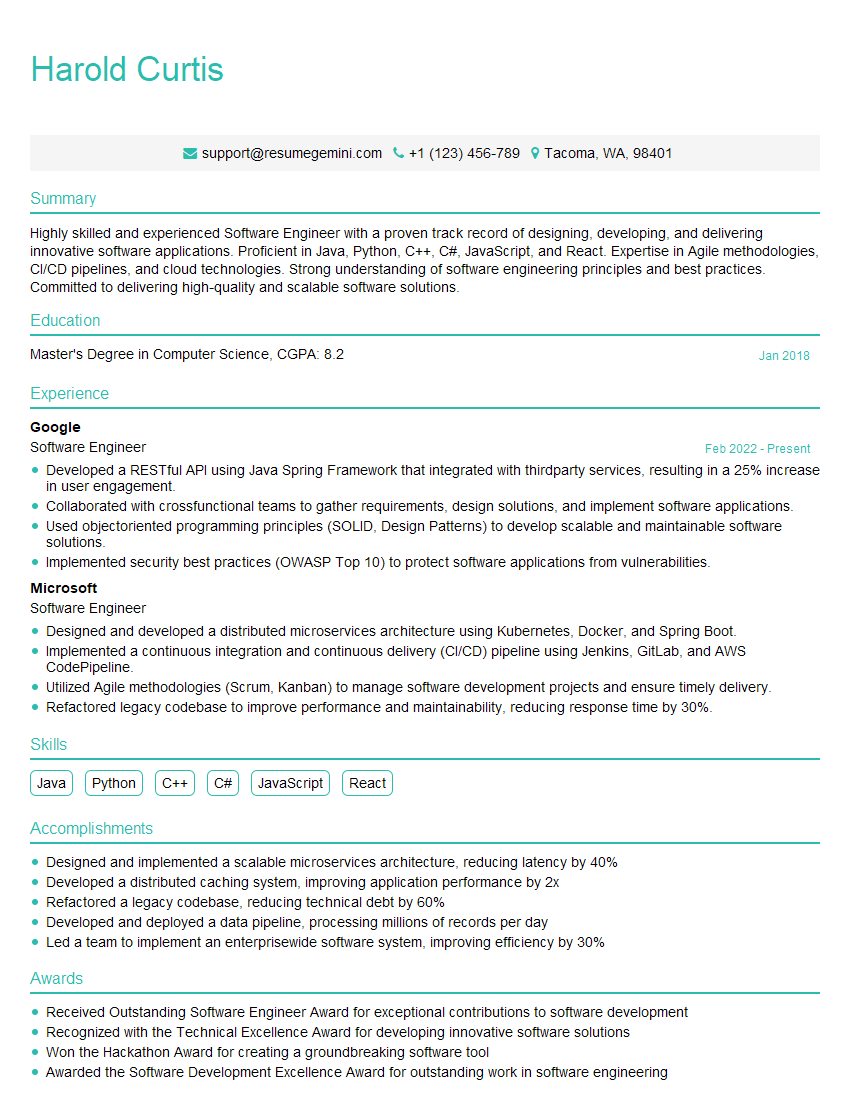
Software Engineer Resume Sample
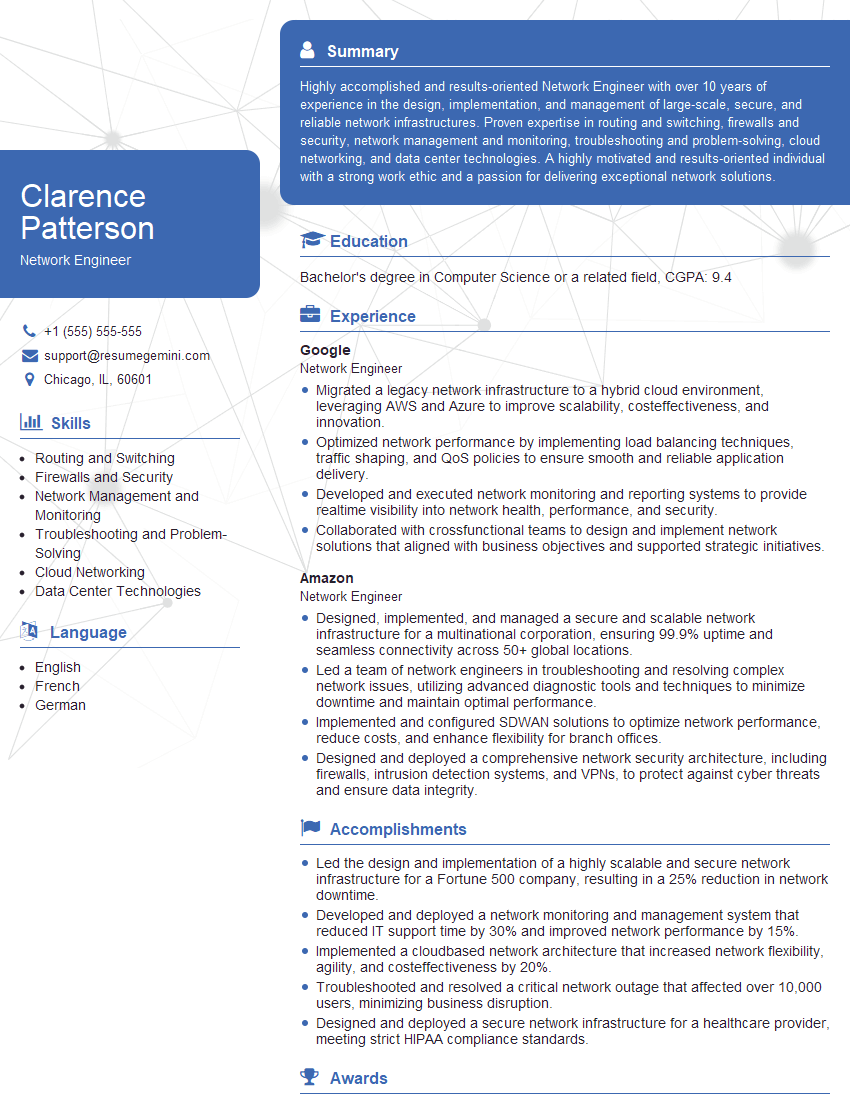
Network Engineer Resume Sample

Technical Support Engineer Resume Sample
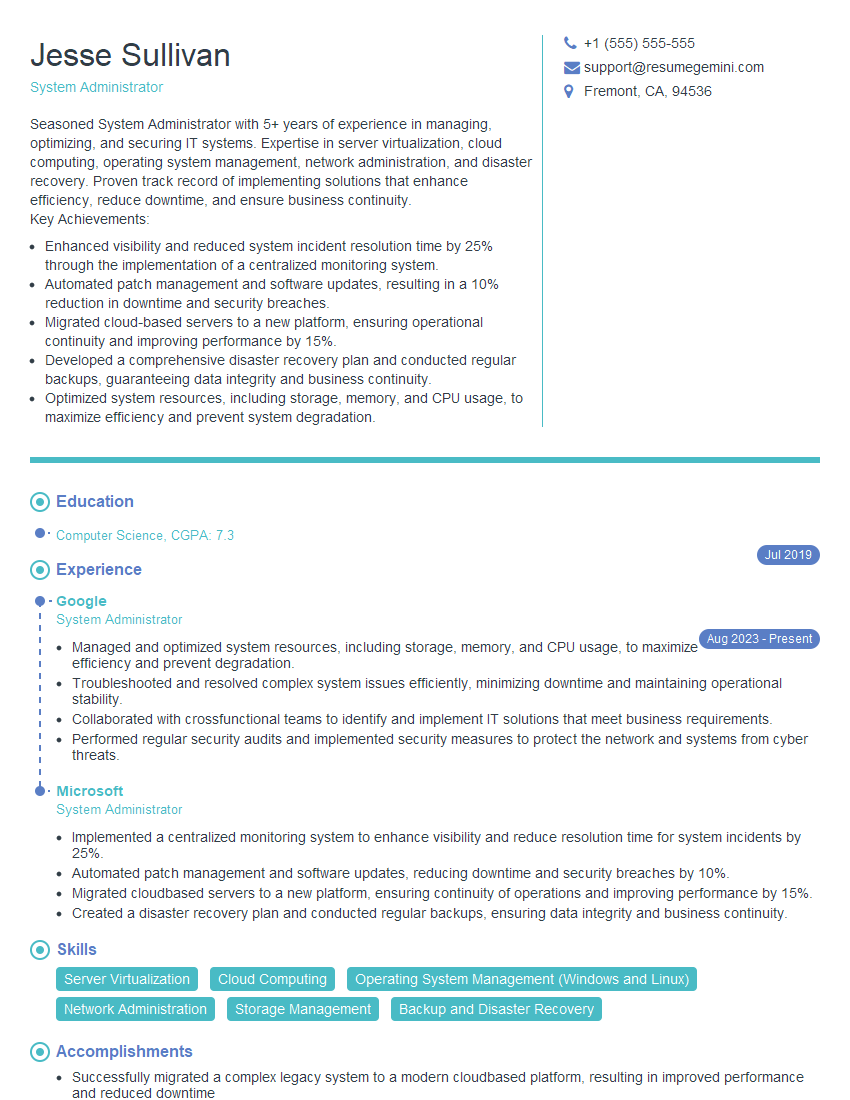
System Administrator Resume Sample
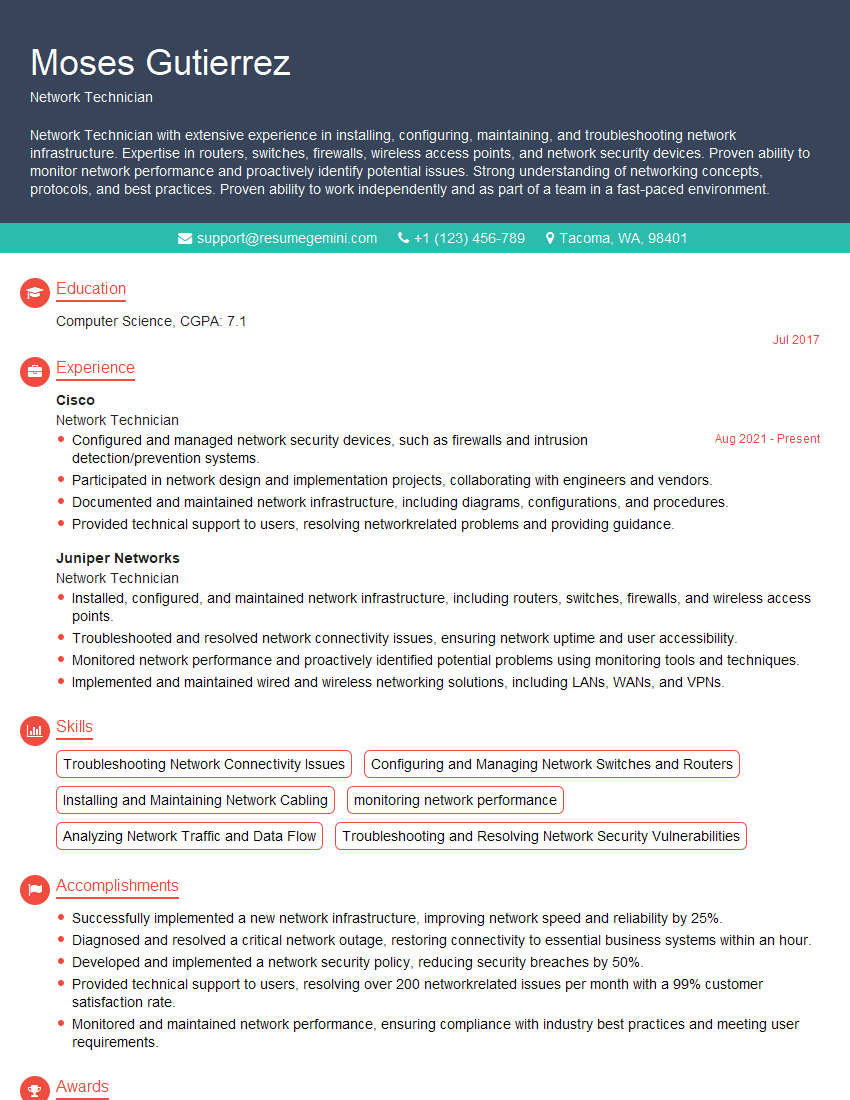
Network Technician Resume Sample
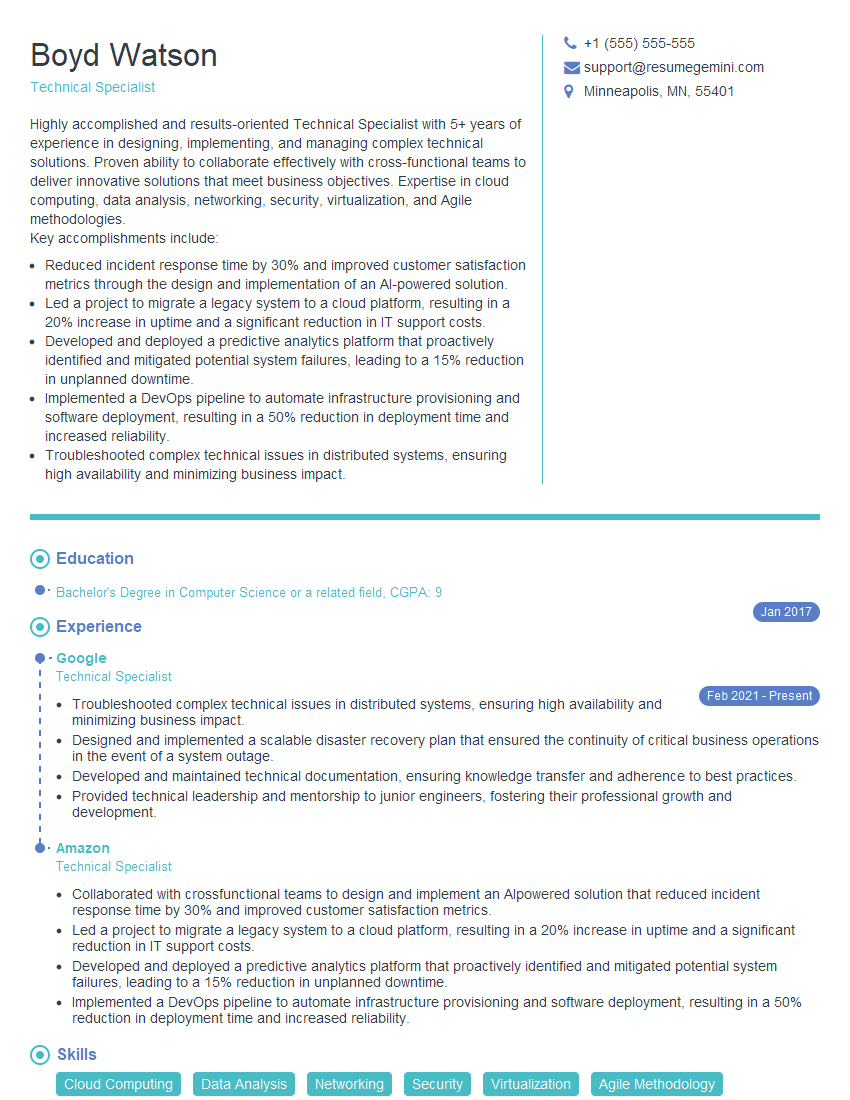
Technical Specialist Resume Sample
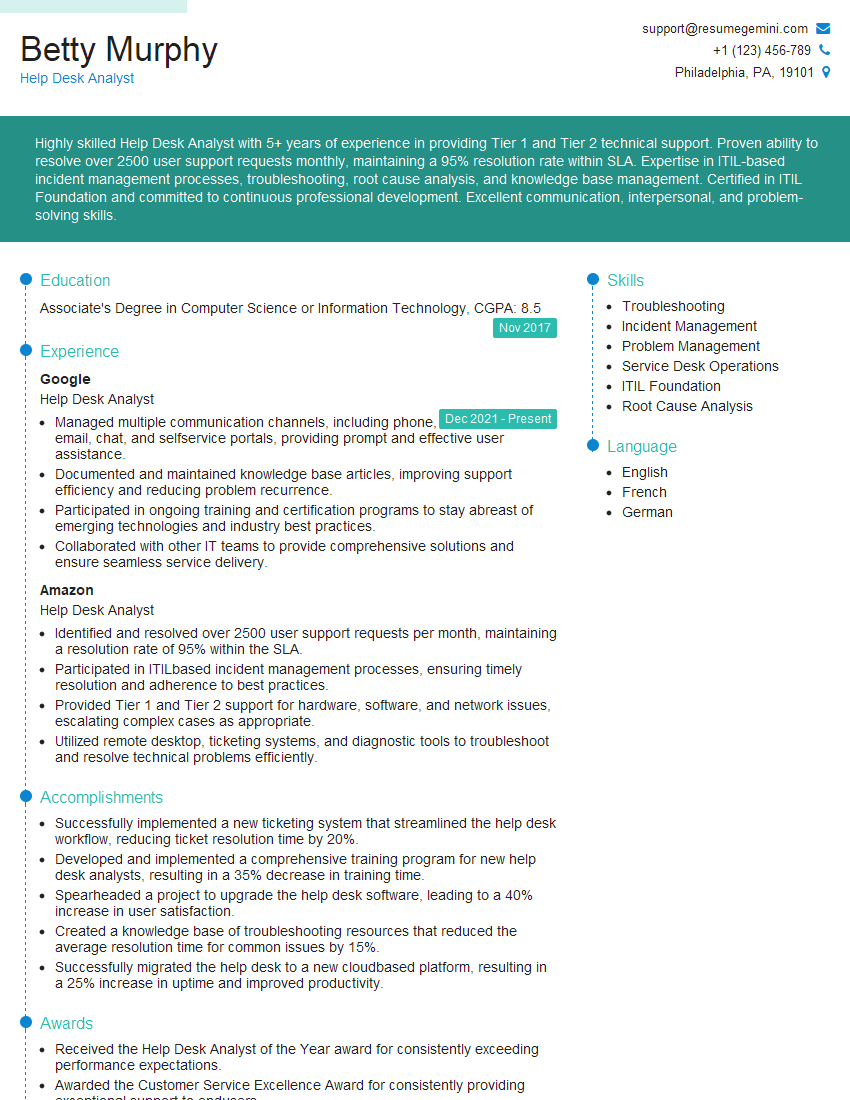
Help Desk Analyst Resume Sample
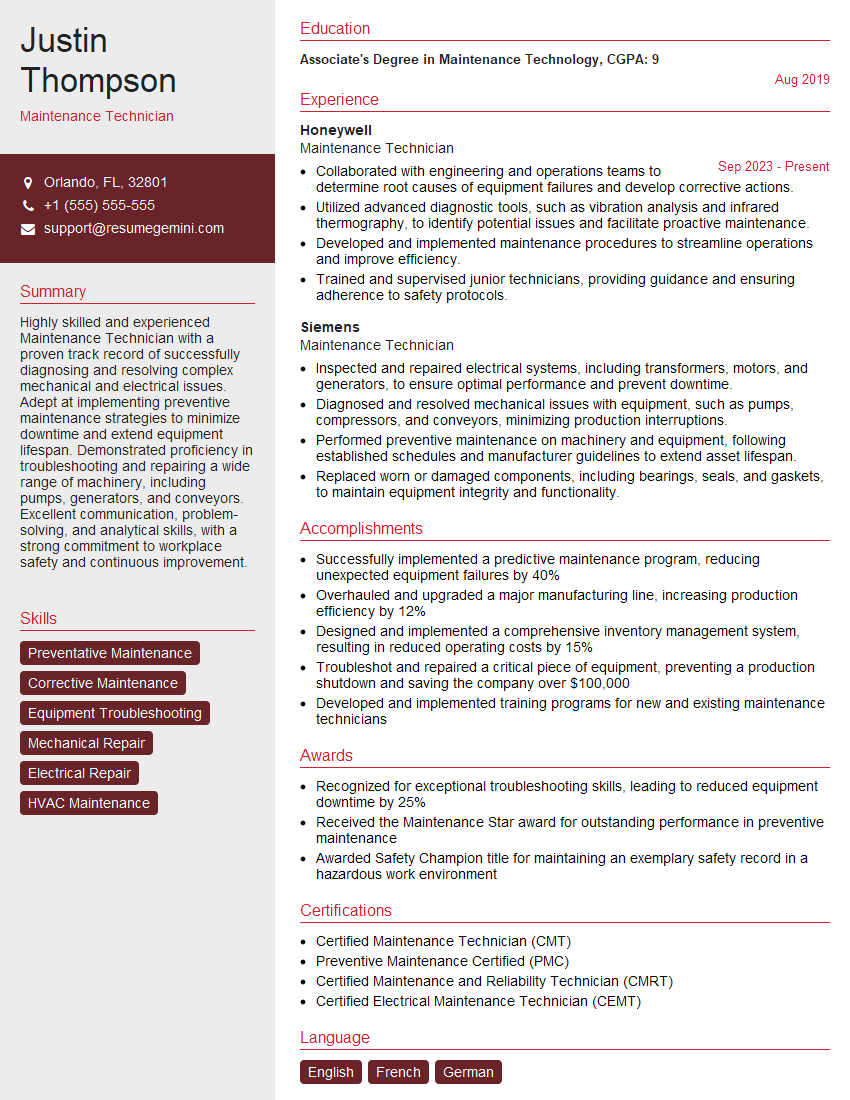
Maintenance Technician Resume Sample

Hardware Engineer Resume Sample
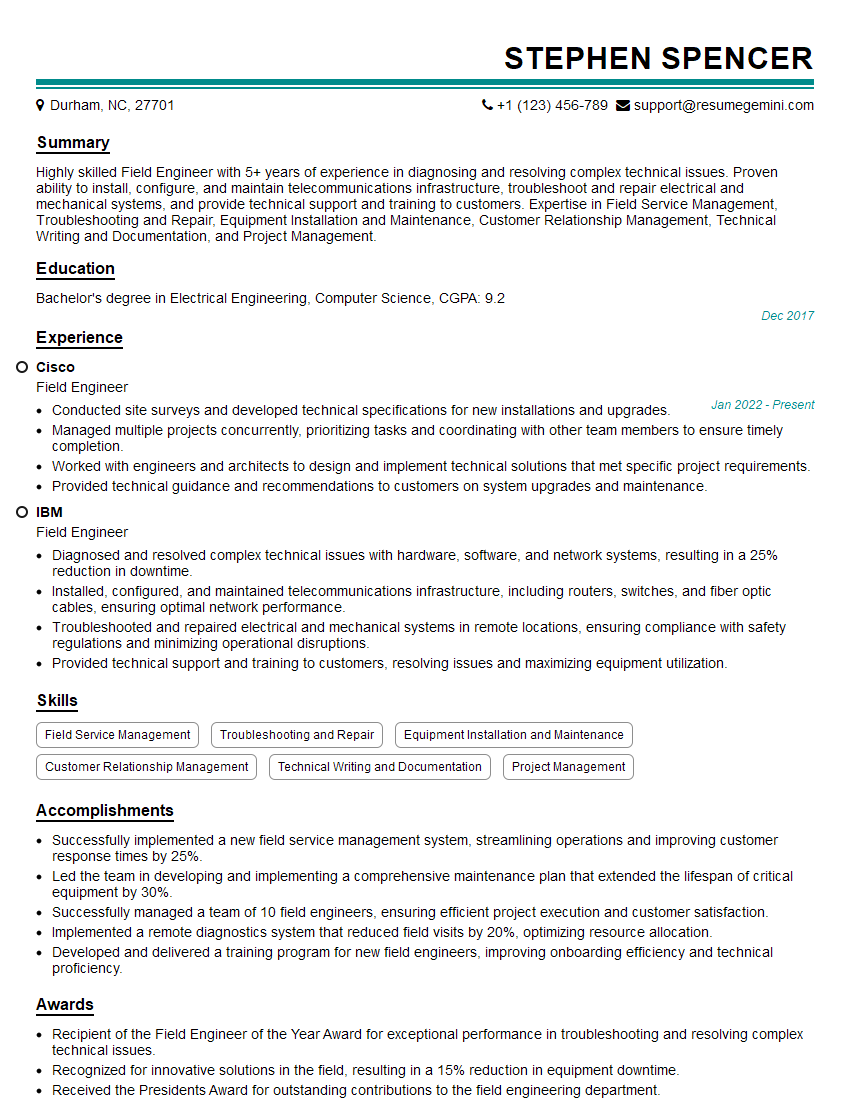
Field Engineer Resume Sample
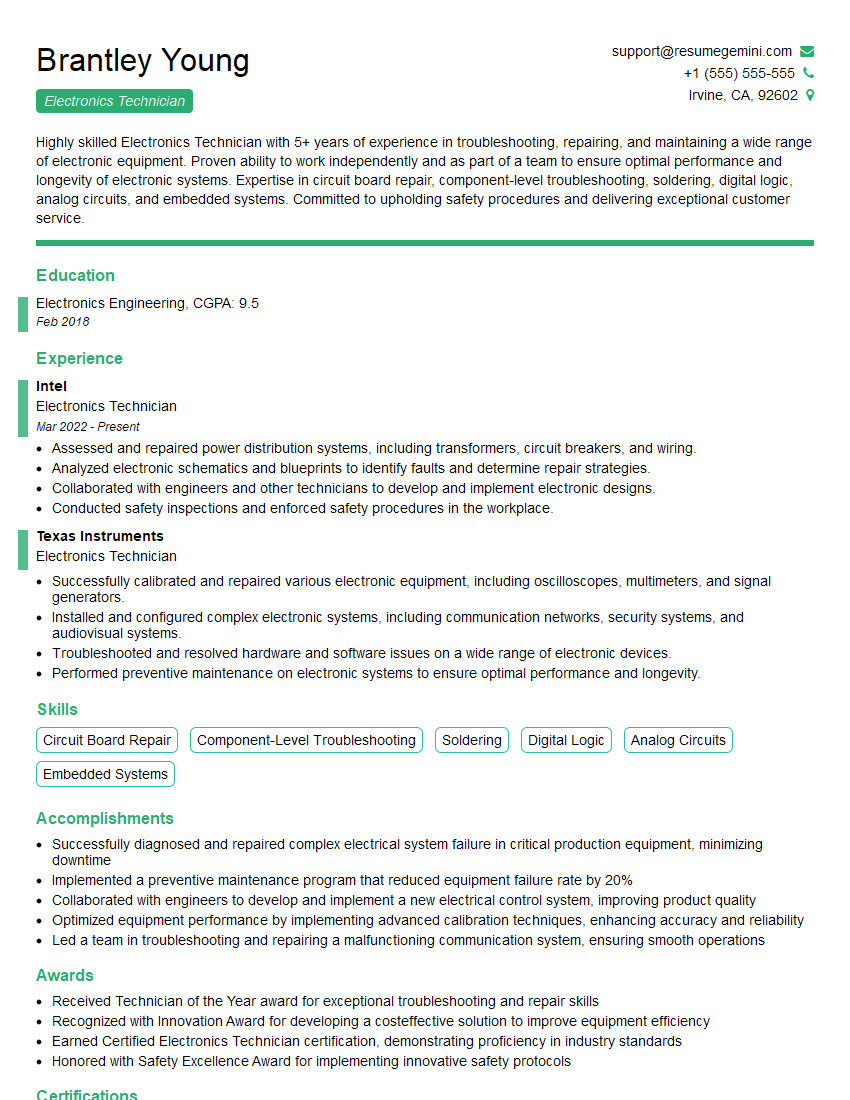
Electronics Technician Resume Sample
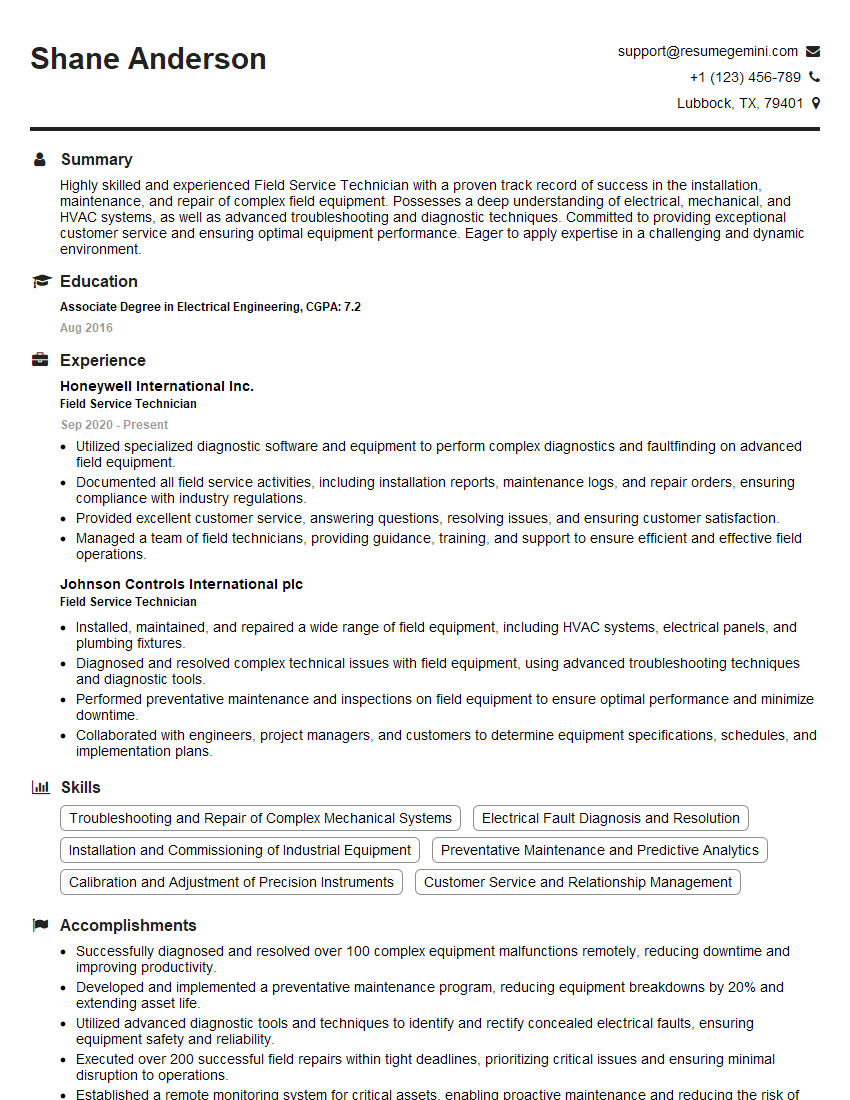
Field Service Technician Resume Sample
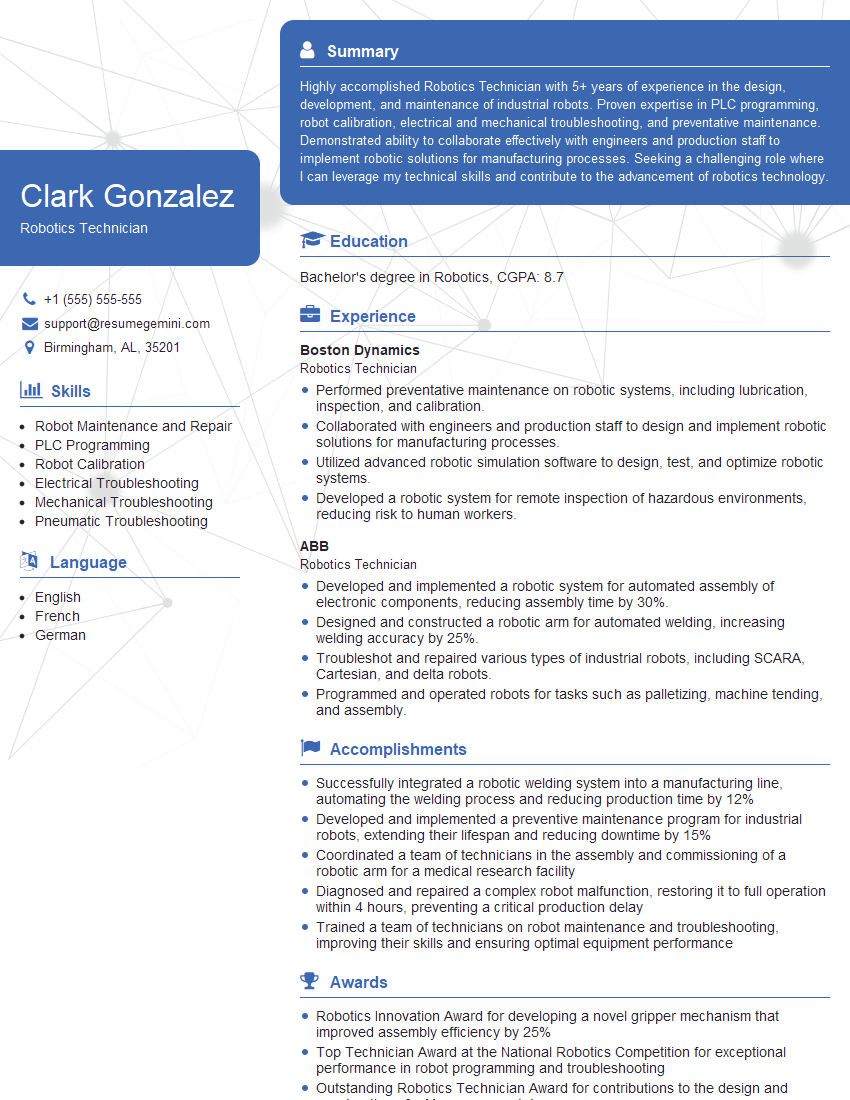
Robotics Technician Resume Sample
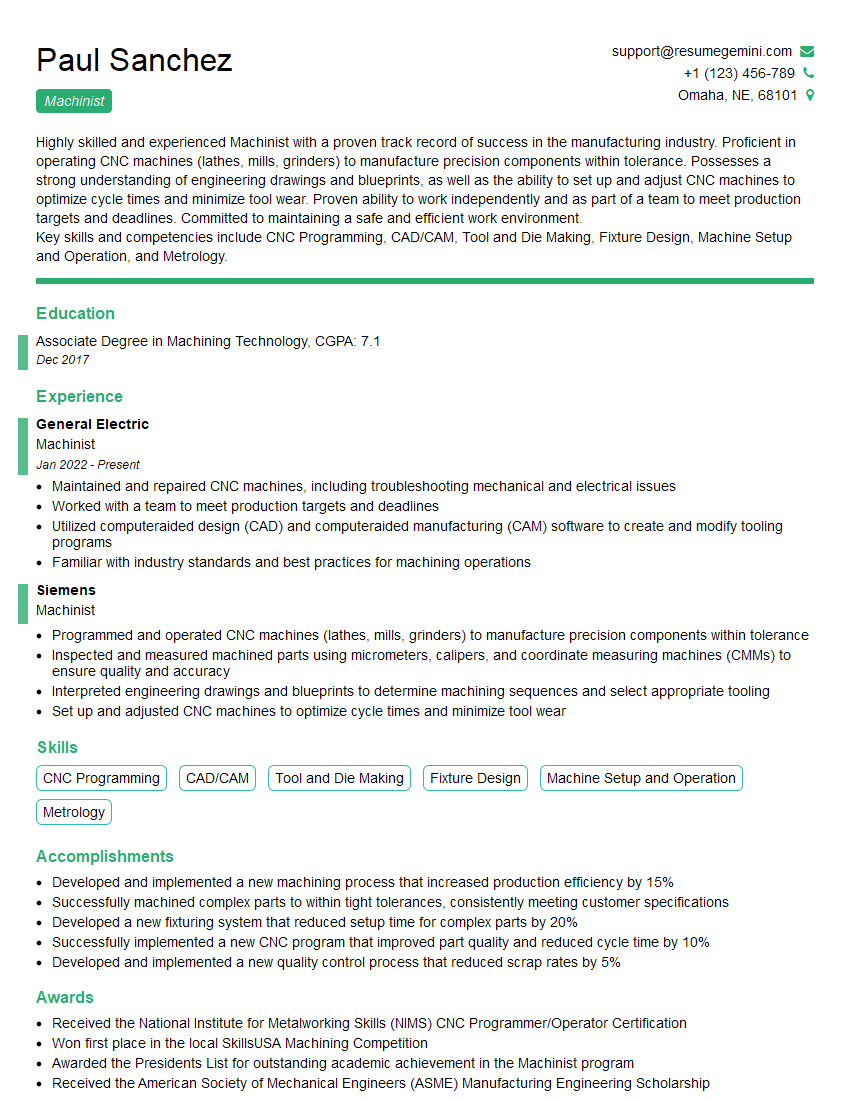
Machinist Resume Sample
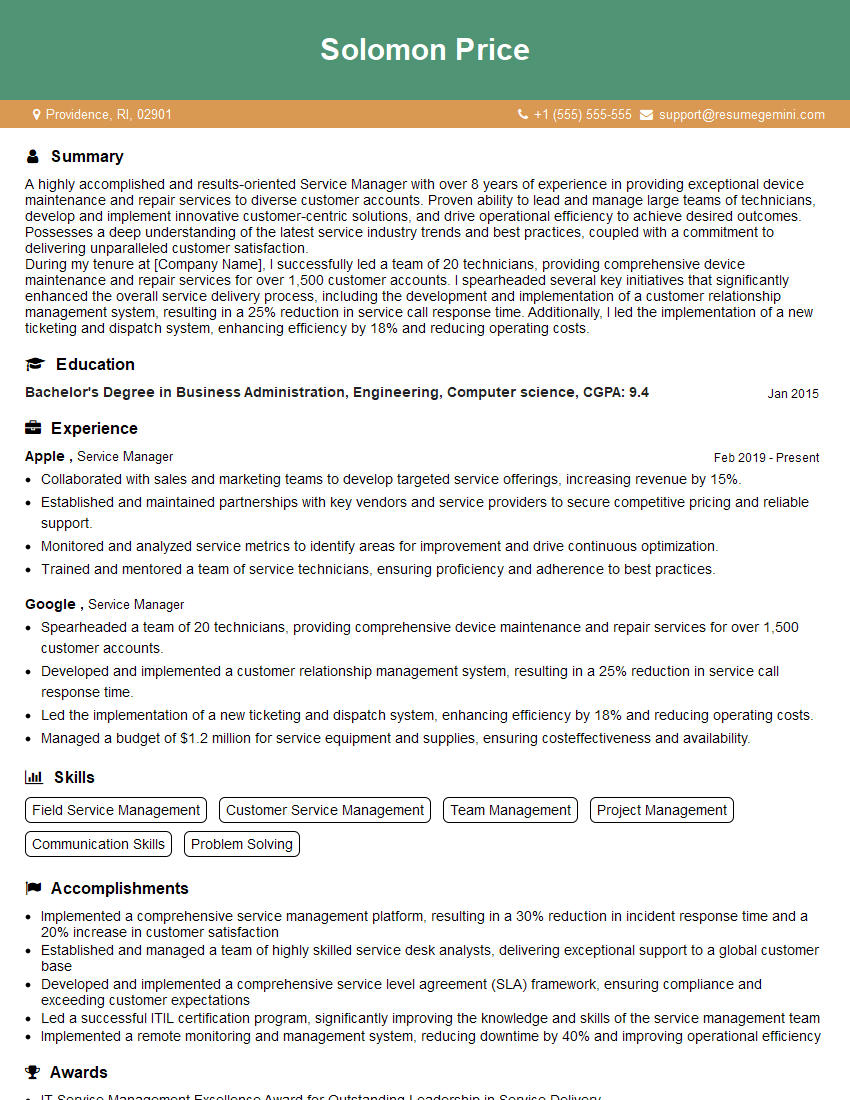
Service Manager Resume Sample
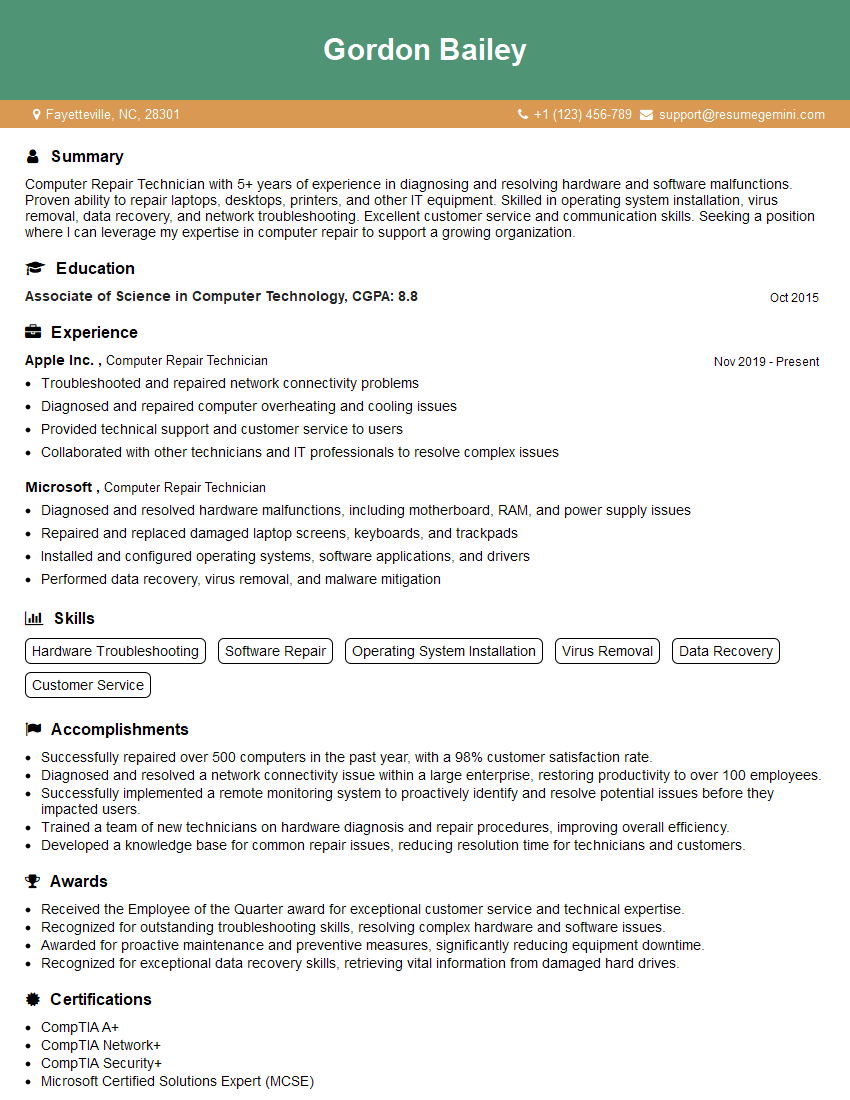
Computer Repair Technician Resume Sample
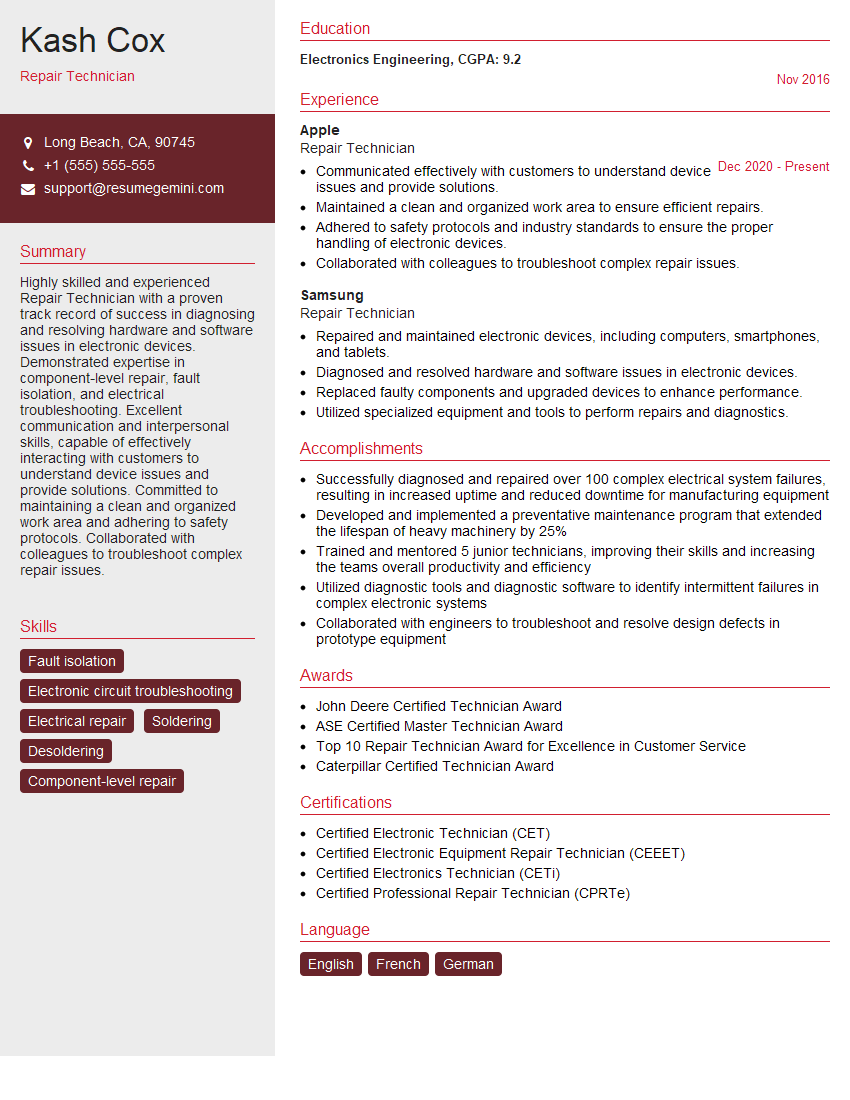
Repair Technician Resume Sample
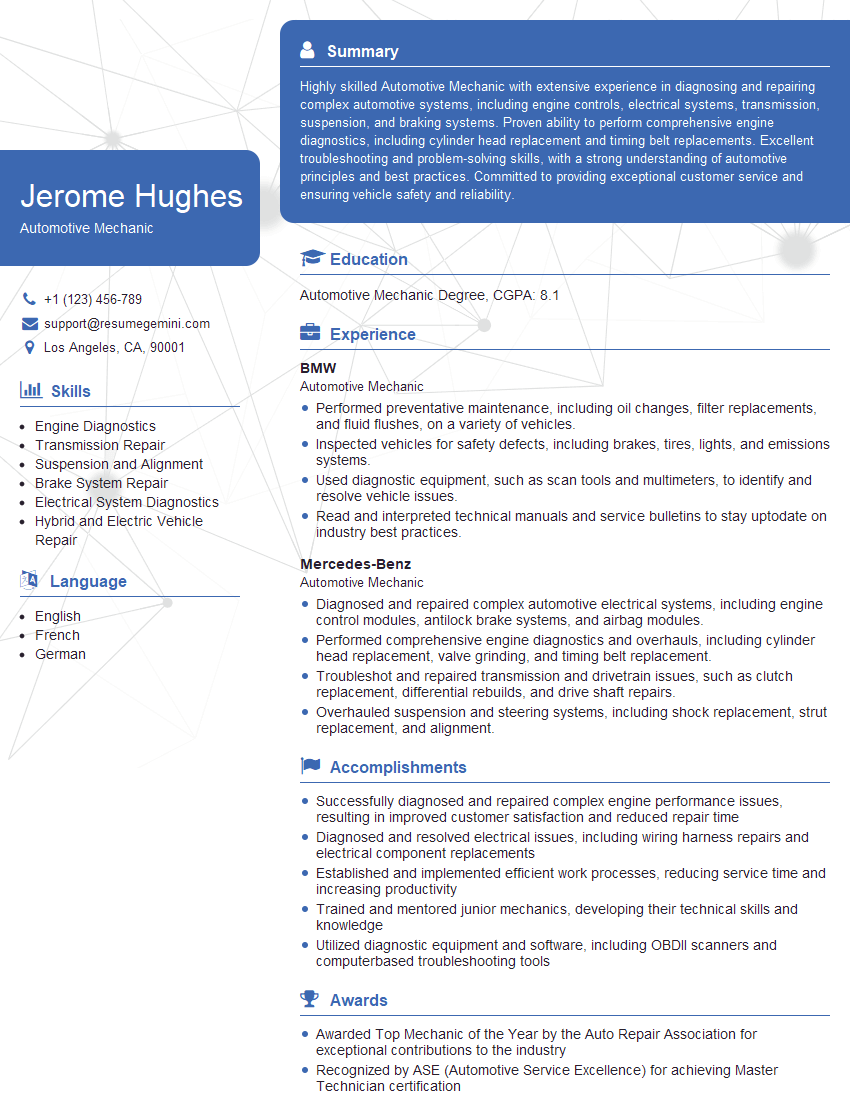
Automotive Mechanic Resume Sample
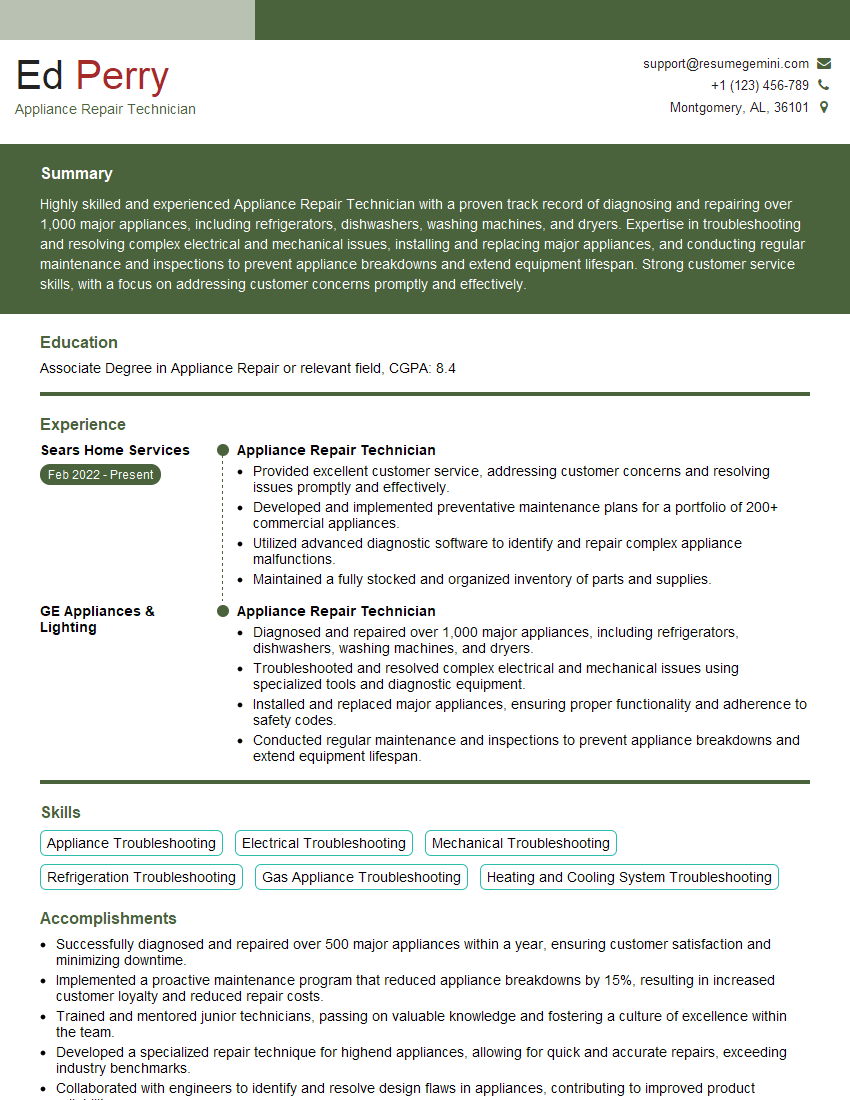
Appliance Repair Technician Resume Sample
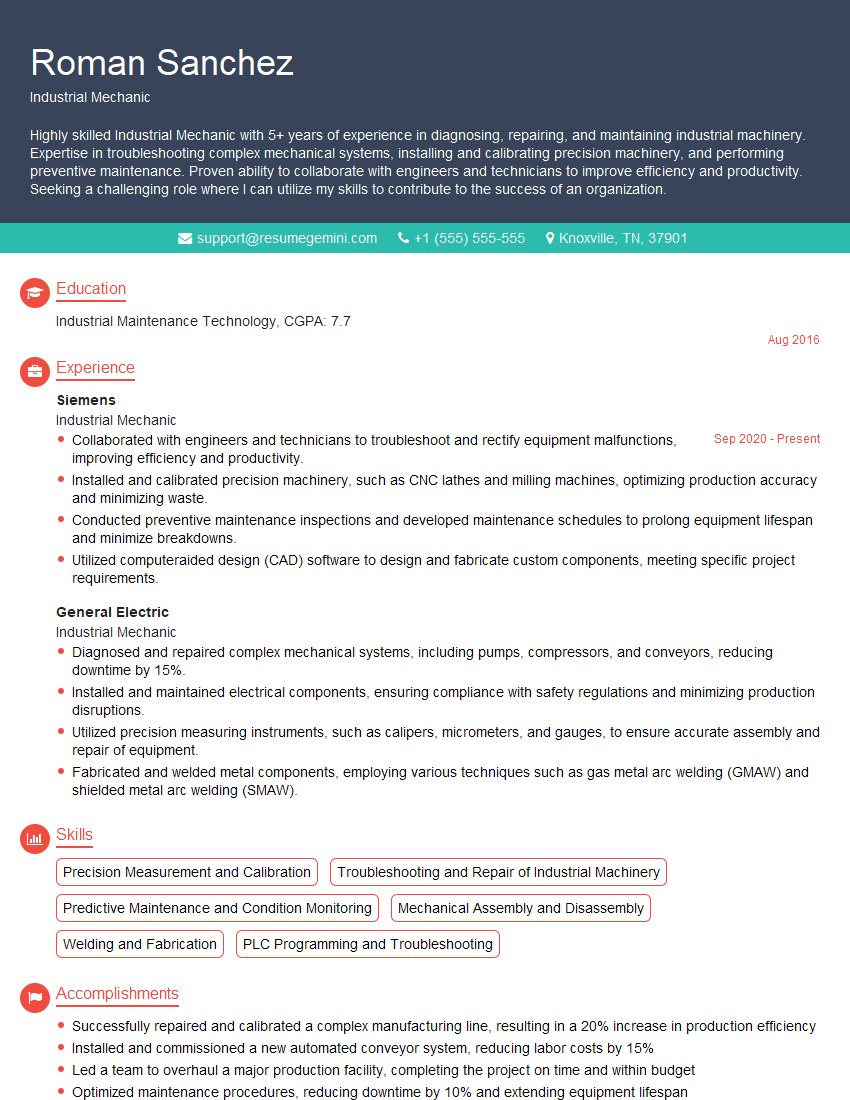
Industrial Mechanic Resume Sample
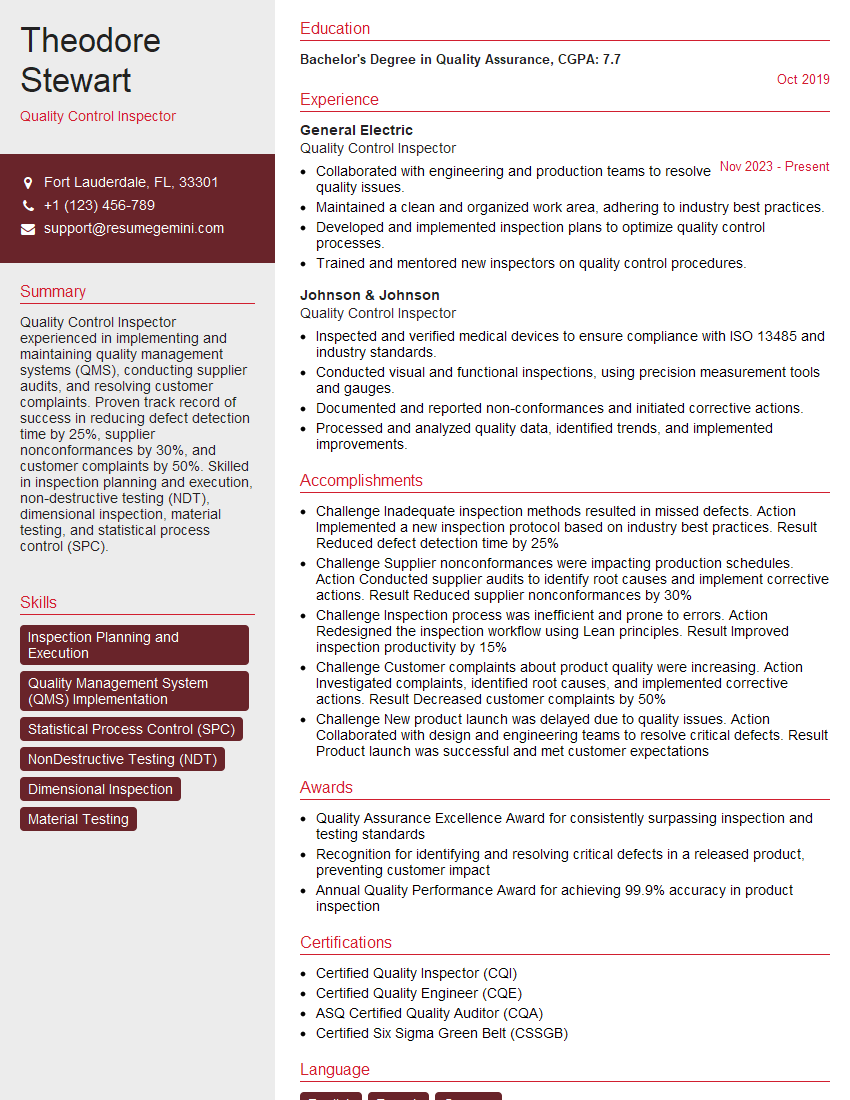
Quality Control Inspector Resume Sample
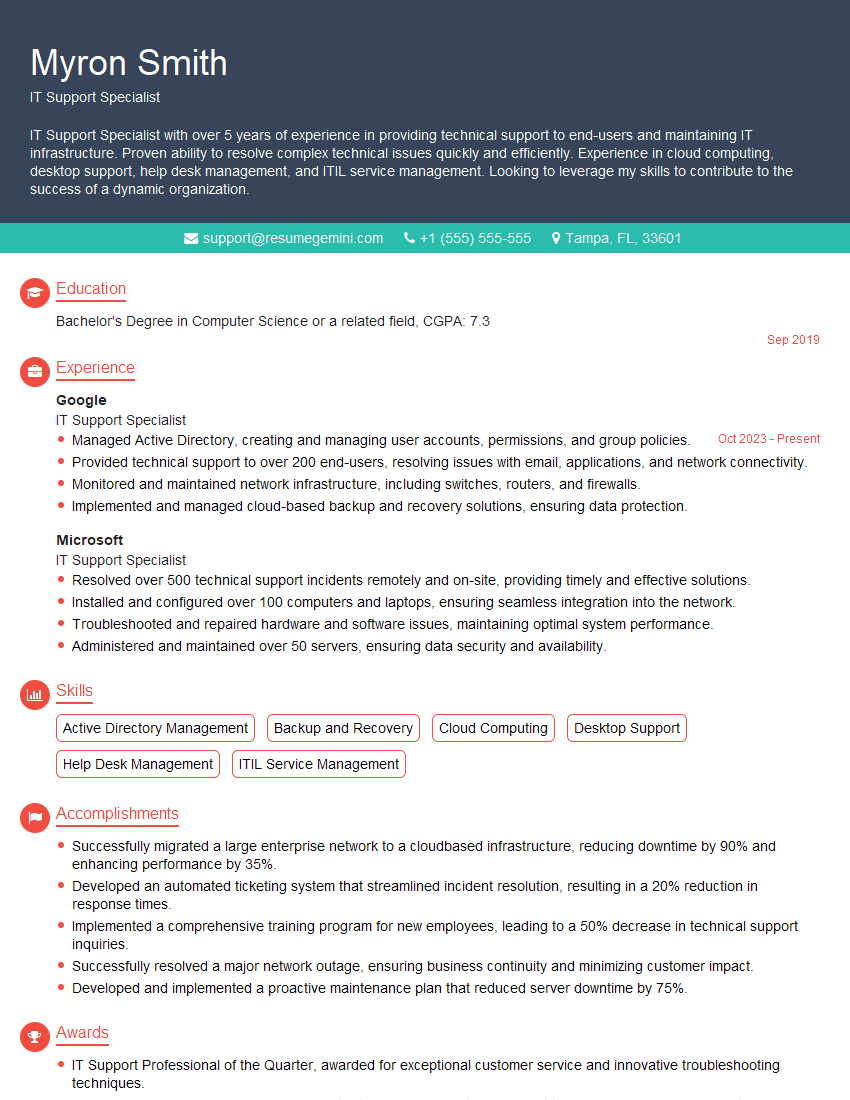
IT Support Specialist Resume Sample
- Software Engineer
- Network Engineer
- Technical Support Engineer
- System Administrator
- Network Technician
- Technical Specialist
- Help Desk Analyst
- Maintenance Technician
- Hardware Engineer
- Field Engineer
- Electronics Technician
- Field Service Technician
- Robotics Technician
- Machinist
- Service Manager
- Computer Repair Technician
- Repair Technician
- Automotive Mechanic
- Appliance Repair Technician
- Industrial Mechanic
- Quality Control Inspector
- IT Support Specialist
Explore more articles
Users Rating of Our Blogs
Share Your Experience
We value your feedback! Please rate our content and share your thoughts (optional).
What Readers Say About Our Blog
Very informative content, great job.
good