Interviews are more than just a Q&A session—they’re a chance to prove your worth. This blog dives into essential Troubleshooting and repairing CNC machines interview questions and expert tips to help you align your answers with what hiring managers are looking for. Start preparing to shine!
Questions Asked in Troubleshooting and repairing CNC machines Interview
Q 1. Explain the process of diagnosing a CNC machine alarm.
Diagnosing a CNC machine alarm starts with safety. Always ensure the machine is powered down and locked out before attempting any troubleshooting. The alarm code itself is your first clue. Most CNC machines display an error code on their control panel, providing a specific indication of the problem. Consult the machine’s manual to find the corresponding description for the alarm code. This manual will detail the possible causes and suggest troubleshooting steps.
Next, systematically check the components mentioned in the manual. This could involve inspecting sensors for obstructions or damage, checking for loose connections, or verifying power supply to the relevant modules. For example, a ‘servo alarm’ might indicate a problem with a motor encoder or a faulty servo amplifier, while a ‘limit switch’ alarm points towards a physical obstruction or a malfunctioning limit switch.
If the manual’s troubleshooting steps don’t resolve the issue, carefully examine the machine’s operational logs. Many CNC controls record detailed event logs that can pinpoint the exact timing and circumstances of the alarm’s occurrence. Finally, if all else fails, calling in a qualified technician is advisable to prevent further damage. A visual inspection and methodical approach, guided by the manual and error logs, are paramount in diagnosing CNC machine alarms.
Q 2. Describe your experience troubleshooting electrical issues in CNC machines.
My experience with electrical troubleshooting in CNC machines involves a systematic approach. I start with visually inspecting wiring harnesses for loose connections, damaged insulation, or signs of overheating. I use a multimeter to test voltage, current, and continuity in circuits, ensuring proper power supply to various components. I’ve encountered issues like faulty power supplies, blown fuses, bad contactors, and problems with servo drives.
For example, I once resolved a machine shutdown caused by a faulty contactor. A visual inspection revealed minor scorching around the contactor, indicating arcing. Replacing the contactor immediately restored functionality. Another instance involved tracing a short circuit using a multimeter, which eventually led to the identification of a damaged wire inside a control cabinet.
I also understand the safety protocols involved in working with high-voltage systems. I never work on live circuits and always use proper personal protective equipment (PPE). My experience encompasses troubleshooting various electrical components, including control circuits, servo amplifiers, and motor drives, using schematics and wiring diagrams to pinpoint faulty components efficiently.
Q 3. How do you identify and resolve mechanical problems in a CNC machine?
Identifying and resolving mechanical problems in CNC machines requires a thorough understanding of their kinematics. I begin by visually inspecting the machine for any obvious issues like loose bolts, worn bearings, damaged ways, or misaligned components. I use precision measuring instruments like dial indicators and calipers to check for any deviations from specifications. This might involve checking the squareness of the machine table, the parallelism of the ways, or the accuracy of the linear guides.
For instance, I once encountered a situation where a machine was producing parts out of square. By carefully checking the machine’s geometry, I found a slightly bent way. The solution involved precision realignment of the ways, which restored the machine’s accuracy. I’ve also dealt with issues like worn ball screws, causing inaccuracies in the positioning. Replacing these parts solved the issue.
I’m experienced in using various techniques to diagnose mechanical problems, including observing the machine’s movements for unusual sounds or vibrations and analyzing the machine’s operational data. I’ve also used specialized tools like alignment lasers for precision measurements and adjustments. My approach prioritizes careful diagnosis before any parts replacement to ensure cost-effectiveness and efficiency.
Q 4. What are the common causes of inaccurate machining in CNC machines?
Inaccurate machining in CNC machines can stem from several sources. One major cause is tool wear, leading to dimensional inaccuracies and poor surface finish. Another common culprit is improper tool compensation, where the programmed tool path doesn’t account for the actual tool size. This results in parts that are too large or small. Similarly, incorrect workpiece setup, such as improper clamping or misalignment, can lead to deviations from the desired dimensions.
Furthermore, problems with the machine’s mechanical components, including worn bearings, ball screws, or linear guides, can affect positioning accuracy. Electrical issues, such as faulty encoders or servo drives, can introduce inaccuracies. Software problems in the CNC control, such as incorrect programming or machine parameters, also lead to inaccurate machining. Lastly, environmental factors, like variations in temperature and humidity, can influence dimensional accuracy over time.
Think of it like baking a cake: if your oven temperature is off, or your ingredients aren’t measured precisely, the result won’t be as expected. Similarly, all these factors in a CNC machine need to be precisely controlled and maintained for accurate machining.
Q 5. How do you troubleshoot a CNC machine that is producing parts out of tolerance?
Troubleshooting a CNC machine producing out-of-tolerance parts is a systematic process. I start by carefully analyzing the parts themselves to determine the nature and extent of the inaccuracies. Are the parts consistently off by a certain amount, or are the deviations random? This helps narrow down the possible causes. Next, I’d review the CNC program, checking for errors in the tool paths or work coordinate system. Simulation software is very helpful here.
I then move on to inspecting the tooling. Are the tools sharp and correctly sized? Is the tool compensation properly set? Following this, I would check the machine’s mechanical components for wear or misalignment, using precision measuring instruments as mentioned previously. This includes checking the accuracy of the axes, the squareness of the machine table, and the parallelism of the ways.
Electrical components are also checked, specifically focusing on encoders, servo drives, and feedback systems to rule out any electrical-related inaccuracies. Finally, environmental factors such as temperature and humidity are also considered. A methodical approach involving careful inspection, data analysis, and elimination of possible causes is crucial to effectively resolve this kind of problem.
Q 6. Explain your experience with hydraulic and pneumatic systems in CNC machines.
My experience with hydraulic and pneumatic systems in CNC machines covers maintenance, troubleshooting, and repair. I’m familiar with the function of hydraulic and pneumatic components, including pumps, valves, cylinders, and accumulators. I understand the importance of maintaining proper hydraulic fluid levels and quality. I can troubleshoot issues like leaks, low pressure, and hydraulic pump failures using pressure gauges, flow meters, and other diagnostic tools.
With pneumatic systems, I’m adept at identifying leaks using soapy water and checking for proper air pressure and flow. I understand how to troubleshoot problems with pneumatic valves, cylinders, and air filters. For instance, a sudden drop in hydraulic pressure could indicate a leak in a hose or a failing seal, requiring careful inspection and replacement of the faulty component. Similarly, a malfunctioning pneumatic valve could be causing inconsistent clamping force, requiring a thorough check of the valve and its associated circuitry.
Safety is always a priority when working with these systems. I’m trained to handle high-pressure hydraulic systems and know the potential hazards involved. Regular maintenance of hydraulic and pneumatic systems is crucial to prevent unforeseen downtime and improve the overall efficiency and lifespan of the CNC machine.
Q 7. Describe your familiarity with various CNC control systems (e.g., Fanuc, Siemens, Haas).
I have extensive experience with various CNC control systems, including Fanuc, Siemens, and Haas controls. My familiarity extends to both their hardware and software aspects. I’m comfortable navigating their user interfaces, programming in their respective languages (e.g., ladder logic for Siemens, conversational programming for Haas, and G-code for all), and understanding their diagnostic capabilities.
For example, I can troubleshoot Fanuc alarms by interpreting the alarm codes and using the control’s diagnostic tools. With Siemens controls, I’m proficient in using their programming software to modify existing programs and troubleshoot ladder logic. With Haas controls, I’m comfortable using the conversational programming interface and diagnosing issues using the machine’s built-in diagnostic functions.
My experience includes working with various machine models and control versions from each manufacturer, giving me a good understanding of their unique features and common issues. I can read and interpret schematics, wiring diagrams, and other technical documentation associated with each control system. This allows me to effectively diagnose and resolve problems in a timely and efficient manner.
Q 8. How do you perform preventative maintenance on a CNC machine?
Preventative maintenance on a CNC machine is crucial for maximizing uptime and preventing costly repairs. It’s like regularly servicing your car – you catch small issues before they become major problems. My approach is systematic and follows a checklist.
- Visual Inspection: I thoroughly examine all moving parts, looking for wear, loose connections, or any signs of damage. This includes checking belts, pulleys, bearings, and the spindle.
- Lubrication: Regular lubrication is vital. I use the recommended lubricants for each component, ensuring proper application to avoid over- or under-lubrication. This extends the lifespan of moving parts and reduces friction.
- Cleaning: Chips and debris can clog mechanisms and cause damage. I meticulously clean the machine, removing chips from the work area, coolant system, and any other relevant areas. Compressed air is a key tool here.
- Coolant System Check: I inspect the coolant level, check for leaks, and ensure the coolant is clean and at the correct concentration. A contaminated coolant system can quickly lead to corrosion.
- Electrical Checks: I check all electrical connections for tightness and signs of damage. This includes checking the control panel, motors, and sensors.
- Calibration: Periodically, I recalibrate the machine’s axes to maintain accuracy. This ensures consistent and precise machining.
- Documentation: I maintain detailed records of all maintenance performed, including dates, procedures, and any findings. This aids in identifying trends and predicting future maintenance needs.
For example, during a recent preventative maintenance on a Haas VF-2, I discovered a slightly loose connection in the X-axis motor, preventing it from responding fully. Tightening the connection averted a possible major failure.
Q 9. What are the safety procedures you follow when working on CNC machines?
Safety is paramount when working with CNC machines. My safety procedures are ingrained in my workflow. They always take precedence over speed or efficiency.
- Lockout/Tagout (LOTO): Before performing any maintenance, I always follow LOTO procedures, completely isolating the power supply to the machine. This prevents accidental activation.
- Personal Protective Equipment (PPE): I always wear appropriate PPE, including safety glasses, hearing protection, and sturdy work shoes. Depending on the task, this may also include gloves, a face shield, and other protective gear.
- Emergency Stops: I locate and familiarize myself with all emergency stop buttons before commencing any work. I understand their function and the procedure for emergency shutdown.
- Clear Work Area: I ensure the work area is clean, organized, and free from obstacles. A cluttered environment can lead to accidents.
- Machine Familiarization: Before working on any CNC machine, I familiarize myself with its specific safety features and operating instructions. Each machine has its nuances.
- Proper Tool Handling: I follow proper tool handling procedures to avoid injury and damage to tools. This includes using appropriate tool holders and carefully handling sharp or heavy tools.
Once, a colleague almost started a machine while another was inside performing maintenance. Our strict LOTO procedure prevented a serious accident.
Q 10. How do you interpret CNC machine error codes?
CNC machine error codes are like cryptic messages from the machine. Each code indicates a specific problem. Interpreting them requires a combination of knowledge and experience.
- Consult the Machine’s Manual: The most reliable source is the machine’s manual. It has a complete list of error codes and their meanings.
- Examine the Error Context: The context of the error – what operation was happening when the error occurred – can provide valuable clues.
- Check Alarm History: Many machines log a history of errors. This can help identify recurring problems.
- Systematic Troubleshooting: If the code doesn’t give a direct answer, I employ a systematic troubleshooting approach, checking various components based on the nature of the code. For instance, a coolant-related code may lead me to check the coolant level, pump, and sensors.
- Diagnostic Software: Advanced diagnostic software can provide more in-depth information and allow for a more detailed analysis of the error.
For example, an error code indicating a ‘Spindle Over-Temperature’ might suggest a problem with the spindle cooling system, a faulty thermal sensor, or even an overloaded spindle.
Q 11. Explain your experience with ladder logic programming related to CNC machines.
My experience with ladder logic programming for CNC machines is extensive. I’ve used it to troubleshoot and modify control systems, optimize machine operations, and even design custom control sequences.
Ladder logic is essentially a visual programming language. It uses symbols to represent logical functions and control sequences. I’ve worked with various PLCs (Programmable Logic Controllers), including Allen-Bradley and Siemens.
For instance, I once used ladder logic to implement a custom safety feature on a milling machine that automatically stopped the spindle if a tool changed unexpectedly. This involved creating a sequence that monitored sensor inputs and triggered the appropriate outputs in the event of an anomaly. //Example ladder logic snippet (Illustrative): //Input: Tool Change Sensor (ICS) //Output: Spindle Stop (SS) //If ICS is activated THEN SS is activated.
I understand the intricacies of timers, counters, and other logical elements, which are crucial for effective CNC machine control.
Q 12. Describe your experience with CNC machine diagnostics software.
I am proficient in using several CNC machine diagnostic software packages. These tools allow for deeper insights into the machine’s operation and performance than simply reading error codes.
These software packages often include features like:
- Real-time Data Monitoring: Observing crucial parameters like spindle speed, axis positions, and temperatures in real-time.
- Error Log Analysis: Detailed analysis of error logs, often providing more context than the simplified error codes.
- Parameter Adjustments: Modifying machine parameters, allowing for fine-tuning of performance and operation.
- Diagnostic Tests: Running built-in diagnostic tests to isolate faulty components.
For example, using Siemens’ SINUMERIK Operate software, I once diagnosed a problem with a servo motor encoder on a lathe by analyzing real-time data and comparing it to historical performance data. This allowed for a quick and accurate diagnosis.
Q 13. How do you handle emergency situations involving CNC machines?
Handling emergency situations on CNC machines requires quick thinking and decisive action. My training emphasizes safety and immediate response.
- Prioritize Safety: The first priority is always the safety of myself and anyone nearby. I immediately shut down the machine using the emergency stop button and initiate the lockout/tagout procedure.
- Assess the Situation: I quickly assess the nature of the emergency – is there a fire, a collision, or a fluid leak?
- Call for Help: Depending on the severity, I call for assistance from other qualified personnel, potentially including emergency services.
- Secure the Area: I secure the area to prevent further incidents or injuries. This could involve evacuating people from the immediate vicinity.
- Document the Incident: Following the emergency, I document the event, including the cause, actions taken, and any injuries or damage.
In one instance, a coolant leak led to a short circuit in the control cabinet. I reacted quickly, shutting down the machine, and then called in an electrician to address the electrical issue safely. The quick response averted a potentially dangerous situation.
Q 14. What are the common causes of tool breakage in CNC machining?
Tool breakage in CNC machining is a common problem that can be caused by a number of factors. Understanding these causes is critical for preventing future breakages.
- Excessive Cutting Forces: Using incorrect cutting parameters (feed rate, depth of cut, spindle speed) can generate excessive forces on the tool, leading to breakage.
- Improper Tool Selection: Selecting a tool that’s not appropriate for the material or operation can lead to premature wear and breakage.
- Tool Wear: Over time, cutting tools wear down, becoming more likely to break under stress. Regular tool inspection and replacement is vital.
- Clamping Issues: Poorly clamped workpieces can cause vibrations, putting extra stress on tools.
- Workpiece Material Defects: Hidden defects in the workpiece material can cause unpredictable forces on the tool, leading to breakage.
- Collision: A collision with the workpiece or a machine component is a leading cause of tool breakage.
- Incorrect Tool Geometry: Worn or improperly sharpened tools are much more prone to break.
For example, using a dull end mill at a high feed rate can lead to significant vibration and rapid tool breakage. Optimizing cutting parameters and carefully monitoring tool wear are key to preventing tool breakage and maximizing productivity.
Q 15. How do you troubleshoot issues related to spindle speed and torque?
Troubleshooting spindle speed and torque issues requires a systematic approach. Think of the spindle like a powerful engine; it needs the right fuel (power), a clean air intake (electrical connections), and proper lubrication to perform optimally. Problems can arise from several sources.
- Power Supply Issues: Insufficient power to the spindle motor is a common culprit. This could be due to a faulty power supply unit (PSU), wiring problems, or even a blown fuse. I’d first check voltage readings at the spindle motor connector against the specified voltage to verify adequate power. If there’s a voltage drop, I’d trace the wiring back to the PSU, checking for loose connections or damaged cables.
- Spindle Motor Problems: The motor itself could be failing. Worn bearings, damaged windings, or a failing encoder can all affect speed and torque. Testing the motor using specialized equipment like a motor analyzer is essential to diagnose internal faults. Listen carefully for unusual noises – a grinding or humming sound can indicate bearing wear.
- Control System Issues: The CNC controller may be sending incorrect speed commands or experiencing a communication fault. Checking the controller’s diagnostics and error logs will help identify programming errors or hardware malfunctions. This might involve verifying the accuracy of the programmed spindle speed and comparing it to the actual speed reading from the spindle encoder.
- Mechanical Problems: Issues with the spindle’s belt drive or other mechanical components can impact performance. A slipping belt or worn gears can lead to reduced torque and inconsistent speed. A visual inspection and careful checking for wear and tear is critical here.
For instance, I once diagnosed a CNC lathe’s low spindle torque by identifying a loose connection in the spindle motor wiring harness, which was subtly preventing adequate power transfer. After tightening the connection, the spindle performance was restored to normal.
Career Expert Tips:
- Ace those interviews! Prepare effectively by reviewing the Top 50 Most Common Interview Questions on ResumeGemini.
- Navigate your job search with confidence! Explore a wide range of Career Tips on ResumeGemini. Learn about common challenges and recommendations to overcome them.
- Craft the perfect resume! Master the Art of Resume Writing with ResumeGemini’s guide. Showcase your unique qualifications and achievements effectively.
- Don’t miss out on holiday savings! Build your dream resume with ResumeGemini’s ATS optimized templates.
Q 16. How do you diagnose and repair problems with CNC machine servos and motors?
Servos and motors are the muscles of a CNC machine, ensuring precise and controlled movement. Diagnosing problems involves a blend of systematic checks and specialized tools.
- Visual Inspection: Begin with a thorough visual inspection for loose connections, damaged wires, or any physical damage to the motor or servo. Look for overheating (discoloration), unusual noises, or anything out of the ordinary.
- Encoder and Feedback: Check the encoder (which provides position feedback to the controller). A faulty encoder will lead to inaccurate positioning and jerky movements. I’d test the encoder signal using an oscilloscope to see if it’s providing a clean, consistent signal.
- Testing with a Multimeter: Use a multimeter to check voltage, current, and resistance in the motor circuit. This helps identify issues with power supply, wiring, and motor windings. For instance, a short circuit in the windings will show a low resistance reading.
- Controller Diagnostics: Consult the machine’s controller manuals and diagnostics screens. Many controllers report motor errors with error codes. Using these codes, you can pin-point the specific issue (e.g., overcurrent, overvoltage, communication errors).
- Specialized Equipment: Specialized servo motor analyzers and test equipment can perform more detailed diagnostics, testing for various motor parameters and identifying subtle faults that a multimeter might miss.
For example, I once traced a servo motor issue to a faulty feedback loop due to a damaged encoder cable. Replacing the cable resolved the problem. Working with the machine’s diagnostics and using an oscilloscope to check the encoder feedback were key in isolating that particular problem.
Q 17. Explain your experience with CNC machine lubrication and cooling systems.
Lubrication and cooling systems are crucial for the long-term health and accuracy of a CNC machine. Neglecting these can lead to premature wear, reduced accuracy, and costly repairs.
- Lubrication: I regularly inspect and maintain lubrication points according to the manufacturer’s specifications. This includes applying the correct type and amount of lubricant to bearings, ways, and other moving parts. Insufficient lubrication leads to friction, wear, and ultimately, failure. Over-lubrication can attract debris and cause problems as well.
- Cooling Systems: Most CNC machines employ cooling systems to regulate the temperature of components like the spindle motor, servos, and the control cabinet. I’d regularly inspect coolant levels and ensure that cooling pumps and fans are functioning correctly. Clogged coolant lines or a malfunctioning cooling pump can lead to overheating and damage to critical components.
- Coolant Filtration and Management: Proper coolant filtration is essential to prevent contamination and maintain effective cooling and lubrication. I regularly check for contamination in the coolant and change it as needed. Using the wrong coolant type can also lead to corrosion and other problems.
- Regular Maintenance Schedules: Following a strict maintenance schedule, including lubrication and cooling system checks, is crucial for preventing major issues. This preventative maintenance approach is far more cost-effective than dealing with breakdowns.
I’ve seen firsthand the devastating effects of neglecting lubrication. One instance involved a machine’s ways becoming severely scored due to insufficient lubrication, leading to a costly rebuild of the machine’s linear guides.
Q 18. Describe your experience working with different types of CNC machine tools (e.g., mills, lathes).
My experience encompasses a wide range of CNC machine tools, including mills (both vertical and horizontal), lathes (both engine and CNC), and routers. Understanding the unique characteristics of each type is essential for effective troubleshooting and maintenance.
- Milling Machines: I’m proficient in working with various milling operations, from basic face milling to complex 3D contouring. Troubleshooting often involves dealing with issues like spindle chatter, tool deflection, and work holding problems.
- Lathes: My experience with lathes includes dealing with issues related to tailstock alignment, chucking problems, and tool wear. Proper tooling and setup are crucial for accurate turning operations.
- Routers: I’m experienced with CNC routers used for woodworking and other material applications. This involves working with specialized tooling and material-specific considerations.
The underlying principles of CNC operation are similar across different machine types, but the specific troubleshooting approaches and challenges vary based on the machine’s configuration and application.
Q 19. How do you calibrate and adjust CNC machine axes?
Calibrating and adjusting CNC machine axes ensures accurate positioning and high-quality machining. This often involves a combination of software and hardware adjustments.
- Software Calibration: The CNC controller often has built-in calibration routines. These routines typically involve moving the axes through a known distance and comparing the actual movement to the commanded movement. Any discrepancies are then compensated for through software adjustments.
- Mechanical Adjustments: Mechanical adjustments might be necessary to correct for backlash (play) in the axes, or to adjust limit switches and homing positions. This often involves carefully adjusting screws or other mechanical components, requiring precision and patience.
- Laser Alignment: Laser alignment tools can be used for precise alignment of the axes, ensuring parallelism and perpendicularity between them. This is especially critical for machines performing high-precision work.
- Test Runs: After making any adjustments, test runs with simple programs are essential to verify the accuracy of the calibration. Measuring actual dimensions of machined parts can validate the correctness of the calibration.
A recent calibration project involved adjusting the backlash compensation in a 5-axis milling machine. The machine was experiencing slight inaccuracies in complex 3D milling operations. By systematically adjusting the backlash compensation parameters in the controller software and meticulously verifying the adjustments, we restored the machine’s accuracy to within the required tolerances.
Q 20. How familiar are you with different types of cutting tools and their applications?
My familiarity with cutting tools is extensive. The selection and application of the right tool are fundamental to efficient and accurate machining. I have experience with a wide range of tools, including:
- Milling Cutters: Various types of end mills, face mills, ball mills, etc., each suited for specific applications (e.g., roughing, finishing, slotting).
- Turning Tools: Different types of turning tools, including parting tools, grooving tools, and boring bars, tailored for various turning operations.
- Drills: Twist drills, step drills, and specialized drills for diverse material types and applications.
- Specialized Tools: I’m also familiar with more specialized tools such as thread milling cutters, form tools, and reamers.
Choosing the correct tool depends on factors such as the material being machined, the desired surface finish, and the machining operation. I meticulously select tools considering factors such as tool geometry, material compatibility, and expected wear rates. The wrong tool selection can lead to poor surface finish, tool breakage, or even machine damage.
Q 21. Describe your experience with CNC machine programming and G-code.
I’m proficient in CNC machine programming and G-code. G-code is the language that CNC machines understand, directing their movements and operations. I use it for:
- Program Creation: I’m skilled in writing G-code programs from scratch for various milling and turning operations, using CAM (Computer-Aided Manufacturing) software to generate efficient and optimized toolpaths.
- Program Editing and Modification: I can efficiently edit and modify existing G-code programs to adapt them for different parts, materials, or machines. I can debug G-code and resolve errors to ensure correct execution.
- G-Code Optimization: Optimizing G-code is key to maximizing machining efficiency. I focus on reducing cycle times while maintaining accuracy and surface finish.
- Post-Processor Knowledge: I understand how post-processors translate CAM-generated toolpaths into machine-specific G-code.
G01 X10.0 Y20.0 F100 ; Linear interpolation example
This line of G-code moves the tool to coordinates X10.0, Y20.0 at a feed rate of 100 units per minute. Understanding this syntax and its implications is vital for successful CNC programming. In practice, I’ve used my G-code expertise to optimize machining cycles, reducing production time and improving part quality.
Q 22. How do you troubleshoot network connectivity issues with CNC machines?
Troubleshooting network connectivity issues in CNC machines often involves a systematic approach. First, I’d verify the basic physical connections: are the Ethernet cables securely plugged into both the machine and the network switch? Are the cables undamaged? A simple visual inspection can often solve the problem.
Next, I’d check the machine’s IP address configuration. Is it correctly set within the machine’s control system, and is it within the same subnet as the rest of the network? Incorrect IP settings are a very common cause of connectivity problems. I use ping commands (ping ) to test basic network reachability and traceroute (traceroute ) to identify any network hops causing issues.
If the machine has a dedicated network port, I’ll rule out issues with that port by trying a different port or cable. Network connectivity tools can also help diagnose problems with the network infrastructure itself, helping pinpoint bottlenecks or faulty network segments. I often utilize a network scanner to identify all active devices on the network to ensure the CNC machine is visible and properly communicating. For more advanced issues involving firewalls or network security, I collaborate with the IT department to resolve those complexities.
Finally, if the problem persists, I would check the CNC machine’s network settings in its control panel and consult the machine’s manuals for specific troubleshooting steps. This often involves verifying the network protocols being used (such as TCP/IP) and restarting the network interface card on the machine itself.
Q 23. What is your experience with machine vision systems integrated with CNC machines?
My experience with machine vision systems integrated with CNC machines is extensive. I’ve worked on several projects where cameras and image processing software were used to improve accuracy and automation. For instance, I integrated a vision system on a milling machine that used image recognition to locate and precisely position irregularly shaped workpieces before machining. This eliminated the need for manual positioning and significantly increased productivity and accuracy. The vision system used a high-resolution camera, specialized lighting to avoid shadows, and software that could analyze the images and output the precise coordinates for the CNC machine.
In another instance, I troubleshooted a vision system that was experiencing calibration issues. The problem turned out to be a combination of camera misalignment and incorrect lighting. After carefully recalibrating the camera and adjusting the lighting, the system performed flawlessly. My experience extends to various vision system components, including cameras, lighting systems, and image processing software. I am proficient in diagnosing and resolving issues related to image acquisition, processing, and communication with the CNC controller. This frequently involves debugging the software, calibrating the camera, and verifying that the image data is correctly interpreted and translated into CNC commands.
Q 24. How do you document your troubleshooting and repair procedures?
Thorough documentation is critical for efficient troubleshooting and repair. I maintain detailed records using a combination of methods. For each issue, I create a detailed report that includes the machine’s identification number, the date and time of the problem, a clear description of the malfunction, and the steps I took to diagnose and resolve the issue.
I utilize a digital documentation system, incorporating images, videos, and relevant data logs. These logs might include sensor readings, error codes, and even snippets of code that I modified. This ensures a comprehensive audit trail. For example, a photograph of a faulty wire connection might be included along with a description of the repair. Similarly, if a software bug was identified, I’d include the code snippet that was corrected.
This documentation is invaluable for future troubleshooting, training new technicians, and tracking the maintenance history of each machine. It also helps in improving maintenance practices by identifying recurring issues and potential preventative measures. In addition, this structured documentation helps prevent repetition of errors and increases overall efficiency and cost-effectiveness.
Q 25. Explain your experience with robotic systems integrated with CNC machines.
My experience with robotic systems integrated with CNC machines primarily centers on collaborative robots (cobots) and their integration into automated manufacturing processes. I’ve worked on projects involving the setup and programming of robots to load and unload parts from CNC machines, improving the overall throughput and efficiency of the production line. This often involved programming the robot using robot-specific programming languages (e.g., RAPID for ABB robots) and integrating the robot’s control system with the CNC machine’s controller.
For instance, one project involved integrating a collaborative robot arm with a CNC lathe. The robot was programmed to pick up raw material, load it into the lathe, and unload the finished parts. This automated the process, eliminated manual handling of heavy parts, and significantly reduced cycle times. The challenge here lay in synchronizing the robot’s movements precisely with the lathe’s operation to prevent collisions and ensure smooth operation. I also possess experience with safety protocols and risk assessments that are crucial when dealing with robots in a manufacturing setting.
Troubleshooting robotic systems integrated with CNC machines can involve issues ranging from mechanical malfunctions of the robot arm itself to communication problems between the robot and the CNC controller. In those cases, I would systematically check each component, using diagnostic tools provided by the robot manufacturer and the CNC controller to identify the source of the problem and implement an effective solution. This often requires a deep understanding of both robot and CNC machine programming and control systems.
Q 26. Describe your experience with different types of CNC machine sensors and encoders.
I’m familiar with a wide variety of CNC machine sensors and encoders, encompassing incremental and absolute encoders, proximity sensors (inductive, capacitive, photoelectric), limit switches, and temperature sensors. Incremental encoders measure relative position, requiring a reference point, while absolute encoders directly provide an absolute position reading regardless of power loss. This difference significantly influences how we troubleshoot issues related to positional accuracy and machine calibration.
For example, I once worked on a CNC mill where the X-axis was exhibiting positional inaccuracy. Through careful investigation, I discovered that the incremental encoder had suffered damage, resulting in incorrect position feedback. Replacing the encoder solved the issue. In another case, a faulty limit switch triggered a machine emergency stop, which was promptly rectified by replacing the malfunctioning switch. I regularly calibrate encoders and sensors using specialized equipment and software, ensuring accurate and reliable readings. The type of sensor or encoder used dictates the troubleshooting approach, requiring a deep understanding of their respective working principles and limitations.
Understanding the specific characteristics of each sensor type—sensitivity, response time, and operational range—is vital for accurate diagnosis. For instance, the choice between different proximity sensors depends on the application and the type of material being detected. Similarly, the selection of an incremental versus absolute encoder is influenced by factors such as machine design and required accuracy.
Q 27. How do you manage multiple CNC machines simultaneously during maintenance or repair?
Managing multiple CNC machines simultaneously during maintenance or repair requires a well-organized and systematic approach. Prioritization is key; I assess the urgency of each repair based on the impact on production and the potential for further damage. Critical machines requiring immediate attention are tackled first.
I also employ a scheduling system to plan maintenance tasks efficiently, allocating time slots for each machine. This might involve using a computerized maintenance management system (CMMS) to track maintenance schedules and track the status of repairs. Preventive maintenance is scheduled to minimize downtime and unexpected repairs. I leverage my team’s skills effectively, assigning tasks based on individual expertise, ensuring efficient utilization of resources.
Effective communication within the team is also crucial; I use daily briefings to keep everyone updated on the status of repairs and any potential delays. This ensures that everyone is aware of their roles and responsibilities, contributing to a smooth and efficient workflow. Clear communication prevents conflicts, ensures smooth handover of tasks, and supports collective problem solving.
Q 28. Explain your approach to identifying and solving complex CNC machine malfunctions.
My approach to identifying and solving complex CNC machine malfunctions involves a structured, systematic process. I begin by gathering all available information, which might include error codes displayed on the machine’s control panel, operator reports detailing the nature of the malfunction, and any relevant historical data from past maintenance logs. This initial information gathering is critical to building a picture of the problem.
Next, I use a process of elimination, systematically testing different components and sub-systems to isolate the source of the malfunction. This might involve checking electrical connections, testing sensors and encoders, and inspecting mechanical components for wear and tear. I often use diagnostic tools and software provided by the machine manufacturer to aid in this process. The strategy is similar to detective work, meticulously examining every clue until the root cause is identified.
For instance, if a CNC lathe is producing parts with inaccurate dimensions, the problem could stem from multiple sources: a faulty encoder, a worn tool, incorrect programming, or even a problem with the machine’s structural integrity. A systematic approach, testing each element individually, is crucial to pinpoint the exact cause. Once identified, the solution is implemented, rigorously tested, and fully documented. If the problem proves too complex, I consult relevant manuals, online resources, and collaborate with the manufacturer’s support team for assistance. Thorough testing is always employed before the machine is returned to service.
Key Topics to Learn for Troubleshooting and Repairing CNC Machines Interview
- Understanding CNC Machine Fundamentals: Grasp the basic principles of CNC operation, including G-code interpretation, coordinate systems, and machine kinematics. This foundational knowledge is crucial for effective troubleshooting.
- Mechanical Troubleshooting: Learn to diagnose and resolve mechanical issues such as bearing failures, spindle problems, and axis misalignment. Practical experience with tools and techniques for mechanical repair is essential.
- Electrical Troubleshooting: Develop expertise in identifying and fixing electrical faults, including wiring issues, motor problems, and control system malfunctions. Familiarity with electrical schematics and safety procedures is paramount.
- Hydraulic and Pneumatic Systems: Understand the principles of hydraulic and pneumatic systems used in CNC machines, and learn how to troubleshoot leaks, pressure issues, and component failures. This often involves understanding pressure gauges and system diagrams.
- PLC Programming and Troubleshooting: Gain proficiency in Programmable Logic Controller (PLC) programming and troubleshooting. This includes understanding ladder logic, input/output signals, and using diagnostic tools to isolate problems within the PLC control system.
- Safety Procedures and Regulations: Demonstrate a strong understanding of safety protocols and regulations relevant to CNC machine operation and maintenance. This is crucial for both your safety and the safety of others.
- Preventive Maintenance: Learn how to perform preventative maintenance tasks to minimize downtime and extend the lifespan of CNC machines. This includes lubrication, cleaning, and regular inspections.
- Diagnostic Tools and Techniques: Become familiar with various diagnostic tools and techniques used to identify and resolve problems in CNC machines. This includes utilizing multimeters, oscilloscopes, and diagnostic software.
- Problem-Solving Methodology: Develop a systematic approach to troubleshooting, emphasizing logical thinking, data analysis, and the ability to effectively communicate findings and solutions.
Next Steps
Mastering troubleshooting and repair of CNC machines opens doors to rewarding and highly sought-after careers in manufacturing and automation. To significantly enhance your job prospects, crafting a compelling and ATS-friendly resume is vital. ResumeGemini is a trusted resource designed to help you build a professional resume that showcases your skills and experience effectively. Examples of resumes tailored specifically to highlight expertise in troubleshooting and repairing CNC machines are available to guide your resume creation. Invest time in building a strong resume; it’s your first impression on potential employers.
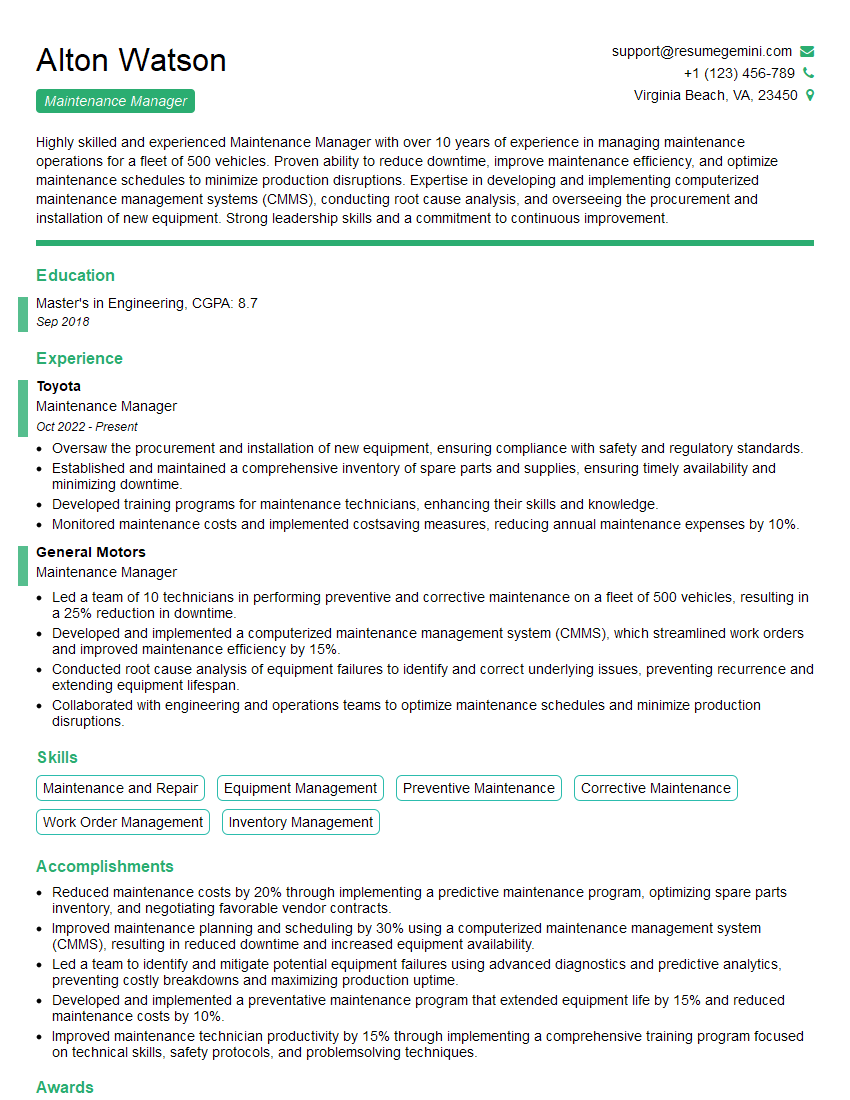
Maintenance Manager Resume Sample

Production Supervisor Resume Sample
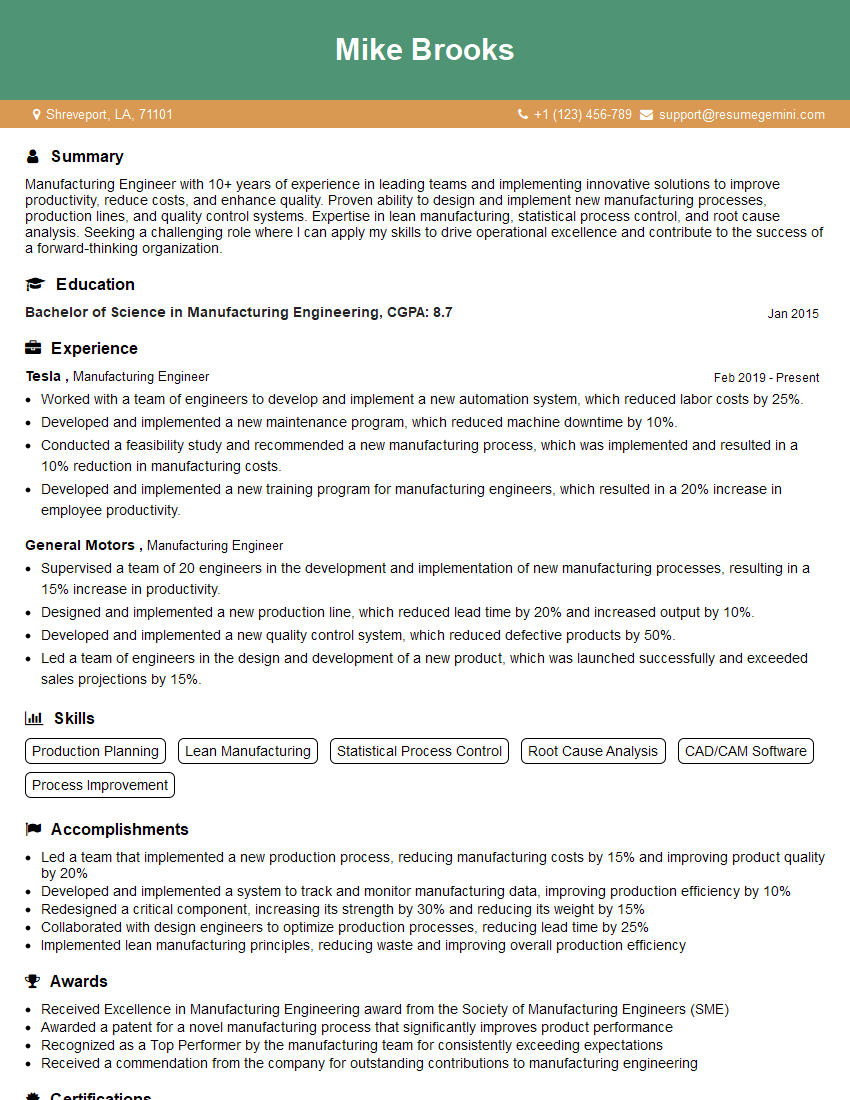
Manufacturing Engineer Resume Sample

Automation Technician Resume Sample

Robotics Technician Resume Sample

Manufacturing Technician Resume Sample

Mechatronics Technician Resume Sample
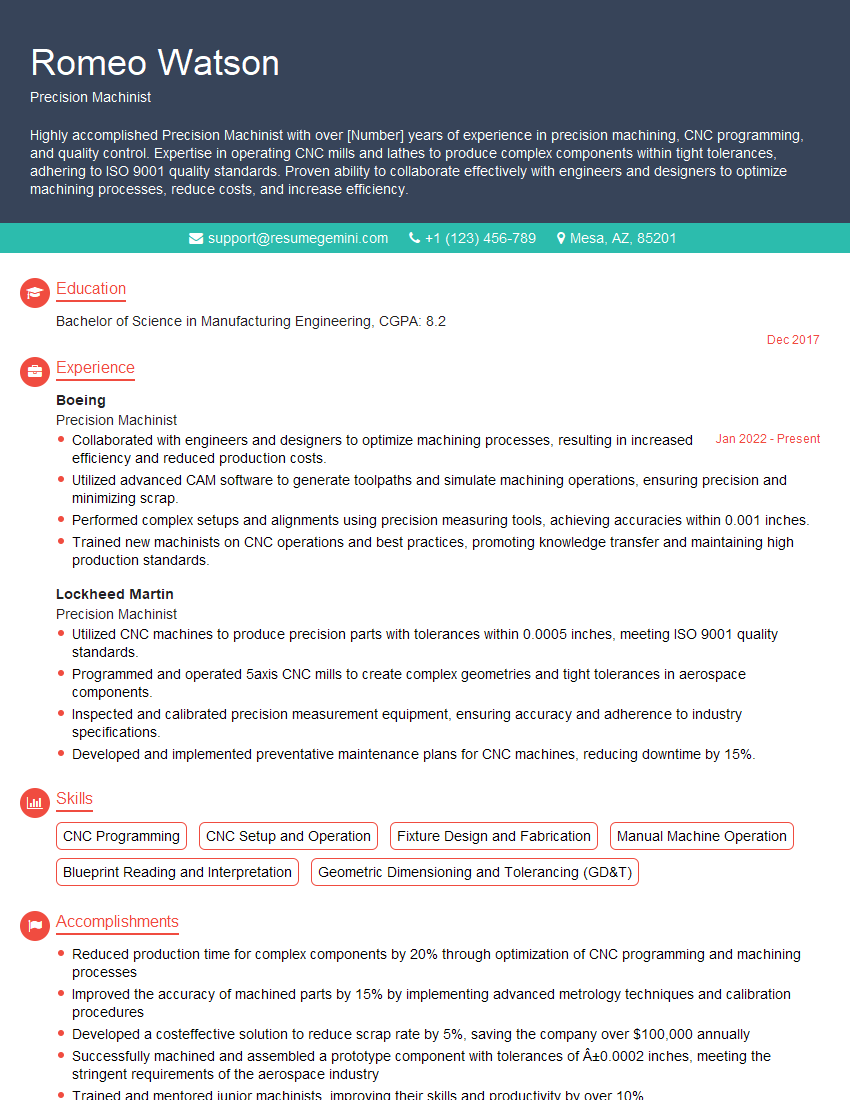
Precision Machinist Resume Sample
Explore more articles
Users Rating of Our Blogs
Share Your Experience
We value your feedback! Please rate our content and share your thoughts (optional).
What Readers Say About Our Blog
Very informative content, great job.
good