Cracking a skill-specific interview, like one for Tubing and Kneeboarding, requires understanding the nuances of the role. In this blog, we present the questions you’re most likely to encounter, along with insights into how to answer them effectively. Let’s ensure you’re ready to make a strong impression.
Questions Asked in Tubing and Kneeboarding Interview
Q 1. Describe the proper techniques for safe tubing operation.
Safe tubing operation hinges on rider awareness and boat operator skill. Think of it like this: the tube is your vehicle, and the boat is your taxi. Both need to be handled responsibly.
- Rider Positioning: Always sit or kneel securely, holding on firmly to the designated handles or ropes. Avoid leaning too far to either side and distribute your weight evenly. Imagine yourself as a balanced statue, minimizing sudden movements.
- Communication: Establish clear hand signals with the boat operator before starting and maintain constant visual contact. A simple thumbs-up indicates readiness, while a thumbs-down signals a stop. This eliminates misunderstandings.
- Boat Operation: The boat operator should maintain a steady speed, avoiding sudden acceleration or deceleration. They should also steer clear of obstacles and other watercraft. A slow, steady approach for beginners is key.
- Water Conditions: Avoid tubing in rough water, strong currents, or near obstacles. The calmer the water, the better the experience and the lower the risk of injury. Always check weather reports before heading out.
- Appropriate Equipment: Ensure the tube is in good condition, properly inflated, and appropriate for the number of riders. Avoid overloaded tubes, and always use tubes specifically designed for towing.
- Life Jackets: All tubers should wear a properly fitted life jacket. This is non-negotiable, regardless of swimming ability. It’s the single most important safety measure.
For example, I once saw a tubing accident where a rider wasn’t holding on properly and fell off into rough water. A life jacket prevented serious injury.
Q 2. Explain the safety precautions for kneeboarding in various water conditions.
Kneeboarding safety in different water conditions requires adaptability and caution. The key is to understand the challenges each situation presents.
- Calm Water: Ideal for learning and practicing basic techniques. Focus on maintaining balance and proper knee placement. Start slow and gradually increase speed.
- Moderate Chop: Requires more balance and control. The boat operator should maintain a slower speed, and the kneeboarder should focus on maintaining a low center of gravity. This avoids being thrown off balance by small waves.
- Rough Water: Not recommended for beginners. Strong waves and currents can easily throw off balance even experienced kneeboarders. This should be avoided unless you are a highly experienced kneeboarder in the right equipment.
- Currents: Be aware of the direction and strength of currents. Avoid areas with strong currents, which can quickly pull you away from the boat or into dangerous areas. This is especially true near inlets and river mouths.
- Obstacles: Keep a safe distance from any underwater hazards like rocks or debris. This needs to be planned by checking charts and using a spotter if needed.
For instance, I recall an incident where a beginner kneeboarder attempted kneeboarding in choppy water without sufficient experience, leading to a fall and minor injury. The key is to match your skill to the conditions.
Q 3. What are the common risks associated with tubing and kneeboarding, and how do you mitigate them?
Tubing and kneeboarding, while fun, carry inherent risks. Understanding these risks and implementing mitigation strategies is crucial.
- Collisions: Collisions with other boats, skiers, or swimmers are possible. Mitigation: Maintain a safe distance from other watercraft, always have a spotter or lookout, and obey boating regulations.
- Falls: Falls from tubes or kneeboards can lead to injuries. Mitigation: Use appropriate safety equipment (life jackets), maintain proper body position, communicate effectively with the boat operator, and choose appropriate water conditions.
- Impact Injuries: Impact with the water or objects in the water can cause injuries. Mitigation: Wear a life jacket, avoid rough water and obstacles, and maintain a controlled speed.
- Drowning: A significant risk if not wearing a life jacket or if caught in unforeseen currents. Mitigation: Always wear a life jacket, avoid tubing/kneeboarding alone, and understand the local water conditions.
- Equipment Failure: Tube or kneeboard malfunctions can lead to accidents. Mitigation: Regularly inspect equipment for wear and tear, and replace damaged equipment promptly.
I’ve seen firsthand how a simple oversight like not inspecting a tube for wear can lead to a sudden deflation, causing a dangerous situation. Regular maintenance is non-negotiable.
Q 4. How do you assess a participant’s skill level before allowing them to tube or kneeboard?
Assessing a participant’s skill level is paramount for safety. It’s not just about whether they’ve done it before, but also their comfort level and ability.
- Interview: Ask about prior experience with tubing or kneeboarding, their comfort level in the water, and any physical limitations.
- Observation: Watch their movement and coordination skills on the water. Can they maintain their balance? Do they display good judgment?
- Demonstration: For kneeboarding, ask them to show you their ability to balance on a board in shallow water. This provides a practical assessment.
- Start Slow: Even experienced participants should start with calm water and gradually move to more challenging conditions.
- Supervision: Beginners should always be closely supervised by a skilled operator. Never leave someone unsupervised, particularly if they are inexperienced.
For example, I’d never let a complete beginner try kneeboarding in rough water, regardless of their confidence. It’s about responsible risk assessment, not just meeting requests.
Q 5. What are the different types of tubing and kneeboarding equipment, and their characteristics?
Tubing and kneeboarding equipment varies in design, material, and features. The choice depends on rider preference and experience.
- Tubes: Range from single-rider tubes to large multi-rider tubes. Materials include vinyl, polyurethane, and heavy-duty nylon. Features like handles, tow ropes, and knee pads enhance safety and comfort.
- Kneeboards: Come in various sizes and shapes. Some have straps for added security, others rely on the rider’s balance. Materials often include fiberglass, wood, or polyurethane.
- Tow Ropes: Must be strong, durable, and of appropriate length for safe towing. The rope should be checked regularly for damage. Look for ropes made from high-quality materials designed specifically for towing.
- Life Jackets: A crucial piece of equipment that should fit snugly and be U.S. Coast Guard approved. Choose a life jacket appropriate for the activity (e.g., a vest for tubing, a more flexible one for kneeboarding).
The choice of tube material, for instance, impacts durability. A heavy-duty nylon tube will generally last longer than a standard vinyl tube but will also cost more.
Q 6. How do you maintain and inspect tubing and kneeboarding equipment?
Proper maintenance and inspection are essential for preventing accidents and ensuring safe operation.
- Pre-Trip Inspection: Before each use, inspect the tube or kneeboard for tears, punctures, loose seams, or any damage to the tow rope. Check inflation levels for tubes according to manufacturer recommendations.
- Post-Trip Cleaning: Rinse the equipment with fresh water to remove salt, sand, and other debris. Allow it to dry thoroughly before storage.
- Regular Storage: Store the equipment in a cool, dry place away from direct sunlight and extreme temperatures. Avoid storing equipment when damp to prevent mold and mildew.
- Repairing Damage: Repair any minor damage promptly using appropriate repair kits. Larger or significant damage should be assessed by professionals before attempting any repair.
- Rope Inspection: Carefully examine ropes for fraying, cuts, or weakening. Replace ropes as needed.
I once had a tube fail due to a small, unnoticed puncture. Regular maintenance can save time, money, and potentially prevent serious injuries.
Q 7. What are the emergency procedures for injuries or accidents during tubing or kneeboarding activities?
Emergency procedures are vital and should be established before any tubing or kneeboarding activity.
- Communication: Maintain clear communication with the boat operator and other participants. This is essential, even during seemingly uneventful outings.
- Immediate Action: In case of an accident, the boat operator should immediately stop the boat and assess the situation. If necessary, call for emergency medical services (EMS).
- First Aid: Provide basic first aid if necessary. Have a well-stocked first-aid kit available.
- Rescue: If someone is injured in the water, attempt rescue only if it is safe to do so. Do not put yourself at risk in the process.
- Safety Equipment: Ensure that a throw rope or other rescue device is readily available and accessible.
- Reporting: Report all accidents to the appropriate authorities.
For example, having a designated spotter who can immediately signal the boat operator in case of a fall is a great way to prevent injuries. It is imperative to establish such procedures before commencing activities.
Q 8. Describe your experience conducting safety briefings for tubing and kneeboarding participants.
Safety briefings are paramount for tubing and kneeboarding. My approach begins with a clear and concise explanation of the activity, emphasizing the inherent risks and how to mitigate them. I use a combination of verbal instruction and visual aids, such as diagrams showing proper body positioning and hand signals.
- Risk Assessment: I start by explaining potential hazards like collisions with other boats, the boat’s wake, underwater obstacles, and sudden changes in water conditions.
- Equipment Overview: I demonstrate the proper use and fit of life jackets, tubes, and kneeboards. I emphasize the importance of securely fastening all straps and ensuring a snug fit.
- Communication: I explicitly explain the hand signals used for communication between the driver and the tubers/kneeboarders. This ensures clear communication, especially when the boat’s noise makes verbal communication difficult.
- Emergency Procedures: I outline the emergency procedures, including what to do in case of a fall, entanglement, or injury. This includes knowing the location of safety equipment and contacting emergency services if needed.
For example, I’ll often use the analogy of a rollercoaster to explain the feeling of the wake and the importance of holding on tight. I also use real-life scenarios, such as near-misses I’ve witnessed or near-miss situations to drive home the importance of following safety instructions.
Q 9. How do you handle difficult or unruly participants?
Handling difficult or unruly participants requires a calm and professional approach. I firmly but politely reiterate safety rules and expectations. My strategy involves:
- Clear Communication: I calmly explain the consequences of unsafe behavior. This often involves referencing the safety briefing and emphasizing the potential risks to themselves and others.
- Empathy and Understanding: I try to understand the reasons behind the behavior – are they nervous, excited, or simply not understanding the instructions? Addressing the underlying cause can help de-escalate the situation.
- Consistent Enforcement: If necessary, I will remove participants from the activity if their behavior poses a significant risk to safety. This is always done in a respectful but firm manner, prioritizing the safety of all involved.
- Parental Involvement: For younger participants, I involve their parents or guardians in addressing any behavioral issues.
In a recent case, a group of teenagers were ignoring safety instructions and horsing around. After a calm explanation of the risks and the rules, I showed them a short video highlighting accidents related to such behaviors. The demonstration of the real-world consequences was significantly more effective than just telling them to follow instructions.
Q 10. How do you adapt your instruction to different skill levels and ages?
Adapting instruction to different skill levels and ages is crucial. I tailor my approach based on the participants’ experience and physical capabilities.
- Beginner Level: For beginners, especially children, I start with basic instructions, focusing on proper body positioning, holding techniques, and communication signals. I break down complex maneuvers into smaller, simpler steps and provide plenty of positive reinforcement.
- Intermediate Level: For those with some experience, I introduce more advanced techniques like turning and maneuvering, gradually increasing the speed and challenge. I focus on improving their skills and helping them refine their techniques.
- Advanced Level: Experienced participants may enjoy more challenging maneuvers and higher speeds. I work with them to fine-tune their skills and potentially introduce more advanced techniques, always with safety as the top priority.
For example, with younger children, I use fun analogies, games, and storytelling to keep them engaged and make learning enjoyable. For adults, I focus on the technical aspects and more advanced maneuvers. I’m always adaptable and keen to provide an experience that is both safe and fun, regardless of the individual’s skill level.
Q 11. What is your experience with various boat types used for tubing and kneeboarding?
My experience encompasses various boat types used for tubing and kneeboarding. The choice of boat significantly impacts the experience.
- Pontoon Boats: Offer a stable platform, making them ideal for beginners and families. Their wide beam provides ample space and a smooth ride.
- Bowriders: Provide more power and speed, suitable for experienced tubers and kneeboarders seeking an adrenaline rush. However, they demand more careful handling due to their higher speed capabilities.
- Wakeboard Boats: While primarily designed for wakeboarding, they are also capable of tubing and kneeboarding, producing impressive wakes for skilled riders. They require specialized skills to operate safely.
- Jet Boats: Offer excellent maneuverability and speed, but their smaller size can feel less stable for some participants.
Understanding the capabilities and limitations of each boat type allows me to appropriately match the boat with the participants’ skill levels and ensure a safe and enjoyable experience. For instance, I wouldn’t take beginners on a high-powered bowrider. I would choose a more stable pontoon boat instead.
Q 12. Explain your knowledge of water safety regulations and best practices.
Water safety regulations and best practices are central to my work. I’m intimately familiar with local and national guidelines.
- Life Jacket Usage: I strictly enforce the mandatory use of appropriate personal flotation devices (PFDs) for all participants. I ensure the PFDs are properly fitted and in good condition.
- Boat Operation: I’m well-versed in safe boat operation, including maintaining a safe speed and distance from other vessels, understanding nautical signals, and navigating through different water conditions.
- Alcohol and Drug Use: I strictly prohibit the use of alcohol or drugs by anyone operating a boat or participating in tubing and kneeboarding activities.
- Weather Monitoring: I carefully monitor weather conditions and postpone or cancel activities if the conditions are unsafe.
- First Aid and Emergency Procedures: I’m trained in basic first aid and CPR and know how to respond to various emergencies.
For example, I always check the weather forecast before each session and am prepared to adapt the activities or cancel them altogether if necessary. I also ensure that our boats are equipped with all necessary safety equipment, including flares, life rings, and first aid kits.
Q 13. Describe your experience with customer service in a water sports environment.
Excellent customer service is essential in a water sports environment. I focus on creating a positive and memorable experience for every participant.
- Pre-activity Communication: I clearly explain the activity, safety procedures, and any additional instructions before starting.
- Friendly and Approachable Demeanor: I create a welcoming and relaxed atmosphere where participants feel comfortable asking questions.
- Addressing Concerns: I actively listen to and address any concerns or anxieties that participants may have.
- Post-activity Feedback: I encourage participants to provide feedback, allowing for continuous improvement and a better experience for future guests.
For example, I often take the time to chat with participants before and after the activity, asking about their experience and offering helpful advice. I remember a time when a child was initially hesitant about kneeboarding. By taking time to explain things in a patient manner and building their confidence, we were able to have a fantastic time that created a lasting positive memory for the family.
Q 14. How do you ensure the appropriate number of participants per tube or kneeboard?
Ensuring the appropriate number of participants per tube or kneeboard is critical for safety and enjoyment.
- Weight Limits: I strictly adhere to the weight limits specified by the manufacturer for each tube or kneeboard. Exceeding these limits can compromise stability and safety.
- Participant Skill Levels: I consider the skill levels of the participants when determining the number per tube or board. Beginners should be placed in smaller groups or individually.
- Tube/Kneeboard Type: Different tubes and kneeboards have different capacities. I always check the manufacturer’s specifications before assigning participants.
For instance, a large multi-person tube may accommodate several experienced riders, but a smaller tube is better suited for a single person, particularly a child or beginner. I never allow overcrowding, as it reduces stability and increases the risk of accidents.
Q 15. What is your approach to conflict resolution in a water sports setting?
Conflict resolution in watersports hinges on proactive communication and a focus on safety. My approach is threefold: prevention, de-escalation, and resolution. Prevention involves clear pre-activity briefings outlining expectations for behavior, safety protocols, and sharing of the equipment. This minimizes misunderstandings and potential conflicts before they arise. For example, I explicitly explain the rules of right-of-way for tubers and kneeboarders, ensuring everyone knows how to navigate safely around each other. If a conflict does occur, I immediately intervene, actively listening to all parties involved to understand their perspectives. I remain calm and neutral, using empathetic language to de-escalate the situation. My goal is to facilitate a mutually agreeable solution, focusing on safety and enjoyment of the activity. If needed, I will separate individuals to give them space to cool down before resuming a discussion. Finally, if a solution can’t be found amicably, I document the incident, following the established procedures of my employer.
Career Expert Tips:
- Ace those interviews! Prepare effectively by reviewing the Top 50 Most Common Interview Questions on ResumeGemini.
- Navigate your job search with confidence! Explore a wide range of Career Tips on ResumeGemini. Learn about common challenges and recommendations to overcome them.
- Craft the perfect resume! Master the Art of Resume Writing with ResumeGemini’s guide. Showcase your unique qualifications and achievements effectively.
- Don’t miss out on holiday savings! Build your dream resume with ResumeGemini’s ATS optimized templates.
Q 16. How do you handle inclement weather or unsafe water conditions?
Safety is paramount. Inclement weather or unsafe water conditions necessitate immediate action. My response begins with constant monitoring of weather forecasts and water conditions before and during activities. Signs like strong winds, lightning, choppy waters, or sudden temperature drops trigger a preemptive halt to operations. I communicate this clearly and calmly to participants, explaining the reason for the delay or cancellation. Safety procedures are outlined and followed diligently, including the safe retrieval of all equipment and ensuring everyone is safely accounted for and reaches shore. For instance, if a sudden storm threatens, I instruct everyone to proceed immediately back to the designated safe area, emphasizing the importance of swift and orderly movement. The safety of the participants is always the top priority.
Q 17. How do you promote a positive and fun atmosphere for your participants?
Creating a positive atmosphere starts before participants even arrive. Pre-activity briefings are not just about safety, but also about building excitement and camaraderie. I use enthusiastic and encouraging language, sharing interesting facts about tubing and kneeboarding while emphasizing the fun aspects of the activity. During the activity, I employ positive reinforcement, praising good technique, effort, and safe practices. I also incorporate elements of fun, like playing upbeat music and offering encouragement and positive feedback throughout the session. I aim to make each experience memorable and enjoyable, whether it’s a beginner’s first attempt or a seasoned athlete’s high-performance run. I encourage interaction between participants but always maintain a watchful eye to ensure their safety and well-being. I also make sure that all instructions are simple and understandable, thereby reducing any potential anxiety that could make the experience less enjoyable. For example, simple phrases like “Great job!” and “Looking good!” can go a long way in boosting confidence and enjoyment.
Q 18. Describe your experience with risk assessment and management in a water sports environment.
Risk assessment and management are integral to my work. Before each session, I conduct a thorough assessment of the location, considering factors such as water depth, currents, obstacles (submerged logs, rocks etc.), weather conditions, and participant skill levels. I then develop a tailored safety plan addressing potential hazards, including the selection of appropriate equipment (life jackets, tow ropes, etc.), appropriate safety guidelines and emergency procedures. For example, I always conduct a thorough inspection of the tubes and kneeboards prior to use, checking for any damage or wear and tear that could pose a safety hazard. My plan includes communication protocols (clear signals for assistance or distress), emergency response strategies (knowing the location of nearby emergency services), and contingency plans for unforeseen circumstances. Throughout the activity, I continuously monitor for any emerging risks, adjusting my strategy as needed. Incident reports are meticulously documented, allowing for continuous improvement in safety protocols and risk mitigation strategies.
Q 19. Explain your understanding of different water currents and their impact on tubing and kneeboarding.
Understanding water currents is essential for safe tubing and kneeboarding. Different currents impact both the speed and direction of the activity, introducing significant safety considerations. Strong currents can make it challenging to control direction, potentially leading to collisions or unexpected situations. Eddies, or circular currents, can trap tubers or kneeboarders. Rip currents, powerful narrow channels of fast-moving water, can quickly pull individuals away from shore. Before initiating an activity, I carefully assess the current’s strength and direction. I choose locations with minimal currents for beginners and avoid areas with known strong currents or rip currents entirely. For experienced participants, navigating currents can be a part of the challenge but always within safe limits and under constant supervision. I teach participants how to identify potential hazards and how to react appropriately. Understanding these dynamics allows me to make informed decisions about location selection, activity duration, and appropriate safety measures.
Q 20. How do you communicate effectively with participants using verbal and nonverbal cues?
Effective communication is vital. I use a combination of verbal and nonverbal cues. Verbal communication involves clear, concise instructions given before and during activities. I use simple language, avoiding jargon, and ensure everyone understands. For instance, I’ll use hand signals to communicate speed adjustments or direction changes to the tubers or kneeboarders, supplementing the verbal communication. Nonverbal cues are equally important. Maintaining eye contact, demonstrating proper techniques, and using encouraging body language builds trust and understanding. I pay close attention to participants’ nonverbal cues, such as hesitation, fatigue, or signs of distress (like struggling to stay upright). This allows for prompt intervention and adjustments to the activity to ensure everyone’s safety and enjoyment. In this way, both forms of communication ensure clear and safe instructions, creating a positive learning and recreational environment.
Q 21. What are the signs of fatigue and exhaustion in participants, and how do you address them?
Recognizing fatigue and exhaustion is crucial. Signs include decreased response time, difficulty maintaining balance, slurred speech, and excessive panting or sweating. Physical signs may include muscle cramps or trembling. I address this by regularly checking in with participants, asking about their energy levels and noticing any changes in their performance. If I observe signs of fatigue, I immediately reduce the intensity of the activity, providing breaks for rest and hydration. If fatigue becomes a concern, I might shorten the session or even end it entirely, prioritizing safety over the length of the activity. Forcing a tired individual to continue is extremely risky and I would never compromise safety by pushing someone beyond their capabilities. Rehydration and simple stretching exercises are often helpful. Ultimately, I put the safety and well-being of participants above all else.
Q 22. Describe your experience working as part of a team in a water sports environment.
Teamwork in a water sports environment is crucial for safety and a positive customer experience. My experience involves coordinating with boat drivers, ensuring the safety of riders, and providing assistance both in and out of the water. For instance, during busy periods, we might have two instructors handling tubing and two others focusing on kneeboarding, requiring seamless communication and coordination to manage rider flow, equipment allocation, and safety protocols. We regularly debrief after sessions to discuss any incidents, improvements to our procedures, and to celebrate successful experiences. This collaborative approach is essential for delivering a high-quality and safe service.
- Example: Once, a sudden downpour threatened to disrupt our scheduled sessions. The team quickly worked together to safely return all riders to shore, secure equipment, and communicate alternative arrangements to waiting customers.
Q 23. How do you respond to unexpected situations or emergencies during a tubing or kneeboarding session?
Responding to unexpected situations requires a calm and decisive approach, prioritizing safety. My training equips me to handle various scenarios. For example, if a rider falls off during tubing, I immediately assess their condition. If they are unharmed, I assist them back onto the tube while the boat driver slows down or stops. If there’s an injury, I initiate first aid, contact emergency services if necessary, and ensure the other riders are safely returned. Similarly, for kneeboarding, a sudden change in weather or water conditions might necessitate immediate adjustments to the session plan, such as ending the session early or modifying the location. My experience includes dealing with equipment malfunctions, such as a tube deflating; in such cases, I immediately initiate a controlled return to shore, ensuring everyone’s safety.
- Example: A rider experienced a minor knee injury after a fall. I immediately provided first aid, contacted our on-site medical personnel, and ensured they received appropriate care. The safety of our riders is our top priority.
Q 24. What is your experience with maintaining accurate records and documentation of activities?
Maintaining accurate records is crucial for liability, safety analysis, and business operations. I’m proficient in using digital systems for recording rider information, equipment inspections, incident reports, and session details. This typically includes forms that document rider experience levels, any safety concerns, equipment condition before and after use, and any incidents occurring during the sessions. The data is then used for various purposes, including customer relationship management, equipment maintenance scheduling, and identifying patterns in incidents to improve safety measures. I am also familiar with complying with all relevant safety regulations and reporting requirements.
- Example: We use a digital logbook that records each session, listing participants’ names, experience levels, any medical conditions, and details of the equipment used. This information is essential for liability purposes and helps us analyze trends in rider behavior and equipment performance.
Q 25. How do you ensure the proper use and storage of safety equipment?
Proper use and storage of safety equipment is paramount. Before each session, we meticulously inspect life jackets for damage or wear, ensuring they are properly fitted and secured. Tow ropes are checked for fraying or damage. Tubes are inspected for air leaks and structural integrity. After each session, all equipment is cleaned, dried, and stored in a designated, dry area to prevent damage from the elements. Regular maintenance schedules are followed, including yearly inspections for tubes and life jackets, ensuring everything is in optimal condition. We adhere strictly to all manufacturer recommendations and relevant safety standards.
- Example: We have a detailed checklist for inspecting life jackets, tubes, and ropes before each session. This ensures no equipment is used that could compromise rider safety.
Q 26. How do you conduct pre-trip checks and inspections of equipment?
Pre-trip checks are vital for a smooth and safe experience. My routine starts with a visual inspection of the boat, ensuring that the engine is functioning properly and all safety features are in place, including the horn, emergency flares, and radio. We then thoroughly examine the tow ropes and the tubes or kneeboards themselves, checking for wear and tear, inflation levels, and overall condition. Life jackets are checked for proper fit and functionality. This process often involves using a checklist to guarantee no steps are missed. The goal is to identify and address any potential problems before the session begins.
- Example: One day, during a pre-trip check, I found a small tear in a tube. By replacing the tube, we prevented a potential accident and ensured a safe session for all participants.
Q 27. What are your strategies for effective communication with supervisors and colleagues?
Effective communication is fundamental in our work. I communicate clearly and concisely with supervisors and colleagues, providing regular updates on session progress, any incidents, and any equipment issues. I am proactive in reporting any potential problems, suggesting solutions, and actively participating in team discussions. I use clear and direct language, ensuring that my messages are easily understood and acted upon. Active listening is equally important; I attentively listen to instructions and feedback, asking clarifying questions when needed. Open and honest communication is central to a safe and efficient operation.
- Example: If I notice a pattern of riders struggling with a specific kneeboarding technique, I’ll inform my supervisor, suggesting a modification to our training program.
Q 28. How would you explain different riding techniques to beginners in tubing and kneeboarding?
Teaching beginners requires a patient and methodical approach. For tubing, I start by explaining proper seating position, emphasizing the importance of holding on securely and maintaining balance. I demonstrate proper body posture and techniques for minimizing the impact of bumps and waves. I also provide instructions on communication signals between the rider and the boat driver. For kneeboarding, I begin by teaching the correct stance, emphasizing weight distribution and the proper use of the rope. I gradually introduce more advanced techniques, starting with slow speeds and gradually increasing them as the rider gains confidence. Throughout both processes, safety is paramount. I stress the importance of listening to instructions, understanding safety signals, and communicating any concerns.
- Example: For kneeboarding beginners, I often start with practicing in calm water, allowing them to get comfortable with the board and the rope before moving to areas with slight waves.
Key Topics to Learn for Tubing and Kneeboarding Interview
- Water Dynamics and Safety: Understanding currents, water conditions, and safe operating procedures for both tubing and kneeboarding.
- Equipment Knowledge: Familiarity with different types of tubes and kneeboards, their functionalities, and maintenance requirements. This includes understanding appropriate safety gear.
- Towing Techniques: Mastering safe and efficient towing techniques for both activities, considering varying rider skill levels and water conditions.
- Rider Instruction and Supervision: Developing effective communication skills to provide clear instructions and ensure rider safety. This includes recognizing and responding to potential hazards.
- Risk Assessment and Management: Proactively identifying potential risks associated with tubing and kneeboarding and implementing appropriate mitigation strategies.
- Customer Service and Communication: Providing excellent customer service, handling customer inquiries and complaints effectively, and maintaining a professional demeanor.
- First Aid and Emergency Procedures: Knowing basic first aid and emergency response procedures relevant to water-based activities and injuries.
- Regulations and Compliance: Understanding and adhering to all relevant safety regulations and licensing requirements for operating tubing and kneeboarding activities.
- Business Operations (if applicable): If the role involves business aspects, understanding marketing, scheduling, budgeting, and staff management will be crucial.
Next Steps
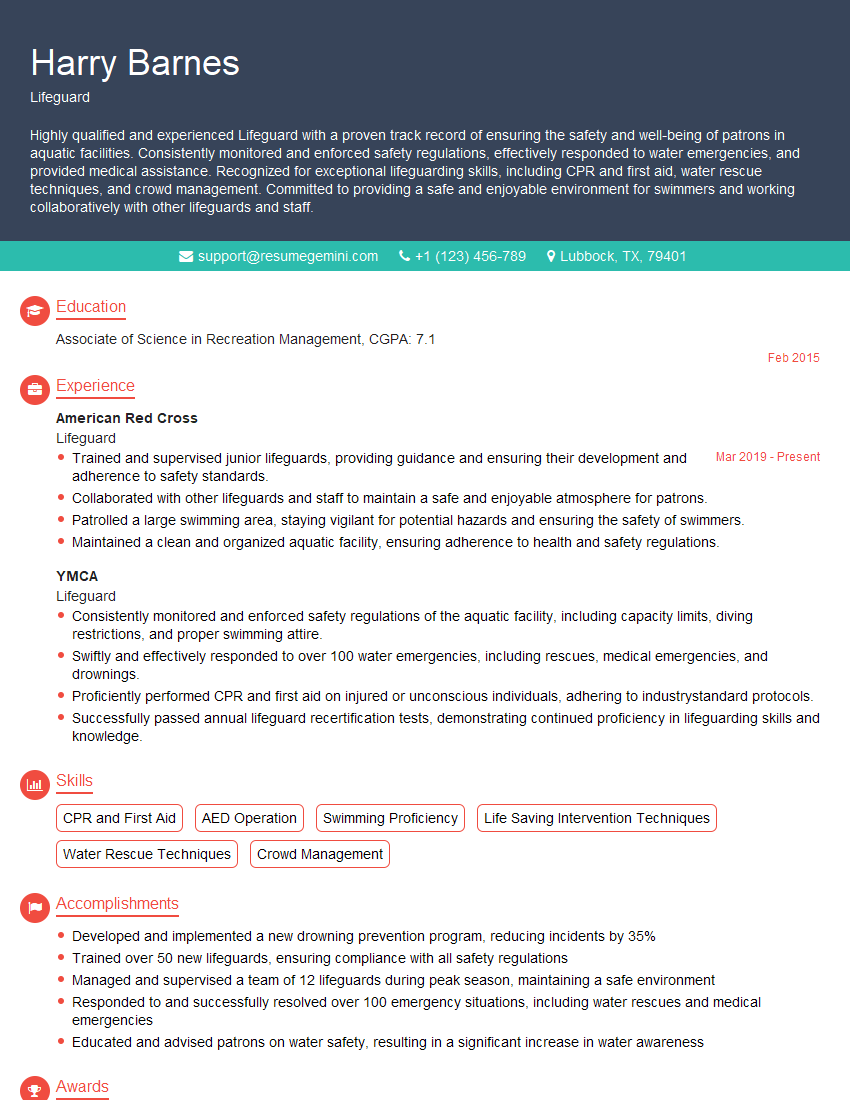
Mastering tubing and kneeboarding skills and knowledge is crucial for career advancement in the water sports industry. A strong understanding of safety, technique, and customer service sets you apart and demonstrates your commitment to excellence. To maximize your job prospects, crafting an ATS-friendly resume is essential. ResumeGemini can help you build a professional and impactful resume that highlights your skills and experience effectively. Examples of resumes tailored to tubing and kneeboarding positions are provided to help guide your resume creation with ResumeGemini.
Explore more articles
Users Rating of Our Blogs
Share Your Experience
We value your feedback! Please rate our content and share your thoughts (optional).
What Readers Say About Our Blog
Very informative content, great job.
good