Every successful interview starts with knowing what to expect. In this blog, we’ll take you through the top ULD Loading and Unloading interview questions, breaking them down with expert tips to help you deliver impactful answers. Step into your next interview fully prepared and ready to succeed.
Questions Asked in ULD Loading and Unloading Interview
Q 1. What are the different types of ULDs?
Unit Load Devices (ULDs) are standardized containers used to transport cargo and baggage on aircraft. They come in various sizes and types, each designed for specific purposes and aircraft configurations. Think of them as the ‘shipping containers’ of the aviation industry, making loading and unloading more efficient and safer.
- Main Deck Containers (LDs): These large containers are primarily used for cargo on the main deck of the aircraft. Sizes vary, but common ones include LD3 and LD2 containers.
- Lower Deck Containers (AKEs): These smaller containers are designed to fit in the lower compartments of the aircraft, often used for smaller packages or baggage. They are also known as AKE (Aircraft, Lower Deck) containers.
- Pallet (Pallets): Flat, rectangular platforms that are stacked with cargo and secured within other ULDs or directly onto the aircraft floor.
- Bulk Containers: These large containers are typically used for loose cargo that is too large to fit in standard containers.
- Specialty Containers: These are custom-designed ULDs for specific cargo types, like live animals or hazardous materials, with features like temperature control or specialized security measures.
Q 2. Explain the process of ULD loading for a Boeing 737.
ULD loading for a Boeing 737, or any aircraft, follows a meticulous process to ensure weight and balance are within limits and cargo is securely positioned. It typically starts with a detailed load plan generated by a sophisticated computer program that considers weight, dimensions, and center of gravity. This load plan dictates where each ULD should be positioned within the aircraft.
- Load Planning: The process begins by inputting the details of the cargo, including weight and dimensions. The software optimizes the placement of ULDs to maintain the aircraft’s center of gravity within acceptable limits.
- ULD Positioning: Following the load plan, ground crews carefully position the ULDs on the aircraft’s lower deck using specialized loading equipment, ensuring they are properly secured with restraints.
- Weight and Balance Verification: Once loaded, the aircraft’s weight and balance are carefully verified using scales and electronic measuring devices. Any discrepancies require adjustments to ensure safety.
- Documentation: Detailed records of the loading process, including weights, ULD locations, and cargo details, are meticulously documented for tracking and safety.
The process emphasizes safety and efficiency. Experienced personnel are trained to use specialized equipment, such as motorized conveyor belts or forklifts, to handle ULDs safely.
Q 3. Describe the weight and balance considerations during ULD loading.
Weight and balance are paramount in aircraft operations. An improperly loaded aircraft can experience instability, potentially leading to catastrophic consequences. During ULD loading, the focus is on maintaining the aircraft’s center of gravity (CG) within specified limits. This ensures the aircraft remains stable during takeoff, flight, and landing.
The process involves:
- Determining Weight: Each ULD’s weight is carefully measured, including the container itself and its contents.
- Calculating Center of Gravity: The CG of each ULD is calculated based on weight distribution within the container. Software helps in this computation.
- Total Weight Calculation: The total weight of all ULDs and the aircraft itself is calculated.
- Center of Gravity Verification: The CG of the entire loaded aircraft is verified against the limits defined in the aircraft’s weight and balance manual. If outside the limits, adjustments are made to the ULD placement.
Imbalances are corrected by adjusting the position of ULDs, possibly shifting heavier ones closer to the aircraft’s center.
Q 4. How do you ensure the safe and secure loading of hazardous materials in ULDs?
Hazardous materials require special handling to prevent accidents. Safety regulations, like those set by IATA (International Air Transport Association), mandate specific procedures for their transport. These procedures involve:
- Proper Packaging and Labeling: Hazardous materials must be packaged according to regulations, using appropriate containers and clearly labeled with hazard classification and identification numbers.
- Segregation: Incompatible hazardous materials must be separated to prevent reactions.
- ULD Selection: Specific ULDs may be required for certain hazardous materials, ensuring their secure containment and prevention of leakage or damage.
- Documentation: Detailed documentation of the hazardous materials, their properties, and the packaging must be provided to ground crews and aircrew.
- Emergency Response Procedures: Clear emergency response plans and safety data sheets (SDS) must be readily available in case of an incident.
Example: Flammable materials will be separated from oxidizers to prevent a fire hazard. Each ULD containing hazmat is carefully inspected for any signs of damage before loading and unloading.
Q 5. What are the safety regulations for ULD handling?
Safety regulations for ULD handling are stringent and crucial to prevent accidents. They involve:
- Training: Ground crews handling ULDs receive comprehensive training on safe handling techniques, including proper lifting, securing, and positioning.
- Equipment: Specialized equipment, such as forklifts and motorized conveyors, must be properly maintained and operated according to safety standards.
- Personal Protective Equipment (PPE): Workers must wear appropriate PPE such as safety shoes, gloves, and high-visibility vests.
- Communication: Clear communication between ground crews and flight crew is essential, ensuring that loading procedures are followed correctly.
- Inspection: ULDs are inspected for damage before each use, ensuring their structural integrity.
Non-compliance with safety regulations can lead to severe penalties and even legal repercussions.
Q 6. What are the procedures for unloading ULDs in inclement weather?
Unloading ULDs in inclement weather requires additional precautions to ensure the safety of personnel and prevent cargo damage. These precautions often include:
- Reduced Speed and Caution: Ground crews operate loading equipment at reduced speeds to maintain control and prevent accidents due to slippery conditions.
- Enhanced Visibility: High-visibility equipment and clothing are employed to ensure personnel are clearly visible in poor lighting or reduced visibility.
- Weather-Appropriate Clothing: Ground crews wear appropriate protective clothing to withstand the elements and prevent exposure to rain, snow, or extreme cold.
- Cargo Protection: Precautions are taken to protect cargo from exposure to rain or snow. This may include using tarps or other protective coverings.
- Emergency Procedures: Clear communication and well-defined emergency procedures are in place to address any unexpected situations or equipment malfunctions during inclement weather.
In severe weather, operations may be suspended completely to prioritize safety.
Q 7. How do you identify and address potential damage to ULDs?
Identifying and addressing ULD damage is crucial for safety and operational efficiency. Damage can range from minor dents to structural compromises. The inspection process involves:
- Visual Inspection: A thorough visual inspection of the ULD is conducted before and after each use, checking for dents, cracks, corrosion, or other damage to the frame or floor.
- Documentation: Any damage, no matter how minor, is meticulously documented. This documentation includes photographs or detailed descriptions of the damage.
- Repair or Replacement: Damaged ULDs that pose a safety risk require immediate repair or replacement. Repairs are carried out by qualified personnel, following manufacturer guidelines.
- Regular Maintenance: ULDs undergo regular maintenance checks to identify and address any potential issues before they become serious problems. This includes checks for wear and tear, corrosion, and structural integrity.
Ignoring ULD damage can lead to cargo damage, delays, and, most importantly, safety hazards. A damaged ULD could fail during loading or flight, with potentially catastrophic consequences.
Q 8. What is the importance of proper ULD documentation?
Proper ULD (Unit Load Device) documentation is crucial for efficient and safe air cargo operations. Think of it as the aircraft’s manifest, but specifically for the containers themselves. It ensures accurate tracking, prevents loss or damage, and facilitates quick and smooth handling throughout the entire journey.
- Accurate weight and balance records: Incorrect weight information can lead to aircraft imbalance and safety hazards. Documentation ensures that the ULD’s weight and center of gravity are accurately recorded.
- Cargo details: This includes the type of cargo, quantity, special handling instructions (e.g., fragile, perishable), and destination. This ensures the correct handling procedures are followed.
- ULD identification: Each ULD has a unique identifier (e.g., serial number). Documentation confirms the correct ULD is being used and where it is throughout the process. This is vital for tracing lost or misplaced containers.
- Handling history: Documentation tracks the ULD’s movement through the system – from loading to unloading and any transfers between aircraft or facilities. This helps in identifying potential issues or points of failure.
- Condition reports: Pre and post-flight condition reports help identify any damage sustained during the handling process, allowing for quick repairs and preventative measures.
For example, imagine a shipment of pharmaceuticals requiring temperature control. Accurate documentation ensures the ULD is loaded into a temperature-controlled environment and handled with the utmost care, preventing spoilage and potential loss.
Q 9. Explain the process of ULD tracking and tracing.
ULD tracking and tracing involves monitoring the movement and location of ULDs throughout the entire supply chain. This is done using various methods, including barcodes, RFID tags, and specialized software.
- Barcode scanning: Each ULD has a unique barcode. Scanning this code at different checkpoints (e.g., loading, unloading, transfer points) records its location and movement.
- RFID technology: Radio-Frequency Identification (RFID) tags provide real-time tracking capabilities, allowing for automated monitoring of the ULD’s location and status.
- ULD management software: Sophisticated software integrates data from various sources (e.g., barcode scanners, RFID readers, and flight manifests) to provide a comprehensive overview of the ULD’s journey. This allows us to pinpoint a ULD’s location at any given time and identify potential delays or bottlenecks.
Imagine a scenario where a ULD is lost or delayed. A robust tracking and tracing system allows us to quickly identify its last known location, retrace its movement, and efficiently initiate recovery efforts, minimizing delays and potential losses.
Q 10. How do you handle discrepancies during ULD loading or unloading?
Discrepancies during ULD loading or unloading are unfortunately common. They can range from minor differences in piece counts to significant missing items or damage. A systematic approach is needed to resolve these issues effectively.
- Immediate investigation: The discrepancy should be investigated immediately upon detection, noting the specific nature of the problem. A thorough check of the paperwork, comparing it to the physical ULD contents is paramount.
- Reconciliation of documentation: Carefully compare the loading manifest with the unloading manifest and physical inventory. Verify weights and quantities.
- Visual inspection: Conduct a thorough visual inspection of both the ULD and its contents to assess any damage that might have occurred during transit.
- Damage assessment: If damage is discovered, document it fully, taking photographs and noting the extent of damage to both the ULD and its contents. Inform the appropriate parties immediately.
- Reporting procedures: Follow established reporting procedures to document the discrepancy and its resolution. This includes completing incident reports and notifying relevant stakeholders (e.g., cargo handlers, airlines, shippers).
For instance, if there’s a missing item, I’d trace back the ULD’s journey using the tracking system to determine at what point the item was lost. The process would be documented to prevent similar incidents in the future.
Q 11. What are the common causes of ULD damage?
ULD damage can arise from various sources, and prevention requires a multi-faceted approach.
- Improper handling: Rough handling during loading, unloading, or ground transportation is a major cause of ULD damage. This includes dropping, hitting, or stacking improperly.
- Environmental factors: Exposure to extreme weather conditions (e.g., rain, snow, extreme heat) can damage ULD materials, especially those susceptible to corrosion or warping.
- Cargo-related damage: Improperly secured or overweight cargo can cause damage to the ULD structure or its internal components. Sharp objects within the cargo can puncture or tear the ULD.
- Maintenance deficiencies: Inadequate maintenance, such as neglecting repairs or failing to address minor damages promptly, can lead to more significant issues over time.
- Equipment malfunctions: Malfunctioning ground support equipment (GSE), like forklifts or conveyors, can cause damage to ULDs during handling.
For example, neglecting minor cracks in a ULD could eventually lead to a structural failure, resulting in a major incident. Regular inspections are crucial to prevent such situations.
Q 12. Describe your experience with different types of cargo handling equipment.
My experience encompasses a wide range of cargo handling equipment commonly used in ULD operations.
- Forklifts: I’m proficient in operating various types of forklifts, including reach stackers and counterbalance forklifts, for loading and unloading ULDs from aircraft and trucks.
- Belt loaders: I’ve worked with various types of belt loaders, understanding their capabilities and limitations in different operational contexts.
- Conveyor systems: I understand the principles of automated conveyor systems and can troubleshoot minor issues, optimizing the flow of ULDs through the facility.
- Tugmasters: I’m experienced in using tugmasters for efficient movement of ULDs over longer distances within the terminal or airport apron.
- Lower Deck Loaders: I have practical experience with operating lower-deck loaders, understanding the specific safety procedures involved in loading/unloading ULDs into the aircraft’s lower cargo compartment.
The choice of equipment depends on several factors such as the type of ULD, the size of the aircraft, and the specific handling requirements of the cargo.
Q 13. How do you maintain efficiency during peak operational periods?
Maintaining efficiency during peak operational periods demands meticulous planning, effective communication, and a flexible approach.
- Prioritization of tasks: Focus on high-priority ULDs, such as those with time-sensitive cargo or connecting flights.
- Optimized workflows: Streamlining processes, reducing unnecessary steps, and implementing efficient loading and unloading procedures.
- Effective communication: Clear and consistent communication among all team members is crucial for coordinating efforts and ensuring smooth operations.
- Resource allocation: Efficient allocation of personnel and equipment to handle the increased workload.
- Contingency planning: Developing contingency plans to address potential disruptions or delays.
During peak times, I might delegate tasks to ensure everything is handled efficiently. Communication is vital to prevent bottlenecks and maintain a smooth workflow, avoiding unnecessary delays. We might also use more advanced planning tools to optimize resource allocation.
Q 14. How do you prioritize tasks during ULD loading and unloading?
Prioritizing tasks during ULD loading and unloading is essential for optimizing efficiency and meeting deadlines. I typically follow a system which considers several key factors:
- Time sensitivity: ULDs with perishable goods, time-critical shipments, or connecting flights are given top priority. Think of it like a hospital emergency room: the most urgent cases are seen first.
- Flight schedules: ULDs needed for departing flights are prioritized to ensure on-time departures.
- Cargo type: Special handling requirements (e.g., temperature-sensitive, dangerous goods) influence priority. These need special attention and handling procedures.
- Weight and balance: ULDs are often prioritized based on their weight and distribution to maintain aircraft balance.
- ULD availability: Prioritizing ULDs that are ready for loading or unloading helps ensure a smooth workflow.
By combining these factors, we develop an efficient loading plan. For example, a ULD containing perishable goods with a tight connection flight would receive immediate attention over a standard cargo ULD with a later departure time.
Q 15. Describe your experience with ULD repair and maintenance procedures.
ULD repair and maintenance are crucial for ensuring the safe and efficient transport of air cargo. My experience encompasses a wide range of procedures, from minor repairs like replacing damaged straps and latches to more significant tasks involving structural assessments and repairs to the ULD frame itself. I’m proficient in identifying and addressing issues such as cracked frames, worn-out rollers, and damaged flooring.
For instance, I once encountered a ULD with a severely bent corner, potentially compromising its structural integrity and load-bearing capacity. Using specialized tools and following the manufacturer’s guidelines, I carefully straightened the frame, ensuring it met all safety standards before returning it to service. This included meticulous documentation of the repair process and a thorough inspection to confirm its airworthiness. My experience also includes regular preventative maintenance, such as lubrication of moving parts and inspections for signs of wear and tear, to proactively avoid more extensive repairs.
We use a comprehensive checklist and standardized procedures to ensure consistency and compliance with both the manufacturer’s specifications and regulatory requirements. Thorough documentation of all repairs and maintenance activities is paramount, allowing us to track the ULD’s history and predict potential future issues.
Career Expert Tips:
- Ace those interviews! Prepare effectively by reviewing the Top 50 Most Common Interview Questions on ResumeGemini.
- Navigate your job search with confidence! Explore a wide range of Career Tips on ResumeGemini. Learn about common challenges and recommendations to overcome them.
- Craft the perfect resume! Master the Art of Resume Writing with ResumeGemini’s guide. Showcase your unique qualifications and achievements effectively.
- Don’t miss out on holiday savings! Build your dream resume with ResumeGemini’s ATS optimized templates.
Q 16. What is your understanding of IATA regulations related to ULDs?
My understanding of IATA (International Air Transport Association) regulations concerning ULDs is extensive. These regulations cover numerous aspects, including the design, construction, maintenance, and operation of ULDs. They ensure the safe and efficient transport of air cargo and establish industry-wide standards for quality and safety. Key regulations I’m familiar with include those related to:
- ULD Construction and Materials: Specifications for materials used in ULD construction, ensuring strength, durability, and compliance with safety standards.
- ULD Marking and Identification: Clear and unambiguous marking requirements for ULDs, including identification numbers, weight limits, and handling instructions.
- ULD Maintenance and Repair: Detailed procedures for the inspection, maintenance, and repair of ULDs, ensuring their continued airworthiness.
- ULD Loading and Securing: Regulations on proper loading and securing techniques to prevent shifting and damage during transport.
- Dangerous Goods Transport: Specific guidelines on handling ULDs containing dangerous goods, ensuring compliance with hazard classification and segregation requirements.
Staying updated with the latest IATA regulations is crucial in this field. I regularly participate in training sessions and consult the latest publications to ensure compliance.
Q 17. How do you ensure compliance with safety standards during ULD handling?
Ensuring compliance with safety standards during ULD handling is a top priority. This involves a multi-faceted approach. It starts with thorough training on safe handling procedures, including the proper use of ground support equipment (GSE) and adherence to weight limits.
We use standardized procedures for ULD loading and unloading, emphasizing safe lifting techniques, preventing damage to both the ULDs and the cargo. Regular safety inspections of GSE and ULDs are conducted to identify and rectify potential hazards. Proper communication and teamwork among ground crew are crucial to prevent accidents. Clear communication channels ensure that everyone involved understands the loading plan and potential hazards associated with specific cargo types.
For example, before loading any ULD, we meticulously check for structural damage or signs of wear. We also double-check the weight and balance to ensure compliance with aircraft limits. In the case of dangerous goods, strict adherence to segregation and handling instructions is critical. Reporting near misses and accidents allows us to identify and address potential weaknesses in our safety procedures and training.
Q 18. Explain your understanding of weight and balance calculations for aircraft.
Weight and balance calculations are fundamental for safe aircraft operation. They ensure the aircraft remains within its center of gravity limits throughout the flight. This calculation takes into account the weight of the aircraft itself, the fuel, the crew, the passengers (if applicable), and, critically, the cargo loaded into the ULDs. Incorrect weight and balance can significantly impact aircraft stability and handling, leading to potential accidents.
The process involves accurately weighing each ULD and determining its center of gravity. This data is then input into a weight and balance computer program or manual calculation sheet, which considers the placement of each ULD within the aircraft’s cargo hold. The program provides the aircraft’s center of gravity and compares it to the acceptable limits defined by the aircraft manufacturer. If the calculated center of gravity falls outside these limits, adjustments must be made to the cargo loading plan before the aircraft can be cleared for takeoff.
A real-world example would be loading heavy cargo in the rear of the aircraft to balance out lighter cargo loaded forward. Accurate weight and balance is not just a matter of compliance; it’s a critical safety measure that directly impacts the safe operation of the aircraft.
Q 19. Describe your experience using ground support equipment.
My experience with ground support equipment (GSE) is extensive, covering a range of machinery used in ULD handling. This includes:
- ULD dollies: Used for moving ULDs around the ramp efficiently and safely.
- Belt loaders: For loading and unloading ULDs from the aircraft quickly and efficiently.
- Forklifts: Handling heavier ULDs and maneuvering them in confined spaces, needing careful handling due to the weight and potential damage to aircraft cargo bays.
- Cargo lifts: Used to move ULDs between different levels of the aircraft cargo hold.
I’m proficient in operating and maintaining these machines, ensuring they are in good working order and used safely and correctly. This includes regular inspections, preventative maintenance checks, and following all safety protocols while operating the equipment. I always prioritize safety when operating GSE, understanding the potential risks if not used correctly. My knowledge extends to understanding the limitations of each piece of equipment, making sure to match the equipment to the specific task and load requirements. Proper use prevents damage to both equipment and the cargo itself.
Q 20. How do you handle communication with pilots and flight crew regarding ULDs?
Communication with pilots and flight crew regarding ULDs is essential for safe and efficient operations. The key is clear, concise, and accurate communication of crucial information. This typically involves confirming the weight and balance information calculated for the flight. This ensures the pilots have the correct data to assess if the aircraft can safely take off and land. Other aspects of communication could include reporting any issues with specific ULDs, such as damage or unexpected weight discrepancies. It’s also important to communicate any delays or problems that might affect the loading process.
I have experience using various communication methods, including written loadsheets, digital data transfer systems, and direct radio communication if necessary. Maintaining professionalism and using precise language is crucial to avoid misunderstandings. A clear understanding of aviation terminology is essential to communicate effectively and accurately with flight crew.
For example, if an ULD is damaged during loading, I would immediately communicate the problem to the relevant personnel, including the pilots and ground crew. This ensures a timely resolution and prevents delays or potential safety hazards. Clear, documented communication ensures accountability and prevents miscommunication.
Q 21. What is your experience with different types of cargo (e.g., fragile, oversized)?
My experience handling diverse cargo types is extensive. I’m proficient in handling a wide range of cargo, including:
- Fragile Cargo: Requires special handling and packaging to prevent damage during transport. This includes using appropriate cushioning materials, securing items properly within the ULD, and using proper labeling to indicate fragility.
- Oversized Cargo: Needs careful planning and securing to ensure it fits within the ULD and the aircraft without compromising safety. Special handling techniques and securing equipment may be required.
- Dangerous Goods: Requires strict adherence to regulations to ensure safe transport. This involves understanding and classifying dangerous goods, ensuring proper packaging and labeling, and adhering to segregation rules.
- Live Animals: Specialized handling and climate control might be needed to ensure their wellbeing during transport.
- Perishable Goods: Requires temperature-controlled ULDs and careful monitoring to maintain quality.
I’m also familiar with the documentation and communication procedures necessary for each cargo type, ensuring that all relevant information is accurately recorded and shared with the relevant personnel. Proper handling of diverse cargo types is crucial to ensure not only safe transportation but also the integrity and quality of the goods themselves.
Q 22. How do you handle urgent situations or unexpected delays during operations?
Handling urgent situations requires a calm and systematic approach. My priority is always safety. If a delay arises, such as a late-arriving aircraft or unexpected mechanical issue with a ULD, I immediately inform my supervisor and the relevant stakeholders (e.g., ground handling agents, flight crew). We then assess the impact on the flight schedule and available resources. This might involve prioritizing high-priority cargo, finding alternative ULDs, or requesting additional personnel. For example, if a crucial shipment is delayed, we would explore options like expedited transport via road or utilizing a different aircraft. Effective communication is key – keeping everyone informed minimizes confusion and ensures we’re all working towards a common goal. Following established contingency plans and adhering to safety regulations are crucial in these scenarios.
Q 23. Describe your problem-solving approach in a high-pressure environment.
In high-pressure environments, my problem-solving approach is based on a structured methodology. First, I identify the problem clearly – is it a weight and balance issue? A damaged ULD? A missing piece of documentation? Then, I gather all relevant information, considering the constraints (time, resources, safety regulations). Next, I brainstorm potential solutions and evaluate them based on their feasibility, safety implications, and impact on the overall operation. I choose the best solution, implement it, and monitor its effectiveness. Finally, I document everything for future reference and continuous improvement. For instance, during a sudden heavy rainfall, if we had a risk of cargo getting wet, I would prioritize covering vulnerable cargo and relocating it to a sheltered area. This structured approach helps to avoid panic and ensures that decisions are made logically and safely.
Q 24. What are your experience and skills with using a load sheet?
Load sheets are the backbone of ULD management. My experience encompasses creating, verifying, and using them for every loading operation. I’m proficient in reading and interpreting the information contained within, including weight and balance calculations, cargo dimensions, ULD type, and special handling instructions (e.g., fragile, perishable). I’ve utilized load sheets for various aircraft types and cargo configurations. For example, I can instantly identify potential weight and balance issues by comparing the load sheet data with the aircraft’s weight and balance limitations. Any discrepancies are immediately flagged and addressed, ensuring the aircraft operates within safe limits. I’m meticulous in ensuring accuracy as any error could have significant safety implications.
Q 25. How do you ensure the integrity of the aircraft’s cargo hold after loading?
Ensuring the integrity of the aircraft’s cargo hold after loading is paramount. After loading is complete, I perform a thorough visual inspection of the cargo hold to ensure all ULDs are securely fastened, properly positioned according to the load sheet, and that there are no loose items that could shift during flight. I also check for any damage to the ULDs or the cargo hold itself. This includes verifying the correct placement of nets, straps, and other securing devices, which prevent cargo from shifting. If any issues are identified, corrective actions are taken before closing the cargo hold. Proper documentation of these checks is meticulously maintained. This process is crucial for passenger and crew safety and prevents potential in-flight incidents and cargo damage.
Q 26. What is your understanding of ULD security procedures and protocols?
ULD security is critical. My understanding covers various aspects, including physical security measures (e.g., seals, locks, and monitoring systems), procedural security (e.g., authorized personnel access, cargo screening, and documentation), and regulatory compliance (e.g., adhering to national and international aviation security regulations). I’m familiar with various security seals and their proper application, and I know how to identify tampering. For instance, I know the importance of using tamper-evident seals on ULDs containing high-value or sensitive goods and immediately reporting any sign of compromise to the appropriate authorities. Understanding and adhering to these procedures is essential for preventing unauthorized access to cargo and maintaining a secure air transport system.
Q 27. Describe your proficiency in using specialized software for ULD management.
I’m proficient in using several specialized software applications for ULD management, including [mention specific software, e.g., ULD management systems, weight and balance software]. These systems facilitate efficient loading planning, load sheet generation, weight and balance calculations, and tracking of ULDs throughout the process. For example, I can utilize the software to simulate different loading configurations to optimize space utilization and ensure compliance with weight restrictions. The software helps in identifying potential conflicts before the actual loading commences, minimizing delays and improving overall efficiency. My skill with these tools significantly enhances my operational speed and accuracy.
Q 28. How do you contribute to a safe and efficient team environment?
I contribute to a safe and efficient team environment through proactive communication, teamwork, and adherence to safety protocols. I readily share my knowledge and experience with colleagues, mentoring junior staff and offering assistance when needed. I believe in open communication and promptly report any potential safety concerns or operational issues. My attention to detail and commitment to accuracy ensure that tasks are completed correctly and efficiently, minimizing the potential for errors. Furthermore, my proactive approach to problem-solving and my willingness to assist others creates a supportive and collaborative atmosphere, fostering a strong team spirit. For example, I’ve initiated training sessions on new security procedures to ensure everyone is up-to-date and working safely. This collaborative approach is key to successful and safe operations.
Key Topics to Learn for ULD Loading and Unloading Interview
- ULD Types and Characteristics: Understanding different ULD types (containers, pallets, etc.), their weight limits, dimensions, and specific handling requirements.
- Weight and Balance Principles: Applying weight and balance calculations to ensure safe and efficient loading, preventing aircraft imbalance.
- Loading Procedures and Techniques: Mastering safe loading and unloading techniques, including proper securing of cargo, utilizing equipment (e.g., forklifts, conveyor belts), and adhering to safety regulations.
- Cargo Securing Methods: Knowing various cargo securing methods (nets, straps, blocks) and their appropriate application based on cargo type and ULD.
- Dangerous Goods Regulations (ADR/IATA): Familiarity with regulations for handling dangerous goods, including identification, segregation, and documentation.
- Documentation and Procedures: Understanding the importance of accurate documentation (ULD manifests, weight and balance sheets) and following established procedures.
- Safety Regulations and Procedures: Thorough knowledge of all relevant safety regulations and emergency procedures, including accident prevention and response.
- Problem-Solving and Decision-Making: Ability to identify and solve problems related to loading and unloading, such as weight discrepancies or damaged cargo.
- ULD Maintenance and Inspection: Basic understanding of ULD maintenance and inspection procedures to identify potential issues.
- Technology and Automation in ULD Handling: Awareness of how technology and automation are improving efficiency and safety in ULD handling (e.g., automated guided vehicles).
Next Steps
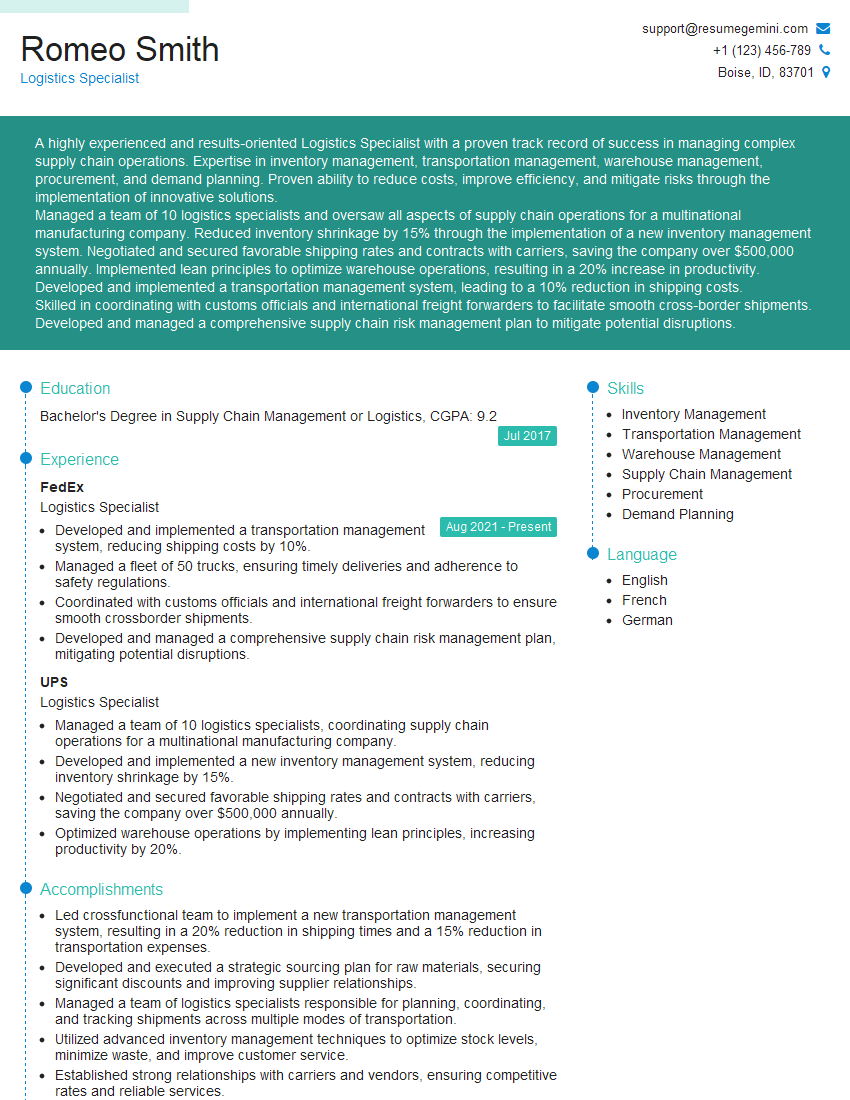
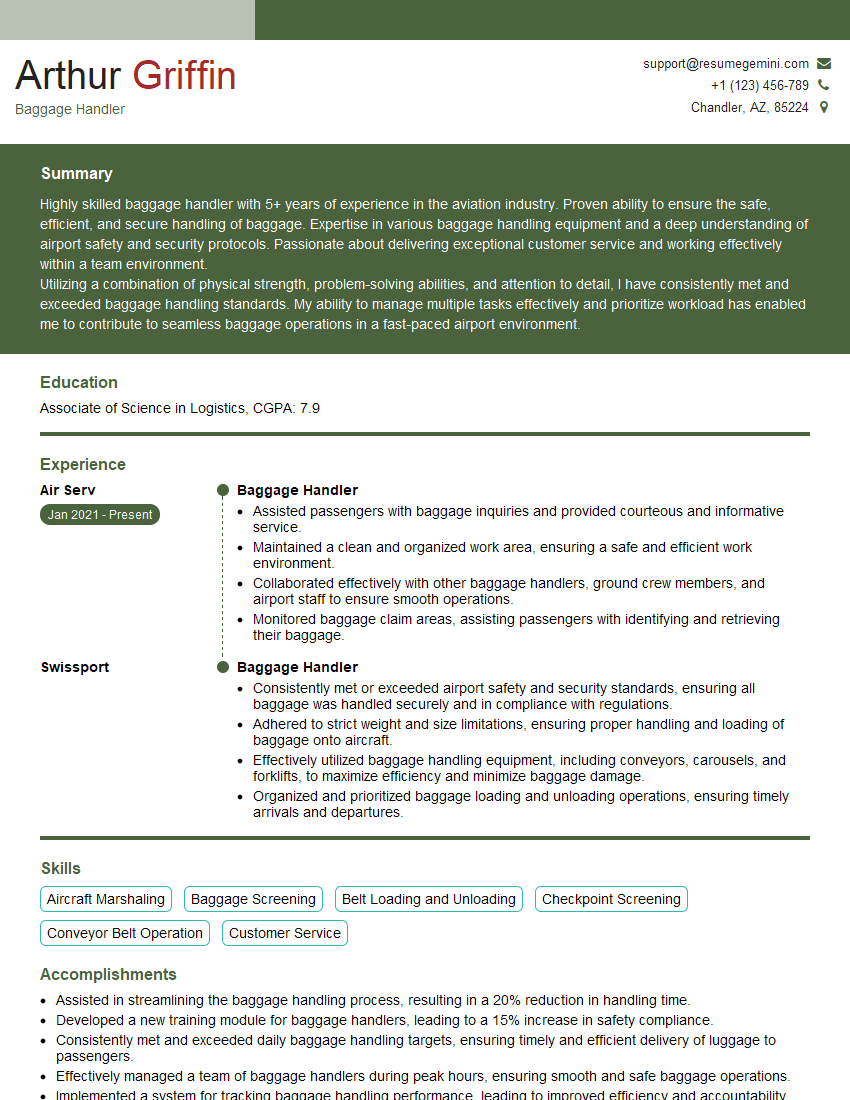
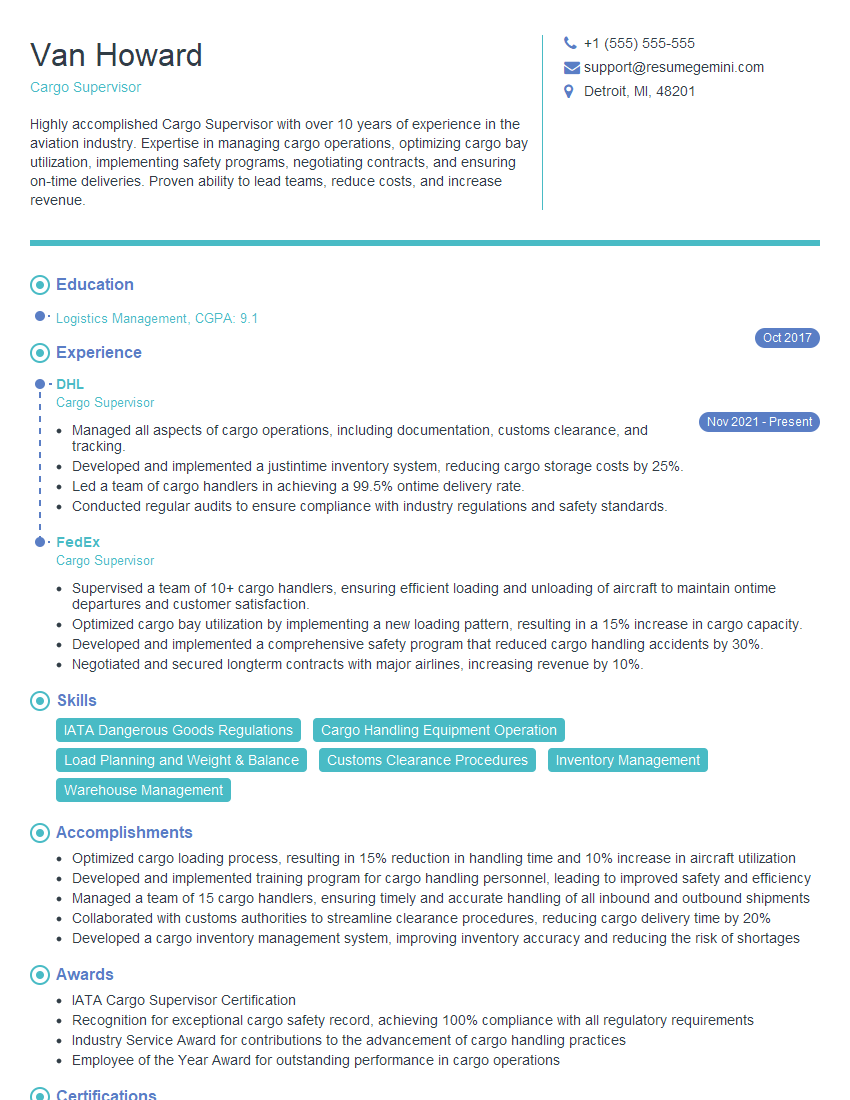
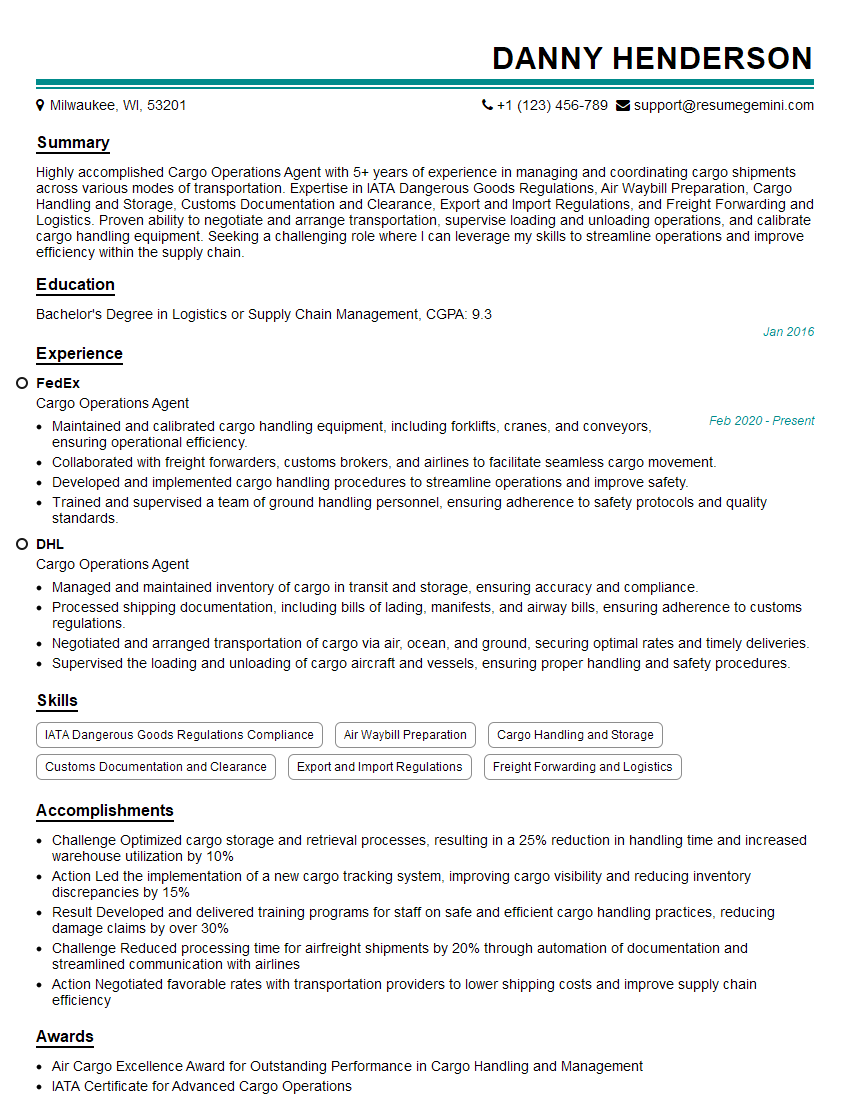
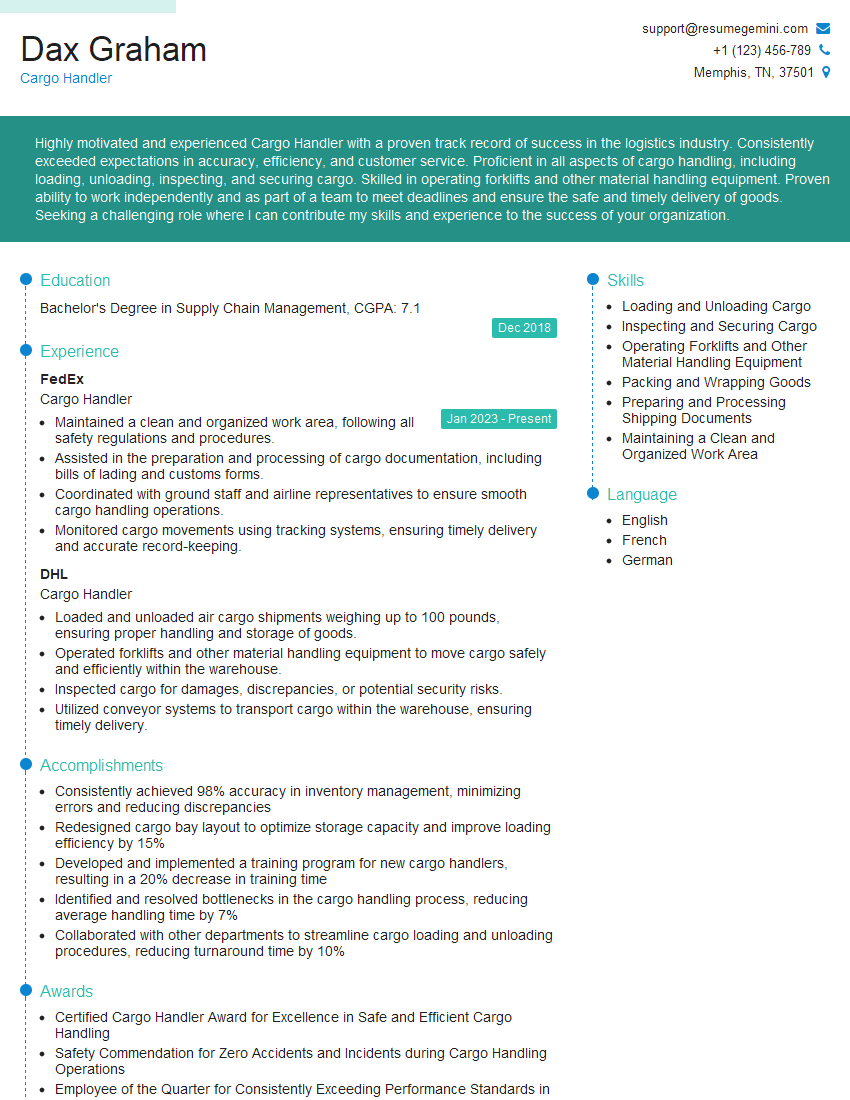
Mastering ULD loading and unloading opens doors to a rewarding career in the aviation industry, offering opportunities for growth and specialization. A strong resume is crucial for showcasing your skills and experience to potential employers. Creating an ATS-friendly resume significantly increases your chances of getting noticed. We recommend using ResumeGemini, a trusted resource for building professional and effective resumes. ResumeGemini provides examples of resumes tailored to ULD Loading and Unloading roles, helping you craft a compelling application that highlights your qualifications effectively. Take the next step towards your dream job – build a winning resume today!
Explore more articles
Users Rating of Our Blogs
Share Your Experience
We value your feedback! Please rate our content and share your thoughts (optional).
What Readers Say About Our Blog
Very informative content, great job.
good