Interviews are opportunities to demonstrate your expertise, and this guide is here to help you shine. Explore the essential Ultrasonic Welding Process Development interview questions that employers frequently ask, paired with strategies for crafting responses that set you apart from the competition.
Questions Asked in Ultrasonic Welding Process Development Interview
Q 1. Explain the principle of ultrasonic welding.
Ultrasonic welding leverages high-frequency vibrations to join materials, primarily thermoplastics and some metals. Imagine rubbing your hands together really fast – they’ll get warm. Ultrasonic welding does the same, but much faster and more intensely. The process generates frictional heat at the interface of the materials being joined, causing them to melt and fuse together. This happens at the molecular level, creating a strong, nearly seamless bond.
The high-frequency vibrations, typically in the range of 20-40 kHz, are generated by a transducer and transferred to the parts through a tool called a sonotrode. The combined action of vibration, pressure, and heat forms the weld. The process is incredibly fast and efficient, often taking only seconds to complete.
Q 2. Describe the different types of ultrasonic welding.
Ultrasonic welding encompasses several variations depending on the application and materials:
- Plastic Welding: The most common type, used to weld thermoplastic materials like polypropylene, polyethylene, and ABS. This can include applications for films, sheets, and complex parts.
- Metal Welding: This technique involves joining thin metal sheets, often using a different approach from plastic welding which prioritizes friction heating.
- Wire Bonding: Often used in the electronics industry, to attach fine wires to circuit boards or other components.
- Spot Welding: Used for localized welds, ideal for joining small parts or adding reinforcements.
- Seam Welding: This method produces a continuous weld along a joint, commonly used for packaging and sealing applications.
The choice of method depends on factors such as material properties, joint geometry, and desired weld strength.
Q 3. What are the advantages and disadvantages of ultrasonic welding compared to other welding methods?
Ultrasonic welding offers several key advantages over other welding methods:
- Speed and Efficiency: It’s incredibly fast, often requiring only seconds to complete a weld.
- High Strength Bonds: The molecular fusion results in strong, durable welds with minimal distortion.
- No Filler Material Needed: Eliminates the need for additional materials like solder or adhesives, making it cleaner and environmentally friendly.
- Low Energy Consumption: Compared to other methods like laser welding, it uses less energy.
- Automation Friendly: It’s easily integrated into automated production lines.
However, there are limitations:
- Material Suitability: It’s primarily suitable for thermoplastic materials and certain metals. Materials with poor thermal conductivity or high melting points may pose a challenge.
- Joint Design: Proper part design is crucial for successful welding; poorly designed joints can lead to weld defects.
- High Initial Investment: Specialized equipment is required, making the initial investment higher compared to some other welding methods.
For example, while suitable for many applications in the automotive industry, it may not be ideal for joining thick metal sheets which require more robust techniques.
Q 4. How does the frequency of the ultrasonic transducer affect the welding process?
The frequency of the ultrasonic transducer significantly impacts the welding process. Higher frequencies generally lead to smaller heat-affected zones and improved precision, particularly beneficial for delicate parts or complex geometries. Lower frequencies, conversely, offer higher energy and can penetrate deeper, making them suitable for thicker materials. The optimal frequency depends on the specific material, thickness, and desired weld characteristics.
For instance, welding thin films might require a higher frequency for localized heating and to avoid excessive melting, whereas welding thicker components would benefit from a lower frequency for better penetration and heat distribution. Selecting the incorrect frequency can result in poor welds, or even damage to the materials.
Q 5. Explain the role of the sonotrode in ultrasonic welding.
The sonotrode, also known as the horn, is the critical component that transmits the ultrasonic vibrations from the transducer to the parts being welded. It’s typically made of high-strength materials like titanium or steel to withstand the intense vibrations. Its design is paramount; the shape and size directly influence the energy concentration at the weld point.
Think of it as a focused amplifier for the ultrasonic energy. A well-designed sonotrode will concentrate the vibrations onto a small area, maximizing the heat generated at the weld interface. Poor sonotrode design can lead to uneven heating and weak welds. Factors like its geometry (e.g., its surface area, shape and any booster section) affect the energy distribution.
Q 6. How do you select the appropriate welding parameters (amplitude, time, pressure)?
Selecting the appropriate welding parameters—amplitude, time, and pressure—is crucial for a successful weld. These parameters are interconnected and need to be optimized for each specific application. This often involves a systematic approach involving experimentation and adjustment.
- Amplitude: This refers to the intensity of the ultrasonic vibrations. Higher amplitudes generate more heat, but excessive amplitude can damage the materials. A careful calibration considering material characteristics and weld design is essential.
- Time: The duration of the ultrasonic energy application. Sufficient time is necessary to achieve complete melting and fusion at the interface. Too short a time results in weak welds, whereas too long can cause excessive melting and material degradation.
- Pressure: This holds the materials together under ultrasonic vibration, ensuring proper contact to facilitate heat transfer and fusion. Insufficient pressure can lead to an incomplete weld. Excessive pressure can deform the parts or damage the weld.
A common approach is to start with a parameter range based on past experience or available data, then fine-tune each parameter individually while observing the weld quality. This often involves monitoring the weld strength, appearance, and any signs of material degradation. Techniques like Design of Experiments (DOE) can be employed for a systematic optimization process.
Q 7. Describe the importance of material compatibility in ultrasonic welding.
Material compatibility is paramount in ultrasonic welding. Not all materials are suitable for this process. The materials must have sufficient thermal conductivity to effectively generate heat at the weld interface. They should also be compatible in terms of their melting points and viscoelastic properties to ensure a proper fusion.
For instance, thermoplastics generally weld well using this method because they soften and melt at relatively lower temperatures, creating a strong bond easily. However, materials with high melting points, poor thermal conductivity, or dissimilar thermal expansion properties may not create a strong weld using ultrasonic technology. Thorough material testing and knowledge of material properties are essential to determine compatibility before embarking on a welding project.
Q 8. What are the common defects found in ultrasonic welds and how are they identified?
Ultrasonic welding, while efficient, is susceptible to several defects. These defects significantly impact the weld’s strength and overall quality. Common defects include incomplete welds, lack of fusion, porosity, cracks, and flashing. Identifying these defects often involves a combination of visual inspection, destructive and non-destructive testing methods.
- Visual Inspection: A simple, initial check for obvious flaws like gaps, excessive material deformation, or discoloration. This is often done with a magnifying glass or microscope for finer details.
- Destructive Testing: Methods such as tensile testing, where the weld is pulled apart to measure its strength, are crucial for quantifying the weld quality. Shear testing, measuring the force needed to separate the welded parts, is also common.
- Non-Destructive Testing (NDT): This includes techniques like dye penetrant testing (to reveal surface cracks), ultrasonic testing (to detect internal flaws), and radiographic testing (X-ray or gamma-ray inspection to reveal internal voids or cracks). Choosing the appropriate NDT method depends on the material and the type of defect expected. For instance, I’ve used ultrasonic testing to identify internal porosity in a plastic-to-metal weld in a medical device application, revealing a significant weakness before it went into production.
For example, a weak weld might show a significant difference in tensile strength compared to the base material, indicating a lack of proper fusion. Porosity, visible as small holes in the weld, would be easily detectable under magnification or with radiographic testing. Each defect requires a specific approach to correction, as detailed in subsequent answers.
Q 9. How do you troubleshoot common problems encountered during ultrasonic welding?
Troubleshooting ultrasonic welding problems requires a systematic approach. It often involves checking the equipment’s settings, the materials being welded, and the process parameters.
- Amplitude and Time: Insufficient welding amplitude (the power of the ultrasonic vibrations) or insufficient weld time can result in weak or incomplete welds. Adjusting these parameters is often the first step. A simple increase in amplitude or time may resolve a weak weld, but careful monitoring is needed to avoid damaging the parts.
- Pressure: Insufficient pressure prevents proper contact between the parts, leading to incomplete fusion. Conversely, excessive pressure might crush or deform the material. The optimum pressure needs to be carefully determined based on material characteristics and weld geometry.
- Material Compatibility: Not all materials are suitable for ultrasonic welding. The materials must have adequate acoustic impedance and sufficient plastic deformation capability. Incorrect material pairings will lead to poor weld quality, regardless of parameter adjustment.
- Horn Design: The design of the ultrasonic horn (the tool that transmits vibrations) is critical. An improperly designed horn can cause uneven energy distribution, resulting in incomplete welds or localized damage. In one project, we had to redesign the horn to improve energy transfer, leading to a 20% increase in weld strength.
- Contaminants: Surface contamination, such as oil or grease, significantly impacts the welding process by hindering proper acoustic energy transfer. Thorough cleaning is essential prior to welding.
A flowchart or decision tree can aid the troubleshooting process. The strategy involves carefully analyzing the defect’s characteristics, adjusting parameters methodically, and monitoring the results. Repeated adjustments, careful documentation, and a thorough understanding of material properties are key to successful troubleshooting.
Q 10. Explain the concept of weld strength and its measurement methods.
Weld strength refers to the resistance of a weld to failure under applied force. It’s a critical measure of the weld’s quality and reliability. Several methods exist for assessing weld strength, and the choice depends on factors like the application’s requirements and the material being welded.
- Tensile Testing: This is a common method where a welded specimen is subjected to a controlled tensile load until it breaks. The maximum force withstood before failure indicates the weld’s tensile strength. This provides a direct measure of the weld’s strength in resisting pulling forces.
- Shear Testing: In this method, the welded joint is subjected to a shear force, aiming to separate the parts along the weld plane. The force required to cause failure determines the weld’s shear strength. This test is particularly relevant for applications where the weld will experience shearing forces.
- Peel Testing: This test measures the adhesive strength of the weld. The welded parts are subjected to a peeling force, and the force required for separation is measured. This is beneficial for testing welds in applications experiencing peeling stresses.
- Destructive Visual Inspection: After destructive testing, the fracture surfaces of the welded joints are examined to provide insights into the failure mode and the quality of the weld. Identifying areas of incomplete fusion or other defects helps improve the process.
It’s crucial to standardize testing procedures and use appropriate specimen geometries to ensure reliable and comparable results. The data obtained provides critical feedback for process optimization and ensures the weld meets required specifications. In my experience, developing robust testing protocols for a new application takes time and often involves experimentation with different test methods.
Q 11. Describe your experience with different types of ultrasonic welding equipment.
My experience encompasses a range of ultrasonic welding equipment, from small, benchtop units suitable for laboratory use and low-volume production to large, automated systems for high-volume manufacturing. I have worked extensively with both manual and automated systems.
- Benchtop Units: These are ideal for research and development, allowing for precise control over welding parameters and for smaller-scale production runs. They provide flexibility in experimentation and process development. I’ve utilized these for initial material studies and parameter optimization for a new type of plastic-to-metal joint.
- Automated Systems: These systems are designed for high-throughput applications and feature integrated controls, automated material handling, and often sophisticated monitoring and data acquisition capabilities. I’ve been involved in integrating automated systems into large-scale manufacturing lines, which improved productivity and consistency significantly.
- Different Horn Designs: I’ve worked with numerous horn designs—from simple flat horns to complex, customized horns designed to accommodate specific part geometries. The horn’s geometry is crucial for effective energy transfer and weld quality.
- Frequency Variations: I’ve encountered machines operating at various frequencies (e.g., 20 kHz, 35 kHz, 40 kHz). The optimal frequency often depends on the material and the desired weld depth. Higher frequencies typically lead to shallower welds, while lower frequencies lead to deeper welds.
My expertise also extends to the integration of different systems into existing production workflows, optimizing the use of existing equipment and coordinating the process with other manufacturing steps. Understanding the nuances of each type of equipment is vital for selecting the most appropriate solution for a particular application.
Q 12. How do you ensure the quality and consistency of ultrasonic welds?
Ensuring consistent and high-quality ultrasonic welds necessitates a multifaceted approach focusing on process control, equipment maintenance, and thorough quality checks.
- Process Parameter Control: Maintaining consistent welding parameters (amplitude, time, pressure) is paramount. This often involves using precise control systems and regular calibration of the equipment. Statistical Process Control (SPC) charts are essential for tracking key parameters and detecting deviations from the optimal settings.
- Material Characterization: Thorough material characterization is essential to selecting appropriate welding parameters. Variations in material properties can significantly affect weld quality, so consistent material properties are crucial.
- Regular Equipment Maintenance: Regular maintenance of the ultrasonic welding equipment, including horn cleaning and inspection, is essential to prevent degradation in performance. This includes checking for wear and tear, ensuring proper functionality of the transducer and the power supply, and lubrication of moving parts. Preventive maintenance is vital for preventing downtime and maintaining weld consistency.
- Quality Control Checks: Implementing regular quality checks and audits, including visual inspection and destructive or non-destructive testing, are crucial for validating the welding process and identifying potential issues early on. The frequency of these checks will depend upon the criticality of the application.
- Operator Training: Proper training of operators is critical for ensuring consistency and preventing errors. Standardized operating procedures and clear guidelines should be in place to minimize variability.
In practice, a robust quality management system (QMS) is essential for achieving consistent weld quality. This system should incorporate all aspects mentioned above—from initial material selection to final product testing.
Q 13. What are the safety precautions to be taken while operating ultrasonic welding equipment?
Safety is paramount when operating ultrasonic welding equipment. The high-frequency vibrations and high-power electrical systems pose several potential hazards.
- Hearing Protection: Ultrasonic vibrations can produce audible noise, potentially damaging hearing. Hearing protection is mandatory when operating the equipment.
- Eye Protection: The possibility of flying debris or intense light emission from the welding process makes eye protection essential. Safety glasses or goggles should be worn at all times.
- Electrical Safety: Ultrasonic welders operate with high voltages. Ensuring the equipment is properly grounded and that all electrical connections are secure is critical. Only qualified personnel should work on electrical components of the machine.
- Machine Guarding: Using machine guarding to prevent accidental contact with moving parts, such as the horn and clamping mechanisms, is crucial. Never place your hands in the welding area while the machine is operating.
- Material Safety: Some materials used in ultrasonic welding may be hazardous. Appropriate personal protective equipment (PPE) must be worn, such as gloves and respirators, depending on the materials involved.
- Emergency Shut-Off: All operators should know the location and proper use of the emergency shut-off mechanism in case of accidents.
Regular safety training and compliance with all relevant safety regulations are crucial for maintaining a safe working environment. A detailed risk assessment should be performed before operating any ultrasonic welding equipment, particularly with new materials or setups.
Q 14. How do you optimize the ultrasonic welding process for a specific application?
Optimizing ultrasonic welding for a specific application involves a systematic approach that considers the materials, the design, and the required weld strength. It’s an iterative process, often involving experimentation and analysis.
- Material Selection and Testing: The choice of materials significantly influences the welding parameters. Testing different material combinations to determine their suitability for ultrasonic welding is the first step. This includes measuring the materials’ acoustic impedance and their ability to undergo plastic deformation. I’ve used material testing and simulation to pre-determine ideal welding parameters for a range of materials before even turning on the machine.
- Weld Joint Design: The design of the joint profoundly impacts the success of the weld. This includes the overlap area, the thickness of the parts, and any features that may interfere with energy transfer. Finite Element Analysis (FEA) can be used to simulate the stress distribution during welding, aiding in design optimization.
- Parameter Optimization: This is an iterative process involving systematically varying the welding parameters (amplitude, time, pressure) to find the optimal settings. Design of Experiments (DOE) methodologies, such as Taguchi methods, can be used to efficiently explore the parameter space and identify optimal settings. Careful monitoring of weld quality using appropriate testing methods guides this optimization process.
- Monitoring and Data Analysis: Collecting and analyzing data during the optimization process is essential. This data provides insights into the relationship between parameters and weld quality, aiding in fine-tuning the process. Statistical analysis can uncover patterns and dependencies between the variables.
- Validation and Verification: Once the optimal parameters are identified, the process must be validated through extensive testing to confirm consistent weld quality and strength. This might involve creating prototypes and subjecting them to rigorous testing to ensure performance in the target application.
Optimizing ultrasonic welding is a complex process. It requires a deep understanding of the material science, the welding process, and the application requirements. It’s often an iterative process, requiring careful experimentation, data analysis, and a collaborative effort between engineers and technicians.
Q 15. Explain the role of tooling in ultrasonic welding and its maintenance.
Tooling in ultrasonic welding is absolutely critical; it’s the interface between the ultrasonic energy and the parts being joined. The sonotrode (the horn) transmits the vibrations, and the anvil provides a stable base. Their design directly impacts weld quality and consistency. Proper tooling material selection is key – it needs to be robust enough to withstand the high-frequency vibrations and the heat generated during the welding process. Common materials include titanium alloys and hardened steel, chosen based on the specific plastic being welded and the desired weld strength.
Maintenance involves regular inspections for wear and tear. Look for signs of pitting, erosion, or deformation on the sonotrode’s weld face. These imperfections can lead to inconsistent welds or even damage the equipment. Cleaning is also crucial; plastic residue can build up, affecting energy transfer and weld quality. Regular cleaning with appropriate solvents and careful handling prevents premature wear. For example, in a project welding polypropylene components, we observed that regular polishing of the sonotrode extended its lifespan by over 30%, directly impacting our production costs. Periodic replacement is always necessary, of course, and should follow a schedule based on usage and observed wear.
Career Expert Tips:
- Ace those interviews! Prepare effectively by reviewing the Top 50 Most Common Interview Questions on ResumeGemini.
- Navigate your job search with confidence! Explore a wide range of Career Tips on ResumeGemini. Learn about common challenges and recommendations to overcome them.
- Craft the perfect resume! Master the Art of Resume Writing with ResumeGemini’s guide. Showcase your unique qualifications and achievements effectively.
- Don’t miss out on holiday savings! Build your dream resume with ResumeGemini’s ATS optimized templates.
Q 16. Describe your experience with Statistical Process Control (SPC) in ultrasonic welding.
Statistical Process Control (SPC) is fundamental to achieving consistent, high-quality ultrasonic welds. I extensively use control charts, such as X-bar and R charts, to monitor key process parameters like weld time, amplitude, and pressure. This helps identify trends and potential issues before they lead to significant scrap. For example, in a recent project welding ABS plastic, we noticed a subtle upward trend in weld strength over a period of time. Using SPC, we investigated and traced it to a slight adjustment in the machine’s power setting. Adjusting the parameter resolved the issue and brought our weld strength back to the optimal level, well within our control limits. This prevented us from having to conduct a costly re-inspection and re-work operation of all the parts that were produced. Beyond control charts, I use capability studies (Cp and Cpk) to assess the process’s ability to meet specified tolerances. Data analysis from these studies ensures the process is robust and capable of producing consistently high-quality welds.
Q 17. How do you manage and reduce scrap rate in ultrasonic welding?
Scrap reduction in ultrasonic welding is a multi-faceted approach, focusing on both process optimization and proactive problem-solving. The first step is meticulous process parameter optimization. This involves carefully controlling factors like weld time, pressure, amplitude, and energy level to identify the optimal settings for a given plastic material and joint design. For instance, inadequate pressure can lead to incomplete welds, while excessive pressure might damage the components, both resulting in scrap. We typically use Design of Experiments (DOE) methodologies to systematically investigate the effect of each parameter and identify the ideal combination. Regular preventative maintenance (as discussed previously) is crucial. Additionally, operator training and standardized operating procedures are key in reducing human error. This involves training on proper part loading, parameter selection, and timely identification of potential problems. A visual management system can play a role here; we use color-coded indicators to signal weld quality so operators can instantly identify and address issues.
Finally, continuous monitoring using SPC helps identify early signs of variation and allows for corrective actions. The key is a proactive approach to identify and eliminate the root cause of any scrap generation.
Q 18. How do you validate the ultrasonic welding process?
Validating the ultrasonic welding process involves verifying that it consistently produces welds meeting pre-defined quality standards. This validation requires a combination of destructive and non-destructive testing methods. Destructive testing involves techniques like tensile strength testing, peel strength testing, and cross-sectional analysis under a microscope to assess the weld’s mechanical properties and integrity. These tests quantify the weld strength and determine if it meets the specified requirements. Non-destructive testing methods such as ultrasonic inspection or dye penetrant testing can assess weld integrity without damaging the samples. These methods provide additional confidence in the quality and consistency of the welds, even at the initial stages of process development.
Validation also includes documented process parameters and testing results for future reference and regulatory compliance. The documentation clearly describes the optimized weld parameters, the specific testing methods used, and the associated results demonstrating compliance with quality standards. This meticulous approach ensures that the welding process is consistent and reliable over time.
Q 19. What is your experience with different types of plastics used in ultrasonic welding?
My experience encompasses a wide range of plastics commonly used in ultrasonic welding, including: polypropylene (PP), polyethylene (PE), acrylonitrile butadiene styrene (ABS), polycarbonate (PC), and various blends and copolymers. Each material has unique characteristics that influence the optimal welding parameters. For instance, crystalline polymers like PP require higher energy levels and shorter weld times compared to amorphous polymers like ABS, which may require longer weld times and lower amplitudes to avoid burning.
The choice of material directly affects tooling selection, as different plastics have varying levels of hardness and melting points. The tooling design is always tailored to the specific material properties to achieve a good, consistent weld. For example, welding thin-walled polypropylene parts necessitates specialized tooling designed to minimize heat dissipation and prevent deformation. Understanding material properties is crucial for successful and reliable ultrasonic welding.
Q 20. Explain the impact of different joint designs on ultrasonic weld quality.
Joint design significantly impacts ultrasonic weld quality. A well-designed joint facilitates efficient energy transfer, leading to strong and consistent welds. Key aspects include the overlap area, the part thickness, and the overall geometry. An insufficient overlap area can result in weak welds, while an excessively large overlap can lead to uneven heating and potential burn marks. Similarly, significant differences in part thickness across the joint can hinder effective energy distribution and affect the weld quality.
We frequently use a design approach that incorporates tapered edges and step-down designs that enhance energy concentration, and, for example, reduce stress concentrations at the joint lines. Proper joint design ensures uniform heating and pressure distribution throughout the weld interface, resulting in high-quality, consistent welds. The joint design should always be optimized for the specific plastic material and the intended application.
Q 21. Describe your experience with automated ultrasonic welding systems.
I have significant experience with automated ultrasonic welding systems, integrating them into high-volume production lines. Automation brings several advantages, including increased productivity, enhanced consistency, and reduced labor costs. These systems typically incorporate robotic arms for part handling, programmable logic controllers (PLCs) for process control, and vision systems for quality inspection. I’ve been involved in the design, implementation, and troubleshooting of such systems.
A recent project involved automating the welding of complex plastic assemblies. This required careful consideration of robotic integration, tooling design, and quality control mechanisms. Programming and process optimization were crucial to ensure the automation system’s efficiency and accuracy. Automated systems demand a higher level of precision in tooling design and parameter optimization to achieve consistent results across a high volume of parts. Regular maintenance and monitoring of the automated system are key to preserving its performance and preventing production downtime.
Q 22. What is your experience with data acquisition and analysis in ultrasonic welding?
Data acquisition and analysis are crucial for optimizing ultrasonic welding processes. My experience involves using various sensors to collect real-time data during the welding cycle. This includes parameters like amplitude, frequency, power, time, and weld force. I then utilize software tools like LabVIEW or specialized ultrasonic welding monitoring systems to analyze this data. For example, I might analyze the amplitude decay curve to identify potential issues with material properties or horn wear. Furthermore, I analyze the resulting weld strength through destructive or non-destructive testing (e.g., tensile testing, ultrasonic inspection) and correlate it with the process parameters. This correlation allows us to build statistical models predicting optimal welding parameters for consistent, high-quality welds. I have also used statistical process control (SPC) techniques to monitor process stability and detect deviations that indicate potential problems.
One project involved welding dissimilar plastics where initial welds were inconsistent. By analyzing the amplitude data, we discovered that the energy transfer was less efficient due to impedance mismatch. Adjusting the welding parameters based on this data improved weld consistency significantly.
Q 23. How do you improve the efficiency of the ultrasonic welding process?
Improving ultrasonic welding efficiency focuses on optimizing parameters and equipment to achieve higher throughput and better weld quality while minimizing costs. This includes:
- Optimizing Welding Parameters: This involves fine-tuning amplitude, frequency, weld time, and pressure based on material properties and desired weld strength. Using statistical methods like Design of Experiments (DOE) helps identify optimal parameter combinations efficiently.
- Horn Design and Selection: Choosing the right horn design is vital. Horns with optimized geometry for specific applications ensure efficient energy transfer and reduce wear. This might involve selecting horns with different sonotrode designs, boosters, or using focused horns for smaller parts.
- Material Preparation: Ensuring consistent material properties and proper part cleaning are essential. Contamination can significantly impact weld quality and repeatability.
- Automation and Process Control: Automating the welding process through robotics or automated clamping systems increases throughput and reduces inconsistencies compared to manual welding.
- Preventive Maintenance: Regularly scheduled maintenance (discussed in detail in a later answer) significantly increases the equipment uptime and reduces unexpected downtime.
For instance, in a project involving the welding of medical devices, we implemented automation which increased the production rate by 40% and reduced the defect rate by 15%.
Q 24. Describe your experience in root cause analysis of ultrasonic weld failures.
Root cause analysis of ultrasonic weld failures is a systematic process involving a combination of visual inspection, data analysis, and material characterization. I typically follow a structured approach such as the 5 Whys or a Fishbone diagram.
- Visual Inspection: The first step is a thorough visual inspection of the weld to identify any obvious defects like lack of fusion, cracks, or excessive deformation.
- Data Analysis: Reviewing process parameters data, including amplitude, frequency, weld time, and force, can pinpoint deviations that may have contributed to failure. Anomalous data points can highlight potential sources of error.
- Material Characterization: Analyzing the material properties of the parts being welded is crucial. Testing for things like surface contamination, material degradation, and variations in density can reveal contributing factors.
- Microscopic Examination: Microscopic analysis (optical or SEM) of the weld cross-section provides detailed information about the microstructure and the weld interface, revealing the nature of the failure mechanism.
In one case, a series of welds exhibited brittle failure. Initially, suspected causes included parameters and equipment but thorough analysis using SEM revealed microscopic contamination on the plastic surfaces, which inhibited proper bonding and led to the weld failure.
Q 25. What is your experience with different types of ultrasonic welding horns?
My experience encompasses various ultrasonic welding horn types, each with unique characteristics suited to different applications:
- Conical Horns: These are commonly used for their ability to focus energy onto a small area, ideal for welding small parts or intricate geometries. The geometry can be further customized to match specific needs.
- Cylindrical Horns: These are simpler in design and often used for larger parts or applications requiring consistent energy distribution over a larger area.
- Step Horns: Used for impedance matching between the transducer and the workpiece. They allow for the efficient transfer of energy to the weld zone, especially when dealing with parts of varying thickness or material properties.
- Exponential Horns: These horns optimize energy focusing and concentration based on the specific application and materials, improving efficiency and consistency.
Selection of a horn depends on factors such as the size and shape of the parts being welded, the material properties, and the desired weld strength and quality. The choice also has implications for cost and maintenance. For example, a step horn might be preferred for welding dissimilar materials due to its improved impedance matching capabilities.
Q 26. How do you develop a new ultrasonic welding process for a novel application?
Developing a new ultrasonic welding process for a novel application starts with a thorough understanding of the materials and the desired outcome. It’s an iterative process involving several stages:
- Material Characterization: Thoroughly characterizing the materials to be welded, including their physical and chemical properties, is the foundation. This helps determine the feasibility of ultrasonic welding and guides parameter selection.
- Preliminary Testing: Initial experiments with small-scale samples involve systematically varying parameters (amplitude, frequency, time, pressure) to establish a workable parameter range.
- Design of Experiments (DOE): A statistically designed approach to identify the optimal combination of welding parameters for consistent weld quality. This significantly reduces testing time and resource consumption.
- Process Optimization: Fine-tuning the welding parameters to achieve the required weld strength, aesthetics, and other quality attributes. This often involves iterative adjustments based on data analysis.
- Robustness Testing: Testing the process’s robustness to variations in material properties, environmental factors, and equipment fluctuations ensures consistent performance across diverse conditions.
- Scale-Up and Validation: After optimizing the process for laboratory conditions, scaling up to production conditions is critical. Validation involves rigorous testing to ensure that the scaled-up process consistently achieves the desired results.
For example, when developing a process for welding a new biocompatible polymer, initial testing focused on identifying suitable parameters to avoid thermal damage. DOE was instrumental in optimizing the process for consistent and reliable welds in a production setting.
Q 27. Explain your experience with preventive maintenance of ultrasonic welding equipment.
Preventive maintenance is critical for maximizing the lifespan and reliability of ultrasonic welding equipment. My experience involves a comprehensive program encompassing several key aspects:
- Regular Inspections: Visual inspections for signs of wear, damage, or loose connections are performed at regular intervals. This includes checking for cracks in the horn, transducer, and booster.
- Cleaning: Regular cleaning of the equipment, especially the horn and anvils, is crucial. Accumulated debris can interfere with energy transfer and compromise weld quality.
- Lubrication: Proper lubrication of moving parts helps prevent wear and tear and ensures smooth operation. The specific lubrication methods vary based on the equipment model.
- Calibration: Regular calibration of the equipment using standardized test blocks helps ensure the accuracy of parameters and maintains the quality of welds. Frequency and amplitude calibration is especially important.
- Component Replacement: Proactive replacement of worn-out components, like horns, boosters, or transducers, prevents unexpected downtime and costly repairs.
A well-maintained ultrasonic welding system significantly reduces downtime, maintains consistent weld quality, and extends the useful life of the equipment. A planned preventive maintenance schedule based on usage and manufacturer recommendations is essential.
Key Topics to Learn for Ultrasonic Welding Process Development Interview
- Ultrasonic Welding Fundamentals: Understanding the principles of ultrasonic vibration, acoustic impedance matching, and energy conversion in the welding process. Explore different welding modes (e.g., amplitude, frequency control).
- Material Science and Selection: Knowledge of material properties crucial for successful ultrasonic welding. This includes understanding thermoplastic and thermoset polymers, metals, and composites, and how their characteristics influence weldability.
- Process Parameter Optimization: Mastering the art of adjusting parameters like power, time, pressure, and frequency to achieve optimal weld strength, consistency, and aesthetics. Understand the impact of variations and how to troubleshoot common issues.
- Joint Design and Fixture Design: Knowledge of designing effective weld joints and fixtures to ensure proper energy transfer and consistent weld quality. This includes understanding the implications of different joint geometries and material thicknesses.
- Quality Control and Testing: Familiarize yourself with various quality control methods such as destructive (tensile strength, peel strength) and non-destructive (ultrasonic testing) techniques to ensure weld integrity. Understand statistical process control (SPC) concepts.
- Troubleshooting and Problem-Solving: Develop strategies for identifying and resolving common ultrasonic welding issues like poor welds, inconsistent results, or equipment malfunctions. This includes root cause analysis and corrective actions.
- Automation and Process Control: Understanding automated ultrasonic welding systems, including PLC programming, process monitoring, and data acquisition. Explore the integration of ultrasonic welding into larger manufacturing processes.
- Safety and Regulations: Be familiar with relevant safety protocols and regulations associated with operating ultrasonic welding equipment. This includes personal protective equipment (PPE) and machine safety features.
Next Steps
Mastering Ultrasonic Welding Process Development opens doors to exciting career opportunities in advanced manufacturing, automation, and materials science. To maximize your job prospects, creating a strong, ATS-friendly resume is crucial. ResumeGemini is a trusted resource that can help you build a professional and impactful resume, significantly increasing your chances of landing your dream job. Examples of resumes tailored to Ultrasonic Welding Process Development are available to guide you. Invest in your future; invest in your resume.

Quality Control Manager Resume Sample

Production Supervisor Resume Sample

Engineering Manager Resume Sample

Process Engineer Resume Sample

Technical Specialist Resume Sample
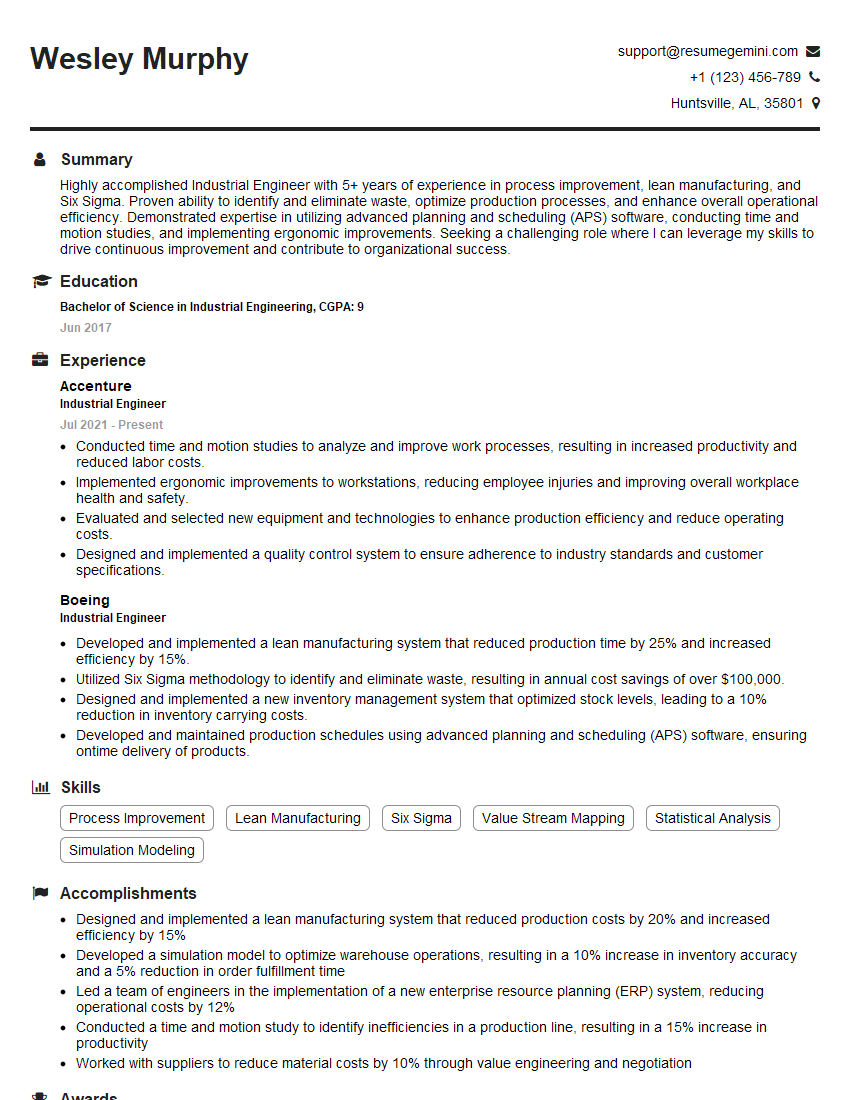
Industrial Engineer Resume Sample

Manufacturing Engineer Resume Sample

Materials Engineer Resume Sample

Welding Engineer Resume Sample
Explore more articles
Users Rating of Our Blogs
Share Your Experience
We value your feedback! Please rate our content and share your thoughts (optional).
What Readers Say About Our Blog
Very informative content, great job.
good