The right preparation can turn an interview into an opportunity to showcase your expertise. This guide to Understanding of furniture construction interview questions is your ultimate resource, providing key insights and tips to help you ace your responses and stand out as a top candidate.
Questions Asked in Understanding of furniture construction Interview
Q 1. Explain the different types of wood joints used in furniture construction.
Wood joints are the heart of furniture construction, determining its strength, durability, and aesthetic appeal. They’re the way we connect different pieces of wood to create a stable and functional piece. There are numerous types, but some of the most common include:
- Mortise and Tenon: A strong, time-tested joint where a tenon (a projecting piece) fits snugly into a mortise (a hole).
- Dovetail: A very strong joint, especially for drawers, characterized by interlocking, tapered ‘fingers’ that resist pulling apart.
- Dowel Joint: Simple and relatively quick to make, using dowels (small cylindrical wooden pins) as fasteners.
- Biscuit Joint: Uses oval-shaped biscuits (thin, compressed wood wafers) to join two pieces, often aided by glue.
- Lap Joint: A joint where two pieces overlap, often with some portion cut away from each to create a flat surface.
- Miter Joint: Two pieces are joined at an angle, typically 45 degrees. Requires careful cutting and often additional reinforcement (like biscuits or dowels) for strength.
The choice of joint depends on the furniture’s design, the type of wood, and the desired strength and aesthetic.
Q 2. Describe the process of creating a mortise and tenon joint.
Creating a mortise and tenon joint is a classic woodworking skill. It requires precision and patience. Here’s a step-by-step process:
- Lay out the mortise and tenon: Mark the dimensions of the mortise (the hole) on the receiving piece and the tenon (the projection) on the other piece. Accurate measurements are crucial.
- Cut the mortise: This can be done using a chisel and mallet, or with a mortising machine for greater speed and accuracy. The mortise should be slightly larger than the tenon to allow for a snug, but not tight, fit.
- Cut the tenon: The tenon is typically cut using a tenon saw or a handsaw, ensuring square, clean cuts. The shoulders of the tenon (the ends) should be perfectly perpendicular to the sides.
- Test the fit: Before gluing, dry-fit the tenon into the mortise to check for proper fit. Any adjustments can be made at this stage.
- Glue and assemble: Apply wood glue liberally to the tenon and insert it into the mortise. Clamp the joint firmly until the glue is dry, ensuring proper alignment.
Think of it like a precisely fitted puzzle piece; the better the fit, the stronger the joint will be. This joint is the backbone of many sturdy chairs and tables.
Q 3. What are the advantages and disadvantages of using solid wood versus plywood in furniture?
The choice between solid wood and plywood depends heavily on the project’s requirements and budget. Each has its advantages and disadvantages:
- Solid Wood:
- Advantages: Superior strength, durability, beautiful grain patterns, repairable, and can appreciate in value over time.
- Disadvantages: More expensive, prone to warping and expansion/contraction with humidity changes, requires more skilled craftsmanship.
- Plywood:
- Advantages: More affordable, consistent dimensions, less prone to warping, easier to work with for some projects, good strength-to-weight ratio.
- Disadvantages: Can lack the visual appeal of solid wood, edge banding may be required to hide the layers, less repairable in some cases.
For example, high-end furniture often utilizes solid wood for its beauty and longevity, while mass-produced pieces might opt for plywood for cost-effectiveness.
Q 4. How do you choose the appropriate wood for a specific furniture project?
Choosing the right wood is crucial for both the aesthetics and structural integrity of your project. Factors to consider include:
- Species: Different species offer varying levels of hardness, durability, grain patterns, and color. Oak is known for its strength and durability, while mahogany is prized for its rich color and beauty.
- Budget: Exotic hardwoods like ebony or rosewood are significantly more expensive than common hardwoods like pine or maple.
- Application: Hardwoods are best for high-stress areas like table legs, while softer woods might be suitable for drawer sides.
- Availability: Some woods might be easier to source than others, depending on your location and supplier.
- Aesthetic considerations: The final finish and overall design should influence the wood choice, taking into account color, grain pattern, and texture.
For example, a rustic coffee table might use reclaimed pine for its character, whereas a fine dining table might call for the elegant grain of cherry wood.
Q 5. Explain the different types of wood finishes and their applications.
Wood finishes protect the wood from moisture, scratches, and other damage, while enhancing its appearance. Common types include:
- Oil finishes: (e.g., linseed oil, tung oil) Penetrate the wood, enhancing its natural color and providing some protection. They require more frequent maintenance.
- Varnish: Creates a hard, durable, and glossy surface. It offers excellent protection but can mask the wood’s natural grain.
- Lacquer: A quick-drying, hard finish providing good protection and a smooth surface. It is available in various sheens.
- Shellac: A natural resin finish that provides a warm, amber tone. It’s more sensitive to moisture than other finishes.
- Polyurethane: A synthetic finish offering excellent durability and water resistance. It comes in various sheens and is a popular choice for high-traffic furniture.
The best choice depends on the desired level of protection, the aesthetics, and the type of wood being finished.
Q 6. Describe the process of applying a stain and sealant to wood furniture.
Applying stain and sealant requires careful preparation and execution. Here’s a general process:
- Prepare the wood: Sand the surface smooth to remove any imperfections. The smoother the surface, the better the stain and sealant will adhere.
- Apply stain (if using): Follow the manufacturer’s instructions. Generally, this involves applying a thin, even coat using a brush, rag, or sprayer. Let it dry according to the instructions.
- Sand lightly (between coats): This will help the next coat adhere better. Use very fine sandpaper (e.g., 320 grit or finer).
- Apply sealant: Apply a few thin coats of sealant, allowing each coat to dry completely before applying the next. Sanding between coats is optional but can create a smoother finish.
- Final sanding and polishing (optional): A light sanding with very fine sandpaper followed by polishing can give the final finish a professional gleam.
Proper ventilation is essential when working with stains and sealants as many contain solvents.
Q 7. What are the common tools and equipment used in furniture construction?
Furniture construction utilizes a range of tools, from hand tools for precision work to power tools for efficiency. Essential tools include:
- Hand tools: Chisels, mallets, hand saws (tenon saw, rip saw, crosscut saw), measuring tools (tape measure, square), planes, screwdrivers.
- Power tools: Jigsaw, router, drill press, belt sander, orbital sander, planer.
- Clamps: Various types of clamps (bar clamps, hand clamps, etc.) are crucial for holding pieces together while glue dries.
- Safety equipment: Safety glasses, dust mask, hearing protection are paramount.
The specific tools needed will depend on the project’s complexity and the techniques employed. Investing in quality tools is a worthwhile investment for any serious woodworker.
Q 8. How do you ensure the accuracy and precision of your cuts and measurements?
Accuracy and precision in cuts and measurements are paramount in furniture making. It’s the foundation of a strong, well-fitting piece. I achieve this through a multi-pronged approach.
Precise Measurement Tools: I rely on high-quality measuring tools like steel tapes, combination squares, and digital calipers for precise measurements. Regular calibration ensures accuracy.
Accurate Marking Techniques: I use sharp pencils and marking gauges to create clear, consistent lines. For intricate work, I employ techniques like scribing to transfer measurements precisely.
Appropriate Cutting Tools: The choice of cutting tool directly impacts accuracy. For example, a sharp saw blade or router bit will produce cleaner cuts than a dull one. I maintain my tools meticulously.
Jig and Fixture Use: For repetitive cuts or complex joinery, I use jigs and fixtures. These simple devices act as guides, ensuring consistent results. Think of them as ‘training wheels’ for your tools, ensuring every cut is identical to the last.
Double-Checking: I always double-check my measurements and markings before making any cuts. A moment of double-checking can save hours of rework.
For instance, when constructing a complex mortise and tenon joint, I’ll use a marking gauge to precisely mark the tenon shoulders and then double-check my measurements against the mortise layout before cutting. This process ensures a perfect fit.
Q 9. Explain the importance of proper wood drying and its impact on furniture construction.
Proper wood drying is absolutely critical. Wood contains moisture, and variations in moisture content can lead to significant problems during and after construction.
Dimensional Stability: As wood dries, it shrinks. Uneven drying causes warping, cracking, and twisting. Proper kiln-drying or air-drying to the appropriate moisture content for the final environment prevents these issues.
Strength and Durability: Properly dried wood is stronger and more durable than green wood. It’s less susceptible to insect infestation and decay.
Finish Quality: Wood that’s too wet will resist finishes properly, leading to blotchiness or uneven application. Wood that’s too dry can be brittle and prone to cracking under the stress of the finish.
Imagine building a chair with wood that’s too wet. As it dries, it could warp, leading to a wobbly, unstable seat. Conversely, wood that’s too dry might crack during assembly or later, compromising the chair’s structural integrity.
I typically work with lumber that has been kiln-dried to a moisture content of around 6-8%, suitable for most indoor furniture projects. I often check the moisture content using a moisture meter to ensure the wood is at an appropriate level before starting any project.
Q 10. Describe your experience with different woodworking techniques, such as carving or inlay.
My experience encompasses a wide range of woodworking techniques. I’m proficient in both traditional and modern methods.
Carving: I’ve worked with various carving tools, from chisels and gouges for rough shaping to specialized tools for fine detail work. I’ve created everything from simple decorative elements to intricate, three-dimensional sculptures that I’ve incorporated into furniture pieces.
Inlay: I’ve mastered various inlay techniques, including contrasting wood veneers, mother-of-pearl, and even metalwork. The precision and patience required for inlay work add a unique level of artistry to my furniture. I find that inlays can really elevate a design.
Joinery: My joinery skills are extensive. I am skilled in various joinery techniques, including mortise and tenon, dovetail, dado, and rabbet joints. The selection of joint depends heavily on the specific design and stress the joint will need to withstand.
Finishing: I’m highly proficient in various finishing techniques, from simple stains and varnishes to more complex lacquers and hand-rubbed oil finishes. The right finish enhances not only the beauty but the durability of the furniture.
For example, a recent project involved a custom dining table with inlaid floral patterns in contrasting woods. This required precise cutting, careful fitting, and a meticulous finishing process to create a truly stunning piece.
Q 11. How do you deal with wood warping or cracking during the construction process?
Wood warping or cracking is a common challenge. Addressing it requires understanding the cause and taking preventive measures.
Proper Acclimatization: Before starting any project, I allow the wood to acclimatize to the workshop environment for several days. This helps to minimize the effects of moisture changes.
Careful Selection of Wood: I carefully select lumber with minimal defects to reduce the risk of warping or cracking. I favor stable wood species for critical components.
Appropriate Joinery: The right type of joint can help accommodate movement in the wood. For example, flexible joints can better handle expansion and contraction due to humidity changes.
Wood Movement Considerations: I design the furniture to account for wood movement. This might involve using expansion joints or designing the piece to allow for slight changes in dimension.
Repair Techniques: If cracking occurs, I may use wood glue and clamps to re-join the pieces, and sometimes fill cracks with wood filler or epoxy for a seamless repair.
For instance, if a board starts to cup (curve along its width), I might plane it down to reduce the curve or incorporate the curve into the design. If it’s a minor crack, I might secure it with glue and leave it as a natural feature of the wood.
Q 12. What are the safety precautions you take while using power tools in furniture making?
Safety is my top priority. Using power tools requires constant vigilance and adherence to safety protocols.
Personal Protective Equipment (PPE): I always wear appropriate PPE, including safety glasses, hearing protection, a dust mask, and sometimes a respirator depending on the task. For certain tasks, I also wear cut-resistant gloves.
Tool Maintenance: I regularly inspect and maintain all my power tools to ensure they are in good working order. Dull blades and bits are more dangerous than sharp ones.
Proper Tool Use: I ensure I understand the operating instructions for each tool before using it. I always follow the manufacturer’s guidelines.
Safe Work Practices: I maintain a clean and organized workspace, free from clutter. I use push sticks and featherboards to keep my hands away from rotating blades. I never rush my work.
Emergency Preparedness: I have a first-aid kit readily accessible and know what to do in case of an accident. I am also aware of the location of the nearest fire extinguisher.
For example, when using a table saw, I always use a push stick to feed the wood and a featherboard to keep the wood against the fence, preventing kickback. I make sure to never reach over the blade, always keeping my hands clear.
Q 13. Explain your understanding of furniture design principles and ergonomics.
Understanding furniture design principles and ergonomics is crucial for creating functional and comfortable pieces.
Design Principles: I consider aspects like proportion, balance, scale, rhythm, emphasis, and harmony when designing furniture. These principles ensure the visual appeal and aesthetic coherence of the piece.
Ergonomics: Ergonomics focuses on the relationship between the human body and its environment. In furniture design, this translates to creating pieces that are comfortable and supportive. I consider factors like seat height, backrest angle, armrest position, and overall dimensions to ensure proper posture and prevent strain.
Material Selection: Material choice plays a critical role in both design aesthetics and ergonomics. For example, using a soft, yielding material for seating promotes comfort, whereas strong, durable wood forms the structural foundation.
Functionality: A well-designed piece is not only visually appealing but also practical and suitable to its intended function.
For example, designing a chair involves considering the average user’s height and posture. The seat height should be appropriate for comfortable leg placement, and the backrest should provide adequate lumbar support. I often create prototypes and test them to ensure optimal ergonomics.
Q 14. How do you interpret and follow furniture construction blueprints or plans?
Interpreting and following blueprints or plans is a fundamental skill. It involves more than just reading the drawings; it’s about understanding the design intent.
Detailed Review: I start by carefully reviewing the entire plan, noting all dimensions, materials, and assembly instructions. I pay close attention to details like joint types and assembly sequences.
Material List Check: I verify the materials listed against my available stock, ensuring I have everything needed before beginning construction.
Cut List Creation: From the blueprint, I create a detailed cut list, specifying the dimensions of each piece, ensuring efficiency and minimizing waste.
Step-by-Step Assembly: I follow the assembly instructions meticulously, paying close attention to the order of operations and ensuring each joint is properly fitted and secured.
Problem Solving: If I encounter discrepancies or ambiguities in the plan, I carefully analyze the drawings and specifications and may consult the designer for clarification.
For example, if a blueprint shows a mortise and tenon joint, I won’t just blindly cut the mortise and tenon. I’ll carefully measure and mark the components, ensuring the dimensions are precise and the joint will fit correctly. I might even create a small test joint to ensure the design works as intended before committing to the final piece.
Q 15. Describe your experience with different types of furniture hardware and their installation.
My experience with furniture hardware spans a wide range, from simple hinges and drawer slides to complex mechanisms like lift systems and hidden hardware. I’m proficient in installing various types, including:
- Hinges: I’ve worked extensively with butt hinges, concealed hinges, piano hinges, and specialized hinges for specific applications like cabinet doors or jewelry boxes. Proper installation ensures smooth operation and prevents sagging over time. For example, when installing concealed hinges, precise mortise cutting and alignment are crucial for a seamless finish.
- Drawer Slides: I’m familiar with side-mount, under-mount, and full-extension slides, each offering different functionalities and weight capacities. Understanding the load requirements is vital; using undersized slides can lead to premature failure. I always ensure proper adjustment for smooth, silent operation.
- Latches & Locks: From simple magnetic catches to intricate locking mechanisms, I’ve installed a variety to secure cabinets, doors, and drawers. Correct installation ensures security and ease of use.
- Lift Systems: I’ve experience installing gas lift systems for lift-top coffee tables or desk mechanisms. These systems require careful attention to detail during installation to ensure proper function and safety.
Beyond installation, I understand the importance of choosing appropriate hardware based on wood type, weight, style, and budget. I always prioritize durability and aesthetics, selecting hardware that complements the overall design.
Career Expert Tips:
- Ace those interviews! Prepare effectively by reviewing the Top 50 Most Common Interview Questions on ResumeGemini.
- Navigate your job search with confidence! Explore a wide range of Career Tips on ResumeGemini. Learn about common challenges and recommendations to overcome them.
- Craft the perfect resume! Master the Art of Resume Writing with ResumeGemini’s guide. Showcase your unique qualifications and achievements effectively.
- Don’t miss out on holiday savings! Build your dream resume with ResumeGemini’s ATS optimized templates.
Q 16. How do you troubleshoot problems encountered during furniture construction?
Troubleshooting in furniture construction often involves a systematic approach. I start by identifying the problem precisely. Is it a structural issue, a finish problem, or a hardware malfunction? Then, I employ these strategies:
- Visual Inspection: Carefully examine the piece for visible defects, loose joints, or damage.
- Component Testing: If the issue seems structural, I’ll test the strength of joints and look for weak spots. If it’s a hardware problem, I check for proper installation and functionality.
- Material Analysis: Sometimes, material defects (like warped wood or flawed joints) are the root cause. I might need to replace the affected component.
- Research and Consultation: If I can’t pinpoint the problem, I consult reference materials, online resources, or experienced colleagues.
- Process of Elimination: By systematically ruling out possible causes, I narrow down the possibilities and find the solution.
For example, if a chair leg is wobbly, I’d first check for loose screws. If the screws are tight, I might examine the joinery for weaknesses or cracks. If those are fine, the problem could be in the leg itself, possibly requiring replacement.
Q 17. Describe your experience with different upholstery techniques and materials.
My upholstery experience encompasses a variety of techniques and materials. I’m skilled in both hand-upholstery and machine techniques:
- Hand-Upholstery: I’m proficient in traditional techniques like hand-sewing, button tufting, and welt cord application. This often requires intricate handwork and attention to detail to achieve a high-quality finish. For instance, creating a perfectly symmetrical button tuft requires precise placement and tension.
- Machine Upholstery: I’m also experienced in using industrial sewing machines for larger projects or high-volume production. This involves using different stitch types and working with various fabrics.
- Materials: I’m familiar with a wide range of upholstery materials such as fabrics (cotton, linen, velvet, leather), foams (high-density foam, memory foam), webbing, and batting. Material selection is crucial for durability, comfort, and aesthetic appeal. For example, high-density foam provides better support and longevity than cheaper alternatives.
I understand the importance of proper preparation, cutting, and fitting of materials to ensure a smooth, professional finish. Proper stretching and stapling of fabric are key to prevent sagging or wrinkling.
Q 18. How do you estimate the cost of materials and labor for a furniture project?
Estimating costs for a furniture project involves a detailed breakdown of materials and labor. I typically follow these steps:
- Bill of Materials (BOM): I create a comprehensive list of all materials needed, including wood, hardware, fabric, foam, etc. I obtain quotes from suppliers to determine material costs.
- Labor Estimation: I estimate the time required for each stage of the project – design, cutting, assembly, finishing, upholstery, etc. This is based on my experience and the complexity of the design.
- Hourly Rate: I determine my hourly rate based on my experience and market standards.
- Overhead Costs: I include overhead costs such as shop rent, utilities, and tool maintenance.
- Profit Margin: Finally, I add a profit margin to cover business expenses and ensure profitability.
For example, for a custom chair, I’d estimate wood costs based on the species and quantity, upholstery fabric costs per yard, foam costs per cubic foot, hardware costs, and my labor hours at my hourly rate, all added together to determine the final cost.
Q 19. What software or CAD programs are you proficient in using for furniture design?
I’m proficient in several CAD programs used for furniture design, including SketchUp, Fusion 360, and AutoCAD. SketchUp is excellent for initial conceptualization and 3D modeling, allowing for quick visualization and client presentations. Fusion 360 provides more advanced modeling capabilities, suitable for complex designs and detailed joinery. AutoCAD’s precision makes it ideal for technical drawings and detailed shop drawings.
I utilize these programs to create detailed designs, generate accurate cutting lists, and visualize the finished product before construction begins. This helps minimize errors, optimize material usage, and ensure a more efficient workflow.
Q 20. Describe your experience with quality control processes in furniture manufacturing.
Quality control is integrated throughout the entire furniture-making process. My quality control measures include:
- Material Inspection: I thoroughly inspect all materials upon arrival for defects, ensuring that they meet the required quality standards.
- Process Checks: Regular checks at each stage of the construction process help identify and correct errors early on. This reduces waste and ensures consistent quality.
- Dimensional Accuracy: I use precise measuring tools and techniques to ensure accuracy in cuts and assembly. This is crucial for proper fit and functionality.
- Finish Inspection: I meticulously inspect the finish for imperfections such as scratches, drips, or uneven application.
- Functional Testing: Before delivery, I thoroughly test the functionality of the piece to ensure everything operates smoothly.
Documenting each step with photos or notes helps track the progress and identify potential issues. I also use checklists to ensure that all quality control measures are followed consistently.
Q 21. How do you maintain and care for your woodworking tools and equipment?
Maintaining my woodworking tools and equipment is critical for their longevity and my safety. My maintenance routine includes:
- Regular Cleaning: I clean all tools after each use to remove sawdust and debris. This prevents rust and ensures smooth operation.
- Sharpening: I regularly sharpen blades and bits using appropriate techniques and equipment. Sharp tools are safer and produce cleaner cuts.
- Lubrication: I lubricate moving parts of machinery as needed, following manufacturer recommendations.
- Storage: I store tools properly in a dry place to prevent rust and damage.
- Inspection: I regularly inspect tools for wear and tear and replace damaged parts promptly. This helps prevent accidents and ensures accurate work.
I treat my tools as an investment, understanding that proper maintenance translates directly into the quality of my work and the longevity of my equipment.
Q 22. Explain your understanding of sustainable woodworking practices.
Sustainable woodworking prioritizes environmental responsibility throughout the furniture creation process. This encompasses material sourcing, manufacturing techniques, and end-of-life management. It’s about minimizing the environmental footprint while maximizing the quality and longevity of the furniture.
- Sustainable Sourcing: Using responsibly harvested wood from certified forests (like FSC-certified forests) ensures that trees are replenished, preventing deforestation. This also often includes using reclaimed or recycled wood, giving new life to old materials.
- Low-Impact Finishes: Opting for non-toxic, water-based finishes minimizes volatile organic compounds (VOCs) released into the air, protecting both the environment and the craftsperson’s health. Traditional finishes like shellac or beeswax are also excellent low-impact options.
- Efficient Manufacturing: Minimizing waste is key. This includes careful planning of cuts to reduce scrap wood, employing techniques that maximize material yield, and recycling or repurposing sawdust and other byproducts.
- Durable Construction: Building furniture to last reduces the need for frequent replacements, extending the product lifecycle and minimizing environmental impact. Solid wood construction is inherently more durable than many engineered alternatives.
- Responsible Disposal: Even at the end of a piece’s life, sustainability plays a role. Design for disassembly allows for easier recycling or reuse of components. Proper disposal methods should be considered to prevent landfill waste.
For example, I recently completed a project using reclaimed redwood from a demolished barn. The wood possessed a beautiful patina, and by repurposing it, I avoided contributing to landfill waste and created a unique piece with a compelling story.
Q 23. Describe a challenging furniture project you completed and how you overcame the obstacles.
One of my most challenging projects was crafting a custom curved-back dining chair set. The challenge lay in precisely bending the steam-bent oak to achieve the desired elegant curve without cracking or weakening the wood. The initial attempts resulted in some breakage.
To overcome this, I researched various steam-bending techniques and experimented with different durations and temperatures. I also refined my jig design to ensure even pressure distribution during bending. This iterative process, combining research, experimentation, and meticulous craftsmanship, ultimately led to the successful completion of the chair set. The final product was worth the effort, demonstrating the resilience and elegance of the steam-bent oak.
Q 24. What are your strengths and weaknesses as a furniture maker?
My strengths lie in my meticulous attention to detail, my problem-solving abilities, and my dedication to creating high-quality, durable furniture. I’m adept at working with various wood types and possess a wide range of joinery skills. I also pride myself on my collaborative spirit and ability to work effectively with clients to bring their vision to life.
A weakness I’m actively working on is time management. Large-scale projects can sometimes lead to unexpected delays. I’m implementing project management tools and breaking down complex projects into smaller, manageable tasks to improve efficiency.
Q 25. How do you stay updated with the latest trends and technologies in furniture construction?
I stay updated through several methods. I subscribe to woodworking magazines like Fine Woodworking and Woodworker’s Journal. I actively participate in online woodworking forums and communities, engaging in discussions with other craftspeople and sharing best practices. Attending industry conferences and workshops also provides invaluable insights into new technologies and design trends. Additionally, exploring online resources and reviewing new tool releases keeps me abreast of innovations in the field.
Q 26. What are your salary expectations?
My salary expectations are in the range of [Insert Salary Range], commensurate with my experience and skills, and reflective of the market rate for skilled furniture makers in this region.
Q 27. Why are you interested in this position?
I’m interested in this position because of [Company Name]’s reputation for creating high-quality, sustainable furniture. I’m deeply impressed by your commitment to [Mention Specific Company Value or Project]. The opportunity to contribute my skills and expertise to a company with such a strong ethical and design philosophy is very appealing.
Q 28. What are your long-term career goals in the furniture industry?
My long-term career goals involve further developing my expertise in furniture design and construction, potentially specializing in a niche area like marquetry or advanced joinery techniques. I’d also like to mentor aspiring woodworkers and contribute to the growth and sustainability of the furniture industry through innovative design and responsible manufacturing practices. Ultimately, I aim to establish a strong reputation as a highly skilled and respected furniture maker.
Key Topics to Learn for Understanding of Furniture Construction Interview
- Wood Types and Properties: Understanding the characteristics of different wood species (hardwoods vs. softwoods), their strengths, weaknesses, and suitability for specific furniture applications. Practical application: Identifying appropriate wood for a given design based on durability and aesthetic requirements.
- Joinery Techniques: Knowledge of various joinery methods (e.g., mortise and tenon, dovetail, dowel, biscuit) – their strengths, weaknesses, and appropriate uses. Practical application: Analyzing the structural integrity of a piece of furniture based on the joinery used.
- Furniture Construction Processes: Familiarity with the steps involved in furniture making, from design and material selection to assembly and finishing. Practical application: Troubleshooting potential problems during the construction process, suggesting alternative techniques.
- Hardware and Fasteners: Understanding the different types of hardware (hinges, drawer slides, etc.) and fasteners (screws, nails, bolts) and their appropriate applications. Practical application: Selecting the correct hardware for optimal functionality and durability.
- Finishes and Coatings: Knowledge of various wood finishing techniques (staining, painting, lacquering) and their impact on the final product. Practical application: Choosing the appropriate finish to protect the furniture and enhance its aesthetic appeal.
- Design Principles and Aesthetics: Understanding fundamental design principles (proportion, balance, scale) and their application in furniture design. Practical application: Critiquing existing furniture designs and identifying potential areas for improvement.
- Safety Procedures and Practices: Knowledge of safe woodworking practices and the use of power tools. Practical application: Identifying and mitigating potential safety hazards in a workshop environment.
- Blueprint Reading and Interpretation: Ability to understand and interpret furniture construction drawings and specifications. Practical application: Accurately constructing furniture from provided blueprints.
Next Steps
Mastering the intricacies of furniture construction significantly enhances your career prospects, opening doors to diverse roles within the furniture industry. A well-crafted resume is crucial for showcasing your skills and experience effectively to potential employers. Building an ATS-friendly resume maximizes your chances of getting noticed. ResumeGemini is a trusted resource for creating professional, impactful resumes, ensuring your qualifications shine. Examples of resumes tailored to highlight expertise in understanding of furniture construction are available to help you get started.
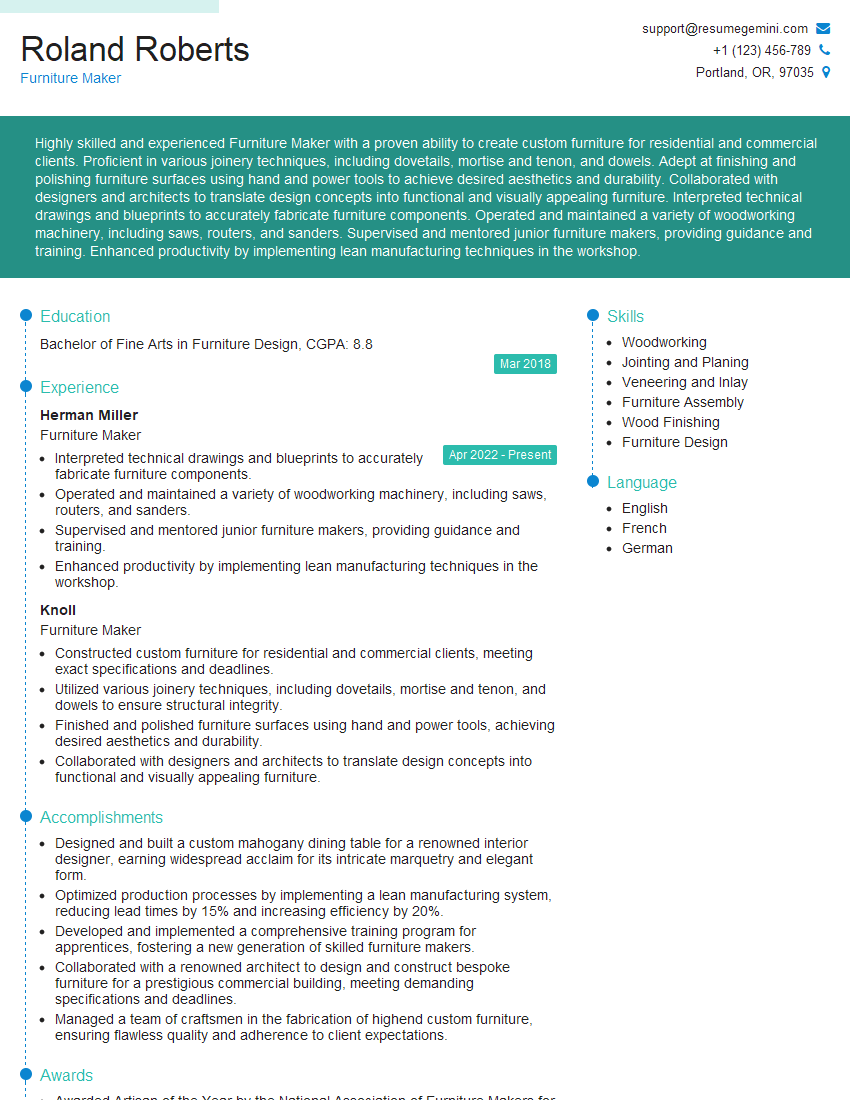
Furniture Maker Resume Sample
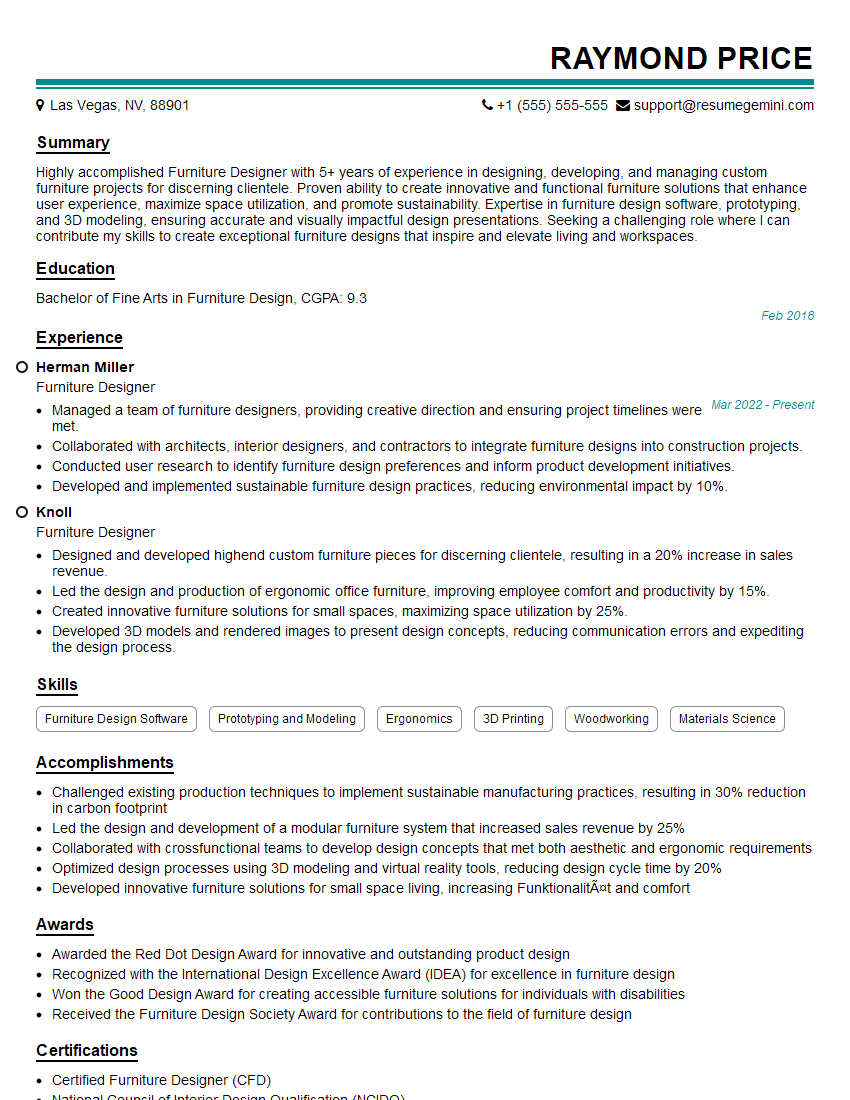
Furniture Designer Resume Sample
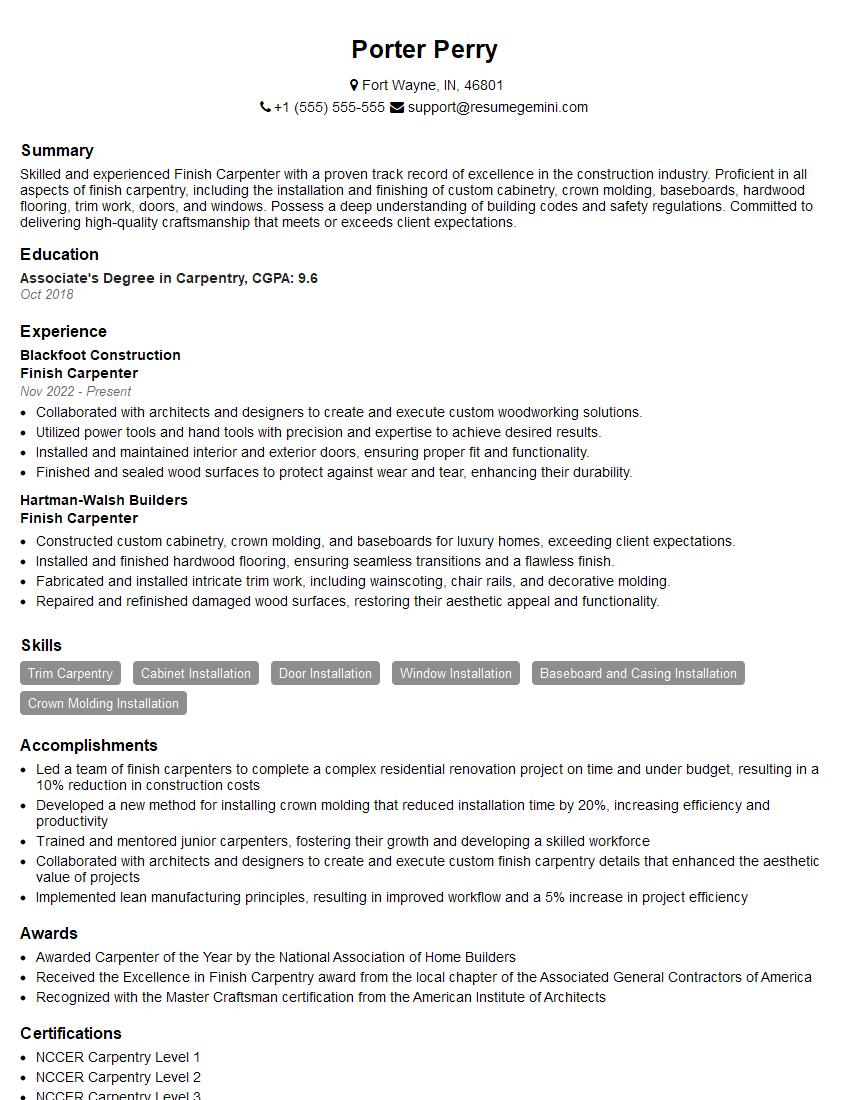
Finish Carpenter Resume Sample
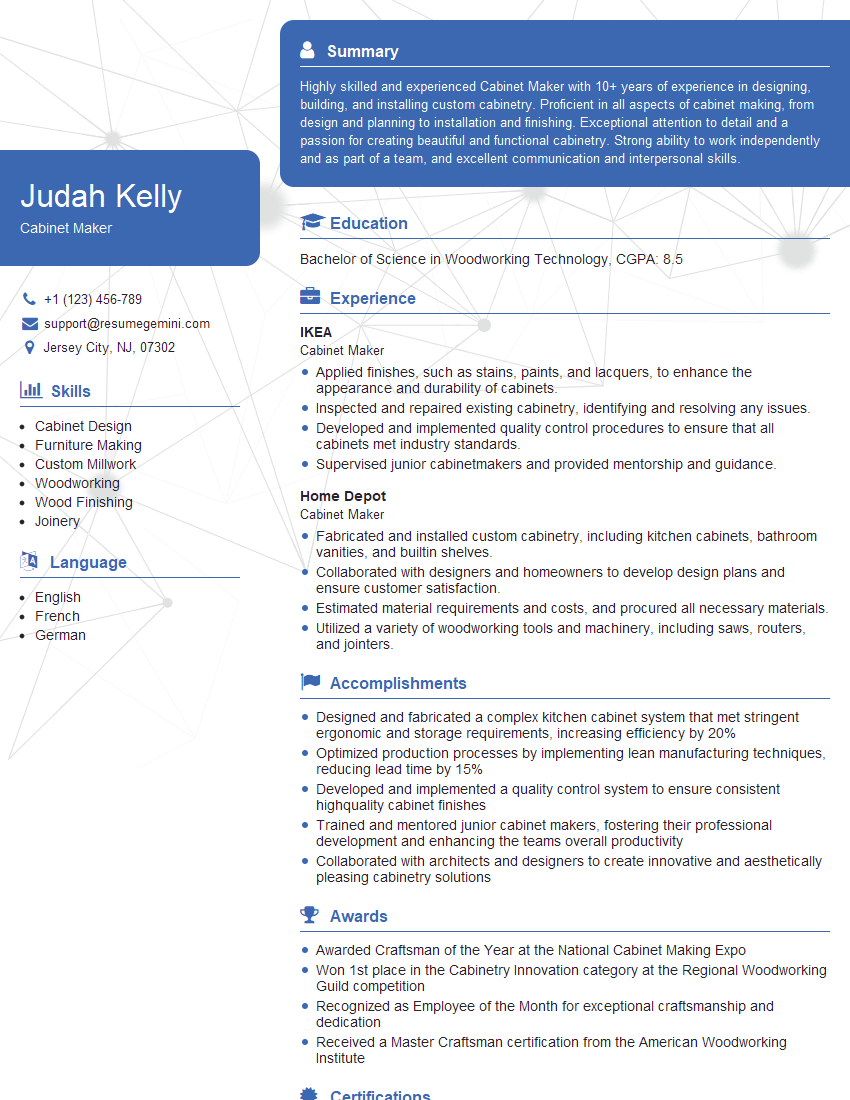
Cabinet Maker Resume Sample
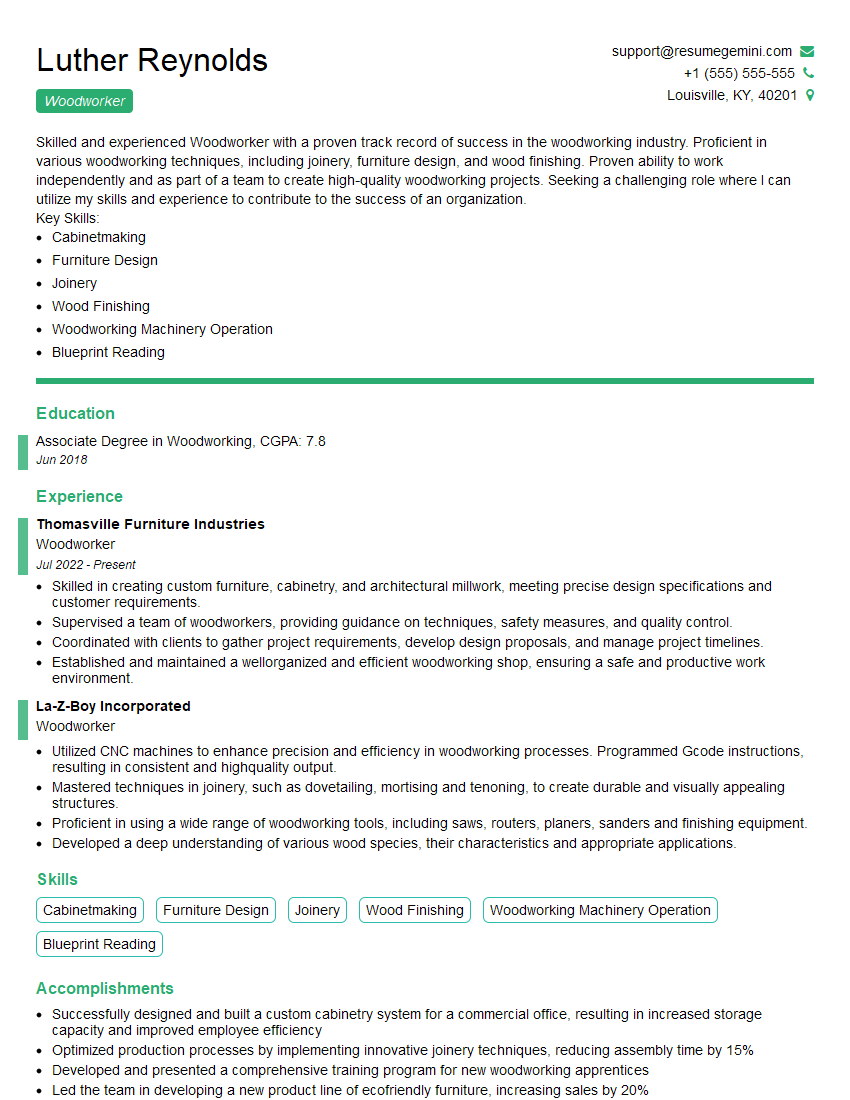
Woodworker Resume Sample

Carpenter Resume Sample
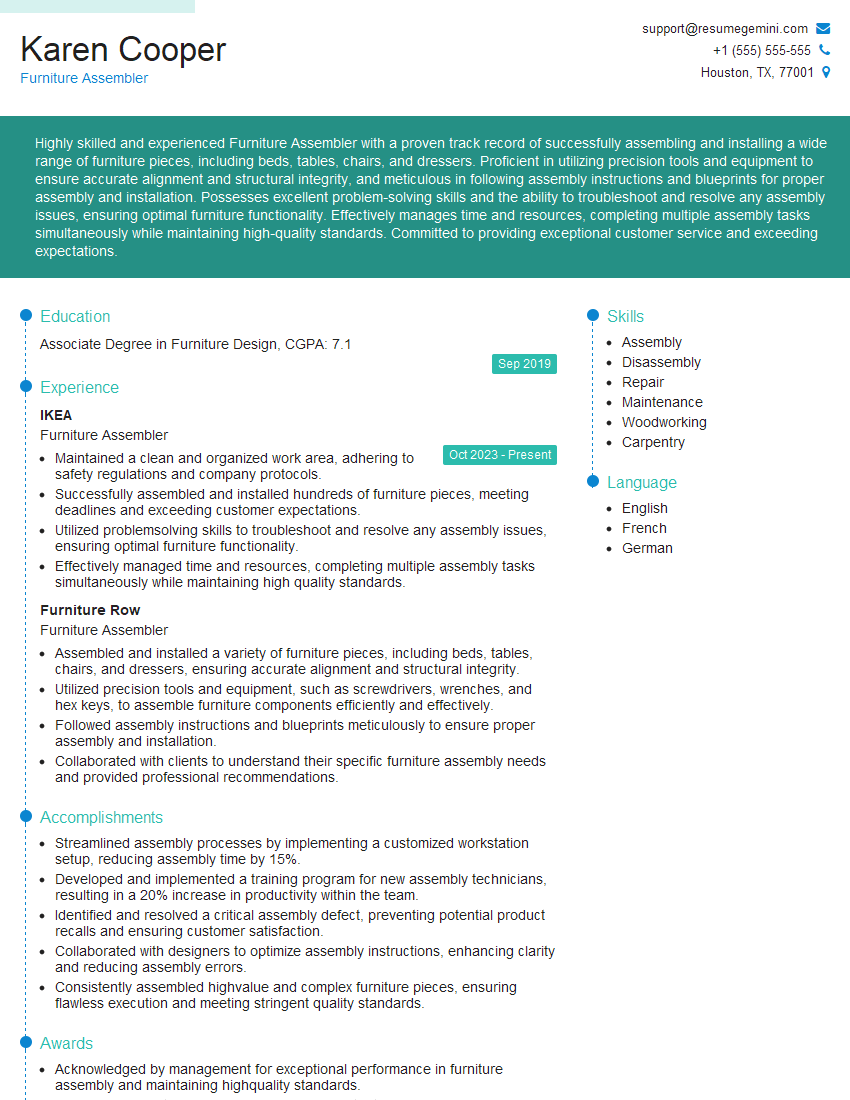
Furniture Assembler Resume Sample
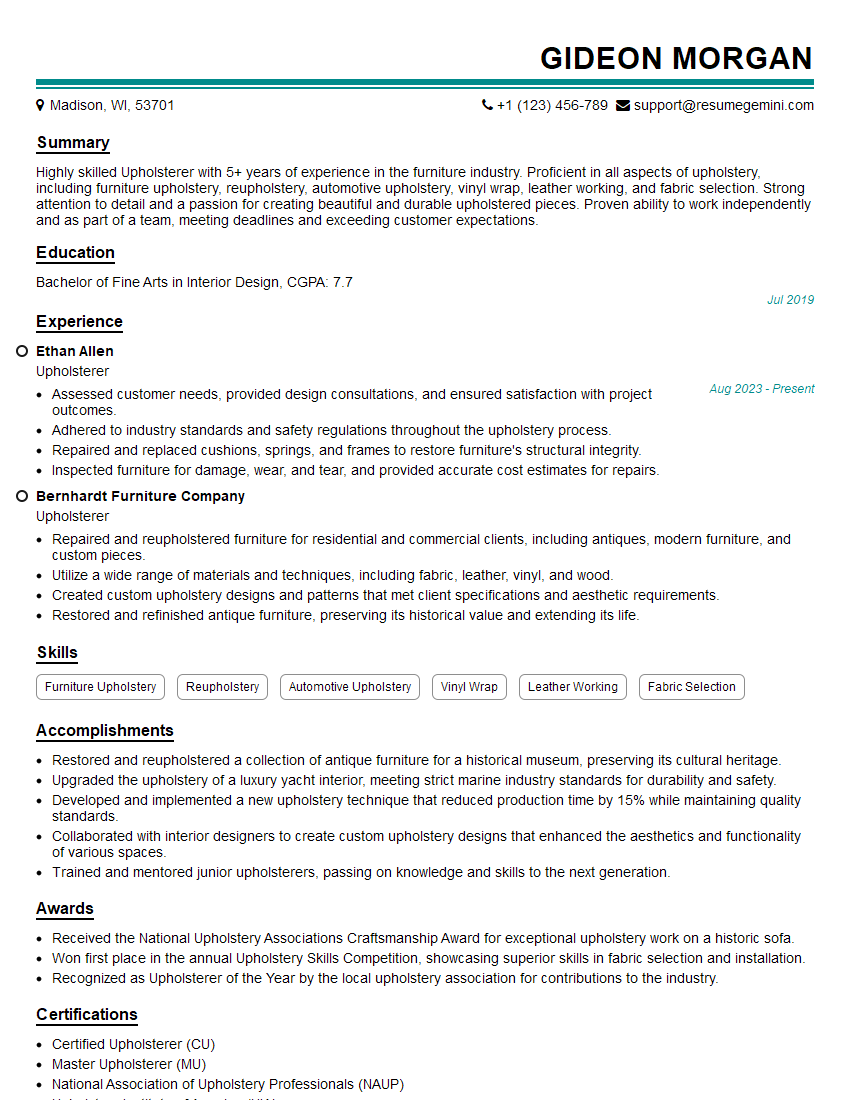
Upholsterer Resume Sample

Antique Furniture Repairer Resume Sample
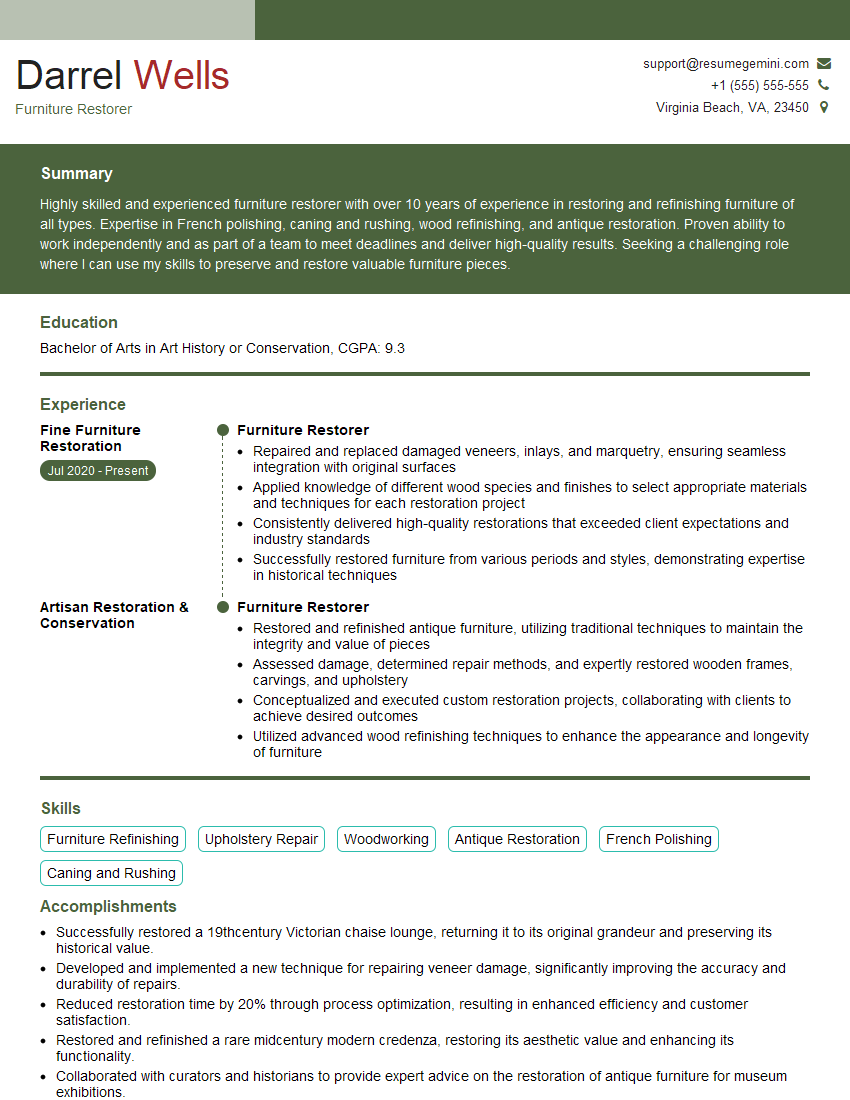
Furniture Restorer Resume Sample
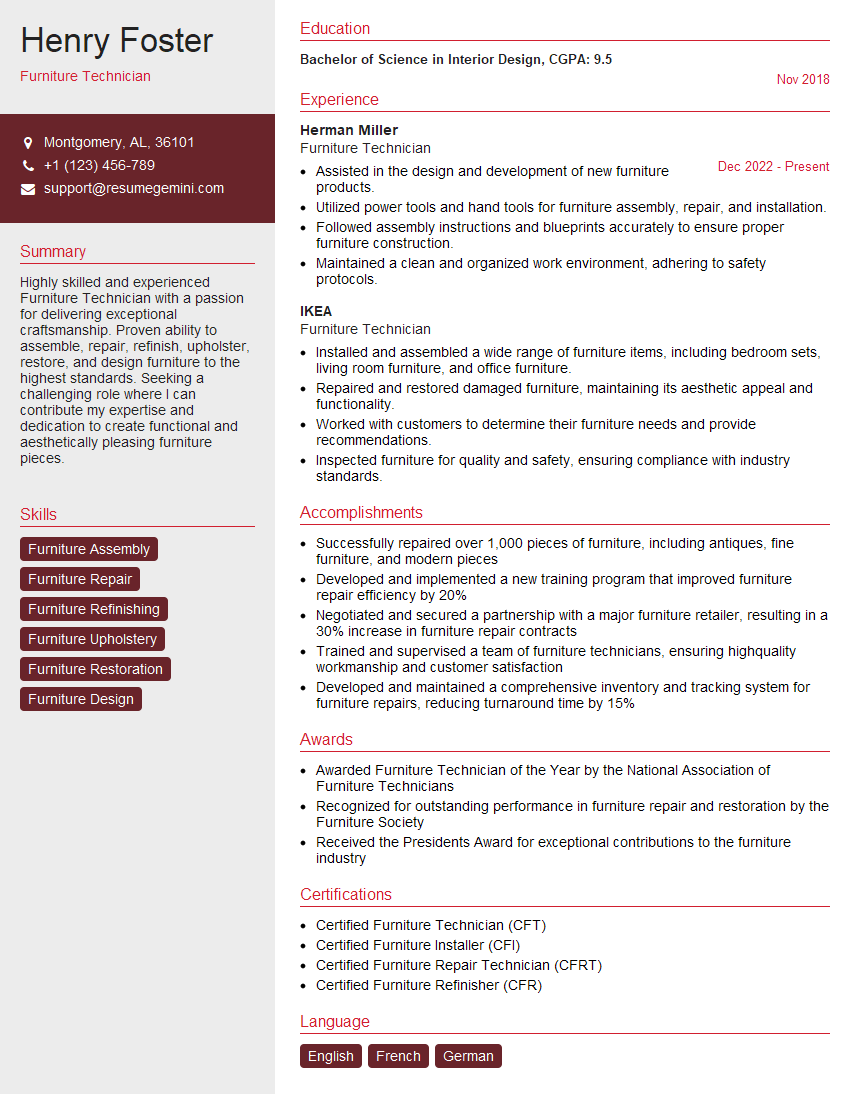
Furniture Technician Resume Sample

Furniture Inspector Resume Sample
Explore more articles
Users Rating of Our Blogs
Share Your Experience
We value your feedback! Please rate our content and share your thoughts (optional).
What Readers Say About Our Blog
Very informative content, great job.
good