Cracking a skill-specific interview, like one for Understanding of Print Finishing Techniques, requires understanding the nuances of the role. In this blog, we present the questions you’re most likely to encounter, along with insights into how to answer them effectively. Let’s ensure you’re ready to make a strong impression.
Questions Asked in Understanding of Print Finishing Techniques Interview
Q 1. Explain the difference between saddle stitch and perfect binding.
Saddle stitch and perfect binding are both methods of binding printed materials, but they differ significantly in their approach and suitability for different projects. Think of saddle stitch as a simple staple and perfect binding as a more sophisticated glued spine.
Saddle stitch involves folding sheets of paper in half and then stapling them through the fold line along the spine. This is ideal for smaller publications like brochures, booklets, and magazines with a relatively low page count (typically under 64 pages). It’s cost-effective and allows the pages to lay relatively flat. Imagine a simple pamphlet; that’s likely saddle-stitched.
Perfect binding, on the other hand, involves gluing the edges of the pages together to create a spine. The pages are first gathered and then the rough edges are trimmed and glued. A cover is then wrapped around the glued spine. This method is suitable for larger publications such as books, journals, and softcover publications that need a more robust and professional finish. Think of your favorite paperback novel; that’s almost certainly perfect bound.
The key difference lies in the binding method (staples vs. glue) and the resulting page count and overall durability. Saddle stitch is simpler and cheaper for shorter documents, while perfect binding offers a more professional and durable solution for larger documents.
Q 2. Describe the process of die-cutting.
Die-cutting is a process that uses a sharp, custom-designed steel rule die to cut shapes and designs into paper, board, or other materials. It’s like using a giant cookie cutter, but much more precise and versatile. The die is mounted onto a press, which forces the material through the die, creating intricate shapes and designs.
Imagine designing a business card with a custom shape, perhaps a star or a flower. Die-cutting would be the method to achieve this. It’s not limited to simple shapes; it can create complex designs, including intricate perforations for tear-away sections, or even embossing and debossing effects in conjunction with the cutting action.
The process involves creating a precise die that accurately reflects the desired design. This die is then used to cut through the material with incredible accuracy, resulting in cleanly cut edges. This technique is commonly used in packaging, labels, promotional materials, and even greeting cards to add a unique and professional touch.
Q 3. What are the common types of lamination?
Lamination is a process that applies a protective film to printed materials to enhance their durability, resistance to scratching, and overall visual appeal. There are several common types:
- Gloss Lamination: Provides a high-gloss, shiny finish, enhancing vibrancy and making colors pop. Think of a glossy magazine cover.
- Matte Lamination: Creates a smooth, non-reflective finish that reduces glare and is often preferred for text-heavy documents or images requiring a more subtle look. Think of a high-quality business card.
- Satin Lamination: Offers a balance between gloss and matte, providing a subtle sheen without excessive glare. It’s a popular choice for applications where a middle ground is desired.
- UV Coating (Ultraviolet Coating): While often categorized separately, UV coating acts similarly to lamination by providing a protective layer, but it is applied in a liquid form that cures instantly under UV light. It offers a high-gloss finish and exceptional scratch resistance.
The choice of lamination type depends on the specific application and desired aesthetic.
Q 4. What are the advantages and disadvantages of using UV coating?
UV coating offers several advantages, but also comes with some drawbacks.
Advantages:
- Superior Protection: Offers excellent protection against scratches, scuffs, and UV damage, extending the life of the printed material.
- Enhanced Vibrancy: Creates a high-gloss finish that enhances the vibrancy and depth of colors.
- Quick Drying Time: Cures instantly under UV light, allowing for faster turnaround times.
- Durable Finish: Provides a very resistant surface, making it suitable for high-traffic or frequently handled materials.
Disadvantages:
- Higher Cost: UV coating is generally more expensive than traditional lamination.
- Specialized Equipment: Requires specialized UV curing equipment, which can be a significant investment.
- Less Flexible: The cured coating can make the material less flexible and more prone to cracking if folded repeatedly.
- Potential for Smudging: If not applied properly, there’s a risk of smudging or uneven coverage.
The decision of whether to use UV coating often comes down to balancing cost, desired level of protection, and the specific characteristics of the print job.
Q 5. How do you ensure the quality of print finishing operations?
Ensuring quality in print finishing requires a multi-faceted approach that begins even before the printing process.
Pre-press Checks: Thorough inspection of the print files for accuracy, color consistency, and proper imposition is crucial. This includes verifying bleed areas, margins, and ensuring all elements are positioned correctly.
In-process Monitoring: Regular checks during each finishing stage, including folding, cutting, binding, and lamination, are essential. This involves visually inspecting samples and employing quality control procedures to catch any defects early.
Equipment Maintenance: Properly maintained equipment is paramount. Regular cleaning, calibration, and preventative maintenance minimize the risk of errors and inconsistencies in the finishing process. This includes ensuring the blades are sharp, the glue is properly mixed and the lamination film is wrinkle-free.
Quality Control Checks: A final quality control check of a representative sample of the finished product is necessary before mass distribution. This can include checks for accurate alignment, proper binding, and consistent color and finish across all pieces.
By following these steps, print finishing operations can ensure a high level of consistency and quality, leading to a superior final product that meets or exceeds client expectations.
Q 6. Explain the role of a creasing machine in print finishing.
A creasing machine is a vital piece of equipment in print finishing. It’s used to create a controlled fold line in paper or board, making it easier and more precise to fold the material without cracking or tearing. Imagine trying to fold a thick piece of cardboard cleanly by hand; a creasing machine makes this process simple and efficient.
The machine uses a roller with a curved blade that scores the paper or board without completely cutting through it. This creates a weakened area, allowing the material to fold cleanly and sharply along the scored line, preventing cracking or damage, especially important for thicker stocks such as cardstock.
Creasing is particularly important for folding large format pieces like posters, leaflets, and invitation cards, as well as when working with heavier paper weights or card stock. The result is a cleaner, more professional-looking fold, critical for creating visually appealing and high-quality finished products.
Q 7. What are some common issues encountered during folding and how are they resolved?
Folding is a crucial step in print finishing, but several issues can arise.
Common Issues:
- Creasing/Scoring Problems: Improper creasing can lead to cracked or poorly aligned folds. This is often due to a dull creasing blade or improper machine settings.
- Misaligned Folds: Inaccurate registration of the paper during folding can lead to misaligned pages or sections within the folded piece. This could be caused by inconsistent paper feed or improper machine calibration.
- Paper Jams: Paper jams can be caused by incorrect paper feed, wrinkled paper, or excessive paper in the feed tray.
- Tearing or Breaking: This typically occurs when folding heavier paper stocks without proper creasing or using unsuitable folding equipment.
Solutions:
- Regular Maintenance: Ensure that the folding machine is regularly cleaned, maintained, and calibrated. Check and sharpen blades as needed.
- Proper Setup: Accurately set the machine according to the paper weight and type and the desired fold pattern.
- Paper Handling: Use appropriate paper handling techniques to prevent wrinkles and jams. This includes ensuring that the paper is correctly stacked and that the feed tray isn’t overloaded.
- Appropriate Equipment: Use folding equipment appropriate for the type and weight of the paper to prevent tears and damage.
- Troubleshooting: If problems persist, consult the machine’s manual or seek assistance from a qualified technician.
Addressing these issues proactively ensures the production of high-quality, consistently folded materials.
Q 8. Describe the different types of paper folding.
Paper folding is a crucial step in print finishing, impacting the final product’s look and feel. There are several methods, each suited for different applications and desired aesthetics. Here are some of the most common:
- Half Fold: The simplest fold, where a sheet is folded in half. Think of a standard brochure or letter.
- Letter Fold: A more complex fold, often used for inserting into envelopes. It involves two or more folds, creating panels. Think of a tri-fold brochure.
- Roll Fold: A series of parallel folds that create a booklet effect. Common in longer documents or newspapers.
- Gate Fold: A unique fold where the panels are folded inward to create a gate-like appearance. Often used for maps or invitations.
- Parallel Fold: Similar to a roll fold, but all the folds run in the same direction.
- Z-Fold: Three parallel folds creating a zig-zag pattern, excellent for showcasing different sections of information.
The choice of fold depends on factors such as the paper size, the amount of information, and the desired presentation. For instance, a half fold is perfect for a simple flyer, while a gate fold is ideal for a more dramatic and sophisticated piece.
Q 9. What are the key considerations when selecting a binding method?
Selecting the right binding method is critical; it significantly affects the document’s durability, aesthetics, and overall cost. Several factors must be considered:
- Document Length and Thickness: Saddle stitch is suitable for short documents, while perfect binding is better for thicker books.
- Budget: Saddle stitching is generally the most cost-effective, while case binding is the most expensive.
- Desired Aesthetics: Spiral binding allows for easy page turning but may not be aesthetically pleasing for all projects. Perfect binding offers a clean, professional look.
- Frequency of Use: If the document needs to lay flat, lay-flat binding might be necessary.
- Content Type: Consider the importance of preventing page damage or ensuring easy access to specific sections.
For example, a short-run pamphlet might use saddle stitch, whereas a high-quality novel would benefit from perfect binding or case binding.
Q 10. How do you troubleshoot a jammed finishing machine?
Troubleshooting a jammed finishing machine requires a systematic approach. Safety should always be the top priority – ensure the machine is switched off and unplugged before any troubleshooting begins.
- Identify the Jam Location: Carefully examine the machine to pinpoint where the paper is jammed.
- Clear the Jam: Gently remove the jammed paper. Avoid forcing anything, as this could damage the machine.
- Check for Obstructions: Inspect the paper path for any debris, foreign objects, or misaligned components.
- Review Paper Quality: Ensure you are using appropriate paper weight and type for the machine’s specifications.
- Inspect Feed Trays: Check for misaligned paper stacks or any obstructions in the feed tray.
- Consult the Manual: Refer to the machine’s manual for specific troubleshooting steps and diagrams.
- Contact Support: If the problem persists, contact the manufacturer’s technical support.
Remember, always consult the machine’s manual for specific safety procedures and troubleshooting instructions. Improper handling can lead to injuries and machine damage.
Q 11. Explain the process of embossing and debossing.
Embossing and debossing are both relief printing techniques that create raised or indented designs on paper or other materials. They are often used for adding texture and visual interest to products like invitations, packaging, and business cards.
Embossing: Creates a raised design. Imagine pressing a coin into soft clay; the coin’s impression becomes raised. This is achieved using a heated die that presses the design onto the material.
Debossing: Creates an indented design. It’s like pressing the coin into the clay, but then removing the coin, leaving an indented impression. This also uses a heated die, but the design is pressed into the material.
Both techniques often involve a counter-die to ensure a clean, crisp impression. The pressure and temperature of the dies are crucial in determining the final result. The depth and clarity of the embossed or debossed image depend on the material, pressure, and temperature used.
Q 12. What are the safety procedures related to operating print finishing equipment?
Safety is paramount when operating print finishing equipment. Here are key safety procedures:
- Proper Training: Always receive thorough training before operating any machine.
- Personal Protective Equipment (PPE): Use appropriate safety glasses and gloves.
- Machine Guards: Ensure all safety guards are in place and functioning correctly.
- Emergency Stops: Know the location and operation of emergency stop buttons.
- Loose Clothing and Jewelry: Avoid wearing loose clothing or jewelry that could get caught in moving parts.
- Clear Work Area: Maintain a clean and organized work area to prevent accidents.
- Regular Maintenance: Follow the manufacturer’s recommendations for regular maintenance and inspections.
- Lockout/Tagout Procedures: Use appropriate lockout/tagout procedures before performing any maintenance or repairs.
Ignoring safety procedures can lead to serious injuries, so careful adherence to guidelines is crucial. Never take shortcuts with safety; it’s always worth the extra time.
Q 13. How do you calculate the cost of different finishing techniques?
Calculating the cost of different finishing techniques involves considering various factors:
- Material Costs: Cost of paper, card stock, or other materials used.
- Labor Costs: Hourly rates of operators and time spent on the task.
- Machine Costs: Depreciation, maintenance, and operating costs of equipment.
- Waste: Materials wasted during the finishing process.
- Consumables: Ink, toner, or other consumables needed.
- Quantity: Costs are often influenced by economies of scale; larger quantities often result in lower unit costs.
A cost breakdown sheet is usually created, outlining each element and then calculating a per-unit cost. For example, you might have a cost of $0.10 per piece for cutting and $0.20 per piece for binding. Adding the material costs to this would give a total cost per unit.
Q 14. What are the environmental considerations related to print finishing?
Environmental considerations in print finishing are increasingly important. Here are key areas of concern:
- Waste Reduction: Minimizing paper waste through efficient cutting and planning.
- Sustainable Materials: Using recycled paper and environmentally friendly inks and coatings.
- Energy Consumption: Optimizing equipment usage to reduce energy consumption.
- Waste Disposal: Proper disposal of ink cartridges, paper waste, and other materials.
- Emissions: Reducing emissions from equipment through maintenance and energy-efficient practices.
- Water Usage: Minimizing water use in cleaning processes.
Many companies are adopting greener practices like using vegetable-based inks, employing cleaner production methods, and working with suppliers who share their commitment to sustainability. These efforts minimize the environmental footprint of the print finishing process and contribute to a healthier planet.
Q 15. Explain the difference between offline and online finishing.
The key difference between offline and online finishing lies in when the finishing processes are applied relative to the printing process. Online finishing integrates finishing steps directly into the printing workflow. This means the printed sheets move directly from the press to various finishing units, like cutters, folders, or binders, without manual intervention in between. Think of it like an assembly line for print products. This is highly efficient for large-scale projects.
Offline finishing, on the other hand, involves finishing the printed sheets separately, after they’ve been printed. The printed output is gathered, often stacked, and then moved to a different area or machine for finishing. This allows more flexibility in terms of scheduling and choice of finishing methods, but it’s generally less efficient for mass production. An example of offline finishing would be taking a stack of printed brochures to a separate bindery for saddle stitching.
Career Expert Tips:
- Ace those interviews! Prepare effectively by reviewing the Top 50 Most Common Interview Questions on ResumeGemini.
- Navigate your job search with confidence! Explore a wide range of Career Tips on ResumeGemini. Learn about common challenges and recommendations to overcome them.
- Craft the perfect resume! Master the Art of Resume Writing with ResumeGemini’s guide. Showcase your unique qualifications and achievements effectively.
- Don’t miss out on holiday savings! Build your dream resume with ResumeGemini’s ATS optimized templates.
Q 16. Describe your experience with different types of cutting and trimming techniques.
My experience encompasses a wide range of cutting and trimming techniques. I’m proficient with guillotine cutters, which are ideal for straight cuts and high volume, and rotary cutters, suited for more intricate shapes and perforations. I’ve also worked extensively with die-cutting, allowing for complex shapes and custom designs, often employed for packaging or promotional materials. For precise trimming of multiple sheets simultaneously, I’m experienced with three-knife trimmers. Furthermore, I understand the nuances of different blade types and their impact on the final cut quality, minimizing paper waste and ensuring clean edges. I even have experience with digital cutting, using technologies like CNC cutters for specialized projects. For example, a recent project required a custom die to create uniquely shaped invitations; the die-cutting process ensured perfectly consistent and aesthetically pleasing results.
Q 17. How do you handle inconsistencies in paper stock during finishing?
Inconsistencies in paper stock are a common challenge in print finishing. To handle this, a multi-pronged approach is necessary. First, I always carefully inspect the paper stock before the finishing process begins to identify any major variations in thickness, moisture content, or surface texture. If substantial variations are found, I would flag this with the print production team so that adjustments can be made for the finishing process or even during the printing itself. For smaller inconsistencies, I adjust machine settings to accommodate. For instance, with guillotine cutters, I might slightly adjust the cutting pressure or blade position to ensure clean cuts across varying thicknesses. Using high-quality cutters and regular maintenance are crucial to minimize inconsistencies during cutting.
Furthermore, the careful use of appropriate feeder mechanisms on finishing equipment aids in handling inconsistencies, ensuring consistent feed and reducing jamming.
Q 18. What software or tools are you familiar with in the context of print finishing?
My software proficiency includes prepress software like Adobe Acrobat Pro and imposition software such as Imposition Pro or CGS ORIS. These tools are essential for designing efficient layouts and preparing files for optimal finishing. I’m also familiar with RIP software, crucial for managing color profiles and ensuring color consistency between the printed output and the final product. On the finishing equipment side, I’m well-versed in the control interfaces of various machines, from simple guillotine cutters to sophisticated automated binding systems. Many modern finishing machines utilize touchscreen interfaces or connected software for setup and monitoring purposes.
Q 19. How do you ensure color consistency throughout the print finishing process?
Maintaining color consistency is paramount in print finishing. This starts long before the finishing stage, with careful color management during prepress. Using calibrated monitors, accurate color profiles (e.g., ICC profiles), and proofing are essential. During the finishing process, consistent lighting conditions are crucial for visual inspection. If applying coatings or laminates, ensuring the chosen material doesn’t significantly alter the printed colors is vital. Regular calibration of the finishing equipment, like checking the color settings on a laminator, is essential for consistency. If working with specialized coatings, careful testing on sample prints will help identify and minimize any color shifts before large-scale production.
Q 20. Explain your experience with quality control checks in print finishing.
Quality control is ingrained in my approach to print finishing. My checks begin with inspecting the printed sheets for defects such as misprints, blemishes, or inconsistencies in color or image quality before any finishing. Throughout each finishing stage, I conduct regular checks for accurate cutting, binding, and folding. I meticulously examine the final product for any defects, ensuring all elements align with specifications. This may involve visual inspection, as well as using measuring tools to check dimensions and alignment. I also maintain detailed records of each step, including machine settings and any adjustments made, allowing for traceability and troubleshooting.
Statistical Process Control (SPC) methods, though not always used for small runs, are useful in larger projects to monitor process consistency and proactively identify potential issues. A well-documented quality control system is vital for consistently meeting high standards.
Q 21. Describe your experience with different types of finishing materials (e.g., adhesives, coatings).
My experience encompasses a wide range of finishing materials. I’m familiar with various types of adhesives, including hot melt, cold glue, and PUR (polyurethane reactive) adhesives, each with its own application and suitability for different substrates and binding methods. I understand the importance of choosing the right adhesive for the material and the finishing process to ensure strong and reliable bonds. In terms of coatings, I’ve worked extensively with aqueous coatings, UV coatings, and laminates. I’m adept at selecting the right coating to enhance durability, protection, and the overall aesthetic appeal of the printed product. For instance, UV coatings are often chosen for their high gloss and scratch resistance, while aqueous coatings are used when a more environmentally friendly option is needed. Understanding the properties of each material and their interaction with the printed ink is essential for optimal results.
Q 22. How do you manage deadlines and prioritize tasks in a fast-paced print finishing environment?
In a fast-paced print finishing environment, effective deadline management is crucial. My approach is multifaceted and relies heavily on a combination of project prioritization techniques and meticulous planning.
- Prioritization Matrix: I utilize a system like the Eisenhower Matrix (urgent/important) to categorize tasks. This ensures that time-sensitive, high-impact jobs are tackled first. For example, a rush order for a client’s conference materials would take precedence over a less urgent large-scale printing job.
- Detailed Scheduling: I create detailed schedules, breaking down large projects into smaller, manageable tasks with realistic deadlines for each. This allows for better tracking of progress and identification of potential bottlenecks early on. Software like MS Project or specialized print management systems are invaluable here.
- Communication & Collaboration: Open communication with the pre-press and production teams is essential. Any delays or unforeseen issues are addressed proactively. Regular status meetings help to keep everyone informed and synchronized.
- Contingency Planning: I always build in buffer time for unexpected issues, like equipment malfunctions or material delays. This ensures that deadlines are met even when things don’t go exactly according to plan. For instance, having backup materials or alternative finishing techniques readily available can prevent major delays.
This structured approach allows me to efficiently manage multiple projects simultaneously, ensuring timely delivery and client satisfaction, even in high-pressure situations.
Q 23. What are your strategies for handling customer requests and resolving discrepancies?
Handling customer requests and resolving discrepancies requires a calm, professional, and solution-oriented approach. My strategy focuses on clear communication, thorough investigation, and collaborative problem-solving.
- Active Listening: I begin by carefully listening to the customer’s concerns, ensuring I fully understand their needs and the nature of the discrepancy. I ask clarifying questions to avoid misunderstandings.
- Thorough Investigation: I systematically investigate the root cause of the discrepancy, reviewing the original order, pre-press files, and the finishing process itself. This often involves checking for errors in the printing process, finishing equipment settings, or even material defects.
- Collaborative Solutions: I work closely with the relevant teams (pre-press, printing, etc.) to determine the best course of action. This could involve re-finishing the job, offering a partial refund, or exploring alternative solutions to satisfy the customer.
- Documentation: I maintain detailed records of all communication and actions taken. This documentation protects both the client and the company, serving as a record of the issue and its resolution.
- Follow-up: I always follow up with the customer to ensure they are satisfied with the resolution and to prevent future occurrences of similar issues.
For example, if a client received a brochure with misaligned text, I would investigate if the issue stemmed from the pre-press files, the printing machine, or the folding/cutting process. This would allow me to pinpoint the problem and find a swift solution.
Q 24. How do you stay up-to-date with the latest advancements in print finishing technologies?
Staying current with advancements in print finishing technologies is critical for remaining competitive and providing clients with the best possible service. I employ several strategies to stay informed:
- Industry Publications & Trade Shows: I regularly read industry magazines and attend trade shows like drupa or Graph Expo. These events showcase new technologies and provide opportunities to network with other professionals.
- Online Resources & Webinars: I actively follow industry websites, blogs, and online forums. Webinars and online courses offered by equipment manufacturers and industry associations provide in-depth knowledge on new developments.
- Manufacturer Training: I seek out training opportunities provided by equipment manufacturers to become proficient in using the latest machines and software. This hands-on experience is invaluable.
- Professional Networks: I participate in professional organizations related to print finishing, allowing me to engage with experts and learn about new trends and best practices.
By continuously seeking out and applying this knowledge, I can ensure that I am always working with the most efficient and effective technologies available.
Q 25. Describe a situation where you had to problem-solve a finishing issue under pressure.
During a large-scale promotional campaign, we encountered a critical issue with the die-cutting process for several thousand custom-shaped boxes. The die was malfunctioning, creating inconsistent cuts and damaging a significant portion of the boxes. The deadline was extremely tight – the boxes were needed for a major product launch in 48 hours.
Under pressure, I immediately assessed the situation. We had several options, each with its own set of trade-offs:
- Repair the Die: This would take time and potentially miss the deadline.
- Source a Replacement Die: This was unlikely to be available in time.
- Implement a Manual Process: While slower, it could salvage a portion of the boxes.
I opted for a combination approach. We prioritized the repair of the die while simultaneously deploying a team to manually trim and correct the damaged boxes. I implemented a quality control check at each step to ensure consistency. We managed to salvage the majority of the boxes on time. This required overtime, but ultimately the project was successfully completed and delivered to the client on time, preventing major financial and reputational damage.
Q 26. What are your strengths and weaknesses concerning print finishing?
My strengths lie in my meticulous attention to detail, my ability to manage multiple priorities effectively, and my problem-solving skills under pressure. I’m proficient in a wide range of finishing techniques, from die-cutting and embossing to perfect binding and UV coating. I also possess strong communication skills, enabling me to collaborate effectively with clients and colleagues.
One area I’m continually working on is my proficiency with the latest automated finishing systems. While I have a solid foundation, I’m eager to expand my expertise in this rapidly evolving field through ongoing training and experience.
Q 27. What are your salary expectations for this role?
My salary expectations are in line with the industry standard for a Print Finishing Specialist with my experience and skill set. I’m open to discussing a competitive compensation package that reflects the value I can bring to your team. I would prefer to discuss this in more detail after learning more about the complete compensation and benefits package.
Q 28. Why are you interested in this specific print finishing position?
I’m highly interested in this specific print finishing position because of [Company Name]’s reputation for high-quality work and innovative approach to print production. The opportunity to work with state-of-the-art equipment and contribute to a team known for its excellence is extremely appealing. I’m particularly excited about [mention a specific project or aspect of the job description that excites you]. I believe my skills and experience align perfectly with the requirements of this role, and I am confident I can make a significant contribution to your team’s success.
Key Topics to Learn for Understanding of Print Finishing Techniques Interview
- Die-Cutting and Embossing: Understand the processes, machinery involved, and the design considerations for creating unique shapes and textures. Consider the different die-cutting methods and their applications.
- Folding and Creasing: Explore various folding techniques (e.g., parallel, gate, z-fold) and their suitability for different print materials and designs. Analyze the impact of creasing on the final product’s quality and appearance.
- Binding and Finishing: Master the different binding methods (e.g., perfect binding, saddle stitch, spiral binding) and their appropriate uses. Discuss the impact of different binding methods on the cost and durability of the final product.
- Laminating and Coating: Understand the purpose and application of various laminates (gloss, matte, UV) and coatings. Discuss their impact on the product’s protection, feel, and visual appeal. Analyze the pros and cons of different coating options.
- Finishing Processes and Material Selection: Discuss the relationship between print finishing techniques and material choices (paper stock, board, etc.). Explore how material properties influence the selection of finishing techniques.
- Quality Control and Troubleshooting: Learn to identify common issues encountered in print finishing and propose solutions for achieving high-quality results. This includes understanding color consistency, proper alignment, and damage prevention.
- Sustainability in Print Finishing: Explore environmentally friendly finishing options and their impact on the industry.
Next Steps
Mastering print finishing techniques is crucial for career advancement in the printing and publishing industries. A strong understanding of these processes demonstrates your technical expertise and problem-solving abilities, making you a valuable asset to any team. To maximize your job prospects, crafting a compelling and ATS-friendly resume is essential. ResumeGemini can help you build a professional resume that highlights your skills and experience effectively. We provide examples of resumes tailored to the Understanding of Print Finishing Techniques field to give you a head start. Invest in your future – create a resume that showcases your expertise and opens doors to exciting career opportunities.

Print Production Coordinator Resume Sample

Print Production Manager Resume Sample
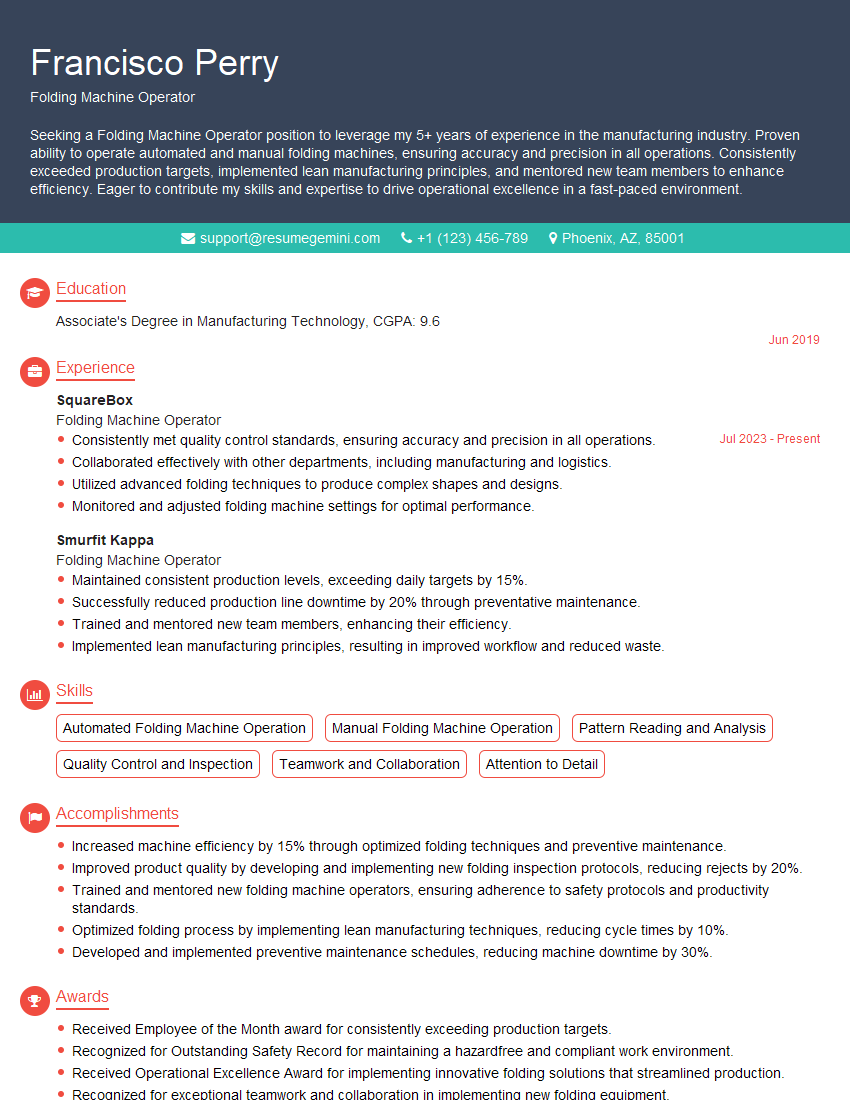
Folding Machine Operator Resume Sample
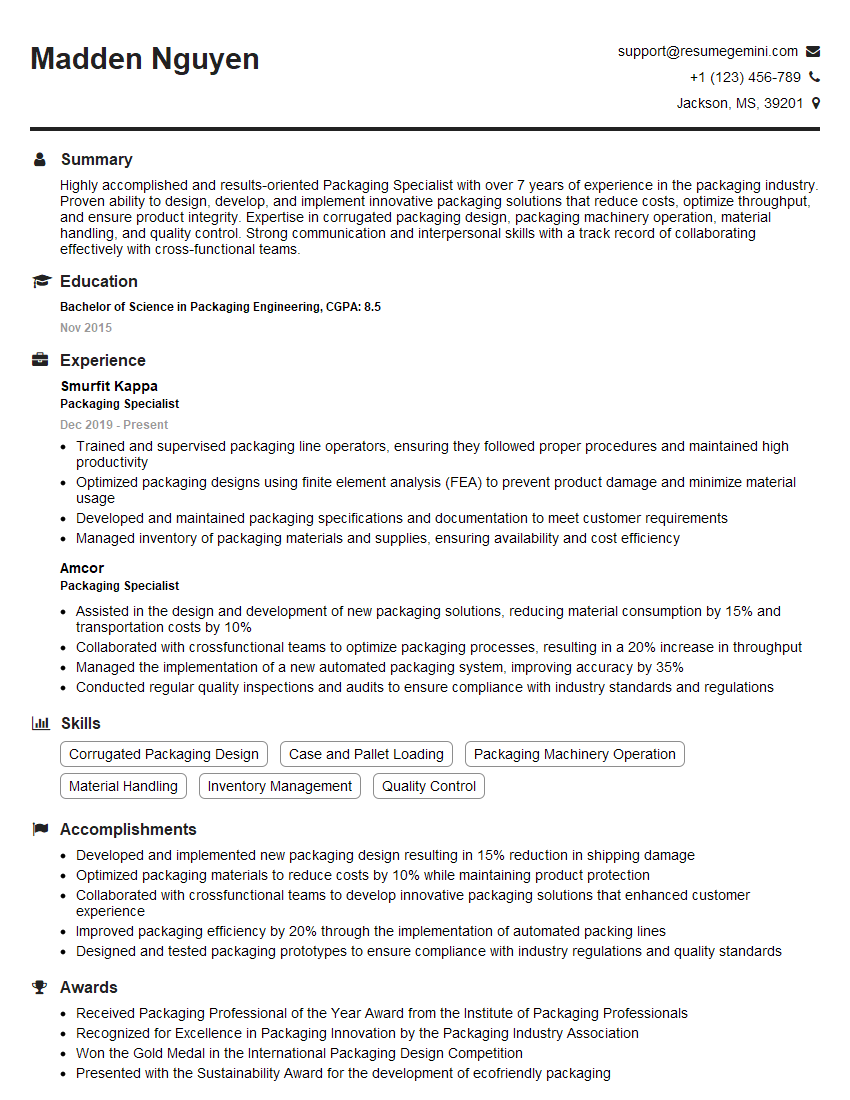
Packaging Specialist Resume Sample
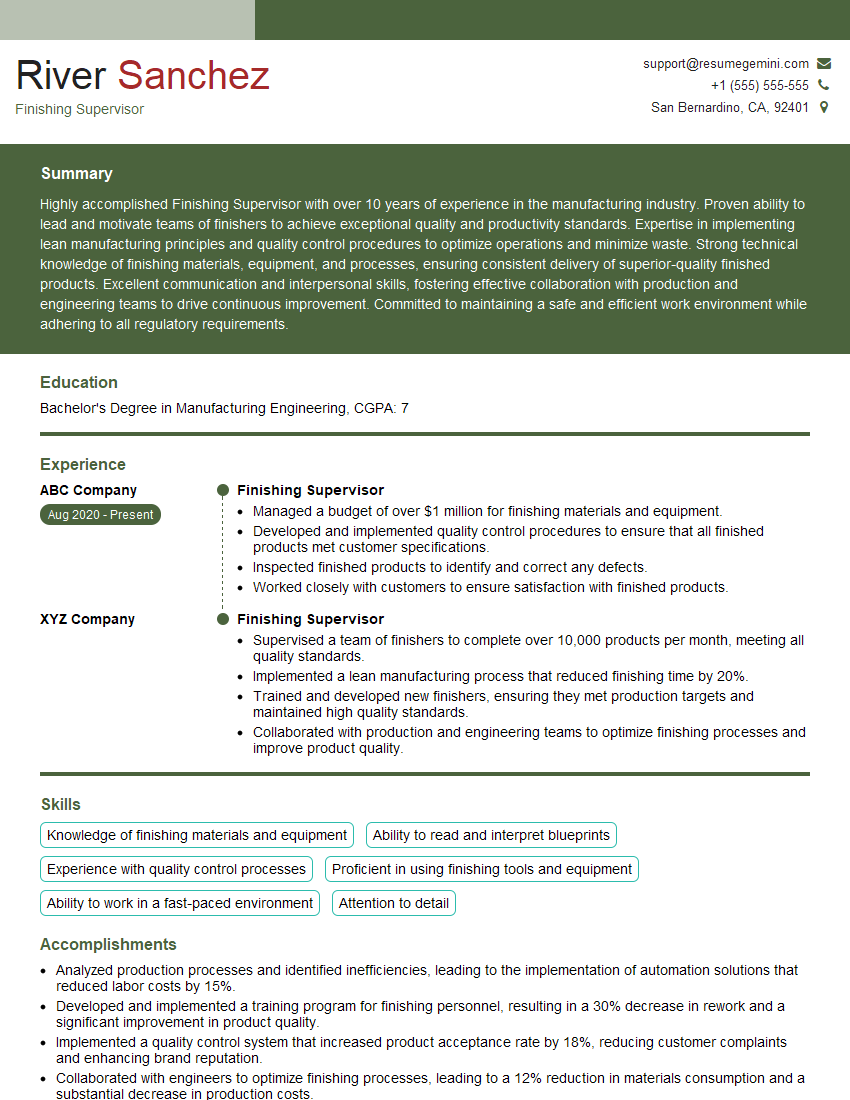
Finishing Supervisor Resume Sample

Prepress Manager Resume Sample
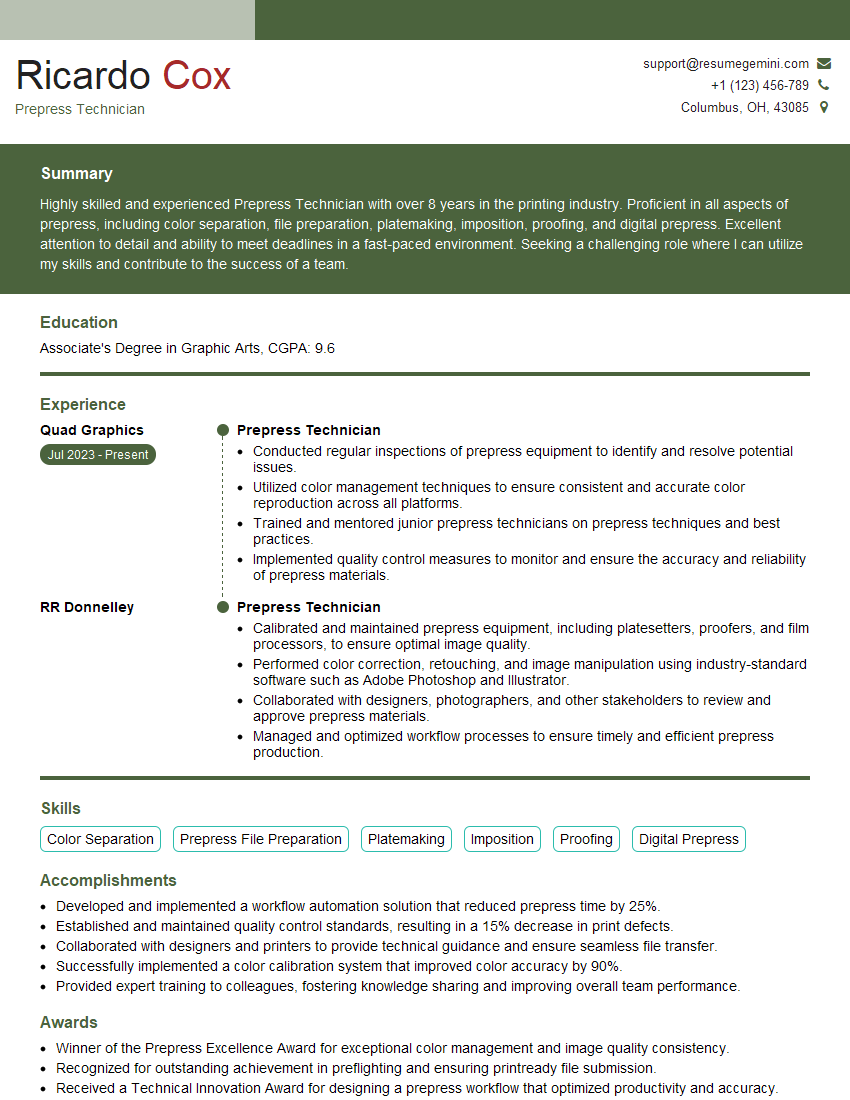
Prepress Technician Resume Sample
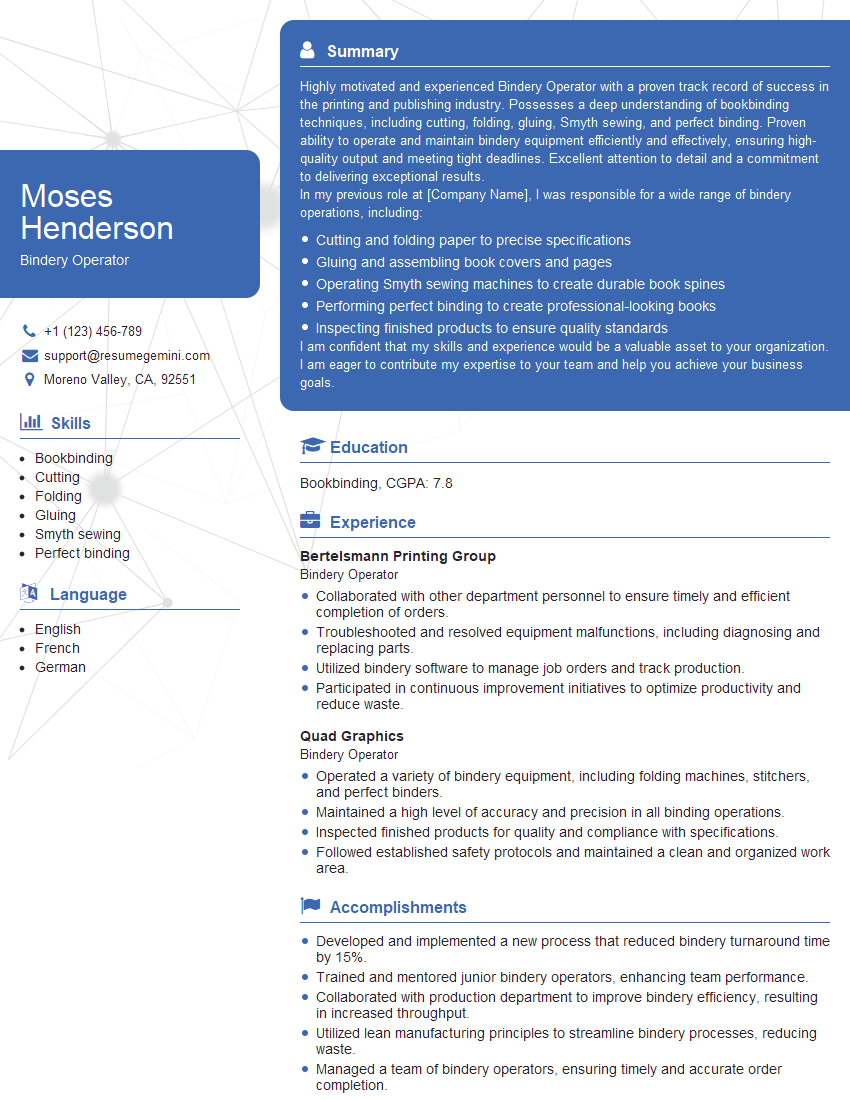
Bindery Operator Resume Sample
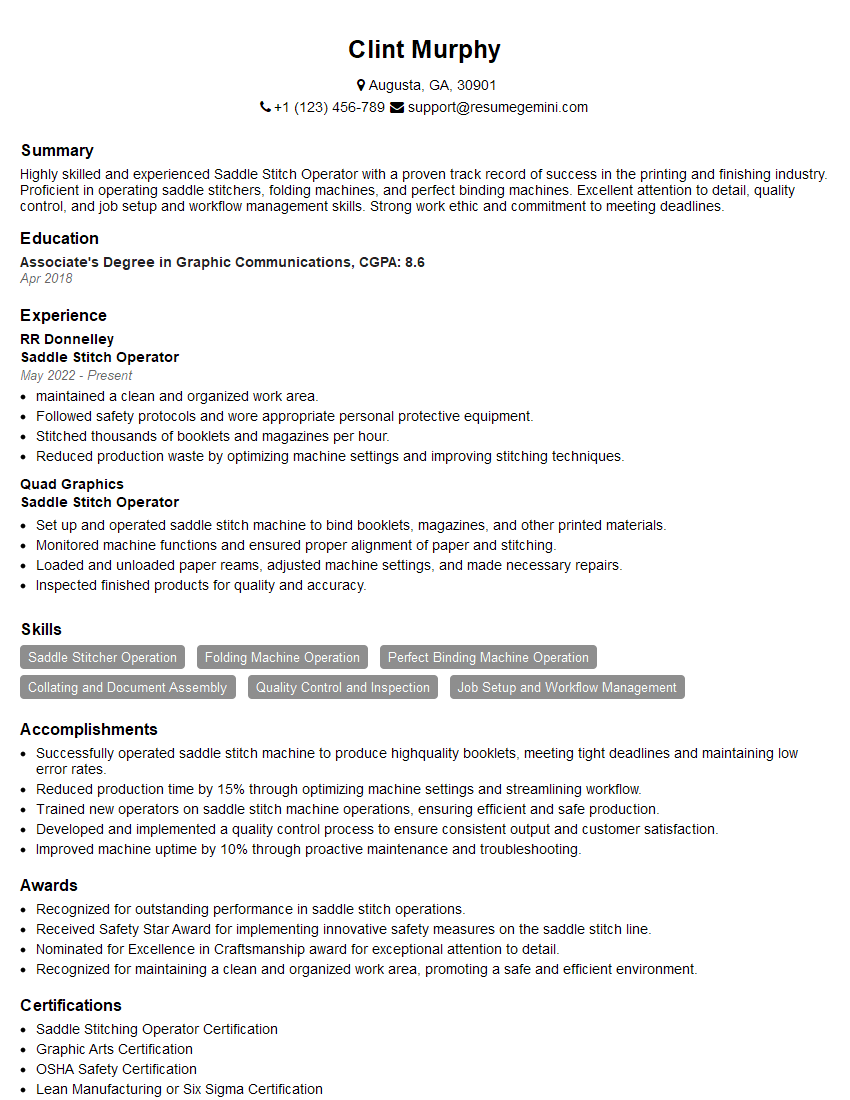
Saddle Stitch Operator Resume Sample
Explore more articles
Users Rating of Our Blogs
Share Your Experience
We value your feedback! Please rate our content and share your thoughts (optional).
What Readers Say About Our Blog
Very informative content, great job.
good