Cracking a skill-specific interview, like one for Voice for Podcasts, requires understanding the nuances of the role. In this blog, we present the questions you’re most likely to encounter, along with insights into how to answer them effectively. Let’s ensure you’re ready to make a strong impression.
Questions Asked in Voice for Podcasts Interview
Q 1. Describe your experience with different microphone techniques for podcasting.
Microphone technique is crucial for podcast audio quality. I’ve extensively worked with dynamic and condenser microphones, each offering unique benefits. Dynamic mics, like the Shure SM7B, are robust, handle high sound pressure levels well, and are less sensitive to background noise – perfect for less-than-ideal recording environments. Condenser mics, such as the Rode NT1-A, are known for their detailed and clear sound, capturing subtle nuances in the voice, but require a quieter recording space due to their higher sensitivity. I’ve also experimented with USB microphones like the Blue Yeti, which offer convenience for beginners but might lack the professional-grade audio quality of dedicated XLR mics. The choice depends heavily on the budget, recording environment, and desired audio characteristics.
For example, when recording a podcast in a busy coffee shop, a dynamic mic would be preferable to minimize background chatter. However, in a dedicated studio, a condenser mic could yield a richer, more detailed vocal recording.
Q 2. How do you ensure consistency in your vocal delivery across a long podcast episode?
Maintaining vocal consistency throughout a long podcast episode requires careful planning and execution. Hydration is key – keeping a water bottle handy and taking regular sips prevents vocal strain. Before recording, I warm up my voice with vocal exercises, focusing on articulation and breath control. During recording, I pay close attention to my pacing and try to maintain a consistent energy level. I also use pacing techniques, like pausing strategically, to avoid sounding monotonous. Finally, editing plays a critical role. In post-production, I can adjust the audio levels to smooth out inconsistencies and make the delivery sound more consistent.
For instance, I might record a few sentences, listen back, and adjust my tone or speed before continuing. This iterative process helps ensure a consistent vocal performance across the whole podcast.
Q 3. Explain your understanding of audio editing software (e.g., Audacity, Adobe Audition).
I’m proficient in both Audacity (a free, open-source DAW) and Adobe Audition (a professional-grade audio editing software). Audacity is excellent for basic editing tasks like noise reduction, clipping removal, and basic sound manipulation. Its user-friendly interface makes it perfect for beginners. Adobe Audition, on the other hand, provides far more advanced features, including spectral editing, multitrack capabilities, and professional-level mastering tools. This makes it ideal for complex editing needs and producing high-quality audio for professional podcasts.
For example, in Audacity, I might use the ‘noise reduction’ effect to minimize background hum. In Audition, I could employ more sophisticated techniques like de-essing to reduce sibilance (hissing sounds) in the voice and use advanced compression to even out volume variations.
Q 4. What are your preferred methods for handling background noise during recording?
Handling background noise is crucial for podcast quality. My approach is multi-faceted. First, I prioritize recording in a quiet environment – a dedicated home studio or a professionally soundproofed room. If a perfectly quiet space isn’t feasible, I use physical sound absorption methods, like blankets or acoustic panels, to dampen unwanted sounds. During recording, I employ a high-quality microphone with good noise rejection capabilities, as previously discussed. Finally, post-production editing software, such as Audacity or Audition, is instrumental in reducing remaining noise using noise reduction tools. This typically involves identifying a sample of the background noise and then applying a noise reduction algorithm to minimize its presence throughout the recording.
I might also utilize techniques like gate functionality to only record when the signal reaches a certain level to reduce ambient sound in quieter moments of the recording.
Q 5. How do you adapt your vocal style to suit different podcast genres?
Adapting vocal style to different podcast genres is essential. A conversational tone suits interview-style podcasts, while a more energetic and enthusiastic delivery works well for motivational or comedy podcasts. For educational podcasts, a clear, concise, and authoritative style is key. I analyze the target audience and the podcast’s overall tone to inform my vocal choices. This includes adjusting my pacing, intonation, and the level of formality in my speech. It is all about finding the right voice to connect with the audience and match the podcast’s theme.
For example, in a horror podcast, I might use a lower, more ominous tone, whereas for a children’s podcast, a brighter, more playful style is more appropriate.
Q 6. Describe your experience with voice direction and working with other talent.
My experience with voice direction involves guiding talent to achieve a consistent and engaging vocal performance. This includes providing clear instructions, offering constructive feedback, and fostering a collaborative environment. I focus on helping talent understand the podcast’s tone and target audience and then guide them in embodying that through their voice. It’s about ensuring everyone is comfortable and confident, which translates into a better recording. I also work closely with the editing team to ensure smooth transitions between different voices and a cohesive sound across the entire episode.
A great example is giving a host direction to be more enthusiastic during a specific segment, or helping a guest find their comfort level and articulate their points with clarity.
Q 7. What’s your process for managing vocal fatigue during long recording sessions?
Managing vocal fatigue during long recording sessions is paramount. I always ensure adequate hydration and rest before recording. I take regular breaks – every 30 to 60 minutes – to give my voice a rest and prevent strain. During breaks, I perform simple vocal exercises and stretches to maintain vocal health. I also avoid excessive talking or shouting before and during recording. Proper vocal technique and pacing, which is consistent and even, are vital. Finally, if fatigue sets in, I do not hesitate to reschedule the recording session to ensure the highest quality output.
Think of your voice like a muscle – it needs rest and proper care just like any other physical tool. Prioritizing vocal health ensures a consistent and professional quality throughout the production process.
Q 8. How familiar are you with compression, equalization, and limiting in audio editing?
Compression, equalization (EQ), and limiting are fundamental audio processing techniques crucial for achieving professional-sounding podcasts. Think of them as tools for sculpting your audio.
Compression reduces the dynamic range of your audio – the difference between the loudest and quietest parts. This makes quieter parts louder and prevents the loudest parts from being clipped (distorted). It results in a more consistent and even sound. For podcasts, compression can make voices sound fuller and more present, reducing the need for constant volume adjustments by the listener. For example, a compressor can even out the variations in volume that occur when a speaker speaks softly at times and loudly at others.
Equalization (EQ) shapes the frequency balance of your audio. Different frequencies correspond to different aspects of sound: bass (low frequencies), mids (middle frequencies), and treble (high frequencies). EQ allows you to boost or cut specific frequencies to enhance clarity or reduce muddiness. For example, boosting the presence frequencies (around 2-4kHz) can make a voice sound clearer and more articulate. Reducing the bass frequencies can improve clarity if the recording sounds ‘boomy’. You may use a high-pass filter (cutting lower frequencies) to get rid of rumble from microphone handling noise or room reflections.
Limiting prevents your audio from exceeding a specific maximum volume. It’s like a safety net to avoid clipping or distortion, ensuring consistent loudness across your podcast. While compression reduces the dynamic range, limiting ensures that the sound stays below a specific threshold, preventing distortion. In mastering your podcast this is particularly important.
Q 9. Explain your understanding of audio file formats and their applications in podcasting.
Understanding audio file formats is vital for podcasting efficiency and quality. Different formats have different strengths and weaknesses concerning file size, audio quality, and compatibility with various editing software and podcast platforms.
- MP3 (MPEG-1 Audio Layer III): The most common format for podcast distribution. It offers a good balance between file size and audio quality, making it suitable for efficient streaming and downloading. MP3 is lossy, meaning some audio data is discarded during encoding, but the loss is generally not noticeable to most listeners.
- WAV (Waveform Audio File Format): A lossless format that preserves all the original audio data. This is ideal for editing and mastering because it avoids any generation loss. However, WAV files are much larger than MP3 files, making them less efficient for distribution.
- AAC (Advanced Audio Coding): Another widely used format, particularly on Apple devices. It offers better audio quality than MP3 at comparable file sizes. Many podcast hosting platforms support AAC.
- AIFF (Audio Interchange File Format): Similar to WAV, this is another lossless format, popular among Mac users.
For podcasting, it’s common practice to edit in a lossless format like WAV and then export the final product in a compressed format like MP3 or AAC for distribution. This ensures that the highest quality is preserved during editing without sacrificing efficiency on the listener’s end.
Q 10. Describe your experience with mastering audio for podcast distribution.
Mastering is the final stage of audio production, where the overall loudness, dynamics, and frequency balance are polished to ensure consistent quality across the entire podcast. For podcast distribution, mastering is crucial for ensuring a professional-sounding product that compares favorably to others in the listener’s library.
My approach involves:
- Level Matching: Ensuring consistent volume across all episodes.
- EQ and Compression: Subtle adjustments to enhance clarity and dynamics, creating a polished and engaging listening experience.
- Limiting: Setting the maximum loudness to ensure the podcast isn’t too quiet or distorts when played on different devices.
- Stereo Imaging: If using stereo, optimizing the placement of audio elements within the stereo field, preventing phase cancellations.
- Dithering: Applying dithering during the conversion to a lossy format (like MP3) reduces the noise artifacts often associated with data compression.
I use professional-grade audio mastering software such as iZotope Ozone or similar tools to achieve these goals. The end result is a podcast that sounds both professional and engaging regardless of the playback platform used by the listener.
Q 11. How do you approach script interpretation to effectively convey emotion and tone?
Script interpretation goes beyond simply reading words; it’s about understanding the nuances of the text and conveying its essence authentically. I approach it through a multi-faceted process:
- Understanding the intent: Before recording, I delve deep into the script’s purpose, target audience, and the overall message. This helps me determine the appropriate tone and emotional delivery.
- Identifying key emotions: I carefully highlight words and phrases that carry strong emotions. This can often be indicated in the writing itself (e.g. through italicization, bolding, descriptive phrasing). I identify the specific emotion to convey (e.g., joy, sadness, anger, surprise) for each passage to make the message clear and resonate with the listener.
- Pacing and phrasing: Varying the pacing (speed of speech) and phrasing (grouping words) adds rhythm and dynamism to the audio. A faster pace might work for excitement, while a slower pace could reflect contemplation.
- Vocal variety: Pitch, volume, and tone variations are essential tools. Changing my tone of voice can reflect the change in character dialogue or the overall mood or emphasis of the narrative. This allows me to convey more feeling and emotion, keeping the listener engaged.
- Practice and iteration: I practice the script multiple times, experimenting with different delivery styles before making a final recording. I then listen back critically to ensure that the emotion and tone aligns with the script’s intent and the overall feeling of the podcast episode.
For example, if a script describes a character’s feeling of betrayal, I will reflect that emotional state through the use of subdued tone, slight pauses, and a slower pace to create a sense of weight and gravity to the scene. I might also lower the volume of my voice to create emphasis and emotional impact.
Q 12. How would you troubleshoot a problem with audio dropouts or poor audio quality during recording?
Troubleshooting audio dropouts or poor quality during recording requires a systematic approach. It’s a process of elimination, starting with the most likely causes and working towards more complex issues.
- Check your recording software: Ensure that the recording levels are not clipping (exceeding the maximum signal), that the software is correctly configured and not causing interruptions, and that you have sufficient hard drive space.
- Examine your microphone and connections: Verify that the microphone is properly connected to your computer and that there are no loose cables. If you are using an external audio interface, verify that it’s correctly connected to the computer and the power is on. Inspect the microphone cable for damage or loose connections.
- Test your audio interface (if using one): If you are using an audio interface, make sure that its drivers are up to date and correctly installed. Test it with a different microphone to isolate if the issue is with the microphone or the interface.
- Address environmental factors: Look for sources of interference like nearby electronic devices, cell phones, or Wi-Fi routers. Try using a different location for the recording.
- Check your computer resources: Make sure your computer isn’t overloaded with other applications and has sufficient processing power available for recording.
- Examine the recording file itself: Once you’ve identified the problem, check the file to see if the issue is consistently at the same place, or more random and spread throughout. This might point towards hardware or software problems.
- Test with a different setup: If possible, try recording with a different microphone and computer to isolate the problem.
By systematically eliminating these possibilities, you should pinpoint the cause of the issue and resolve it effectively. Keep a detailed log of your troubleshooting steps to assist with future problem solving.
Q 13. Describe your familiarity with different podcast hosting platforms.
I’m familiar with several podcast hosting platforms, each with its own strengths and weaknesses. The choice often depends on specific needs and priorities like storage space, features, analytics, and integration with other services.
- Buzzsprout: Known for its user-friendly interface and excellent analytics. It’s a solid choice for beginners.
- Libsyn: A more powerful platform with advanced features, suitable for experienced podcasters with larger audiences.
- Podbean: Offers a range of hosting plans, including options with built-in website hosting and monetization features.
- Blubrry: A reliable and well-established platform with strong community support.
- Spreaker: Integrates social media features and offers live streaming capabilities.
Each platform offers unique tools and integrations, such as website integration, media hosting, analytics, monetization options, and support for various podcast directories.
Q 14. How do you ensure your voice recording meets the technical specifications of a podcast?
Ensuring your voice recording meets technical specifications for a podcast involves attention to several key aspects.
- Sample Rate and Bit Depth: Most podcasts use a sample rate of 44.1kHz (or 48kHz) and a bit depth of 16-bit. These settings provide a good balance between audio quality and file size. These settings can be adjusted in your audio recording software, so if your platform requests specific settings you will need to follow them.
- Audio Levels: Aim for consistent audio levels, avoiding clipping (distortion) or excessively low levels. Peak levels should generally be around -12dBFS to -6dBFS, which should be shown in your recording software. If you have a very quiet recording, you may need to amplify it later in post-production. Clipping can ruin a recording and must be avoided.
- Noise Reduction: Minimize background noise as much as possible during recording. Use a quiet room with minimal distractions. If noise does get picked up, you can reduce it in post-production, but this is much harder to do, as removing noise also reduces the quality of the desired signal.
- File Format: Edit in a lossless format (WAV or AIFF) for post-production and export in a compressed format (MP3 or AAC) for distribution.
- Metadata: Provide accurate and complete metadata, including title, description, episode number, and keywords. Correct metadata is crucial for podcast discovery.
By paying close attention to these factors, you guarantee that your podcast is technically sound and optimized for distribution and listener enjoyment.
Q 15. What is your process for reviewing and revising your voice recordings before final delivery?
My post-recording review process is meticulous and multi-layered. It starts with a first pass listening for obvious errors like pops, clicks, or distracting background noises. I use high-quality headphones to ensure accurate sound reproduction. Then, I focus on pacing and intonation. Does the delivery feel natural and engaging? Are there any sentences that need re-recording for clarity or better emphasis? Finally, I perform a detailed edit, addressing any remaining issues with audio editing software such as Audacity or Adobe Audition. This often involves using noise reduction tools, compression to even out volume levels, and potentially some light EQ adjustments to enhance specific frequencies. Imagine it like polishing a gem—the initial cut is important, but the final polish brings out its true brilliance. I always compare my final edit to the original script, ensuring accuracy and consistency.
Career Expert Tips:
- Ace those interviews! Prepare effectively by reviewing the Top 50 Most Common Interview Questions on ResumeGemini.
- Navigate your job search with confidence! Explore a wide range of Career Tips on ResumeGemini. Learn about common challenges and recommendations to overcome them.
- Craft the perfect resume! Master the Art of Resume Writing with ResumeGemini’s guide. Showcase your unique qualifications and achievements effectively.
- Don’t miss out on holiday savings! Build your dream resume with ResumeGemini’s ATS optimized templates.
Q 16. What strategies do you employ to maintain a consistent vocal energy level throughout a podcast recording?
Maintaining consistent vocal energy is crucial for listener engagement. I prepare thoroughly by practicing the script beforehand, paying close attention to the rhythm and inflection. Think of it like pacing yourself in a marathon—you can’t sprint the whole way. During the recording session, I use a technique called ‘micro-breaks’ – taking short pauses between sections to refresh myself. I also visualize the story I am telling, connecting emotionally with the content to naturally modulate my voice. Hydration is key; I always have water nearby. To avoid monotony, I consciously vary my pacing and pitch subtly— think of it as adding subtle dynamics to music. Finally, I listen back to sections regularly during the recording to monitor energy levels and adjust as needed.
Q 17. How do you handle feedback from clients or producers on your voice work?
Client and producer feedback is invaluable. I approach it constructively, viewing it as an opportunity for improvement. First, I carefully review all comments, making sure I understand the specific concerns. Then, I discuss the feedback with the client or producer directly to clarify any ambiguity and to understand their vision. Sometimes, simple adjustments like slight changes in pacing or emphasis are all that’s needed. Other times, more extensive re-recording might be required. Regardless, I aim for collaborative problem-solving. Transparency is key; I’ll always explain my reasoning and proposed solutions, ensuring we’re on the same page before making any changes. I believe that open communication is essential to delivering a final product that meets, and ideally exceeds, expectations.
Q 18. Explain your experience with different microphone types (dynamic, condenser, etc.)
My experience encompasses various microphone types, each with its strengths and weaknesses. Dynamic microphones, like the Shure SM7B, are known for their robustness and ability to handle high sound pressure levels, making them ideal for loud environments. They are less sensitive to background noise, which is beneficial. Condenser microphones, such as the Neumann U 87 Ai, offer greater sensitivity and detail, capturing nuances in the voice. They, however, require cleaner recording environments as they pick up more ambient noise. I’ve also worked with ribbon microphones, which are known for their warm and smooth sound, but are more fragile and require careful handling. The choice of microphone depends heavily on the recording environment and the desired sound. For a podcast recorded in a dedicated studio, a condenser microphone might be preferred, while a dynamic microphone is better suited for a less-controlled environment.
Q 19. Describe your experience with remote recording techniques and software.
Remote recording has become commonplace, and I’m proficient in various techniques and software. I frequently use Source Connect, which allows for high-quality audio transmission with minimal latency. Zoom, while versatile, is also an option, though it requires careful attention to audio settings for optimal results. For file transfer, I prefer cloud-based solutions like Dropbox or WeTransfer for easy sharing and version control. On the software side, I’m adept at using audio editing software to handle audio files from different sources, ensuring consistent audio quality. A robust internet connection is crucial for seamless remote sessions, and I always conduct a test run beforehand to ensure everything is working correctly. This eliminates potential technical issues during the actual recording.
Q 20. How do you stay updated on the latest trends and technologies in podcasting?
Staying current is paramount in this rapidly evolving field. I actively subscribe to industry publications, podcasts, and online forums dedicated to podcasting. I attend webinars and conferences, both online and in-person, to learn about new technologies and techniques. Networking with fellow voice artists and audio engineers is invaluable for exchanging insights and staying abreast of the latest trends. Experimentation is also crucial; I regularly try new software and hardware to explore their capabilities and limitations. This continuous learning ensures my skills and knowledge remain up-to-date and relevant to the demands of the industry.
Q 21. Describe your experience with different audio effects (e.g., reverb, delay).
Audio effects can significantly enhance a podcast’s production value, but they must be used judiciously. Reverb, for example, can add depth and atmosphere, but excessive use can sound unnatural. I often use a subtle amount of reverb to create a sense of space, particularly in intro or outro sections. Delay is another effect I use sparingly, creating a sense of echo or repetition for specific stylistic choices. Compression helps even out volume levels, ensuring a consistent listening experience. EQ allows for adjusting specific frequencies, enhancing clarity or warmth. However, my primary focus is always on achieving a natural and clean sound; I avoid over-processing, ensuring that the voice remains clear and intelligible. The goal is enhancement, not artificiality.
Q 22. What are the key elements of effective voiceover delivery for podcast interviews?
Effective voiceover delivery for podcast interviews hinges on three key elements: clarity, pacing, and tone. Clarity ensures the listener understands every word; pacing dictates the rhythm and keeps the listener engaged; and tone conveys emotion and personality, setting the overall mood.
- Clarity: This involves precise pronunciation, avoiding mumbling or rushing. Think of it like a conversation – you want the listener to feel like you’re speaking directly to them. Good microphone technique and proper breathing are crucial here.
- Pacing: A monotone delivery can be incredibly dull. Varying your pace, emphasizing key words, and pausing strategically keeps the listener hooked. Imagine reading a thrilling novel – certain parts are read faster, others slower to emphasize emotion and suspense.
- Tone: This is about conveying the emotional context of the interview. A formal interview requires a professional, respectful tone, while a casual one might allow for a more conversational and relaxed style. Your tone should match the content and the overall feel of the podcast.
Practicing beforehand is key to mastering these elements. Recording yourself and critically listening back helps identify areas for improvement. A good voice coach can provide invaluable feedback.
Q 23. How do you ensure clarity and articulation in your voice recordings?
Ensuring clarity and articulation involves a multi-faceted approach. It starts with proper vocal technique:
- Warm-up Exercises: Just like athletes warm up their muscles, vocal warm-ups prepare your vocal cords for optimal performance. This includes simple exercises like humming, tongue twisters, and lip trills.
- Breathing Techniques: Deep, controlled breaths provide the support needed for clear articulation. Think of it like a bellows powering a blacksmith’s hammer – steady breaths are the key to consistent sound.
- Microphone Technique: Maintaining a consistent distance from the microphone and minimizing background noise is vital. I use a pop filter to reduce plosives (hard ‘p’ and ‘b’ sounds) and employ sound dampening techniques to minimize unwanted noises.
- Post-Production Editing: Even with perfect recording, minor imperfections can occur. Software like Audacity or Adobe Audition allows for noise reduction, equalization, and compression, ensuring a clean and polished final product.
Regular practice and attention to detail are crucial for consistently clear and articulate recordings. Listen back to your recordings and identify areas that could benefit from improvement. Continuous improvement is essential in this field.
Q 24. What is your understanding of copyright and licensing related to podcast audio?
Copyright and licensing for podcast audio are crucial aspects. Understanding these ensures you avoid legal issues and ethical breaches.
- Copyright: Original audio recordings, including your voiceover work, are automatically copyrighted upon creation. This means you own the rights to your work unless you’ve explicitly transferred them to someone else.
- Licensing: When using music, sound effects, or other audio elements, you need to obtain the appropriate licenses. Royalty-free music and sound effects are readily available online but always check the license terms to ensure they permit use in podcasts. Using copyrighted material without permission is a serious offense.
- Guest Interviews: Obtaining verbal permission from guests to use their recorded contributions is vital. Having a clear agreement outlining usage rights prevents future disputes.
I always meticulously document the sources of any audio I use, and I always prioritize obtaining appropriate licenses. This process ensures that my podcasts are legally compliant and that I respect the intellectual property rights of others.
Q 25. How would you approach working on a podcast with a tight deadline?
Working with tight deadlines requires a structured approach:
- Clear Communication: I start by clearly defining the scope of the project with the client and establishing realistic expectations about turnaround time.
- Efficient Workflow: I prioritize tasks based on urgency and dependency. Script review and preparation are completed immediately, followed by recording and post-production. This streamlined process minimizes delays.
- Time Blocking: I allocate specific time blocks for each stage of the project, ensuring focused work without distractions.
- Contigency Planning: I always factor in extra time for unforeseen issues – technical glitches or unexpected delays.
In a recent project with a tight deadline, I used a Kanban board to track my progress, allowing for effective visualization and prioritization of tasks. This proved to be an invaluable tool for timely completion, even with the pressure of a fast approaching deadline.
Q 26. Describe your experience with creating custom sound effects for a podcast.
I have significant experience creating custom sound effects for podcasts. This often involves using a combination of audio editing software and sound design techniques.
- Software: I use Audacity and Adobe Audition extensively. These programs allow for manipulation of existing sound recordings, applying effects like reverb, delay, and pitch shifting to create unique sounds.
- Sound Design Techniques: I often layer and blend multiple sounds to create complex effects. For example, I might combine the sounds of crunching leaves with a low rumble to create the illusion of someone walking through a forest at night. I also utilize foley techniques (creating sounds by manipulating objects) to add realism and depth.
- Library Resources: While I create many original sounds, I also utilize royalty-free sound effects libraries to supplement my work. These resources save time and expand my creative options.
One example was creating the sound of a ticking clock for a suspenseful podcast scene. By layering multiple ticking sounds, altering their pitch, and adding subtle background noises, I built a realistic and atmospheric effect that enhanced the storyline and captivated the listeners.
Q 27. How do you manage your time and prioritize tasks effectively when working on multiple podcast projects?
Managing multiple podcast projects demands effective time management and prioritization. My strategy incorporates these key elements:
- Project Management Software: I use tools like Asana or Trello to organize projects, set deadlines, and track progress. These tools offer a clear overview of all ongoing projects and allow me to prioritize tasks effectively.
- Prioritization Matrix: I employ the Eisenhower Matrix (Urgent/Important) to determine which tasks require immediate attention and which can be scheduled for later. This method helps me focus on the most critical tasks first.
- Time Blocking: Allocating specific time blocks for each project ensures focused work and prevents multitasking, which can lead to decreased productivity and errors.
- Regular Review: I regularly review my schedule and adjust my priorities as needed. This helps account for unexpected delays or changes in project scope.
This structured approach helps me manage workload efficiently, even with several projects running concurrently, ensuring that each project receives the attention it deserves and is completed to the highest standards.
Q 28. What are your salary expectations for this position?
My salary expectations are commensurate with my experience and the requirements of the position. I am open to discussing a competitive compensation package that reflects the value I bring to your team. I would appreciate the opportunity to discuss my salary expectations further after learning more about the specifics of the role and your company’s compensation structure.
Key Topics to Learn for a Voice for Podcasts Interview
- Microphone Technique & Equipment: Understanding different microphone types (dynamic, condenser), placement techniques, and common audio equipment used in podcasting. Practical application includes knowing how to optimize audio quality for different recording environments.
- Vocal Delivery & Performance: Mastering pacing, intonation, articulation, and vocal energy to engage listeners. Practical application involves analyzing your own voice recordings and identifying areas for improvement in vocal clarity and expressiveness.
- Audio Editing & Post-Production: Familiarity with audio editing software (e.g., Audacity, Adobe Audition) and processes like noise reduction, compression, equalization, and mastering. Practical application includes demonstrating an understanding of how to clean and polish audio for a professional sound.
- Scriptwriting & Storytelling: Crafting engaging scripts that are both informative and entertaining. Practical application involves understanding narrative structure, audience engagement, and how to adapt your style to different podcast formats.
- Podcast Production Workflow: Understanding the complete process from initial concept to final publication, including recording, editing, mixing, and distribution. Practical application includes demonstrating familiarity with different podcast hosting platforms and distribution strategies.
- Collaboration & Teamwork: Experience working with editors, producers, and other team members in a podcast production environment. Practical application includes outlining your collaborative skills and ability to contribute effectively to a team.
- Audio Branding & Consistency: Understanding the importance of maintaining a consistent audio brand identity across episodes. Practical application involves demonstrating knowledge of how music, sound effects, and intro/outro elements contribute to a podcast’s overall brand.
Next Steps
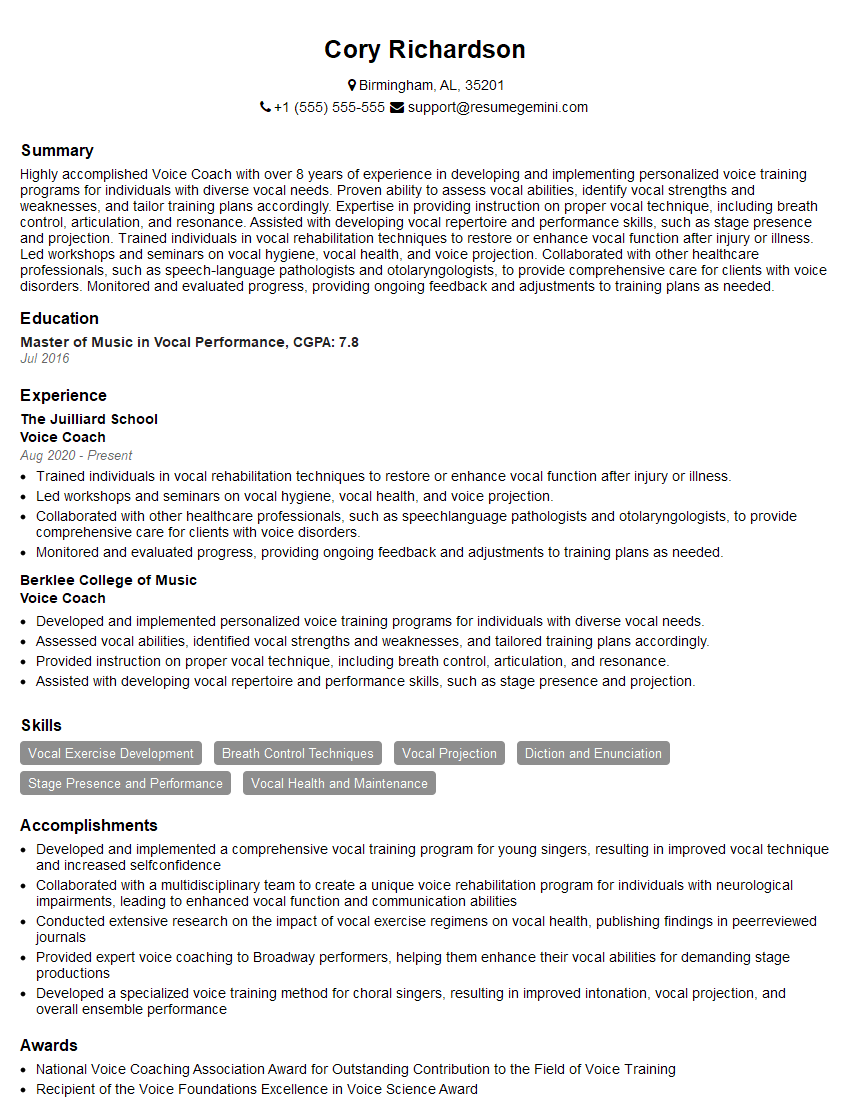
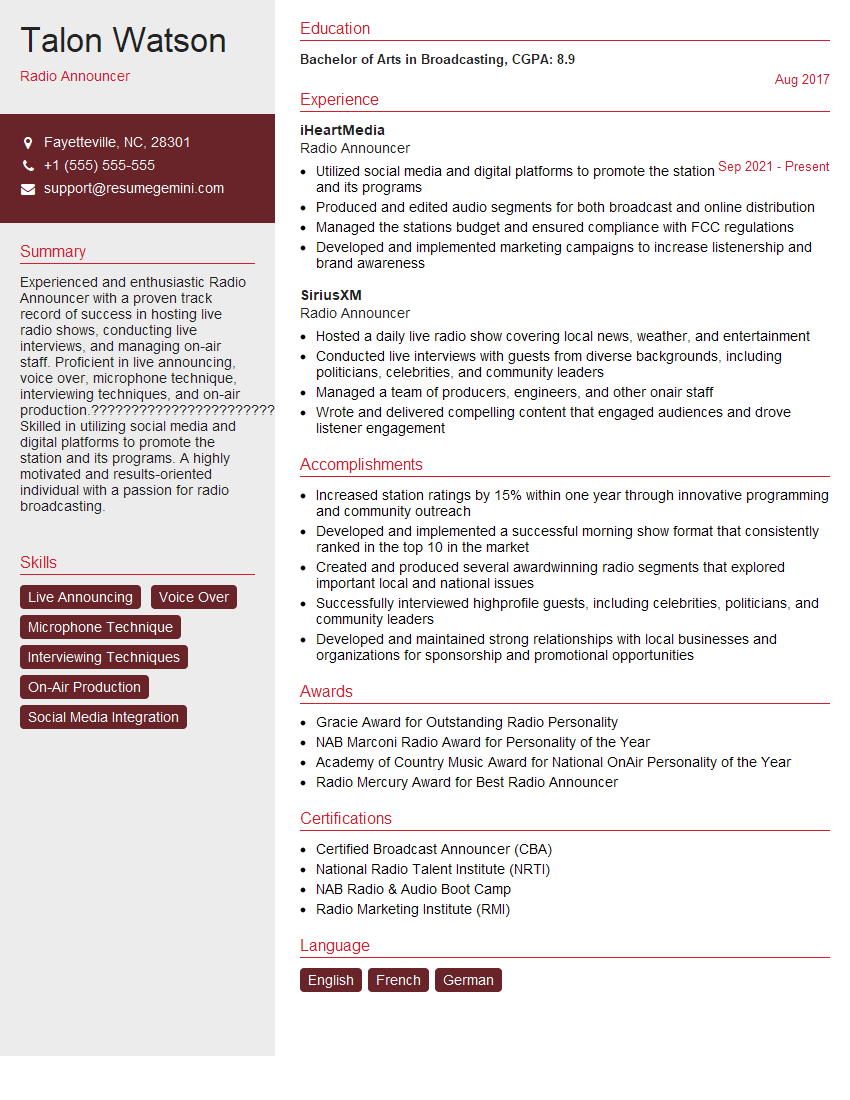
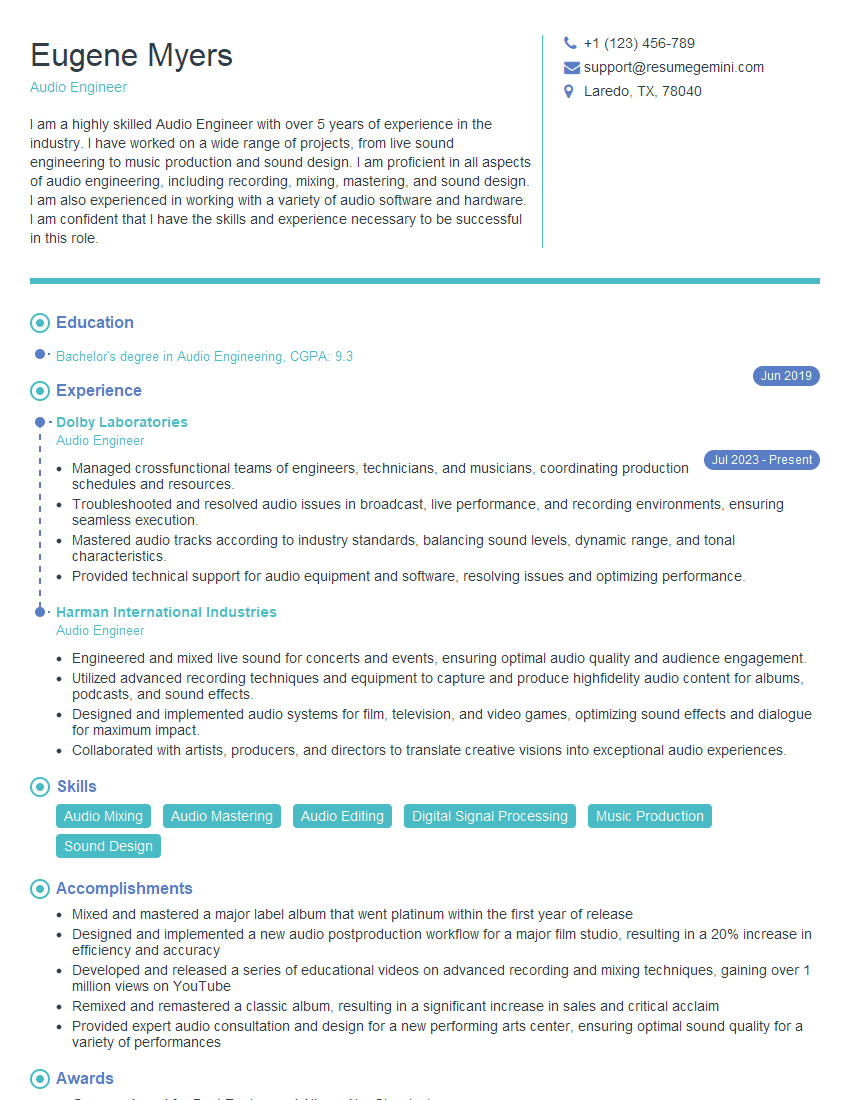
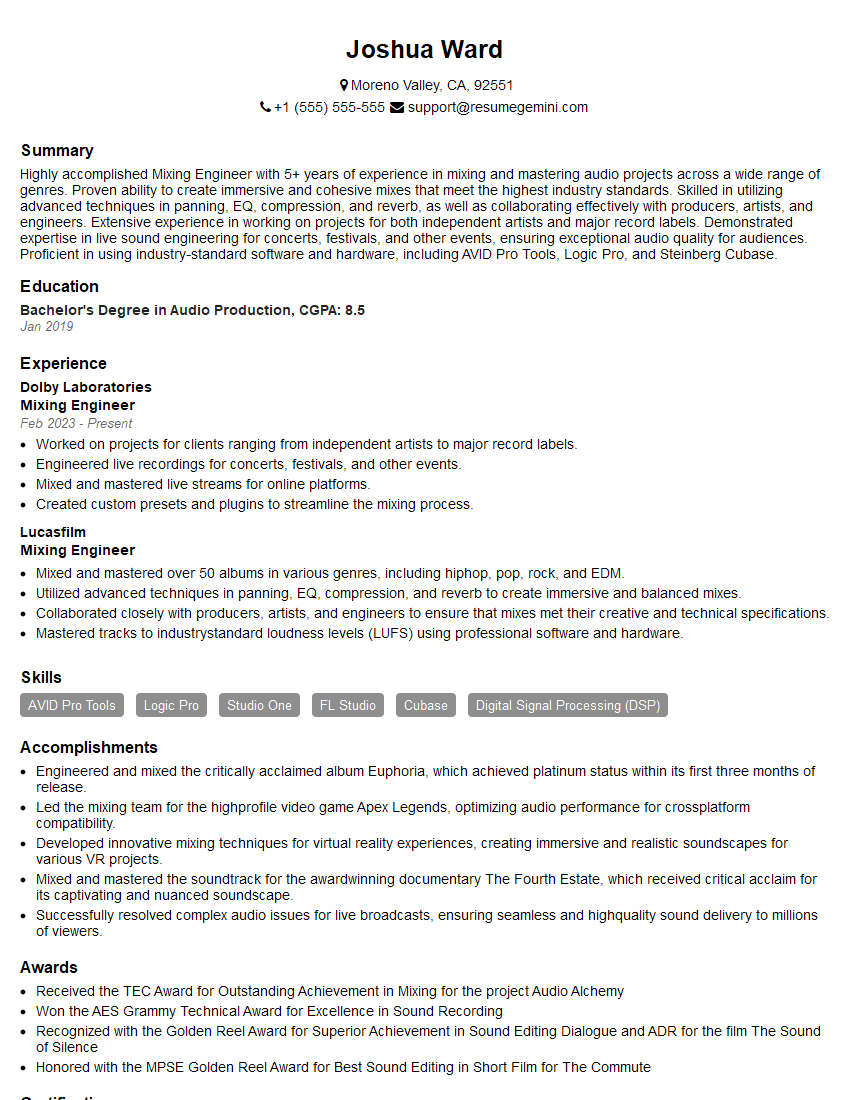
Mastering Voice for Podcasts opens doors to exciting careers in audio production, media, and content creation. To maximize your job prospects, create a compelling and ATS-friendly resume that highlights your skills and experience. ResumeGemini is a trusted resource to help you build a professional resume that stands out. Examples of resumes tailored to Voice for Podcasts are available to help you craft the perfect application.

Explore more articles
Users Rating of Our Blogs
Share Your Experience
We value your feedback! Please rate our content and share your thoughts (optional).
What Readers Say About Our Blog
Very informative content, great job.
good