Feeling uncertain about what to expect in your upcoming interview? We’ve got you covered! This blog highlights the most important Warehouse Equipment Repair interview questions and provides actionable advice to help you stand out as the ideal candidate. Let’s pave the way for your success.
Questions Asked in Warehouse Equipment Repair Interview
Q 1. Describe your experience troubleshooting malfunctioning conveyor systems.
Troubleshooting malfunctioning conveyor systems requires a systematic approach. I begin by visually inspecting the entire system, looking for obvious issues like misaligned rollers, damaged belts, or obstructions. Then, I’ll check the control system – looking at the PLC (Programmable Logic Controller) programming for any errors or unusual activity, and examining the motor starters, sensors, and limit switches for proper operation. If the problem is intermittent, I might employ a multimeter to check for voltage and current fluctuations.
For example, I once worked on a conveyor system experiencing frequent stoppages. Initial inspection revealed nothing obvious. However, by carefully monitoring the PLC’s diagnostic logs, I discovered a pattern: the system would shut down whenever a specific sensor registered a slight overload. It turned out the sensor was overly sensitive, needing recalibration rather than replacement. This highlights the importance of not just reacting to symptoms but also understanding the underlying control logic.
I often use a process of elimination, starting with the simplest checks (power supply, belt tension) and progressively moving to more complex components (motors, drives, sensors). Documentation, including schematics and wiring diagrams, is essential for efficient troubleshooting. Sometimes specialized tools like thermal cameras are necessary to pinpoint overheating components.
Q 2. Explain the process for diagnosing and repairing a hydraulic leak in a forklift.
Diagnosing and repairing a hydraulic leak in a forklift involves several steps. First, I’d identify the source of the leak by carefully inspecting all hydraulic lines, hoses, fittings, and the hydraulic pump itself. I’d look for wet spots, oil streaks, or even the sound of hissing. A clean rag can help locate the precise point of leakage. Once located, I would then determine the severity of the leak and the component affected. A minor leak from a fitting might just require tightening. However, significant leaks or damage to hoses or the pump necessitate repairs or replacements.
Next, I would isolate the damaged section by turning off the forklift’s engine and ensuring the hydraulic system is depressurized. Safety is paramount; I would always use appropriate safety glasses and gloves. After that, the damaged component (hose, fitting, or pump seal) would be replaced, ensuring all connections are tight and free of leaks. After repairs, I would thoroughly test the system to confirm the leak is fixed and check for proper operation of the hydraulic functions (lift, tilt, etc.). Often, specific tools like hydraulic wrenches and specialized replacement parts are required.
For instance, I once repaired a forklift with a significant hydraulic leak originating from a cracked hose. After safely depressurizing the system, I replaced the damaged hose with a new one of the correct specifications. A post-repair pressure test ensured no further leakage before returning the forklift to service.
Q 3. What are the common causes of forklift engine overheating?
Forklift engine overheating can stem from several common causes. One major factor is a malfunctioning cooling system – insufficient coolant, a clogged radiator, a faulty water pump, or a broken thermostat can all lead to overheating. Problems with the engine itself, such as low oil levels (insufficient lubrication), a damaged fan belt (reduced airflow), or even internal engine damage can also cause overheating. Additionally, prolonged operation under heavy loads or in high ambient temperatures can stress the engine, increasing the risk of overheating.
Other less common but equally important issues include air in the cooling system, a blocked exhaust system hindering heat dissipation, or even issues with the engine’s electrical system (like a faulty fan motor). I always check coolant levels first, then visually inspect the belts, hoses, and radiator for any damage or blockages. Using an infrared thermometer to check component temperatures can help pinpoint overheating areas, guiding efficient troubleshooting.
For example, I resolved an overheating issue on a forklift by simply replacing a worn-out fan belt. The failing belt resulted in insufficient airflow through the radiator, leading to overheating. This illustrates how seemingly minor components can have significant consequences. A thorough understanding of a forklift’s cooling and engine systems is crucial for preventing and fixing these types of issues.
Q 4. How do you perform preventative maintenance on a pallet jack?
Preventative maintenance on a pallet jack is crucial for its longevity and safe operation. A routine inspection should include checking the pump and hydraulic system for leaks. The condition of the wheels and casters should be assessed; replace them if they are worn or damaged. Lubricate moving parts regularly, such as the pump handle pivot points and the wheel bearings, using the appropriate grease. Inspect the handle for any damage or cracks. Finally, check the forks for any bending or damage.
I also advise to regularly clean the pallet jack, removing any dirt or debris that might hinder its movement. By performing these routine checks and lubrications, you can avoid more serious and expensive repairs later on. It’s a good practice to maintain a log of all maintenance activities, including dates, tasks performed, and any parts replaced. This helps with tracking maintenance schedules and identifying potential recurring problems.
For instance, I’ve seen many pallet jacks whose pumps fail prematurely due to a lack of lubrication. Regular greasing can easily prevent such issues, ensuring smooth operation and extending the lifespan of the jack.
Q 5. What safety precautions do you take when working on high-voltage equipment?
Safety is my top priority when working on high-voltage equipment. I never work alone on such equipment. I always use appropriate personal protective equipment (PPE), including insulated gloves, safety glasses, and arc flash protective clothing as needed. Before commencing any work, I confirm the power is completely disconnected and locked out/tagged out. I verify the power is off using a non-contact voltage tester. I thoroughly inspect the equipment for any signs of damage or worn insulation before beginning repairs.
I use insulated tools to avoid accidental contact with energized parts. If working on high voltage circuits, I would also use specialized equipment, such as a voltage detector, to ensure complete de-energization. Understanding the specific safety procedures outlined in the equipment’s manuals is crucial. After completing repairs, I always carefully follow the lockout/tagout procedure in reverse to restore power.
I once assisted in repairing a faulty motor controller on a high-voltage conveyor system. Following all lockout/tagout procedures, we verified de-energization multiple times before proceeding with the repairs. This meticulous approach ensured the safety of my team and myself throughout the process.
Q 6. Explain your experience with various types of warehouse lift trucks (e.g., sit-down, stand-up, reach trucks).
My experience encompasses a wide range of warehouse lift trucks. I’ve worked extensively with sit-down counterbalance forklifts, which are common for heavier loads and longer distances. I’m also familiar with stand-up reach trucks, ideal for narrow aisle operations and high-stacking applications. I have experience with order pickers, which are used for selecting items from shelves at various heights, and stock pickers, used for horizontal movement of palletized goods.
I’m comfortable diagnosing and repairing mechanical, hydraulic, and electrical issues across these various types. Each type presents unique challenges. For example, reach trucks require specialized knowledge of their mast systems and hydraulic components for safe and efficient repair. Sit-down forklifts often require extensive knowledge of engine systems and transmissions. My experience covers maintenance, repair, and troubleshooting, encompassing both routine servicing and complex repairs.
Over the years, I’ve found that understanding the specific operating principles and maintenance requirements of each type is critical for effective and safe repairs. The ability to quickly identify the make and model, access relevant service manuals, and use appropriate diagnostic tools is essential to efficient troubleshooting.
Q 7. How do you diagnose and repair electrical faults in warehouse equipment?
Diagnosing and repairing electrical faults in warehouse equipment begins with a thorough visual inspection to identify any obvious issues like frayed wires, loose connections, or burned components. I would then use a multimeter to check voltage, current, and continuity, systematically testing circuits and components. I’d follow the wiring diagrams to trace circuits and locate the fault. Specialized electrical testing equipment, such as clamp meters and oscilloscopes, might be required for more complex problems.
I frequently encounter problems with motor controls, faulty sensors, or damaged wiring harnesses. Identifying the root cause requires understanding how the electrical system interacts with the mechanical components. Sometimes, specialized software and diagnostic tools are needed to interpret error codes from PLCs or other control systems. When repairing a circuit, I always ensure proper grounding and follow all safety procedures.
For example, I once resolved a problem on a conveyor system where the motor would intermittently stop. After checking the power supply and wiring, I discovered a faulty proximity sensor that was failing to detect the presence of pallets. Replacing the sensor resolved the issue, illustrating the importance of systematically examining all components within the electrical circuit. Documentation such as schematics is invaluable in this process.
Q 8. Describe your experience with different types of conveyor systems (e.g., roller, belt, chain).
My experience with conveyor systems encompasses a wide range of types, including roller, belt, and chain conveyors. I’ve worked extensively on diagnosing and repairing issues with each. Roller conveyors, for example, often suffer from roller misalignment, bearing wear, and accumulation of debris. Identifying the cause requires careful inspection, often using a combination of visual checks and testing the individual rollers for proper rotation and load capacity. Belt conveyors present different challenges, such as belt tracking problems, belt tears or slippage, and motor issues. Troubleshooting often involves checking belt tension, alignment of the drive pulleys and idlers, and evaluating the condition of the belt itself. Chain conveyors, typically used for heavier loads, require a closer look at chain wear, lubrication, and the condition of the sprockets and drive components. I’ve managed complex repairs involving replacing sections of worn chain, repairing broken sprockets, and addressing issues with the chain drive system. In each case, understanding the specific mechanics of the conveyor type is crucial for effective troubleshooting and repair.
For instance, I once worked on a large warehouse where a critical belt conveyor transporting palletized goods experienced frequent stoppages due to belt slippage. By meticulously inspecting the system, I found that the drive pulley was misaligned and the belt tension was too low. After realigning the pulley and adjusting the tension, the slippage stopped, significantly improving operational efficiency. I’m proficient in preventative maintenance for all types too, including lubrication schedules and component inspections to prevent such breakdowns.
Q 9. What are the common causes of malfunctioning automated guided vehicles (AGVs)?
Malfunctioning Automated Guided Vehicles (AGVs) usually stem from a few common culprits. These include battery issues – either low charge, damaged batteries, or connection problems. Software glitches, whether from programming errors or communication failures with the warehouse management system (WMS), are another major cause. Mechanical problems such as wheel or motor malfunctions, sensor failures (e.g., proximity sensors, laser scanners), and damage to the AGV’s chassis from collisions can all lead to operational disruptions. Finally, environmental factors like debris or uneven flooring can affect AGV navigation and performance.
Troubleshooting requires a systematic approach. I often start by checking the battery level and connections. Then, I review any error logs or diagnostic messages generated by the AGV’s onboard system. This often provides clues to software or sensor problems. I can then use my knowledge of PLC programming (explained in the next answer) to investigate further. Finally, a thorough visual inspection often reveals mechanical damage or environmental obstructions. I’ve dealt with everything from replacing faulty sensors to repairing minor collision damage to completely rebuilding a motor. It’s about systematic investigation, starting from the simplest to more complex possibilities.
Q 10. Explain your experience with programmable logic controllers (PLCs) in warehouse automation.
My experience with Programmable Logic Controllers (PLCs) in warehouse automation is extensive. PLCs are the brains of many automated systems, controlling everything from conveyor belts and AGVs to robotic arms and sorting systems. I’m proficient in programming PLCs using ladder logic, which allows me to create, modify, and debug control programs for various warehouse automation tasks. My skills cover troubleshooting PLC programs, identifying and resolving faults using both hardware and software diagnostics. This includes working with PLC communication networks, understanding input and output signals (I/O), and interpreting error codes. I also use simulation software to test program modifications before deploying them to the physical system, preventing costly downtime.
For example, I once resolved a production bottleneck caused by a faulty PLC program controlling a palletizing robot. By carefully reviewing the ladder logic, I identified a timing issue that was causing the robot to misplace pallets. After correcting the timing parameter in the PLC program and testing thoroughly via simulation, the robot functioned correctly and the bottleneck was eliminated. This demonstrated a vital aspect of my job: the ability to diagnose, adapt and modify PLC programs to achieve peak efficiency.
Q 11. How do you prioritize repair tasks in a high-pressure warehouse environment?
Prioritizing repair tasks in a high-pressure warehouse environment demands a structured approach. I utilize a system that combines urgency and impact. I categorize repairs based on their impact on overall warehouse operations (e.g., complete shutdown vs. minor disruption) and their urgency (e.g., immediate failure vs. potential future failure). A matrix can be useful; immediate critical failures get top priority, followed by failures with high impact but less immediate urgency. This approach might involve assigning severity levels to each task based on criteria like production downtime cost and safety implications.
For instance, a malfunctioning conveyor belt crucial for order fulfillment would be prioritized over a minor issue with a lighting fixture. I also consider the availability of parts and the skills required for each repair; complex repairs requiring specialized knowledge may be scheduled accordingly. Effective communication with warehouse management is crucial to ensure everyone understands the prioritization and any potential delays. This transparent system ensures swift response to critical issues while optimizing resource allocation.
Q 12. Describe your experience with welding and fabrication techniques in equipment repair.
My welding and fabrication skills are essential to my role. I’m proficient in various welding processes, including MIG (Metal Inert Gas), TIG (Tungsten Inert Gas), and stick welding. These are vital for repairing damaged metal components on warehouse equipment. I can repair broken frames on conveyors, weld cracked support structures for shelving units, and fabricate custom parts when replacements are unavailable. I understand the importance of using the correct welding techniques for different metal types and thicknesses to ensure a strong and lasting repair.
Fabrication involves shaping and assembling metal components. I’ve fabricated custom brackets, guards, and other components using various tools, such as cutting torches, grinders, and sheet metal shears. A recent example was repairing a damaged support beam on a high-bay racking system. Using precise measurements and TIG welding, I skillfully repaired the beam, ensuring its structural integrity and safety. This avoided costly replacement and minimized downtime.
Q 13. What is your experience with preventative maintenance programs?
Preventative maintenance (PM) programs are crucial for minimizing downtime and extending the lifespan of warehouse equipment. My experience includes developing and implementing PM schedules tailored to the specific needs of various warehouse systems. This involves creating checklists for regular inspections, documenting maintenance activities, and tracking equipment performance. A comprehensive PM program includes routine lubrication, cleaning, adjustments, and inspections of all critical components based on manufacturer recommendations and operational history.
For example, I developed a PM program for a large warehouse using computerized maintenance management system (CMMS) software. This program tracks scheduled maintenance tasks, provides alerts for upcoming maintenance needs, and generates reports on equipment performance. This proactive approach has significantly reduced equipment failures and overall maintenance costs, and also improves safety by identifying potential hazards before they become serious problems.
Q 14. What software or diagnostic tools are you proficient in using?
I’m proficient in using a range of software and diagnostic tools. This includes CMMS software (like those from Fiix or UpKeep) for scheduling and tracking maintenance tasks. I also have experience using PLC programming software, both for Siemens and Allen-Bradley PLCs. For troubleshooting electrical issues, I utilize multimeters, oscilloscopes, and clamp meters. I’m familiar with AGV diagnostic software specific to various manufacturers. In addition, I use various specialized software for specific types of equipment, allowing me to extract diagnostic information directly from the equipment, providing rapid diagnostics and quicker repairs.
The use of these diagnostic tools allows me to quickly identify problems, order parts and plan repairs efficiently, ultimately reducing downtime and cost. Staying up-to-date on the latest technologies is critical in this rapidly evolving field, which is why I invest time in learning new software and diagnostic techniques. The ability to master new technologies is as important as my skillset.
Q 15. How do you handle unexpected equipment failures during peak operating hours?
Unexpected equipment failures during peak operating hours are a major challenge in warehouse operations. My approach prioritizes speed and efficiency while maintaining safety. First, I perform a rapid assessment to determine the severity of the issue and any immediate safety hazards. If the problem is minor and can be fixed quickly, I address it directly. For instance, a simple belt replacement on a conveyor or a minor hydraulic leak fix. For more complex issues requiring specialized tools or expertise, I immediately follow established protocols: escalating the issue to my supervisor, initiating a temporary workaround if possible (e.g., rerouting workflow), and mobilizing additional resources if needed. We maintain a well-stocked parts inventory and have a system for contacting vendors for emergency parts delivery. Effective communication with warehouse management is crucial to minimize disruption and keep everyone informed of the situation and estimated repair time.
For example, once we had a major breakdown of our automated storage and retrieval system (AS/RS) during a critical inventory replenishment period. By quickly assessing the problem – a faulty sensor – and having a spare on hand, we managed to restore functionality within an hour, minimizing the impact on operations. This required teamwork and effective communication, highlighting the importance of a well-rehearsed emergency response plan.
Career Expert Tips:
- Ace those interviews! Prepare effectively by reviewing the Top 50 Most Common Interview Questions on ResumeGemini.
- Navigate your job search with confidence! Explore a wide range of Career Tips on ResumeGemini. Learn about common challenges and recommendations to overcome them.
- Craft the perfect resume! Master the Art of Resume Writing with ResumeGemini’s guide. Showcase your unique qualifications and achievements effectively.
- Don’t miss out on holiday savings! Build your dream resume with ResumeGemini’s ATS optimized templates.
Q 16. What is your understanding of OSHA regulations related to warehouse equipment safety?
OSHA (Occupational Safety and Health Administration) regulations are paramount in warehouse equipment safety. My understanding encompasses several key areas, including regular inspections and preventative maintenance schedules for all equipment. This includes detailed checks on mechanical and electrical components, safety guards, emergency stops, and load capacity limits. Operator training is also critical, ensuring that workers are properly trained on safe operating procedures, including pre-operational checks, load handling techniques, and emergency response protocols. Furthermore, OSHA regulations mandate the use of personal protective equipment (PPE) such as safety glasses, gloves, and steel-toed boots. Maintaining detailed records of inspections, repairs, and training is crucial for compliance. Failure to adhere to these standards can lead to significant fines and, more importantly, workplace accidents and injuries. I am meticulous in ensuring that my work aligns with all relevant OSHA standards.
For instance, I recently conducted a thorough inspection of a forklift, identifying a worn brake pad. This was immediately addressed and documented, preventing a potential accident. Our company’s strict adherence to OSHA regulations is not just about avoiding penalties; it’s about fostering a culture of safety and ensuring the well-being of our employees.
Q 17. Describe your experience with different types of hydraulic systems.
My experience with hydraulic systems is extensive, encompassing various types including open-center, closed-center, and load-sensing systems. I’m proficient in diagnosing and repairing leaks, identifying and replacing faulty hydraulic pumps, motors, valves (directional control, pressure control, and flow control valves), and cylinders. I understand the importance of maintaining the correct hydraulic fluid levels and viscosity, and I’m skilled in troubleshooting problems related to pressure, flow, and temperature. I’m familiar with various hydraulic components such as accumulators, filters, and coolers. I can use diagnostic tools like pressure gauges and flow meters to pinpoint issues effectively.
For example, I once repaired a malfunctioning scissor lift by identifying a leak in a hydraulic cylinder seal. This involved disassembling the cylinder, replacing the seal, and then carefully reassembling and testing the system to ensure proper operation. This required a good understanding of hydraulic principles and the ability to work methodically.
Q 18. Describe your experience with different types of pneumatic systems.
Pneumatic systems are another area of my expertise. I’m experienced with various components, including air compressors, air filters, pressure regulators, valves, and pneumatic actuators (cylinders and motors). I’m skilled in troubleshooting problems like air leaks, low pressure, and valve malfunctions. My experience includes working with different types of pneumatic valves, including solenoid valves, pilot-operated valves, and foot valves. I understand the importance of maintaining a clean and dry air supply and how to address issues related to moisture and contamination. I’m also familiar with pneumatic circuits and schematics.
For instance, I recently resolved a problem with a faulty pneumatic clamp on a packaging machine. After identifying a leak in the air hose, I replaced the hose and tested the system thoroughly, restoring the machine to full functionality.
Q 19. How do you document your repair work and maintain accurate records?
Accurate record-keeping is critical for efficient maintenance and compliance. I use a computerized maintenance management system (CMMS) to document all repair work. This system allows me to record details such as the equipment type, problem description, troubleshooting steps, parts used, labor hours, and repair costs. The system generates detailed reports for analysis and trend identification, which is helpful in predicting potential future maintenance needs and optimizing preventative maintenance schedules. Additionally, I maintain physical files with photos and diagrams for complex repairs. All documentation is securely stored and accessible to authorized personnel.
For example, when repairing a conveyor belt, I would document the type of belt, the section that was damaged, the cause of failure (e.g., wear and tear, impact damage), the replacement procedure, and the parts used. This detailed record aids in tracking repair costs, identifying trends in equipment failures, and preventing similar problems in the future.
Q 20. What is your experience with troubleshooting and repairing electric motors?
Troubleshooting and repairing electric motors is a significant part of my work. My experience spans various types, including AC and DC motors, single-phase and three-phase motors. I’m proficient in using multimeters, motor analyzers, and other diagnostic tools to identify problems such as winding faults, bearing issues, and faulty capacitors. I understand motor control circuits and can diagnose problems with starters, contactors, and overload relays. My experience also includes motor rewinding and stator replacement in cases where repair isn’t feasible. Safety is always paramount; I follow lockout/tagout procedures religiously before working on any electrical equipment.
I once diagnosed a faulty motor in a palletizer by systematically checking voltage, current, and resistance. This led to the identification of a shorted winding, requiring the motor to be replaced. Thorough documentation of the fault, repair process, and replacement ensured minimal downtime and improved preventative maintenance in the future.
Q 21. Explain your experience with battery maintenance and replacement in electric forklifts.
Battery maintenance and replacement in electric forklifts are crucial for optimal performance and safety. My experience includes regular inspections of battery water levels (in flooded lead-acid batteries), checking for corrosion, ensuring proper ventilation, and cleaning terminals. I’m trained in safe handling procedures for forklift batteries, including using appropriate lifting equipment and personal protective gear. I understand the importance of using the correct charging methods and equipment to prevent overcharging or damage to the battery. I can diagnose issues such as low capacity, cell imbalances, and other faults. Battery replacement involves safely removing the old battery, installing the new one, and ensuring proper connections. We use advanced battery management systems to track battery health and predict potential failures.
For instance, I’ve performed numerous battery replacements, carefully following manufacturer guidelines and safety protocols. This includes properly disposing of old batteries in an environmentally friendly manner according to local regulations. Regular inspections help to extend the battery lifespan and maintain forklift efficiency.
Q 22. What is your experience working with different types of bearings and lubrication?
My experience with bearings encompasses a wide range, from the simple ball bearings in conveyor rollers to the more complex tapered roller bearings in forklift axles. I’m proficient in identifying different bearing types (ball, roller, tapered, spherical) and understanding their specific applications and limitations. Lubrication is critical for bearing lifespan. I’m experienced with various grease types, selecting the appropriate one based on load, speed, and operating temperature. For example, a high-speed application requires a thinner, less viscous grease to reduce friction and heat build-up, while a heavy-duty application might need a thicker, high-temperature grease. I also understand the importance of proper lubrication techniques, ensuring thorough coverage and preventing over-greasing which can damage seals. I regularly inspect bearings for wear, damage, or contamination, using tools like dial indicators to measure runout and identify irregularities.
- Experience with different bearing types: Ball, roller, tapered roller, spherical roller, thrust bearings.
- Lubrication techniques: Grease gun application, manual lubrication, centralized lubrication systems.
- Grease selection: Understanding NLGI grades and choosing appropriate grease for various applications.
Q 23. How do you identify and replace worn or damaged parts?
Identifying worn or damaged parts begins with a thorough visual inspection. I look for signs of wear such as scoring, pitting, cracks, or excessive play. For example, a worn-out drive chain will show excessive elongation and wear on the sprockets. A damaged hydraulic cylinder might leak fluid or exhibit signs of scoring on the piston rod. I use precision measuring instruments like calipers, micrometers, and dial indicators to check for dimensional changes, ensuring parts are within manufacturer’s specifications. If a part is beyond repair, I consult manuals and schematics to identify the correct replacement. I always prioritize using OEM (Original Equipment Manufacturer) parts for optimal performance and reliability. In cases of unavailable OEM parts, I’ll select high-quality alternatives, carefully verifying their compatibility before installation.
- Tools used: Calipers, micrometers, dial indicators, feeler gauges.
- Documentation: Referencing repair manuals, parts diagrams, and schematics.
- Part selection: Prioritizing OEM parts or high-quality alternatives.
Q 24. Describe your experience with troubleshooting and repairing braking systems in forklifts.
My experience with forklift braking systems covers various types, including hydraulic, wet disc, and drum brakes. Troubleshooting typically begins with a thorough inspection of the system. This includes checking fluid levels (hydraulic systems), brake pedal travel, and the condition of brake pads or linings. I listen for unusual noises such as grinding or squealing, which can indicate worn or damaged components. I utilize diagnostic tools such as pressure gauges to check hydraulic pressures and ensure proper operation of the braking system. For instance, a low hydraulic pressure might indicate a leak in the lines or a malfunctioning pump. Repairs can range from replacing worn brake pads to overhauling hydraulic components like master cylinders or calipers. Safety is paramount, and I always follow established safety procedures when working on braking systems.
- Troubleshooting Techniques: Visual inspection, pressure testing, sound analysis.
- Repair Procedures: Bleeding hydraulic brakes, replacing brake components, adjusting brake linkages.
- Safety Procedures: Following lockout/tagout procedures when working on hydraulic systems.
Q 25. What is your experience with different types of sensors and their applications in warehouse equipment?
Modern warehouse equipment relies heavily on sensors for automation and safety. My experience includes working with various types of sensors, such as proximity sensors (inductive, capacitive), photoelectric sensors, load cells, and tilt sensors. Proximity sensors are commonly used in automated guided vehicles (AGVs) for obstacle detection. Photoelectric sensors are used in conveyor systems to detect the presence of objects. Load cells in forklifts provide accurate weight measurements, and tilt sensors help prevent accidents by alerting the operator to dangerous inclines. Troubleshooting sensor issues involves testing sensor output signals, checking wiring connections, and verifying power supply. For example, a faulty proximity sensor might cause an AGV to malfunction by failing to detect an obstacle. Identifying the source of the problem requires a systematic approach, using multimeters and oscilloscopes to analyze sensor signals and confirm functionality.
- Sensor Types: Proximity, photoelectric, load cells, tilt sensors, encoders.
- Troubleshooting Techniques: Signal testing, wiring checks, power supply verification.
- Diagnostic Tools: Multimeters, oscilloscopes.
Q 26. How do you stay up-to-date with the latest technologies and best practices in warehouse equipment repair?
Staying current in this field requires continuous learning. I regularly attend industry conferences and workshops to learn about new technologies and best practices. I actively participate in online forums and professional organizations, engaging with other technicians and experts to share knowledge and discuss emerging trends. I subscribe to relevant trade publications and online resources to keep up with the latest developments in warehouse equipment and repair techniques. Manufacturers often provide updated service manuals and technical bulletins, which I consistently review to enhance my understanding of specific equipment models. Furthermore, I actively seek out opportunities for training on new equipment and technologies from manufacturers and distributors.
Q 27. Explain your experience with different types of fuel systems in internal combustion engine forklifts.
My experience with internal combustion engine (ICE) forklift fuel systems covers various aspects from fuel tank and lines to the injection system (for diesel and LPG). I’m familiar with troubleshooting issues such as fuel leaks, clogged filters, low fuel pressure, and problems with fuel injectors or carburetors (depending on the engine type). For example, a clogged fuel filter can lead to engine stalling or poor performance. A leak in the fuel line can result in fuel wastage and create a fire hazard. Diagnosis often involves checking fuel pressure using gauges and testing components for proper operation. I’m adept at performing fuel system maintenance procedures such as filter replacements and injector cleaning. Safety is a paramount concern when working with fuel systems, and I always follow proper procedures to minimize risks.
- Fuel System Components: Fuel tanks, fuel lines, fuel pumps, filters, injectors/carburetors.
- Troubleshooting Techniques: Pressure testing, leak detection, visual inspection.
- Maintenance Procedures: Filter replacement, injector cleaning, fuel line repair.
Q 28. Describe a time you had to troubleshoot a complex equipment problem; what was your approach?
I once encountered a complex issue with an automated storage and retrieval system (AS/RS). The system was experiencing intermittent malfunctions, where the crane would suddenly stop mid-operation, throwing error codes that weren’t readily identifiable in the manual. My approach was methodical and systematic. First, I thoroughly documented the error codes and the conditions under which the malfunctions occurred. Then, I meticulously examined the system’s electrical components, checking for loose connections, damaged wiring, and faulty sensors. I also reviewed the system’s PLC (Programmable Logic Controller) program logs for any patterns or inconsistencies. I used a logic analyzer to trace the signals to pinpoint the point of failure. After several hours of investigation, I discovered a faulty communication module that was causing intermittent data loss between the crane controller and the central system. Replacing the module resolved the issue. This experience highlighted the importance of thorough documentation, careful examination, and leveraging advanced diagnostic tools when dealing with complex equipment problems.
Key Topics to Learn for Warehouse Equipment Repair Interview
- Hydraulic Systems: Understanding hydraulic principles, troubleshooting common hydraulic failures (leaks, pressure loss), and preventative maintenance procedures.
- Electrical Systems: Diagnosing electrical malfunctions in forklifts, conveyor belts, and other equipment; familiarity with wiring diagrams, motor controls, and safety regulations.
- Internal Combustion Engines: Knowledge of engine components, troubleshooting engine problems (starting issues, overheating), and performing routine maintenance (oil changes, tune-ups).
- Preventive Maintenance: Implementing and scheduling preventative maintenance programs to minimize downtime and extend equipment lifespan. Understanding the importance of lubrication, inspection, and record-keeping.
- Safety Procedures: Demonstrating a thorough understanding of workplace safety regulations, lockout/tagout procedures, and personal protective equipment (PPE) usage.
- Troubleshooting and Diagnostics: Applying systematic approaches to identify and resolve equipment malfunctions, using diagnostic tools and interpreting error codes.
- Common Equipment Repair: Hands-on experience repairing and maintaining a variety of warehouse equipment, such as forklifts, pallet jacks, conveyors, and stackers. Understanding different makes and models.
- Welding and Fabrication: Basic welding skills and the ability to fabricate or repair damaged components using appropriate materials and techniques.
- Pneumatic Systems: Understanding the principles of pneumatic systems, troubleshooting air leaks, and maintaining pneumatic components.
- Record Keeping and Documentation: Maintaining accurate and detailed records of repairs, maintenance performed, and parts used.
Next Steps
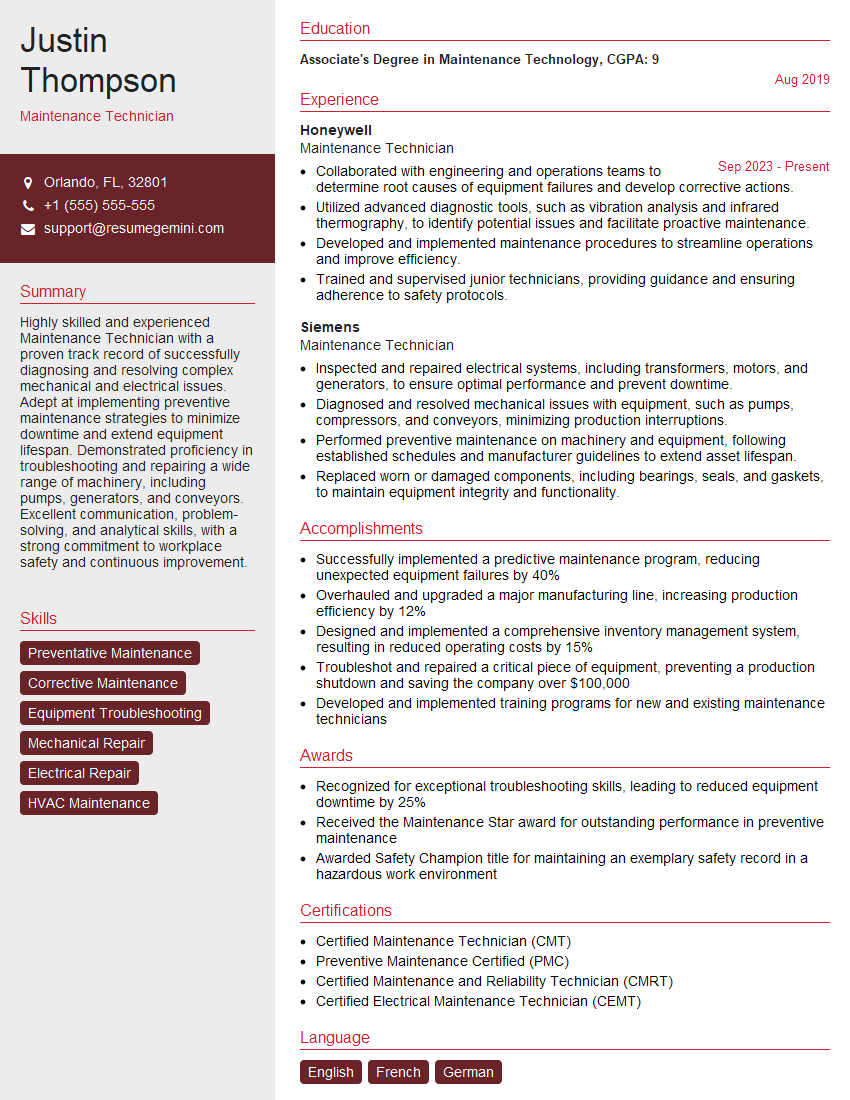
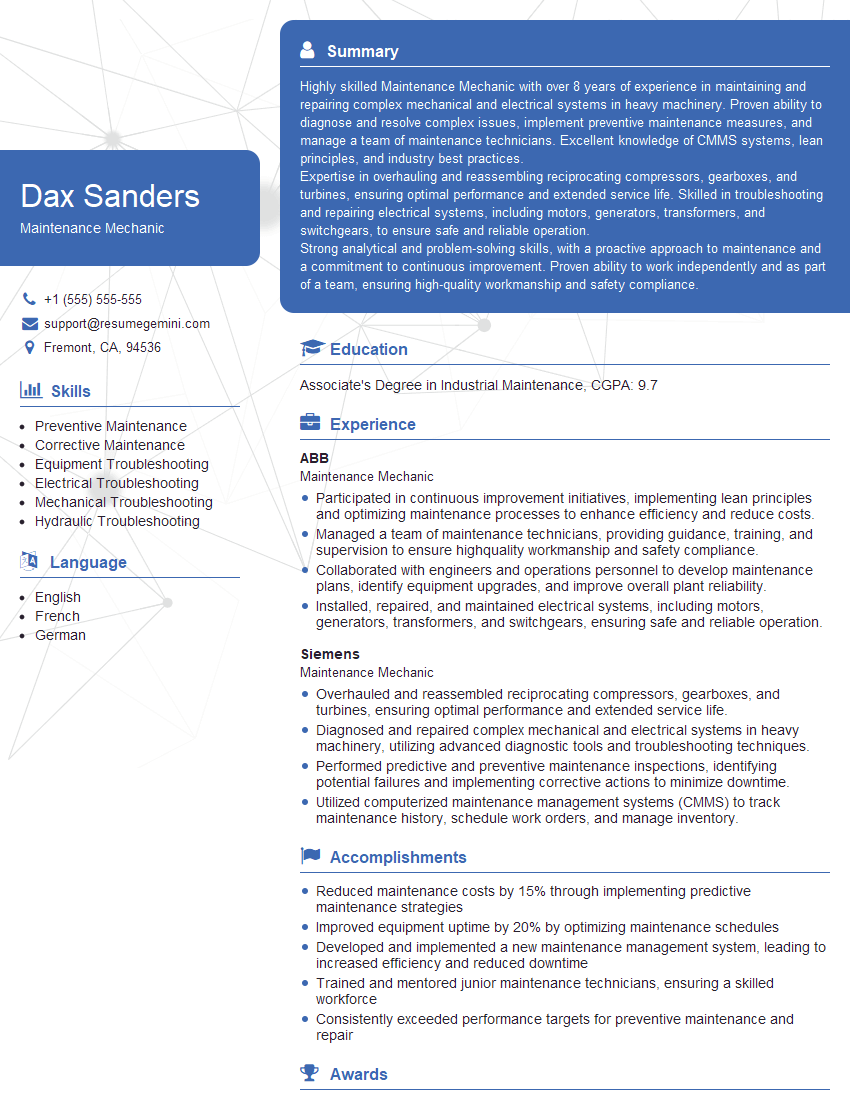
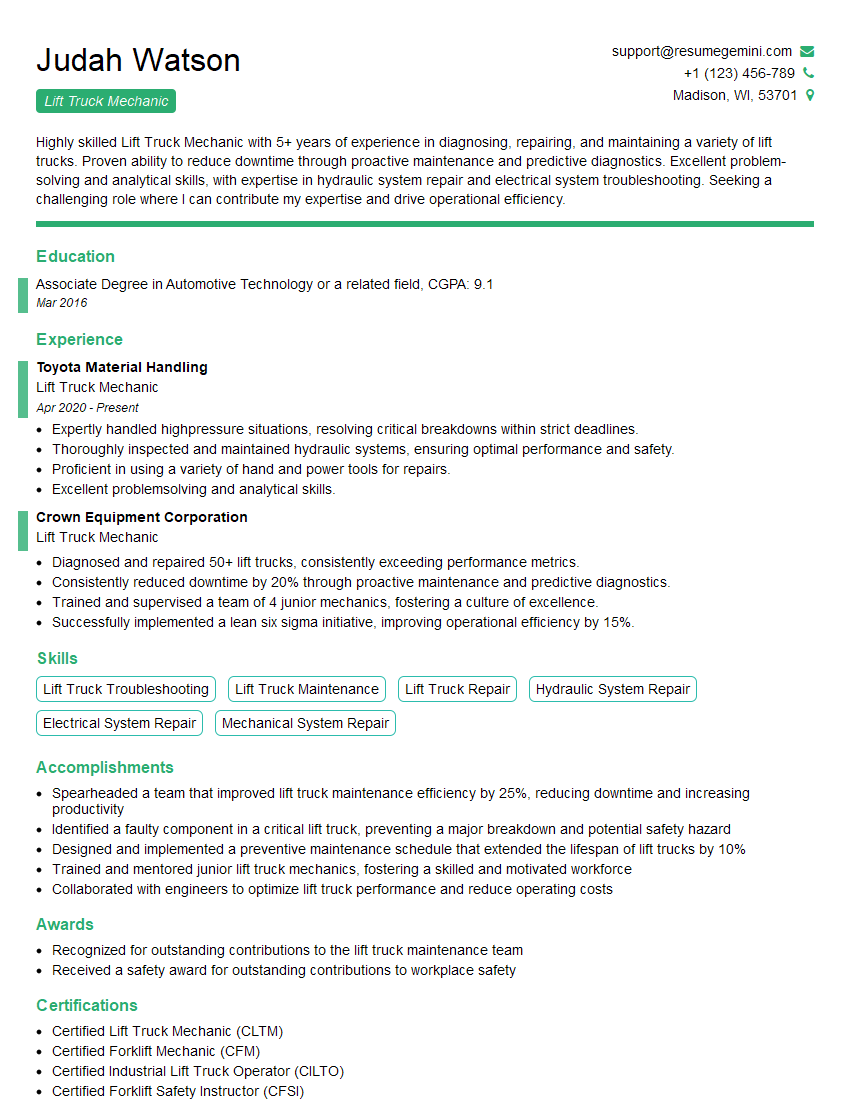
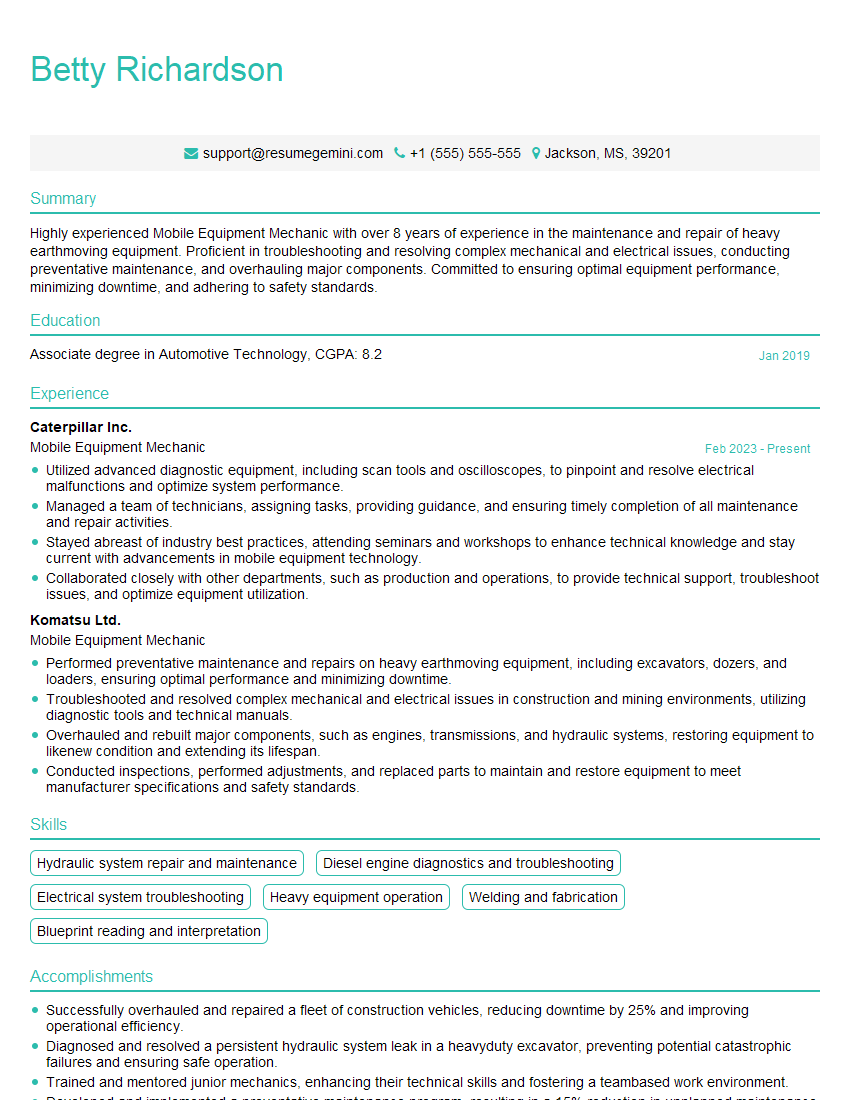
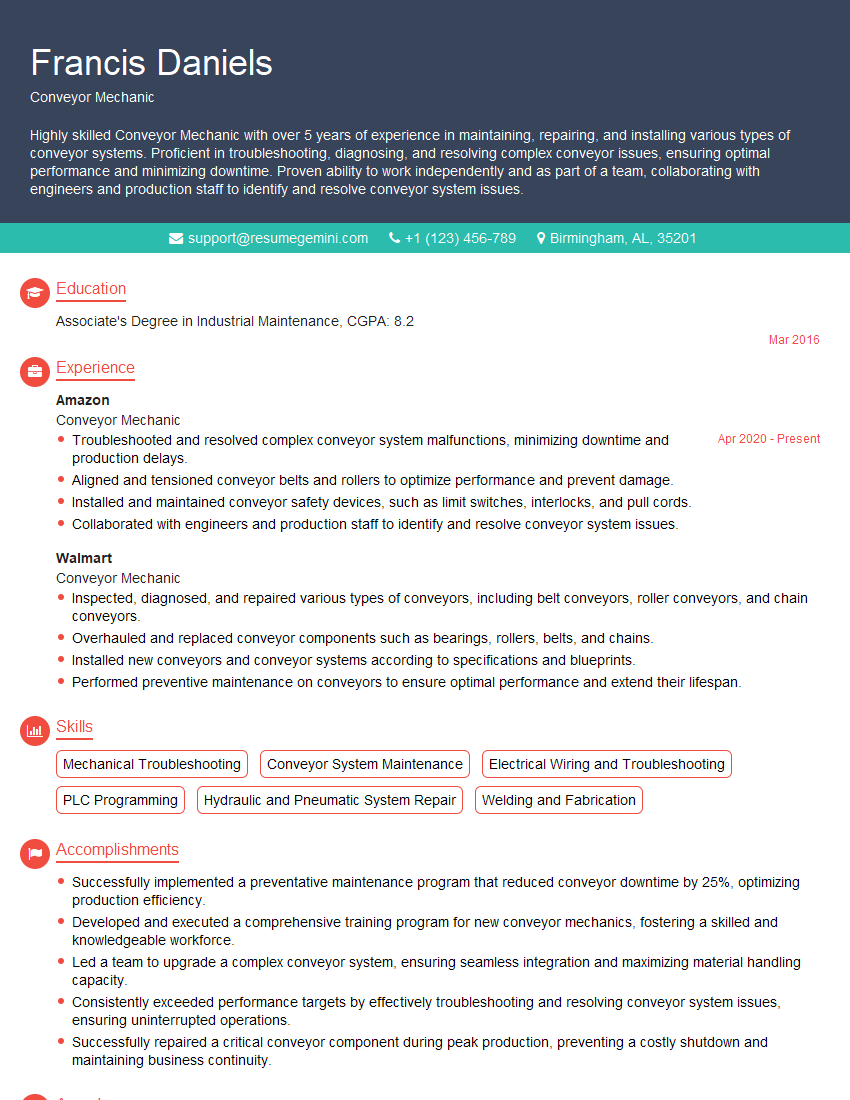
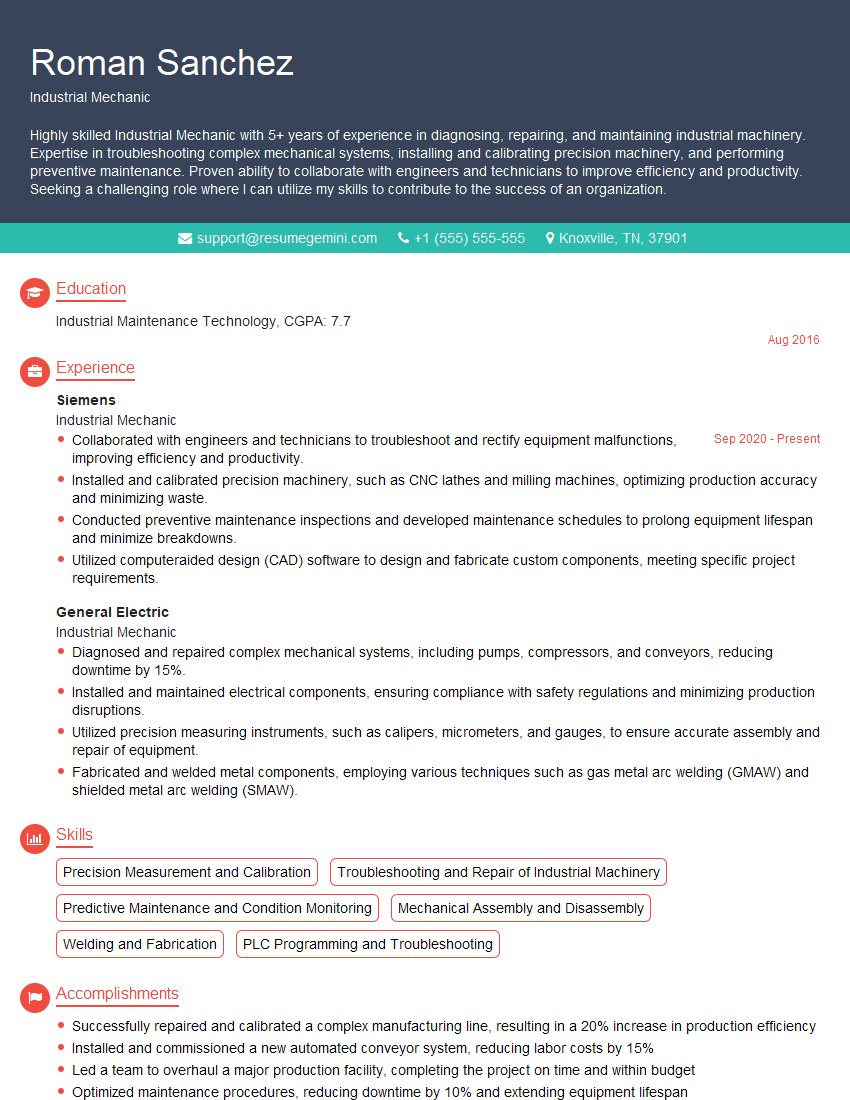
Mastering Warehouse Equipment Repair opens doors to a rewarding career with excellent growth potential. Specialized skills in this field are highly sought after, leading to increased earning potential and opportunities for advancement. To maximize your job prospects, creating a strong, ATS-friendly resume is crucial. ResumeGemini can help you build a professional and impactful resume that highlights your skills and experience effectively. Examples of resumes tailored to Warehouse Equipment Repair are available to guide you through the process.

Explore more articles
Users Rating of Our Blogs
Share Your Experience
We value your feedback! Please rate our content and share your thoughts (optional).
What Readers Say About Our Blog
Very informative content, great job.
good