Preparation is the key to success in any interview. In this post, we’ll explore crucial Wedding Gown and Formalwear Creation interview questions and equip you with strategies to craft impactful answers. Whether you’re a beginner or a pro, these tips will elevate your preparation.
Questions Asked in Wedding Gown and Formalwear Creation Interview
Q 1. Describe your experience with different bridal fabric types (e.g., silk, lace, tulle).
My experience with bridal fabrics is extensive, encompassing a wide range of textures and properties. Silk, for instance, offers luxurious drape and sheen, but requires careful handling due to its delicate nature. I often use silk charmeuse for flowing skirts and silk crepe for structured bodices. Lace, with its intricate patterns and textures, adds a romantic touch. I work with various lace types—Chantilly, Alençon, and Venise—each with unique characteristics that influence design and construction. Tulle, a lightweight net fabric, provides volume and creates beautiful silhouettes, often used in overlays or skirts. Understanding the properties of each fabric—its weight, drape, sheerness, and how it reacts to different stitching techniques—is crucial for achieving the desired aesthetic and ensuring the gown’s longevity.
For example, I recently designed a gown using a heavy silk dupioni for the bodice to provide structure and support, contrasted with layers of soft tulle for a full, romantic skirt. The contrast in textures added depth and visual interest to the final design. Choosing the right fabric is often the first step in creating a truly stunning wedding gown.
Q 2. Explain your process for creating a wedding gown pattern from a sketch.
Transforming a sketch into a wearable wedding gown pattern involves a methodical process. It begins with careful analysis of the sketch itself, paying close attention to the silhouette, neckline, sleeve style, and any unique design details. I then create a base pattern, a foundational pattern that serves as a template for the specific body measurements of the bride. This involves taking detailed measurements and using these measurements to adjust the standard pattern blocks for the bodice, skirt, and sleeves. Each element is carefully drafted on pattern paper, considering seam allowances and ease (extra fabric for comfort and movement).
Next, I meticulously refine the base pattern using muslin mock-ups. These muslin prototypes allow me to assess the fit and drape of the design on a dress form that represents the bride’s body type. Adjustments are made to ensure the pattern perfectly complements the body’s curves and creates the intended silhouette. Once the muslin fit is perfect, I meticulously transfer the final adjustments onto the chosen fabric pattern pieces. This detailed approach guarantees a precise and stunning fit in the final garment. This iterative process—sketch, base pattern, muslin mock-up, adjustments, final pattern—is essential for creating a bespoke wedding gown that looks and feels incredible.
Q 3. How do you handle alterations on a complex wedding gown?
Alterations on a complex wedding gown demand precision and expertise. Before commencing any alteration, I carefully analyze the gown’s construction, noting the intricate details and the placement of seams, beading, and embellishments. My approach is systematic, starting with a thorough assessment of the fit, focusing on areas needing adjustment. This may include taking new measurements and pin-fitting the gown to ensure all adjustments are precisely marked. I prioritize preserving the gown’s structural integrity. Any alteration must maintain its original design intent and avoid compromising its delicate features.
For example, if a bride needs alterations to her waistline, I wouldn’t simply take in the seam. I’d carefully analyze the overall balance and construction of the gown to decide whether to take in the side seams, the back seam, or adjust the pattern pieces. If there’s complex beading, I’d carefully remove and reattach it after the alteration is complete, ensuring nothing is damaged. Small alterations are often easier, but larger changes may require re-drafting portions of the pattern for a perfect fit. Patience and attention to detail are paramount when making alterations to ensure the gown retains its elegance and perfection.
Q 4. What techniques do you use to ensure the fit and drape of a formal gown are flawless?
Achieving flawless fit and drape in a formal gown relies on several key techniques. First, precise pattern making is crucial. A well-drafted pattern considers the chosen fabric’s drape and weight, ensuring the garment falls gracefully on the body. Secondly, careful fabric selection and manipulation are essential. Understanding how different fabrics drape, stretch, and recover is key to selecting the appropriate materials for the desired silhouette. Thirdly, meticulous seam construction—using appropriate techniques like French seams, flat felled seams or Hong Kong seams—adds durability and a clean, professional finish, enhancing both the drape and visual appeal.
Finally, the fit itself is refined through multiple fittings. These fittings allow for adjustments to be made, ensuring the garment drapes seamlessly against the body, highlighting its curves while providing the perfect fit. A toile, a practice garment, is an invaluable step; it allows for experimenting with different adjustments without affecting the final fabric. By combining these techniques, I guarantee each gown drapes and fits flawlessly.
Q 5. Describe your experience with various formalwear construction methods.
My experience encompasses a range of formalwear construction methods, from basic techniques to highly specialized ones. I’m proficient in various seaming methods, including French seams, flat-felled seams, and bound seams, each selected based on the fabric, garment type, and desired aesthetic. I’m skilled in working with various closures, such as zippers (both invisible and exposed), hooks and eyes, and buttons, selecting the most appropriate closure based on the design and fit. I also have expertise in constructing different sleeves—set-in sleeves, raglan sleeves, and kimono sleeves—as well as various necklines, including V-necks, round necks, boat necks, and halter necks.
Furthermore, I’m adept at handling intricate details such as boning, which creates structure and support in bodices and corsets; and working with linings and interfacings to create precise shaping and structure. My knowledge of these methods, combined with my artistic vision, guarantees the creation of exquisitely constructed formalwear.
Q 6. How do you manage tight deadlines and multiple projects simultaneously?
Managing tight deadlines and multiple projects requires meticulous organization and effective time management. I employ a project management system that allows me to prioritize tasks based on deadlines and complexity. This system uses a combination of a detailed calendar, task lists, and project-specific folders that maintain the organization of patterns, sketches, and fabric selections for each gown. I break down large projects into smaller, manageable tasks, assigning specific timeframes to each. This approach allows for better tracking of progress and easier identification of potential bottlenecks.
Communication is key. I maintain open communication with clients regarding deadlines and potential delays, managing their expectations and ensuring transparency throughout the process. Delegation, where appropriate, allows me to focus on the most demanding aspects of each project. While working under pressure, I maintain a calm and focused approach, prioritizing accuracy and quality over speed.
Q 7. Explain your understanding of different formalwear silhouettes and their construction.
My understanding of formalwear silhouettes and their construction is comprehensive. I’m familiar with a wide range of silhouettes, including A-line, empire waist, mermaid, ballgown, sheath, and fit-and-flare, each requiring specific construction techniques. The A-line silhouette, for example, is relatively straightforward to construct, often involving a fitted bodice and a gradually widening skirt. The mermaid silhouette, however, requires more advanced techniques, including careful shaping of the skirt to hug the body before flaring out at the knees. This often involves multiple pattern pieces and precise fitting to achieve a flattering and comfortable result.
The construction method for each silhouette is dictated by its design. A ballgown, for instance, requires a substantial amount of fabric and careful consideration of the skirt’s support structure (often involving a crinoline or other understructure), whereas a sheath dress may rely heavily on precise fitting and quality fabrics to create its elegant and close-fitting silhouette. Knowing which construction techniques to employ for each silhouette is vital for creating a final garment that is both beautiful and wearable.
Q 8. How do you incorporate client feedback into the design process?
Client feedback is the cornerstone of a successful design. I begin by actively listening during initial consultations, understanding not just the client’s aesthetic preferences, but also their personality, lifestyle, and the overall vision for their special day. This includes discussing inspiration images, fabric choices, and any specific details they envision. Throughout the design process, I provide regular updates, often with sketches and fabric swatches, soliciting feedback at each crucial stage. For example, if a client expresses concern about the neckline of a dress, I’ll sketch alternative options, showing them different necklines and how they would drape on the body. This iterative process ensures the final design perfectly reflects their vision. I might even create a toile, a muslin mockup of the dress, to check the fit and silhouette before committing to the final fabric.
Q 9. What software are you proficient in for design and pattern making?
My design and pattern-making proficiency spans several industry-standard software packages. I am highly adept at using Adobe Illustrator for creating technical drawings, detailed sketches, and precise measurements for embellishment placement. For pattern making and grading, I rely on industry standard software like Optitex and Gerber Accumark. These programs allow me to efficiently create accurate patterns, adjust sizing, and produce professional-quality technical packs. Knowing how to use these tools ensures efficiency and accuracy in the pattern making process, minimizing errors and allowing for smoother production runs.
Q 10. How do you troubleshoot fitting issues during a bridal fitting?
Troubleshooting fitting issues during a bridal fitting is a critical skill. It requires a keen eye for detail and a methodical approach. I begin by carefully observing the fit, pinpointing areas of tightness, looseness, or unwanted wrinkles. For example, if the bodice is too tight across the bust, I’ll adjust the seams and darts, taking precise measurements to ensure a comfortable and flattering fit. If the skirt is bunched at the hips, I may need to adjust the seams or add darts to create a smoother silhouette. I always communicate clearly with the client, explaining each adjustment and its purpose, ensuring they feel comfortable and informed throughout the process. Often, small adjustments can make a big difference in the final outcome. I treat each fitting as an opportunity for refinement, leading to a perfect fit that enhances the dress and the client’s confidence.
Q 11. What is your experience with hand-sewing techniques?
Hand-sewing techniques are fundamental to my craft. I possess extensive experience in various hand-stitching methods, including couture-level techniques such as hand-beading, French seams, and blind hemming. My skills extend to intricate embellishment applications, where precision and patience are vital. For example, hand-beading a floral motif requires careful placement and consistent tension, ensuring a polished and professional finish. Mastering hand-sewing allows me to achieve a higher level of detail and quality, especially in areas where machine sewing would be impractical or detrimental to the fabric. Hand-sewing is an invaluable skill for creating truly bespoke garments.
Q 12. Describe your experience with different types of closures (zippers, buttons, hooks).
My experience encompasses a wide range of closures, each chosen based on the garment’s design and intended functionality. I’m proficient with invisible zippers, which offer a clean, seamless finish, ideal for many bridal gowns. I’m also skilled in working with various types of buttons, from delicate pearl buttons to larger, more decorative options, each requiring different attachment techniques for optimal security and aesthetic appeal. For gowns requiring more support or adjustability, I utilize hooks and eyes, carefully placing them to ensure secure fastening and comfortable wear. The choice of closure is critical – it affects both the aesthetics and functionality of the finished garment. Each closure has its own set of nuances, and my skill involves selecting the best one for each specific design and ensuring it’s seamlessly integrated.
Q 13. How do you maintain quality control throughout the production process?
Maintaining quality control is paramount. My process begins with meticulous fabric selection, ensuring high-quality materials that meet the design requirements. Throughout the production process, I perform regular quality checks at each stage: after cutting, after construction of each section, before the final fitting, and finally, before packaging. This includes verifying seam allowances, examining stitching for consistency, and checking for any imperfections. I maintain detailed records of each step, allowing for quick problem-solving and precise tracking of progress. My attention to detail and commitment to high standards ensures each garment meets the highest quality expectations. This proactive approach minimizes errors and guarantees a final product that is flawless and beautiful.
Q 14. How familiar are you with different embellishment techniques (e.g., beading, embroidery)?
I have extensive experience in a variety of embellishment techniques, including beading, embroidery, and other embellishments. For example, I’m proficient in different beading techniques such as hand-beading, machine beading and using pre-made beaded motifs. My embroidery skills encompass various styles, including French knots, chain stitch, and satin stitch. I can incorporate intricate patterns or motifs to add exquisite detailing to a gown. The choice of embellishment technique depends on the design, the desired level of detail, and the fabric used. My understanding of various fabric types and how they react to different embellishment methods ensures a successful and lasting outcome. Skill in embellishment techniques allows me to elevate the design to a high level of artistry, creating truly unique and stunning pieces.
Q 15. Describe a time you had to problem-solve a complex design or construction challenge.
One particularly challenging project involved a client who wanted a gown with a dramatic, asymmetrical draped bodice and a voluminous, tiered skirt made from a very delicate silk organza. The complexity stemmed from the need to balance the weight of the skirt with the delicate drape of the bodice, preventing the organza from collapsing under its own weight. The solution involved creating a structured internal boning system for the bodice, using a lightweight but sturdy material. For the skirt, we employed a tiered construction with carefully calculated seam allowances and strategically placed interfacing to add support without sacrificing the airy feel of the organza. We also developed a unique pattern-cutting technique that used strategically placed darts and seams to achieve the desired asymmetry without compromising structural integrity. Through meticulous planning and a combination of supportive understructures and innovative pattern cutting, we managed to bring the client’s vision to life, resulting in a stunning and structurally sound gown.
Career Expert Tips:
- Ace those interviews! Prepare effectively by reviewing the Top 50 Most Common Interview Questions on ResumeGemini.
- Navigate your job search with confidence! Explore a wide range of Career Tips on ResumeGemini. Learn about common challenges and recommendations to overcome them.
- Craft the perfect resume! Master the Art of Resume Writing with ResumeGemini’s guide. Showcase your unique qualifications and achievements effectively.
- Don’t miss out on holiday savings! Build your dream resume with ResumeGemini’s ATS optimized templates.
Q 16. How do you choose the right fabric for a specific gown design and body type?
Fabric selection is crucial. It’s a balance between aesthetic appeal, drape, and suitability for the design and body type. For instance, a heavy brocade might be perfect for a structured ballgown on a more curvaceous figure, providing shape and support. However, the same fabric would be overwhelming on a petite frame or a less structured A-line silhouette. Conversely, a lightweight chiffon would be ideal for a flowing, romantic gown on a slender figure, but it may lack the necessary structure for a more form-fitting design or a larger body type. I consider the following factors:
- Body Type: A structured fabric can help create shape where needed, while a flowing fabric can enhance a slender figure.
- Design: A simple design can allow for more flexible fabric choices, while a complex design may necessitate fabrics with specific properties like stretch or drape.
- Season: Heavier fabrics are better suited for cooler months, while lightweight fabrics are preferable for warmer weather.
- Client’s Preference: Ultimately, client comfort and preference guide the final choice.
Q 17. What is your preferred method for draping fabric to create a pattern?
My preferred method for draping is the ‘free-drape’ technique. This involves directly manipulating the fabric on a dress form to achieve the desired shape and drape. It’s a very intuitive method, allowing for spontaneous creation and adjustment. I start with a basic muslin foundation – a simple shell – on the dress form. Then I pin and drape the chosen fabric directly onto the muslin, manipulating the folds and pleats to achieve the desired silhouette. This allows me to assess the drape and flow of the fabric in three dimensions, making adjustments until I’m satisfied with the aesthetic. Once the drape is perfect, I carefully remove the fabric, preserving the pins to create a pattern. Then I trace the shape onto pattern paper, taking into account seam allowances and other construction details.
Q 18. Explain your understanding of garment construction principles.
Garment construction relies on fundamental principles including:
- Pattern Making: This is the foundation, creating precise templates for cutting fabric pieces.
- Fabric Selection: Choosing fabrics with the appropriate drape, weight, and texture is vital.
- Seam Construction: Different seams—French seams, flat-felled seams, etc.—are chosen based on the fabric and the desired aesthetic. Strong and well-finished seams are essential for durability.
- Interfacing: This adds structure and support to areas needing stability.
- Finishing Techniques: Professional finishing is key. Techniques include clean edges, precise stitching, and appropriate closures.
- Underlining and Lining: Used to enhance the drape, provide support, and create a smooth finish.
Q 19. How do you ensure the structural integrity of a complex gown?
Structural integrity in complex gowns requires a multi-pronged approach. For instance, in a gown with a heavy skirt or elaborate embellishments, boning, corsetry, or internal supports are crucial. These provide structure and prevent sagging or distortion. Proper seam construction, including reinforced seams and carefully chosen stitching techniques, also adds to durability. Strategic use of interfacing, underlining, and lining can provide additional support and a smooth, polished finish. Furthermore, careful consideration of fabric weight and drape helps to balance the design elements and prevent undue stress on specific areas. Regular fitting sessions throughout the construction process allows for adjustments and modifications to ensure the final garment retains its shape and integrity.
Q 20. What is your experience with working with bridal accessories?
I have extensive experience working with bridal accessories, from veils and headpieces to jewelry and shoes. I understand that these accessories play a vital role in completing the bridal look. My involvement often includes helping clients select appropriate accessories that complement the gown’s design and style. In some cases, I custom-design or source unique accessories to create a cohesive and personalized look. This includes designing bespoke veils that incorporate specific lace patterns or embellishments that match the gown and creating headpieces that complement the bride’s hairstyle and overall aesthetic. I always prioritize quality and ensure that the chosen accessories are of high standard and enhance the overall look of the bridal ensemble.
Q 21. How do you communicate effectively with clients regarding design choices and alterations?
Clear and consistent communication is paramount. I begin with a thorough consultation to understand the client’s vision, style preferences, and budget. I use sketches, mood boards, and fabric swatches to visually communicate design ideas. During fittings, I actively listen to the client’s feedback and address any concerns. I explain the design choices, construction techniques, and any potential challenges clearly and patiently, using non-technical language where appropriate. If alterations are needed, I provide a detailed explanation of the process and timelines involved. I always maintain a professional and positive demeanor, ensuring the client feels heard and valued throughout the entire process. Post-completion, I remain in touch to address any minor adjustments or concerns that might arise.
Q 22. What are some common challenges in bridal and formalwear design, and how do you overcome them?
Bridal and formalwear design presents unique challenges, primarily stemming from the highly personalized nature of the garments and the exacting standards of fit and finish. One major hurdle is managing client expectations. Often, clients arrive with Pinterest boards overflowing with disparate ideas, requiring skillful interpretation and synthesis into a cohesive design. Another significant challenge is the intricate construction techniques involved. Working with delicate fabrics like silk chiffon, lace, and beading demands precision and patience. Finally, fitting and alterations can be time-consuming and require a keen eye for detail to ensure a perfect fit.
To overcome these challenges, I employ a multi-pronged approach. First, I conduct thorough consultations with clients, actively listening to their vision while also offering professional guidance. This helps manage expectations and ensures the final design aligns with both their style and practicality. Second, I utilize digital design tools like CAD software to create detailed sketches and patterns, minimizing errors during the construction phase. Third, I meticulously document all fitting and alteration sessions, ensuring consistency and efficiency. Finally, I maintain open communication with my clients throughout the process, keeping them informed of progress and addressing any concerns promptly. For example, I recently worked with a bride who initially wanted a voluminous ballgown, but after trying on several samples, realized a more streamlined A-line silhouette was more flattering and comfortable. By actively listening and offering alternatives, I delivered a gown that surpassed her expectations.
Q 23. Describe your experience with different types of linings and interfacings.
My experience with linings and interfacings is extensive. The choice of lining significantly impacts the drape, comfort, and durability of the garment. For instance, silk charmeuse provides a luxurious feel and excellent drape, ideal for evening gowns, while cupro offers a similar feel with greater durability for bridal wear. I also frequently use silk organza for sheer overlays and cotton batiste for more structured garments. Interfacings are equally crucial; they add structure and support, preventing unwanted wrinkling and sagging. I regularly employ fusible interfacings for their ease of application, particularly in areas requiring crisp shapes like collars and cuffs. However, for more delicate fabrics or when a softer hand is desired, I prefer sew-in interfacings. I’ve also experimented with horsehair braid interfacing for adding volume and structure to skirts and bodices.
For example, in a recent project involving a beaded lace wedding gown, I chose a lightweight silk charmeuse lining for its drape and breathability, which was crucial given the weight of the beading. The bodice utilized a lightweight fusible interfacing to provide support without sacrificing the fluidity of the lace. In another instance, a formal gown required a structured silhouette. Here, I opted for a heavier weight sew-in interfacing on the shoulders and bust to provide support and maintain the desired shape without adding excessive stiffness.
Q 24. How do you stay up-to-date with current trends in bridal and formalwear fashion?
Staying current in bridal and formalwear fashion demands a proactive approach. I regularly attend industry trade shows like Bridal Fashion Week and relevant fashion weeks worldwide, where I observe new designs, materials, and techniques. I also subscribe to key fashion magazines and online publications dedicated to bridal and formalwear, such as Vogue, Harper’s Bazaar, and specialized bridal publications. Furthermore, I actively follow influential designers and brands on social media platforms like Instagram and Pinterest, analyzing their collections and creative directions. Finally, I actively participate in online forums and communities that focus on fashion design, engaging in discussions with other professionals and designers to exchange ideas and insights.
For example, I recently discovered a new sustainable fabric supplier through a trade show, leading to more eco-conscious choices in my designs. The use of social media allows me to quickly spot emerging trends, such as the recent resurgence of Victorian-inspired details in bridal wear, enabling me to incorporate these elements into my work and stay ahead of the curve.
Q 25. Explain your understanding of color theory and how it applies to bridal and formalwear design.
Color theory is fundamental to successful bridal and formalwear design. Understanding the color wheel and the relationships between colors – complementary, analogous, triadic – allows me to create harmonious and impactful palettes. For bridal wear, I often utilize a base of classic neutrals like ivory, champagne, or blush, accentuating them with complementary colors or subtle jewel tones for a touch of elegance. Formalwear offers greater flexibility, enabling exploration of bolder color combinations, depending on the occasion and client preferences.
For instance, if a client desires a dramatic look, I might use a complementary color scheme like deep emerald green and ruby red. For a more understated elegance, an analogous palette of soft blues and lavenders would be appropriate. It’s important to consider the skin tone and hair color of the client when selecting colors to ensure the chosen hues enhance their natural beauty. For example, a warm-toned client might look stunning in shades of gold and peach, while someone with cooler tones might be flattered by silvery blues and grays. The lighting under which the garment will be worn also plays a critical role in color selection.
Q 26. Describe your experience with managing a team or assisting other professionals.
Throughout my career, I’ve worked extensively in collaborative environments, both leading teams and assisting other professionals. In my previous role, I managed a team of five seamstresses, delegating tasks, overseeing production schedules, and ensuring quality control. My approach involves clear communication, providing constructive feedback, and fostering a supportive and collaborative work environment. I’m adept at identifying individual strengths and assigning tasks accordingly, maximizing efficiency and team morale. I’ve also had the opportunity to assist senior designers, learning advanced techniques and expanding my skillset. This collaborative experience has honed my ability to communicate effectively, work efficiently within deadlines, and contribute positively to a team’s success.
For example, during the production of a high-profile bridal collection, I successfully managed the team by breaking down the complex designs into manageable tasks and implementing a clear workflow. This resulted in the timely and high-quality completion of the collection, surpassing expectations.
Q 27. How do you prioritize tasks to meet deadlines effectively?
Effective deadline management involves a combination of planning, prioritization, and efficient execution. I typically begin with a detailed project breakdown, identifying all the tasks involved and assigning realistic timelines to each. I utilize project management tools, such as Kanban boards or project management software, to visualize progress and track deadlines. I prioritize tasks based on their urgency and importance, focusing on critical path activities first. This involves identifying tasks that must be completed before others can begin. Furthermore, I maintain open communication with clients and team members, proactively addressing any potential delays or challenges.
For instance, when working on multiple projects simultaneously, I might use a Kanban board to visually organize tasks and track their progress, ensuring all deadlines are met. If a delay arises on a particular task, I immediately communicate this to the client and explore solutions to mitigate the impact, such as adjusting timelines or reallocating resources.
Q 28. What are your salary expectations for this role?
My salary expectations for this role are commensurate with my experience, skills, and the responsibilities involved. Based on my research of comparable positions and considering my extensive expertise in bridal and formalwear design, including pattern making, draping, construction, and team management, I am seeking a salary in the range of [Insert Salary Range Here]. I am open to discussing this further based on the specific details of the position and company benefits package.
Key Topics to Learn for Wedding Gown and Formalwear Creation Interview
- Design Principles and Aesthetics: Understanding classic and contemporary bridal and formalwear styles, silhouettes, and fabric choices. Knowing how to analyze a client’s needs and translate them into a design.
- Pattern Making and Draping: Mastering techniques for creating accurate patterns, adapting patterns for different body types, and using draping methods to achieve desired shapes and fits. Be prepared to discuss your experience with various pattern-making software and methods.
- Seam Construction and Finishing: Demonstrate expertise in various sewing techniques, including hand-stitching, machine stitching, and finishing methods to ensure high-quality garments. Understanding different types of seams and their applications is crucial.
- Fabric Selection and Manipulation: Knowledge of various fabrics (lace, silk, satin, chiffon, etc.), their properties, and how to manipulate them effectively during the design and construction process. Be ready to discuss the challenges of working with different materials and your problem-solving techniques.
- Production and Time Management: Understanding efficient workflow processes, managing deadlines, and prioritizing tasks. Be prepared to discuss your experience with managing multiple projects simultaneously.
- Client Communication and Collaboration: Discussing your approach to client consultations, understanding their vision, and effectively communicating design ideas and progress updates. Highlight your ability to manage client expectations and address concerns professionally.
- Sustainability and Ethical Practices: Understanding eco-friendly fabric choices, sustainable manufacturing methods, and ethical sourcing. Be ready to discuss your commitment to responsible practices in the fashion industry.
Next Steps
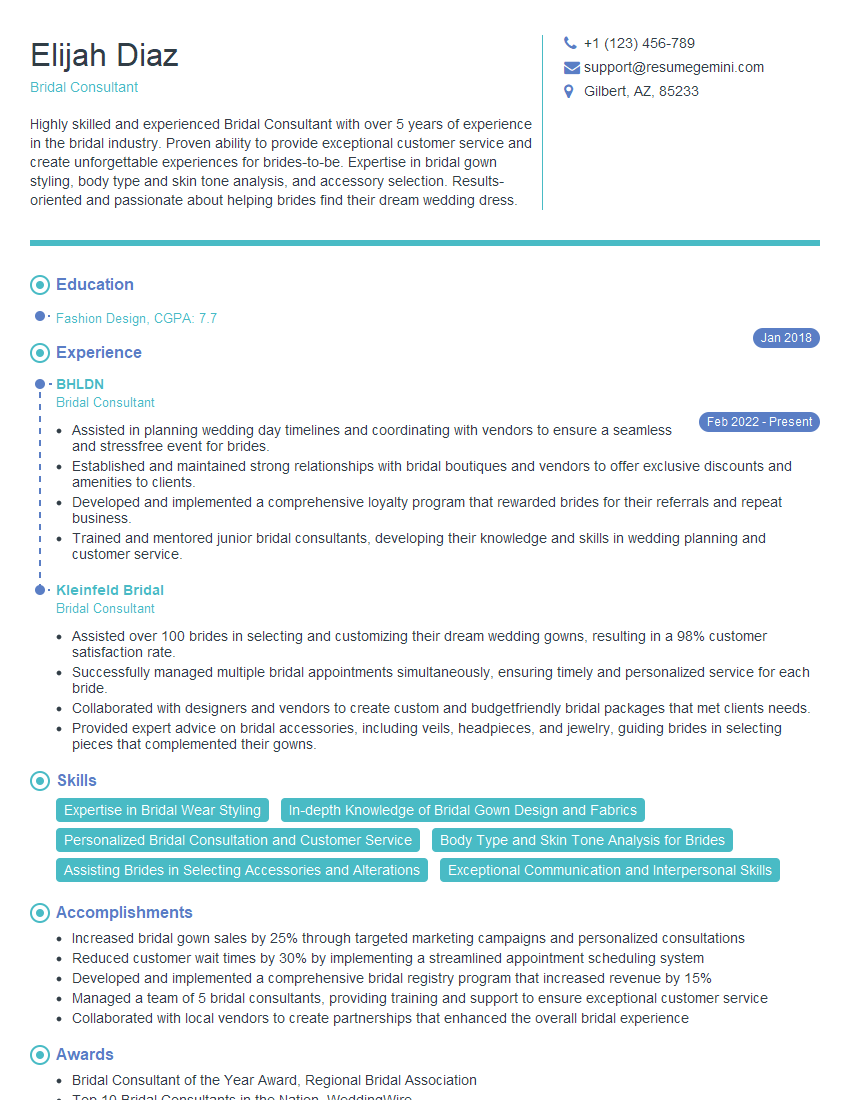
Mastering Wedding Gown and Formalwear Creation opens doors to a fulfilling and creative career, offering opportunities for growth and specialization. A strong resume is your key to unlocking these opportunities. Creating an ATS-friendly resume is essential to ensure your application is seen by potential employers. To enhance your resume and increase your chances of landing your dream job, leverage the power of ResumeGemini. ResumeGemini provides valuable tools and resources to create a professional, impactful resume. Examples of resumes tailored to the Wedding Gown and Formalwear Creation field are available to guide you.
Explore more articles
Users Rating of Our Blogs
Share Your Experience
We value your feedback! Please rate our content and share your thoughts (optional).
What Readers Say About Our Blog
Very informative content, great job.
good