Are you ready to stand out in your next interview? Understanding and preparing for Wildland Fire Behavior and Suppression Tactics interview questions is a game-changer. In this blog, we’ve compiled key questions and expert advice to help you showcase your skills with confidence and precision. Let’s get started on your journey to acing the interview.
Questions Asked in Wildland Fire Behavior and Suppression Tactics Interview
Q 1. Explain the fire triangle and how it relates to wildland fire suppression.
The fire triangle is a fundamental concept illustrating the three elements necessary for combustion: heat, fuel, and oxygen. Removing any one of these elements extinguishes the fire. In wildland fire suppression, this principle guides our tactics. We aim to interrupt the cycle by removing or reducing one or more components of the triangle.
- Heat: We reduce heat by applying water, which absorbs heat and converts it into steam. We can also use firebreaks to starve the fire of fuel close to the fire’s edge.
- Fuel: This involves removing burnable materials such as brush, undergrowth, and fallen logs. Creating fuel breaks – strategic gaps in vegetation – significantly reduces the fire’s ability to spread.
- Oxygen: While we can’t remove oxygen entirely, we can reduce its access to the fire through techniques like beating the fire down with shovels or applying foam, which creates a barrier between oxygen and the burning fuel.
For example, a firefighter might use a hose to apply water (removing heat), while another crew uses chainsaws to create a fuel break (removing fuel), effectively interrupting the fire triangle and suppressing the blaze.
Q 2. Describe the different types of wildland fire behavior.
Wildland fire behavior is complex and dynamic, exhibiting various characteristics depending on fuel, weather, and topography. We broadly classify it into different types:
- Creeping fire: Slow, surface fire with low intensity, usually burning in fine fuels like grass.
- Running fire: Rapidly spreading fire across the surface, consuming heavier fuels like shrubs and underbrush. Often driven by strong winds and slopes.
- Spotting fire: Embers carried by wind ignite fires ahead of the main fire front, leading to rapid expansion.
- Crown fire: Fast-moving fire consuming the crowns of trees, usually requiring high winds and dry, continuous canopy fuels. Extremely dangerous and difficult to control.
- Surface fire: Fire burning through the surface vegetation and duff layer, typically slower than crown fires.
Understanding these different types allows firefighters to predict fire spread and adjust their suppression strategies accordingly. A creeping fire might be contained with direct attack methods, while a crown fire requires significant resources and may necessitate strategic retreat to safer locations.
Q 3. What are the key factors influencing fire spread?
Several key factors influence how rapidly a wildland fire spreads. These are often interconnected and impact each other:
- Fuel: The type, amount, continuity, and moisture content of burnable material significantly affect fire spread. Dense, dry fuels burn much faster than sparse, moist fuels.
- Weather: Wind speed and direction are paramount. Strong winds dramatically accelerate fire spread, while humidity levels influence fuel moisture content – higher humidity reduces flammability.
- Topography: Steep slopes can enhance fire spread due to preheating of fuels uphill and increased wind speeds in canyons. Aspect (the direction a slope faces) affects sun exposure and fuel moisture.
- Topography: Steep slopes can enhance fire spread due to preheating of fuels uphill and increased wind speeds in canyons. Aspect (the direction a slope faces) affects sun exposure and fuel moisture.
For instance, a wildfire in a dry forest with strong winds and steep slopes will spread much more rapidly than a fire in a moist grassland on a flat terrain with minimal wind.
Q 4. Explain the concept of fire intensity and how it’s measured.
Fire intensity refers to the rate of heat release per unit area of fire front. It’s a crucial factor in determining fire behavior and the effectiveness of suppression efforts. Higher intensity translates to faster spread, more extreme fire behavior, and greater difficulty in control.
Intensity is typically measured in kilowatts per meter (kW/m). While precise real-time measurement in the field can be challenging, we estimate intensity by considering factors such as:
- Rate of spread: Faster spread generally indicates higher intensity.
- Flame height: Taller flames indicate greater heat release.
- Fuel consumption: The rate at which the fire consumes fuel is a good indicator.
Estimating fire intensity allows firefighters to prioritize resource allocation and adjust tactical decisions. A high-intensity fire might require more personnel, air support, and potentially more aggressive containment strategies.
Q 5. Describe different methods of wildland fire suppression.
Wildland fire suppression employs a range of methods, often used in combination:
- Direct attack: Firefighters directly engage the fire’s edge, using water, hand tools, and fire retardant to extinguish the flames. This is effective on smaller fires with relatively low intensity.
- Indirect attack: Constructing control lines (firebreaks) ahead of the fire’s front to slow its advance and create a containment perimeter. This is a safer and more effective approach for larger, more intense fires.
- Water drops: Air tankers and helicopters drop water or fire retardant to slow or stop fire spread, especially in areas inaccessible to ground crews.
- Fuel breaks: Creating wide gaps in vegetation to halt fire progression. These can be natural features or constructed using heavy machinery.
- Backfires: Strategically setting controlled fires to consume fuel in the path of the main fire, thereby removing the fuel source.
The chosen method depends on several factors such as the fire’s size, intensity, behavior, fuel type, and available resources. Experienced Incident Commanders use their expertise and real-time information to formulate the most effective suppression plan.
Q 6. What are the safety considerations when engaging in wildland fire suppression?
Safety is paramount in wildland fire suppression. The environment is inherently hazardous, and firefighters face numerous risks. Key safety considerations include:
- Personal Protective Equipment (PPE): Firefighters must wear appropriate PPE, including fire-resistant clothing, helmets, gloves, and eye protection.
- Communication: Maintaining clear and constant communication among crew members and with command is crucial.
- Weather monitoring: Continuous monitoring of weather conditions (wind speed, direction, temperature, humidity) helps anticipate changes in fire behavior and adjust strategies.
- Fire behavior awareness: Thorough understanding of fire behavior is essential for predicting fire spread and making informed decisions.
- Safety briefings: Regular safety briefings before and during operations enhance awareness of potential hazards and appropriate responses.
- Emergency procedures: Establishment of clear escape routes and emergency procedures is vital in case of unexpected fire behavior or rapid changes in conditions.
A common example is the use of Lookouts, Communications, Escape Routes, and Safety Zones (LCES) – a fundamental safety strategy for crews working near active fire lines. The LCES system ensures quick communication and pre-planned escape routes in case of a sudden fire behavior change.
Q 7. How do you assess fire danger and risk?
Assessing fire danger and risk involves a multi-faceted approach that combines various factors to gauge the potential for wildfire ignition and the severity of its consequences. This assessment informs decisions on preparedness, resource allocation, and suppression strategies.
We use several tools and systems:
- Fire Danger Rating Systems: These systems, such as the Canadian Forest Fire Weather Index System (FWI), use meteorological data (temperature, humidity, wind, precipitation) and fuel characteristics to calculate a fire danger rating. Higher ratings indicate an increased likelihood of fire ignition and rapid spread.
- Fuel Models: These models categorize fuel types (grass, shrubs, timber) to estimate fire spread and behavior.
- Risk Assessment: This involves identifying values at risk (lives, property, natural resources) and the likelihood of these values being affected by wildfire. This combines fire danger ratings with vulnerability assessments of the area.
- Fire Weather Forecasts: Meteorological forecasts provide critical information on upcoming weather conditions, allowing for proactive adjustments in suppression strategies and public warnings.
For instance, a high FWI rating combined with a forecast of high winds and low humidity would suggest an extremely high fire danger. This knowledge enables proactive measures such as increased preparedness levels, public education campaigns, and more aggressive response plans.
Q 8. Explain the role of topography in wildland fire behavior.
Topography plays a crucial role in wildland fire behavior, influencing everything from rate of spread to intensity. Essentially, the shape of the land dictates how fire moves.
- Slope: Fires burn faster uphill because of preheating from rising hot air and increased oxygen supply. Downhill, fire slows but can create intense, fast-moving firebrands.
- Aspect: The direction a slope faces affects sun exposure and therefore fuel moisture. South-facing slopes (in the Northern Hemisphere) are typically drier and more prone to ignition and faster fire spread.
- Elevation: Higher elevations often experience lower temperatures, higher humidity, and stronger winds, impacting fire behavior. Changes in elevation can also create canyons or draws that act as natural firebreaks or funnels.
- Channeling: Narrow canyons or valleys can create intense fire behavior as winds funnel the flames, increasing speed and intensity. Imagine a river of fire being accelerated down a steep channel.
For instance, a wildfire on a steep, south-facing slope with dry vegetation will behave dramatically differently than a fire on a flat, north-facing slope with moist vegetation. Understanding these topographic influences is vital for effective fire suppression strategies.
Q 9. Describe different types of fireline construction techniques.
Fireline construction techniques are crucial for creating defensible space and controlling fire spread. Different techniques are used depending on fuel type, terrain, and available resources.
- Handline: This involves manually removing vegetation along a pre-determined line, creating a mineral soil barrier. It’s labor-intensive but effective in areas with light to moderate fuels.
- Control Burn: A carefully planned and executed burn that consumes the fuel ahead of the main fire, reducing its intensity and creating a firebreak. This requires precise weather monitoring and skilled personnel.
- Dozer Line: Using heavy equipment (bulldozers) to create a wide firebreak by pushing vegetation away from the line of fire. Efficient in areas with heavy fuels but can be environmentally disruptive.
- Indirect attack: Focusing on building firelines beyond the head of the fire, strategically utilizing existing natural barriers like roads and rivers. The goal is to contain the fire before it reaches critical areas.
The choice of technique depends on the situation. In a rapid fire spread, a dozer line may be necessary, while in more controlled situations, handline might suffice. Proper training and risk assessment are paramount in choosing the right technique.
Q 10. How do weather conditions influence wildland fire behavior?
Weather significantly influences wildland fire behavior, acting as a primary driver of ignition, spread, and intensity. Even slight changes can drastically alter the situation.
- Temperature: Higher temperatures dry out fuels, increasing flammability. Think of a dry piece of paper versus a damp one; the dry one ignites much more easily.
- Relative Humidity (RH): Lower RH increases fire danger because dry fuels ignite readily. High RH reduces flammability.
- Wind: Wind is a critical factor, transporting embers and accelerating fire spread. Strong winds can cause rapid fire growth and erratic fire behavior, making suppression incredibly difficult. Wind direction is also crucial for determining fire spread.
- Precipitation: Rain, snow, or fog can significantly reduce fire danger by moistening fuels. However, it can also be unpredictable and temporary.
For instance, a fire on a windy, hot, and dry day will spread rapidly and fiercely compared to a fire on a calm, humid day. Accurate and up-to-date weather forecasts are essential for making effective fire management decisions.
Q 11. What are the common fire suppression tools and equipment?
Wildland fire suppression relies on a range of tools and equipment, each suited for specific tasks and situations.
- Handtools: Shovels, pulaskis (a combination axe and shovel), rakes, and axes are used for building firelines and clearing fuels.
- Engines: Water tankers and pumpers supply water to fight fires, but are limited by water source accessibility.
- Air Support: Air tankers drop fire retardant or water, while helicopters can drop water buckets, provide personnel transport, and assist with reconnaissance.
- Heavy Equipment: Bulldozers, graders, and excavators are used to construct firebreaks in challenging terrain.
- Personal Protective Equipment (PPE): Firefighters wear specialized clothing, including fire-resistant clothing, helmets, and eye protection.
The selection of tools and equipment depends on the fire’s size, intensity, accessibility, and the available resources. Often, a combination of tools is needed for effective suppression. For example, handcrews might use shovels and pulaskis to construct fireline while air support drops retardant to slow the fire’s advance.
Q 12. Explain the importance of pre-suppression planning.
Pre-suppression planning is critical for minimizing fire damage and loss of life. It’s about being prepared before a wildfire starts.
- Fuel Management: Reducing fuel loads through prescribed burns, mechanical thinning, or grazing can lessen the intensity and spread of wildfires.
- Firebreaks: Establishing firebreaks, which are barriers that prevent fire spread, is a key element of pre-suppression planning.
- Community Education: Educating the public about wildfire risks and prevention is vital. This helps prevent human-caused fires.
- Resource Mobilization: Identifying and securing the necessary resources such as personnel, equipment, and water sources, in advance of fire season.
- Emergency Response Plans: Creating comprehensive plans for evacuation routes, communication systems, and coordinated responses among multiple agencies.
For example, a community might implement controlled burns in the autumn to reduce the risk of catastrophic wildfires in the spring. This proactive approach is much more effective than reacting to a fire after it has started.
Q 13. Describe the different stages of fire suppression.
Wildland fire suppression typically involves several stages, each requiring different tactics and strategies.
- Initial Attack: The first response to a newly reported fire, aiming for rapid suppression and containment before it spreads significantly. Speed and efficiency are crucial here.
- Containment: Establishing a perimeter around the fire to prevent further spread. This stage often involves building firelines and using various suppression techniques.
- Control: Ensuring the fire is no longer spreading. This doesn’t mean it’s out, just that its progression is stopped.
- Extinguishment: Completely putting out the fire, ensuring all embers and hot spots are eliminated. This is often the most time-consuming stage.
- Patrol and Mop-up: Monitoring the area for any flare-ups and ensuring the fire is fully extinguished. This can last for days or even weeks after the fire is declared controlled.
Each stage requires careful assessment and adaptation to changing conditions. The transition between stages is not always linear; a fire might jump containment lines, requiring a return to initial attack tactics.
Q 14. How do you manage a wildland fire crew?
Managing a wildland fire crew requires strong leadership, communication, and safety awareness. It’s about coordinating a team effectively under often-intense and dangerous conditions.
- Clear Communication: Ensuring clear and concise communication through briefings, radio communication, and direct observation is critical. Everyone must know their roles and responsibilities.
- Safety First: Safety protocols must be strictly adhered to. This includes proper use of PPE, hazard awareness, and implementing safety checks before and during operations.
- Delegation and Supervision: Effectively delegating tasks based on crew members’ skills and experience while providing appropriate supervision is essential.
- Training and Skill Development: Ensuring crew members receive ongoing training in fire behavior, safety, and suppression techniques is vital for maintaining competence.
- Motivation and Teamwork: Building a strong team spirit and fostering a positive work environment is crucial in managing the stress and challenges of wildland firefighting.
For example, before deploying a crew, I’d hold a briefing outlining the fire’s behavior, the crew’s objectives, safety procedures, and communication protocols. Throughout the operation, I’d maintain a keen eye on everyone’s safety and ensure clear communication channels were open.
Q 15. How do you communicate effectively during a wildfire incident?
Effective communication during a wildfire incident is paramount. It’s the backbone of a coordinated and successful response. We rely heavily on clear, concise, and consistent messaging across all levels of the incident command system (ICS). This includes using standardized terminology, established communication channels, and regular briefings.
- Radio communication: We use dedicated radio frequencies to transmit critical information like fire location, size, behavior, and resource needs. Clear and concise radio reports are crucial, following a standardized format to avoid confusion. For example, instead of saying “The fire’s getting bigger,” I would say “Fire growth is estimated at 50 acres per hour, heading northeast towards the Dry Creek drainage.”
- Incident Action Plans (IAPs): These are written documents detailing the strategies and tactics for managing the incident. They are crucial for coordinating activities between different teams and agencies. They are constantly reviewed and updated as the situation evolves.
- Briefings: Regular briefings, both formal and informal, ensure everyone is on the same page. This includes situation updates, assignments, safety concerns, and changes in plans.
- Technology: We utilize mapping systems, such as GIS, and real-time data feeds to visually communicate the fire’s progression and resource deployment.
During a chaotic situation, maintaining calm and clear communication is key to preventing misunderstandings and ensuring the safety of personnel and the public. I’ve personally experienced situations where a quickly relayed update on changing wind conditions prevented a potentially disastrous flanking fire.
Career Expert Tips:
- Ace those interviews! Prepare effectively by reviewing the Top 50 Most Common Interview Questions on ResumeGemini.
- Navigate your job search with confidence! Explore a wide range of Career Tips on ResumeGemini. Learn about common challenges and recommendations to overcome them.
- Craft the perfect resume! Master the Art of Resume Writing with ResumeGemini’s guide. Showcase your unique qualifications and achievements effectively.
- Don’t miss out on holiday savings! Build your dream resume with ResumeGemini’s ATS optimized templates.
Q 16. Describe your experience with incident command systems (ICS).
I have extensive experience working within the Incident Command System (ICS). It’s the standardized management system used for all types of emergencies, including wildfires. My experience spans various roles, from single-resource to complex multi-agency incidents. I’m proficient in all five ICS functional areas: Command, Operations, Planning, Logistics, and Finance/Administration.
In my previous role, I was the Operations Section Chief during a large wildfire. This meant I was responsible for overseeing all tactical operations, including resource allocation, fireline construction, and suppression efforts. I collaborated closely with other Section Chiefs to create and implement the Incident Action Plan, ensuring a coordinated and efficient response. We used ICS forms, like the 201, 202, and 205, to track resources and track progress, effectively managing the available personnel and equipment.
Understanding the ICS framework allows for seamless transitions in personnel, minimizing disruption during extended incidents. It fosters a clear chain of command and accountability, ultimately improving safety and effectiveness.
Q 17. What are the different types of fuels and how do they affect fire behavior?
Wildland fuels are the materials that burn in a wildfire. Their type, quantity, and arrangement significantly affect fire behavior. Different fuels burn at different rates and intensities.
- Grasses: These are fine fuels that ignite easily and burn rapidly, often creating fast-spreading surface fires. Think of dry prairie grasses.
- Shrubs: These are intermediate fuels that can sustain a fire for longer periods and contribute to crown fires under certain conditions. Examples include chamise and manzanita.
- Trees: These are heavy fuels that burn slower but release more intense heat, contributing to large, intense fires. Examples include Ponderosa Pine and Lodgepole Pine.
- Litter: This includes dead leaves, twigs, and other organic matter on the forest floor. Litter creates a continuous fuel bed, allowing fire to spread easily.
Fuel moisture content is a critical factor. Drier fuels ignite more readily and burn more intensely. Fuel loading (the amount of fuel present) also plays a significant role. A high fuel loading can lead to more intense and larger fires. The arrangement of fuels (fuel continuity) also influences fire behavior – a continuous fuel bed allows for easier spread.
Understanding fuel characteristics is fundamental to predicting fire behavior and developing effective suppression strategies. For instance, a fire in dense timber will behave differently than a fire in grasslands, necessitating different tactical approaches.
Q 18. Explain the concept of firebrands and their potential impact.
Firebrands are burning embers or pieces of burning material that are carried by the wind. They can be anything from burning leaves and twigs to burning pieces of wood. These embers pose a significant threat as they can start spot fires far ahead of the main fire front, rapidly expanding the fire’s perimeter and making suppression efforts far more challenging.
The impact of firebrands can be devastating. They can ignite structures, create new fire starts in areas already thought to be secured, and cause fire to jump firelines or natural barriers. Predicting their flight path and potential ignition points is difficult, requiring constant vigilance, especially under windy conditions.
During a wildfire, we use strategies to mitigate the risk of firebrands. This includes creating defensible space around structures, using specialized equipment to extinguish spot fires, and closely monitoring the wind’s direction and intensity. We also educate the public about the dangers of firebrands and the importance of home defensible space.
Q 19. Describe your experience with backburning and controlled burns.
Backburning and controlled burns are prescribed fire techniques used to manage wildfires. Both involve intentionally setting fire under specific, controlled conditions to remove fuel and create a firebreak. They are used strategically to create a buffer zone where a wildfire can be safely stopped.
Backburning involves setting fire to the unburned fuel in front of an advancing wildfire to consume the fuel ahead of the main fire. This creates a burned-out area that prevents the wildfire from spreading further. It requires precise planning and execution, considering wind direction, speed, fuel type, and topography.
Controlled burns (prescribed burns) are conducted in planned scenarios, often during cooler, less windy periods, to reduce fuel loads in a controlled manner. They’re typically done during a time of lower fire danger to create firebreaks ahead of a potential future wildfire. It’s a proactive approach and aims to reduce overall wildfire risk, reducing fuel build up that could fuel a large and destructive wildfire.
Both backburning and controlled burns are highly technical and require skilled personnel, detailed planning, and careful monitoring. Safety is paramount. Miscalculation can result in uncontrolled fires, underscoring the need for experience and adherence to safety protocols.
Q 20. How do you use fire behavior prediction models?
Fire behavior prediction models are crucial tools we use to anticipate how a wildfire will spread. These models utilize various inputs, such as fuel type, weather conditions (wind speed, temperature, humidity), topography, and fuel moisture content, to project fire spread rate, intensity, and direction. The most commonly used model is the FARSITE model.
I use these models to develop tactical plans, allocate resources efficiently, and prioritize suppression efforts. For instance, a model might predict that a fire will spread rapidly uphill due to strong winds and dry fuels. This information allows us to strategically position crews and equipment to contain the fire along that flank before it gets out of control. The prediction models aid in the development of the Incident Action Plan, giving us a clearer understanding of the fire’s likely path and enabling better decisions about resource deployment.
It is important to remember that fire behavior models are just predictions. Factors not included in the model can significantly affect the fire’s behavior. Therefore, continuous monitoring and adjustments are vital, and ground observations constantly validate model predictions.
Q 21. Describe your experience with aerial firefighting support.
Aerial firefighting support is essential in many wildfire incidents. I’ve worked extensively with various aerial resources, including air tankers, helicopters, and air attack platforms.
Air tankers drop large quantities of fire retardant or water on the fire, slowing its spread and creating firebreaks. Their large capacity allows for quick coverage over extensive areas, particularly useful for initial attack on fast-moving fires. Coordination with ground crews is critical for effective use of air tankers. For example, directing the tanker to a specific location based on the developing fire edge.
Helicopters offer more precise fire attack capabilities. They are commonly used for water bucket drops in hard-to-reach areas or to transport personnel and equipment. They are particularly useful for spot fires, or in areas inaccessible to ground crews.
Air attack platforms provide real-time aerial surveillance and coordinate the actions of other aerial resources and ground crews. The air attack platform provides invaluable situational awareness, coordinating drops for air tankers and directing helicopter operations for accurate deployment.
Effective communication and coordination with aerial resources is vital for safety and efficiency. Properly designating drop zones, communicating wind conditions, and providing clear instructions are essential to prevent accidents and maximize the impact of aerial support. Clear communication protocols are required to allow the aerial resources to integrate seamlessly into the overall suppression plan.
Q 22. What are the signs of extreme fire behavior?
Extreme fire behavior is characterized by rapid and unpredictable changes that significantly increase the danger to firefighters and the surrounding environment. Several signs indicate this dangerous escalation. Think of it like a wildfire going from a simmer to a rolling boil in a very short time.
- Rapid Rate of Spread (ROS): This is the most critical indicator. We’re talking about fire spreading much faster than anticipated, often exceeding 100 chains per hour (approximately 1/4 mile per hour) in open terrain. This makes containment incredibly difficult.
- Torching: Individual trees or groups of trees ignite and burn from the crown down, creating a spectacular but very dangerous fire column that throws burning embers far ahead of the main fire front.
- Crown Fires: The fire spreads through the treetops, typically driven by strong winds, and moves incredibly quickly. This is one of the most difficult types of fires to control.
- Spot Fires: Embers carried by wind or updrafts ignite new fires well ahead of the main fire, creating multiple fire fronts and hindering containment efforts. These are like little fire bombs spread over a wide area.
- Extreme Fire Intensity: High flame lengths, intense heat, and rapid consumption of fuels all signify dangerous intensity. The fire can produce significant smoke columns and pyrocumulus clouds (fire-induced clouds), which can create erratic winds that further exacerbate the fire’s behavior.
- Erratic Fire Behavior: Unpredictable shifts in direction and intensity, often influenced by terrain, fuels, and weather changes, all demonstrate extreme fire behavior. Imagine a fire suddenly changing course and heading straight for a populated area due to a shift in wind.
Recognizing these signs early is crucial for implementing appropriate safety measures and adjusting suppression strategies.
Q 23. How do you respond to unexpected fire behavior changes?
Responding to unexpected fire behavior changes requires immediate action and a strong emphasis on safety. Our priority shifts instantly to protecting lives and property.
- Immediate Evacuation/Withdrawal: If the fire behavior suddenly becomes extremely dangerous, our first response is to evacuate or withdraw crews to a safe location. We don’t take chances with safety.
- Communication: Clear and concise communication between all team members, including incident commanders, firefighters, and support personnel, is critical during an unexpected shift in fire behavior. We use radios and other communication systems constantly to relay information.
- Re-evaluation of the Strategy: Once the situation is deemed safe enough to assess, we re-evaluate the situation, taking into account the new fire behavior and adapting our strategies accordingly. This might involve changing the fire line, deploying more resources, or requesting aerial support.
- Increase in Safety Measures: We increase our focus on safety protocols, including establishing better escape routes and deploying more safety equipment. This might include deploying more lookouts to monitor changing conditions.
- Documentation: Detailed documentation of the event is critical for future incident reviews, contributing to improving preparedness and response strategies.
For example, during a wildfire incident, we might be using a direct attack strategy, and the fire unexpectedly undergoes torching, changing the rate of spread drastically. This would immediately trigger a shift to indirect attack, focusing on creating fire breaks further away from the main fire to control the spread.
Q 24. How do you ensure crew safety during fire suppression operations?
Crew safety is paramount in all aspects of fire suppression operations. It’s not just a priority; it’s the foundation of everything we do.
- Pre-Incident Planning: This includes thorough risk assessments, establishing clear communication plans, assigning roles and responsibilities, and having safety briefings before each shift. We’re not just discussing weather conditions; we’re also talking about escape routes, potential hazards, and accountability.
- Personal Protective Equipment (PPE): Firefighters are equipped with the necessary PPE, such as fire-resistant clothing, helmets, eye protection, and respiratory protection. Proper equipment maintenance is crucial.
- Lookouts and Communications: We establish clear lookout positions and maintain constant communication to monitor fire behavior and crew locations. Regular check-ins are part of our routine.
- Safety Zones and Escape Routes: Designated safety zones and escape routes are identified and regularly monitored. These are not just points on a map but well-understood, regularly assessed paths to safety.
- Weather Monitoring: Continuous weather monitoring is crucial, as sudden changes in wind direction, speed, or humidity can drastically impact fire behavior and safety. We rely on real-time data and forecasts.
- Fatigue Management: Fatigue can significantly impair judgment and reaction time. We have strict guidelines to manage crew fatigue through rest periods and rotations.
- Post-Incident Debriefings: After each incident, we conduct debriefings to identify any safety concerns or areas for improvement, which are critical to learning and enhancing future operations.
For instance, on a steep slope fire, we might use a different method of attack, perhaps employing specialized hand tools and working in smaller crews to reduce the risk of accidents.
Q 25. Describe your experience with fire investigation techniques.
Fire investigation involves a systematic process to determine the origin, cause, and circumstances of a wildfire. It’s like detective work, but with fire.
- Scene Examination: The first step involves a thorough examination of the fire scene, identifying the area of origin and documenting the location of burned and unburned fuels.
- Evidence Collection: We carefully collect evidence, including samples of burned materials, photographs, and witness statements. Everything is documented and logged.
- Scientific Analysis: Laboratory analysis may be needed to identify accelerants or other substances that could indicate arson. This requires expertise in forensic techniques.
- Witness Interviews: Gathering information from witnesses who might have observed any suspicious activity is important to understanding the circumstances.
- Report Writing: A detailed report is prepared summarizing the findings, including conclusions on the origin and cause of the fire. This is our official record.
I’ve been involved in numerous fire investigations, ranging from small incidents caused by lightning strikes to large, complex cases involving suspected arson. In one case, careful examination of the burn patterns led us to identify a faulty power line as the ignition source. In another, meticulous evidence collection and witness testimonies helped bring an arsonist to justice. The process requires attention to detail and a deep understanding of fire behavior.
Q 26. How do you mitigate the risk of wildfires?
Wildfire mitigation involves reducing the risk of wildfires and lessening their impact when they do occur. It’s a proactive approach, not just reactive.
- Fuel Management: This is the cornerstone of wildfire mitigation. It includes activities like controlled burns (prescribed fires), thinning vegetation, creating defensible space around structures, and removing flammable debris. We need to manage the fuel source to reduce fire intensity.
- Public Education: Educating the public about wildfire hazards, safe practices (like how to safely use outdoor equipment), and evacuation procedures is vital. Prevention is key.
- Community Preparedness: Working with communities to develop wildfire preparedness plans, including evacuation routes and communication strategies, is crucial. Planning ahead saves lives and resources.
- Early Detection Systems: Investing in early detection systems, such as lookout towers, fire detection cameras, and lightning detection networks, helps in identifying wildfires early when they’re easier to contain.
- Infrastructure Protection: Protecting critical infrastructure, such as power lines and gas pipelines, from wildfire ignition is essential. This often requires specialized work around those assets.
For example, a community might implement a fuel reduction program in which residents create defensible space around their homes and participate in community-wide prescribed burns, significantly reducing the risk of a devastating wildfire spreading through their neighborhood.
Q 27. What are the environmental impacts of wildfires?
Wildfires have significant environmental impacts, both immediate and long-term. It’s devastating for the natural world.
- Habitat Loss and Degradation: Wildfires destroy wildlife habitats, causing displacement or death of animals and loss of plant life. Recovery takes time, sometimes decades.
- Soil Erosion and Degradation: The loss of vegetation leaves soil exposed to erosion, leading to loss of topsoil and nutrient depletion. This impacts the land’s ability to support new growth.
- Water Quality Degradation: Ash and debris from wildfires can pollute water sources, affecting aquatic life and making water unsafe for human consumption. This can lead to long-term issues for water supplies.
- Air Quality Degradation: Wildfires release significant amounts of smoke and pollutants into the atmosphere, leading to respiratory problems and other health issues for humans and animals. The smoke can travel hundreds, even thousands of miles.
- Greenhouse Gas Emissions: The combustion of vegetation during wildfires releases significant amounts of carbon dioxide and other greenhouse gases into the atmosphere, contributing to climate change. This is a significant global impact.
- Changes to ecosystem dynamics: Post-fire environments can favor the dominance of certain species, potentially altering ecosystem structure and function for a long period of time.
The impact can vary depending on the size and intensity of the fire, the type of ecosystem, and other factors. For instance, a high-intensity fire in a forest could lead to long-term changes in tree species composition and forest structure, whereas a low-intensity fire in a grassland could actually be beneficial in removing dead vegetation and promoting new growth.
Q 28. What are your strategies for post-fire rehabilitation?
Post-fire rehabilitation focuses on restoring the affected area to a healthy and stable state. It’s a long-term commitment.
- Erosion Control: Immediate actions to control erosion are essential. This might involve planting vegetation, installing erosion control structures (like check dams), or using mulch to stabilize the soil.
- Reforestation and Revegetation: Planting trees and other vegetation helps to restore habitat, prevent erosion, and improve water quality. Choosing appropriate species for the area is critical.
- Water Management: Repairing damaged water systems and implementing water management strategies to conserve water resources is essential. This might involve creating water catchments or repairing damaged streams.
- Wildlife Habitat Restoration: Creating or restoring wildlife habitats, such as providing food sources and shelter, is crucial for the recovery of wildlife populations. It often involves habitat structures.
- Community Involvement: Engaging local communities in post-fire rehabilitation projects can enhance community ownership and participation. This promotes long-term restoration success.
- Monitoring and Evaluation: Long-term monitoring and evaluation are essential to track the effectiveness of rehabilitation efforts and make necessary adjustments. It’s a continuous process.
For example, after a wildfire, we might use controlled burns to reduce the risk of future wildfires, then plant native tree seedlings to hasten forest recovery, and work with local communities to restore trails and manage recreational use of the area.
Key Topics to Learn for Wildland Fire Behavior and Suppression Tactics Interview
- Fire Behavior Fundamentals: Understanding the fire triangle, fuel types and characteristics, weather influences (wind, temperature, humidity, topography), and how these factors interact to drive fire spread.
- Fire Spread Prediction: Applying knowledge of fire behavior to predict fire growth using tools and techniques like the fire triangle, spotting behavior, and fire behavior prediction models. Practical application involves analyzing weather data and fuel conditions to estimate fire spread rate and direction.
- Suppression Tactics and Strategies: Direct attack (e.g., hand crews, engines), indirect attack (e.g., constructing fire lines), and other strategic choices depending on fire size, location, and available resources. Understanding the advantages and disadvantages of each approach in various terrain and weather conditions.
- Safety Procedures and Incident Management: Emphasis on safety protocols for wildland firefighters, including personal protective equipment (PPE), communication procedures, and emergency response plans. Understanding incident command system (ICS) structure and roles within a fire incident.
- Fire Effects and Post-Fire Management: Understanding the ecological impacts of wildfires, erosion control, and rehabilitation efforts after the fire is contained.
- Technology and Tools: Familiarity with common equipment used in wildland fire suppression (e.g., chainsaws, pumps, hoselays), and modern technologies used for fire mapping, monitoring, and communication (e.g., GIS, GPS, radio systems).
- Problem-Solving and Decision Making: Demonstrate the ability to assess complex situations, make quick, informed decisions under pressure, and adapt strategies based on changing conditions. This includes analyzing risk and prioritizing safety.
Next Steps
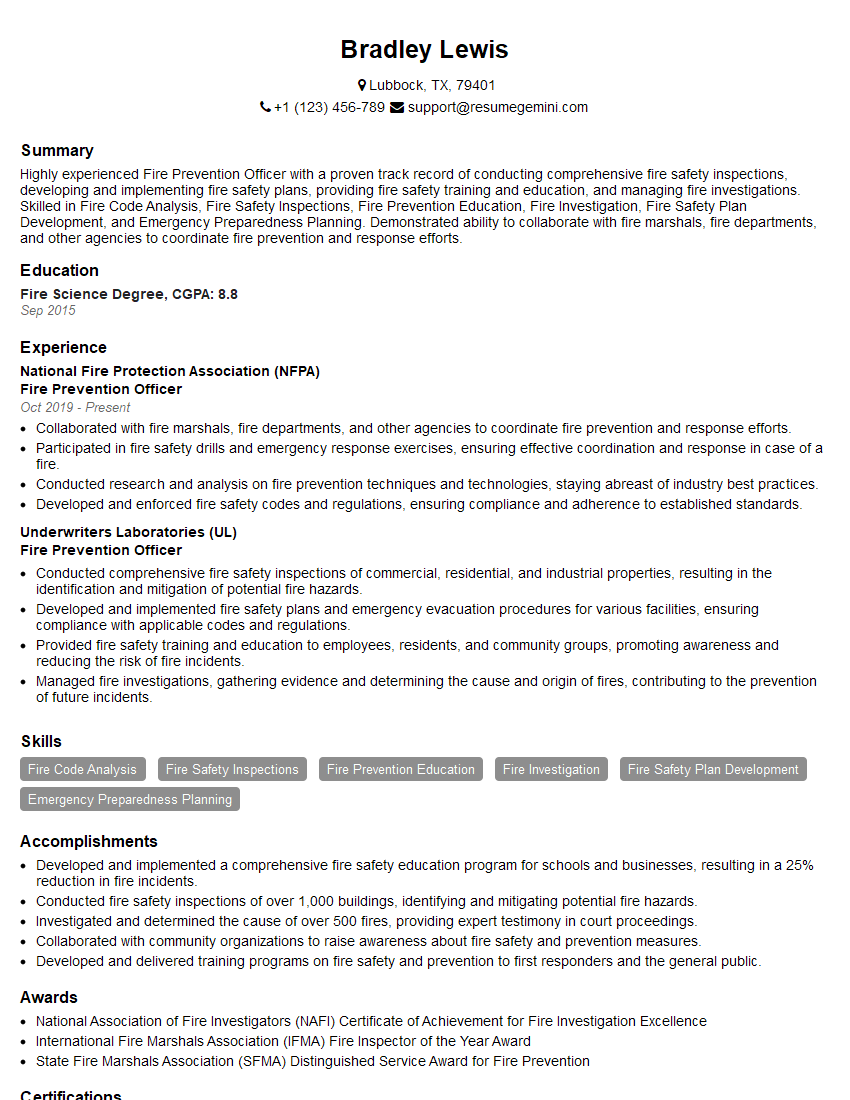
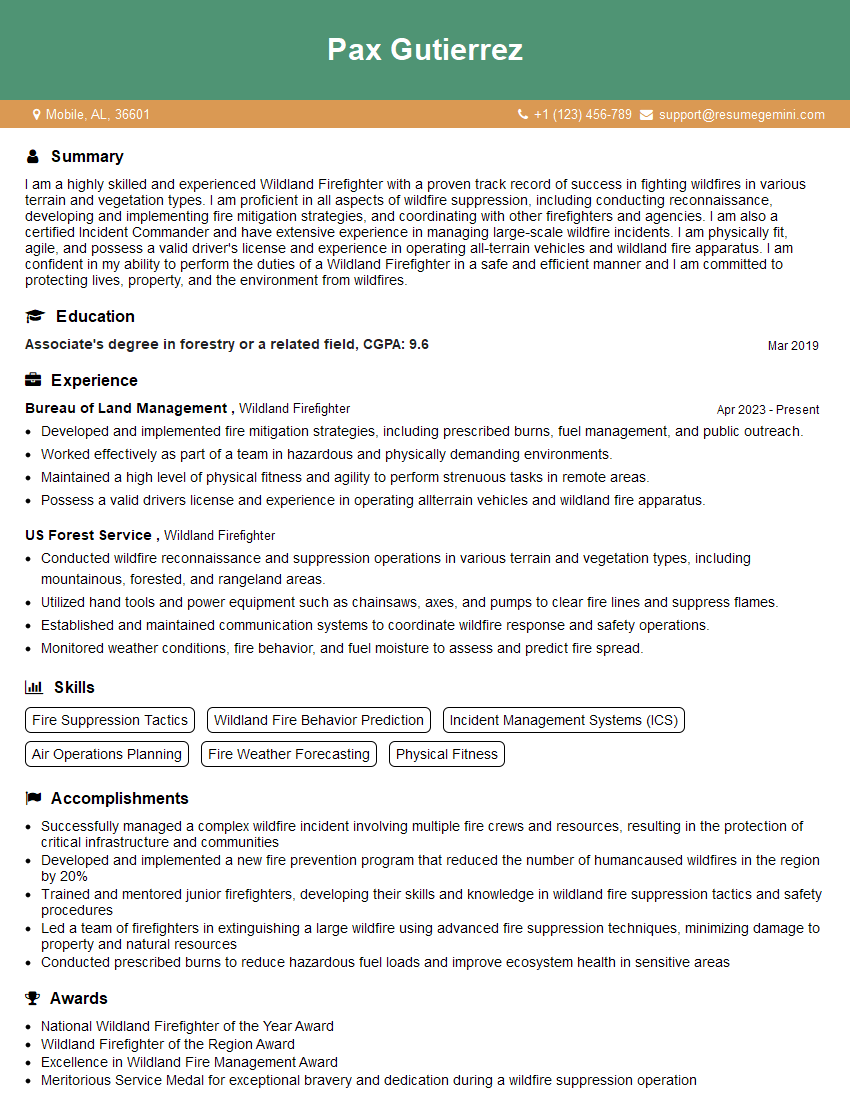
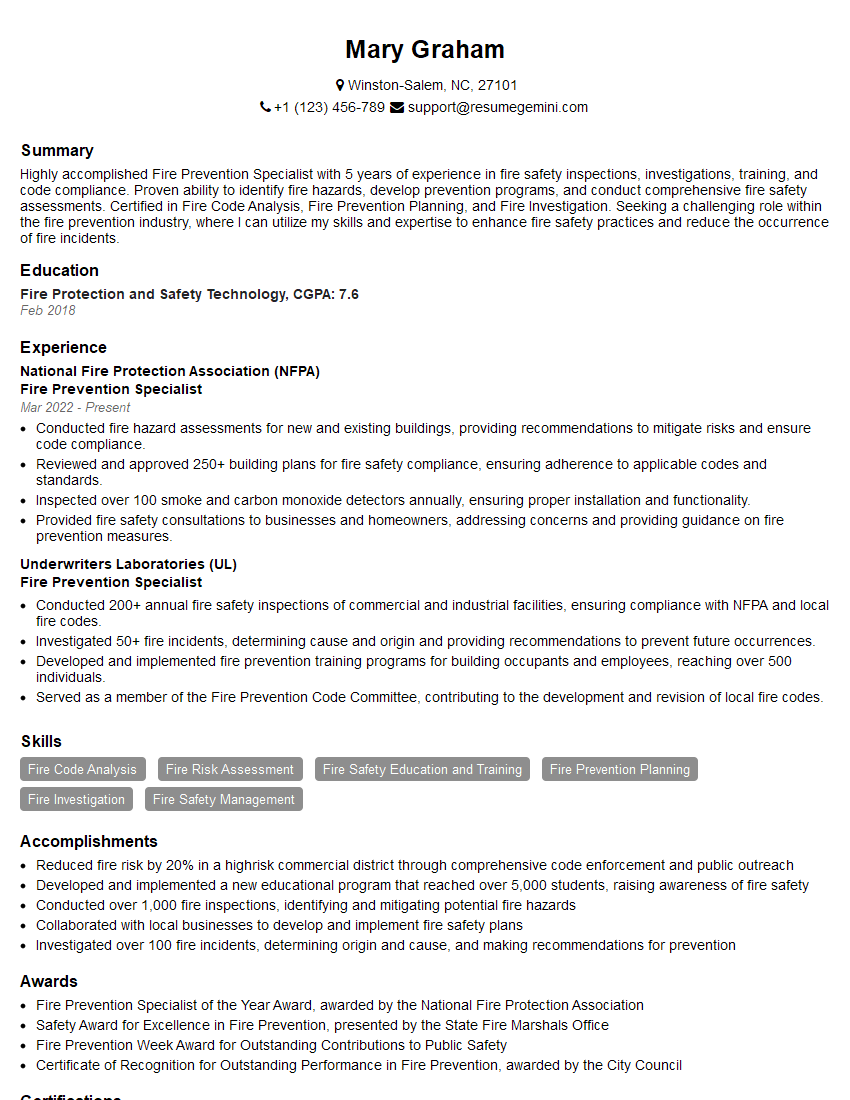
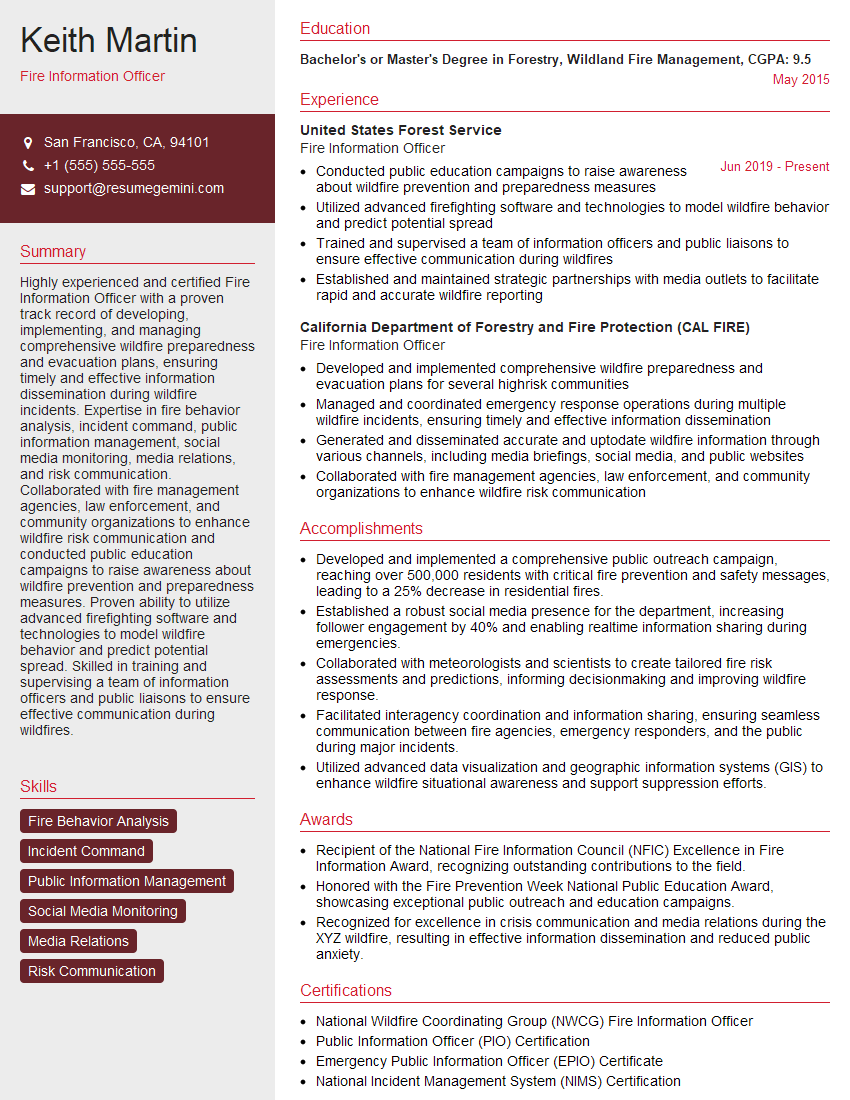
Mastering Wildland Fire Behavior and Suppression Tactics is crucial for advancing your career in this challenging and rewarding field. A strong understanding of these concepts will significantly improve your interview performance and open doors to exciting opportunities. To enhance your job prospects, it’s essential to craft a professional, ATS-friendly resume that showcases your skills and experience effectively. ResumeGemini is a trusted resource that can help you build a compelling resume tailored to this specific field. They provide examples of resumes specifically designed for Wildland Fire Behavior and Suppression Tactics professionals, ensuring your application stands out. Take the next step towards your dream career – build a winning resume with ResumeGemini.




Explore more articles
Users Rating of Our Blogs
Share Your Experience
We value your feedback! Please rate our content and share your thoughts (optional).
What Readers Say About Our Blog
Very informative content, great job.
good