Interviews are opportunities to demonstrate your expertise, and this guide is here to help you shine. Explore the essential Work order management and equipment maintenance interview questions that employers frequently ask, paired with strategies for crafting responses that set you apart from the competition.
Questions Asked in Work order management and equipment maintenance Interview
Q 1. Describe your experience with various CMMS (Computerized Maintenance Management Systems) software.
Throughout my career, I’ve worked extensively with various CMMS software, including IBM Maximo, SAP PM, and Fiix. My experience encompasses not only using these systems for day-to-day work order management but also configuring them to meet specific organizational needs. For instance, in a previous role at a large manufacturing plant, we implemented IBM Maximo to replace a paper-based system. This involved customizing the software to reflect our unique equipment hierarchy, integrating it with our ERP system for seamless data flow, and training over 100 technicians on its use. The key differences between these systems lie in their functionalities, user interfaces, and integration capabilities. Maximo, for example, excels in its robust reporting and analytics features, while Fiix offers a more user-friendly interface that’s ideal for smaller teams. SAP PM, on the other hand, is typically part of a larger enterprise resource planning (ERP) suite and is best suited for organizations with complex maintenance requirements. My experience spans across all phases, from initial needs assessment and software selection to implementation, training, and ongoing optimization.
Q 2. How do you prioritize work orders in a high-pressure environment?
Prioritizing work orders in a high-pressure environment requires a structured approach. I typically use a combination of methods, starting with a clear understanding of the potential impact of each work order. This involves assessing factors like safety risks, production downtime costs, and regulatory compliance. We utilize a prioritization matrix, often incorporating urgency (how quickly the work needs to be done) and impact (the consequences of delaying the work). For example, a work order related to a critical piece of equipment that impacts the entire production line would naturally take precedence over a less critical maintenance task. Furthermore, effective communication and collaboration between maintenance teams and production teams are crucial. We regularly update the priority list, adjusting it based on real-time changes and new information. Imagine a situation where a critical pump malfunctions. Using the prioritization matrix, this would jump to the top of the list, pushing other tasks down until it’s resolved, ensuring minimal disruption to the plant’s operations.
Q 3. Explain your understanding of preventative maintenance (PM) schedules.
Preventative maintenance (PM) schedules are crucial for maximizing equipment lifespan and minimizing unexpected downtime. These schedules are built around the manufacturer’s recommendations, historical maintenance data, and operational risk assessments. The goal is to perform routine inspections and servicing before problems arise. For instance, a PM schedule for a conveyor belt might include regular lubrication checks, belt tension adjustments, and cleaning to prevent wear and tear. We use CMMS software to manage these schedules, setting up automated reminders and tracking the completion of tasks. Effective PM scheduling requires careful consideration of equipment criticality, cost of failure, and the time required for maintenance. Failure to adhere to a PM schedule can lead to premature equipment failure, unplanned downtime, and increased maintenance costs. A well-defined PM schedule ensures that we proactively address potential issues, avoiding costly and disruptive emergencies.
Q 4. How do you handle unexpected equipment breakdowns?
Handling unexpected equipment breakdowns requires a swift and organized response. The first step is to ensure the safety of personnel and contain the situation to prevent further damage. This often involves isolating the equipment and implementing emergency shutdown procedures. Next, I initiate a detailed assessment of the problem to determine the extent of the damage and its impact on operations. We use root cause analysis techniques, which I’ll discuss later, to diagnose the issue effectively. A work order is immediately created and prioritized based on the severity of the breakdown. In parallel, we contact appropriate vendors or specialists if required and explore temporary solutions to minimize downtime, such as using backup equipment or adjusting production schedules. Clear communication among the maintenance team, operations team, and management is paramount throughout this process. For instance, a sudden failure of a boiler in a manufacturing plant would trigger our emergency response plan immediately, prioritizing repair over all other tasks to restore heat and avoid halting the production line.
Q 5. What metrics do you use to track maintenance performance?
Several key metrics are used to track maintenance performance. These include Mean Time To Repair (MTTR), Mean Time Between Failures (MTBF), and overall equipment effectiveness (OEE). MTTR measures the average time taken to restore a piece of equipment after a breakdown; a lower MTTR indicates faster response times. MTBF, conversely, measures the average time between equipment failures; a higher MTBF suggests improved equipment reliability. OEE combines availability, performance, and quality to give a holistic view of equipment efficiency. We also track planned versus unplanned maintenance hours, maintenance backlog, and the cost of maintenance per unit of production. These metrics are monitored regularly and analyzed to identify areas for improvement. For example, if MTTR for a specific machine type is consistently high, we might investigate whether improved training or spare parts inventory is needed. Regular review of these metrics helps us make data-driven decisions to enhance the efficiency and effectiveness of our maintenance efforts.
Q 6. Describe your experience with root cause analysis for equipment failures.
Root cause analysis (RCA) is crucial for preventing equipment failures. I’m proficient in various RCA techniques, including the “5 Whys,” fishbone diagrams, and fault tree analysis. The “5 Whys” method involves repeatedly asking “why” to delve deeper into the underlying causes of a failure. For instance, if a pump fails, we might ask: Why did the pump fail? (worn bearings). Why were the bearings worn? (insufficient lubrication). Why was there insufficient lubrication? (faulty lubrication system). Why was the lubrication system faulty? (lack of preventative maintenance). Why was there a lack of preventative maintenance? (inadequate training). Each answer helps us pinpoint the root cause, allowing for targeted corrective actions. Fishbone diagrams visually map out potential causes of a problem, making it easy to identify contributing factors. Thorough RCA allows us to implement preventive measures, reducing the likelihood of similar failures in the future.
Q 7. How do you ensure compliance with safety regulations during maintenance tasks?
Ensuring compliance with safety regulations during maintenance tasks is paramount. We adhere strictly to all relevant OSHA (or equivalent) guidelines and industry best practices. This includes providing technicians with proper training, personal protective equipment (PPE), and detailed safety procedures for each task. Lockout/Tagout (LOTO) procedures are strictly followed to prevent accidental energization of equipment during maintenance. Regular safety inspections are conducted to identify and address potential hazards. We maintain detailed records of all safety training, inspections, and incidents. Furthermore, we encourage a strong safety culture within the maintenance team, promoting open communication about safety concerns and continuous improvement in our safety practices. Any non-compliance is investigated thoroughly, with corrective actions implemented to prevent recurrence. A strong emphasis on safety is not only crucial for protecting our workforce but also ensures compliance with regulations and avoids potential liabilities.
Q 8. Explain your process for managing spare parts inventory.
Effective spare parts inventory management is crucial for minimizing downtime and optimizing maintenance costs. My process involves a multi-faceted approach encompassing:
- Demand Forecasting: I analyze historical data on parts usage, considering factors like equipment age, operating hours, and seasonality to predict future demand. This helps prevent stockouts and overstocking.
- ABC Analysis: This inventory classification method categorizes parts based on their value and consumption. High-value, frequently used items (A-class) receive close monitoring and tighter control, while less critical parts (C-class) may have less stringent inventory levels.
- Vendor Management: Building strong relationships with reliable vendors is key. This ensures timely delivery and competitive pricing, particularly for critical parts. Negotiating favorable terms and establishing minimum order quantities can also optimize costs.
- Regular Stock Audits: Physical inventory counts are conducted regularly to verify stock levels against the system records. Discrepancies are investigated and resolved promptly to maintain data accuracy.
- Software Utilization: I leverage CMMS (Computerized Maintenance Management System) software to manage inventory, track parts usage, and generate alerts for low stock levels. This automated system helps optimize stock levels and ensures timely procurement.
For instance, in a previous role, implementing an ABC analysis reduced our spare parts inventory holding costs by 15% while maintaining sufficient stock levels to avoid production disruptions.
Q 9. How do you communicate effectively with technicians and other stakeholders?
Effective communication is vital in work order management. I use a multi-channel approach tailored to the audience and context:
- Technicians: Clear, concise work orders with detailed instructions, diagrams, and safety guidelines are paramount. I utilize a CMMS to assign tasks, provide updates, and facilitate direct communication through in-app messaging or mobile notifications. Regular team meetings address common challenges and provide training opportunities.
- Stakeholders (Management, Clients): Regular reports providing key performance indicators (KPIs) such as equipment uptime, maintenance costs, and work order completion times are crucial. I also employ visual dashboards and presentations to illustrate progress and identify areas for improvement. Direct communication channels, such as email or project meetings, are used for urgent updates and complex issues.
For example, when facing a critical equipment failure, I utilized our CMMS’s messaging system to immediately notify the relevant technician and simultaneously updated management via email, ensuring transparency and quick resolution.
Q 10. Describe a time you had to troubleshoot a complex equipment issue.
During my time at [Previous Company Name], we experienced a major malfunction with a key piece of manufacturing equipment. The initial error message was vague, suggesting multiple potential causes.
My troubleshooting process involved:
- Gather Data: I meticulously documented the error messages, reviewed operational logs, and interviewed operators to understand the circumstances leading up to the failure.
- Systematic Investigation: I followed a structured approach, checking electrical connections, hydraulic systems, and pneumatic components systematically. I used schematics and manuals to guide the diagnostic process.
- Component Testing: I isolated suspected components and tested them individually, using specialized diagnostic tools. This narrowed down the source of the problem to a faulty hydraulic valve.
- Part Replacement & Verification: Once the faulty valve was identified, I replaced it with a spare part and retested the equipment. This confirmed the resolution.
- Documentation & Prevention: After rectifying the issue, I documented the entire process, including the root cause analysis, corrective actions, and preventive measures to avoid similar issues in the future. This information was shared with the team to improve future troubleshooting.
This experience reinforced the importance of methodical troubleshooting, thorough documentation, and leveraging technical expertise and resources effectively.
Q 11. What is your experience with predictive maintenance techniques?
Predictive maintenance leverages data analysis and advanced technologies to anticipate equipment failures before they occur. My experience includes using several techniques:
- Vibration Analysis: Using sensors to monitor vibration patterns, enabling the early detection of bearing wear or imbalance. This allows for scheduling maintenance before catastrophic failure.
- Oil Analysis: Analyzing oil samples to detect contaminants, wear metals, and degradation, indicating potential issues within the lubrication system.
- Thermography: Using infrared cameras to identify overheating components, which can be a precursor to electrical or mechanical failures.
- Data Analytics: Utilizing CMMS data to analyze historical maintenance records and identify trends indicating potential future failures. Machine learning algorithms can be integrated to enhance these predictive capabilities.
In a previous role, implementing vibration analysis reduced unplanned downtime by 20% and significantly decreased repair costs by allowing for proactive maintenance.
Q 12. How do you manage and track maintenance costs?
I meticulously track and manage maintenance costs using a CMMS, which allows for detailed cost allocation to individual work orders, equipment, and departments. This involves:
- Direct Costs: Tracking costs of labor, parts, and materials used in each maintenance activity.
- Indirect Costs: Considering overhead costs like utilities, administrative expenses, and depreciation of equipment.
- Cost Allocation: Distributing costs appropriately to responsible departments or projects. This enables accurate cost accounting and budget management.
- Reporting & Analysis: Generating reports on maintenance costs, allowing for identification of cost drivers and areas for optimization. This helps in identifying inefficient processes or overly expensive parts.
For example, by analyzing maintenance cost reports, we identified a pattern of excessive labor costs associated with a particular type of equipment. Subsequently, we implemented preventative maintenance strategies, reducing labor costs by 10%.
Q 13. How do you improve the efficiency of work order completion?
Improving work order completion efficiency requires a holistic approach. My strategies include:
- Optimized Work Order Routing: Prioritizing work orders based on urgency and impact, assigning tasks to the most appropriate technicians with the necessary skills and proximity to the equipment.
- Streamlined Work Processes: Minimizing unnecessary steps in the maintenance process, standardizing procedures, and providing technicians with clear and concise instructions.
- Improved Inventory Management: Ensuring the ready availability of spare parts minimizes delays due to part shortages.
- Technician Training & Empowerment: Providing ongoing training to improve technical skills and empowering technicians to make decisions efficiently within their area of expertise.
- Technology Utilization: Utilizing mobile CMMS applications allows technicians to access work orders, update progress, and receive real-time support from remote experts, streamlining communication and reducing delays.
By implementing these strategies in a past role, we achieved a 15% reduction in average work order completion time, directly increasing equipment uptime and reducing production downtime.
Q 14. What are the key performance indicators (KPIs) you use to evaluate maintenance effectiveness?
Key performance indicators (KPIs) are essential for evaluating maintenance effectiveness. I use a range of metrics, including:
- Mean Time Between Failures (MTBF): The average time between equipment failures, indicating equipment reliability.
- Mean Time To Repair (MTTR): The average time taken to repair failed equipment, reflecting the efficiency of the maintenance process.
- Equipment Uptime: The percentage of time equipment is operational, a direct measure of maintenance effectiveness.
- Maintenance Costs per Unit Produced: Relates maintenance costs to production output, indicating cost-effectiveness.
- Work Order Completion Rate: The percentage of work orders completed on time and as planned.
- Preventative Maintenance Compliance Rate: Measures the adherence to scheduled preventive maintenance tasks.
Regularly monitoring and analyzing these KPIs helps identify areas for improvement and ensures that maintenance strategies are aligned with overall business objectives.
Q 15. Describe your experience with developing and implementing maintenance procedures.
Developing and implementing maintenance procedures is a crucial aspect of ensuring equipment reliability and operational efficiency. It involves a systematic approach, starting with a thorough understanding of the equipment’s functionality and potential failure points.
My experience encompasses the entire lifecycle: from conducting detailed equipment assessments to creating step-by-step procedures, incorporating safety protocols, and documenting all processes. For example, in my previous role at a manufacturing plant, we overhauled the maintenance procedures for our high-speed bottling line. This involved analyzing historical maintenance data to identify recurring issues, then developing a preventative maintenance schedule incorporating lubrication, cleaning, and component inspections at predefined intervals. We also created detailed corrective maintenance procedures, including troubleshooting guides and parts lists, to minimize downtime during repairs. Finally, we implemented a training program for technicians to ensure consistent adherence to the new procedures. This resulted in a 20% reduction in equipment downtime and a 15% decrease in maintenance costs within the first year.
Another example involved implementing a Computerized Maintenance Management System (CMMS) to streamline the entire process, from scheduling to tracking maintenance activities. This ensured standardized procedures, improved data collection, and better reporting capabilities.
Career Expert Tips:
- Ace those interviews! Prepare effectively by reviewing the Top 50 Most Common Interview Questions on ResumeGemini.
- Navigate your job search with confidence! Explore a wide range of Career Tips on ResumeGemini. Learn about common challenges and recommendations to overcome them.
- Craft the perfect resume! Master the Art of Resume Writing with ResumeGemini’s guide. Showcase your unique qualifications and achievements effectively.
- Don’t miss out on holiday savings! Build your dream resume with ResumeGemini’s ATS optimized templates.
Q 16. How do you handle conflicting priorities among different work orders?
Prioritizing conflicting work orders requires a structured approach that considers several factors. It’s not simply a matter of ‘first come, first served,’ but rather a strategic prioritization based on criticality, urgency, and potential impact.
I use a prioritization matrix that considers factors such as the potential impact of equipment failure (safety risks, production downtime, financial losses), the urgency of the request (immediate safety hazard vs. planned maintenance), and the resources required to complete the task. This allows me to rank work orders effectively. For instance, a work order involving a safety hazard on a critical piece of equipment would naturally take precedence over a routine maintenance task.
Transparent communication is crucial. I keep all stakeholders informed of the prioritization decisions and the rationale behind them. Regular meetings with maintenance teams and operational managers are essential to ensure alignment and manage expectations. Sometimes, we might need to renegotiate deadlines or re-allocate resources to address the most critical issues first. This collaborative approach ensures that the most impactful work gets done in a timely manner.
Q 17. How do you ensure the accuracy and completeness of work order documentation?
Accuracy and completeness in work order documentation are essential for effective maintenance management and accountability. It allows for efficient tracking of work performed, identifying trends, and improving future maintenance strategies. I employ several techniques to ensure this.
Firstly, I use a CMMS which provides pre-defined fields for all essential information including: equipment ID, description of the problem, actions taken, parts used, time spent, and technician signature. This ensures consistency and avoids missing vital details. Digital images and videos are included for complex issues to facilitate understanding and future troubleshooting. Secondly, a thorough review process ensures accuracy. This might involve a peer review of completed work orders, particularly for complex repairs. Thirdly, regular audits ensure compliance with documentation standards. We periodically review a sample of work orders to identify any discrepancies or areas for improvement. This helps maintain the integrity of our data and provides feedback for the technicians.
The benefits of meticulous documentation are manifold: it enables better cost tracking, accurate performance measurement, supports continuous improvement initiatives, and improves communication and collaboration across teams.
Q 18. What is your experience with various types of maintenance (preventive, corrective, predictive)?
My experience encompasses all three major types of maintenance: preventive, corrective, and predictive. Each plays a critical role in overall equipment effectiveness (OEE).
- Preventive Maintenance (PM): This involves scheduled maintenance activities aimed at preventing equipment failure. This includes regular inspections, lubrication, cleaning, and component replacements according to a predetermined schedule. I’ve implemented PM programs that reduced equipment downtime significantly. For instance, we scheduled regular oil changes and filter replacements for our production machinery, resulting in a substantial reduction in breakdowns and an increase in equipment lifespan.
- Corrective Maintenance (CM): This addresses equipment failures as they occur. My experience in this area involves troubleshooting, repairing, and replacing faulty components. I’ve utilized root cause analysis techniques to determine the underlying cause of failures and prevent recurrence. An example involves a recurring issue with a specific pump. Through detailed analysis, we identified a faulty valve causing the problem, rather than simply replacing the pump repeatedly.
- Predictive Maintenance (PdM): This uses data analysis and sensors to predict when equipment is likely to fail. I have experience using vibration analysis, oil analysis, and infrared thermography to identify potential problems before they escalate into major failures. This allowed us to schedule maintenance proactively, minimizing downtime and optimizing resource allocation. For example, using vibration analysis, we were able to detect a bearing fault in a critical motor weeks before it failed, allowing for a planned replacement during a scheduled downtime period.
Understanding and effectively implementing all three types is critical to maximizing operational uptime, reducing costs, and enhancing overall equipment reliability.
Q 19. Describe your experience with using and interpreting maintenance data.
Using and interpreting maintenance data is key to improving efficiency and reducing costs. This data offers invaluable insights into equipment performance, maintenance effectiveness, and areas for improvement. I utilize several techniques for this.
I’m proficient in using CMMS software to extract and analyze maintenance data. This includes analyzing historical work order data to identify recurring problems, equipment failure rates, and the effectiveness of various maintenance strategies. We use this data to adjust maintenance schedules, optimize resource allocation, and identify opportunities for preventative measures. For example, analyzing historical data showed a high failure rate for a specific component during peak production periods. This allowed us to proactively increase the stock of spare parts and refine our PM schedule to mitigate the risk of production delays.
Data visualization is critical. I use dashboards and reports to represent maintenance data in a user-friendly format that helps identify trends and patterns. This involves using charts, graphs, and key performance indicators (KPIs) to track critical metrics such as mean time between failures (MTBF), mean time to repair (MTTR), and equipment uptime. This visual representation facilitates quick identification of areas requiring attention.
Q 20. How do you identify and address maintenance backlog?
A maintenance backlog represents a significant risk to operational efficiency and equipment reliability. Addressing it requires a structured approach.
Firstly, I conduct a thorough assessment of the existing backlog, categorizing work orders based on priority, urgency, and resource requirements. This assessment involves evaluating the potential impact of each outstanding task on production, safety, and overall operations. A prioritization matrix, as mentioned earlier, is essential for this step.
Next, I develop a plan to tackle the backlog, which involves assigning resources, scheduling tasks, and establishing realistic timelines. This often requires collaboration with maintenance teams and operational management to ensure alignment and resource availability. We might prioritize critical tasks that pose safety risks or threaten production and tackle less urgent items later.
Finally, I implement a system for tracking progress and regularly review the plan to make necessary adjustments. This involves monitoring task completion rates, identifying bottlenecks, and addressing any unexpected challenges. Regular reporting and communication with stakeholders keep everyone informed and engaged in the process.
Q 21. How do you integrate work order management with other business systems?
Integrating work order management with other business systems is crucial for seamless data flow and enhanced efficiency. This integration improves data accuracy, reduces manual data entry, and enables better decision-making.
In my experience, we’ve integrated our CMMS with Enterprise Resource Planning (ERP) systems, inventory management systems, and even accounting software. This integration allows for automatic updates of inventory levels when parts are used during repairs, accurate cost tracking for maintenance activities, and real-time visibility into maintenance schedules and resource allocation within the broader business context. For example, integrating with the ERP system provides real-time data on production schedules, allowing for proactive maintenance scheduling to avoid conflicts and potential downtime.
API integrations are key to this. This ensures that data flows automatically between systems, minimizing manual data entry and reducing errors. Careful planning and testing are vital to ensure a smooth integration and avoid data inconsistencies. A well-integrated system streamlines workflows, improves data accuracy, and provides a holistic view of operations, ultimately contributing to improved efficiency and profitability.
Q 22. How do you train and mentor junior maintenance technicians?
Training junior maintenance technicians is a multi-faceted process that I approach with a structured, hands-on, and mentorship-focused strategy. It’s not just about teaching technical skills; it’s about cultivating problem-solving abilities and fostering a safety-conscious mindset.
On-the-job training: I believe in learning by doing. I start by assigning junior technicians to assist senior technicians on various tasks, gradually increasing their responsibility as they demonstrate competency. This allows them to observe best practices and learn from experienced colleagues. For example, a junior technician might start by assisting with cleaning equipment, then progress to basic inspections and simple repairs under supervision.
Formal training programs: I supplement on-the-job training with formal courses on relevant equipment, safety procedures, and troubleshooting techniques. This could involve online modules, workshops, or manufacturer-provided training. We often use simulated environments to practice handling emergencies or complex repairs in a risk-free setting.
Mentorship: I assign each junior technician a mentor – a senior technician who can provide guidance, support, and feedback. Regular check-ins and performance reviews allow us to track progress, address challenges, and celebrate successes. This builds confidence and fosters a supportive team environment. For instance, a mentor might guide a junior technician through a difficult repair, explaining the reasoning behind each step and highlighting potential pitfalls.
Regular feedback and evaluation: I conduct regular performance reviews, providing constructive feedback and identifying areas for improvement. This helps the technicians track their progress and understand their strengths and weaknesses. It also creates opportunities for open communication and identifies any training gaps.
Q 23. What are your strategies for improving equipment reliability?
Improving equipment reliability requires a proactive and multifaceted approach encompassing predictive maintenance, preventive maintenance, and a robust CMMS (Computerized Maintenance Management System). My strategies focus on minimizing downtime and extending equipment lifespan.
Predictive Maintenance: Utilizing sensors and data analytics to predict potential failures *before* they occur is crucial. We deploy vibration analysis, oil analysis, and thermal imaging to detect anomalies indicative of impending breakdowns. For example, by monitoring vibration patterns, we can identify bearing wear well in advance of a catastrophic failure, allowing for scheduled replacement and preventing costly unplanned downtime.
Preventive Maintenance: Implementing a well-defined preventive maintenance schedule based on manufacturer recommendations and historical data is essential. This involves routine inspections, lubrication, and cleaning to prevent minor issues from escalating into major problems. A well-structured PM schedule will also catch issues before they significantly impact production.
CMMS implementation: A robust CMMS is the backbone of any effective maintenance strategy. It helps us track work orders, schedule maintenance activities, manage inventory, and analyze equipment performance data. The system allows for better planning, reduces paperwork, and improves overall efficiency. For example, the CMMS can automatically generate alerts when equipment is due for scheduled maintenance or when a component’s lifespan is approaching its end.
Root Cause Analysis (RCA): Investigating equipment failures through RCA is vital for preventing recurrences. By systematically identifying the underlying causes of failures, we can implement corrective actions and improve the overall design or maintenance procedures. For instance, if a pump repeatedly fails due to cavitation, RCA will help us determine if the problem is due to inadequate suction, incorrect impeller selection, or improper installation.
Operator Training: Well-trained operators play a critical role in equipment reliability. They are the first line of defense, able to identify minor issues early and report them promptly. Proper training ensures that equipment is operated correctly, minimizing the risk of damage or premature wear. This includes regular training on safe operating procedures and basic troubleshooting.
Q 24. How do you assess the risk associated with equipment failures?
Assessing the risk associated with equipment failures involves a combination of qualitative and quantitative methods. The goal is to prioritize mitigation efforts based on the potential impact and likelihood of failure.
Failure Modes and Effects Analysis (FMEA): This systematic approach helps identify potential failure modes, their effects, and their likelihood of occurrence. We use FMEA to rank equipment failures based on severity, probability, and detectability (Risk Priority Number – RPN). A higher RPN indicates a higher priority for risk mitigation. This helps to focus our efforts on the most critical areas.
Fault Tree Analysis (FTA): This technique identifies the various combinations of events that can lead to a specific top-level undesired event (e.g., equipment failure). By mapping out potential causes, we can determine the most likely failure scenarios and implement appropriate safeguards.
Data Analysis: Historical maintenance data, including failure rates, downtime durations, and repair costs, are analyzed to identify trends and patterns. This data-driven approach helps prioritize equipment for preventive maintenance or upgrades. For instance, analyzing historical data might reveal that a particular piece of equipment experiences frequent failures during peak production periods, suggesting the need for additional preventative maintenance or capacity planning.
Risk Matrix: Using a risk matrix, we visually represent the likelihood and impact of potential failures. This allows for easy identification of high-risk areas requiring immediate attention and for prioritization based on impact and likelihood of failure. This provides a clear overview for decision-making and resource allocation.
Q 25. Describe your experience with developing and implementing maintenance budgets.
Developing and implementing maintenance budgets requires a thorough understanding of current spending, future needs, and available resources. It’s an iterative process that involves careful planning and ongoing monitoring.
Cost estimation: I start by estimating the costs associated with different maintenance activities, including labor, parts, and contract services. This involves analyzing historical data, considering equipment age and condition, and incorporating inflation factors.
Prioritization: I prioritize maintenance activities based on risk assessment, criticality of equipment, and potential impact on production. This ensures that resources are allocated effectively to address the most critical needs.
Budget allocation: Based on the cost estimates and prioritization, I allocate budget to different maintenance categories, such as preventive maintenance, corrective maintenance, and capital improvements. This includes setting aside funds for emergency repairs and unforeseen circumstances.
Performance monitoring: I regularly monitor budget performance against planned spending, identifying variances and taking corrective action where needed. This involves tracking actual vs. budgeted costs, analyzing the reasons for any deviations, and making adjustments as necessary.
Continuous improvement: I continuously evaluate the budget process and make adjustments based on feedback from maintenance personnel and operational needs. This ensures the budget remains relevant and effective over time.
For instance, if the actual cost of a particular maintenance activity exceeds the budget, I might investigate the root cause, such as unexpected parts failures or increased labor costs, and implement corrective measures to improve efficiency or prevent similar issues in the future.
Q 26. How do you ensure the proper disposal of hazardous materials generated during maintenance?
Ensuring the proper disposal of hazardous materials is paramount. Our process strictly adheres to all relevant environmental regulations and safety protocols.
Identification and segregation: We meticulously identify and segregate all hazardous materials generated during maintenance, ensuring they are stored appropriately in labeled containers. We use appropriate safety data sheets (SDS) to correctly classify and handle each material.
Designated storage areas: We maintain secure and designated storage areas for hazardous waste, ensuring they are compliant with all relevant safety regulations. This involves proper ventilation, signage, and emergency response plans.
Licensed disposal contractors: We utilize only licensed and reputable waste disposal contractors to handle the disposal of hazardous materials. This ensures that materials are disposed of legally and in an environmentally responsible manner. We maintain documentation of all waste disposal activities.
Employee training: All maintenance personnel receive comprehensive training on the safe handling, storage, and disposal of hazardous materials. This training includes proper labeling, handling procedures, and emergency response procedures.
Record-keeping: We maintain detailed records of all hazardous materials generated, handled, stored, and disposed of. This documentation is crucial for compliance audits and environmental reporting. This includes tracking the amount of waste, type of waste, disposal method, and date of disposal.
Q 27. What is your experience with maintenance outsourcing and vendor management?
My experience with maintenance outsourcing and vendor management includes selecting, contracting, and overseeing external service providers. This requires a structured approach to ensure quality, cost-effectiveness, and compliance.
Vendor selection: I meticulously evaluate potential vendors based on their experience, qualifications, insurance coverage, and safety records. This process often involves requesting proposals, conducting site visits, and checking references. We consider factors such as their expertise in specific areas, their track record, and their financial stability.
Contract negotiation: I carefully negotiate contracts with vendors, specifying service level agreements (SLAs), payment terms, and performance metrics. SLAs clearly define expectations, responsibilities, and penalties for non-compliance. This prevents ambiguity and ensures the service provided meets our needs.
Performance monitoring: I regularly monitor vendor performance against the agreed-upon SLAs, ensuring they deliver the promised services at the expected quality. This often involves regular progress meetings, performance reports, and inspections. We use key performance indicators (KPIs) to track vendor performance and identify areas for improvement.
Relationship management: I foster strong working relationships with vendors to ensure effective communication and collaboration. Open communication helps resolve issues promptly and maintain a positive working relationship. This includes regular communication, constructive feedback, and addressing issues promptly and effectively.
Q 28. How do you utilize technology to enhance maintenance processes?
Technology plays a crucial role in enhancing maintenance processes, improving efficiency, and reducing costs. I leverage various technologies to optimize our operations.
CMMS (Computerized Maintenance Management System): As mentioned earlier, a CMMS is the cornerstone of our maintenance strategy. It streamlines work order management, preventive maintenance scheduling, inventory control, and reporting. Data analysis from the CMMS provides valuable insights into equipment performance, helping us optimize maintenance strategies.
Predictive maintenance technologies: We use sensors, data analytics, and IoT devices to monitor equipment performance in real-time. This allows for early detection of potential failures and proactive maintenance interventions. For example, vibration sensors can detect bearing wear before it leads to a catastrophic failure.
Mobile devices and applications: Technicians use mobile devices and applications to access work orders, record maintenance activities, and update equipment status in real-time. This improves efficiency and reduces paperwork.
Augmented reality (AR): AR technology can assist technicians in complex repairs by overlaying digital instructions and schematics onto the physical equipment. This enhances training and reduces repair times.
Data analytics and reporting: We use data analytics to track key performance indicators (KPIs) such as equipment uptime, maintenance costs, and mean time to repair (MTTR). This provides valuable insights for optimizing maintenance processes and making data-driven decisions.
Key Topics to Learn for Work Order Management and Equipment Maintenance Interviews
- Work Order Processes: Understanding the lifecycle of a work order, from initiation and scheduling to completion and closure. Consider different prioritization methods and their impact.
- Preventive Maintenance (PM): Developing and implementing PM schedules, tracking their effectiveness, and understanding the importance of reducing downtime through proactive maintenance.
- Corrective Maintenance: Troubleshooting equipment malfunctions, diagnosing root causes, and efficiently executing repairs. Discuss different diagnostic techniques and tools.
- Inventory Management: Knowing how to track parts, supplies, and equipment; understanding inventory control systems and their impact on maintenance operations. Explore concepts of just-in-time inventory and minimizing waste.
- CMMS/EAM Systems: Familiarity with Computerized Maintenance Management Systems (CMMS) or Enterprise Asset Management (EAM) software; understanding their functionalities and how to effectively utilize them for work order management and reporting.
- Teamwork and Communication: Highlighting your ability to collaborate effectively with technicians, engineers, and other stakeholders to ensure efficient and timely completion of work orders. Discuss effective communication strategies.
- Safety Procedures and Regulations: Demonstrating knowledge of relevant safety regulations and best practices for equipment maintenance and repair. Discuss risk assessment and mitigation strategies.
- Data Analysis and Reporting: Understanding how to collect, analyze, and present data related to work order completion times, maintenance costs, and equipment performance. Discuss key performance indicators (KPIs).
- Cost Control and Budgeting: Demonstrating awareness of budgeting principles and cost-effective maintenance strategies, including optimizing resource allocation.
- Problem-Solving and Troubleshooting: Showcase your analytical and problem-solving skills through examples of how you’ve resolved complex equipment issues or streamlined work order processes.
Next Steps
Mastering Work Order Management and Equipment Maintenance is crucial for career advancement in many industries. A strong understanding of these concepts demonstrates valuable skills in efficiency, problem-solving, and technical proficiency, leading to increased responsibility and earning potential. To significantly improve your job prospects, create an ATS-friendly resume that highlights your relevant skills and experience. ResumeGemini is a trusted resource for building professional, impactful resumes. We provide examples of resumes tailored to Work Order Management and Equipment Maintenance to help you present your qualifications effectively.
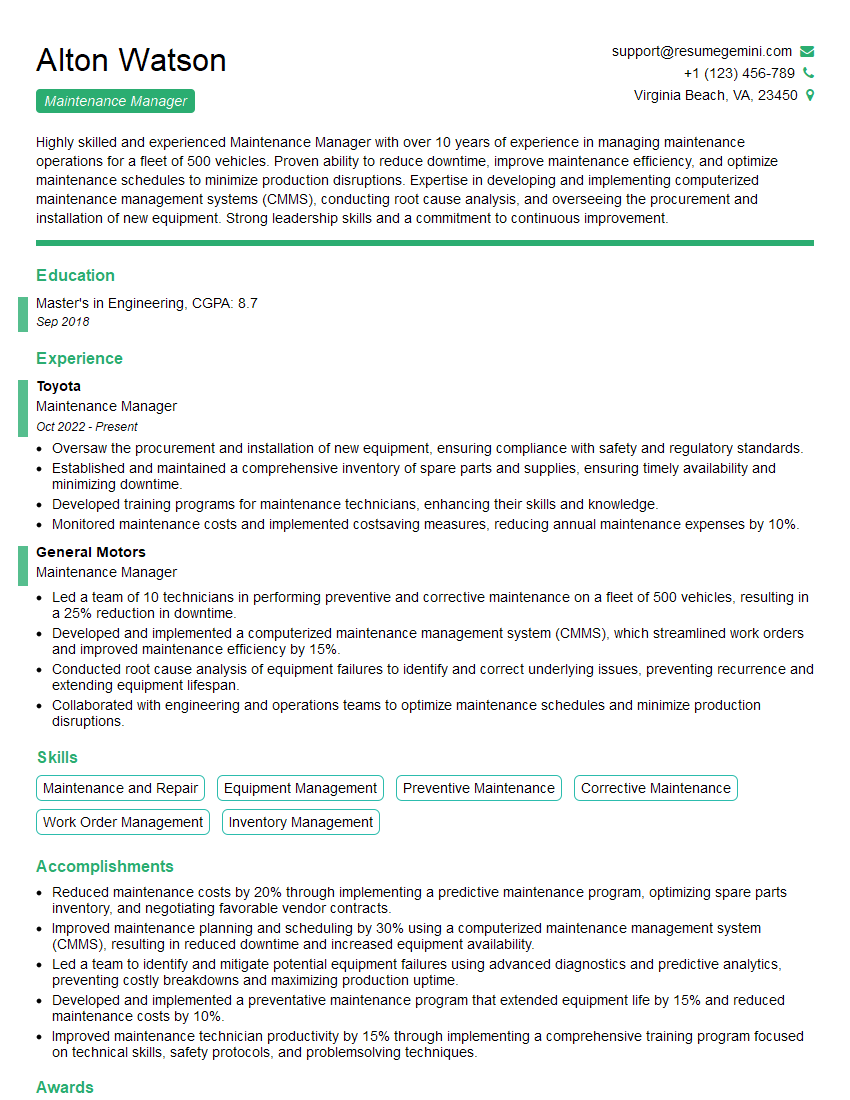
Maintenance Manager Resume Sample
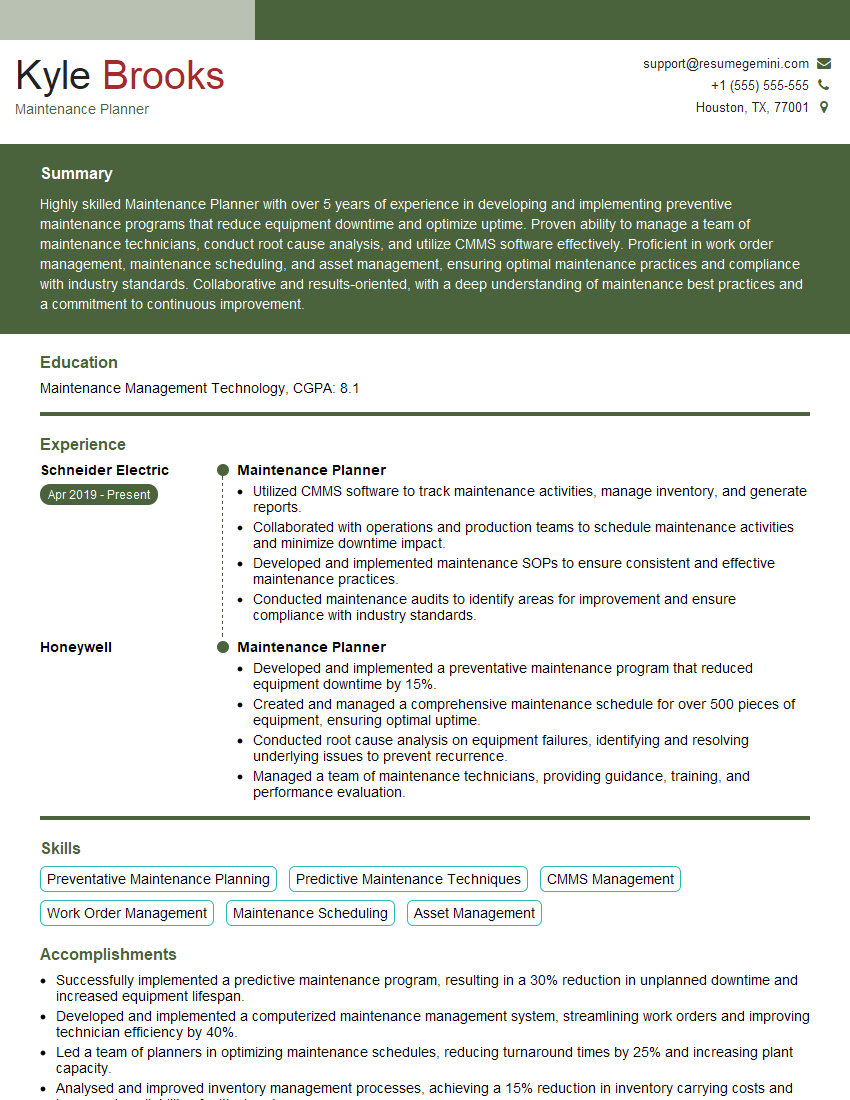
Maintenance Planner Resume Sample
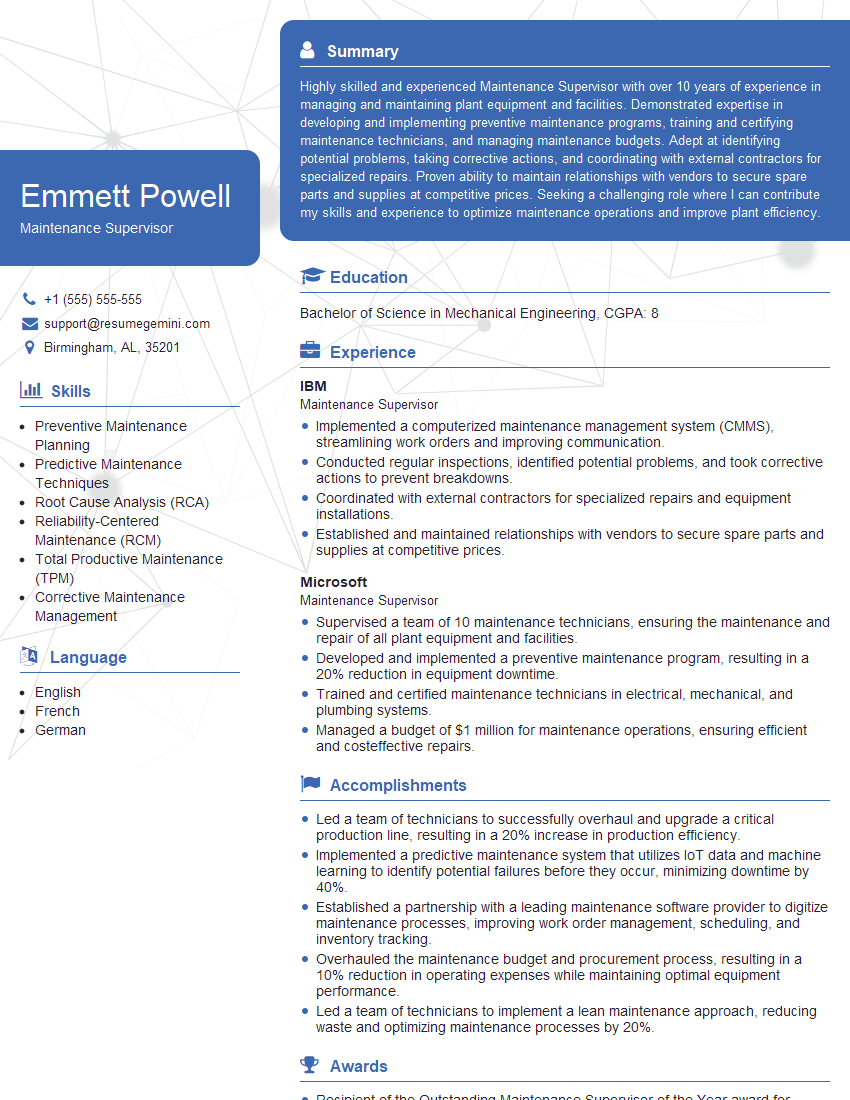
Maintenance Supervisor Resume Sample

Reliability Engineer Resume Sample
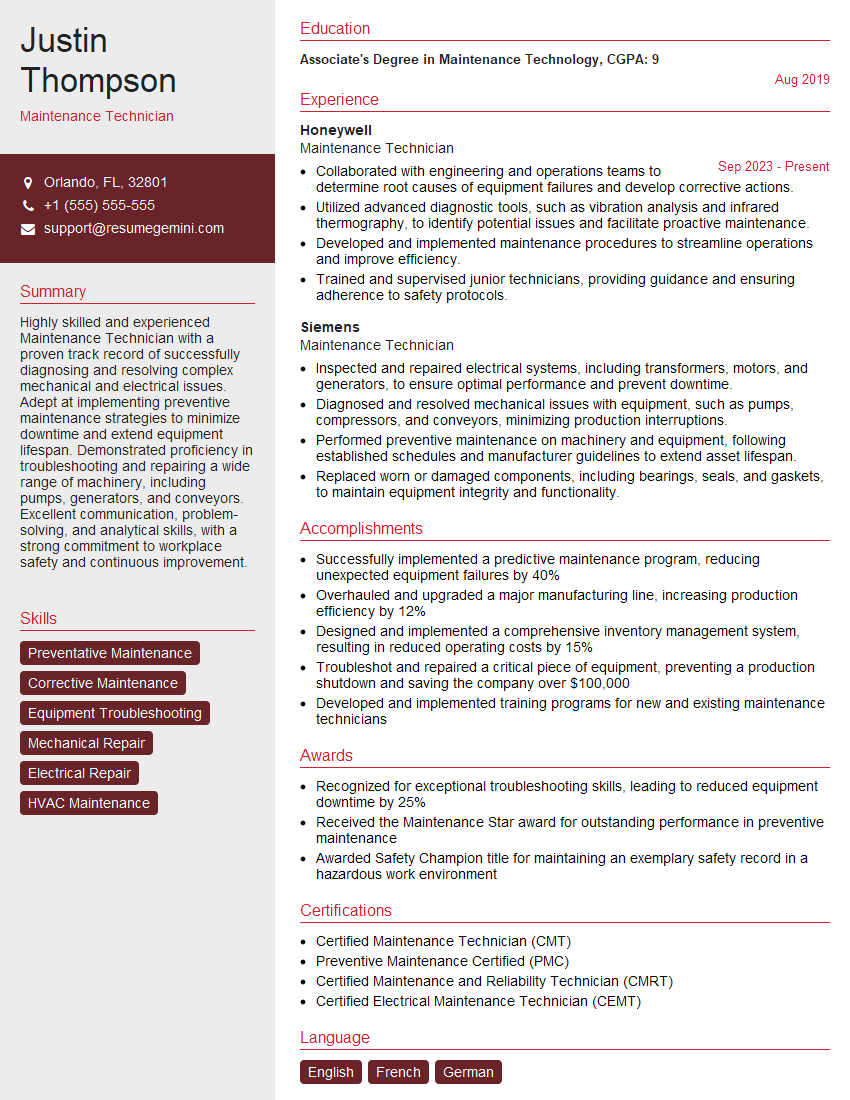
Maintenance Technician Resume Sample
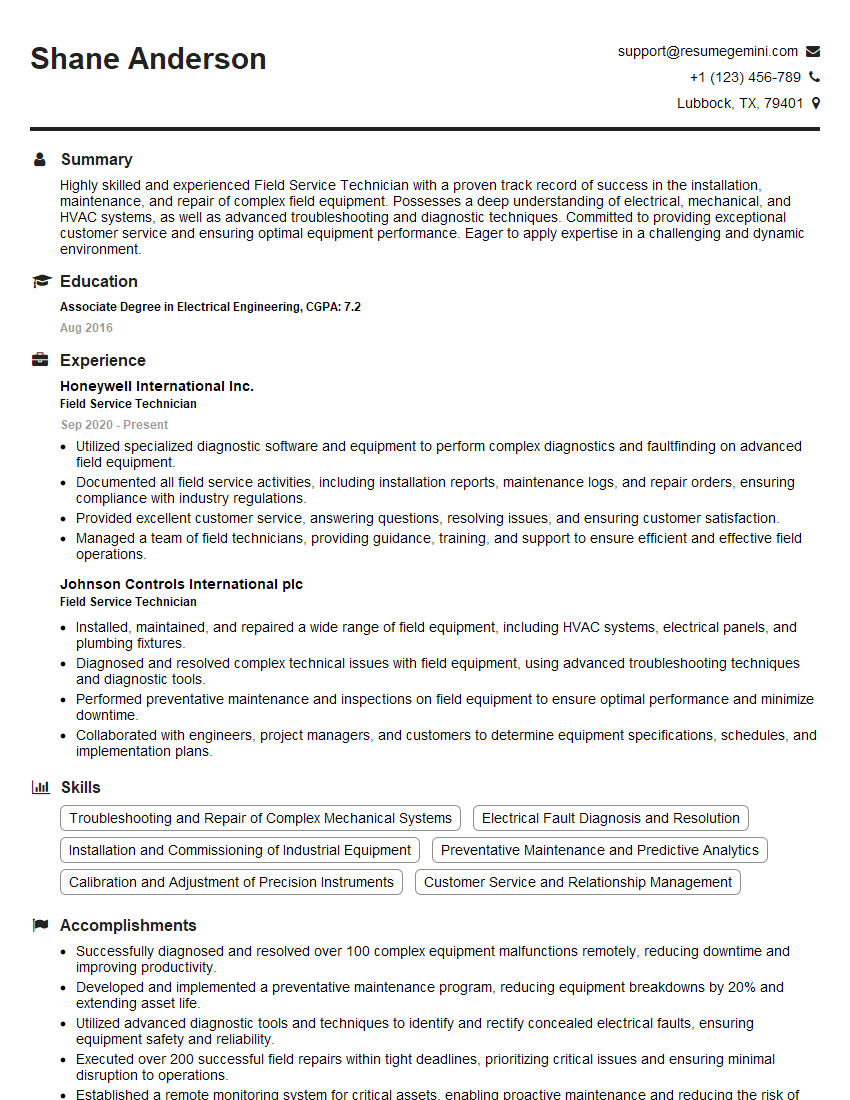
Field Service Technician Resume Sample
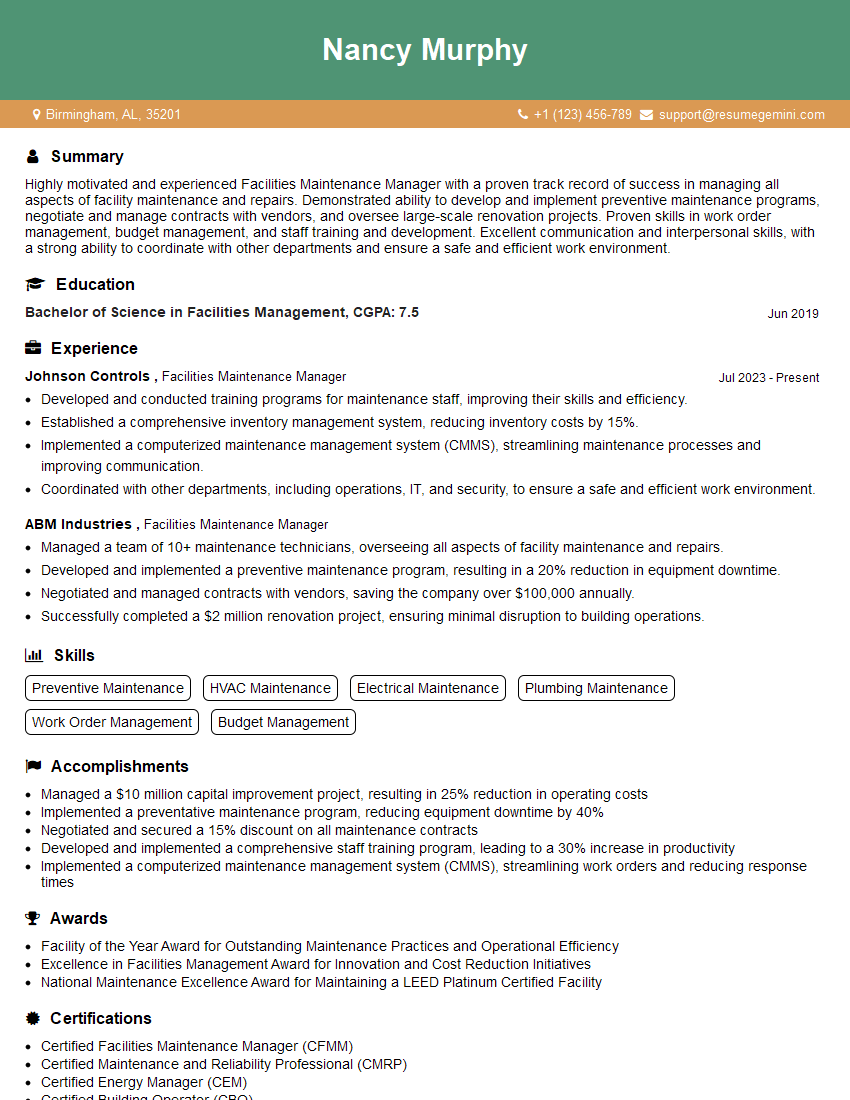
Facilities Maintenance Manager Resume Sample
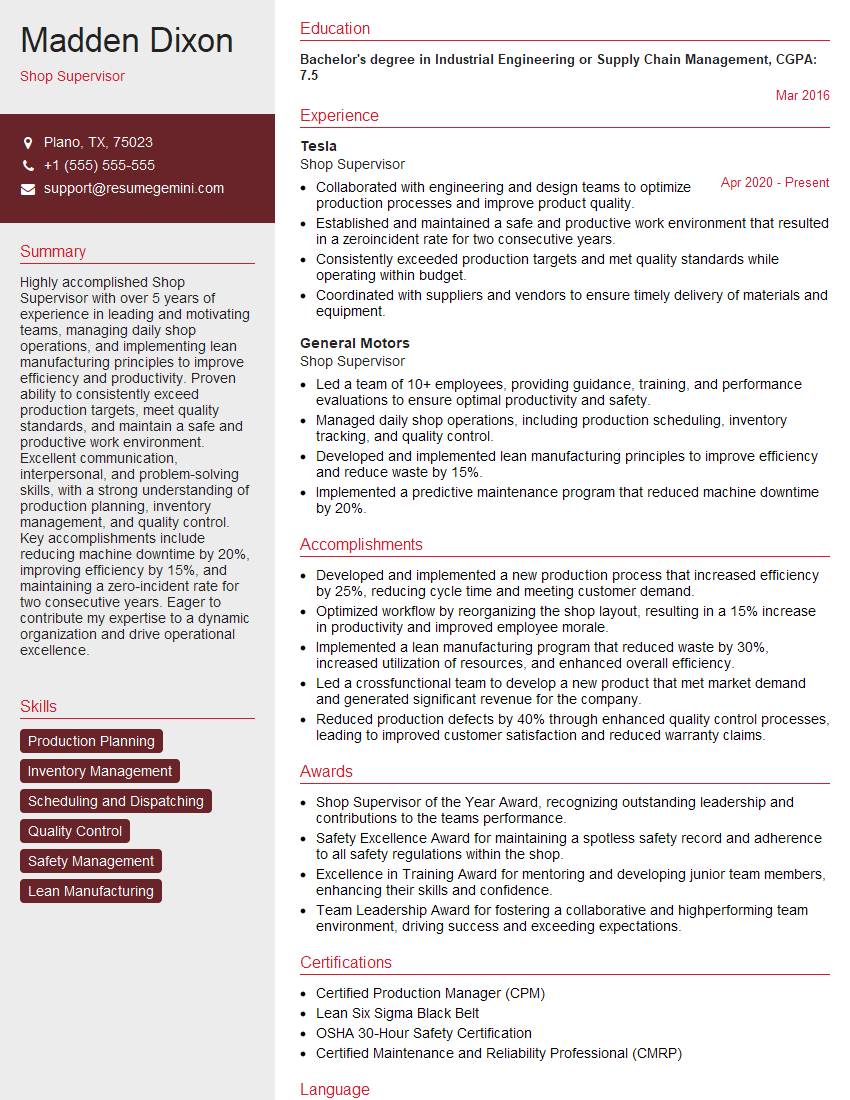
Shop Supervisor Resume Sample
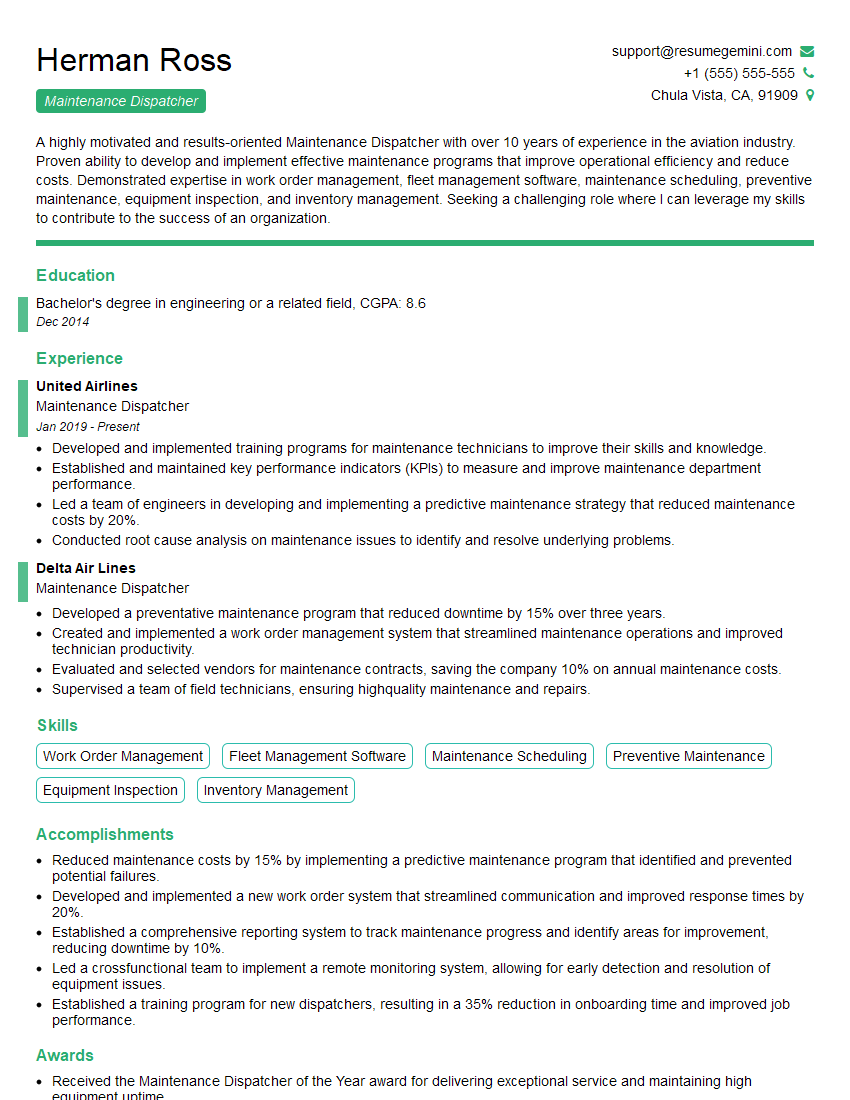
Maintenance Dispatcher Resume Sample
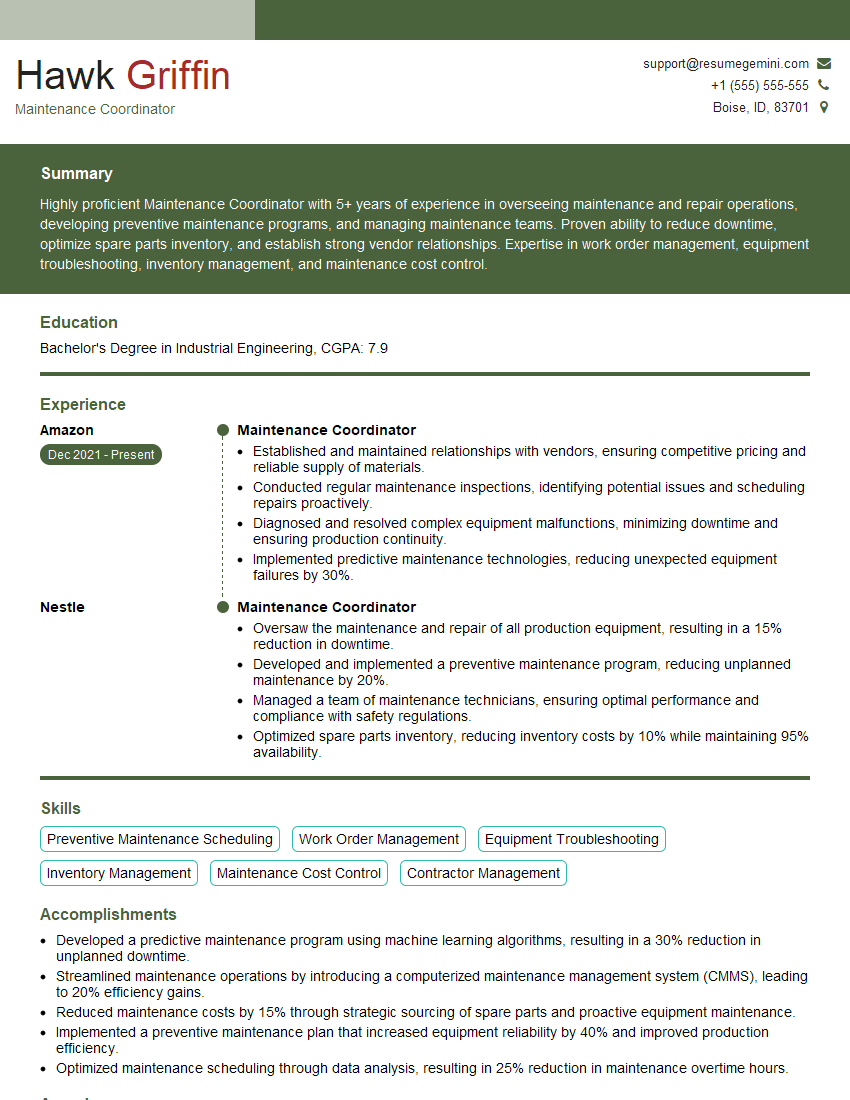
Maintenance Coordinator Resume Sample

Electrical Maintenance Technician Resume Sample
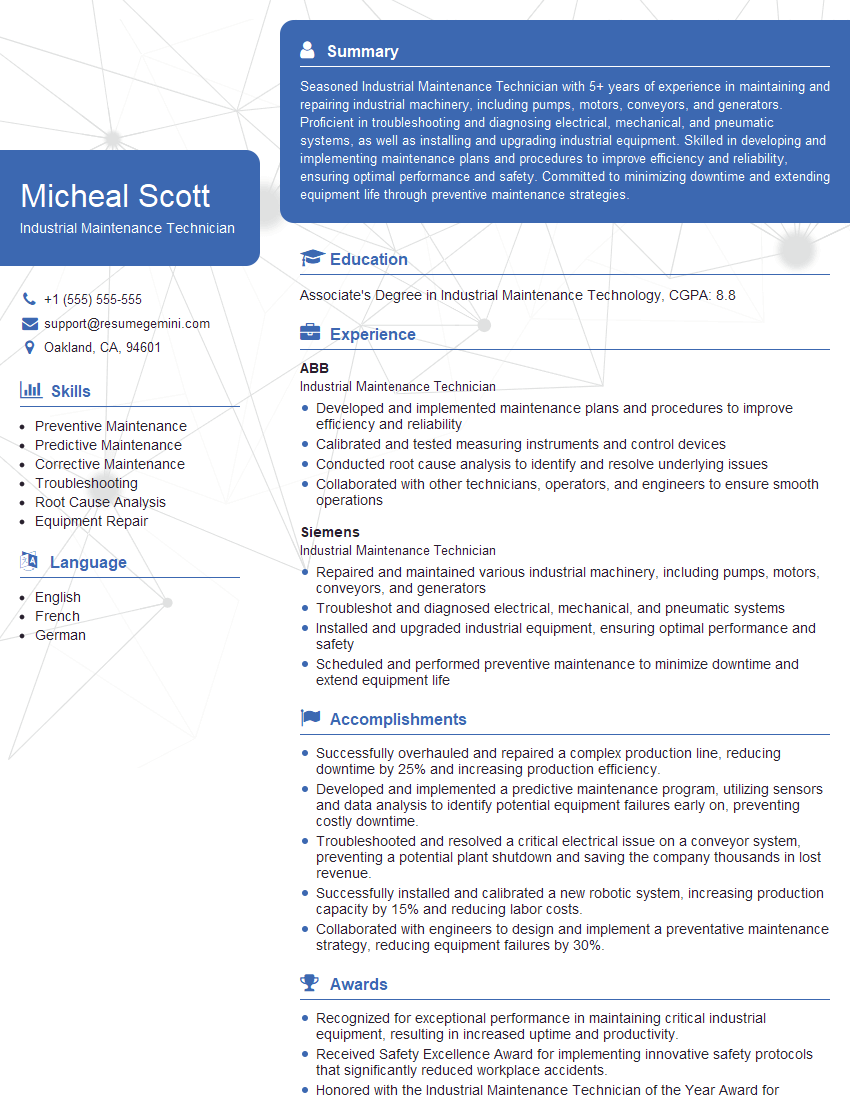
Industrial Maintenance Technician Resume Sample
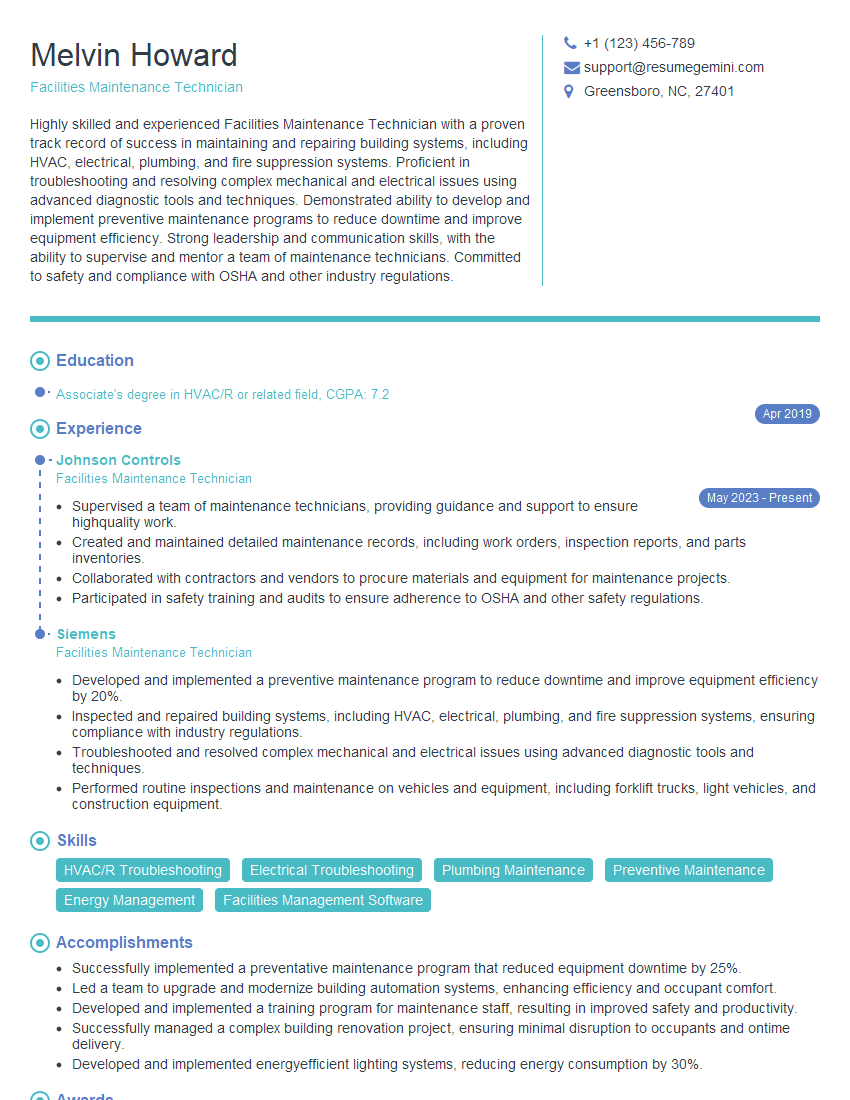
Facilities Maintenance Technician Resume Sample
- Maintenance Manager
- Maintenance Planner
- Maintenance Supervisor
- Reliability Engineer
- Maintenance Technician
- Field Service Technician
- Facilities Maintenance Manager
- Shop Supervisor
- Maintenance Dispatcher
- Maintenance Coordinator
- Electrical Maintenance Technician
- Industrial Maintenance Technician
- Facilities Maintenance Technician
Explore more articles
Users Rating of Our Blogs
Share Your Experience
We value your feedback! Please rate our content and share your thoughts (optional).
What Readers Say About Our Blog
Very informative content, great job.
good