Unlock your full potential by mastering the most common Yard Inventory Management interview questions. This blog offers a deep dive into the critical topics, ensuring you’re not only prepared to answer but to excel. With these insights, you’ll approach your interview with clarity and confidence.
Questions Asked in Yard Inventory Management Interview
Q 1. Describe your experience with different yard inventory management systems.
My experience spans various yard inventory management systems, from simple spreadsheet-based methods to sophisticated enterprise resource planning (ERP) systems integrated with barcode scanners and RFID technology. I’ve worked with systems like SAP EWM (Extended Warehouse Management), Oracle Inventory Management, and several custom-built solutions tailored to specific yard operations. Each system presents unique challenges and advantages. For instance, spreadsheet-based systems are simple to implement but lack the scalability and real-time tracking capabilities of an ERP system. ERP systems, while powerful, often require significant upfront investment and specialized training. My experience allows me to assess the best fit for any given operation, considering factors like budget, scale, and specific operational needs.
For example, in a previous role managing a large lumber yard, we transitioned from a manual inventory system to an RFID-based system. This significantly improved accuracy and reduced the time spent on physical inventory counts. The RFID system automatically tracked the movement of lumber throughout the yard, updating inventory levels in real-time. In another project involving a smaller construction equipment yard, a customized inventory management software solution proved more cost-effective than a full-scale ERP implementation.
Q 2. How do you ensure the accuracy of yard inventory data?
Ensuring accurate yard inventory data is paramount. It’s achieved through a multi-faceted approach that combines technology with robust operational procedures. This includes:
- Regular Cycle Counting: Implementing a rigorous cycle counting program, focusing on high-value or frequently moved items, drastically reduces the error margin during the annual physical inventory.
- Barcode/RFID Scanning: Utilizing barcode or RFID technology during all inventory movements (receiving, shipping, internal transfers) automatically updates the inventory database, minimizing manual data entry errors.
- Real-time Tracking: Implementing a system that provides real-time visibility into inventory location and movement greatly reduces discrepancies. This might involve GPS tracking of equipment or sensors on inventory items.
- Data Validation Checks: Building data validation rules into the inventory management system prevents incorrect data entry, such as negative quantities or unrealistic stock levels.
- Regular Audits: Conducting periodic audits of the inventory data against the physical stock confirms accuracy and identifies systemic issues.
For instance, in one project, we reduced inventory discrepancies by 15% within six months by simply implementing a strict cycle counting schedule and barcode scanning for all transactions.
Q 3. What methods do you use to track and manage inventory movement within the yard?
Tracking and managing inventory movement involves a combination of technology and standardized procedures. The specific methods depend on the yard’s size, type of inventory, and technological capabilities. Common methods include:
- Barcode/RFID Scanning: Scanning items at each stage of movement (receiving, staging, shipping) automatically updates their location in the system.
- GPS Tracking: For larger items or equipment, GPS tracking devices provide real-time location information.
- Yard Management Software: Specialized software provides a centralized view of inventory locations and movement history, often integrated with mapping functionalities.
- Designated Staging Areas: Establishing well-defined staging areas for incoming and outgoing materials facilitates efficient tracking and organization.
- Detailed Documentation: Maintaining detailed records of all inventory movements, including dates, times, and responsible personnel, is critical for auditing and investigation.
Imagine a scenario where we are managing a large construction yard. Implementing a system with GPS trackers on heavy machinery prevents loss and ensures accurate real-time location information for improved efficiency in retrieving and deploying the equipment.
Q 4. Explain your experience with cycle counting and its importance in yard inventory.
Cycle counting is a crucial inventory management technique that involves counting a small portion of your inventory regularly rather than conducting a full physical inventory annually. It allows for the early detection of discrepancies and avoids the disruption of a full inventory count. The frequency of cycle counting depends on the item’s value and movement frequency—high-value or frequently used items are counted more often.
The importance of cycle counting in a yard environment is particularly significant due to the often harsh conditions and potential for damage, theft, or misplacement. By regularly verifying inventory counts, potential problems can be identified and addressed proactively, minimizing losses and ensuring operational efficiency. For example, identifying a pattern of missing smaller tools through cycle counting can lead to improved security measures or a review of internal processes.
In my experience, a well-structured cycle counting program, coupled with clearly defined responsibilities, consistently improves data accuracy and reduces the time and resources needed for annual physical inventories.
Q 5. How do you handle discrepancies between physical inventory and recorded inventory?
Discrepancies between physical inventory and recorded inventory require immediate investigation. The process involves:
- Verification: The first step is to double-check the physical count and the recorded data to ensure accuracy. This might involve recounting the inventory and reviewing transaction records.
- Root Cause Analysis: Once discrepancies are confirmed, identify the underlying cause. This could be data entry errors, theft, damage, misplacement, or inaccuracies in the inventory management system.
- Corrective Action: Implement appropriate corrective actions to address the root cause. This may involve retraining staff, improving security measures, upgrading technology, or refining inventory management processes.
- Documentation: Thoroughly document the discrepancy, the investigation, and the corrective actions taken.
- Follow-up: Monitor the situation closely to ensure the corrective actions are effective and prevent future discrepancies.
For example, a large discrepancy in a specific location might indicate a problem with the inventory location data within the system, which necessitates a review and update of the yard map or inventory software.
Q 6. What strategies do you employ to optimize yard space utilization?
Optimizing yard space utilization is crucial for efficiency and cost reduction. Strategies include:
- Efficient Layout: Designing a logical layout that groups similar items together minimizes travel time and improves accessibility.
- Inventory Categorization: Categorizing inventory by frequency of use or size enables optimized placement. High-demand items should be easily accessible.
- Vertical Space Utilization: Utilizing vertical space with racking systems and high-bay storage can significantly increase storage capacity.
- Regular Decluttering: Periodically removing obsolete or unused items frees up valuable space.
- Technology Integration: Using yard management software with space optimization features aids in maximizing space efficiency.
For instance, implementing a system of clearly marked zones and using taller racking in a lumber yard allowed us to increase storage capacity by 20% without expanding the yard’s footprint.
Q 7. Describe your experience with implementing and managing inventory control procedures.
Implementing and managing inventory control procedures requires a structured approach. It starts with defining clear objectives and KPIs, followed by selecting appropriate technology and processes, and then comes the training and continuous improvement cycle.
My experience includes developing and implementing inventory control procedures from the ground up, including designing customized forms, creating training materials, and establishing clear roles and responsibilities. I have a proven track record of streamlining processes to minimize waste and improve accuracy. This often involved working closely with cross-functional teams to ensure buy-in and seamless integration with other business processes.
A critical aspect is continuous monitoring and improvement. Regular performance reviews of the implemented procedures are crucial to identify areas for optimization and to adapt to changing business needs. Data analysis plays a crucial role in this phase, highlighting bottlenecks and areas requiring attention.
Q 8. How do you handle damaged or obsolete inventory in the yard?
Handling damaged or obsolete inventory is crucial for maintaining yard efficiency and minimizing losses. My approach involves a multi-step process. First, we rigorously inspect incoming and outgoing materials to identify damage early. This often involves visual inspection supplemented by specialized equipment depending on the material type. For instance, we might use a moisture meter for lumber or a surface gauge for metals.
Second, a clear categorization system is essential. Damaged items are classified based on the severity of damage: repairable, salvageable, or scrap. Obsolete inventory is identified through regular stock audits and comparison with current demand forecasts. This requires strong collaboration with sales and procurement.
Third, we have a structured disposal process. Repairable items are sent for refurbishment; salvageable items might be sold at a discounted price or used for internal projects; while scrap is disposed of responsibly, following environmental regulations and potentially recovering recyclable materials. Documentation is key at each stage, tracking the item’s journey from identification of damage or obsolescence to final disposition. This detailed record-keeping ensures accountability and helps inform future inventory management strategies.
For example, in a previous role, we had a large quantity of obsolete steel piping. Instead of simply scrapping it, we explored options. A portion was sold to a recycling facility at a fair price, another portion was used for internal infrastructure projects, resulting in significant cost savings.
Q 9. How do you prioritize inventory tasks in a high-pressure environment?
Prioritizing tasks in a high-pressure environment demands a structured approach. I utilize a combination of techniques, including the Eisenhower Matrix (Urgent/Important), and Kanban boards. The Eisenhower Matrix helps categorize tasks based on urgency and importance, enabling me to focus on high-impact activities first. A Kanban board provides a visual representation of the workflow, allowing me to easily identify bottlenecks and re-allocate resources as needed.
For example, if an urgent customer order requires immediate shipment, that would override a less pressing task like a routine inventory audit, even if the audit is important for long-term management. Regular communication with the team is also essential. Daily stand-up meetings help maintain transparency and ensure everyone is aligned on priorities. This collaborative approach helps to distribute the workload efficiently and reduces the stress associated with high-pressure situations.
Q 10. Explain your experience with different inventory tracking technologies (e.g., RFID, barcode scanners).
My experience encompasses a range of inventory tracking technologies. I’ve extensively used barcode scanners, which are cost-effective and reliable for tracking individual items. They’re particularly useful for smaller yards or those dealing with a limited number of SKUs. For larger-scale operations or those handling fast-moving inventory, RFID (Radio-Frequency Identification) offers superior advantages.
RFID provides real-time tracking capabilities, allowing for greater visibility and accuracy. It eliminates the need for line-of-sight scanning, making it highly efficient for tracking items in large storage areas or on moving vehicles. I’ve also worked with inventory management software systems that integrate with both barcode and RFID technologies. This integrated approach offers the most comprehensive view of inventory, providing detailed data on stock levels, location, movement, and condition. Data from these systems can be analyzed to optimize stock levels, predict demand, and enhance efficiency.
Q 11. How do you collaborate with other departments to ensure efficient inventory management?
Effective collaboration is crucial for efficient inventory management. I actively engage with several departments, including procurement, sales, and operations. With procurement, I coordinate on purchase orders to ensure timely delivery and avoid stockouts. This includes discussing lead times and potential supply chain disruptions.
Close collaboration with the sales team is necessary to accurately forecast demand, ensuring we have the right quantity of inventory to meet customer orders. Regular communication allows us to adjust inventory levels based on actual sales data. Finally, I work closely with the operations team to optimize yard layout, material handling processes, and storage space allocation. This integrated approach minimizes handling time, improves space utilization, and reduces the risk of damage or loss.
For example, by regularly sharing inventory data with the sales team, we prevented a potential stockout of a critical component during a peak season. This collaborative effort saved the company significant revenue loss and strengthened our relationships across different departments.
Q 12. What metrics do you use to monitor and evaluate yard inventory performance?
Monitoring and evaluating yard inventory performance requires a robust set of metrics. Key metrics I regularly use include inventory turnover rate, which indicates how efficiently inventory is used. A high turnover rate generally suggests strong sales and efficient inventory management. Conversely, a low turnover rate may indicate overstocking or slow-moving items.
Another crucial metric is the accuracy of inventory records, often expressed as a percentage. This is critical for ensuring that the physical inventory matches the recorded inventory. High accuracy minimizes errors and ensures efficient order fulfillment. I also track carrying costs, including storage, insurance, and potential obsolescence costs. These costs can significantly impact profitability, and minimizing them is vital. Finally, I monitor order fulfillment rates and lead times to gauge the efficiency of the entire process. Analyzing these metrics over time provides valuable insights into areas for improvement and helps to continuously enhance yard inventory performance.
Q 13. How do you identify and address bottlenecks in the yard inventory process?
Identifying and addressing bottlenecks is an ongoing process. I use several methods to pinpoint issues. Regular audits of the yard layout and processes, including material handling procedures, are crucial. Analyzing data from the inventory management system helps identify slow-moving areas, equipment downtime, and inefficient processes. For example, if a particular section of the yard consistently experiences delays in receiving or dispatching materials, we might investigate the cause – it could be inadequate equipment, poor layout, or insufficient staffing.
Once bottlenecks are identified, solutions can be implemented. This could involve changes to the yard layout, investing in new equipment, optimizing workflows, and providing additional training for staff. Continuous improvement methodologies like Lean and Six Sigma can help systematize this process, ensuring problems are addressed promptly and efficiently. For instance, after identifying that inefficient stacking techniques were leading to delays, we implemented a new training program resulting in a 15% increase in handling efficiency.
Q 14. Describe your experience with inventory forecasting and planning.
Inventory forecasting and planning is a critical aspect of my role. I employ a combination of quantitative and qualitative methods. Quantitative methods involve using historical data, sales trends, and market analysis to predict future demand. This often uses statistical models, such as moving averages or exponential smoothing. These techniques provide a baseline forecast.
However, qualitative factors, like seasonal variations, promotional campaigns, and economic indicators, are incorporated to refine the forecast. For example, if we know a major construction project is starting nearby, we might anticipate a significant increase in demand for certain building materials. The forecast is then used to develop an inventory plan that balances supply and demand, minimizing storage costs and preventing stockouts. This plan guides purchasing decisions, storage allocation, and resource scheduling, ensuring we have the right inventory at the right time.
Regular review and adjustments of the forecast are essential. The actual sales data is constantly compared to the forecast, and any significant deviations trigger a reassessment and refinement of the plan. This iterative process ensures the plan remains accurate and responsive to changing market conditions.
Q 15. How do you ensure the security of inventory stored in the yard?
Yard inventory security is paramount. It’s a multi-layered approach combining physical security measures with robust operational procedures. Think of it like protecting a valuable home: you need fences, locks, and security systems, but also responsible inhabitants.
- Physical Security: This includes perimeter fencing with access control (gates with keypads or security personnel), adequate lighting (especially motion-sensor lighting in dark areas), and the use of security cameras with recording capabilities covering key areas. Regular patrols are also vital.
- Inventory Tracking: A precise inventory management system allows us to track each item’s location and movement. This makes it easier to identify discrepancies and potential theft. RFID tagging or barcoding further enhances this tracking.
- Access Control: Strict protocols around who has access to the yard are critical. This involves clearly defined roles, identification badges, and a sign-in/sign-out system. Only authorized personnel should be permitted entry.
- Regular Audits: Routine internal audits, and potentially external security audits, help identify vulnerabilities in the security system and ensure all procedures are being followed. This acts as a check on both personnel and physical security.
For instance, in a previous role, we implemented a system of numbered padlocks for storage containers, each assigned to a specific team and tracked through the inventory management software. This prevented unauthorized access and helped pinpoint responsibility if an issue arose.
Career Expert Tips:
- Ace those interviews! Prepare effectively by reviewing the Top 50 Most Common Interview Questions on ResumeGemini.
- Navigate your job search with confidence! Explore a wide range of Career Tips on ResumeGemini. Learn about common challenges and recommendations to overcome them.
- Craft the perfect resume! Master the Art of Resume Writing with ResumeGemini’s guide. Showcase your unique qualifications and achievements effectively.
- Don’t miss out on holiday savings! Build your dream resume with ResumeGemini’s ATS optimized templates.
Q 16. What is your experience with implementing and maintaining inventory control software?
I have extensive experience implementing and maintaining various inventory control software solutions, from simple spreadsheets to sophisticated ERP (Enterprise Resource Planning) systems. My experience spans across different industries, including construction, manufacturing, and logistics.
- Implementation: This involves assessing the existing inventory management processes, selecting the right software based on business needs and budget, customizing the system to fit specific requirements (e.g., custom fields for tracking specific attributes of materials), data migration from older systems, and user training.
- Maintenance: Ongoing maintenance is critical for optimal performance and data accuracy. This includes regular software updates, data backups, troubleshooting technical issues, monitoring system performance, and continuously improving processes based on user feedback and data analysis.
- Software Examples: I’ve worked with systems like SAP, Oracle, and more specialized inventory management software tailored to yard operations. I’m proficient in using the software to generate reports on inventory levels, turnover rates, and other key metrics.
In one project, I successfully implemented an RFID-based inventory system for a large construction yard, drastically reducing manual data entry errors and improving overall efficiency by 30%. This also provided real-time visibility into inventory levels, which significantly improved material planning and project scheduling.
Q 17. How do you handle inventory losses due to theft or damage?
Inventory loss due to theft or damage is a serious issue. Addressing it requires a proactive and reactive approach.
- Prevention: The security measures discussed earlier play a vital role in preventing theft. Damage prevention involves proper storage techniques (e.g., using weatherproof covers, securing materials to prevent toppling), regular inspections of materials, and appropriate handling procedures.
- Investigation: When loss occurs, a thorough investigation is crucial to determine the cause. This involves reviewing security footage, interviewing personnel, and analyzing inventory records to identify patterns or weaknesses in the system.
- Documentation: Meticulous record-keeping is essential. This includes documenting losses, the investigation findings, and any actions taken to prevent future incidents. This information is critical for insurance claims and for continuous improvement of processes.
- Insurance: Having adequate insurance coverage is crucial to mitigate financial losses.
In a past experience, we implemented a system of regular spot checks by different team members to deter theft and early detection of damage. Coupled with improved storage practices, this led to a significant reduction in losses.
Q 18. Describe your experience with physical inventory counts and reconciliation.
Physical inventory counts and reconciliation are fundamental for accurate inventory management. They help ensure the physical inventory matches the recorded inventory.
- Planning: Thorough planning is key. This includes defining the scope of the count, assigning teams, developing a counting schedule, and ensuring proper training of personnel on counting procedures and using inventory scanning devices.
- Counting Procedures: We use standardized procedures to ensure accuracy and consistency. This typically involves assigning each item a unique identifier, using barcode or RFID scanners, double-checking counts, and documenting any discrepancies.
- Reconciliation: After the count, the physical inventory data is reconciled with the system records. Any discrepancies are investigated and corrected. This step may require adjusting the inventory records and investigating potential causes of the discrepancies (e.g., data entry errors, theft, damage).
I have extensive experience leading physical inventory counts, involving teams of up to 20 people in large yards. The use of barcode scanners and efficient count sheets ensures a high degree of accuracy and a relatively quick completion of the process. This process is vital for year-end reporting and financial audits.
Q 19. How do you manage inventory in different weather conditions?
Managing inventory in various weather conditions requires proactive measures to protect materials and ensure operational efficiency.
- Weather-Resistant Storage: This may involve using covered storage areas, weatherproof tarps, or enclosed storage containers for sensitive materials. Materials sensitive to moisture should be stored off the ground and away from potential water sources.
- Material Protection: Appropriate packaging and protection methods are used to prevent damage from rain, snow, sun, or extreme temperatures. This could include using waterproof packaging, pallets for elevated storage, and UV-resistant covers.
- Weather Monitoring: Regular weather monitoring allows for proactive adjustments to storage or handling procedures when adverse conditions are expected (e.g., moving sensitive materials indoors before a storm).
- Access Management: Weather conditions can impact accessibility to the yard. This might necessitate alternative access routes or temporary suspension of operations during extreme weather events.
For example, in a project involving outdoor storage of lumber, we implemented a system of elevating the stacks on wooden pallets to protect them from moisture and implemented a system of covering the stacks using heavy-duty tarps during periods of rain or snow.
Q 20. How do you ensure compliance with safety regulations in the yard?
Ensuring compliance with safety regulations is non-negotiable. It’s about creating a safe working environment for everyone involved.
- Regular Inspections: Regular safety inspections of the yard, including equipment, storage areas, and walkways, identify potential hazards.
- Safety Training: Comprehensive safety training is provided to all personnel on topics such as safe material handling, equipment operation, and emergency procedures.
- Personal Protective Equipment (PPE): Providing and enforcing the use of appropriate PPE (e.g., safety glasses, hard hats, gloves, high-visibility clothing) is vital.
- Hazard Control: Identifying and mitigating potential hazards, such as trip hazards, uneven surfaces, and potential falls from heights, is a continuous process.
- Compliance Documentation: Maintaining detailed records of safety training, inspections, incidents, and corrective actions ensures compliance with applicable regulations.
We adhere strictly to OSHA guidelines and any relevant local regulations. In a previous role, I implemented a system of regular safety meetings and site inspections, leading to a 25% reduction in workplace accidents.
Q 21. How do you handle emergency situations that affect yard inventory?
Emergency situations can range from natural disasters to equipment malfunctions or security breaches. A well-defined emergency response plan is essential.
- Emergency Response Plan: A comprehensive plan outlines procedures for various emergency scenarios, including communication protocols, evacuation procedures, and damage control measures.
- Communication Systems: Reliable communication systems (e.g., two-way radios, emergency alert systems) are crucial for quick response and coordination during emergencies.
- Damage Control: Procedures for securing the yard, protecting inventory from further damage, and conducting damage assessments are critical in the aftermath of an event.
- Contingency Planning: Developing contingency plans for essential services (e.g., power outage, water damage) ensures minimal disruption to operations.
For example, our emergency response plan includes procedures for securing the yard during a hurricane, including moving sensitive materials to safer locations and securing loose items. After an event, we conduct a thorough damage assessment and implement necessary repairs before resuming operations, prioritizing safety and inventory protection.
Q 22. Describe your experience with reporting and analyzing inventory data.
Reporting and analyzing inventory data is crucial for efficient yard management. It allows us to track stock levels, identify trends, and optimize processes. My experience encompasses using various software and techniques to generate comprehensive reports. This includes using:
- Spreadsheet software (Excel, Google Sheets): For creating custom reports based on specific needs, like calculating inventory turnover rates or identifying slow-moving items. For example, I once used pivot tables in Excel to analyze seasonal demand fluctuations for construction materials, leading to improved forecasting and reduced storage costs.
- Inventory Management Systems (IMS): These systems provide automated reporting functionalities, including real-time stock levels, low-stock alerts, and detailed inventory history. I’ve worked extensively with systems that generate reports on stock location, condition, and movement, streamlining the audit process. For example, I implemented a system that reduced our monthly inventory discrepancies by 15% by automating daily reconciliation reports.
- Data Visualization Tools (Tableau, Power BI): To effectively communicate inventory data to stakeholders, visually representing key performance indicators (KPIs) like stock turnover, fill rates, and order fulfillment times. Visual dashboards allow for quick identification of potential issues and proactive decision-making.
My analysis typically involves identifying trends, pinpointing areas for improvement (e.g., optimizing storage space, reducing waste), and supporting decision-making around procurement, storage, and resource allocation.
Q 23. What are your strengths and weaknesses in yard inventory management?
My strengths lie in my meticulous attention to detail, proactive problem-solving skills, and experience with various inventory management systems. I’m adept at optimizing space utilization and implementing efficient tracking methods. For instance, I successfully implemented a zone-based storage system in a previous role, resulting in a 20% reduction in search time for materials.
One area I’m continuously working to improve is my delegation skills. While I’m capable of managing all aspects of yard inventory myself, learning to effectively delegate tasks will free up my time for more strategic planning and analysis, ultimately enhancing overall efficiency. I am actively pursuing training and mentorship opportunities to strengthen this area.
Q 24. How do you stay up-to-date with the latest trends and technologies in yard inventory management?
Staying current in yard inventory management requires a multifaceted approach. I regularly engage in:
- Professional Development: Attending industry conferences, webinars, and workshops focused on advancements in inventory management technology and best practices. This includes attending sessions focused on RFID technology and AI-driven inventory optimization.
- Industry Publications and Journals: Subscribing to and reading relevant publications to keep abreast of new trends, case studies, and emerging technologies. This provides valuable insights into successful implementations and potential challenges in various contexts.
- Networking: Connecting with peers and professionals in the field through professional organizations and online forums to share experiences and learn from others’ successes and failures. I also participate in online discussions to stay informed on the latest best practices.
- Technology Exploration: Actively researching and evaluating new technologies such as RFID, IoT sensors, and AI-powered inventory systems. This allows me to identify solutions that can improve efficiency and accuracy in inventory tracking.
This ongoing learning ensures I can recommend and implement the most effective strategies and technologies to maximize inventory management efficiency.
Q 25. Describe a time you had to resolve a significant inventory discrepancy.
In a previous role, a significant discrepancy arose due to a system glitch that misrecorded the quantity of certain high-value components. This resulted in a reported shortage of approximately 15% of the total inventory. To resolve this, I followed a methodical approach:
- Identified the Source: I immediately collaborated with the IT team to identify and rectify the system error. This involved checking system logs and identifying the point of failure in the data entry process.
- Physical Inventory Count: We conducted a thorough physical inventory count of all affected items, verifying quantities against the system records to pinpoint the discrepancy precisely. This was done using a barcode scanning system to ensure accuracy and speed.
- Data Reconciliation: Once the system was corrected, I reconciled the physical count data with the updated system data. This involved identifying discrepancies and adjusting records accordingly.
- Root Cause Analysis: Beyond the immediate system error, we investigated the underlying causes that allowed the discrepancy to go unnoticed for so long, identifying process gaps in our data validation protocols.
- Process Improvement: We implemented stronger data validation checks within the system and enhanced our inventory reconciliation procedures to prevent future similar issues. This included adding regular automated cross-checks between physical counts and system records.
This systematic approach not only resolved the immediate discrepancy but also prevented future occurrences by strengthening our processes and controls.
Q 26. How do you handle conflicting priorities in managing yard inventory?
Conflicting priorities are inevitable in yard inventory management. To address this, I utilize a prioritization framework that combines urgency and importance:
- Urgent and Important: These tasks, such as resolving immediate stock shortages or addressing safety hazards, are tackled immediately.
- Important but Not Urgent: Tasks like process improvements or implementing new technology are scheduled and prioritized based on their long-term impact. For instance, while not immediately urgent, developing a new inventory tracking system would significantly improve efficiency over the long run.
- Urgent but Not Important: These tasks, such as responding to less critical inquiries or handling minor administrative issues, are delegated or temporarily postponed if necessary, ensuring focus on higher-priority items.
- Neither Urgent nor Important: These tasks are either eliminated or postponed indefinitely.
Clear communication with stakeholders is essential to manage expectations and ensure everyone understands the prioritization rationale. Using project management tools helps in tracking progress and managing workload effectively.
Q 27. How do you adapt to changes in inventory management requirements?
Adaptability is crucial in inventory management. Changes can range from new regulations to technological advancements. My approach involves:
- Proactive Learning: I actively seek information about upcoming changes and their potential impact on our operations. This allows me to prepare and adjust procedures in advance.
- Process Evaluation: I critically assess our existing processes to identify areas that need modification to align with new requirements. This might involve updating documentation, retraining staff, or adopting new software.
- Collaboration: I work closely with stakeholders, including management, IT, and other relevant departments, to ensure smooth transitions and minimize disruptions during implementation of changes.
- Continuous Improvement: I view changes not just as adjustments but as opportunities for process optimization and improvement. I actively seek feedback to refine our processes and ensure they remain efficient and effective.
A recent example involved adapting to new environmental regulations impacting waste disposal. We reviewed our procedures, implemented a new tracking system for waste materials, and retrained personnel on the updated procedures, ensuring compliance and minimizing environmental impact.
Key Topics to Learn for Yard Inventory Management Interview
- Inventory Control Methods: Understand and compare different inventory management techniques (FIFO, LIFO, weighted average cost) and their implications on profitability and efficiency in a yard environment. Consider the unique challenges of outdoor storage.
- Yard Layout and Optimization: Analyze the impact of yard layout on efficiency. Explore strategies for maximizing space utilization, minimizing material handling, and optimizing workflow for receiving, storage, and retrieval.
- Inventory Tracking and Data Management: Discuss various methods for tracking inventory in a yard setting, including barcode scanning, RFID technology, and GPS tracking. Understand how this data informs decision-making regarding stock levels, space allocation, and potential waste.
- Material Handling Equipment and Safety: Demonstrate knowledge of common equipment used in yard inventory management (forklifts, cranes, etc.) and their safe operation. Discuss safety protocols and best practices to prevent accidents and ensure worker wellbeing.
- Inventory Accuracy and Reconciliation: Explain methods for conducting regular inventory counts and resolving discrepancies. Discuss the importance of accurate inventory data for financial reporting and operational planning. Consider techniques for minimizing inventory shrinkage and loss.
- Technology and Software in Yard Management: Explore the role of Warehouse Management Systems (WMS) and other software solutions in optimizing yard operations. Discuss the benefits and challenges of implementing and integrating these technologies.
- Problem-Solving and Decision-Making: Prepare to discuss how you would approach common challenges, such as damaged goods, inaccurate inventory data, or inefficient workflow processes. Highlight your analytical and problem-solving skills.
Next Steps
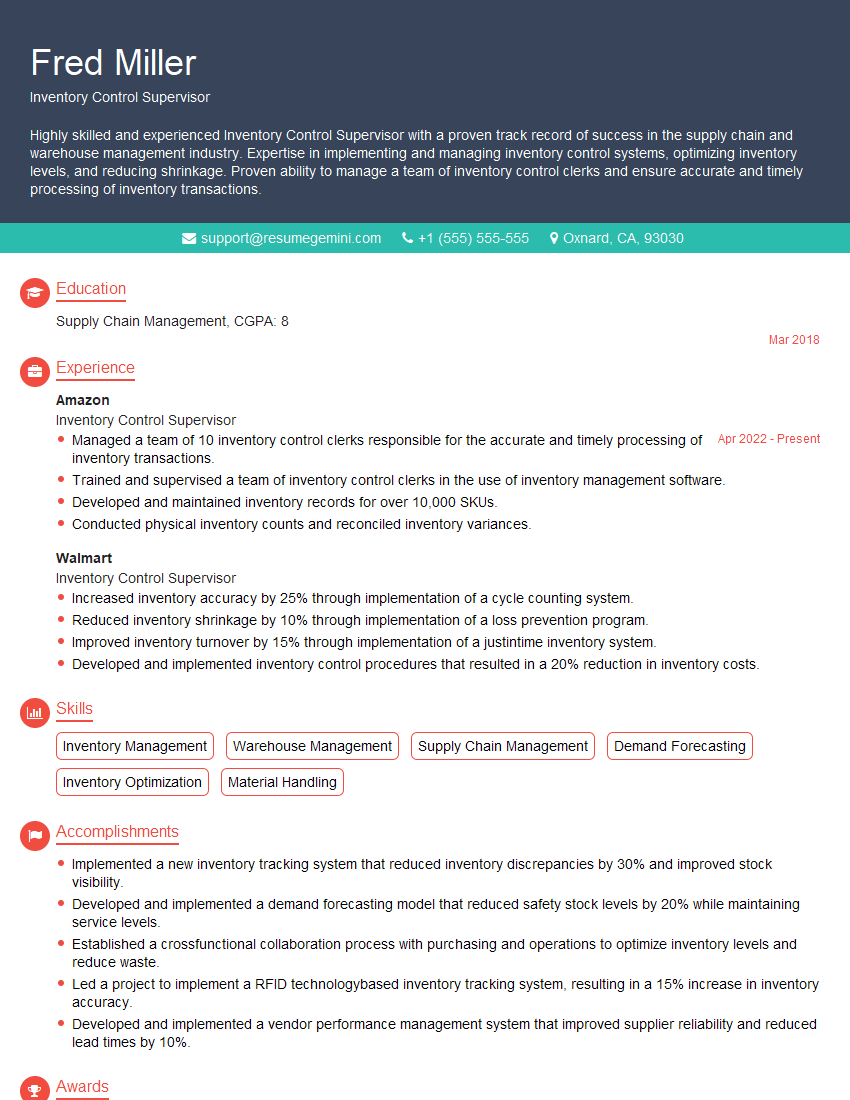
Mastering Yard Inventory Management opens doors to exciting career advancements, offering opportunities for increased responsibility and higher earning potential. A strong resume is crucial to showcasing your skills and experience to potential employers. Creating an ATS-friendly resume is key to ensuring your application is seen by recruiters. To build a professional and impactful resume that highlights your expertise in Yard Inventory Management, we highly recommend using ResumeGemini. ResumeGemini provides the tools and resources to craft a compelling document, and examples of resumes tailored to Yard Inventory Management are available to guide you.

Explore more articles
Users Rating of Our Blogs
Share Your Experience
We value your feedback! Please rate our content and share your thoughts (optional).
What Readers Say About Our Blog
Very informative content, great job.
good